
Separate Elevator Maintenance Contract vs. Bundled Facilities Management: Which Is Cheaper and Smarter for Florida Building Owners?
For most building owners and property managers in Florida, a standalone elevator maintenance contract — managed by a state-registered elevator company — delivers better long-term value than bundling elevator service into a general facilities management agreement. While bundled contracts may appear to reduce vendor count and simplify billing, they frequently introduce compliance gaps, accountability ambiguities, and hidden costs that outweigh any administrative convenience. The sections below break down every relevant factor so Florida property owners can make an informed decision.
What does a dedicated elevator maintenance contract actually include?
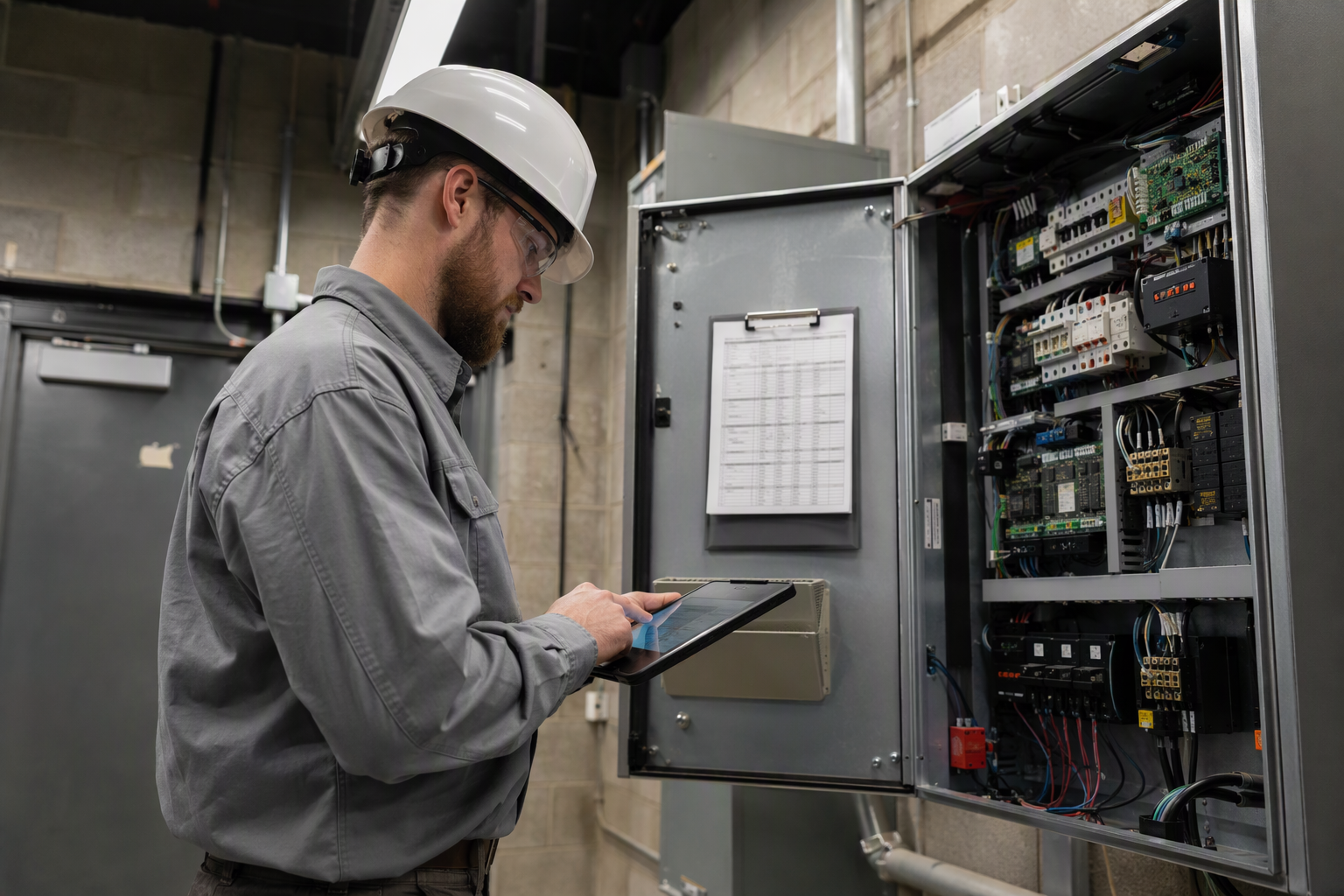
A dedicated elevator maintenance contract is an agreement between a building owner and a registered elevator company covering scheduled maintenance, lubrication, adjustments, parts replacement, code compliance monitoring, and coordination of mandatory inspections required under Florida law.
Under Chapter 399, Florida Statutes, the certificate of operation holder — typically the building owner or property manager — is legally responsible for the safe operation, proper maintenance, and correction of code deficiencies on every covered conveyance. A dedicated elevator contract assigns that technical maintenance obligation to a company whose entire business model is built around elevator systems, whose technicians hold Florida elevator certificates of competency, and whose work is governed by the ASME A17.1/CSA B44 Safety Code for Elevators and Escalators — the 2019 edition of which Florida adopted under Chapter 61C-5, Florida Administrative Code, effective December 31, 2023.
In Pompano Beach and Sarasota, Axxiom Elevator Florida structures its maintenance agreements to align directly with these statutory and code requirements, ensuring that every service visit is performed by a certified elevator technician registered with the Florida Department of Business and Professional Regulation (DBPR), Division of Hotels and Restaurants, Bureau of Elevator Safety.
What does a bundled facilities management contract typically cover for elevators?

A bundled facilities management contract typically covers elevator service as a line item within a broader agreement that also governs HVAC, plumbing, electrical, janitorial, and other building systems — usually subcontracted to a third party rather than performed by the FM provider’s own elevator-certified technicians.
The practical consequence is a layer of administrative distance between the building owner and the actual elevator service work. The FM company may subcontract to an elevator firm, but the subcontract terms, technician credentials, response protocols, and parts standards are negotiated by the FM company — not the building owner — and often prioritized based on the FM company’s margin rather than the building’s specific compliance needs. When an elevator fails inspection or a certificate of operation issue arises, accountability questions between the FM company and its elevator subcontractor can delay resolution and expose the building owner to regulatory liability.
Is a separate elevator maintenance contract cheaper than a bundled contract?
On a per-elevator, per-year basis, a dedicated elevator maintenance contract is generally equal to or lower in cost than the elevator portion of a bundled facilities management agreement, because the specialized provider eliminates the FM company’s administrative markup and subcontractor margin layered on top of the actual service cost.
Bundled contracts create the appearance of savings through consolidated invoicing and a single vendor relationship, but the elevator service component rarely benefits from true volume pricing. FM companies typically add a coordination fee or margin of their own on top of what the subcontracted elevator company charges them — a cost that flows directly to the building owner, even if it is not itemized separately on the invoice. By contrast, a dedicated elevator contract prices the work directly, with no intermediary margin. Over a multi-year term on a building with two or more elevators, this difference is meaningful.
The analysis changes further when compliance costs are factored in. Florida requires a certificate of operation valid for no more than two years, which can be renewed only for a conveyance with a current satisfactory inspection. An elevator operating on an expired certificate violates state law. If a bundled FM arrangement allows an inspection to lapse — because elevator compliance is not the FM company’s core competency — the building owner bears the legal and financial consequences, not the FM company.
How does Florida law define who must perform elevator maintenance?
Florida law requires that all elevator construction, installation, maintenance, and repair be performed by a certified elevator technician who holds a Florida elevator certificate of competency issued by the DBPR Bureau of Elevator Safety.
Under Chapter 399, Florida Statutes, a certified elevator technician is authorized to perform this work only after the state issues the certificate of competency. That certificate expires after one year and is renewed with proof of eight hours of continuing education. Florida certified elevator technicians must also register with the state every year and carry general liability insurance. A bundled FM contract that does not contractually require — and verify — these credentials for every technician who touches an elevator puts the building owner in a precarious legal position.
Additionally, the elevator companies themselves must be registered with the state every year and maintain general liability insurance. Building owners evaluating any contract — standalone or bundled — should request and verify the current registration status of the elevator company performing the work, regardless of how the contract is structured.
What is the maintenance contract exemption from annual inspection, and does it apply to bundled contracts?
Florida law provides a specific exemption from the annual inspection requirement for a single category of elevator: a conveyance that is not an escalator or dumbwaiter, serves only two adjacent floors, and is covered by a service maintenance contract — but this exemption applies only while that specific service maintenance contract remains in effect.
This is a meaningful compliance consideration. The exemption is tied to the existence and continuity of a qualifying service maintenance contract. If elevator service is embedded within a broader FM agreement that is cancelled, modified, or allowed to lapse for any reason — including budget disputes unrelated to elevator service — the exemption evaporates and the elevator immediately becomes subject to annual inspection requirements. A standalone elevator maintenance contract provides a cleaner, more defensible basis for claiming and maintaining this exemption, because the elevator coverage cannot be inadvertently lost when other FM services are renegotiated.
How does Florida’s annual inspection requirement affect the choice of contract structure?
Florida requires every elevator or other conveyance covered by Chapter 399, Florida Statutes to be inspected annually by a certified elevator inspector, or by a county or municipality under contract with the state — and the certificate of operation issued after a satisfactory inspection is valid for no more than two years.
In Broward County — which includes Pompano Beach — the Broward County Building Code Division enforces Florida’s elevator law through its own elevator inspectors. Building owners in Pompano Beach should coordinate their maintenance contracts with that local inspection framework. In Sarasota, inspections are coordinated through the DBPR Bureau of Elevator Safety at the state level. A dedicated elevator maintenance company operating in both markets understands these jurisdictional nuances and can coordinate inspection scheduling accordingly. A generalist FM company is less likely to track local authority having jurisdiction (AHJ) differences between markets.
What are the key cost comparison factors between contract types?
The table below outlines the primary financial and compliance factors building owners should evaluate when comparing a dedicated elevator maintenance contract against elevator coverage within a bundled facilities management agreement.
| Factor | Dedicated Elevator Maintenance Contract | Elevator in Bundled FM Contract |
|---|---|---|
| Pricing structure | Direct pricing, no intermediary markup | FM margin layered on subcontractor cost |
| Technician credentials | Florida-certified elevator technicians required | Credential verification depends on FM subcontract terms |
| Regulatory accountability | Elevator company directly accountable to DBPR | Accountability split between FM company and subcontractor |
| Inspection coordination | Elevator-specific knowledge of AHJ requirements by market | Variable; generalist FM may lack local AHJ expertise |
| Certificate of operation tracking | Core service function of the elevator company | May be deprioritized among many FM responsibilities |
| Maintenance exemption eligibility | Clear contractual basis for two-floor elevator exemption | Exemption at risk if FM contract is modified or cancelled |
| Parts sourcing and quality | Elevator-specific supply chain, OEM familiarity | Parts decisions made by subcontractor under FM margin pressure |
| ASME A17.1-2019 code alignment | Core competency of elevator-specific firm | Depends on subcontractor; FM company may not verify compliance |
| ADA accessibility compliance | Addressed as part of elevator-specific scope | May fall in a gap between FM and elevator subcontractor scope |
| Contract continuity risk | Elevator service agreement is standalone and stable | Elevator coverage disrupted if broader FM contract changes |
How does ADA compliance factor into elevator maintenance contract decisions?
The Americans with Disabilities Act (ADA) imposes accessibility requirements on elevators in buildings subject to the Act, and those requirements must be maintained as an ongoing operational obligation — not just addressed at installation.
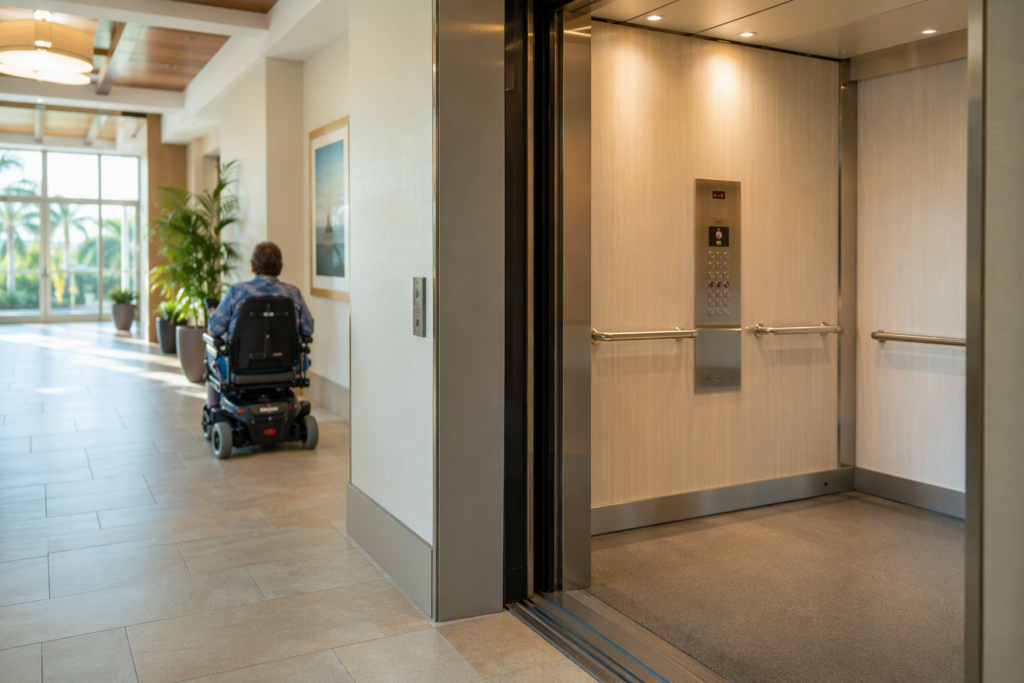
ADA-required features such as audible signals, Braille and raised character floor designations, door timing, and leveling accuracy must remain functional between inspections. A dedicated elevator maintenance contract specifically includes these functional checks because they are part of the ASME A17.1 Safety Code for Elevators and Escalators maintenance scope. In a bundled FM environment, ADA elevator compliance can fall into a gray area where neither the FM company nor the elevator subcontractor clearly owns the responsibility for ongoing accessibility maintenance — a gap that can result in ADA complaints or legal exposure for the building owner.
What should a building owner look for in a dedicated elevator maintenance contract?
A well-structured dedicated elevator maintenance contract should address regulatory compliance, technical scope, and accountability at a level of specificity that a generalist FM contract rarely achieves for elevator systems.
Building owners should confirm that any elevator maintenance agreement includes: verification that the elevator company is currently registered with the DBPR Bureau of Elevator Safety and carries required general liability insurance; confirmation that all technicians performing work hold current Florida elevator certificates of competency; clear identification of which conveyances are covered and their certificate of operation expiration dates; a defined schedule of preventive maintenance visits aligned with ASME A17.1-2019 maintenance requirements; coordination of annual inspections with the applicable local authority having jurisdiction; and a process for reporting any elevator accident to the state within five working days, as required by Florida law.
How should a building owner evaluate the total cost of ownership under each contract type?
Total cost of ownership for elevator service extends well beyond the contract price line and must account for compliance penalties, unplanned downtime costs, inspection coordination fees, and the cost of resolving deficiencies discovered at inspection.
An elevator operating on an expired certificate of operation violates Florida law — exposing the building owner to regulatory action regardless of whether the lapse was caused by the FM company’s failure to coordinate inspections rather than any action by the owner. The cost of regulatory non-compliance, potential shutdown orders, and the remediation required to restore a certificate of operation can significantly exceed any administrative savings from bundling elevator service into an FM contract. Building owners should require any FM contract to itemize the elevator service component separately, identify the subcontractor performing the work, and provide copies of that subcontractor’s current DBPR registration and technician credentials before signing.
Are there situations where bundling elevator service into an FM contract makes sense?
Bundling may be administratively convenient for very small buildings with a single, simple elevator and an FM provider that uses a well-credentialed elevator subcontractor with transparent pass-through pricing — but even in these cases, the building owner should verify the subcontractor’s credentials independently.
For buildings with multiple elevators, escalators, or specialty conveyances — including hydraulic, traction, or limited-use/limited-application (LULA) systems — a dedicated elevator maintenance contract is the more defensible choice on both cost and compliance grounds. The complexity of maintaining different equipment types under ASME A17.1-2019, coordinating multi-unit inspection schedules, and tracking individual certificate of operation expiration dates requires elevator-specific expertise and systems that generalist FM providers do not typically maintain.
What happens if an elevator fails inspection under a bundled FM contract?
When an elevator fails inspection, the building owner — as the certificate of operation holder — bears direct legal responsibility for correcting deficiencies and must not permit the elevator to be used until a satisfactory re-inspection is completed and a valid certificate is issued.
Under a bundled FM arrangement, the chain of communication runs from the inspector to the building owner, who must then notify the FM company, which must then engage the subcontractor — introducing delays at each handoff. Under a dedicated elevator maintenance contract, the elevator company is directly accountable and typically has already been coordinating with the inspector as part of the maintenance relationship. Florida law requires the certificate of operation to be posted in a conspicuous location on the elevator in a frame with a transparent cover; a failed inspection with a delayed response is visible to every building tenant and guest.
How does the Florida DBPR Bureau of Elevator Safety enforce maintenance requirements?
The Florida Department of Business and Professional Regulation (DBPR), Division of Hotels and Restaurants, Bureau of Elevator Safety administers and enforces the Florida Elevator Safety Act (Chapter 399, Florida Statutes) and the rules under Chapter 61C-5, Florida Administrative Code.
Enforcement tools available to the Bureau include the authority to require correction of deficiencies, to act on accident reports — which must be filed by the certificate holder within five working days of any elevator accident — and to coordinate with local authorities having jurisdiction in counties and municipalities that conduct their own inspections under state contract. Building owners who rely on a bundled FM company to manage these interactions without a dedicated elevator company relationship risk delays in communication, incomplete documentation, and compliance exposure that falls squarely on the owner rather than the FM company.
What role does the local authority having jurisdiction play for Pompano Beach and Sarasota buildings?
In Pompano Beach, which is located in Broward County, the Broward County Building Code Division enforces Florida’s elevator law through its own certified elevator inspectors — meaning local inspections are conducted by county inspectors rather than directly by the DBPR Bureau of Elevator Safety, though the underlying legal standard is Chapter 399 and ASME A17.1-2019.
In Sarasota, elevator inspections are coordinated through the state-level DBPR framework. These jurisdictional differences affect how inspection scheduling, permit coordination, and certificate of operation renewals are managed in practice. Axxiom Elevator Florida maintains active service operations in both Pompano Beach and Sarasota and coordinates directly with the applicable local authority having jurisdiction in each market — a practical advantage that a generalist FM company’s out-of-area elevator subcontractor may not provide.
What steps should a building owner take to transition from a bundled FM contract to a dedicated elevator maintenance contract?
Transitioning elevator service from a bundled FM contract to a dedicated maintenance agreement requires careful sequencing to avoid any gap in coverage or certificate of operation compliance. The following steps outline a sound transition process:
- Obtain the current certificate of operation for every elevator in the building and note the expiration date of each certificate — valid for no more than two years under Florida law.
- Request from the current FM provider the identity of the elevator subcontractor currently performing service, along with that subcontractor’s current DBPR registration number and technician credential documentation.
- Obtain the most recent inspection report for each elevator and note any open deficiencies or upcoming inspection dates.
- Engage a registered elevator company — such as Axxiom Elevator Florida in Pompano Beach or Sarasota — for a current condition assessment of each conveyance before signing a new maintenance agreement.
- Confirm the new elevator company’s DBPR registration, general liability insurance, and technician certifications are current.
- Execute the dedicated elevator maintenance contract with an effective date that precedes the termination of the FM contract’s elevator component, ensuring no gap in coverage.
- Notify the applicable local authority having jurisdiction — Broward County Building Code Division for Pompano Beach, or the DBPR Bureau of Elevator Safety for Sarasota — of the change in elevator service provider as appropriate.
- Update the building’s elevator records to reflect the new maintenance provider and confirm that all certificates of operation are properly posted in conspicuous locations on each elevator.
How does ASME A17.1-2019 define maintenance obligations that affect contract scope?
The ASME A17.1/CSA B44 Safety Code for Elevators and Escalators — the 2019 edition adopted by Florida effective December 31, 2023 — establishes specific maintenance requirements that must be performed at defined intervals, documented, and available for inspection by the authority having jurisdiction.
These requirements include systematic examinations of safety devices, buffers, governor mechanisms, door operators, hydraulic systems, machine room conditions, and other components at frequencies defined in the code. A dedicated elevator maintenance contract is structured around these code-defined intervals; a bundled FM contract’s elevator line item is rarely detailed enough to ensure code-defined maintenance tasks are performed on schedule. When an inspector finds a maintenance-related deficiency, the code documentation requirement means the building owner must be able to produce maintenance records — records that a dedicated elevator company maintains as a core function, and that a bundled FM arrangement may not reliably generate or retain.
What questions should a building owner ask before signing any elevator maintenance contract?
Whether evaluating a dedicated elevator contract or the elevator component of a bundled FM agreement, building owners in Florida should ask the following questions before signing:
Is the elevator company currently registered with the Florida DBPR Bureau of Elevator Safety? Does the company carry current general liability insurance as required by state law? Are all technicians who will perform work on this building’s elevators holders of a current Florida elevator certificate of competency? What is the specific preventive maintenance schedule, and how does it align with ASME A17.1-2019 maintenance intervals? Who coordinates inspection scheduling with the local authority having jurisdiction — Broward County Building Code Division or DBPR? How are open deficiencies documented and tracked to resolution? What is the process if an elevator accident occurs and must be reported to the state within five working days? And critically — if this is a bundled FM contract, who exactly is the elevator subcontractor, and what are their credentials?
Axxiom Elevator Florida provides clear, documented answers to all of these questions as part of its contract engagement process for buildings in Pompano Beach and Sarasota.
How does elevator age and equipment type affect the contract structure decision?
Older elevators and specialty equipment types — including hydraulic systems, traction elevators, escalators, and limited-use/limited-application lifts — require more technically specific maintenance than modern, standardized installations, making the case for a dedicated elevator maintenance contract stronger as equipment complexity or age increases.
Under ASME A17.1-2019, existing installations are subject to ASME A17.3 (Safety Code for Existing Elevators and Escalators) requirements for periodic tests and inspections, which differ from new installation requirements. A dedicated elevator company’s technicians are trained specifically on these distinctions; a generalist FM subcontractor may not have the equipment-specific expertise to perform required tests correctly or to identify emerging deficiencies before they become inspection failures or safety events. Florida’s adoption of ASME A17.1-2019 with certain exclusions under Chapter 61C-5 further requires the elevator service provider to understand which requirements apply to which equipment types in this jurisdiction.
What are the risks of an elevator accident under a bundled FM contract structure?
Florida law requires the certificate of operation holder to report any elevator accident to the state within five working days — and the legal and financial consequences of an elevator accident fall on the building owner, not the FM company or its subcontractor, regardless of which party was responsible for maintenance.
Under a bundled FM structure, accident response depends on the FM company’s internal protocols and its relationship with the elevator subcontractor — neither of which the building owner controls or has direct visibility into. The accident reporting obligation runs directly from the certificate holder to the DBPR Bureau of Elevator Safety, and delays in internal FM communication channels can result in missed reporting deadlines. A dedicated elevator maintenance company provides a direct line of accountability from the technician to the building owner and to the regulatory agency, with no intermediary whose priorities may not align with the building owner’s compliance obligations.
How can building owners in Pompano Beach and Sarasota get started with a proper elevator maintenance evaluation?
Building owners and property managers in Pompano Beach and Sarasota who are currently relying on a bundled FM contract for elevator service — or who are approaching a contract renewal decision — should begin with a professional elevator assessment that establishes the current condition of each conveyance, documents open deficiencies, confirms certificate of operation status, and identifies the specific maintenance scope required under ASME A17.1-2019 and Chapter 399, Florida Statutes.
This assessment provides the factual basis for a cost comparison between contract structures that goes beyond the invoice line item and accounts for compliance risk, inspection coordination, technician credentials, and the long-term liability exposure that comes with entrusting elevator service to a non-specialist intermediary. Axxiom Elevator Florida offers this assessment as a starting point for property owners evaluating their elevator service options in both markets.
Need elevator service you can rely on? Axxiom Elevator Florida is ready to help.