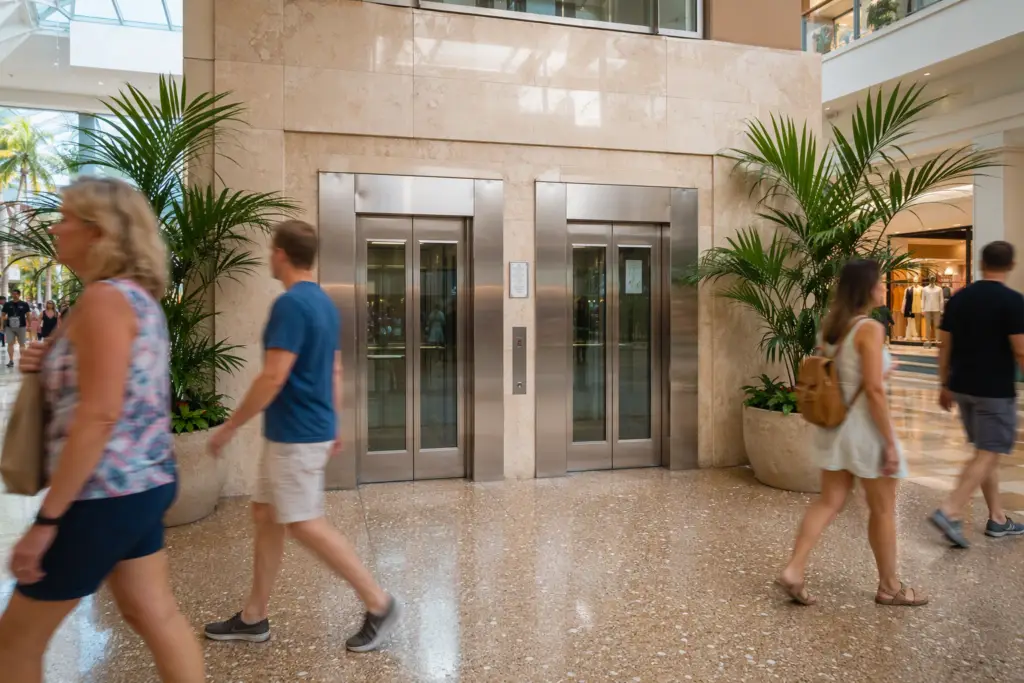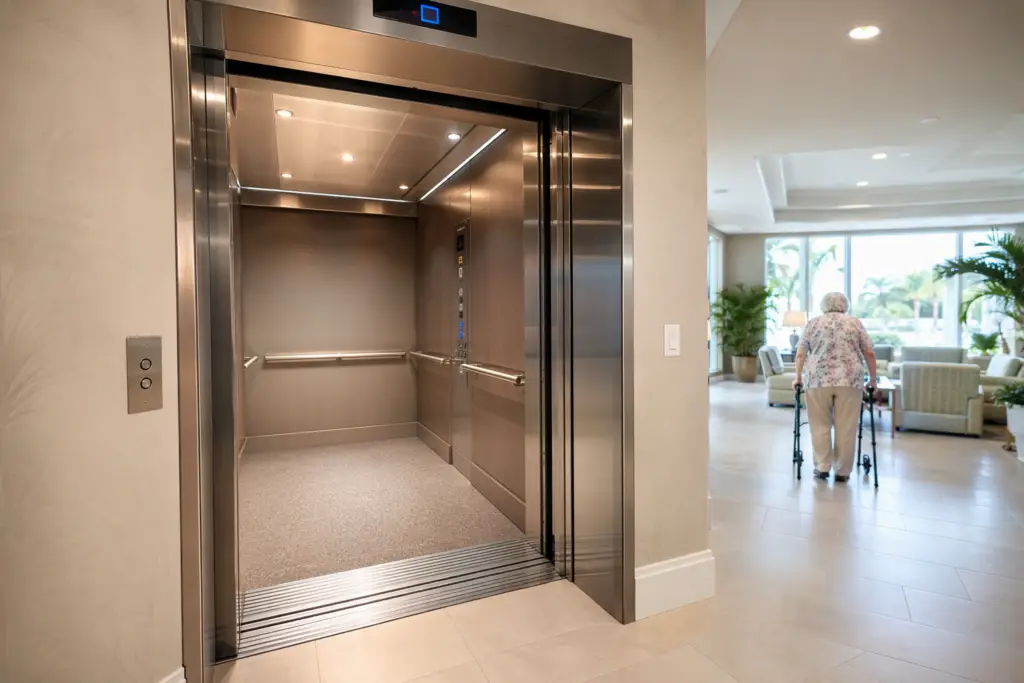
For Florida building owners and facility managers, elevators are among the larger continuous energy consumers in a multi-story property. Older traction and hydraulic systems run motors at full power regardless of load, use incandescent or fluorescent cab lighting around the clock, and generate heat that feeds back into the building’s cooling load — a compounding cost in Florida’s subtropical climate. The good news is that proven, commercially available modernization packages exist for virtually every equipment type, and most can be completed without pulling a full permit for a new installation. This guide walks through the specific upgrades, their real-world trade-offs, and what Florida regulatory requirements apply when you alter a conveyance.
What Is the Single Highest-Impact Energy Upgrade for an Existing Elevator?
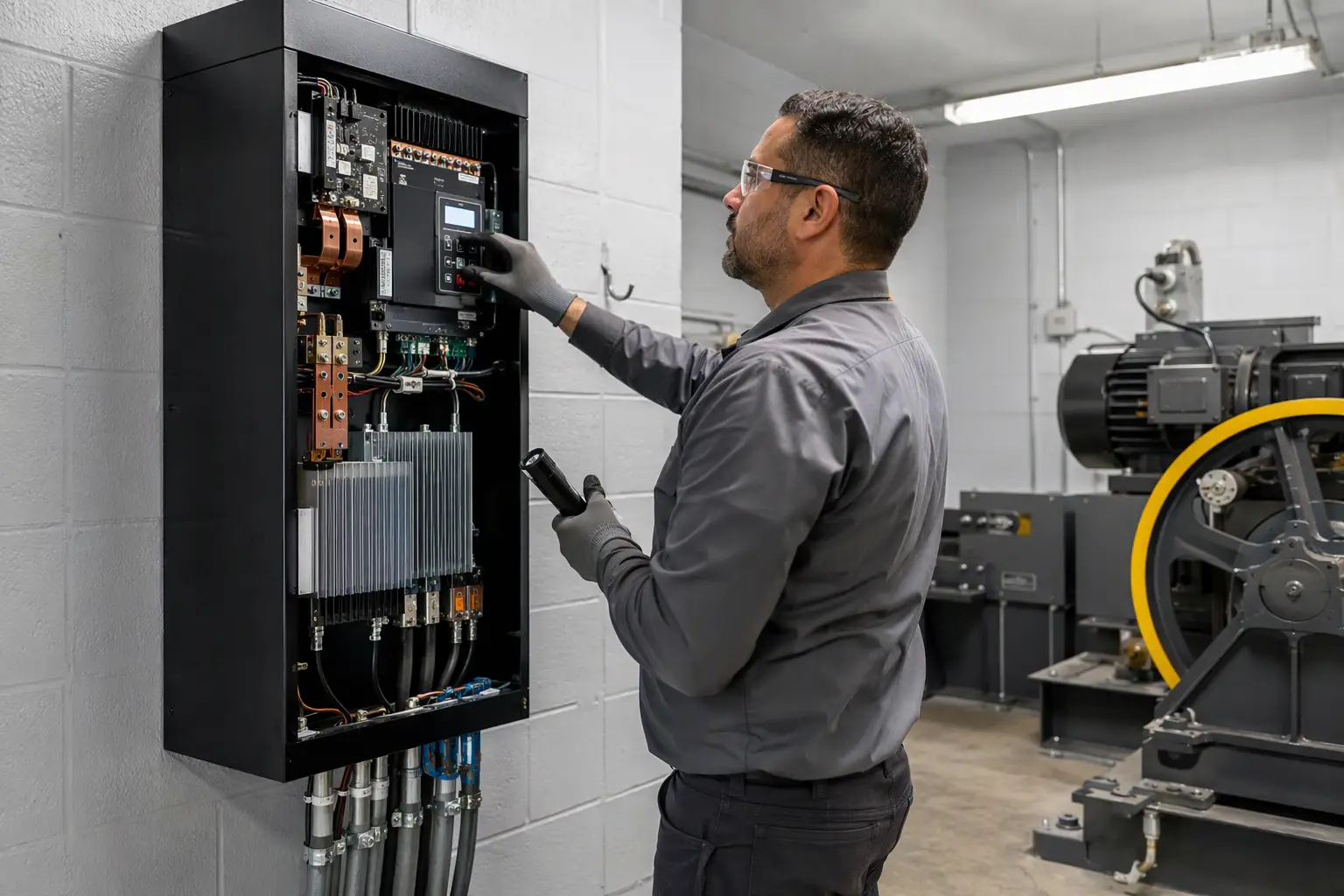
For most commercial traction elevators, replacing a fixed-speed motor controller with a variable-voltage variable-frequency (VVVF) drive — sometimes called a variable-speed drive — is the highest-impact single upgrade. VVVF drives match motor output precisely to the load being moved rather than running at full rated power on every trip. The result is a measurable drop in both active consumption and peak demand, the two line items that drive commercial electric bills in Florida. Hydraulic elevators benefit most from a hydraulic power unit (HPU) replacement with a submersible or above-ground unit fitted with a soft-start or variable-speed pump motor, which achieves a similar effect on the motor-run cycle.
How Do Regenerative Drives Differ from Standard Variable-Speed Drives?
A standard VVVF drive reduces energy going into the motor. A regenerative drive goes further: when a loaded car travels down or an empty car travels up, the motor acts as a generator, and the drive feeds that electricity back into the building’s electrical grid rather than dissipating it as heat through resistor banks. In a Florida office tower with high daily trip volume, this recaptured power can offset consumption from other building systems. Regenerative drives require a compatible motor and a building electrical panel that can accept the returned current, so an electrical feasibility review is a prerequisite. Because they eliminate braking resistors, regenerative drives also reduce machine room heat gain — a direct benefit in a state where mechanical room cooling is an ongoing operational expense.
Does LED Cab Lighting Actually Move the Needle on Energy Bills?
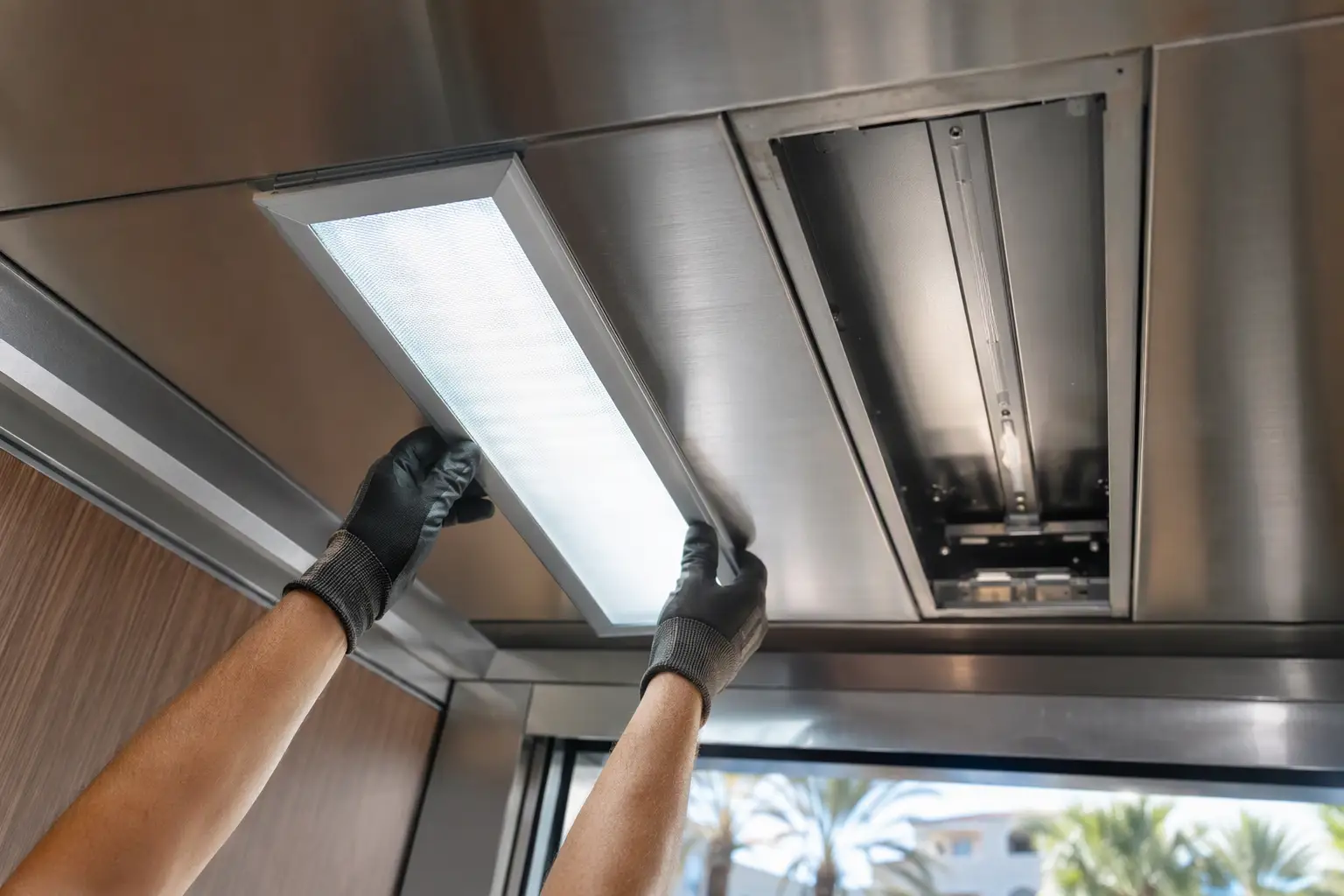
LED cab lighting is the lowest-cost, fastest-payback upgrade on this list. Elevator cabs in commercial buildings typically run lighting continuously during business hours and often on reduced cycles overnight. Older fluorescent and incandescent fixtures consume substantially more wattage per equivalent lumen output compared to modern LED arrays. Beyond the kilowatt-hour savings, LED fixtures generate less heat, which reduces the demand on building HVAC — an amplified benefit in Florida’s year-round cooling climate. LED upgrades are also minimally disruptive: they rarely require a permit because they do not alter the elevator’s drive, control, or structural systems, though owners should confirm the scope with the Florida DBPR’s Bureau of Elevator Safety before proceeding.
What Is Destination Dispatch and When Does It Make Sense for a Florida Office Building?
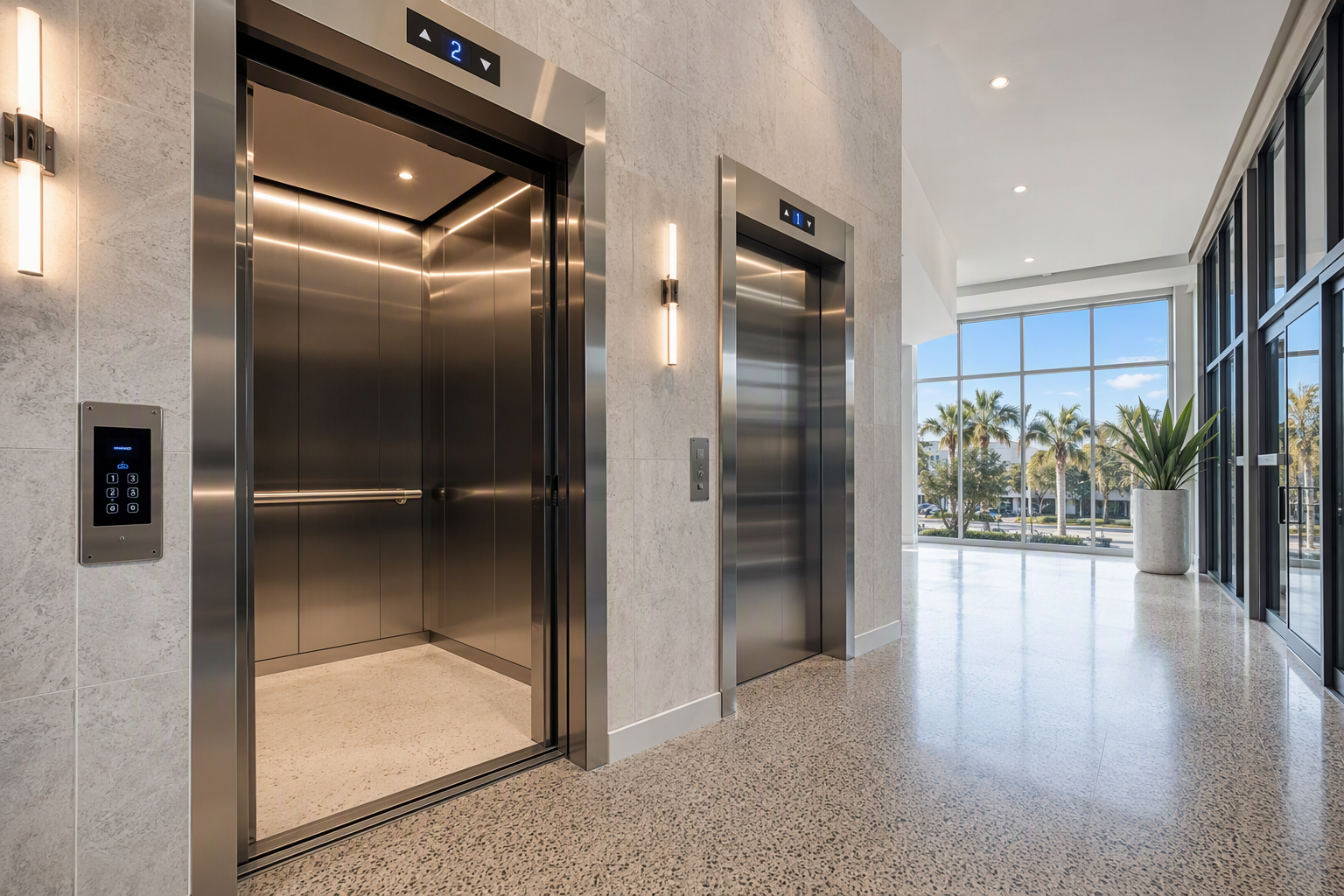
Destination dispatch replaces traditional up/down hall buttons with a keypad or touchscreen where passengers enter their destination floor before boarding. The system groups passengers traveling to the same or adjacent floors into the same car, reducing the number of stops per trip, cutting total travel time, and lowering motor run-cycles over the course of a day. The energy benefit is most pronounced in buildings with ten or more floors and high peak-hour traffic — large office towers, mixed-use retail and office buildings, and hotel-office hybrids. In low-traffic two- or three-stop commercial buildings, the capital outlay rarely justifies the energy return, and simpler dispatch optimization through a modernized controller achieves comparable results at lower cost.
How Does Standby or Sleep Mode Reduce Elevator Operating Costs?
Modern elevator controllers can be programmed to enter a low-power standby state during off-hours — dimming or extinguishing cab lighting, reducing ventilation fan speed, and parking the car at a designated floor to minimize unnecessary travel. For Florida retail buildings that have predictable closing hours and overnight dead periods, standby mode is a straightforward software or controller configuration change that requires no mechanical work. Some older relay-logic controllers cannot support standby programming and must be replaced with a solid-state or microprocessor-based controller before this feature becomes available, making the controller upgrade itself a prerequisite modernization with multiple downstream benefits.
What Florida Regulatory Requirements Apply When You Alter an Elevator for Energy Upgrades?
Under Chapter 399, Florida Statutes (the Elevator Safety Act) and Chapter 61C-5, Florida Administrative Code, a state permit — applied for by a registered elevator company — is required before any alteration to a conveyance. Replacing a drive controller, adding a regenerative unit, or modifying a hydraulic power unit all qualify as alterations. Once the work is complete, the altered elevator must be inspected by a certified elevator inspector who has no conflict of interest with the permit holder or the owner before it is returned to service. The certificate of operation remains valid for no more than two years and must be posted in the cab in a frame with a transparent cover. Operating on an expired certificate violates Florida law.
In Miami-Dade County, permits and inspections flow through the Miami-Dade County Office of Elevator Safety for most municipalities, with the City of Miami Building Department Elevator Division and the City of Miami Beach Elevator Safety Division each running their own programs under delegated authority. In Broward County, the Broward County Building Code Division enforces Chapter 399 through its own inspectors. Building owners outside those jurisdictions fall under state DBPR oversight. Engaging a registered Florida elevator company at the planning stage ensures the permit is filed and the inspection is scheduled correctly from the outset.
All work must comply with the ASME A17.1/CSA B44 Safety Code for Elevators and Escalators, 2019 edition, which Florida adopted effective December 31, 2023 under Chapter 61C-5.
Elevator Energy Upgrade Comparison Table
| Upgrade | Best Suited For | Primary Benefit | Permit Required (FL)? | Relative Capital Cost | Typical Payback Range | Key Limitation |
|---|---|---|---|---|---|---|
| VVVF Motor Drive | Traction elevators with AC motors | Reduces motor energy consumption and demand charges | Yes | Moderate | 3–7 years (varies by trip volume) | Motor must be compatible; may require panel upgrade |
| Regenerative Drive | High-traffic traction elevators, 10+ floors | Returns braking energy to building grid; reduces machine room heat | Yes | Moderate–High | 4–8 years (varies by building load profile) | Requires bidirectional electrical panel capacity |
| Hydraulic Power Unit Replacement | Older hydraulic elevators | Reduces pump motor run-time and energy draw | Yes | Moderate | 3–6 years | May require pit or machine room modifications |
| LED Cab Lighting Retrofit | All elevator types | Lower wattage, less heat, reduced HVAC load | Typically No (confirm with AHJ) | Low | 1–3 years | Cosmetic impact on cab aesthetics if fixtures change |
| Standby / Sleep Mode Controller | Buildings with predictable off-hours | Eliminates idle consumption overnight and on weekends | Yes (if controller replaced) | Low–Moderate | 2–5 years | Requires microprocessor controller; not available on relay-logic systems without replacement |
| Destination Dispatch System | High-traffic, 10+ floor office buildings | Fewer stops per trip, lower daily motor cycles | Yes | High | 5–10 years | Requires full controller replacement; user behavior adjustment |
| Machine-Room-Less (MRL) Conversion | Mid-rise buildings replacing obsolete hydraulic systems | Eliminates hydraulic fluid, reduces heat load, improves efficiency | Yes | High | 6–12 years | Structural and hoistway modifications often required |
Pros and Cons Comparison: Traction vs. Hydraulic Energy Modernization
| Factor | Traction Elevator Modernization | Hydraulic Elevator Modernization |
|---|---|---|
| Primary efficiency lever | VVVF or regenerative drive | Variable-speed pump motor / HPU replacement |
| Heat generation | Reduced significantly with regenerative drive (no resistor banks) | Reduced with submersible unit and soft-start; fluid cooling still needed |
| Florida climate consideration | Machine room cooling savings meaningful year-round | Fluid viscosity affected by ambient temps; submersible units perform more consistently |
| Regulatory complexity | Moderate — drive and controller replacement triggers ASME A17.1 review | Moderate — HPU replacement is an alteration under Chapter 399 |
| Downtime during upgrade | Typically 3–10 business days per elevator | Typically 2–5 business days per elevator |
| Best ROI scenario | High-traffic building, long daily operating hours | Low-to-mid-rise building replacing aging oil-based system |
How Should a Florida Building Owner Prioritize Upgrades When Budget Is Limited?
When a full modernization is not immediately feasible, a logical sequencing approach produces the fastest return:
- Start with LED cab lighting and standby mode programming. These have the lowest capital cost, the shortest payback periods, and — in the case of LED-only swaps — may not require an alteration permit. Confirm the scope with the local authority having jurisdiction before proceeding.
- Replace the motor controller or drive next. A VVVF drive upgrade addresses the largest single energy draw in a traction system and is often bundled with a modernized controller that enables standby features, remote monitoring, and predictive maintenance diagnostics.
- Evaluate regenerative drives at the next major maintenance cycle. Once the controller is modern and the building’s electrical panel has been assessed, the incremental cost of stepping up to a regenerative unit is lower than a standalone installation.
- Consider destination dispatch only when traffic justifies it. Commission a traffic study — either through the elevator contractor or a qualified vertical transportation consultant — before committing to this investment in a mid-rise office or retail building.
Are There Federal Accessibility or Safety Requirements That Intersect With Energy Upgrades?
Yes. Any alteration to an elevator in a commercial building that affects cab dimensions, door hardware, control panel layout, or floor call buttons must comply with Americans with Disabilities Act (ADA) accessibility standards for altered elements. A destination dispatch retrofit, for example, changes the call interface entirely and must meet ADA requirements for reach ranges, tactile controls, and audio signals. Building owners should request an ADA compliance review as part of any modernization scope, not as an afterthought. Separately, work practices during the modernization must comply with OSHA standards for construction and general industry, which the registered elevator company is responsible for enforcing on site.
What Should Florida Building Owners Ask an Elevator Contractor Before Approving an Energy Modernization?
A rigorous pre-approval conversation with any elevator contractor should cover the following points:
- Is the company registered with the Florida DBPR as a registered elevator company, and is registration current for this calendar year?
- Will the company file the state alteration permit before work begins, as required under Chapter 399?
- Who is the certified elevator inspector who will perform the post-modernization inspection, and can the company confirm that inspector has no conflict of interest with the permit holder?
- Does the proposed drive or controller replacement comply with the ASME A17.1/CSA B44, 2019 edition, as adopted in Florida?
- Has the contractor performed a load profile and traffic analysis to confirm the proposed upgrade matches actual building usage patterns?
- What is the plan for maintaining the certificate of operation during and immediately after the alteration?
- Does the scope include an ADA compliance review for any modified cab controls or hall call interfaces?
How Does Florida’s Climate Affect the ROI Calculation for Elevator Energy Upgrades?
Florida’s year-round cooling demand changes the calculus compared to northern markets in two important ways. First, any heat that an elevator system generates — from motor resistors, fluorescent lighting, or hydraulic oil cooling — adds directly to the building’s air-conditioning load. Eliminating that heat source through a regenerative drive or LED lighting retrofit produces a dual saving: the direct reduction in elevator electricity use and the indirect reduction in HVAC energy. Second, Florida’s utility rate structures frequently include demand charges tied to peak consumption during summer months. A VVVF or regenerative drive that flattens the motor’s power draw during peak-hour elevator traffic can meaningfully reduce the demand charge line on a commercial electric bill, shortening the effective payback period compared to a climate where cooling is seasonal.
Why Choose Axxiom Elevator Florida for an Energy Modernization Project?
Axxiom Elevator Florida is an independent certified elevator service company operating exclusively in Florida. As an independent provider, Axxiom is not tied to a single equipment manufacturer, which means modernization recommendations are based on the building’s actual equipment profile and energy goals rather than a preferred product line. Axxiom’s technicians are Florida-certified elevator professionals who understand the permitting pathway through the DBPR, the local authorities in Miami-Dade, Broward, and other Florida jurisdictions, and the compliance requirements under Chapter 399 and the ASME A17.1-2019 code. For building owners weighing the upgrade options described in this guide, an independent assessment is the logical starting point.
Contact Axxiom Elevator Florida for a free elevator assessment at 954-970-0020.
Need elevator service you can rely on? Axxiom Elevator Florida is ready to help.