Freight Elevator Maintenance and Safety Requirements for Florida Warehouse and Industrial Buildings
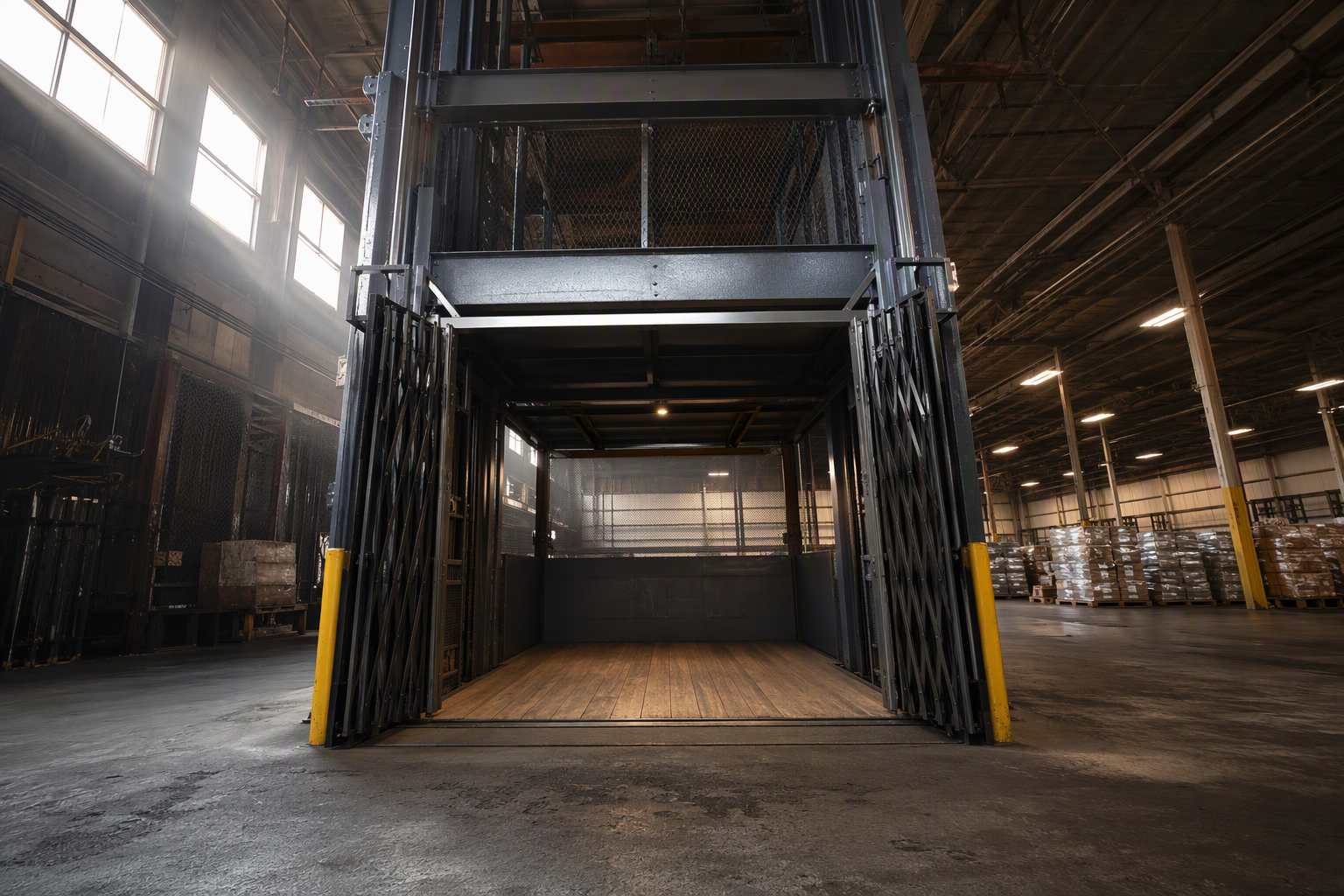
Florida warehouse and industrial buildings depend on freight elevators to move heavy loads safely and efficiently every day. Whether a facility is located in Pompano Beach or Sarasota, the regulatory obligations for freight elevator owners are substantial — and non-compliance can mean work stoppages, liability exposure, and costly corrective orders. This page covers every compliance layer that applies, the questions inspectors ask, and how Axxiom Elevator Florida helps industrial and warehouse operators stay ahead of every requirement.
What Are the Core Legal Requirements for Freight Elevators in Florida Warehouse Buildings?
Florida regulates freight elevators through Chapter 399, Florida Statutes — the Elevator Safety Act — administered by the Florida Department of Business and Professional Regulation (DBPR), Division of Hotels and Restaurants, Bureau of Elevator Safety. The technical standard adopted by Florida is the ASME A17.1/CSA B44 Safety Code for Elevators and Escalators, 2019 edition, effective December 31, 2023.
Key legal obligations for warehouse and industrial freight elevator owners include:
- Obtaining a state permit — applied for by a registered elevator company — before any installation or alteration of a freight conveyance.
- Ensuring that any new conveyance is inspected by a certified elevator inspector with no conflict of interest with the permit holder or the owner before it is placed into service.
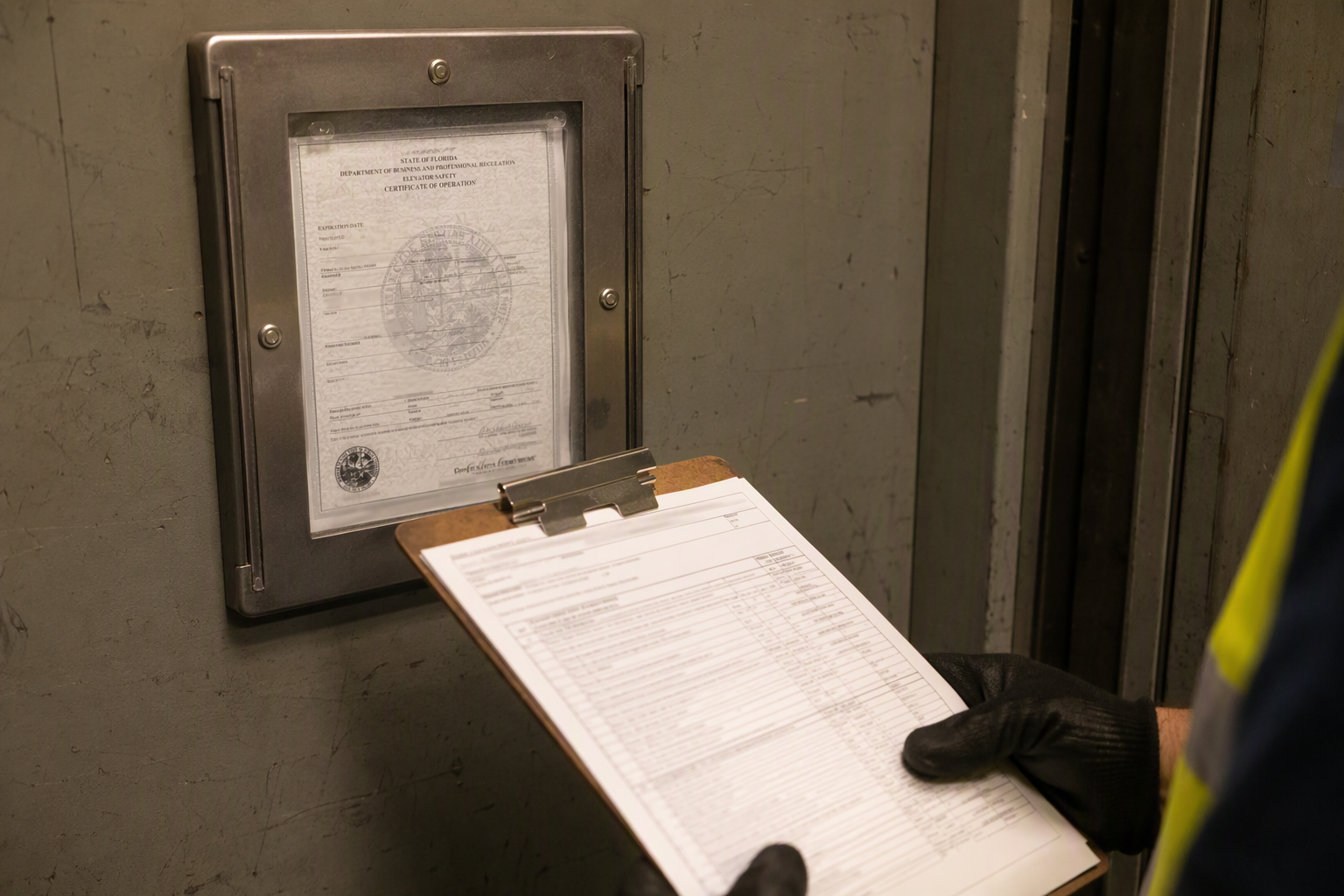
- Maintaining a valid Florida certificate of operation, which is valid for no more than two years and may only be renewed following a satisfactory inspection.
- Posting the certificate of operation in a conspicuous location inside the elevator cab in a frame with a transparent cover.
- Using only Florida-registered elevator companies for all construction, installation, maintenance, and repair work.
- Reporting any elevator accident to the state within five working days of the occurrence.
- Assuming full responsibility, as the certificate holder, for safe operation, proper maintenance, and correction of any code deficiencies identified during inspection.
Which ASME A17.1 Provisions Apply Specifically to Freight Elevators?
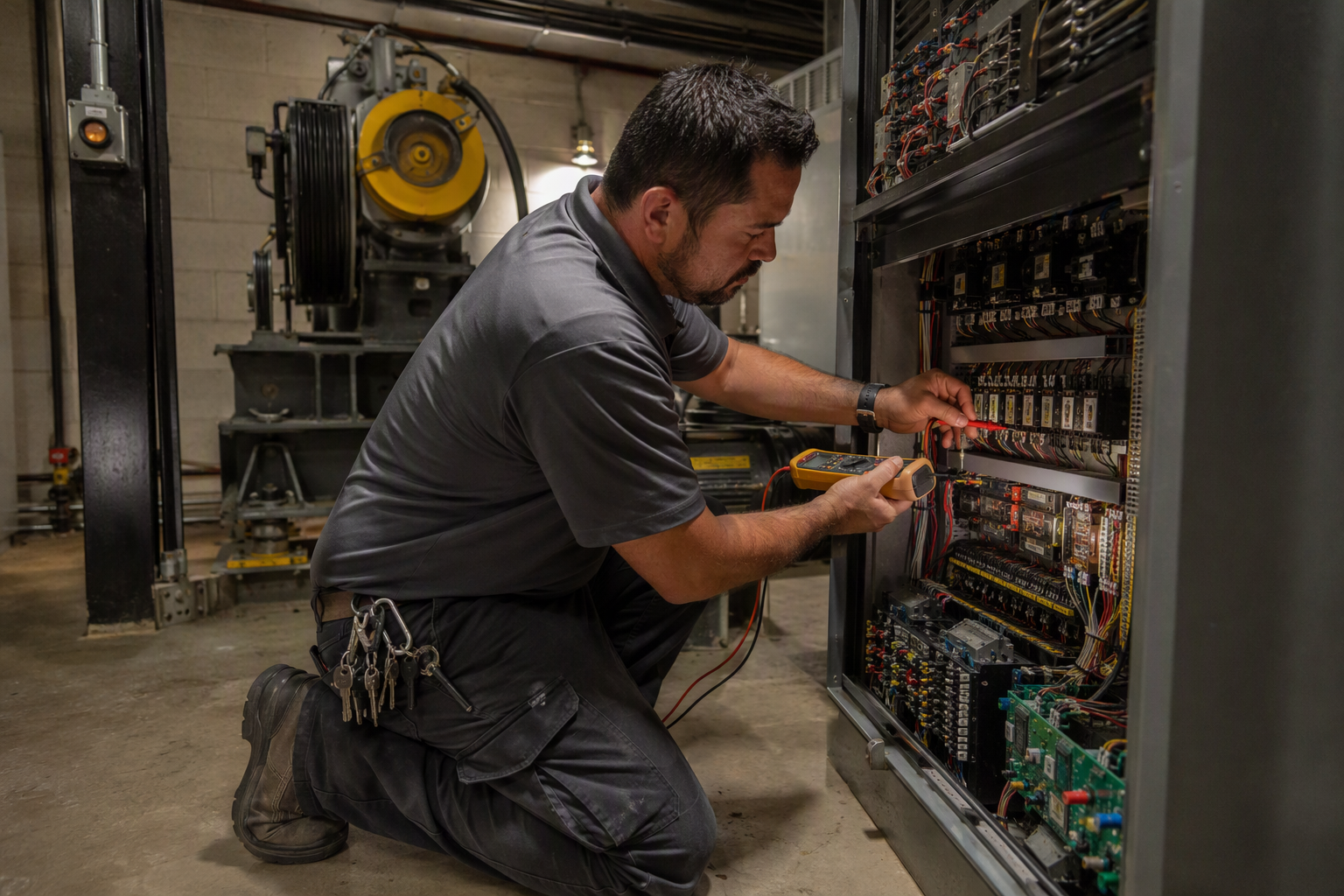
The ASME A17.1-2019 Safety Code for Elevators and Escalators distinguishes freight elevators from passenger elevators in several important ways relevant to warehouse and industrial settings. Freight elevators are classified by loading class — including general freight, industrial truck, and motor vehicle loading — and each class carries specific requirements for platform size, capacity ratings, gate and door configurations, and safety device performance.
Critical ASME A17.1 areas that inspectors evaluate on freight elevators include:
- Rated load and capacity markings clearly displayed inside the cab.
- Proper freight elevator door or gate guarding to prevent shear and crush hazards during loading operations.
- Safety device functionality, including safeties, buffers, and final terminal stopping devices.
- Machine room access, lighting, clearances, and ventilation requirements.
- Adequate pit depth, lighting, stop switches, and ladder access.
- Adequate overhead clearance for the car frame and equipment at the top of the hoistway.
- Wire rope and suspension system condition consistent with ASME standards for the rated load class.
Axxiom Elevator Florida performs maintenance and repair work aligned with the ASME A17.1-2019 code adopted by Florida, helping warehouse operators identify deficiencies before a formal inspection.
How Often Must Freight Elevators in Florida Be Inspected?
Under Chapter 399, Florida Statutes, every elevator covered by the Elevator Safety Act must be inspected annually by a certified elevator inspector — or by a county or municipality operating under contract with the state.
There is a limited exemption: an elevator that serves only two adjacent floors, is not an escalator or dumbwaiter, and is covered by a valid service maintenance contract is exempt from the annual inspection requirement while that contract remains active. However, most multi-floor freight elevators in warehouse and industrial buildings do not qualify for this exemption and remain subject to the annual inspection requirement.
Florida certificates of operation are valid for no more than two years. Operating on an expired certificate is a violation of state law, and a certificate may only be renewed after a satisfactory inspection. Local authorities in Broward County — including Pompano Beach — enforce Chapter 399 through the Broward County Building Code Division, which deploys its own certified elevator inspectors.
Do ADA Requirements Apply to Freight Elevators in Industrial Warehouse Facilities?
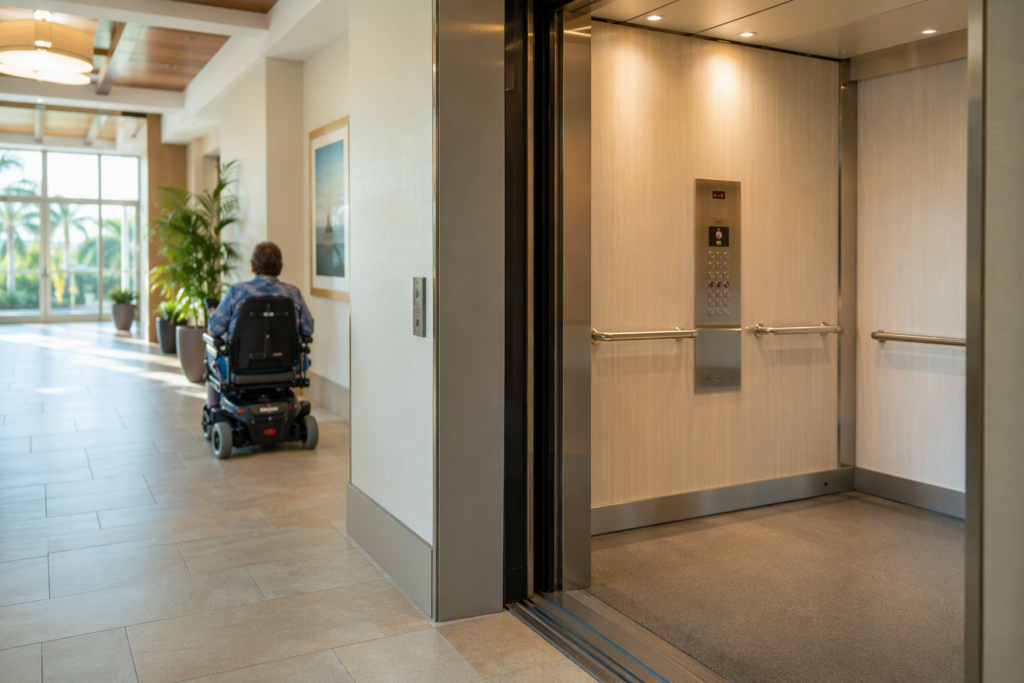
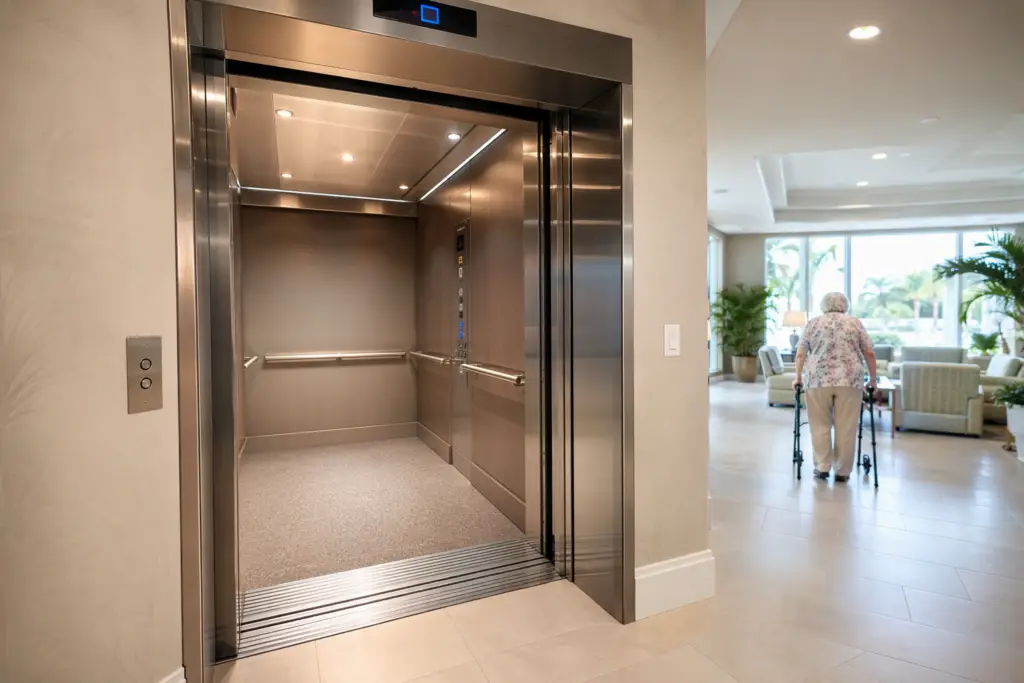
The Americans with Disabilities Act (ADA) requires that new construction and alterations to facilities open to employees and the public provide accessible routes. Where an elevator is the accessible means of vertical travel, it must meet ADA Standards for Accessible Design — including requirements for cab dimensions, control button height and labeling, door timing, and floor designation signage.
Freight-only elevators used exclusively for freight and operated only by employees are generally not required to comply with ADA elevator standards under the freight elevator exception. However, if a freight elevator serves as part of the accessible route for employees with disabilities or is used by the public at any point, ADA compliance obligations attach. Warehouse and industrial facility owners should verify intended use with qualified legal counsel and work with a Florida-registered elevator company to assess their specific configuration.
Axxiom Elevator Florida assists facility operators in Sarasota and Pompano Beach in evaluating how ADA obligations interact with their existing freight elevator configurations.
What Role Does OSHA Play in Warehouse Freight Elevator Safety?
The Occupational Safety and Health Administration (OSHA) sets federal workplace safety standards that apply to freight elevator operations in warehouse and industrial environments. OSHA requirements address employee safety during freight elevator operation, loading procedures, and maintenance activities. Employers are obligated to ensure that employees who operate freight elevators are trained in safe operating procedures, that equipment is maintained in safe working condition, and that hazardous conditions are corrected promptly.
OSHA standards and Florida elevator code requirements operate in parallel — compliance with one does not automatically satisfy the other. Warehouse operators should maintain records demonstrating both OSHA compliance and current DBPR certificate of operation status.
Who Is Authorized to Maintain or Repair Freight Elevators in Florida?
Florida law is explicit: all construction, installation, maintenance, and repair of conveyances covered by Chapter 399 must be performed by a Florida-registered elevator company. A Florida registered elevator company must register with the state annually and maintain general liability insurance.
The individual technicians performing the work must hold a Florida elevator certificate of competency, issued by the state, which authorizes them to construct, install, maintain, or repair conveyances. These certificates expire after one year and are renewed only with proof of eight hours of continuing education. Florida certified elevator inspectors — the individuals who conduct code-required inspections — must also maintain their credentials annually and demonstrate eight hours of continuing education.
Hiring an unregistered contractor for freight elevator work exposes a warehouse operator to regulatory liability and may void the certificate of operation. Axxiom Elevator Florida operates as a Florida-registered elevator company serving industrial and warehouse facilities across Pompano Beach, Sarasota, and surrounding markets.
What Happens If a Freight Elevator Accident Occurs at a Florida Warehouse?
Under Florida law, the certificate of operation holder — the elevator owner or operator — must report any elevator accident to the state within five working days of the incident. Failure to report is a violation of Chapter 399.
After a freight elevator accident, the recommended protocol for warehouse operators is:
- Secure the elevator immediately and take it out of service to prevent further injury or property damage.
- Provide emergency medical assistance to any injured persons and contact emergency services as needed.
- Preserve the scene as much as possible without interfering with emergency response.
- Notify the certificate holder’s designated contact to begin the state accident reporting process.
- Report the accident to the Florida DBPR Bureau of Elevator Safety within five working days as required by Chapter 399.
- Contact a Florida-registered elevator company to conduct a maintenance inspection and assess the cause before the elevator returns to service.
- Document all findings, corrective actions, and communications for regulatory and insurance purposes.
What Maintenance Records Should Warehouse Operators Keep for Freight Elevators?
Although Florida law places the responsibility for safe operation, proper maintenance, and correction of code deficiencies on the certificate of operation holder, specific recordkeeping formats are governed by Chapter 399 and Chapter 61C-5 of the Florida Administrative Code. Warehouse operators should maintain documentation that demonstrates:
- Current, valid certificate of operation posted in the cab with a transparent cover.
- History of annual inspection reports and any corrective orders issued.
- Records of maintenance and repair work performed by the registered elevator company.
- Documentation of any alterations, including the permits obtained from DBPR before work began.
- Accident reports filed with the state within the required five-working-day window.
- Active service maintenance contract, if the two-adjacent-floor inspection exemption applies.
Well-organized records are the first line of defense during an inspector’s visit and in the event of an OSHA investigation.
Are There Special Considerations for Older Freight Elevators in Legacy Warehouse Buildings?
Many warehouse and industrial buildings in Pompano Beach and Sarasota were constructed decades ago and contain freight elevators installed to earlier code editions. Florida’s adoption of the ASME A17.1-2019 edition, effective December 31, 2023, may introduce requirements that did not apply when older equipment was installed.
Additionally, ASME A17.3, the Safety Code for Existing Elevators and Escalators, provides standards specifically designed to address existing installations that predate current code requirements. Warehouse operators with legacy freight elevators should work with a Florida-registered elevator company to assess which ASME A17.3 provisions apply and what upgrades may be required or advisable to meet current safety expectations.
Axxiom Elevator Florida conducts assessments of existing freight elevator systems to help warehouse and industrial building owners understand their current compliance posture and plan for any necessary modernization work.
Questions Your Inspector Will Ask
Florida certified elevator inspectors — whether from the DBPR Bureau of Elevator Safety, the Broward County Building Code Division (for Pompano Beach facilities), or a delegated local authority — arrive with a structured checklist. Warehouse operators should be prepared to answer and demonstrate the following:
- Is the current certificate of operation posted in the cab in a frame with a transparent cover? An unposted or expired certificate is an immediate violation.
- Who is the registered elevator company currently under contract for maintenance? The inspector will verify the company holds a valid Florida registration.
- Has the elevator been altered since the last inspection? Any alteration requires a state permit obtained before work began.
- Are all safety devices — safeties, buffers, interlocks — functional and tested? Inspectors will test these in the field.
- Is the rated load capacity clearly posted inside the cab? ASME A17.1 requires this for freight elevators.
- Is the machine room locked, properly lit, and clear of stored materials? Machine room conditions are a common deficiency in warehouse settings.
- Is the pit properly lit, equipped with a working stop switch, and free of water accumulation and debris?
- Have any accidents or incidents been reported to the state within the required five working days?
- Are all hoistway doors, gates, and interlocks in proper working order for the freight loading class?
- Is the elevator’s wire rope and suspension system within acceptable wear limits for the rated load?
Preparing documented answers and physical evidence for each of these items before inspection day significantly reduces the risk of a corrective order or suspension of the certificate of operation.
How Does Local Authority Jurisdiction Affect Freight Elevator Compliance in Pompano Beach?
For warehouse and industrial facilities located in Pompano Beach, the local authority having jurisdiction (AHJ) for elevator inspections is the Broward County Building Code Division. Broward County enforces Florida’s elevator law — Chapter 399 — through its own certified elevator inspectors. Operators in Pompano Beach should direct permit applications, inspection requests, and certificate of operation matters through the Broward County Building Code Division rather than the state DBPR office directly.
For facilities in Sarasota, inspection and certificate of operation matters are handled through the state DBPR Bureau of Elevator Safety framework, as Sarasota County does not appear among the counties with delegated local elevator enforcement authority. Operators should confirm the applicable AHJ with Axxiom Elevator Florida or directly with the DBPR at the outset of any permit or inspection process.
What Is the Difference Between a Maintenance Contract and a Full Compliance Program for Freight Elevators?
A service maintenance contract covers scheduled preventive maintenance visits — lubrication, adjustments, safety device testing, and minor repairs — to keep a freight elevator in reliable operating condition. For two-adjacent-floor elevators meeting the statutory criteria, a valid maintenance contract also triggers the annual inspection exemption under Chapter 399.
A full compliance program extends beyond routine maintenance to include pre-inspection audits, permit management for alterations, coordination with the AHJ, accident reporting support, and documentation management. For warehouse and industrial operators managing multiple freight elevators across a facility, a comprehensive compliance approach reduces the risk of unexpected corrective orders, certificate suspensions, and operational disruptions.
Axxiom Elevator Florida offers maintenance and compliance support tailored to the operational demands of warehouse and industrial freight elevator environments in the Pompano Beach and Sarasota markets.
Schedule Your Free Freight Elevator Assessment
Freight elevator compliance in Florida warehouse and industrial buildings involves intersecting federal, state, and local requirements that change as code editions are adopted and certificates expire. A missed inspection, an expired certificate of operation, or an undocumented alteration can result in regulatory action and operational downtime at exactly the wrong moment.
Contact Axxiom Elevator Florida for a free elevator assessment to review your current compliance status, identify any deficiencies, and develop a maintenance plan aligned with Florida’s freight elevator requirements. Serving Pompano Beach, Sarasota, and surrounding Florida markets.
Call Axxiom Elevator Florida today:
Need elevator service you can rely on? Axxiom Elevator Florida is ready to help.