Elevator Service in Pompano, FL | Axxiom Elevator Florida
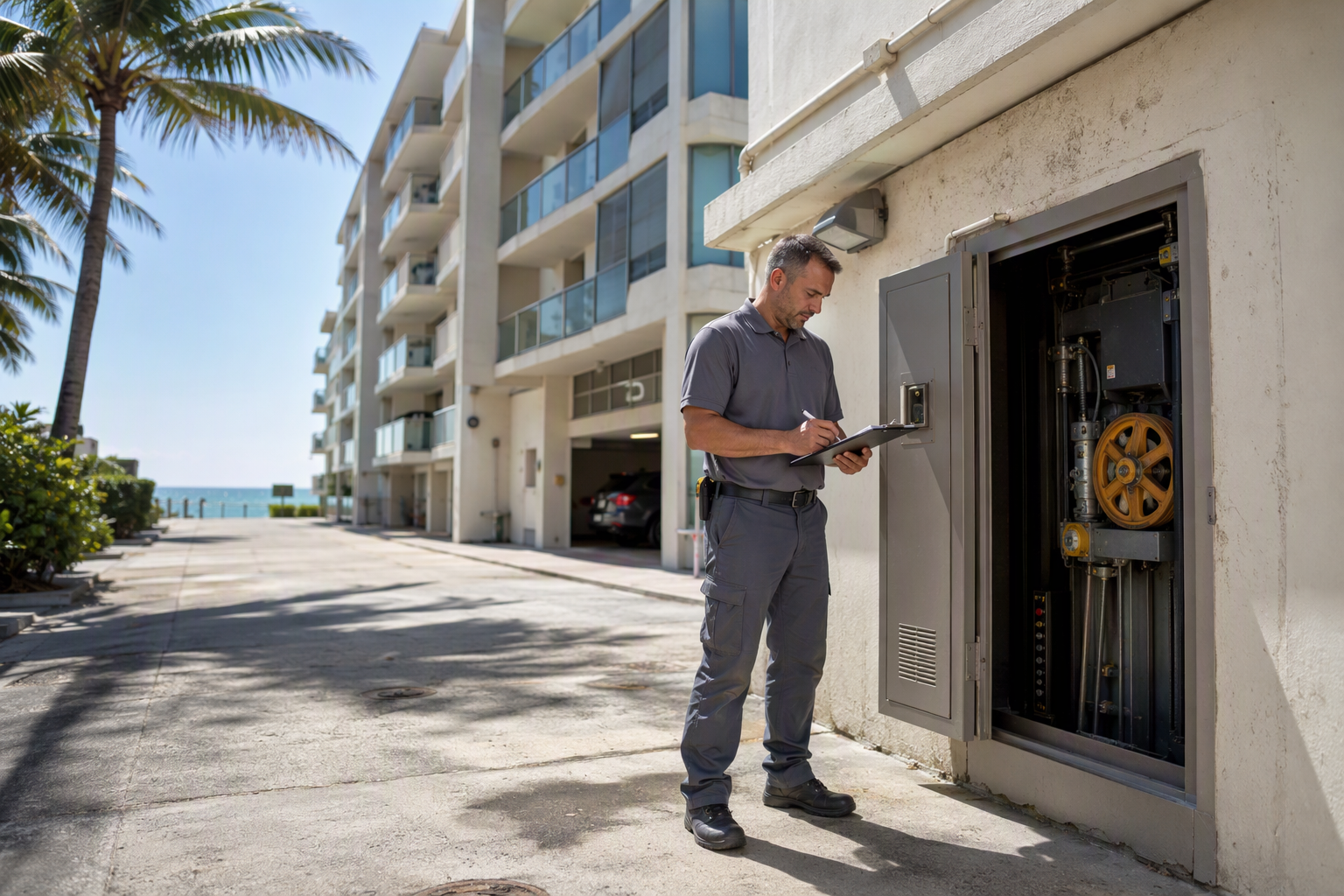
Coastal buildings in Pompano Beach and throughout Broward County face an accelerated elevator aging environment that inland properties simply do not. Salt-laden air and consistently high humidity infiltrate elevator shafts, machine rooms, and pit areas, attacking metal surfaces, electrical systems, and moving parts simultaneously. Axxiom Elevator Florida provides certified elevator maintenance, repair, and compliance services tailored specifically to the coastal Florida environment — helping building owners in Pompano Beach and surrounding communities protect their equipment and stay current with state law.
What Elevator Problems Does Salt Air Cause in Florida Coastal Buildings?
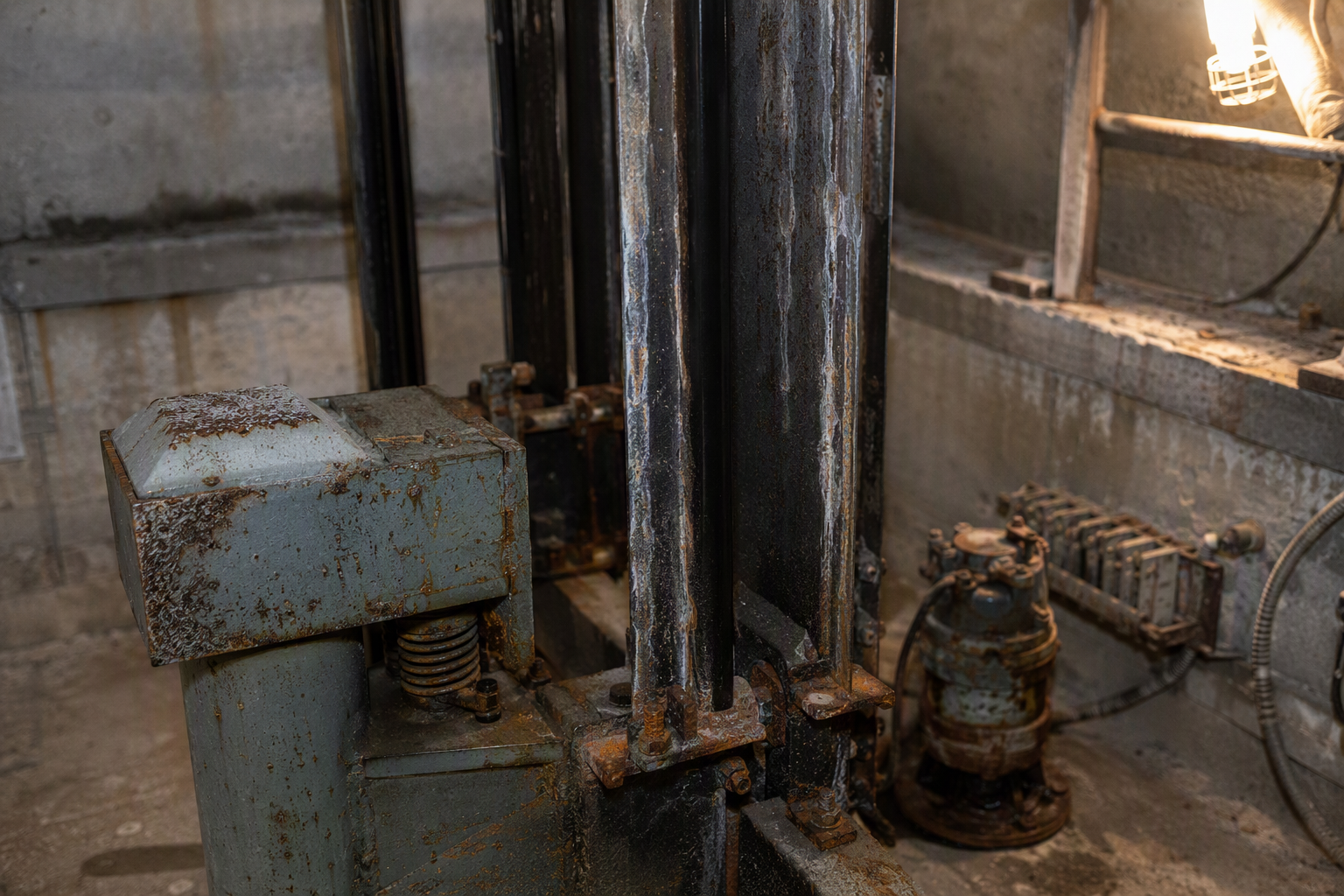
Salt air and high humidity create a uniquely hostile environment for elevator systems. The most commonly observed damage in Florida coastal buildings includes:
- Hoist rope and cable corrosion: Steel cables absorb salt moisture and begin oxidizing from the inside out. Surface rust is often only a visible indicator of deeper internal degradation.
- Pit flooding and moisture intrusion: Elevator pits in coastal buildings are especially prone to water infiltration, which accelerates corrosion of buffers, rails, and safety components at the lowest point of the hoistway.
- Electrical contact oxidation: Control boards, relay contacts, and terminal connections corrode when exposed to salt-humid air, causing intermittent faults, nuisance shutdowns, and communication errors.
- Door operator deterioration: Door tracks, rollers, and linkages suffer faster wear in humid salt environments, leading to misalignment, slow response, and door-related entrapment risks.
- Bearing and guide rail wear: Lubrication films break down more rapidly in humid conditions, and salt particles act as an abrasive, accelerating wear on guide rails, roller guides, and machine bearings.
- Controller and drive unit degradation: Solid-state drives and variable-frequency drive units are sensitive to moisture and salt particulate contamination, which can cause erratic behavior or premature component failure.
How Can Building Owners in Pompano Beach Prevent Coastal Elevator Damage?
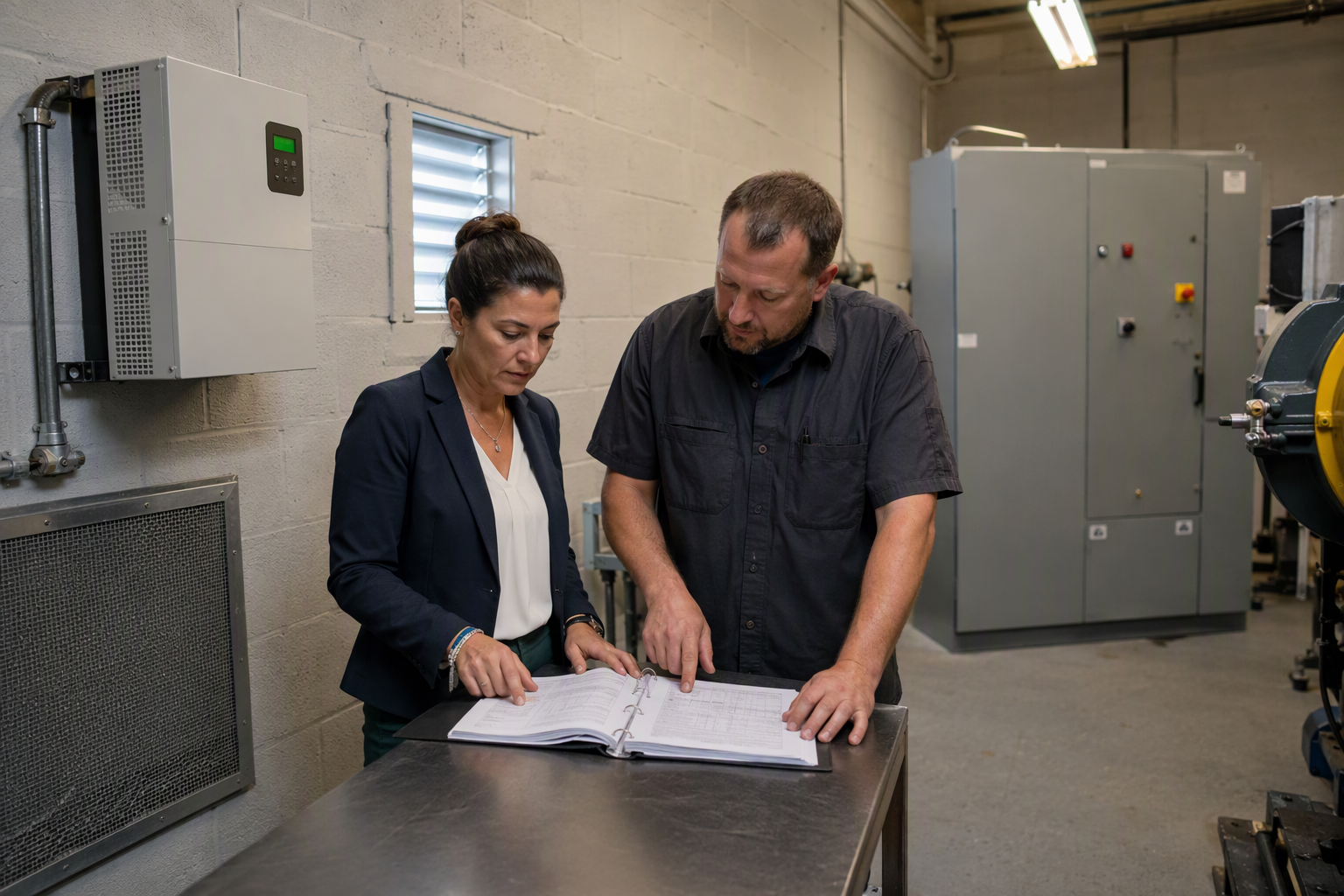
Prevention in a coastal Florida environment requires a strategy that goes beyond standard maintenance intervals. Axxiom Elevator Florida recommends a layered approach for Pompano Beach and Broward County properties:
- Schedule more frequent inspections of the pit area to catch early moisture intrusion, corrosion on buffers, and deteriorating sump pump systems before structural damage occurs.
- Apply marine-grade or corrosion-resistant lubricants to guide rails, ropes, and mechanical linkages, replacing standard lubricants that break down faster in humid salt air.
- Seal or weatherstrip machine room ventilation openings with filtered covers that block salt particulate while maintaining required airflow for equipment cooling.
- Install dehumidification systems in machine rooms and pits to maintain stable, lower relative humidity and reduce the rate of electrochemical corrosion.
- Upgrade exposed steel components to stainless steel or powder-coated alternatives where code-compliant substitutions are available.
- Implement a documented preventive maintenance contract that includes visual inspection of all electrical contacts, cable condition assessment, and door operator adjustments at each visit.
- Monitor and test the pit sump pump regularly, ensuring drainage is functional before storm season, a critical but often overlooked step in coastal building elevator maintenance.
- Review the certificate of operation to confirm it remains valid and is posted conspicuously in the elevator cab with a transparent cover, as required under Florida law.
What Does Florida Law Require for Elevator Maintenance and Inspection?
Florida’s elevator program is governed by Chapter 399, Florida Statutes (the Elevator Safety Act), administered by the Florida Department of Business and Professional Regulation (DBPR), Division of Hotels and Restaurants, Bureau of Elevator Safety. Florida has adopted the ASME A17.1/CSA B44 Safety Code for Elevators and Escalators, 2019 edition, with certain exclusions, effective December 31, 2023.
Key compliance obligations for elevator owners in Pompano Beach include:
- Every elevator covered by Chapter 399 must be inspected annually by a certified elevator inspector. An elevator that serves only two adjacent floors and is covered by a service maintenance contract qualifies for an exemption from this annual inspection while the contract is in effect.
- A Florida certificate of operation is valid for no more than two years. It may be renewed only when the elevator has a current satisfactory inspection. Operating on an expired certificate violates state law.
- The certificate of operation must be posted in a conspicuous location in the elevator cab, in a frame with a transparent cover.
- The elevator owner is responsible for safe operation, proper maintenance, and correction of any code deficiencies once a certificate of operation has been issued.
- Any elevator accident must be reported to the state within five working days.
- All installation and alteration work requires a state permit, applied for by a registered elevator company, before work begins.
In Pompano Beach specifically, the Broward County Building Code Division enforces Florida’s elevator law through its own elevator inspectors under authority delegated by the state. Building owners should coordinate compliance matters with both the DBPR Bureau of Elevator Safety and Broward County’s local authority.
How Does Humidity Affect Elevator Electrical Systems Specifically?
Elevator control systems in coastal Florida buildings are particularly vulnerable to humidity because modern solid-state controllers, microprocessor boards, and variable-frequency drives were designed with controlled-environment machine rooms in mind. Salt-humid air introduces conductive moisture and corrosive particles onto circuit boards and terminal strips, causing resistive shorts, ground faults, and communication failures that are intermittent and difficult to diagnose.
Preventive electrical maintenance in a coastal environment should include periodic cleaning of control cabinet interiors, application of conformal protective coatings on circuit boards where the manufacturer permits, and verification that machine room sealing and climate control is functioning. These steps reduce the likelihood of nuisance shutdowns and unexpected outages that displace residents or tenants.
Are Elevator Hoist Ropes and Cables More at Risk in Coastal Areas?
Yes. Steel wire ropes used in traction elevator systems are especially susceptible to internal corrosion in coastal Florida environments because salt moisture penetrates the rope’s core and attacks individual wires from within, well before visible surface rust appears. Standard visual inspection may not detect this internal deterioration without closer examination or testing methods appropriate to the rope’s condition and age.
Building owners should discuss rope inspection intervals with their certified elevator service provider and ensure that rope lubrication is performed with products suited to high-humidity, salt-air conditions. Axxiom Elevator Florida’s technicians are trained to recognize the signs of coastal rope degradation during scheduled maintenance visits.
What Is the Role of a Preventive Maintenance Contract in Coastal Elevator Care?
A service maintenance contract is a core tool for protecting elevator equipment in Florida’s coastal climate. Beyond fulfilling the conditions for the two-floor inspection exemption under Chapter 399, a well-structured contract ensures that corrosion-prone components are inspected and treated on a schedule appropriate to the building’s environment — not just at annual compliance intervals.
Contracts for coastal properties should specify the frequency of pit inspections, the lubricant types approved for salt-air conditions, and documentation of all findings and corrective actions. This documentation record also supports the building owner’s obligation to correct code deficiencies promptly and demonstrates due diligence if a DBPR inspection or Broward County review occurs.
Does the ADA Affect Elevator Maintenance Obligations in Florida?
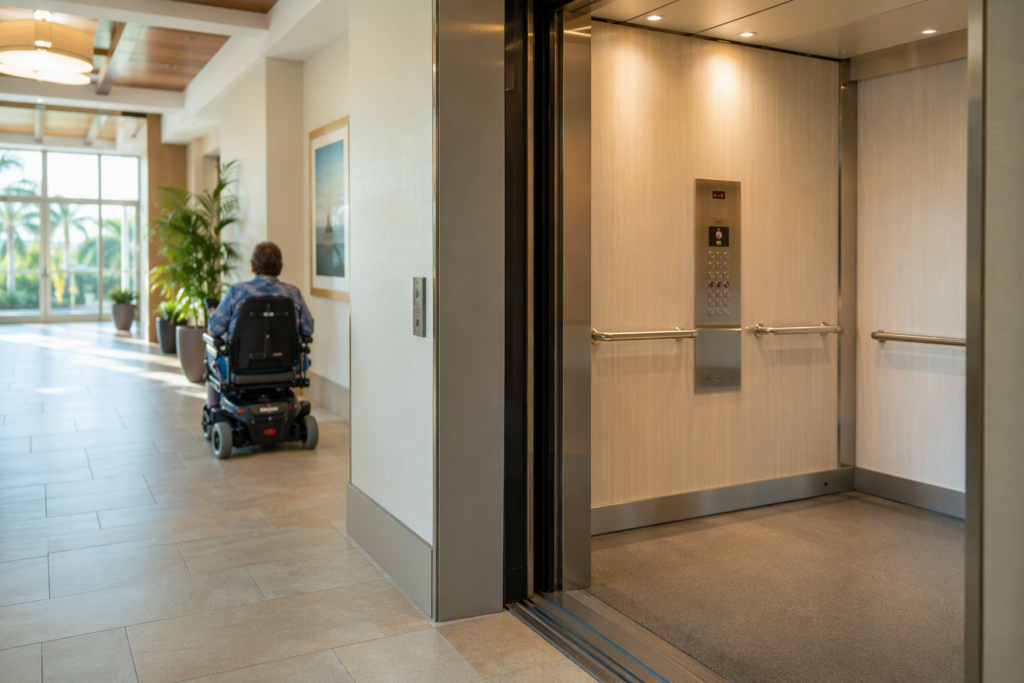
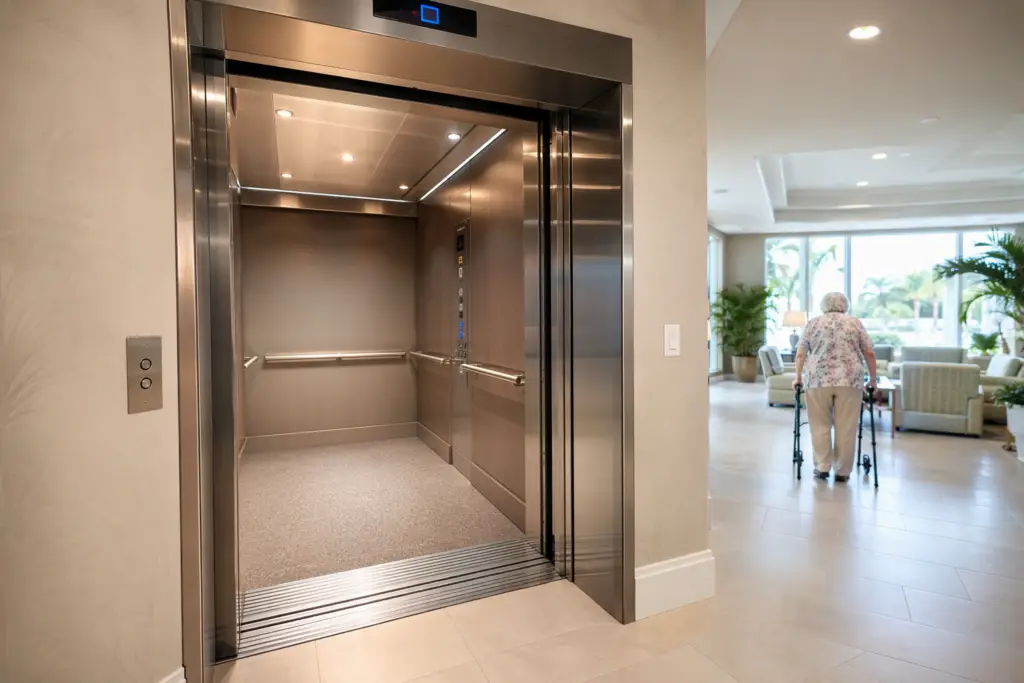
Yes. The Americans with Disabilities Act (ADA) requires that elevators in covered facilities remain accessible and operational. While the ADA does not set elevator maintenance schedules, it does impose obligations on building owners to keep accessible means of vertical travel functional. Coastal damage that puts an elevator out of service — or causes door malfunctions that impede access — can create ADA compliance exposure in addition to state code issues.
Axxiom Elevator Florida advises Pompano Beach building owners to treat elevator reliability in coastal environments as both a safety and accessibility obligation, with preventive maintenance serving both goals simultaneously.
How Do I Choose a Qualified Elevator Service Company for a Coastal Florida Building?
Florida law requires that all elevator maintenance, repair, and installation work be performed by a registered elevator company whose technicians hold a Florida elevator certificate of competency. These credentials are renewed annually through the DBPR, and technicians must complete continuing education as a condition of renewal.
When evaluating a service provider for a coastal Broward County property, building owners should confirm that the company:
- Is registered as an elevator company with the DBPR and maintains current general liability insurance.
- Employs certified elevator technicians with active Florida certificates of competency.
- Has demonstrated familiarity with the accelerated maintenance demands of coastal, salt-air environments.
- Provides clear documentation of all maintenance visits, findings, and repairs.
- Can assist with certificate of operation renewals and DBPR or Broward County inspection coordination.
Axxiom Elevator Florida is a state-registered elevator company serving Pompano Beach, Broward County, and surrounding coastal Florida communities. The team is experienced with the specific demands of beachfront and waterfront high-rise buildings where humidity and salt air accelerate equipment wear beyond typical inland rates.
Schedule a Free Consultation
Protect your coastal building’s elevator from salt air and humidity damage. Axxiom Elevator Florida works with Pompano Beach property owners, HOAs, and building managers to develop maintenance programs designed for Florida’s demanding coastal environment — and to keep every elevator fully compliant with Chapter 399, Florida Statutes and Broward County requirements.
Call Axxiom Elevator Florida today to schedule your free consultation:
Need elevator service you can rely on? Axxiom Elevator Florida is ready to help.