Elevator Upgrades and Accessibility Features Florida Senior Living Facilities Need to Meet Code
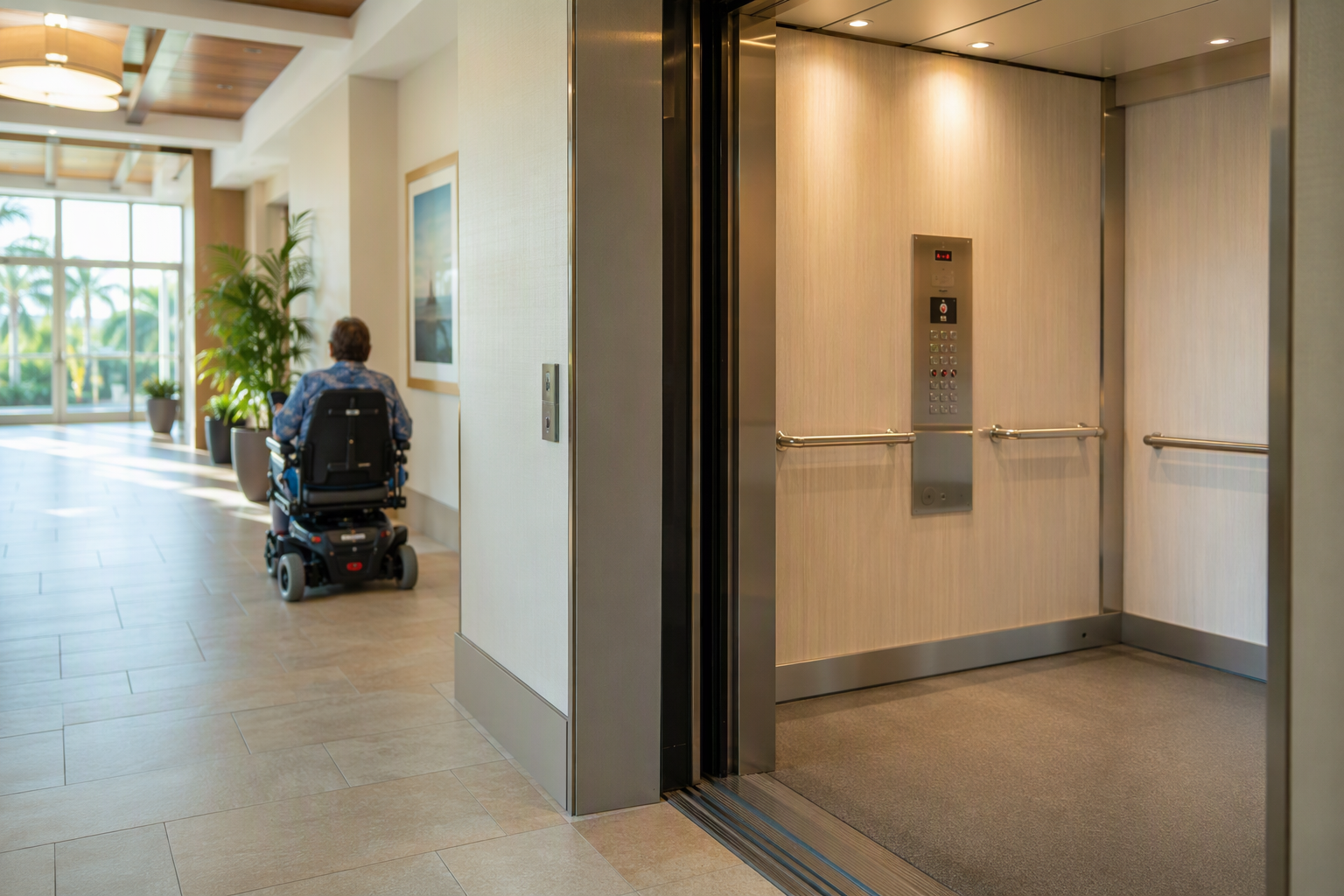
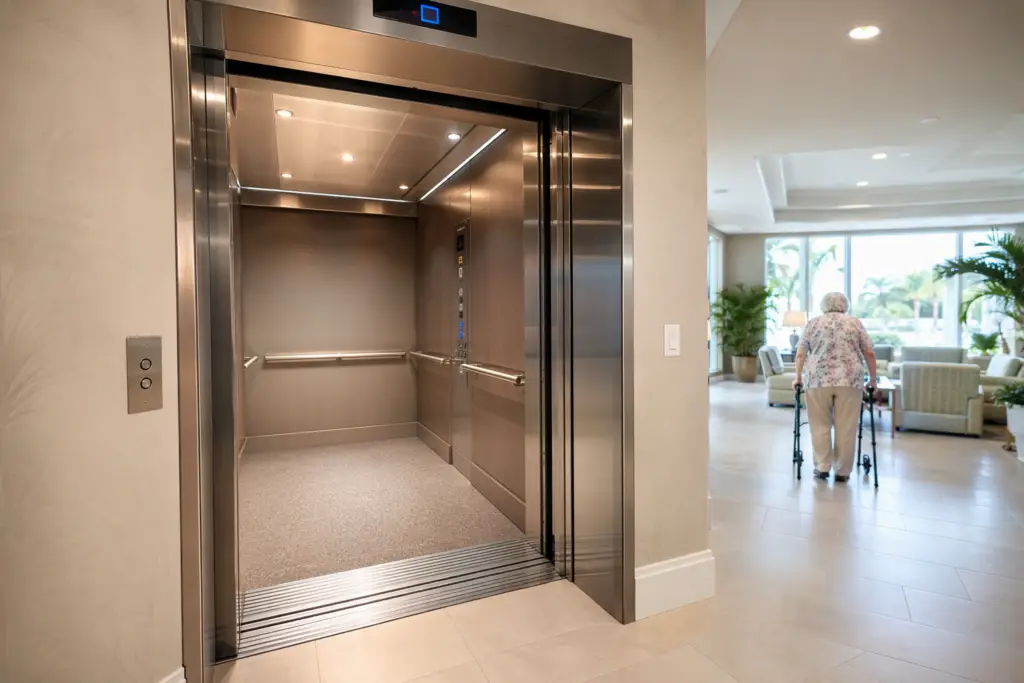
Senior living and assisted living communities in Florida face a distinct combination of regulatory obligations. Residents depend on elevators not just for convenience but for daily mobility, medication access, and emergency evacuation. A code deficiency in this environment is not merely a compliance problem — it is a direct safety risk for vulnerable residents. The sections below map out every major requirement and upgrade category that facility managers, administrators, and maintenance directors in markets like Pompano Beach and Sarasota need to understand heading into 2026.
What federal accessibility standards apply to Florida assisted living elevator requirements?
The Americans with Disabilities Act (ADA) sets the federal floor for accessibility in any facility that qualifies as a place of public accommodation or a commercial facility — a category that includes most assisted living and senior living communities open to prospective residents and their families.
Under ADA Standards for Accessible Design, passenger elevators serving more than one floor must meet minimum requirements in several areas:
- Cab interior dimensions: A minimum clear floor space to allow wheelchair turning and transfer is required. The standard specifies minimum inside car dimensions so that a wheelchair user can enter, turn, and reach controls independently.
- Hall call buttons: Must be located at a height accessible from a wheelchair, with tactile indicators and visual signals.
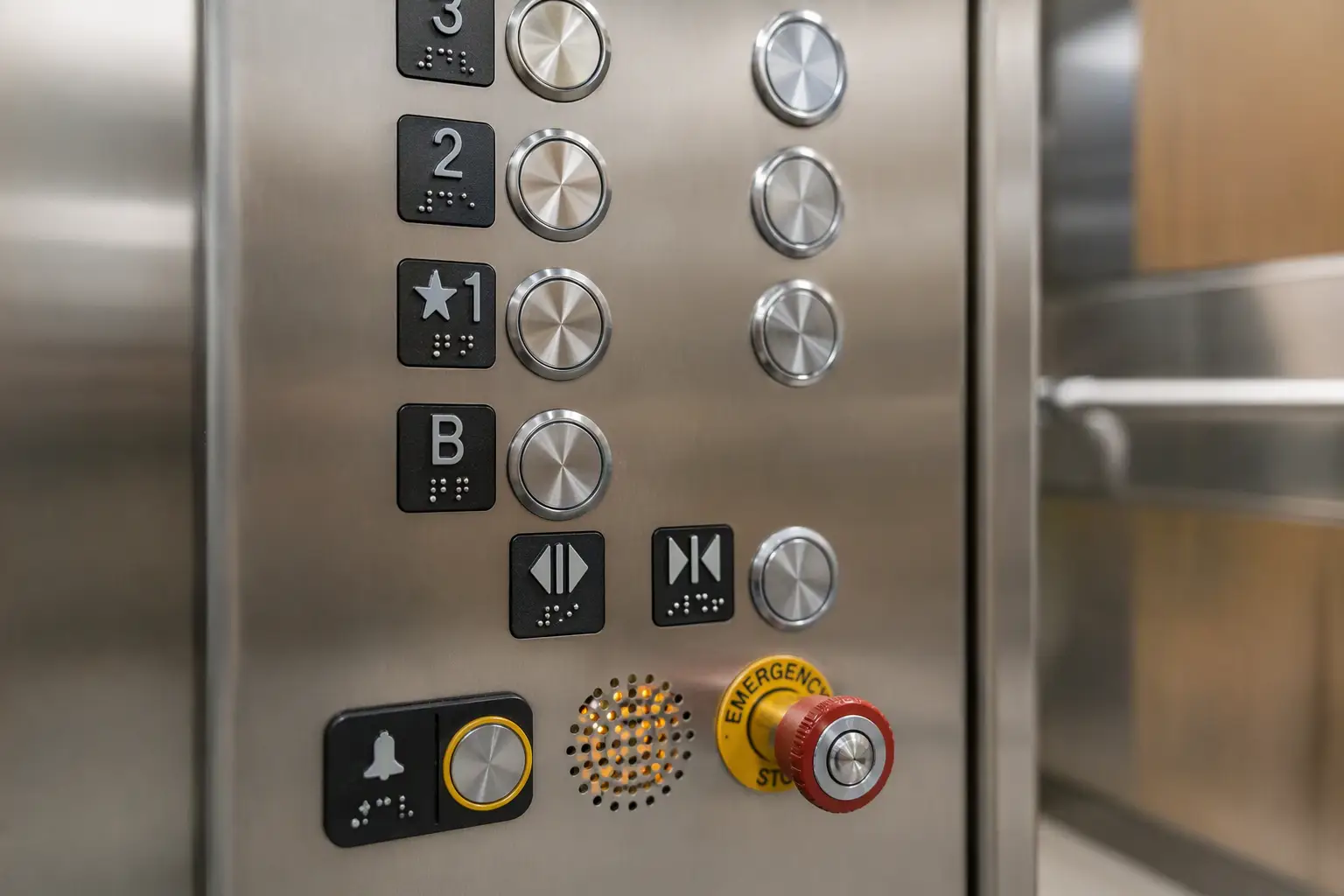
- Car controls: Must be within accessible reach ranges, labeled in Braille and raised characters, and include a two-way emergency communication system that does not require voice communication if voice is not feasible for the user.
- Door reopening devices: Elevator doors must reopen automatically if obstructed by a person or object during closing — a critical feature for residents using walkers, wheelchairs, or mobility aids.
- Leveling accuracy: The cab must stop level with the floor landing so that wheelchairs, walkers, and rollators cross without a bump or gap.
- Illumination and signage: Visual floor indicators inside the cab and audible signals at each landing are required.
For facilities that underwent new construction or alterations after specific ADA effective dates, these requirements are mandatory rather than aspirational. Older properties undergoing renovation trigger “path of travel” obligations, meaning accessible elevator features must be brought into compliance as part of the project.
What does Florida state law require for elevator inspections and certificates at senior living facilities?
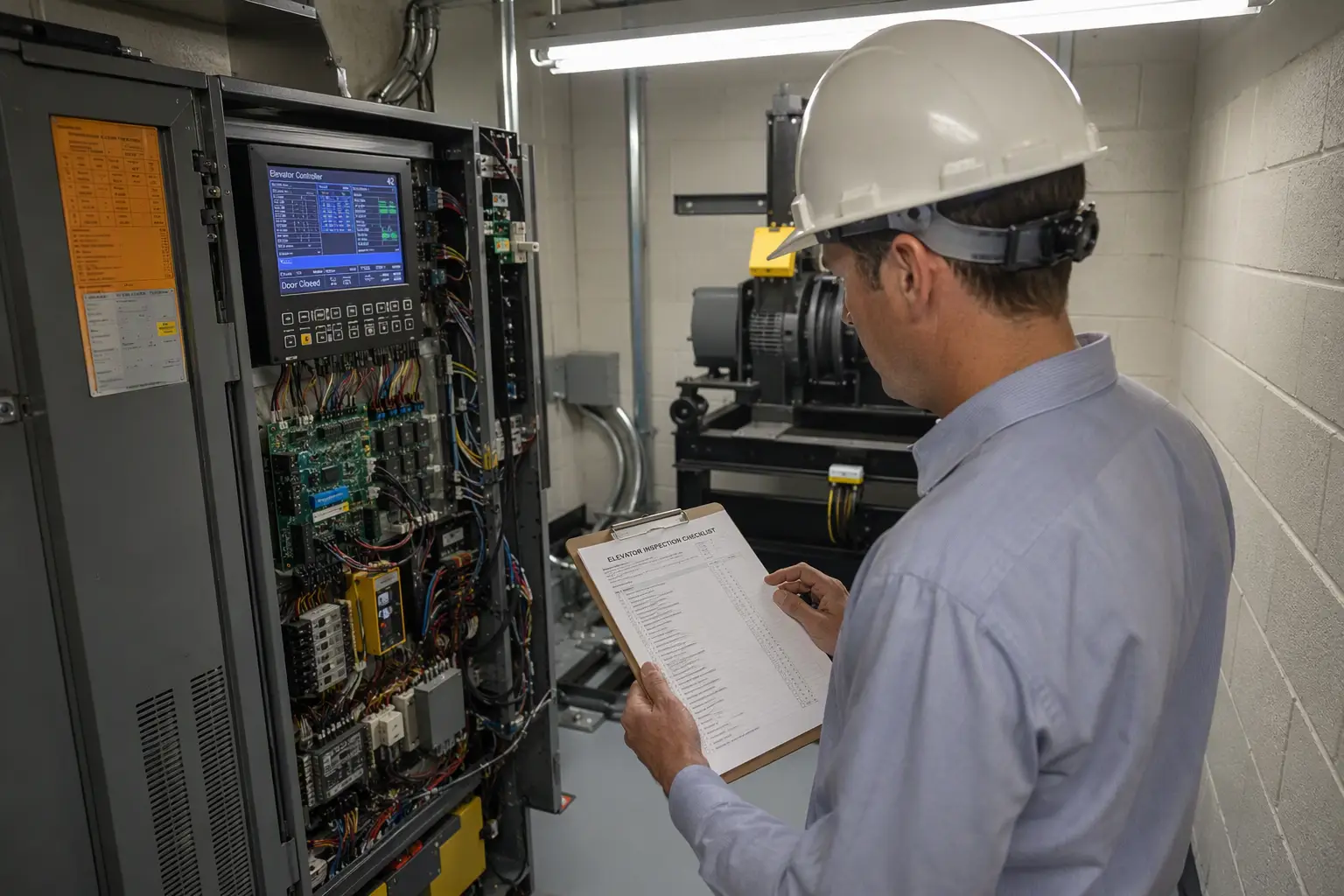
Under Chapter 399, Florida Statutes (the Elevator Safety Act), every elevator covered by the statute must be inspected annually by a certified elevator inspector. Florida’s adopted code is the ASME A17.1/CSA B44, 2019 edition, which became effective in Florida on December 31, 2023.
Key state obligations for senior living facility operators include:
- A Florida certificate of operation is valid for no more than two years and may only be renewed after a current satisfactory inspection.
- The certificate of operation must be posted inside the elevator cab in a frame with a transparent cover — inspectors will look for this immediately upon entering the car.
- Operating on an expired certificate of operation is a violation of state law.
- Any elevator accident must be reported to the state within five working days by the certificate of operation holder.
- Before any elevator is installed or altered, a state permit must be obtained by a registered elevator company. All installation and alteration work must be performed by a Florida-registered elevator company using Florida-certified elevator technicians.
In Pompano Beach, the local authority having jurisdiction (AHJ) is the Broward County Building Code Division, which enforces Chapter 399 through its own elevator inspectors. Facilities in Sarasota are subject to state oversight through the Florida Department of Business and Professional Regulation (DBPR), Division of Hotels and Restaurants, Bureau of Elevator Safety.
Axxiom Elevator Florida works with facility managers across both markets to ensure elevators hold current certificates of operation and that all permit, inspection, and documentation requirements are met before state or county deadlines.
What ASME A17.1 safety features are most critical for a senior care elevator environment?
The ASME A17.1 Safety Code for Elevators and Escalators addresses mechanical, electrical, and operational safety. In a senior living environment, several provisions carry heightened importance:
- Door safety systems: Multi-beam or light-curtain door sensors detect obstructions across the full height of the door opening, not just at a single point. This is especially important for residents using oxygen equipment, IV poles, or wide wheelchairs.
- Emergency lighting and power: The cab must have emergency lighting that activates on power failure and, in applicable facilities, connection to an emergency power system to allow controlled lowering or return to a designated floor during an outage.
- Two-way emergency communication: A working two-way communication device in the cab is required. In a healthcare setting, this line must connect to a location staffed around the clock or a monitored answering service.
- Leveling and re-leveling: Automatic re-leveling keeps the cab floor flush with the landing floor if the cab drifts under load — essential when a power wheelchair or gurney is being loaded.
- Governor and safety devices: Overspeed protection must be tested and operational.
- Pit and machine room safety: Lighting, stop switches, and ladder access in the pit must conform to code — items flagged during Florida annual inspections.
What specific elevator upgrades do aging senior living facilities most commonly need?
Many assisted living properties in Florida were constructed several decades ago, and their elevators were designed to older code editions. Common upgrade needs include:
- Replacing single-point door sensors with full-height door protection systems
- Modernizing cab interiors to meet ADA-compliant control panel heights and Braille labeling
- Installing or upgrading two-way emergency communication systems
- Adding or updating emergency lighting and battery backup systems
- Improving leveling accuracy through controller upgrades to close the floor gap for wheelchair and walker users
- Handrail installation inside the cab on at least one wall — a practical accessibility feature for residents with balance difficulties
- Non-slip flooring in the cab appropriate for medical footwear and wheeled mobility aids
- Upgrading to ASME A17.1-2019 compliant equipment where the facility’s current installation predates Florida’s December 31, 2023 adoption effective date and alterations trigger code compliance
Axxiom Elevator Florida conducts detailed assessments of existing elevator equipment to identify which upgrades are required by code and which are recommended best practices for a healthcare environment.
Does a Florida assisted living facility need a permit before upgrading or modernizing its elevator?
Yes. Under Florida law, a state permit — applied for by a registered elevator company — is required before any elevator is altered. This applies whether the project involves a controller replacement, door upgrade, cab interior renovation, or a full modernization. The permit process is managed through the Florida DBPR Bureau of Elevator Safety or the applicable local AHJ such as the Broward County Building Code Division for facilities in Pompano Beach.
Once work is complete, the elevator must be inspected by a certified elevator inspector who has no conflict of interest with the permit holder or the owner before a new certificate of operation is issued. Facilities should factor this inspection scheduling into their project timelines.
How does emergency power affect elevator compliance in a senior living facility?
Florida senior living and assisted living communities are subject to state-level emergency management requirements that address generator-backed systems. While the specific emergency power code path depends on the facility’s licensure type and local fire code enforcement, the practical elevator requirement is consistent: in a power outage, residents — including those who cannot use stairs — must be able to exit the elevator cab safely and reach care floors.
Elevators connected to emergency power systems should be programmed to return to a designated floor automatically on power transfer, open their doors, and remain available for designated emergency use. This functionality is an ASME A17.1 design provision that Axxiom Elevator Florida verifies during service and modernization projects.
What is the difference between an annual inspection and a periodic test for a Florida healthcare elevator?
Florida requires an annual certified inspection of covered elevators. Separately, ASME A17.1-2019 prescribes periodic tests — including safety and pressure tests — that occur on defined cycles and must be witnessed by a certified elevator inspector. In a senior living facility, both the annual inspection and the required periodic tests must be documented and the results retained by the facility owner.
The certificate of operation can only be renewed after a satisfactory inspection, so delays in scheduling inspections or correcting deficiencies can result in an expired certificate — a state law violation that puts the facility’s operating status at risk.
What accessibility upgrades improve daily usability for senior residents beyond minimum code requirements?
Code compliance sets a floor, not a ceiling. Senior living facilities that prioritize resident dignity and operational efficiency often implement features that exceed minimum ADA and ASME requirements:
- Extended door hold times: Programming doors to remain open longer than the code minimum helps residents with slower mobility safely enter and exit.
- Cab handrails on three walls: Code may require one; adding rails on additional walls supports residents with balance impairments.
- Larger cab dimensions: Where floor plans permit, oversized cabs accommodate hospital beds, stretchers, and multiple staff members simultaneously.
- Low-glare, high-contrast cab lighting: Reduces disorientation for residents with dementia or visual impairment.
- Audible floor announcements: Supplements visual floor indicators for residents with vision loss.
- Destination dispatch systems: In larger communities with multiple elevators, these systems reduce wait times and group residents traveling to the same floor, reducing crowding.
Questions Your Inspector Will Ask
When a Florida certified elevator inspector visits a senior living or assisted living facility, the following questions and documentation requests are common. Facility managers should have answers and records readily available:
- Is the current certificate of operation posted inside the cab in a framed transparent cover, and is it unexpired?
- Has a maintenance log been kept, and is it available for review?
- Has the two-way emergency communication system been tested and confirmed operational?
- Are door reopening devices functioning across the full height of the door opening?
- Is the cab leveling within acceptable tolerance at every floor landing?
- Is emergency lighting in the cab functional, and is there documentation of the last test?
- Have all required periodic tests — including safety tests — been completed on schedule and documented?
- Are pit lighting, pit stop switch, and pit access ladder in safe and code-compliant condition?
- Has any elevator accident or entrapment been reported to the state within the required five working days?
- Was a state permit obtained before any alterations were made to the elevator since the last inspection?
- Is the elevator company performing maintenance currently registered with the state, and are the technicians Florida-certified?
Axxiom Elevator Florida prepares facility maintenance teams for inspection readiness by reviewing documentation, conducting pre-inspection walkthroughs, and identifying deficiencies before the certified inspector arrives.
How should a senior living facility in Florida plan an elevator modernization project?
A structured approach reduces disruption to residents and ensures code compliance from start to finish:
- Commission a code gap assessment. Have a Florida-registered elevator company evaluate the current installation against ASME A17.1-2019 and ADA Standards to identify required upgrades versus recommended enhancements.
- Confirm local AHJ requirements. In Pompano Beach, coordinate with the Broward County Building Code Division. In Sarasota, confirm requirements with the DBPR Bureau of Elevator Safety.
- Obtain the state permit before work begins. Your registered elevator contractor submits the permit application. No alteration work may begin without an approved permit.
- Plan for resident communication and alternative access. Identify stair-accessible residents and plan temporary lift or staff-assist protocols during elevator downtime.
- Schedule construction work during lowest-use periods. Early mornings or overnight windows typically minimize impact on resident routines.
- Arrange post-completion inspection by a certified elevator inspector. The inspector must have no conflict of interest with the permit holder or owner.
- Post the new certificate of operation in the cab before residents resume use.
- Update maintenance logs and documentation to reflect the new equipment and establish the next inspection and periodic test schedule.
What are the consequences of non-compliance for a Florida senior living facility?
Operating a covered elevator on an expired certificate of operation is a violation of Chapter 399, Florida Statutes. Beyond state penalties, a senior living or assisted living community faces additional exposure:
- Licensing action by the state agency overseeing the facility’s healthcare licensure, since elevator safety is part of the physical plant standards reviewed during facility surveys
- Civil liability if a resident is injured in connection with a known code deficiency
- Reputational damage in a market where families actively research the safety records of communities before placing a loved one
- Mandatory shutdown of the elevator until deficiencies are corrected and a satisfactory inspection is passed
Proactive compliance management — including timely scheduling of annual inspections, prompt correction of deficiencies, and working with a Florida-registered elevator company — is the most effective risk management strategy available to facility operators.
How can Axxiom Elevator Florida help a senior living facility stay compliant in 2026?
Axxiom Elevator Florida provides elevator maintenance, inspection coordination, modernization, and permit support for senior living and assisted living communities in the Pompano Beach and Sarasota markets. Working with a Florida-registered elevator company that employs Florida-certified elevator technicians ensures that all work meets the requirements of Chapter 399, Florida Statutes, Chapter 61C-5, Florida Administrative Code, and the ASME A17.1-2019 code adopted in Florida.
Facility administrators who engage Axxiom Elevator Florida benefit from a single point of contact for maintenance scheduling, certificate of operation renewal tracking, ADA compliance assessments, and permit management — reducing the administrative burden on internal staff while keeping elevators safe and compliant for the residents who rely on them every day.
Contact Axxiom Elevator Florida for a free elevator assessment at 954-970-0020.
Need elevator service you can rely on? Axxiom Elevator Florida is ready to help.