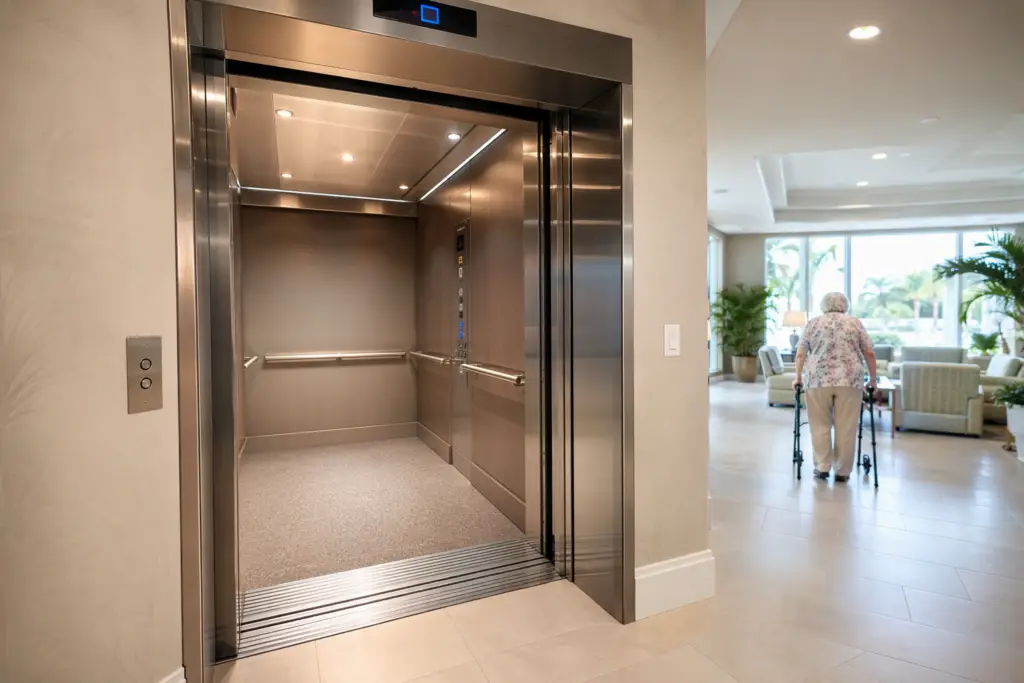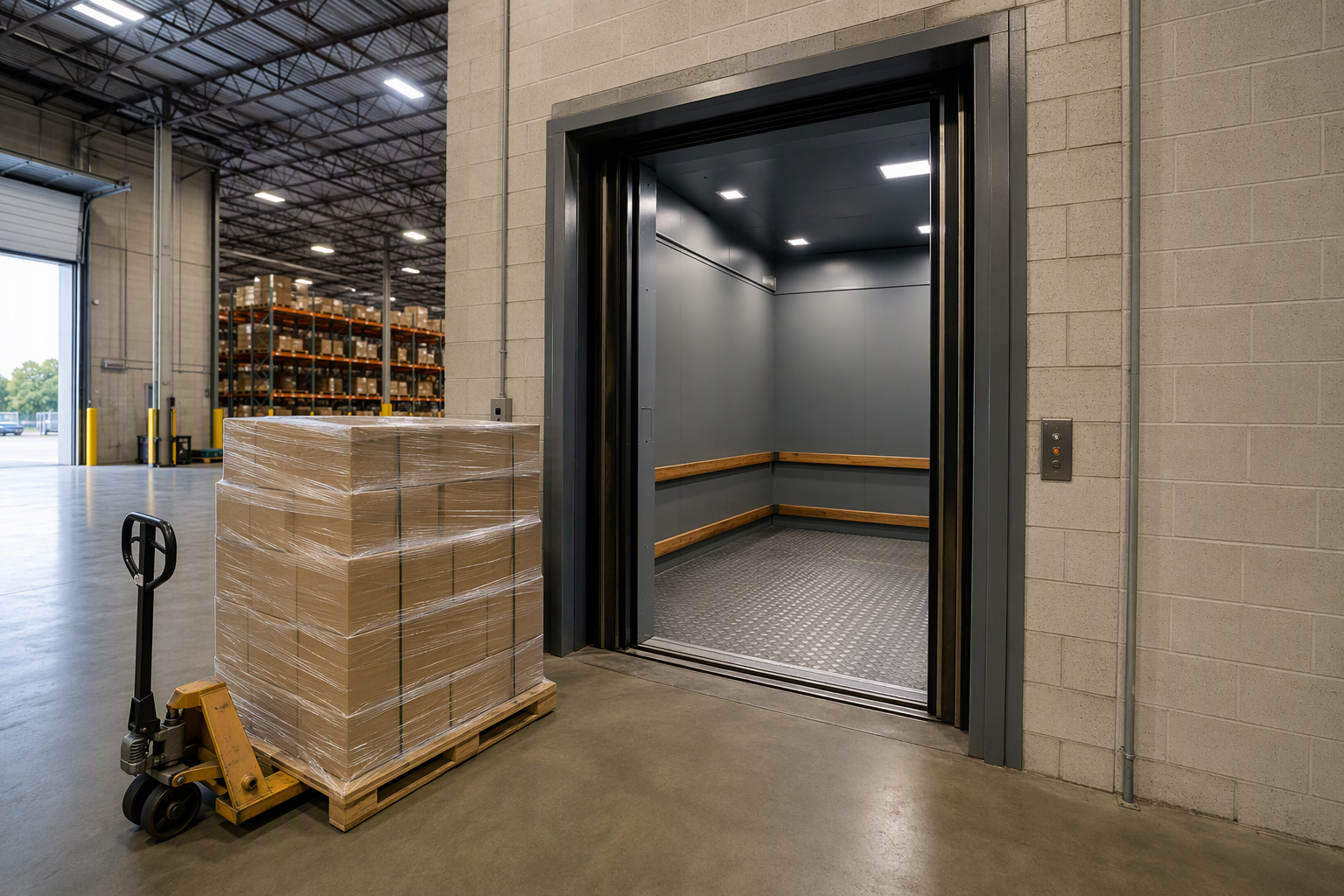
Getting these decisions wrong before breaking ground costs far more to correct mid-construction than to plan correctly from the start. This guide walks Florida warehouse and industrial facility owners through every capacity, traffic, compliance, and equipment decision that must be made before the first permit is filed.
What Are the Most Important Capacity and Traffic Decisions for a Florida Industrial Elevator?
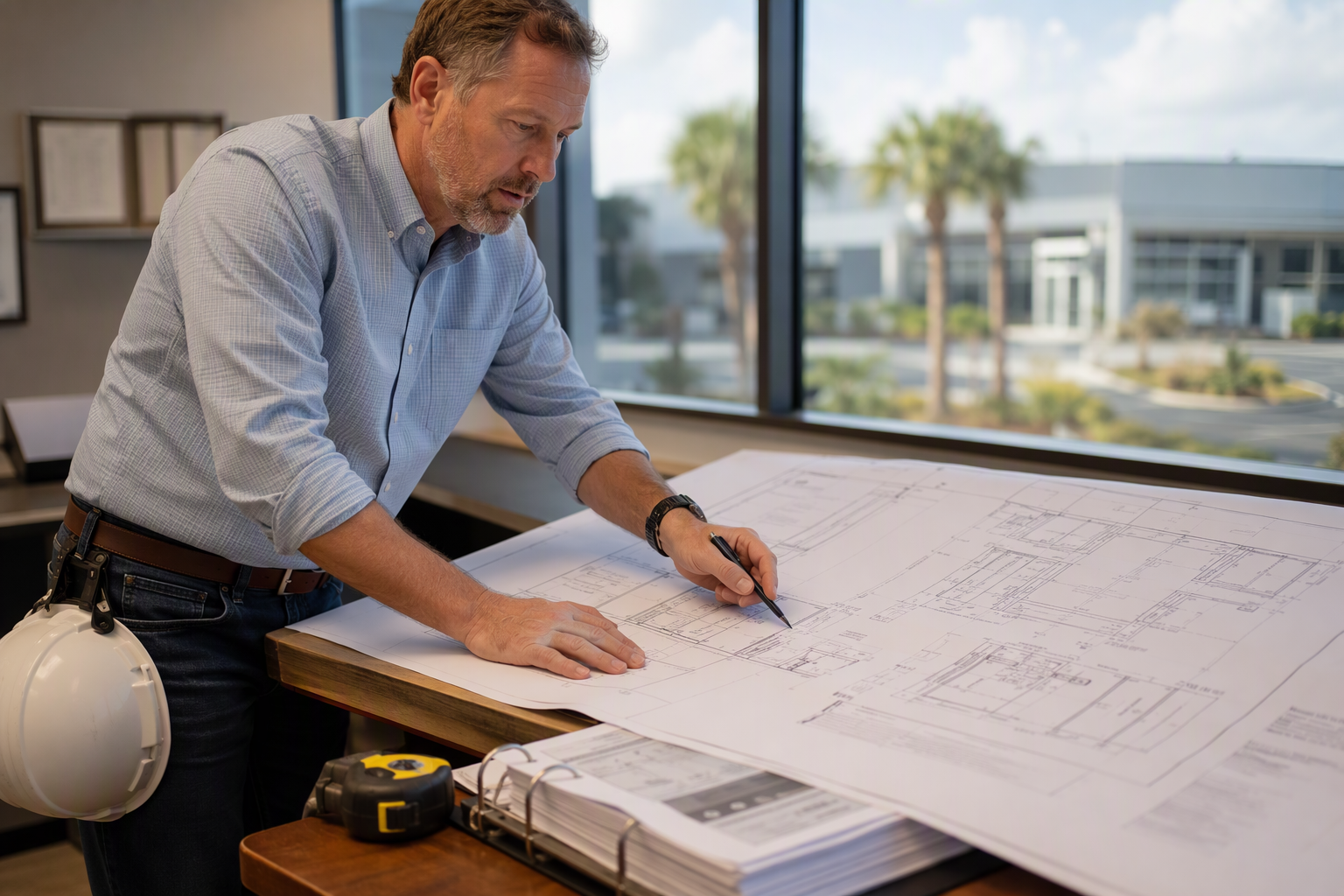
The most consequential pre-installation decisions center on four interconnected factors: rated load, platform size, traffic cycle frequency, and elevator type. Each choice locks in structural, electrical, and code requirements that are expensive to change after construction begins.
Industrial and warehouse elevators generally fall into two regulatory categories under the ASME A17.1/CSA B44 Safety Code for Elevators and Escalators — freight elevators and personnel/service elevators. The distinction matters because each carries different platform, door, and safety requirements. Florida adopted the ASME A17.1-2019 edition effective December 31, 2023, and all new installations must conform to that standard.
Key capacity and traffic decisions to make before installation:
- Maximum rated load: Determined by the heaviest single load the elevator will ever carry — forklifts, palletized goods, heavy machinery, or personnel. Undersizing rated load is a compliance and safety violation; oversizing increases capital cost unnecessarily.
- Platform dimensions: Must accommodate the largest load footprint plus safe operator space. Freight elevator platform sizes must match the type of loading (Class A through Class C3 under ASME A17.1).
- Number of stops and travel height: Dictates drive system type (hydraulic vs. traction), pit depth, overhead clearance, and machine room requirements.
- Traffic volume and peak demand: Determines whether a single elevator is sufficient or whether multiple units or a freight elevator paired with a personnel lift is the correct solution.
- Door type and opening width: Bi-parting, vertical-bi-parting, and single-slide doors serve different forklift and pallet jack clearance needs.
- ADA applicability: If employees or the public access multiple floors, ADA requirements for elevator access apply regardless of building type.
Which Elevator Type Is Right for a Florida Warehouse: Freight, Hydraulic, or Traction?
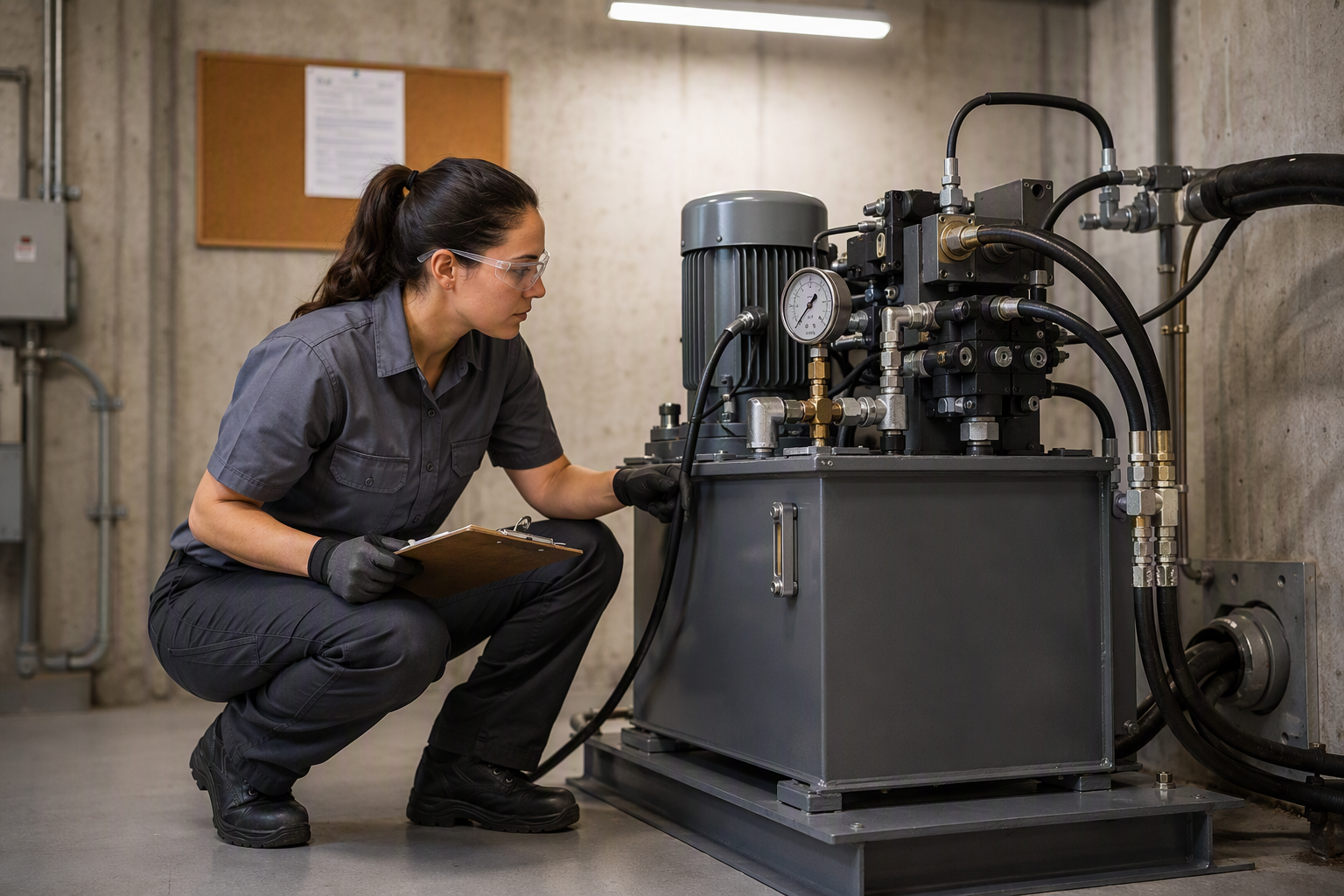
The three primary configurations used in Florida industrial facilities each offer different trade-offs. The table below compares them across the factors most relevant to warehouse and industrial applications.
| Factor | Hydraulic Freight Elevator | Traction Freight Elevator | Vertical Reciprocating Conveyor (VRC) |
|---|---|---|---|
| Best for | Low-rise (2–4 floors), heavy loads, moderate traffic | Mid-to-high-rise, high-frequency traffic, heavier duty cycles | Goods-only movement; not designed for personnel |
| Typical load range | Up to very heavy industrial loads | Wide range, including very heavy industrial | Varies widely by manufacturer specification |
| Florida pit depth requirement | Required; depth per ASME A17.1-2019 | Required; depth per ASME A17.1-2019 | Minimal or flush-floor designs available; not governed by ASME A17.1 |
| Machine room | Required (power unit room) | Required or machine-room-less (MRL) options | None required |
| Energy use | Higher; motor runs on every cycle | Lower; regenerative drives recover energy | Lower; simpler drive mechanism |
| Florida DBPR permit required? | Yes — Chapter 399 applies | Yes — Chapter 399 applies | No — VRCs are mechanical equipment, not conveyances under Chapter 399; governed by OSHA and Florida Building Code |
| Annual inspection required? | Yes (unless two-floor/service-contract exemption applies) | Yes (unless two-floor/service-contract exemption applies) | Not under Chapter 399; OSHA standards apply |
| ADA compliance required? | Yes, if personnel access | Yes, if personnel access | No (goods only) |
| Best Florida climate consideration | Hydraulic fluid viscosity affected by heat; Florida’s heat can require fluid management | Less temperature-sensitive mechanically | Not temperature-sensitive for operation |
Key takeaway: Hydraulic freight elevators remain common in Florida’s lower-rise warehouse stock because of simpler pit and overhead requirements. Traction systems become cost-effective as building height and traffic frequency increase. VRCs are worth considering for goods-only workflows where DBPR permitting timelines are a constraint.
What Florida Permits and Regulatory Steps Are Required Before Elevator Installation Begins?
Florida’s elevator regulatory framework under Chapter 399, Florida Statutes and Chapter 61C-5, Florida Administrative Code mandates a specific sequence of steps before any new elevator may be operated. These steps are not optional and apply to all new industrial elevator installations in Florida.
- Select a Florida-registered elevator company. All new conveyance installations in Florida must be performed by a company registered with the Florida Department of Business and Professional Regulation (DBPR), Division of Hotels and Restaurants, Bureau of Elevator Safety. The registered company must maintain general liability insurance and renew its registration annually.
- Have the registered elevator company apply for a state permit. A state permit is required before any conveyance is installed or altered. The building owner cannot self-file — only the registered elevator company may apply.
- Confirm local authority jurisdiction. Depending on facility location, the Authority Having Jurisdiction (AHJ) may be a county or municipal elevator office rather than the state. Miami-Dade County Office of Elevator Safety covers most Miami-Dade municipalities; Broward County Building Code Division enforces Chapter 399 in Broward County including Pompano Beach; Miami Beach Elevator Safety Division holds delegated authority in Miami Beach; the City of Miami Building Department Elevator Division handles the City of Miami. For all other Florida counties, the state DBPR is the AHJ.
- Complete installation per ASME A17.1-2019. Florida adopted the 2019 edition of the ASME A17.1/CSA B44 Safety Code effective December 31, 2023. All new installations must conform to this edition.
- Schedule a pre-use inspection by a certified elevator inspector. Before the new conveyance may be used, it must be inspected by a certified elevator inspector who has no employment, association, or conflict of interest with the permit holder or the owner.
- Obtain and post a Florida certificate of operation. Once issued, the certificate must be posted in a conspicuous location inside the elevator in a frame with a transparent cover. The certificate is valid for no more than two years and can be renewed only when a current satisfactory inspection is on file.
- Establish a maintenance program. Once a certificate of operation is issued, the elevator owner is responsible for safe operation, proper maintenance, inspection, and correction of code deficiencies. Operating on an expired certificate violates state law.
How Do I Calculate the Right Load Capacity for a Florida Warehouse Elevator?
Rated load must reflect the maximum load the elevator will carry in a single trip under normal operations — not an average or a typical load. The correct approach is to identify the single heaviest scenario: a fully loaded electric pallet jack, an industrial cart with product, or a powered industrial truck entering the cab.
Under ASME A17.1, freight elevators are classified by loading class, which determines the relationship between platform area and rated load. The loading class must be specified before the elevator is designed because it affects cab structure, door strength, and guide rail sizing. The classes relevant to industrial facilities include:
- Class A (General Freight Loading): Load is distributed over the platform; single piece does not exceed a defined proportion of rated load. Suitable for hand trucks and general pallet loads.
- Class B (Motor Vehicle Loading): Designed for automobiles, trucks, or similar vehicles. Relevant to facilities where vehicles drive onto the platform.
- Class C1, C2, C3 (Industrial Truck Loading): Designed for forklifts and powered industrial trucks. The class depends on whether the truck remains on the platform during travel (C1), drives on and off (C2), or the load is deposited and the truck departs (C3).
Selecting the wrong loading class is a code violation. Warehouse operators who expect forklifts to ride with loads must specify Class C1 or C2 at minimum. A qualified elevator consultant or Axxiom Elevator Florida can review operational workflows to confirm the correct class before the permit application is filed.
What Traffic Planning Decisions Determine Whether One Elevator Is Enough?
Traffic planning for industrial elevators is distinct from commercial office traffic analysis. The key variables are:
- Peak trips per hour: Identify the busiest operational period — shift changes, receiving dock windows, or end-of-day outbound shipping. If elevator demand exceeds capacity during peak periods, productivity losses accumulate rapidly.
- Trip duration: Round-trip time is a function of travel distance, door open/close cycle time, and loading/unloading time. Freight elevators typically have longer dwell times than passenger elevators because of load handling.
- Simultaneous demand: If multiple floors are served and multiple departments need the elevator at the same time, a single unit creates a chokepoint. A second elevator or a VRC for goods-only routes can resolve this.
- Maintenance downtime sensitivity: A single elevator creates a single point of failure. For operations where elevator downtime halts production, a redundant unit or a VRC backup for goods movement is a risk management decision, not merely a convenience.
| Scenario | Recommended Configuration | Key Risk If Undersized |
|---|---|---|
| 2-floor light industrial, low traffic | Single hydraulic freight elevator | Low; two-floor service-contract exemption may simplify inspection requirements |
| 2–4 floor warehouse, moderate forklift use | Single Class C hydraulic or traction freight elevator | Peak-hour bottlenecks; downtime halts operations |
| Multi-floor distribution center, high throughput | Two freight elevators or freight elevator + VRC | Single point of failure; productivity loss during maintenance windows |
| Mixed use (personnel + goods) | Dedicated freight elevator + ADA-compliant passenger elevator | ADA violation if freight-only elevator is the sole multi-floor access for employees |
What ADA Requirements Apply to Florida Industrial and Warehouse Elevators?
The Americans with Disabilities Act (ADA) applies to places of employment and any facility accessible to the public. In a warehouse or industrial building where employees work on multiple floors, ADA-compliant elevator access is required unless a specific exemption applies (such as buildings under a defined number of stories or square footage threshold under the ADA Standards for Accessible Design — consult an ADA compliance specialist for applicability to your specific building).
Key ADA considerations for industrial elevator planning:
- Cab dimensions must meet ADA minimum interior requirements for accessible elevators.
- Call buttons, floor indicators, and controls must meet reach range and tactile marking requirements.
- Door timing must allow adequate entry and exit time for individuals using mobility devices.
- A dedicated freight elevator used exclusively for goods does not satisfy the ADA access requirement for personnel — a separate accessible elevator may be required.
How Does the Two-Floor Service-Contract Exemption Affect Florida Warehouse Owners?
Under Chapter 399, Florida Statutes, an elevator that is not an escalator or dumbwaiter, serves only two adjacent floors, and is covered by a service maintenance contract is exempt from the annual inspection requirement for as long as the contract remains in effect.
For two-floor warehouse operators, this exemption can simplify ongoing compliance obligations — but it does not eliminate all regulatory requirements. The initial installation permit, pre-use inspection, and certificate of operation are still required. The exemption applies only to the recurring annual inspection, not to the certificate of operation or the owner’s responsibility for maintenance and safe operation.
Warehouse owners considering this exemption should confirm with their registered elevator company that the contract meets the statutory definition and that the elevator configuration qualifies — specifically, that it serves exactly two adjacent floors and is not an escalator or dumbwaiter.
What Are the Pros and Cons of Hydraulic vs. Traction Freight Elevators for Florida Facilities?
| Hydraulic Freight Elevator | Traction Freight Elevator | |
|---|---|---|
| Pros |
|
|
| Cons |
|
|
| Florida climate note | Hydraulic fluid viscosity can be affected by sustained high ambient temperatures; machine room climate control is advisable | Motor and drive components generally less temperature-sensitive; machine room climate control still recommended |
| Recommended for | Two- to four-floor facilities with moderate traffic and heavy single loads | Taller buildings, high-frequency traffic, or operations where energy cost is a significant factor |
What Should the Elevator Shaft and Pit Design Account for in a Florida Industrial Building?
Shaft and pit design decisions made during building design directly control what elevator options are available. Changes after construction are among the most expensive retrofits in commercial construction. The following factors must be addressed in coordination with the structural engineer and the registered elevator company before plans are finalized:
- Pit depth: Required under ASME A17.1-2019; the minimum depth depends on elevator type and speed. Florida’s high water table is a significant consideration — pit waterproofing and sump pump provisions are critical in most Florida locations.
- Overhead clearance: Traction elevators require greater overhead space for machinery and safety clearances. Verify overhead dimensions against the specific elevator specification before structural framing is locked in.
- Shaft width and depth: Must accommodate the cab platform plus code-required clearances on all sides. Freight elevators with wide platforms require correspondingly larger shafts.
- Machine room location and size: Hydraulic units require a power unit room adjacent to or near the shaft. Traction units require a machine room above or beside the shaft, or a machine-room-less design must be specified early.
- Electrical service: Industrial freight elevators require dedicated electrical service sized to the drive system. Coordinate with the electrical engineer before the electrical design is completed.
- Hurricane and wind load considerations: Florida’s building code requires structures to meet wind load standards relevant to the facility’s location. The shaft structure is part of that calculation.
What Does an Elevator Installation Timeline Look Like for a New Florida Warehouse?
The following represents a typical sequence for new elevator installation in a Florida warehouse or industrial building. Actual durations vary based on elevator type, local AHJ review times, and construction sequencing.
- Pre-design planning and equipment selection: Finalize load class, type, number of stops, and traffic requirements in coordination with the registered elevator company. This step should occur before structural drawings are complete.
- State permit application: The registered elevator company submits the permit application to the DBPR Bureau of Elevator Safety (or the applicable local AHJ). Review time varies by jurisdiction and application complexity.
- Construction and installation: Elevator installation typically begins after the shaft structure is complete and rough electrical is in place. Sequence coordination with the general contractor is essential.
- Pre-use inspection: Upon installation completion, a certified elevator inspector — independent of the permit holder and owner — conducts the required inspection under Chapter 399.
- Certificate of operation issuance: Upon satisfactory inspection, the certificate is issued and must be posted in the elevator before the unit is placed into service.
- Ongoing compliance: The owner assumes responsibility for maintenance, inspection (annual or per the service-contract exemption), and certificate renewal within the two-year validity window.
What OSHA Requirements Apply to Industrial Elevator Installation and Use in Florida?
OSHA standards apply to workplace safety during both elevator installation and ongoing operation in industrial facilities. Relevant considerations include:
- Construction-phase worker safety during elevator shaft work falls under OSHA construction standards.
- Powered industrial trucks (forklifts) used to load freight elevators are subject to OSHA powered industrial truck standards — operators must be trained and the elevator must be rated for the specific truck class.
- Vertical Reciprocating Conveyors (VRCs), which are not regulated under Chapter 399, are governed by OSHA material handling equipment standards. Safety requirements for VRCs differ from ASME A17.1 elevator requirements and must not be assumed equivalent.
- Lockout/tagout procedures apply to elevator maintenance activities in industrial settings.
Why Should Florida Warehouse Owners Work with an Independent Elevator Service Company?
Florida elevator owners benefit from working with an independent, Florida-registered elevator service company rather than relying solely on an equipment manufacturer’s service arm. Independent companies can assess equipment from multiple manufacturers, provide objective recommendations on elevator type and configuration, and are not incentivized to recommend a particular brand.
Axxiom Elevator Florida is a certified, Florida-registered independent elevator service provider serving warehouse and industrial facility owners across the state. Axxiom Elevator Florida works with building owners, general contractors, and architects at the pre-installation planning stage — when decisions about load class, shaft design, and equipment type can still be made without costly structural changes — through permit filing, installation oversight, and ongoing maintenance compliance.
Because Axxiom Elevator Florida operates exclusively in Florida, every recommendation is grounded in Florida’s specific regulatory environment: the DBPR Bureau of Elevator Safety requirements, Chapter 399 and Chapter 61C-5, the adopted ASME A17.1-2019 standard, and the requirements of local AHJs in Miami-Dade, Broward, Miami Beach, the City of Miami, and all other Florida jurisdictions.
Pre-Installation Decision Checklist for Florida Warehouse Elevator Projects
| Decision Area | Key Question | Why It Matters |
|---|---|---|
| Load classification | What is the heaviest single load, including the transport vehicle? | Determines ASME A17.1 loading class; wrong class = code violation |
| Elevator type | Hydraulic, traction, or VRC? | Affects shaft design, permits, energy, and ongoing compliance |
| Number of stops | How many floors require elevator access? | Drives drive system choice, pit depth, and overhead requirements |
| Traffic volume | What is peak trips-per-hour demand? | Determines whether one unit is sufficient or a redundant unit is needed |
| Personnel access | Will employees use the elevator? | Triggers ADA compliance requirements if yes |
| Florida permit | Is a registered elevator company engaged to file the DBPR permit? | Required before installation begins; no installation without a permit |
| Local AHJ | Is the facility in Miami-Dade, Broward, Miami Beach, or City of Miami? | Local authorities have delegated jurisdiction; state DBPR process differs |
| Shaft design | Are pit depth, overhead, and machine room coordinated with the elevator specification? | Structural changes after framing are among the most expensive retrofits |
| Two-floor exemption | Is a service maintenance contract in place to qualify for the annual inspection exemption? | Reduces ongoing compliance burden for qualifying two-floor installations |
| Hurricane/water table | Is the pit waterproofed and does the shaft structure meet Florida wind load requirements? | Florida-specific environmental risks not addressed in ASME A17.1 alone |
Get Expert Guidance Before Your Warehouse Elevator Project Begins
Capacity miscalculations, shaft design oversights, and permit missteps are far more expensive to fix after construction begins than to prevent with expert guidance at the planning stage. Axxiom Elevator Florida provides pre-installation consultations for warehouse and industrial facility owners across Florida, covering equipment selection, load classification, traffic planning, Florida DBPR permit requirements, and local AHJ coordination.
Contact Axxiom Elevator Florida for a free elevator assessment:
Need elevator service you can rely on? Axxiom Elevator Florida is ready to help.