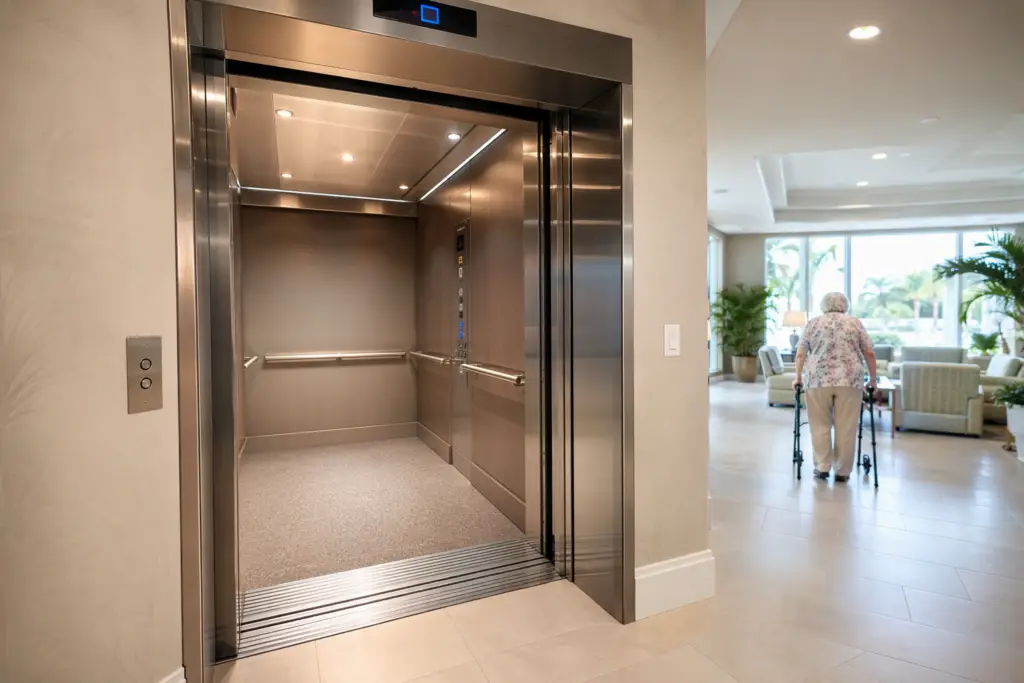
Elevator Maintenance and Reliability Requirements for Florida Warehouse and Industrial Facility Leases and Vendor Contracts
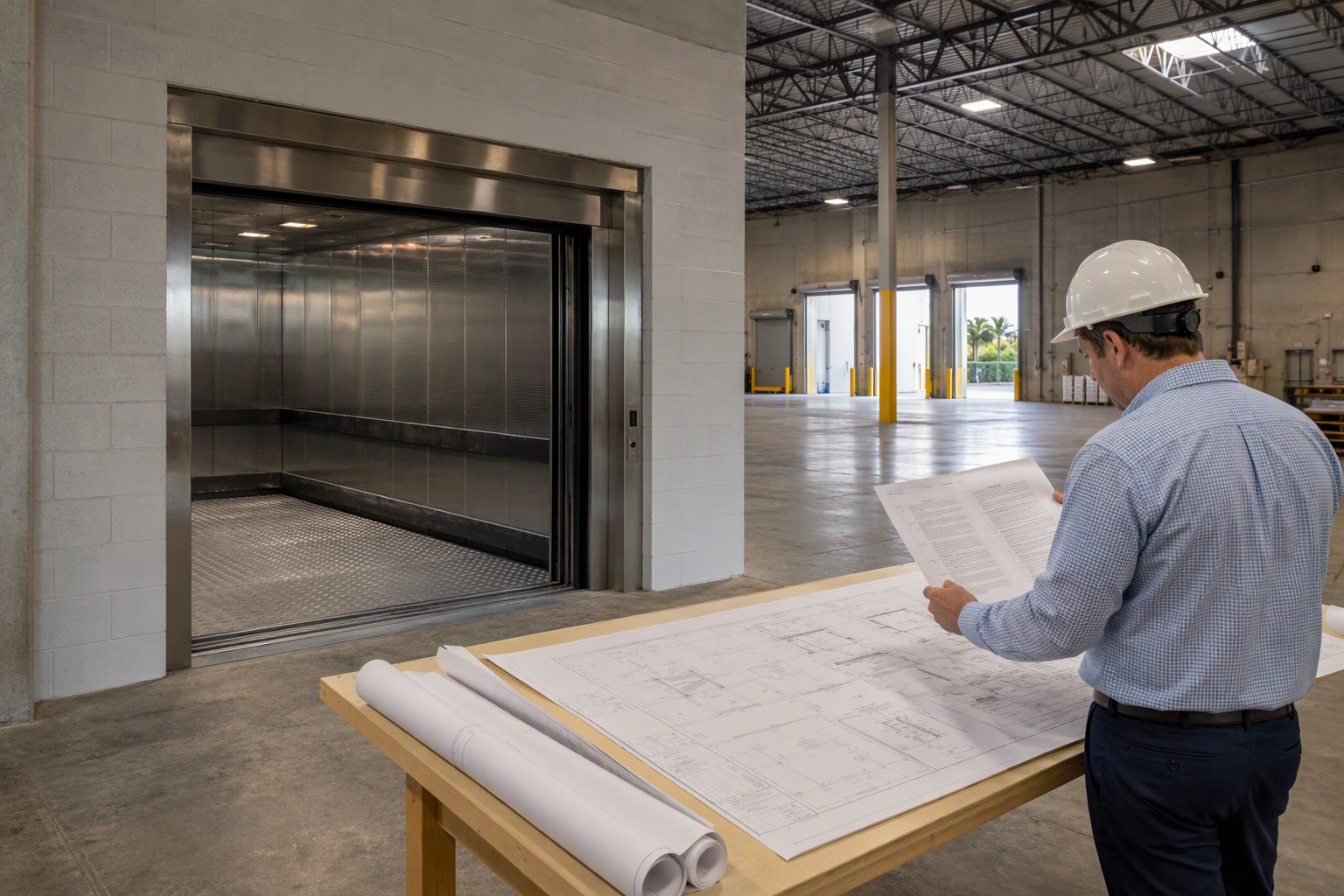
Florida warehouse and industrial facilities depend on freight elevators, vertical reciprocating conveyors, and personnel lifts to sustain throughput every day. When an elevator goes out of service, production timelines slip and lease obligations may be implicated. Embedding the right maintenance and reliability language into a lease or vendor contract before problems arise is the most cost-effective risk management tool available to Florida facility owners, operators, and tenants. This guide covers exactly what that language should include, grounded in Florida law and federal code requirements that govern elevators in the state.
What Florida Law Actually Requires of Elevator Owners and Vendors
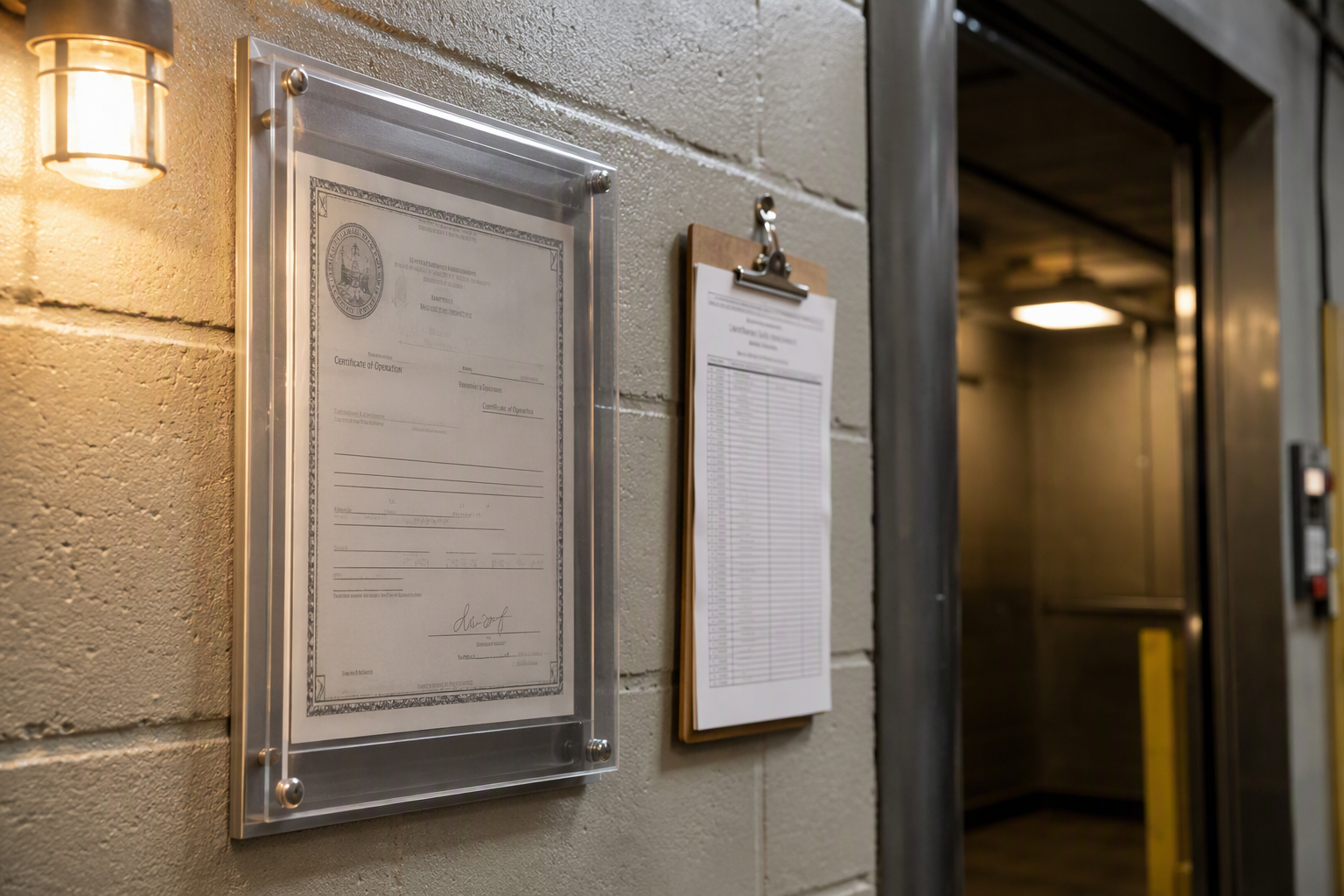
Under Chapter 399, Florida Statutes (the Florida Elevator Safety Act), and the implementing rules in Chapter 61C-5, Florida Administrative Code, the responsibility for safe operation, proper maintenance, inspection, and correction of code deficiencies rests squarely with the elevator owner once a certificate of operation is issued. This statutory ownership-of-compliance is the legal foundation that makes the contract language discussed below essential rather than optional.
Key statutory facts every lease or vendor contract must account for:
- Every covered elevator must be inspected annually by a certified elevator inspector (with a limited exemption for certain two-floor units covered by a qualifying service maintenance contract).
- A Florida certificate of operation is valid for no more than two years and can only be renewed when the elevator has a current satisfactory inspection on record. Operating on an expired certificate violates state law.
- The certificate of operation must be posted inside the elevator in a frame with a transparent cover — a visible compliance requirement that landlords and tenants can verify on every visit.
- Any elevator accident must be reported to the state within 5 working days by the certificate of operation holder.
- All maintenance, repair, installation, and alteration work must be performed by a company registered with the Florida Department of Business and Professional Regulation (DBPR), Division of Hotels and Restaurants, Bureau of Elevator Safety, and carried out by technicians who hold a current Florida elevator certificate of competency.
- Registered elevator companies and certified elevator technicians must renew their registrations annually and maintain general liability insurance. Technicians must demonstrate 8 hours of continuing education at each renewal.
- The adopted technical standard in Florida is the ASME A17.1/CSA B44 Safety Code for Elevators and Escalators, 2019 edition, effective December 31, 2023, subject to Florida-specific exclusions.
What Should a Lease Say About Elevator Maintenance Responsibility?
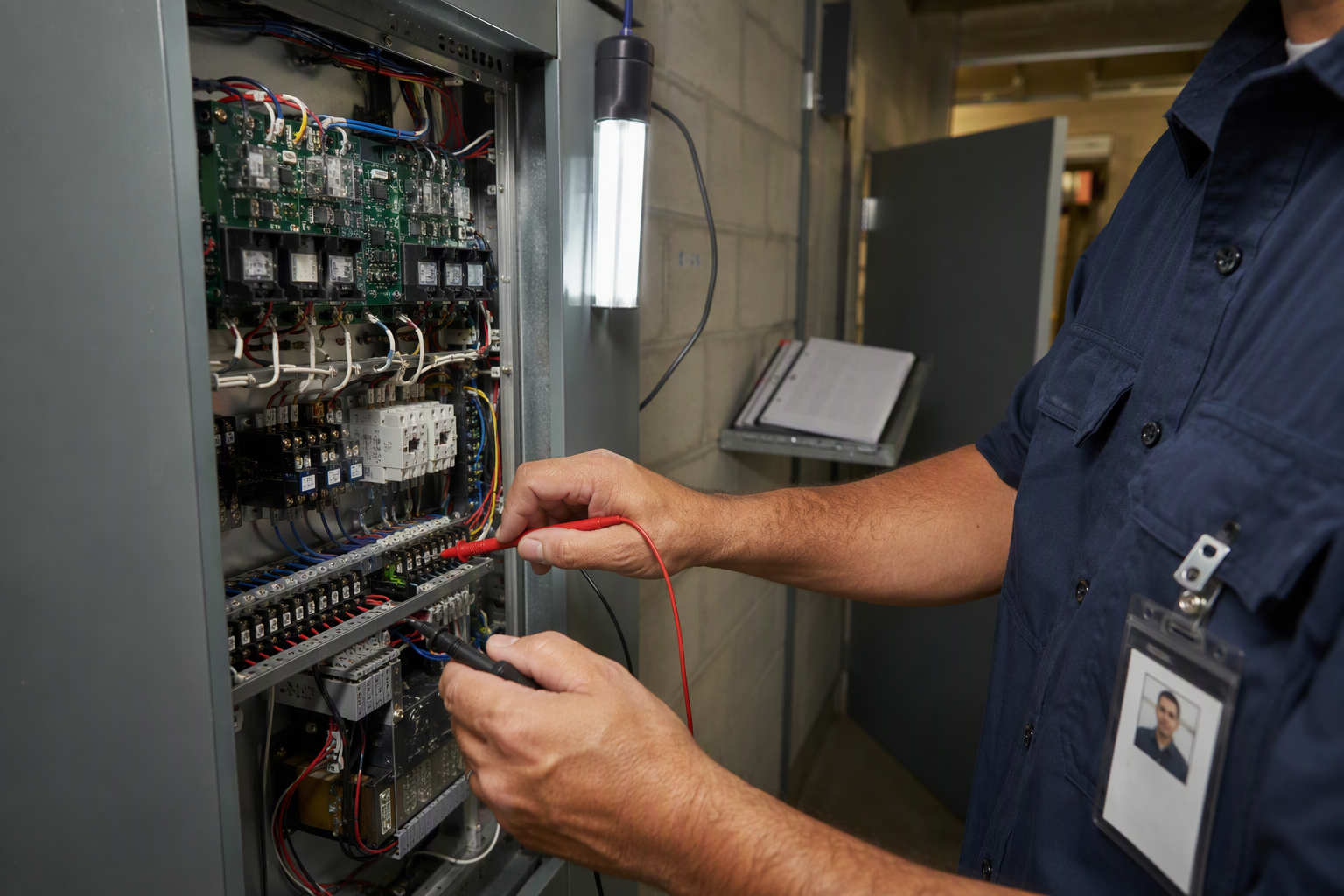
A well-drafted industrial or warehouse lease should explicitly assign the following obligations and do so in writing, with named parties responsible for each item:
- Owner vs. tenant maintenance split: Clearly state whether the landlord or tenant is responsible for maintaining the elevator, retaining a registered elevator company, and paying for routine maintenance versus capital repairs. In multi-tenant industrial buildings, landlords typically retain control of common-area freight elevators, while tenants may operate dedicated dock lifts.
- Certificate of operation currency: Require the responsible party to keep the certificate of operation current at all times during the lease term and to provide a copy of each renewal to the other party within a defined number of days of issuance.
- Annual inspection obligation: Specify that the annual certified inspection required by Chapter 399 will be completed by a Florida-certified elevator inspector, with results shared between landlord and tenant within a defined timeframe.
- Code deficiency correction timelines: Require that any deficiency identified in an inspection report be corrected within a specific number of days for non-emergency items, and immediately for any deficiency that triggers a service withdrawal or unsafe order.
- Accident notification: Mirror the statutory 5-working-day reporting obligation and require the responsible party to notify the other lease party simultaneously.
- Vendor registration verification: Require the responsible party to use only DBPR-registered elevator companies and to provide proof of registration and general liability insurance before any work begins.
- ADA compliance maintenance: Reference the Americans with Disabilities Act and require that the elevator remain compliant with applicable accessibility standards throughout the lease term, with any ADA-triggered repairs treated as the owner’s responsibility unless the lease specifically allocates them otherwise.
What Should an Elevator Vendor Contract Include for a Florida Industrial Facility?
When negotiating a service and maintenance agreement with an elevator contractor, the contract should address these categories:
Vendor Qualification Requirements
- The vendor must be a company registered with the Florida DBPR Bureau of Elevator Safety and must maintain that registration without lapse throughout the contract term.
- All technicians performing work under the contract must hold a current Florida elevator certificate of competency — not just journeyman-level experience from another state.
- The vendor must maintain general liability insurance as required by Florida law and provide certificates of insurance naming the facility owner as an additional insured.
- The vendor’s certified elevator inspectors must hold their qualified elevator inspector (QEI) credential in good standing and comply with Florida’s annual registration and continuing education requirements.
Scope of Maintenance Services
- Identify the specific conveyances covered — freight elevators, personnel lifts, dock levelers, vertical reciprocating conveyors — and confirm which are subject to Chapter 399 and which fall under different regulatory frameworks.
- Specify whether the contract is a full-maintenance (parts and labor inclusive) or a lubrication-and-adjustment (L&A) contract, and which parts categories are excluded.
- Require that maintenance be performed in accordance with the ASME A17.1 Safety Code for Elevators and Escalators maintenance provisions adopted in Florida.
- For facilities with OSHA-regulated industrial environments, confirm the vendor’s familiarity with applicable OSHA general industry standards governing powered platforms and material handling equipment in those settings.
Inspection and Documentation Obligations
- Require the vendor to coordinate or perform the annual certified inspection required by Chapter 399 and to provide the facility with a copy of the inspection report and any deficiency notice within a specified number of days.
- Require the vendor to maintain a service log for each conveyance and to provide that log to the facility owner upon request or at each contract renewal.
- Require the vendor to notify the facility immediately — and in writing within 24 hours — of any finding that triggers a service withdrawal, unsafe-operation determination, or mandatory reporting obligation.
Performance and Reliability Standards
Rather than accepting a vendor’s generic service language, facility operators should negotiate specific reliability provisions. Because no industry-wide uptime benchmark can be cited here from a verifiable source, these provisions are best expressed as contractual commitments rather than statistics:
- Define what constitutes a “callback” or unscheduled service event and require the vendor to track and report callbacks per unit per month.
- Establish a threshold — for example, a maximum number of callbacks per quarter — that triggers a mandatory root-cause analysis and remediation plan from the vendor.
- Require the vendor to provide a written remediation plan if a unit experiences recurring failures and to implement that plan within a defined timeframe at no additional cost.
- Include a right-to-terminate provision if the vendor fails to maintain certificate-of-operation currency on any covered unit, or if any unit is taken out of service due to vendor negligence.
Which Florida Local Authorities May Have Jurisdiction Over Your Facility’s Elevators?
In addition to state oversight by the DBPR Bureau of Elevator Safety, several Florida localities have delegated authority to conduct their own elevator inspections and issue certificates:
- Broward County: The Broward County Building Code Division enforces Florida’s elevator law through its own certified inspectors, including in Pompano Beach.
- Miami-Dade County: The Miami-Dade County Office of Elevator Safety covers all Miami-Dade municipalities except the City of Miami and the City of Miami Beach, which operate their own elevator offices.
- City of Miami Beach: The City of Miami Beach Elevator Safety Division holds delegated authority under Florida law for permits, inspections, and certificates within Miami Beach.
- City of Miami: The City of Miami Building Department Elevator Division reviews annual inspection reports and issues the Annual Elevator Certificate within city limits.
Vendor contracts and lease agreements for facilities in these jurisdictions should name the applicable local authority and require the vendor to coordinate inspections and permitting with that authority rather than assuming state-level DBPR scheduling is sufficient.
What Are the ADA Obligations That Belong in a Florida Industrial Lease?
Under the Americans with Disabilities Act, places of public accommodation and commercial facilities must maintain accessible features — including elevators — in operable condition. While purely industrial facilities not open to the public have narrower public-accommodation exposure, leases with office components, visitor access, or mixed-use elements need explicit ADA maintenance language. The lease should:
- Assign responsibility for ADA-required elevator features (door reopening devices, leveling accuracy, cab dimensions, signage) to a named party.
- Require that any alteration triggering an ADA path-of-travel upgrade be disclosed to the other party and completed before the alteration is placed in service.
- Require the vendor contract to include maintenance of all ADA-related elevator features as part of the base scope rather than an optional add-on.
How Should the Contract Address Elevator Modernization and Capital Repairs?
Industrial freight elevators in Florida warehouses age under heavy use, and the boundary between routine maintenance and capital modernization becomes a common lease dispute. The contract should:
- Define “routine maintenance” versus “capital repair or modernization” in writing, referencing the scope of work rather than a dollar threshold alone — dollar thresholds erode with inflation.
- Require the vendor to provide a written assessment of any component the vendor identifies as beyond economic repair before recommending replacement, and to obtain owner approval before proceeding.
- Address how code-mandated upgrades — for example, those triggered by a major alteration under the ASME A17.3 Safety Code for Existing Elevators and Escalators — will be allocated between landlord and tenant.
- Include a permit requirement clause: any installation or alteration must be preceded by a state permit applied for by the registered elevator company, as required under Chapter 399, Florida Statutes.
What Steps Should a Facility Take When an Elevator Is Taken Out of Service?
- Confirm with the vendor or inspector whether the out-of-service status was voluntary or ordered by the DBPR Bureau of Elevator Safety or applicable local authority.
- Obtain a written deficiency report identifying the specific code section or safety finding that triggered the removal from service.
- Notify all affected tenants, dock personnel, and operations teams in writing of the outage and estimated restoration timeline.
- Require the registered elevator company to submit a written remediation plan with a parts procurement and labor timeline within one business day of the service withdrawal.
- If the outage was triggered by an accident, initiate the state accident report process — the certificate of operation holder must report to the state within 5 working days under Chapter 399.
- Verify that no work proceeds until a required permit is in place if the repair constitutes an alteration under Florida law.
- Upon restoration, confirm that a satisfactory inspection has been completed by a certified elevator inspector with no conflict of interest before returning the unit to service.
- Confirm the certificate of operation has been renewed and is posted in the required frame inside the elevator cab before resuming operations.
What Sourced Data Exists on Elevator Inspection and Compliance Requirements?
| Requirement | Standard or Authority | Source |
|---|---|---|
| Annual certified inspection required for most covered conveyances | Chapter 399, Florida Statutes | Florida Elevator Safety Act |
| Certificate of operation valid for no more than 2 years | Chapter 399, Florida Statutes | Florida Elevator Safety Act |
| Accident reporting within 5 working days | Chapter 399, Florida Statutes | Florida Elevator Safety Act |
| Adopted technical standard: ASME A17.1/CSA B44 2019 edition, effective December 31, 2023 | Chapter 61C-5, Florida Administrative Code | ASME Codes & Standards |
| Technician certificate of competency renewal: 8 hours continuing education required | Chapter 399, Florida Statutes | Florida Elevator Safety Act |
| Inspector must hold QEI credential in good standing; annual registration with 8 hours CE required | Chapter 399, Florida Statutes | Florida Elevator Safety Act |
How Do 2025–2026 Trends Affect Elevator Contract Language for Florida Industrial Facilities?
Several qualitative trends are shaping how Florida facility owners and tenants approach elevator contracts heading into 2026:
- Remote monitoring and IoT integration: Elevator vendors increasingly offer remote diagnostic monitoring that logs door cycle counts, motor performance data, and fault codes in real time. Contracts drafted in 2025–2026 should specify who owns that data, how it is retained, and whether it is available to the facility owner — particularly relevant for warranty and dispute resolution purposes.
- Parts supply chain delays: Industrial elevator components — particularly for older hydraulic freight units common in Florida warehouses — have experienced procurement lead times that extend planned maintenance windows. Contract language should require the vendor to maintain a minimum critical parts inventory for units under contract, or to disclose lead times upon contract execution.
- Increased regulatory scrutiny post-modernization: As Florida facilities undergo capital improvements and warehouse expansions, more elevators are triggering major-alteration classifications under the ASME codes, which bring additional inspection and compliance obligations. Lease and contract language should anticipate this by defining what constitutes an alteration and requiring pre-alteration disclosure.
- Sustainability and energy efficiency riders: Some facility operators are beginning to include energy-performance expectations in elevator vendor contracts, particularly for variable-frequency drive upgrades and LED cab lighting. While Florida does not mandate energy performance standards for elevators, proactive contract language can align elevator maintenance with broader ESG facility commitments.
- Vendor consolidation and assignment risk: The elevator service industry has seen significant consolidation. Contracts should include anti-assignment clauses requiring owner consent before a vendor assigns the contract to an acquiring company, ensuring that the registered elevator company relationship and technician qualifications are not disrupted by a merger or acquisition.
Who Is Responsible for OSHA Compliance in a Florida Warehouse Elevator Context?
The Occupational Safety and Health Administration imposes general duty obligations on employers to maintain a workplace free of recognized hazards. In warehouse and industrial settings, this means elevator and lift equipment must be maintained in safe operating condition. Lease and vendor contracts should:
- Assign responsibility for maintaining OSHA-required inspection and maintenance records for powered industrial equipment.
- Require the elevator vendor to notify the facility of any finding that would constitute a recognized OSHA hazard, and to document that notification in the service record.
- Confirm that the vendor’s technicians operate in compliance with applicable OSHA safety standards when performing service in the facility’s operational environment.
What Contract Termination and Transition Provisions Protect Florida Facility Operators?
Elevator vendor contracts in Florida’s industrial market often run for multi-year terms with automatic renewal clauses. Facility operators should negotiate:
- A right to terminate for cause without penalty if the vendor fails to maintain state registration, allows the certificate of operation to lapse through vendor neglect, or fails to respond to a documented emergency within the timeframe specified in the contract.
- A transition assistance obligation requiring the departing vendor to transfer all service records, inspection reports, and as-built documentation to the facility or successor vendor within a defined number of days following termination.
- An equipment release clause confirming that any proprietary monitoring hardware installed by the vendor on the facility’s elevator equipment will be removed or transferred at no cost to the facility upon contract termination.
- A non-interference clause preventing the departing vendor from taking actions that would impede the successor vendor’s ability to assume maintenance responsibility — including withholding maintenance codes or controller access.
How Does Axxiom Elevator Florida Approach Contract and Compliance Assessments?
Axxiom Elevator Florida provides elevator maintenance and consulting services exclusively within Florida. The team works with warehouse and industrial facility owners, property managers, and tenants to evaluate existing elevator maintenance contracts against Florida’s Chapter 399 requirements and current ASME A17.1-2019 provisions. Axxiom Elevator Florida assists clients in identifying gaps in vendor qualification documentation, certificate-of-operation currency, and inspection record completeness — giving facilities the data they need to negotiate or remediate their service agreements before regulatory or operational issues arise. As a DBPR-registered elevator company operating in Florida, Axxiom Elevator Florida brings a regulatory-grounded perspective to the contract review and service delivery process.
Frequently Asked Questions
Does Florida law require a specific type of elevator maintenance contract for warehouse elevators?
Florida law does not mandate a specific contract format. However, Chapter 399, Florida Statutes, places ultimate responsibility for maintenance, inspection, and code compliance on the certificate of operation holder — typically the elevator owner. This means the owner cannot contractually transfer statutory liability to a vendor; the contract can only govern how costs and obligations are shared between the parties. The owner remains the party the state holds accountable.
Can a tenant be held responsible for elevator compliance violations in a Florida industrial lease?
Yes, if the lease explicitly assigns elevator maintenance and compliance obligations to the tenant and the tenant is designated as the certificate of operation holder or responsible party. However, because Florida law places the baseline obligation on the owner, leases that assign compliance to tenants should be reviewed carefully by legal counsel to ensure the assignment is enforceable and that the owner’s statutory exposure is properly managed through insurance and indemnification provisions.
What happens if the elevator vendor’s Florida registration lapses during a service contract?
If the vendor’s registration with the DBPR Bureau of Elevator Safety lapses, any maintenance or repair work performed during the lapse period would not be performed by a properly registered elevator company as required by Chapter 399, Florida Statutes. This creates compliance exposure for the facility owner and may affect the validity of the certificate of operation. Contracts should require the vendor to provide annual proof of current registration and authorize the facility to suspend work if registration cannot be verified.
Are freight elevators in Florida warehouses subject to the same inspection requirements as passenger elevators?
Freight elevators covered by Chapter 399, Florida Statutes are subject to the annual certified inspection requirement and certificate of operation requirements that apply to covered conveyances generally. The adopted technical standard — the ASME A17.1/CSA B44 Safety Code for Elevators and Escalators, 2019 edition — includes specific provisions for freight elevators, and the Florida Administrative Code rules implement those requirements. Facility operators should confirm with the DBPR Bureau of Elevator Safety or applicable local authority whether a specific conveyance type in their facility is covered.
Does the two-floor service maintenance contract exemption apply to Florida warehouse freight elevators?
Under Chapter 399, Florida Statutes, an elevator that is not an escalator or dumbwaiter, serves only two adjacent floors, and is covered by a qualifying service maintenance contract is exempt from the annual inspection requirement while the contract remains in effect. Facility operators considering reliance on this exemption should confirm with their registered elevator vendor and the DBPR Bureau of Elevator Safety that the specific unit and contract qualify — the exemption is narrow and does not eliminate the certificate of operation requirement.
What insurance requirements should a Florida elevator vendor contract include?
Florida law requires registered elevator companies and certified elevator technicians to maintain general liability insurance. Vendor contracts should require the vendor to provide certificates of insurance at contract signing and at each annual renewal, name the facility owner as an additional insured, and specify minimum coverage limits appropriate to the scale of the facility. Legal counsel familiar with Florida commercial real estate and contractor liability should advise on appropriate minimums for industrial elevator work.
What should a lease say about who pays for elevator code upgrade costs in Florida?
Code upgrade costs — particularly those triggered by a major alteration under the ASME A17.1 Safety Code for Elevators and Escalators or by a new Florida Administrative Code requirement — can be significant and are often a source of lease disputes. The lease should explicitly state whether code-mandated upgrades are treated as capital expenditures (typically the landlord’s responsibility) or operating maintenance (potentially shared or assigned to the tenant), and should define what constitutes a “code-mandated” upgrade versus elective modernization.
How often should a Florida industrial facility conduct internal elevator performance reviews beyond the state-required inspection?
While Florida law requires at minimum an annual certified inspection for most covered conveyances, industrial facilities with high-cycle freight elevators benefit from more frequent internal performance reviews. Vendor contracts should require periodic — at minimum quarterly — service reports documenting callback frequency, parts replaced, and any deferred maintenance items. These internal reviews complement the statutory inspection process and provide the facility with data needed to manage the vendor relationship and plan capital expenditures.
What should a Florida warehouse lease say about elevator downtime during tenant operations?
Industrial leases should address planned maintenance windows — including the notice period required before the vendor takes a unit out of service for scheduled maintenance — and require the vendor to schedule planned outages during non-peak operational hours where operationally feasible. Leases should also address the landlord’s and tenant’s respective rights and remedies if elevator downtime materially impairs the tenant’s ability to use the leased premises for its intended purpose.
Does the ADA require Florida warehouse elevators to be maintained in a specific way?
The Americans with Disabilities Act requires that accessible features, including elevators, be maintained in operable working condition. Isolated or temporary outages for maintenance do not automatically constitute an ADA violation, but extended or recurring outages of accessibility features can. For Florida industrial facilities with office components, showroom areas, or any portion open to the public, leases and vendor contracts should assign clear responsibility for maintaining ADA-required elevator features — including cab dimensions, leveling accuracy, door timing, and required signage — and require prompt restoration of those features following any repair.
Get a Free Elevator Assessment for Your Florida Facility
Understanding what your lease or vendor contract is missing before a compliance issue or equipment failure arises is the most cost-effective step a Florida warehouse or industrial facility operator can take. Axxiom Elevator Florida provides data-driven elevator assessments that review your current maintenance contract, certificate of operation status, inspection records, and vendor qualification documentation against Florida’s Chapter 399 requirements and applicable ASME standards.
Contact Axxiom Elevator Florida for a free elevator assessment:
Need elevator service you can rely on? Axxiom Elevator Florida is ready to help.