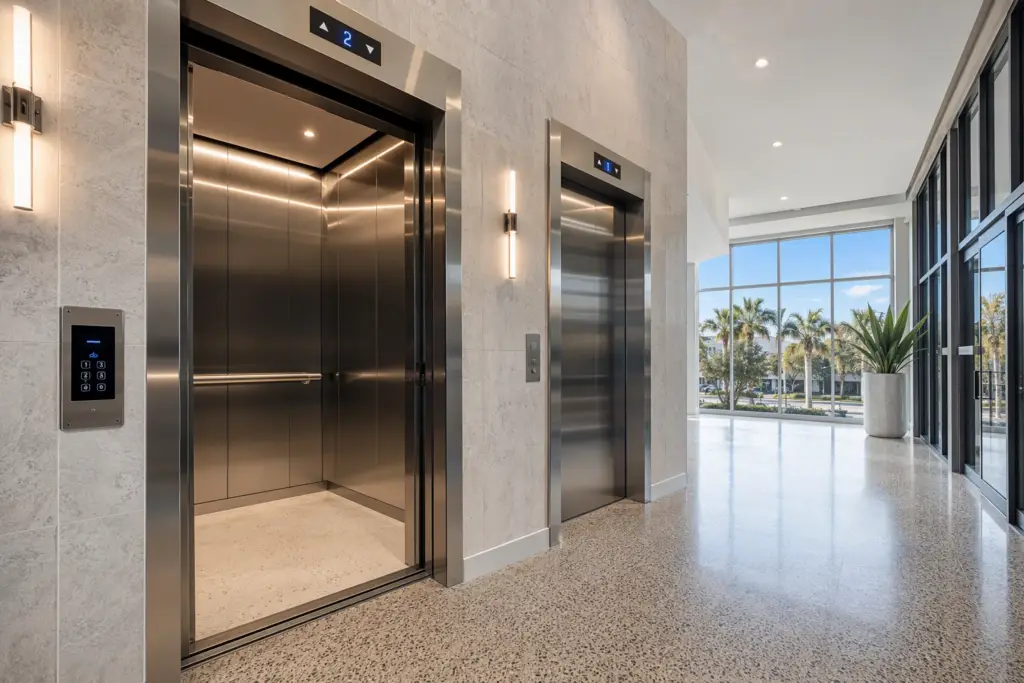
Elevator Modernization and Upgrade Requirements for Senior Living and Assisted Living Facilities in Florida
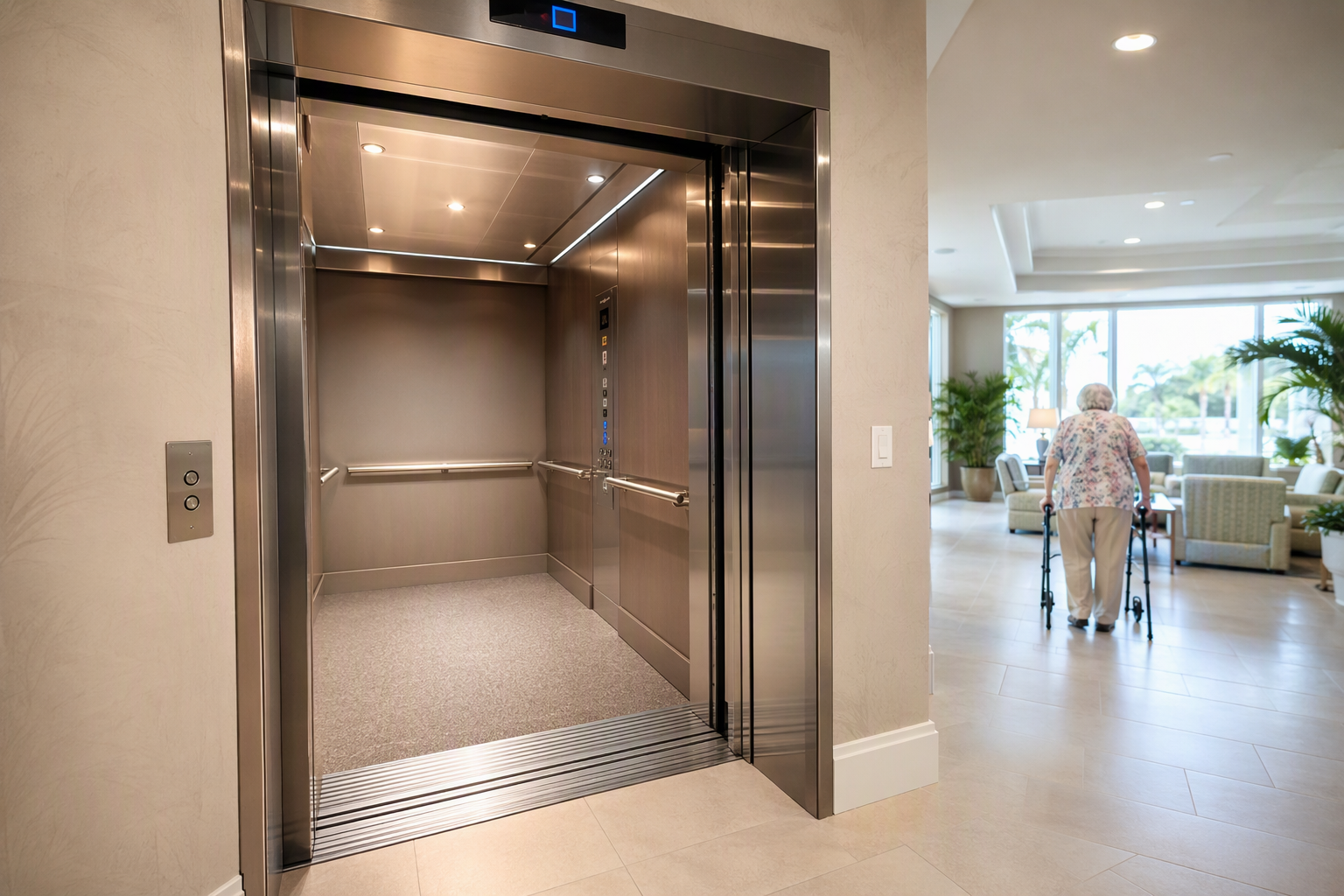
Florida’s senior living and assisted living communities depend on elevators every hour of every day — for resident mobility, staff efficiency, and emergency response. When an elevator fails compliance, the consequences go far beyond an inspection citation. Facility administrators in Pompano Beach, Sarasota, and across the state face operational shutdowns, liability exposure, and, most critically, risk to the residents in their care. Understanding exactly which modernization and upgrade requirements apply — and how to stay ahead of them — is the starting point for any responsible healthcare facilities manager.
What Florida Laws Govern Elevator Safety in Assisted Living Facilities?
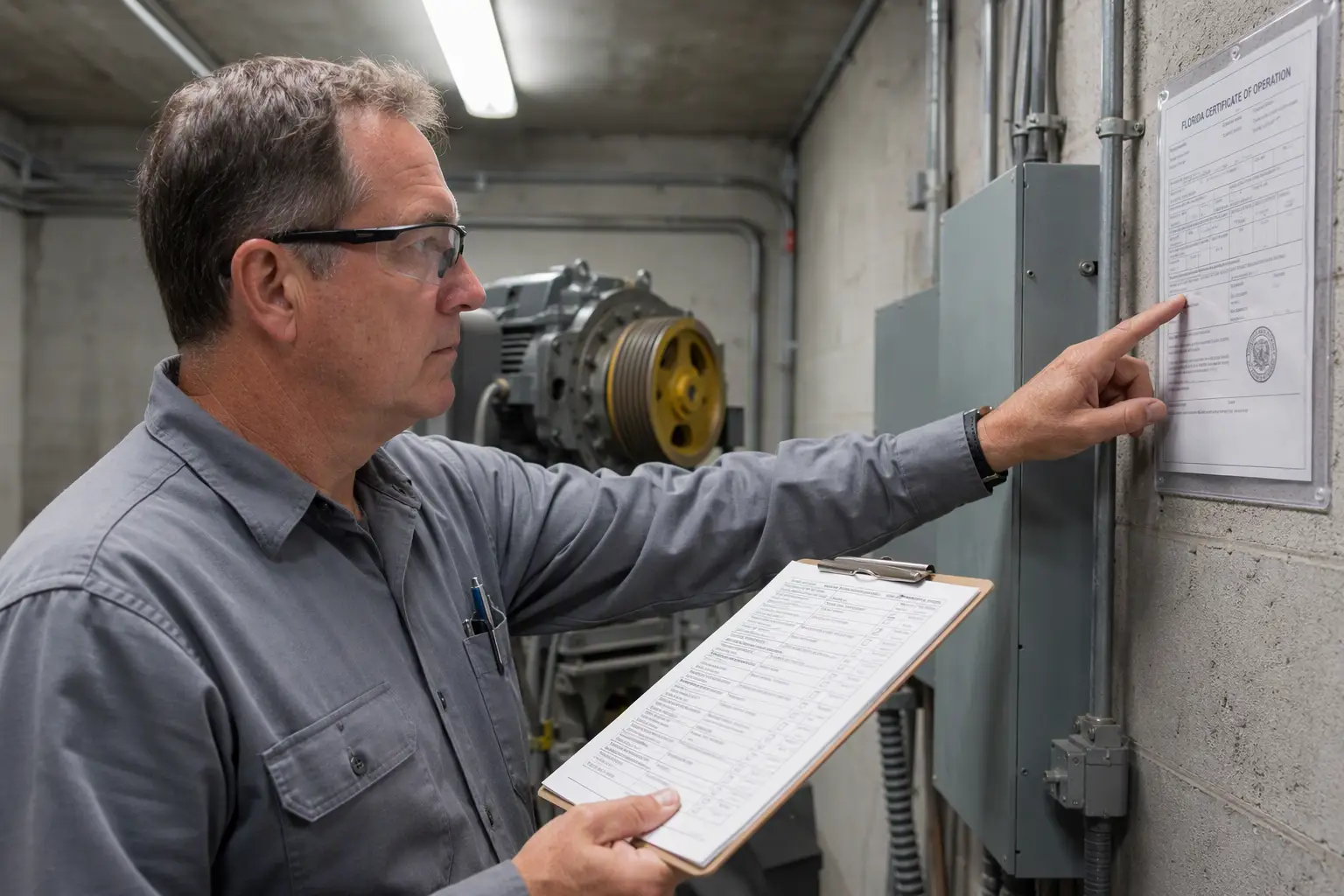
The primary regulatory framework is Chapter 399, Florida Statutes (the Elevator Safety Act), administered by the Florida Department of Business and Professional Regulation (DBPR), Division of Hotels and Restaurants, Bureau of Elevator Safety. Companion rules appear in Chapter 61C-5, Florida Administrative Code, which adopts the ASME A17.1/CSA B44, 2019 edition as Florida’s elevator safety code, effective December 31, 2023.
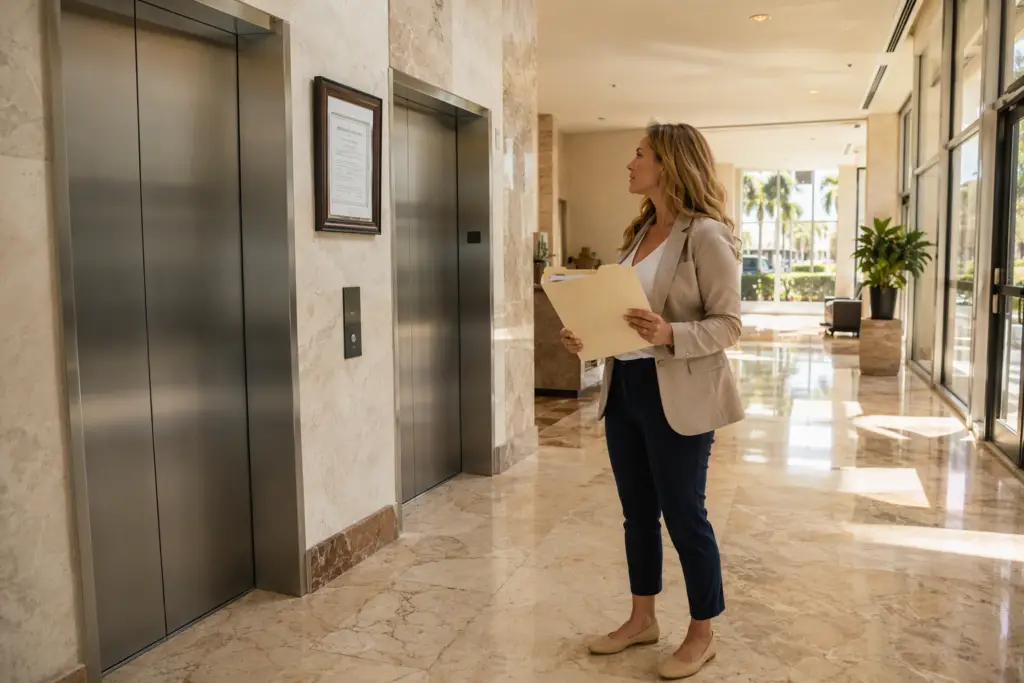
Every conveyance covered by Chapter 399 — including passenger elevators inside assisted living facilities and skilled nursing buildings — must be inspected annually by a certified elevator inspector. The certificate of operation issued after a satisfactory inspection is valid for no more than two years and must be posted in the elevator cab in a frame with a transparent cover. Operating on an expired certificate violates state law.
In Pompano Beach, which falls within Broward County, local enforcement is handled by the Broward County Building Code Division, which enforces Florida’s elevator law through its own certified elevator inspectors. Sarasota facilities work directly with state-level DBPR oversight. Facility operators should confirm the applicable local authority having jurisdiction (AHJ) for their specific address.
Which ASME A17.1 Requirements Most Affect Senior Living Elevators?
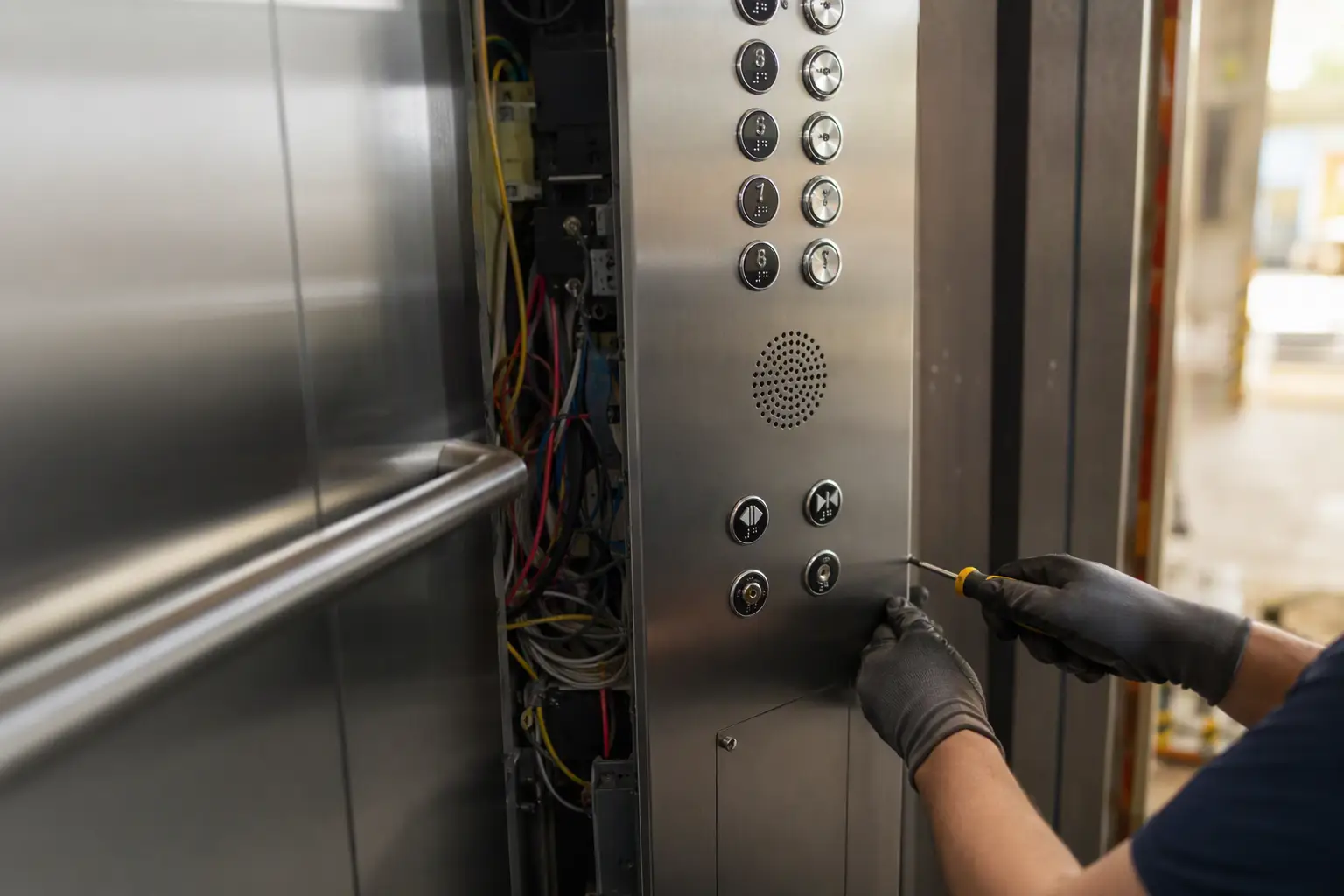
The ASME A17.1-2019 Safety Code for Elevators and Escalators sets minimum design, construction, operation, and maintenance standards. For senior living facilities, the provisions that most often drive modernization projects include:
- Door reopening devices: Entrapment protection requirements are critical in facilities where residents may move slowly or use mobility aids.
- Two-way communications: In-cab emergency communication systems must connect to a location staffed around the clock — a significant requirement for facilities with overnight care staff.
- Door operation and timing: Door dwell times and closing force limits directly affect residents using walkers, wheelchairs, and other assistive devices.
- Firefighters’ emergency operation: Phase I and Phase II fire service features must be operational, a requirement that intersects with assisted living fire safety protocols.
- Leveling accuracy: Precise floor-level stopping reduces trip-and-fall hazards — a heightened concern in any healthcare or senior care setting.
- Machine room and hoistway safety: Lighting, ventilation, and access control requirements protect maintenance technicians and remain mandatory regardless of equipment age.
When an existing elevator no longer meets current ASME A17.1-2019 requirements, the facility owner must correct the deficiency. Depending on the scope of work, this may require a state permit applied for by a registered elevator company before any alteration begins.
What ADA Accessibility Standards Apply to Senior Living Elevators?
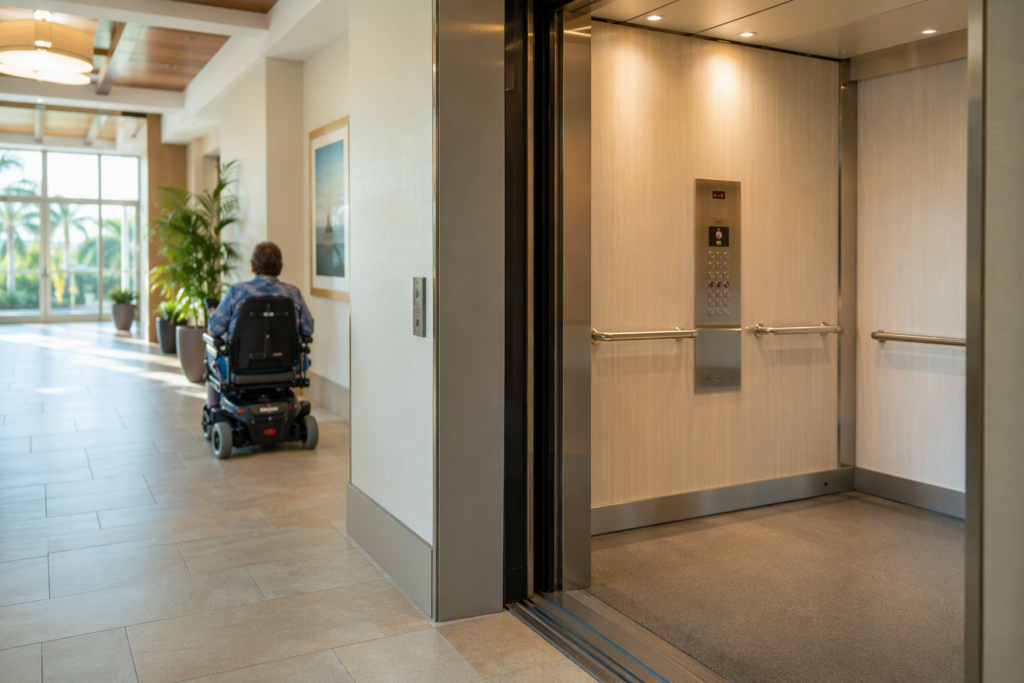
The Americans with Disabilities Act (ADA) and its implementing standards require passenger elevators in multi-story facilities accessible to the public or to residents with disabilities to meet specific dimensional and operational criteria. For senior living and assisted living buildings, this typically includes:
- Minimum cab dimensions to accommodate wheelchairs and mobility equipment
- Call button height and tactile marking requirements
- Audible and visual floor indicators
- Handrails inside the cab
- Accessible door reopening devices at both the door edge and a specified height
- Braille and raised character floor designations at hoistway entrances
ADA requirements apply to new construction and, under barrier removal obligations, to existing facilities undergoing alterations. Facilities completing modernization projects should treat ADA compliance as a parallel requirement alongside ASME A17.1-2019, not a separate afterthought.
When Is a State Permit Required for Elevator Work at an Assisted Living Facility?
Florida law requires a state permit — applied for by a registered elevator company — before any conveyance is installed or altered. “Alteration” covers a broad range of modernization work, including controller replacements, drive system upgrades, door operator replacements, and cab renovations that affect safety components. Cosmetic cab interior work that does not touch safety systems may fall outside this requirement, but the line is not always obvious. Before starting any scope of work, facilities should confirm permit requirements with the DBPR Bureau of Elevator Safety or the local AHJ.
Once a certificate of operation is issued, the elevator owner is responsible for safe operation, proper maintenance, inspection, and correction of any code deficiencies. That responsibility does not transfer to the contractor — it remains with the facility.
What Does a Modernization Project for a Senior Living Elevator Typically Include?
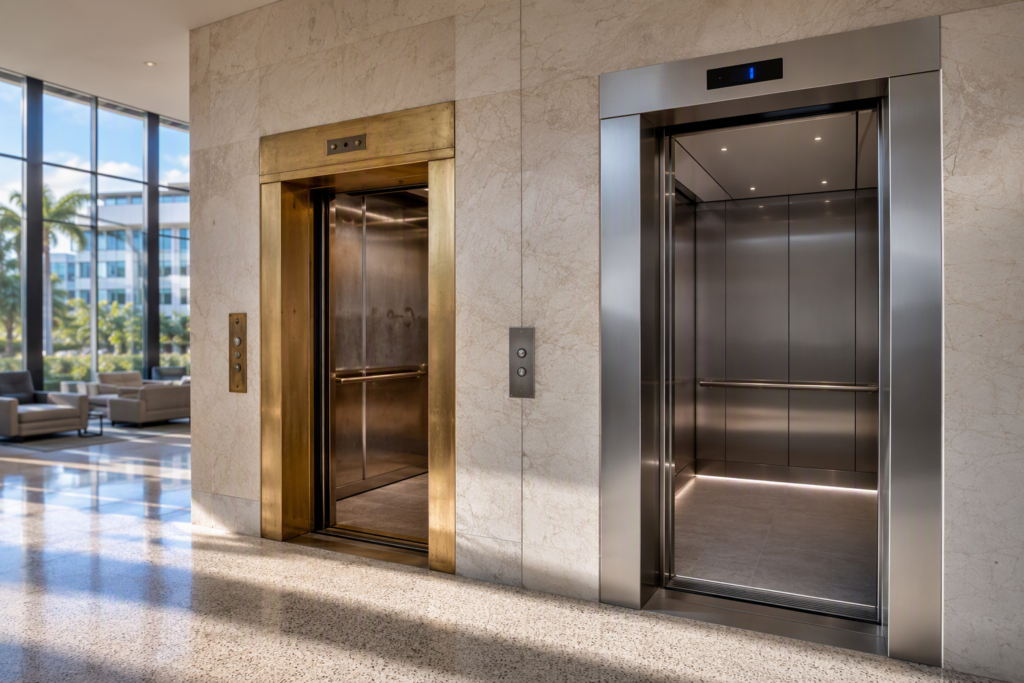
Modernization scope varies widely based on equipment age, current code compliance status, and the specific deficiencies identified during inspection. Common components addressed in healthcare and senior living modernization projects include:
- Control system replacement: Older relay-logic controllers are replaced with solid-state microprocessor controls that support modern safety features and diagnostics.
- Drive system upgrades: Hydraulic and traction drive systems may be upgraded to improve energy efficiency, reduce noise, and achieve more precise leveling.
- Door operator and safety edge replacement: Upgraded door systems reduce closing force and improve response to obstructions.
- Emergency lighting and communication: Two-way emergency communication systems and battery-powered cab lighting are brought into compliance with ASME A17.1-2019.
- Firefighters’ service update: Phase I and Phase II fire service features are tested and upgraded to current code.
- ADA cab upgrades: Handrails, control panel heights, Braille signage, and audible/visual indicators are updated to meet current ADA standards.
- Cab interior renovation: Non-slip flooring, wall panel upgrades, and lighting improvements address both safety and resident comfort.
Axxiom Elevator Florida conducts pre-modernization assessments for assisted living operators to identify which components require mandatory correction and which represent recommended upgrades — giving facility teams the information they need to plan and budget accurately.
How Long Does an Elevator Modernization Project Take at a Healthcare Facility?
Project duration depends on the scope of work, equipment lead times for specialty components, and whether the facility can take the elevator out of service or requires a phased approach. Partial modernizations — such as a controller replacement alone — may be completed within a few days of work after the permit is issued. Full modernizations involving drive system replacement, new cab interiors, and ADA upgrades typically require several weeks of planning, permitting, and installation. Assisted living facilities with a single elevator should coordinate closely with their registered elevator contractor to schedule work during periods of lowest resident impact and to arrange interim accessibility accommodations as required.
What Are the Consequences of Non-Compliance for an Assisted Living Facility?
Operating an elevator on an expired certificate of operation violates Florida law. DBPR enforcement actions can include orders to take the elevator out of service, civil penalties, and complications for the facility’s operating license. Beyond regulatory consequences, a non-compliant elevator in a senior care setting creates significant liability exposure if a resident, visitor, or staff member is injured. Florida law also requires the certificate of operation holder to report any elevator accident to the state within five working days — a requirement that underscores the importance of maintaining a documented, current compliance record.
Do Assisted Living Facilities Need a Service Maintenance Contract?
Florida law provides that an elevator serving only two adjacent floors and covered by a service maintenance contract is exempt from the annual inspection requirement while that contract remains in effect. Most assisted living and senior living facilities serve more than two floors and do not qualify for this exemption. Regardless of exemption status, a documented preventive maintenance program is a sound operational practice that supports equipment reliability and provides evidence of responsible stewardship — both of which matter in regulatory reviews and liability proceedings.
Axxiom Elevator Florida provides maintenance programs for senior living and assisted living communities in Pompano Beach, Sarasota, and surrounding markets, with all work performed by Florida-certified elevator technicians holding current certificates of competency.
Who Is Qualified to Perform Elevator Work in Florida?
Florida law requires that all new conveyance installations and alterations be performed by a registered elevator company. Individual technicians must hold a Florida elevator certificate of competency, which is renewed annually with proof of continuing education, and must carry general liability insurance. Inspections must be conducted by a certified elevator inspector who has no employment relationship, association, or conflict of interest with the permit holder or the facility owner. Facilities should verify contractor registration and technician credentials with the DBPR Bureau of Elevator Safety before awarding any modernization or maintenance contract.
How Should a Facility Prepare for a Florida Elevator Inspection?
- Confirm the current certificate of operation is posted in the elevator cab in a frame with a transparent cover and has not expired.
- Gather maintenance records documenting all service visits, repairs, and parts replacements since the last inspection.
- Verify that the two-way emergency communication system is functional and connects to a continuously staffed location.
- Test firefighters’ Phase I and Phase II emergency service features and document the results.
- Check door operation, including closing force, reopening device response, and leveling accuracy at each floor.
- Confirm machine room access, lighting, ventilation, and housekeeping meet code requirements.
- Review any open deficiency notices from the prior inspection and confirm corrective work was completed and documented.
- Contact the AHJ — Broward County Building Code Division for Pompano Beach facilities, or DBPR directly for Sarasota facilities — to confirm the inspection scheduling process.
Questions Your Inspector Will Ask
Florida certified elevator inspectors follow a structured evaluation process. Facility managers and maintenance directors should be prepared to answer the following:
- Is the certificate of operation current, and is it posted in the required location? An expired or improperly posted certificate is an immediate compliance issue.
- When was the most recent maintenance visit, and is there a written service record? Inspectors look for a documented maintenance history, not just verbal assurances.
- Has any alteration or repair been made since the last inspection? Undocumented alterations can trigger permit-related findings.
- Is the two-way emergency communication system connected to a continuously attended location? This is a hard requirement under ASME A17.1-2019 and cannot be substituted with a voicemail system.
- Has the firefighters’ emergency operation been tested? Inspectors will test Phase I and Phase II fire service directly.
- Are there any known deficiencies that have not been corrected? Self-reporting demonstrates good faith; concealment does not.
- Who is the registered elevator company responsible for maintenance? The inspector may verify contractor registration with DBPR.
- Has any elevator accident or incident occurred since the last inspection? Florida law requires accidents to be reported to the state within five working days; the inspector may ask whether any reportable events occurred.
How Can Axxiom Elevator Florida Support Senior Living Compliance?
Axxiom Elevator Florida works with senior living and assisted living operators to navigate the full compliance lifecycle — from pre-modernization assessment through permit coordination, installation, and post-inspection documentation. As a Florida-registered elevator company, Axxiom Elevator Florida is authorized to perform the permitted alteration work that modernization projects require, with all installation and maintenance performed by certified elevator technicians holding current Florida certificates of competency. Facilities in Pompano Beach and Sarasota can work with Axxiom Elevator Florida to develop a compliance roadmap that prioritizes mandatory corrections, addresses ADA accessibility gaps, and plans for longer-term equipment upgrades within realistic budget cycles.
Contact Axxiom Elevator Florida for a free elevator assessment at 954-970-0020.
Need elevator service you can rely on? Axxiom Elevator Florida is ready to help.