Commercial Elevator Installation in Florida: Timeline, Permitting, and Everything Building Owners Need to Know
Installing a new elevator in a commercial building in Florida typically takes 3 to 12 months from initial planning through final certificate of operation, depending on shaft construction requirements, equipment selection, local authority review timelines, and inspection scheduling. The process involves engineering design, state permitting through the Florida DBPR Bureau of Elevator Safety, equipment fabrication, installation by a state-registered elevator company, and a mandatory post-installation inspection before the elevator can be used.
How Long Does It Actually Take to Install a Commercial Elevator in Florida?
The total timeline from project kickoff to a usable elevator with a valid Florida certificate of operation typically spans 3 to 12 months, with most mid-size commercial projects landing in the 5 to 9 month range.
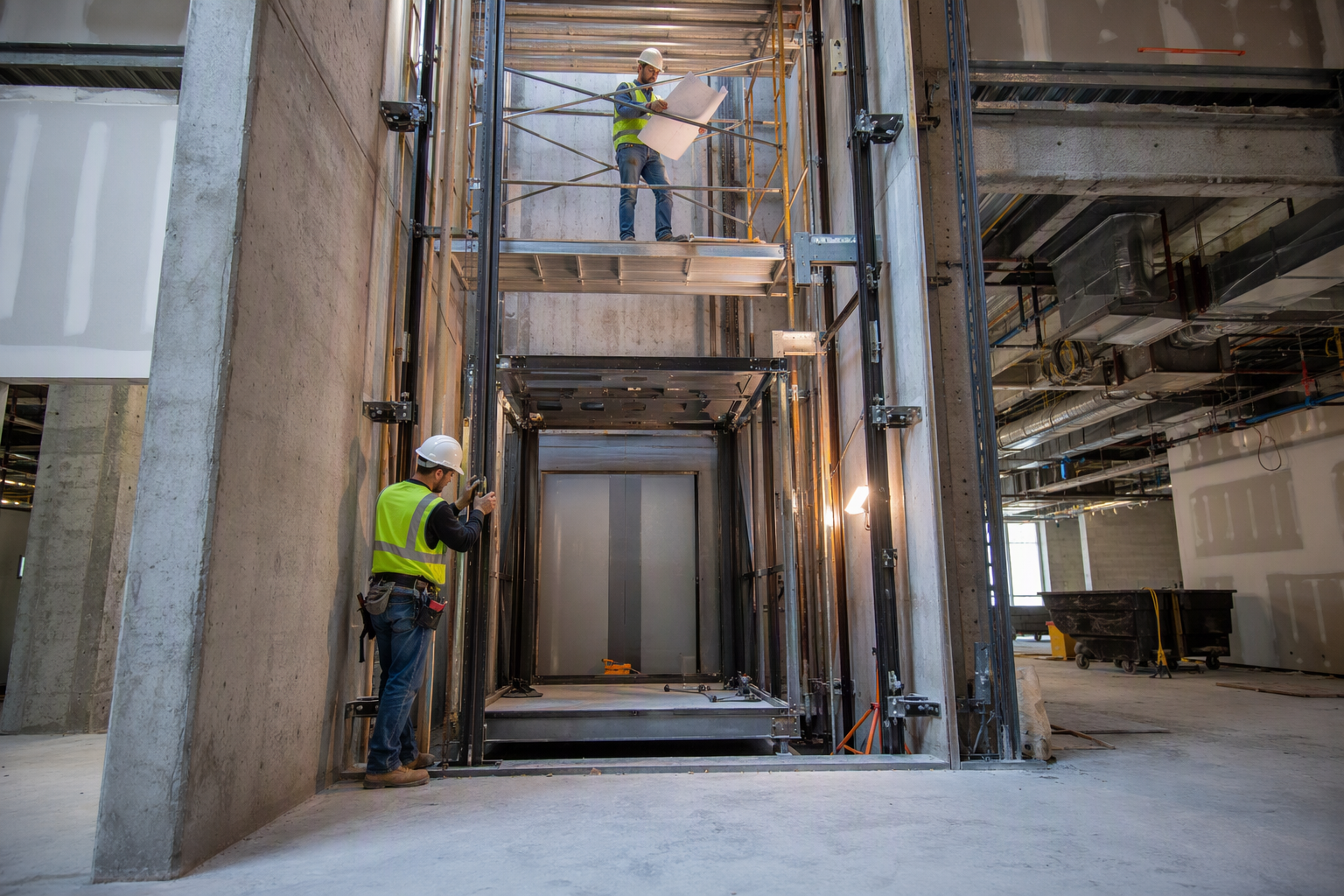
That wide range reflects meaningful differences between project types. A traction elevator in a new mid-rise office building — where a shaft must be constructed, structural engineering reviewed, and equipment custom-ordered — takes substantially longer than a hydraulic elevator retrofit in a two-story professional building where the pit and machine room space already exist.
The timeline breaks down into several distinct phases, each with its own dependencies:
- Pre-design and site assessment: 2–6 weeks
- Engineering drawings and specification finalization: 3–8 weeks
- State and local permit application and review: 4–12 weeks (varies significantly by jurisdiction)
- Equipment fabrication and delivery: 8–20 weeks for custom or traction equipment
- Shaft and pit construction (if required): Concurrent with or before equipment delivery
- Mechanical and electrical installation: 3–8 weeks
- Final inspection and certificate issuance: 1–4 weeks after installation completion
Because permit review and equipment fabrication often run in parallel, experienced project teams sequence these phases carefully to avoid bottlenecks. Axxiom Elevator Florida works with building owners in Pompano Beach and Sarasota to coordinate this sequencing from the outset, reducing avoidable delays in what is inherently a multi-agency process.
What Are the Florida Permit Requirements for a New Commercial Elevator Installation?
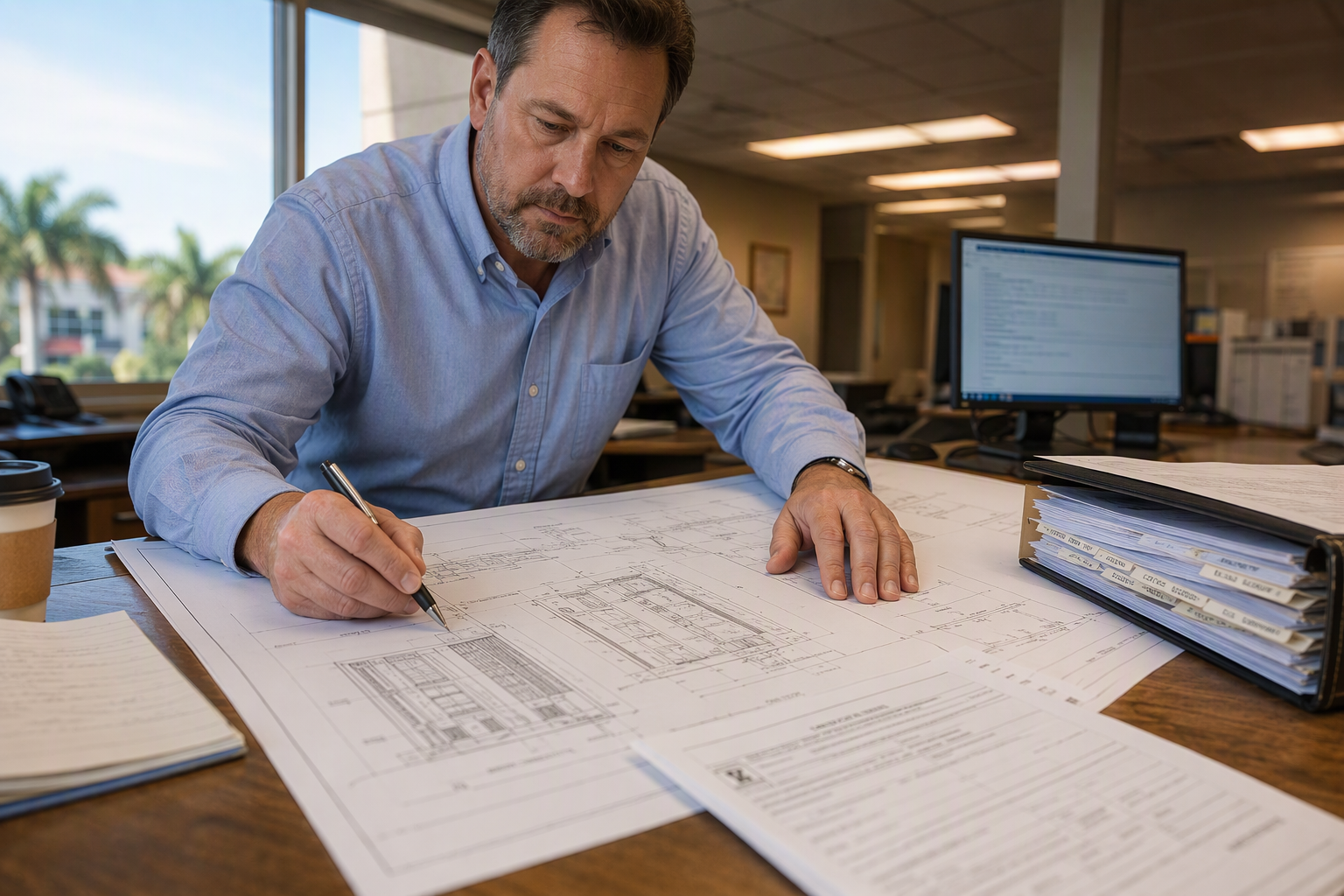
Under Chapter 399, Florida Statutes (the Elevator Safety Act), a state permit applied for by a registered elevator company is required before any conveyance is installed or altered in Florida.
This is a firm statutory requirement — no installation work may legally begin before the permit is issued. The permit application is submitted by the registered elevator company performing the installation, not by the building owner directly. The application must include engineered construction drawings, equipment specifications, and documentation confirming the installing company’s registration status with the DBPR.
The Florida Department of Business and Professional Regulation (DBPR), Division of Hotels and Restaurants, Bureau of Elevator Safety is the state-level authority governing elevator permits, inspections, and certificates of operation statewide. In some counties and municipalities, the state has delegated enforcement authority to local bodies. In Broward County — which includes Pompano Beach — the Broward County Building Code Division enforces Chapter 399 through its own elevator inspectors. Building owners in Pompano Beach should confirm whether their specific project is reviewed by the county-level authority or the state bureau directly.
In Sarasota, permit coordination occurs through the state DBPR system and any applicable local building department requirements. Axxiom Elevator Florida manages permit submissions in both markets and is familiar with the review timelines and documentation expectations of each jurisdiction.
What Code Standards Apply to a New Commercial Elevator Installation in Florida?
Florida has adopted the ASME A17.1/CSA B44 Safety Code for Elevators and Escalators, 2019 edition (ASME A17.1-2019), as the governing technical standard for elevator design and installation, effective December 31, 2023, under Chapter 61C-5, Florida Administrative Code (Florida Elevator Safety Code).
ASME A17.1-2019 covers design, construction, installation, operation, inspection, testing, maintenance, alteration, and repair of elevators and escalators. For new commercial installations, the code governs critical parameters including car dimensions, door operation, safety devices, machine room requirements, electrical systems, and emergency operations.
In addition to ASME A17.1, commercial elevator projects must also comply with:
- Americans with Disabilities Act (ADA): ADA Standards for Accessible Design set minimum requirements for elevator cab dimensions, control panel height, door timing, floor identification, and accessible features in commercial buildings open to the public or serving employees.
- OSHA construction standards: Apply to worker safety during the installation process itself.
- Florida Building Code: Governs the structural and architectural elements of shaft construction, pit dimensions, and machine room design, adopted by the Florida Building Commission.
A compliant new installation must satisfy all of these standards simultaneously. Engineering drawings submitted with the permit application must demonstrate compliance with ASME A17.1-2019 as Florida’s adopted elevator code.
Who Is Legally Authorized to Install a Commercial Elevator in Florida?
All new conveyance installations in Florida must be performed by a registered elevator company — a firm that has registered with the DBPR, maintains active general liability insurance, and employs certified elevator technicians.
A Florida certified elevator technician holds an elevator certificate of competency issued by the state and is authorized to construct, install, maintain, or repair conveyances after that certificate is issued. Elevator certificates of competency expire after one year and require proof of 8 hours of continuing education for renewal. Registered elevator companies must also renew their registration annually and maintain current general liability insurance.
Building owners should confirm that any company bidding on their installation project holds active DBPR registration before signing a contract. Using an unregistered company — regardless of general contractor relationships — violates Chapter 399 and can invalidate the permit process entirely. Axxiom Elevator Florida is a registered elevator company serving commercial clients in Pompano Beach and Sarasota.
What Happens After Installation — What Is the Final Inspection Process?
Before a newly installed elevator can be used, it must be inspected by a certified elevator inspector who has no employment, association, or conflict of interest with the permit holder or the building owner.
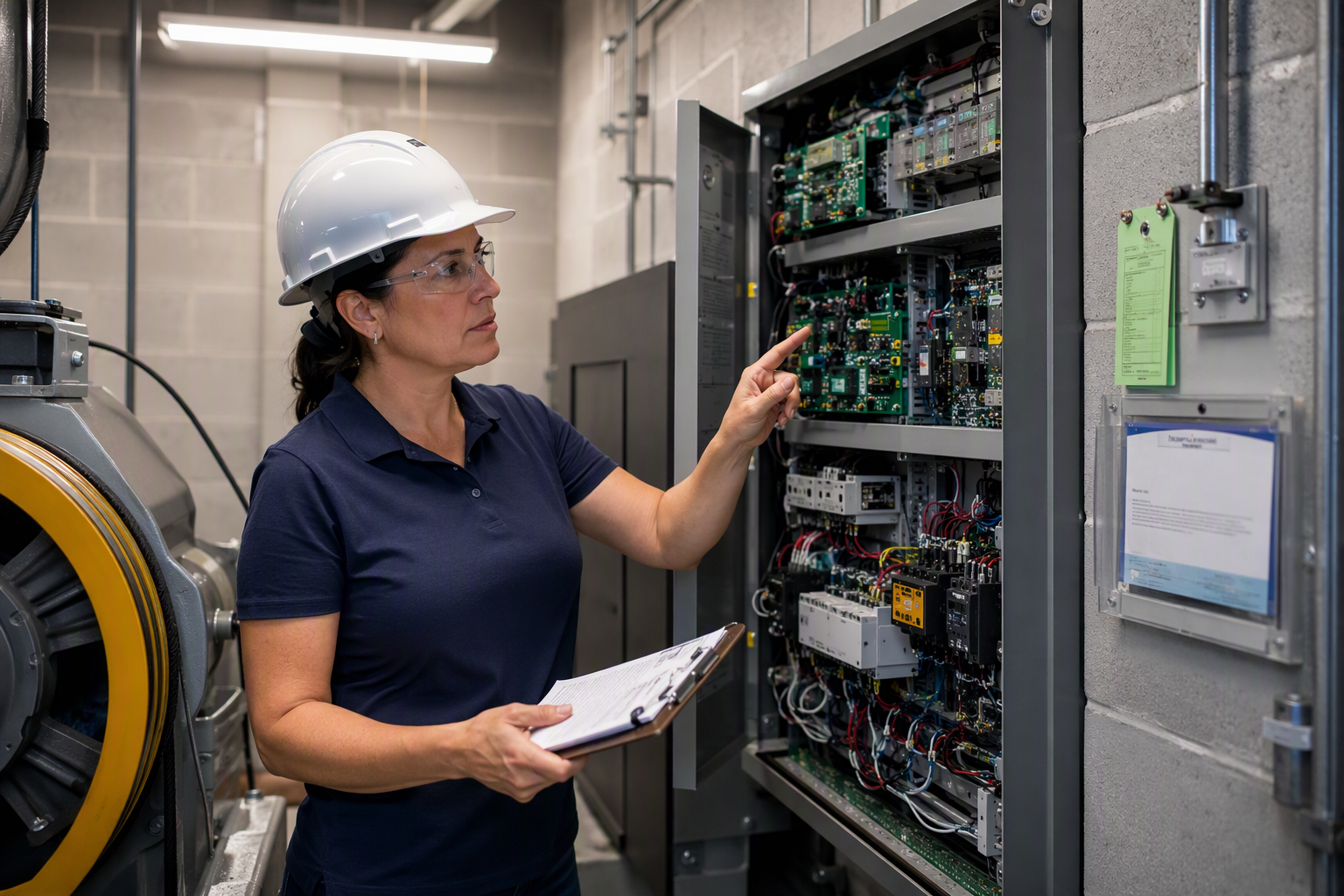
This independence requirement is embedded in Chapter 399 and exists to ensure that the final inspection is objective. The inspector reviews compliance with ASME A17.1-2019, verifies that the installation matches the permitted drawings, and conducts operational testing. Only after a satisfactory inspection can a certificate of operation be issued by the DBPR or the delegated local authority.
The certificate of operation must then be posted in a conspicuous location inside the elevator in a frame with a transparent cover — this is a statutory requirement under Chapter 399, not optional. A Florida certificate of operation is valid for no more than 2 years. Once issued, the elevator owner becomes responsible for safe operation, proper maintenance, ongoing inspection, and correction of any code deficiencies.
What Types of Elevators Are Commonly Installed in Florida Commercial Buildings?
The most common elevator types installed in Florida commercial buildings each carry different installation timelines and technical requirements under ASME A17.1-2019.
| Elevator Type | Typical Commercial Application | Typical Installation Timeline | Key Technical Considerations |
|---|---|---|---|
| Hydraulic (conventional) | Low-rise buildings, 2–5 floors | 3–6 months | Requires machine room and underground cylinder; pit depth required |
| Hydraulic (hole-less) | Low-rise, environmental or soil concerns | 3–6 months | No underground cylinder; above-ground jack system |
| Geared traction | Mid-rise commercial, 4–10 floors | 6–10 months | Machine room required above or adjacent; custom cab common |
| Gearless traction (MRL) | Mid-to-high-rise, modern commercial | 7–12 months | Machine room-less design; longer equipment lead times |
| Limited-use / limited-application (LU/LA) | Low-traffic accessibility applications | 2–5 months | Covered under ASME A17.1; ADA compliant options available |
Equipment lead times from manufacturers vary based on market conditions, customization requirements, and supply chain factors. Gearless traction and machine-room-less (MRL) systems frequently carry the longest lead times due to greater customization and specialized components.
How Does Local Authority Jurisdiction Affect the Permitting Process in Pompano Beach?
In Broward County, which includes Pompano Beach, the Broward County Building Code Division is the local authority having jurisdiction (AHJ) for elevator enforcement under Chapter 399. The division enforces Florida’s elevator law through its own certified elevator inspectors, operating under delegated authority from the state.
This means permit applications, plan reviews, and final inspections for new elevator installations in Pompano Beach are coordinated through Broward County’s elevator inspection program rather than directly through the state DBPR bureau in every instance. Building owners and their registered elevator companies should confirm the correct submission path at the outset of project planning, as submitting to the wrong authority can add weeks to the review timeline.
Axxiom Elevator Florida has direct experience navigating the Broward County permit and inspection process for commercial elevator projects and can help clients understand the correct documentation requirements and review timelines for Pompano Beach projects.
How Does the Permitting Process Work for a New Elevator in Sarasota?
In Sarasota, elevator permit applications for new commercial installations are submitted through the DBPR Bureau of Elevator Safety at the state level, coordinated alongside any applicable local building department requirements for the structural and architectural elements of the project.
Unlike Broward County or Miami-Dade County — which have delegated local enforcement programs — Sarasota-area projects typically interact with the state bureau directly for elevator-specific permitting and inspection. Building owners should expect the state DBPR review process, and should factor local building department timelines for shaft construction permits separately from the elevator permit itself. Axxiom Elevator Florida assists Sarasota commercial clients with navigating the multi-department coordination that larger installation projects require.
What Are the ADA Requirements for Commercial Elevator Installations?
The Americans with Disabilities Act (ADA) requires that elevators in commercial facilities serving the public or employees meet specific accessibility standards, including minimum cab dimensions, door clear widths, control panel mounting heights, floor call button requirements, tactile signage, audible and visual signals, and door timing requirements.
New commercial elevator installations must incorporate ADA-compliant features from the design phase — retrofitting accessibility features after installation is both technically difficult and expensive. Buildings subject to ADA coverage that are newly constructed or undergo alterations triggering accessibility path-of-travel requirements must include an ADA-compliant elevator where vertical access between floors is required for accessibility.
There are exceptions to ADA elevator requirements — for example, facilities under a certain occupancy threshold or with fewer than a specified number of stories may qualify for an elevator exemption under specific ADA conditions — but these exceptions do not eliminate the need for other accessible means of vertical access. Building owners should consult qualified legal and accessibility counsel to confirm whether their specific project qualifies for any ADA elevator exemptions.
What Are the Ongoing Compliance Requirements After Installation?
Once a Florida certificate of operation is issued, the building owner bears legal responsibility for the elevator’s safe operation and ongoing compliance under Chapter 399.
Key ongoing obligations include:
- Annual inspection: Florida requires that every elevator covered by Chapter 399 be inspected annually by a certified elevator inspector. (An exception applies to non-escalator, non-dumbwaiter elevators serving only two adjacent floors that are covered by an active service maintenance contract.)
- Certificate of operation renewal: A Florida certificate of operation is valid for no more than 2 years and can only be renewed following a satisfactory inspection. Operating on an expired certificate violates state law.
- Posted certificate: The current certificate of operation must remain posted conspicuously inside the elevator at all times, in a frame with a transparent cover.
- Accident reporting: The certificate of operation holder must report any elevator accident to the state within 5 working days.
- Code deficiency correction: The owner is responsible for correcting any deficiencies identified during inspections.
- Maintenance by qualified personnel: Ongoing maintenance must be performed by certified elevator technicians employed by a DBPR-registered elevator company.
What Questions Should Building Owners Ask Before Choosing an Elevator Installation Company?
Selecting the right installation contractor directly affects both the timeline and the long-term compliance of the project. The following questions help building owners evaluate candidates meaningfully:
- Is the company registered as an elevator company with the Florida DBPR, and is that registration current?
- Does the company carry active general liability insurance as required by Chapter 399?
- Are the technicians assigned to the project certified elevator technicians with current DBPR certificates of competency?
- Does the company have experience with the specific elevator type being installed (hydraulic, traction, MRL)?
- Will the company manage the permit application, plan review coordination, and inspection scheduling?
- Can the company provide references from comparable commercial projects in Florida?
- What is the company’s approach to managing equipment lead time within the overall project schedule?
How Do Equipment Lead Times Affect the Installation Schedule?
Equipment fabrication and delivery is frequently the longest single phase in a commercial elevator installation project. Custom cab finishes, specialized drive systems, and machine-room-less configurations often require orders placed months in advance of the intended installation start date.
The most effective project schedules treat equipment ordering and permit application as parallel tracks rather than sequential steps. A registered elevator company with established manufacturer relationships can often provide realistic lead time estimates during the pre-design phase, allowing owners to build accurate project timelines from the outset. Attempting to compress this phase by ordering equipment before permit approval carries its own risks if permit review results in required design modifications.
What Building Infrastructure Is Required Before Installation Can Begin?
A commercial elevator installation is not a stand-alone trade activity — it depends on prerequisite building infrastructure that must be completed or coordinated in advance:
- Elevator shaft: Constructed to dimensions specified in the engineered drawings and ASME A17.1-2019 requirements, including minimum clearances above and below the cab travel range.
- Pit: A concrete pit at the base of the shaft meeting code-required depth, with waterproofing, lighting, emergency stop, and drainage as required.
- Machine room or overhead space (traction systems): Properly sized, ventilated, and secured per code requirements, or overhead structural provisions for MRL systems.
- Electrical service: Dedicated electrical circuits, disconnect means, lighting, and emergency power provisions as required by ASME A17.1-2019 and the National Electrical Code.
- Structural provisions: Guide rail bracket attachment points and overhead support beams must be engineered to handle the static and dynamic loads specified for the equipment.
Coordination between the general contractor and the elevator installation company during the construction phase is critical. Dimensional errors or missing infrastructure items discovered after the elevator equipment arrives can cause significant delays and cost overruns.
How Does a Commercial Elevator Project Coordinate With the Florida Building Code?
The Florida Building Code governs the structural, architectural, and mechanical aspects of elevator shaft construction, machine room design, and building egress — separate from, but coordinated with, the elevator-specific permit under Chapter 399. A commercial elevator project therefore involves at minimum two parallel regulatory tracks: the elevator permit from the DBPR or delegated local authority, and a building permit from the local building department for shaft and related construction.
These two tracks must be synchronized. Elevator plans reviewed under Chapter 399 reference the shaft dimensions and structural provisions that the building permit establishes. Discrepancies between the elevator permit drawings and the building permit drawings must be resolved before installation begins. Experienced elevator companies and their project managers understand this dual-track process and plan accordingly.
What Factors Most Commonly Cause Commercial Elevator Installation Delays?
Understanding common delay sources allows building owners and project teams to plan proactively:
- Permit review processing time: Volume of applications at the reviewing authority, completeness of submitted documents, and requests for additional information can each add weeks.
- Plan revision cycles: Incomplete or non-compliant engineering drawings require resubmission, restarting portions of the review clock.
- Equipment delivery delays: Supply chain disruptions, manufacturer backlogs, or late design changes can push delivery dates and idle installation crews.
- Site readiness: Shaft construction, electrical rough-in, or pit waterproofing not completed when equipment arrives forces costly schedule delays.
- Inspection scheduling: Certified elevator inspectors with no conflict of interest must be available and scheduled — inspection availability varies by jurisdiction and time of year.
- Design changes during construction: Owner-requested changes after permit approval typically require permit amendment and restart of some review periods.
Is a Private Residence Elevator Subject to the Same Florida Requirements?
No. Elevators, stairway chairlifts, and wheelchair lifts in private residences do not require a Florida certificate of operation under Chapter 399. Similarly, the annual inspection requirement under Chapter 399 applies to commercial and public conveyances, not private residential equipment. Private residence elevators are also excluded from the scope of Florida’s adopted ASME A17.1-2019 for certain provisions.
This distinction is relevant because many Florida commercial properties — including multi-family buildings, assisted living facilities, and mixed-use developments — contain elevators that do fall under Chapter 399 even if the building includes residential units. The nature of the occupancy and the elevator’s classification determines regulatory applicability. Building owners with mixed-use properties should confirm classification with the DBPR or their registered elevator company.
What Happens If a Commercial Elevator Is Operated Without a Valid Certificate of Operation?
Under Chapter 399, Florida Statutes, operating a commercial elevator on an expired certificate of operation violates state law. A Florida certificate of operation is valid for no more than 2 years and can only be renewed following a current satisfactory inspection. Once a certificate lapses, the elevator must be taken out of service until a satisfactory inspection is completed and a new certificate is issued.
Additionally, the certificate of operation holder is legally responsible for safe operation and must report any elevator accident to the state within 5 working days. Operating non-compliant equipment exposes building owners to regulatory enforcement action, potential civil liability, and the practical burden of an emergency shutdown. Proactive maintenance scheduling and certificate renewal well ahead of expiration dates is strongly recommended by Axxiom Elevator Florida for all commercial elevator owners in Pompano Beach and Sarasota.
How Should Building Owners Prepare for a Post-Installation Inspection?
A successful final inspection requires careful preparation. The following steps outline the standard preparation process for a new commercial elevator prior to the mandatory post-installation inspection under Chapter 399:
- Confirm that all installation work has been completed according to the permitted drawings and ASME A17.1-2019 specifications.
- Verify that all required safety devices are installed, functional, and tested by the installing technicians.
- Ensure the machine room or equipment area is clean, accessible, properly lit, and free of stored materials that are not part of the elevator system.
- Confirm that all required electrical provisions — including the main line disconnect, lighting, and emergency operations circuits — are complete and properly labeled.
- Confirm that the pit is clean, properly lit, equipped with a working emergency stop switch, and free of standing water.
- Ensure that ADA-required features are installed, including correct control panel heights, tactile signage, audible/visual signals, and door timing.
- Verify that the installation documentation, permit, and approved drawings are on site and available for the inspector’s review.
- Schedule the inspection with a certified elevator inspector who has no conflict of interest with the permit holder or owner — the registered elevator company typically coordinates this.
What Is the Difference Between an Elevator Permit and a Certificate of Operation in Florida?
These are two distinct regulatory documents issued at different stages of the project, and confusing them is a common source of compliance errors among building owners unfamiliar with the process.
The elevator permit is issued by the DBPR or delegated local authority before installation begins. It authorizes the registered elevator company to proceed with installation according to the reviewed and approved plans. No installation work may legally begin without this permit.
The certificate of operation is issued after installation is complete and a satisfactory post-installation inspection has been conducted by a qualified, conflict-free certified elevator inspector. This certificate is what legally authorizes the elevator to be placed in service and used by building occupants. It must be posted inside the elevator, is valid for no more than 2 years, and must be renewed following satisfactory ongoing inspections.
The full process — from permit to certificate — represents the complete regulatory lifecycle of bringing a new commercial elevator into legal service in Florida.
Need elevator service you can rely on? Axxiom Elevator Florida is ready to help.