Florida building owners and property managers face a crowded market of elevator maintenance providers, ranging from large OEM-affiliated companies to regional independents. Choosing the wrong company can mean hidden costs, compliance gaps, and equipment downtime. This guide breaks down every factor that separates a quality elevator maintenance contract from a costly one — so Florida property owners can make a fully informed decision before signing anything.
—
What Are the Main Types of Elevator Maintenance Companies Operating in Florida?
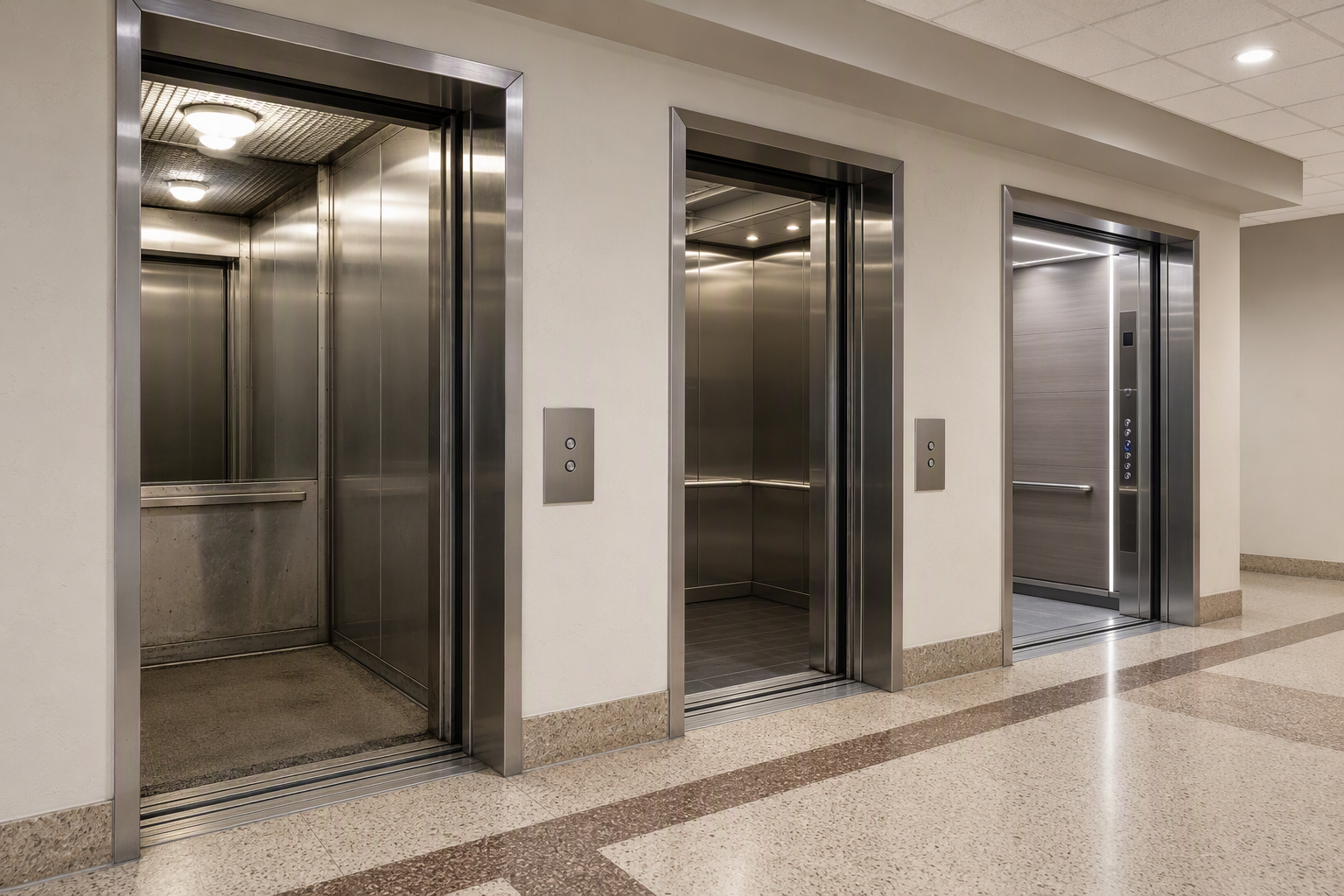
Florida’s elevator service market generally divides into three categories, each with distinct advantages and trade-offs:
1. OEM (Original Equipment Manufacturer) Service Divisions
Major elevator manufacturers operate their own service arms. These companies have direct access to proprietary parts and diagnostic software for their own equipment — but they typically charge premium rates, lock clients into long-term contracts, and may be less flexible on pricing or scope. Proprietary parts access can become a leverage point at contract renewal time.
2. Large National Independent Contractors
These companies are not manufacturer-affiliated but operate across multiple states. They may offer competitive pricing and broad technician coverage, though local accountability and response consistency can vary depending on the regional branch managing your account.
3. Florida-Based Independent Service Providers
Companies like Axxiom Elevator Florida operate exclusively within the state, focusing on Florida-specific regulatory requirements and building types. Independent providers typically offer more transparent contract terms, flexibility in choosing parts sourcing, and direct communication with decision-makers rather than a national call center.
| Factor | OEM Service Division | National Independent | Florida Independent (e.g., Axxiom) |
|---|---|---|---|
| Parts Access | Proprietary only; may restrict access | Multi-brand sourcing | Multi-brand sourcing, no vendor lock-in |
| Contract Flexibility | Low; long-term lock-in common | Moderate | Higher; shorter-term options available |
| Florida Code Familiarity | Varies by regional branch | Varies by regional branch | Florida-focused expertise |
| Local Accountability | Low (national structure) | Moderate | High (direct contact, local operation) |
| Pricing Transparency | Often opaque; proprietary cost leverage | Moderate | Typically more transparent |
| ADA / ASME Compliance Support | Yes | Yes | Yes, with Florida-specific AHJ knowledge |
—
What Florida Regulations Govern Elevator Maintenance Companies?
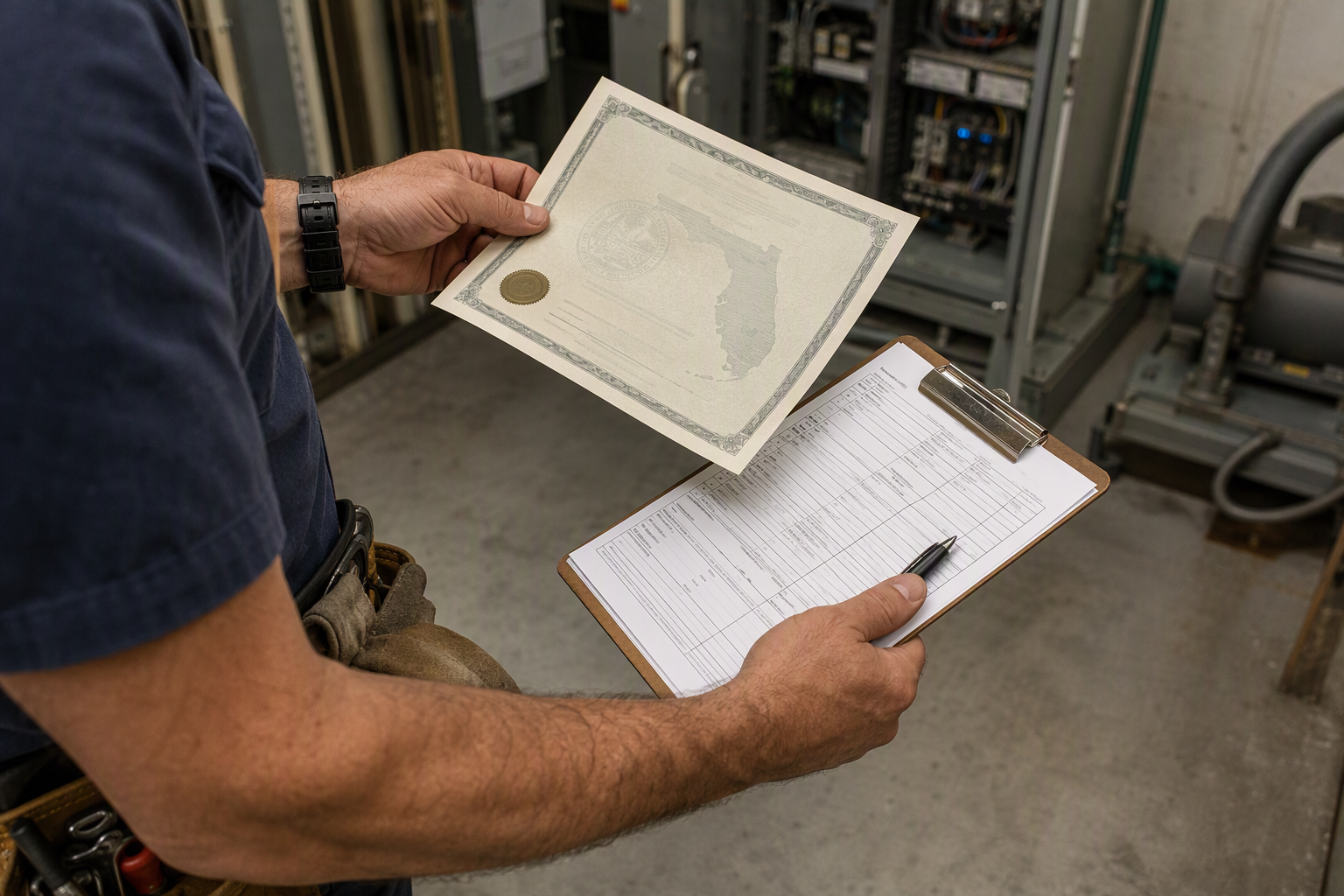
Florida elevator maintenance is governed at both the federal and state level. Any company you consider must demonstrate compliance with the following:
- ASME A17.1 Safety Code for Elevators and Escalators — the primary federal safety standard governing elevator design, installation, and maintenance. Florida adopts this code for new installations.
- ASME A17.3 Safety Code for Existing Elevators and Escalators — governs ongoing maintenance and inspection requirements for elevators already in service, which is directly relevant to any maintenance contract.
- Americans with Disabilities Act (ADA) — federally mandates accessibility standards for elevators serving the public, including cabin dimensions, control heights, and door timing. Maintenance companies must understand how service work affects ADA compliance.
- OSHA Standards — apply to elevator technician safety practices, including confined space, electrical, and fall protection requirements during maintenance and repair work.
- Florida Department of Business and Professional Regulation (DBPR) — Florida requires elevator companies and their mechanics to hold state-issued licenses. Always verify a company’s DBPR license before signing a contract.
Any maintenance provider unable to demonstrate current Florida DBPR licensing and working knowledge of ASME A17.1 and A17.3 should be removed from consideration immediately.
—
What Should a Florida Elevator Maintenance Contract Actually Include?
The contract is where most property owners are caught off guard. A low quote can reflect a narrow scope that leaves significant costs uncovered. Before signing, verify each of the following elements is addressed explicitly:
Scope of Service: Full-Service vs. Oil-and-Grease
The two most common contract types in Florida are:
- Oil-and-Grease (Lubrication-Only) Contracts — cover only routine lubrication, adjustment, and minor cleaning. Parts, repairs, and callbacks beyond routine visits are billed separately. These carry lower monthly fees but high variable cost exposure.
- Full-Service (Comprehensive) Contracts — include labor, most replacement parts, callbacks, and sometimes modernization components. Monthly costs are higher but more predictable. Best suited for high-traffic buildings or aging equipment.
| Contract Type | Pros | Cons | Best For |
|---|---|---|---|
| Oil-and-Grease | Lower base cost; works well for newer, reliable equipment | Unpredictable repair bills; limited coverage | New installations, low-traffic buildings |
| Full-Service / Comprehensive | Predictable costs; parts and labor included; priority response | Higher monthly fee; some exclusions may still apply | Aging equipment, high-traffic commercial or residential buildings |
| Modernization-Inclusive | Covers code upgrade components; reduces capital expenditure surprises | Highest cost tier; not always necessary for newer units | Buildings with equipment approaching end-of-life |
—
How Do You Compare Elevator Maintenance Quotes Side by Side in Florida?
When multiple quotes arrive, price-per-month is the least reliable point of comparison. Use this structured approach instead:
- Standardize the scope. Confirm each quote covers the same elevator count, contract type (full-service vs. oil-and-grease), and service frequency before comparing numbers at all.
- Identify all exclusions in writing. Ask each vendor to provide a written exclusions list. Common exclusions include door operator components, cab interiors, hydraulic fluid replacement, and modernization parts.
- Verify callback and emergency call terms. Confirm whether after-hours callbacks are included or billed separately, and whether there are caps on annual callbacks. Unlimited callback coverage is a meaningful differentiator for high-traffic buildings.
- Check parts sourcing language. OEM-affiliated contracts may require proprietary parts. Independent contracts often allow multi-source parts, which reduces cost and lead time, particularly when supply chains are disrupted.
- Review escalation clauses. Multi-year contracts often include annual price escalation tied to an index. Confirm whether this is capped and what triggers it.
- Assess inspection and violation support. Confirm whether the contract includes coordination with Florida’s Authority Having Jurisdiction (AHJ) for annual inspections and whether the vendor will address violations without additional billing.
- Examine termination terms. Early termination penalties, notice periods (commonly 30–90 days), and auto-renewal clauses can create significant financial exposure if you need to switch vendors.
- Request a sample service log or maintenance record. Reputable companies maintain detailed logs of every visit, adjustment, and part replacement — this documentation is essential for ASME A17.3 compliance and liability protection.
—
What Red Flags Should Property Owners Watch for When Reviewing Elevator Service Contracts?
Beyond what a contract includes, what it obscures is equally important. Watch for these warning signs:
- Vague scope language — phrases like “routine maintenance as needed” without a defined visit schedule or task list leave too much to interpretation.
- Unlimited liability waivers — some contracts contain language that eliminates vendor responsibility for code violations discovered during their service tenure.
- Parts mark-up clauses — some contracts exclude parts from coverage but also require that any parts used be sourced exclusively through the vendor at their listed price. This can result in significant cost exposure.
- No inspection coordination language — if the contract says nothing about Florida AHJ annual inspections, ask explicitly who coordinates and pays for them.
- Auto-renewal without notice requirements — contracts that renew automatically with short cancellation windows (under 30 days) can trap property owners in unwanted agreements.
- Unlicensed subcontracting — ask whether all work will be performed by the company’s own Florida-licensed technicians or subcontracted out, and confirm any subcontractors also hold active DBPR licenses.
—
How Often Should Elevators in Florida Be Inspected and Maintained?
Florida follows inspection intervals aligned with ASME A17.1 and A17.3 requirements, administered through the DBPR’s Bureau of Elevator Safety. Your maintenance contract should explicitly address how the provider supports compliance with these required inspection cycles — including coordinating with the licensed elevator inspector and addressing any violations noted in inspection reports.
Maintenance visit frequency should be defined in your contract and matched to the equipment type and usage intensity. High-traffic commercial buildings typically require more frequent maintenance visits than low-use residential installations. Any contract that does not specify minimum visit frequency in writing leaves compliance risk with the property owner.
—
Does It Matter Whether a Florida Elevator Company Is Independent or OEM-Affiliated?
Yes — the distinction has practical consequences for both cost and flexibility:
| Consideration | OEM-Affiliated | Independent (e.g., Axxiom Elevator Florida) |
|---|---|---|
| Parts Sourcing | Restricted to proprietary parts; higher cost and lead time | Multi-brand access; competitive pricing, faster sourcing |
| Contract Lock-In | Common; long-term agreements with steep exit penalties | More negotiable terms; shorter contracts often available |
| Equipment Brand Coverage | Strongest on own brand; variable on others | Trained across multiple brands and equipment generations |
| Pricing Leverage | Proprietary tools/data create negotiating disadvantage for buyers | Open market pricing; no proprietary lock-in |
| Local Decision-Making | Often requires national approval for pricing or terms | Local leadership can make decisions directly |
Axxiom Elevator Florida operates as a certified independent elevator service company, providing Florida property owners with the flexibility, transparent pricing, and Florida-specific code knowledge that manufacturer-tied providers often cannot match.
—
What Questions Should You Ask an Elevator Maintenance Company Before Signing a Contract?
Use this checklist when speaking with any prospective provider in Florida:
- Is your company and are your technicians currently licensed through the Florida DBPR Bureau of Elevator Safety?
- Will you provide a written list of everything excluded from this contract?
- How do you define and handle after-hours emergency callbacks — are they included or billed separately?
- Will all work be performed by your licensed employees, or do you subcontract?
- How do you coordinate with Florida’s AHJ for required inspections, and are inspection fees included?
- What is the parts sourcing policy — can you use non-OEM parts, and who controls that decision?
- What is the escalation clause tied to, and is there a cap?
- What is the notice period required to cancel or not renew, and what are the early termination penalties?
- Do you maintain written service logs for every visit, and will those records be available to us on request?
- How does your contract address compliance with ASME A17.3 and ADA accessibility requirements?
—
What Is the Process for Switching Elevator Maintenance Companies in Florida?
Transitioning between providers is manageable when approached systematically:
- Review your existing contract. Identify the required notice period, any auto-renewal dates, and early termination clauses before taking any other action.
- Send written notice by the required deadline. Most contracts require 30–90 days written notice of non-renewal. Missing this window can trigger automatic renewal for another full term.
- Request all maintenance records from the outgoing provider. Florida-licensed providers are expected to maintain service documentation. Obtain complete records including inspection reports, violation notices, and service logs before the transition.
- Schedule a condition assessment with the incoming provider. A reputable new provider will conduct a thorough evaluation of equipment condition before contract commencement — this protects both parties and establishes a baseline for ongoing maintenance.
- Verify DBPR licensing of the incoming company and technicians. Confirm all licenses are active before the new contract begins.
- Confirm inspection status. Know when the next Florida AHJ inspection is due and confirm the new provider will support or coordinate that inspection.
- Obtain the new contract in writing with all terms finalized — scope, exclusions, callback terms, escalation clauses, and termination provisions — before the first service visit occurs.
—
How Does ADA Compliance Factor Into Elevator Maintenance in Florida?
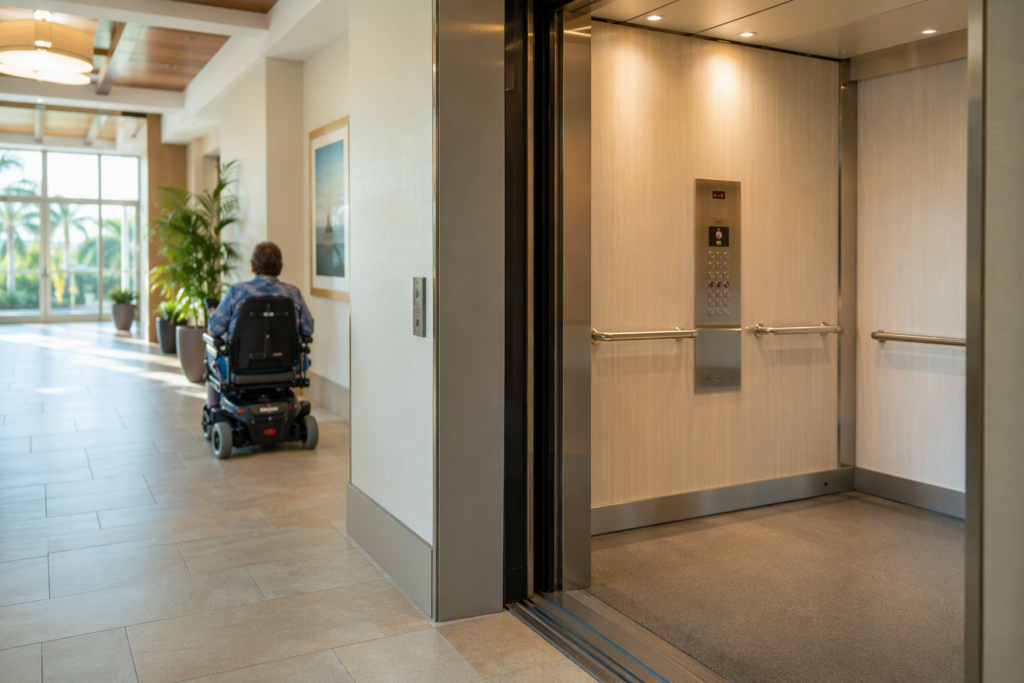
The Americans with Disabilities Act imposes ongoing accessibility requirements on elevators serving the public in Florida. Maintenance work that inadvertently alters door timing, button height, audio signals, or cab leveling accuracy can create ADA compliance exposure for building owners.
A qualified maintenance provider should understand how service activities interact with ADA requirements and flag any potential compliance issues identified during routine visits. This is particularly relevant when performing adjustments to door operators, leveling systems, or control panels. Property owners should confirm that any maintenance contract includes a commitment to preserve — and not inadvertently compromise — existing ADA-compliant configurations.
—
Why Do Florida Property Owners Choose Axxiom Elevator Florida?
Axxiom Elevator Florida is a certified, Florida-based independent elevator service company serving property owners across the state. As an independent provider, Axxiom is not tied to any single manufacturer, which means parts are sourced competitively, contract terms are negotiated transparently, and every decision is made with Florida’s regulatory environment — and the client’s best interest — in mind.
Axxiom’s team works across elevator brands and equipment generations, providing maintenance, repair, inspection coordination, and compliance support aligned with ASME A17.1 and A17.3, ADA standards, and Florida DBPR requirements. For property owners navigating the complexity of vendor comparison, Axxiom offers a no-obligation assessment to evaluate current equipment condition and identify what a fair, complete maintenance contract should include for their specific building.
—
Ready to Compare? Start With a Free Assessment.
Don’t sign another elevator maintenance contract without understanding what you’re actually getting. Contact Axxiom Elevator Florida for a free elevator assessment and get a transparent, Florida-specific quote you can actually compare.
Call us today:
Need elevator service you can rely on? Axxiom Elevator Florida is ready to help.