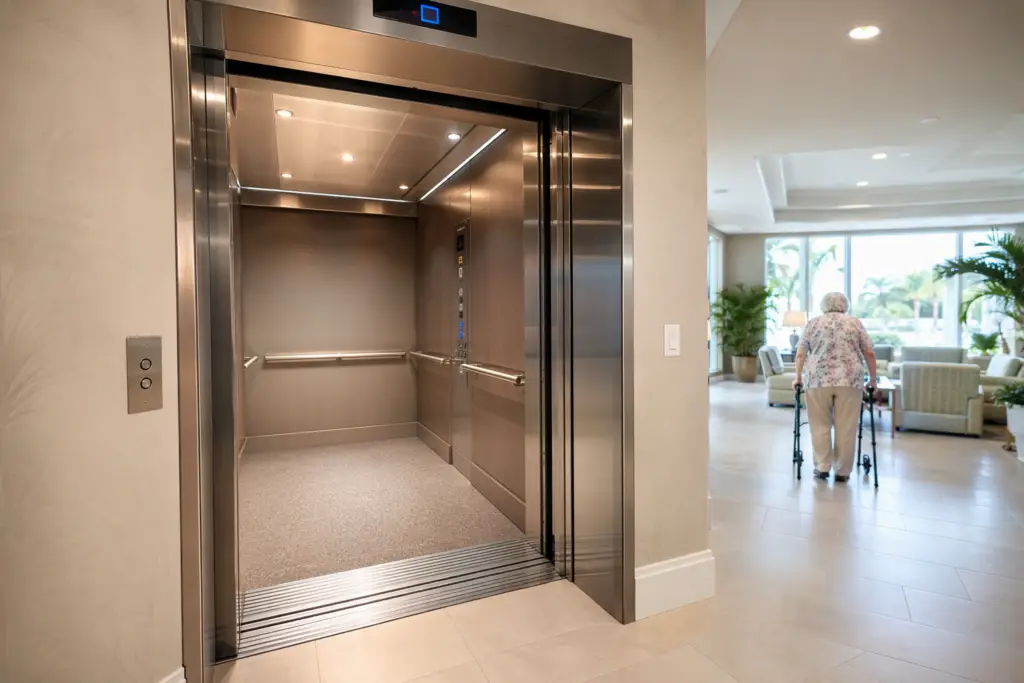
Elevator Modernization in Florida Healthcare Facilities: Costs, Process & Compliance
For Florida healthcare facilities — hospitals, medical office buildings, outpatient clinics, and assisted living communities — elevator reliability is not a convenience. It is a patient safety issue. When a vertical transportation system in a medical building fails or falls out of compliance, the consequences extend far beyond inconvenience: delayed patient transport, regulatory citations, and potential liability. Understanding what elevator modernization costs and what the process involves helps facility managers in Pompano Beach, Sarasota, and across Florida make informed, defensible decisions.
What Does It Cost to Modernize an Elevator in a Florida Office or Healthcare Building?
Elevator modernization costs in Florida are highly variable and depend on several interconnected factors: the age and type of the existing equipment, the scope of work required, the number of stops, and the compliance upgrades needed to meet current code. Rather than quoting a flat figure — which would be misleading without a site assessment — it is more useful to understand the cost drivers:
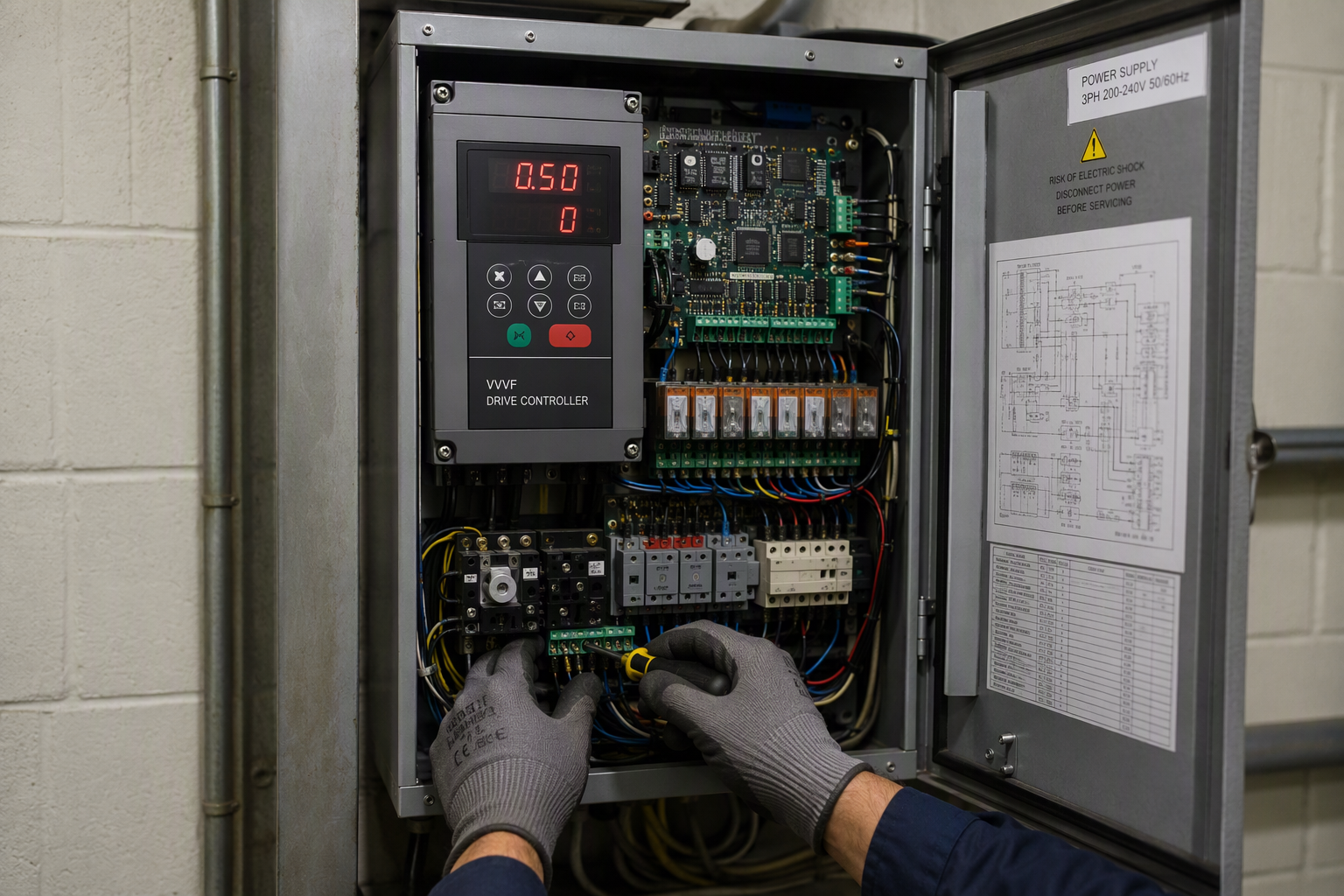
- Control system replacement: Modernizing an outdated relay-logic or older microprocessor controller to a current digital system is frequently the core of any modernization project and one of the more significant cost contributors.
- Drive unit upgrade: Replacing a DC motor-generator set with a variable-voltage, variable-frequency (VVVF) drive improves energy efficiency and ride quality — a priority in healthcare settings where smooth operation matters for patient transport.
- Door operator and safety edge replacement: Outdated mechanical door safety edges must be replaced with light curtains or multi-beam detection systems to meet current ASME A17.3 retroactive requirements.
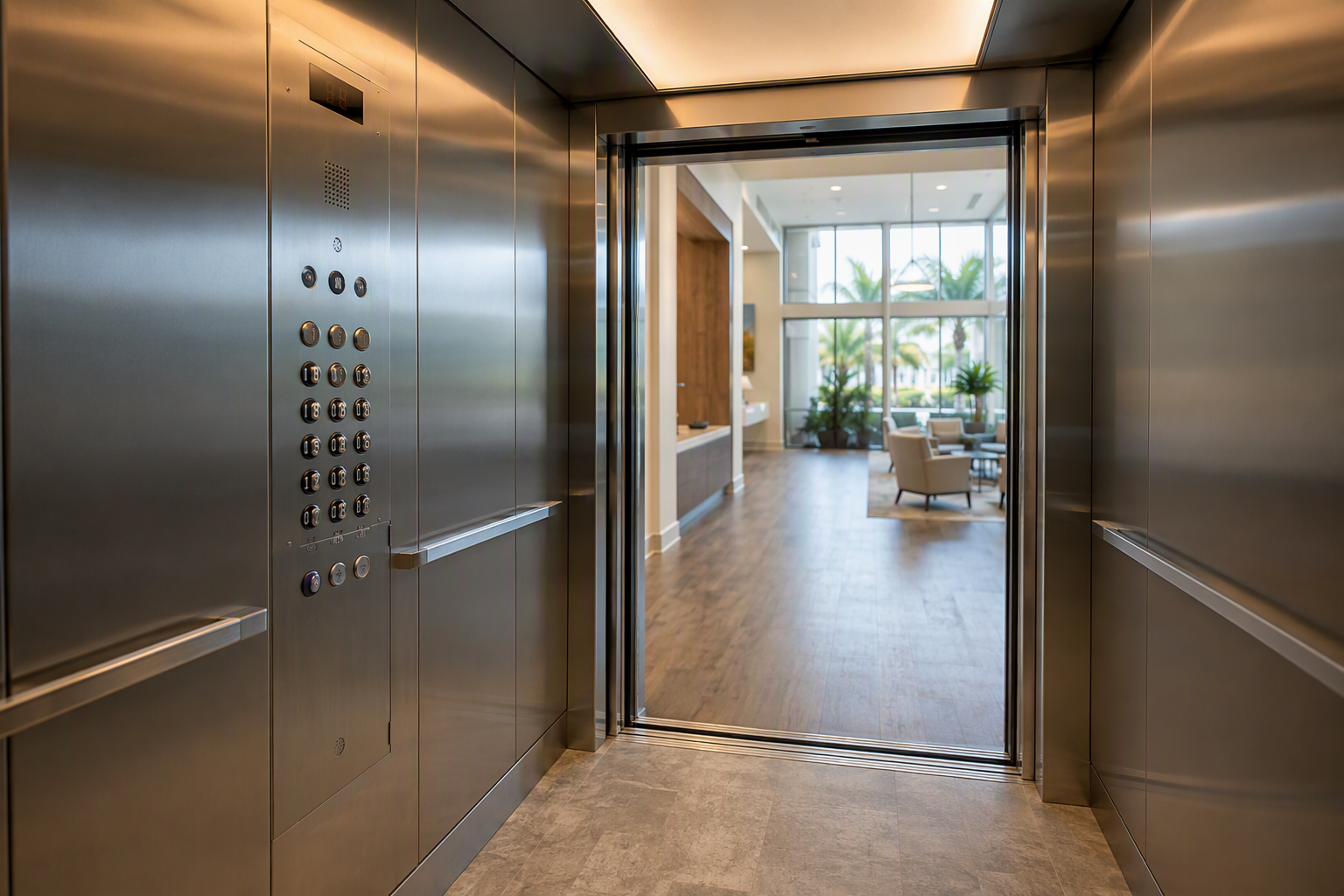
- ADA compliance upgrades: Button panels, cab dimensions, audible signals, and Braille signage must meet ADA Standards for Accessible Design. In healthcare environments, this is non-negotiable.
- Cab interior renovation: Flooring, wall panels, lighting, and handrails may require replacement — especially in high-traffic medical environments where hygiene and durability standards are elevated.
- Emergency communications: Current code requires a two-way communication system capable of connecting to a live monitoring center — a critical requirement in any occupied building.
The total scope varies significantly between a partial modernization (controls and door operators only) and a full modernization (all mechanical, electrical, and cab components). A qualified elevator contractor will assess the existing equipment condition, code compliance gaps, and building-specific requirements before providing a detailed proposal. Axxiom Elevator Florida offers free assessments to help healthcare facility managers in Pompano Beach and Sarasota understand exactly what modernization their system requires before committing to a scope of work.
What Florida Codes and Standards Govern Healthcare Elevator Modernization?
Florida healthcare facilities are subject to a layered compliance framework. Understanding which standards apply — and in what order — is essential before planning any modernization project.
- ASME A17.1 Safety Code for Elevators and Escalators: The primary design and installation standard for new elevator work and modernization components installed in Florida.
- ASME A17.3 Safety Code for Existing Elevators and Escalators: Governs retroactive safety requirements applicable to existing installations in Florida, including mandatory upgrades that apply when modernization work is performed.
- Americans with Disabilities Act (ADA): Requires accessible design in elevators serving public accommodations and commercial facilities — this applies directly to medical office buildings and healthcare campuses.
- Florida Department of Business and Professional Regulation (DBPR) — Elevator Safety Program: Florida’s state elevator safety authority enforces elevator installation, inspection, and permit requirements. All modernization work in Florida requires proper permitting through the applicable Authority Having Jurisdiction (AHJ), which coordinates with the DBPR.
- OSHA General Industry Standards: Apply to contractor safety practices during the modernization installation process.
Healthcare facilities that receive Medicare or Medicaid reimbursement may also face additional scrutiny from CMS (Centers for Medicare & Medicaid Services) life safety surveys, which evaluate whether physical plant systems — including elevators — comply with applicable codes. A modernization project that brings equipment into full ASME A17.3 and ADA compliance directly supports a clean life safety survey outcome.
What Does the Elevator Modernization Process Involve Step by Step?
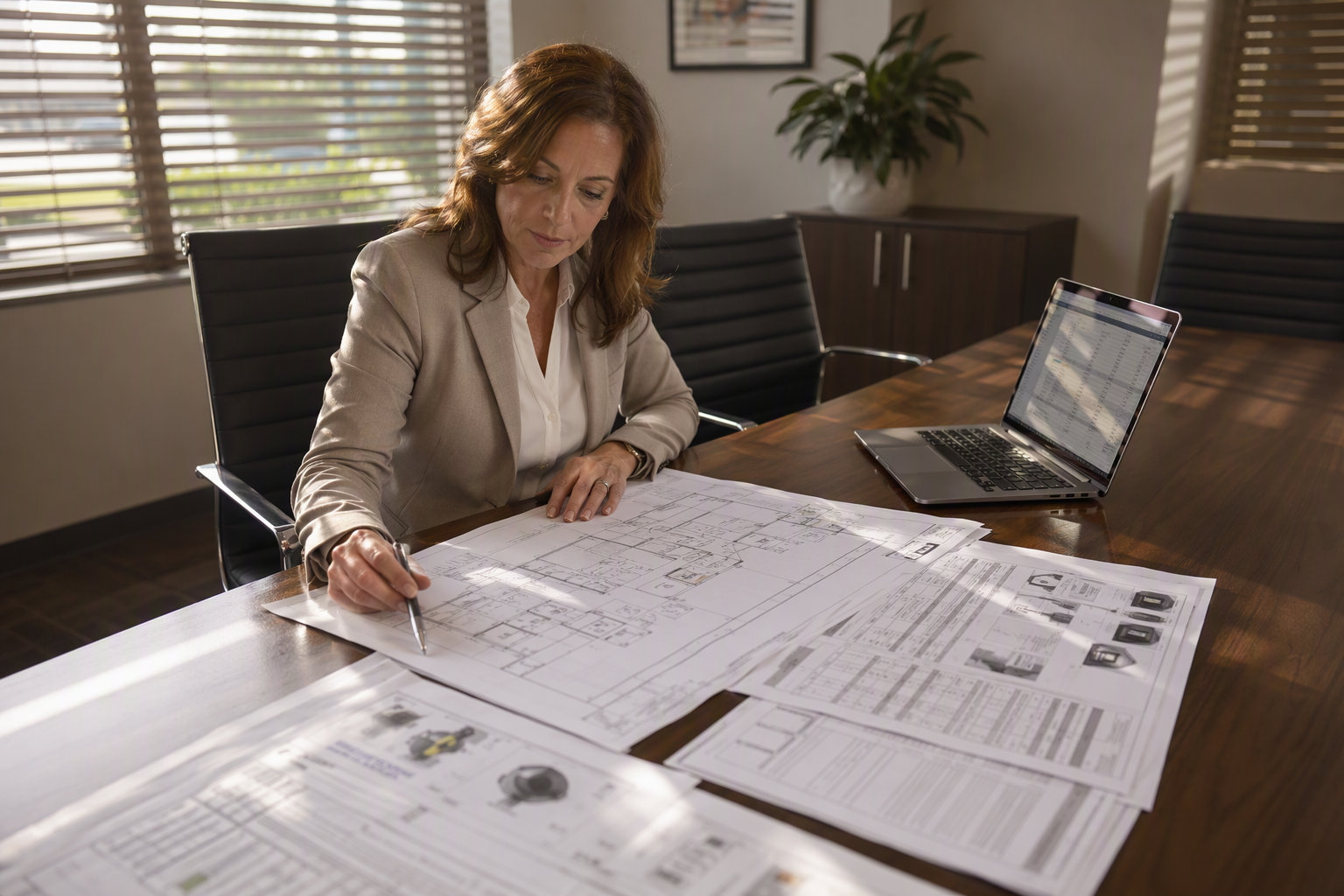
- Facility Assessment and Code Gap Analysis: A certified elevator contractor evaluates the existing equipment, reviews inspection records, and identifies all code deficiencies under ASME A17.3 and ADA that must be remediated.
- Scope Development and Proposal: Based on the assessment, the contractor develops a detailed scope of work specifying which components will be replaced, upgraded, or retained — along with a project timeline tailored to the facility’s operational needs.
- Permitting with the Authority Having Jurisdiction: Before any work begins, plans and permit applications are submitted to the local AHJ in Florida. Work cannot legally proceed without approved permits.
- Equipment Procurement: Control systems, drive units, door operators, and cab components are ordered. Lead times vary by manufacturer and component complexity, and this phase affects the overall project timeline.
- Modernization Installation: The elevator is taken out of service for the installation phase. In healthcare facilities, outage scheduling must be carefully coordinated with operations to minimize impact on patient flow. For multi-elevator buildings, phased installation allows at least one cab to remain operational.
- State Inspection and Acceptance: Upon completion, the Florida DBPR-authorized inspector performs a final acceptance inspection. The elevator cannot return to service until it passes inspection and the certificate is issued.
- Return to Service and Documentation: The modernized elevator is returned to service with updated maintenance records, new inspection certificates posted in the cab, and any required staff orientation on new features.
Axxiom Elevator Florida manages each of these phases for healthcare clients in Pompano Beach, Sarasota, and surrounding Florida communities, coordinating permitting, inspection scheduling, and outage planning to protect patient care continuity.
How Long Does Healthcare Elevator Modernization Take in Florida?
The timeline for a modernization project depends on the scope of work, equipment lead times, permitting schedules with the local AHJ, and the complexity of coordinating outages in an occupied healthcare facility. A partial modernization focused on controls and door operators may be completed more quickly than a full cab and mechanical overhaul. Healthcare facility managers should plan for the permitting and equipment procurement phases to precede any actual installation work — and build contingency time into their operational planning accordingly.
Why Is Elevator Modernization Particularly Critical in Healthcare Settings?
Healthcare environments place exceptional demands on vertical transportation systems. Elevators in hospitals, medical office buildings, and outpatient centers transport patients on gurneys and wheelchairs, clinical staff, medical equipment, and supply carts — often around the clock. Reliability failures in this context are not merely inconvenient; they create direct patient safety risks.
Beyond reliability, aging elevator equipment in healthcare settings is frequently non-compliant with current ADA requirements for cab dimensions, control panel height, and audible/visual signals — creating legal exposure for facility operators. Regulatory agencies conducting life safety inspections will identify these deficiencies. Modernization directly addresses both the operational reliability gap and the compliance gap simultaneously.
What ADA Requirements Apply to Healthcare Elevator Modernization in Florida?
Under the ADA Standards for Accessible Design, passenger elevators in buildings covered by the ADA — including medical office buildings and healthcare campuses — must meet specific requirements. Key requirements relevant to modernization projects include:
- Call buttons and control panels at accessible heights with raised characters and Braille
- Audible and visual floor indicators (lanterns and tone signals)
- Door reopening devices that respond to obstruction without contact (light curtains)
- Two-way emergency communication systems usable without voice
- Minimum cab dimensions to accommodate wheelchair users
When modernization work is undertaken, it provides the operational and regulatory opportunity to bring the entire installation into ADA compliance. Facilities that defer ADA upgrades risk both legal liability and accessibility barriers for patients with disabilities.
What Is the Difference Between Elevator Modernization and Replacement in a Florida Healthcare Building?
Modernization preserves the existing hoistway structure and pit/overhead infrastructure while replacing key mechanical, electrical, and cab components. Full replacement involves removing the existing elevator entirely and installing a new unit — a significantly more disruptive and costly undertaking that typically requires major structural work.
For most Florida healthcare buildings with structurally sound hoistways, modernization is the more practical path: it achieves current code compliance, improves reliability and energy efficiency, and extends the operational life of the vertical transportation system without the disruption of a full replacement. An assessment by a qualified contractor — such as Axxiom Elevator Florida — is the appropriate starting point for determining which approach fits a specific facility’s needs.
What Permits Are Required for Elevator Modernization in Florida?
All elevator modernization work in Florida requires permits issued through the Authority Having Jurisdiction (AHJ) — typically the county or municipality building department, coordinated with the Florida DBPR Elevator Safety Program. Plans must be submitted, reviewed, and approved before installation begins. Upon completion, a state-authorized elevator inspector performs an acceptance inspection before the elevator is returned to service. Operating an elevator without a current, valid certificate of operation in Florida is a violation of state law.
How Should a Healthcare Facility in Pompano Beach or Sarasota Choose an Elevator Modernization Contractor?
Healthcare facility managers evaluating elevator modernization contractors should consider the following:
- Florida licensing: Verify that the contractor holds the appropriate Florida state licenses for elevator work. Unlicensed elevator work is illegal and creates significant liability.
- Healthcare project experience: Healthcare environments have unique operational constraints — occupied buildings, infection control requirements, and patient safety considerations — that require a contractor familiar with these demands.
- Scope of services: A contractor that handles permitting, inspection coordination, and project management end-to-end reduces administrative burden on the facility team.
- Local presence: A contractor with established presence in Pompano Beach, Sarasota, and the broader Florida market is positioned to respond to issues during and after the modernization project.
- References: Request references from comparable healthcare or medical office building projects in Florida.
Axxiom Elevator Florida serves healthcare facility clients across Florida, including Pompano Beach and Sarasota, with modernization services that include full permitting management, phased outage planning, and post-modernization maintenance support.
Questions Your Inspector Will Ask
When a Florida DBPR-authorized elevator inspector arrives for a modernization acceptance inspection at a healthcare facility, the following are among the areas they will evaluate and the questions that will guide their review:
- Are all permits in order? The inspector will verify that the AHJ-approved permits cover the full scope of work performed.
- Has the control system been tested to current ASME A17.1 standards? Documentation of testing procedures and results will be reviewed.
- Are door safety devices functional and compliant? Light curtains or multi-beam detection systems will be tested for proper operation and response time.
- Does the emergency communication system connect to a continuously monitored location? The two-way communication system will be tested during the inspection.
- Is the governor and safeties function verified? Safety system performance is a core inspection requirement under ASME A17.1.
- Are ADA-required cab features installed and functional? Braille signage, accessible control panel height, and audible signals will be checked.
- Is the machine room or machine space clean, properly lit, and secured? Code requires compliant machine room conditions.
- Has the contractor provided a complete maintenance control program? Modern Florida-compliant elevators require a documented maintenance program that the contractor must provide.
- Are all capacity and data plates current and correctly posted? The cab must display current, accurate load and speed data.
What Happens If a Healthcare Elevator Fails a Florida Inspection?
If an elevator fails the acceptance inspection, it cannot legally return to service until all deficiencies are corrected and re-inspection is passed. In a healthcare setting, this has direct operational consequences. The best protection against this outcome is thorough pre-inspection preparation by the modernization contractor — ensuring all work is fully compliant before the inspector arrives. Working with an experienced Florida elevator contractor reduces the risk of failed inspections and the delays they create.
Does Elevator Modernization Improve Energy Efficiency in Florida Healthcare Buildings?
Yes. Replacing older motor-generator drive systems with modern VVVF (variable-voltage, variable-frequency) drives reduces energy consumption during operation. In healthcare buildings — which often operate elevators continuously — this can produce meaningful reductions in utility costs over time. Additionally, modernized lighting systems in elevator cabs, such as LED fixtures, contribute to energy savings. While specific savings figures vary by installation, energy efficiency is a documented benefit of elevator modernization that supports sustainability goals for Florida healthcare campuses.
Ready to Modernize Your Healthcare Facility’s Elevators?
Whether your medical office building in Pompano Beach is running aging relay-logic controls, or your Sarasota outpatient center has received a code deficiency notice, the path forward starts with an honest, expert assessment of your current equipment. Axxiom Elevator Florida works with healthcare facility managers across Florida to develop modernization scopes that address compliance requirements, minimize operational disruption, and deliver reliable vertical transportation for patients, staff, and visitors.
Do not wait for an elevator failure or a regulatory citation to act. Proactive modernization planning protects patients, protects your facility’s compliance standing, and protects your operational continuity.
Contact Axxiom Elevator Florida for a free elevator assessment.
Call us today at to schedule your no-obligation site evaluation and code gap analysis.
Need elevator service you can rely on? Axxiom Elevator Florida is ready to help.