Elevator Downtime Risks and Liability Issues Hotel Owners Must Understand Before Equipment Fails
When an elevator stops working in a hotel, the consequences extend far beyond guest inconvenience. Owners can face regulatory citations, personal injury lawsuits, ADA complaints, and insurance complications — all before a single repair technician arrives. Understanding these risks before a failure occurs is the difference between a manageable maintenance event and a costly legal and operational crisis. This guide outlines the compliance requirements, liability exposure, and operational protocols Florida hotel owners need to know in 2026.
What Are the Most Serious Downtime Risks Hotel Owners Face When an Elevator Fails?
Elevator downtime in a hotel creates a cascade of interconnected risks that go well beyond a temporary service interruption:
- Guest injury liability: If a malfunction causes a fall, entrapment, or sudden drop, the hotel owner may face negligence claims — particularly if maintenance records show deferred repairs or missed inspections.
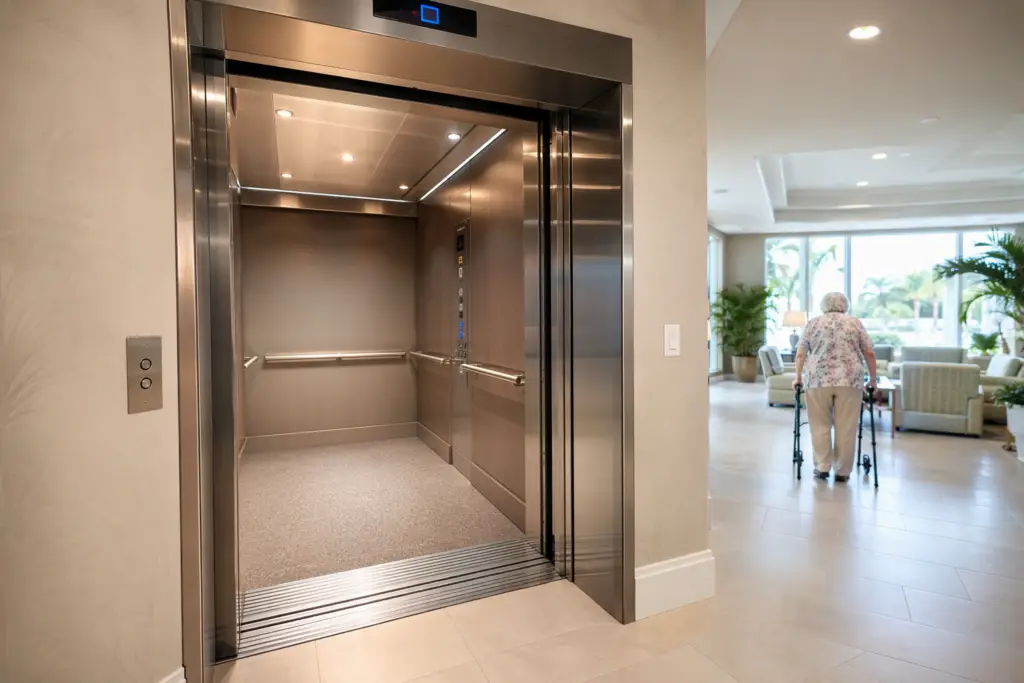
- ADA compliance violations: Under the Americans with Disabilities Act, hotels are required to provide accessible routes. An out-of-service elevator that eliminates the only accessible path to upper floors or amenities can trigger a formal ADA complaint or Department of Justice enforcement action.
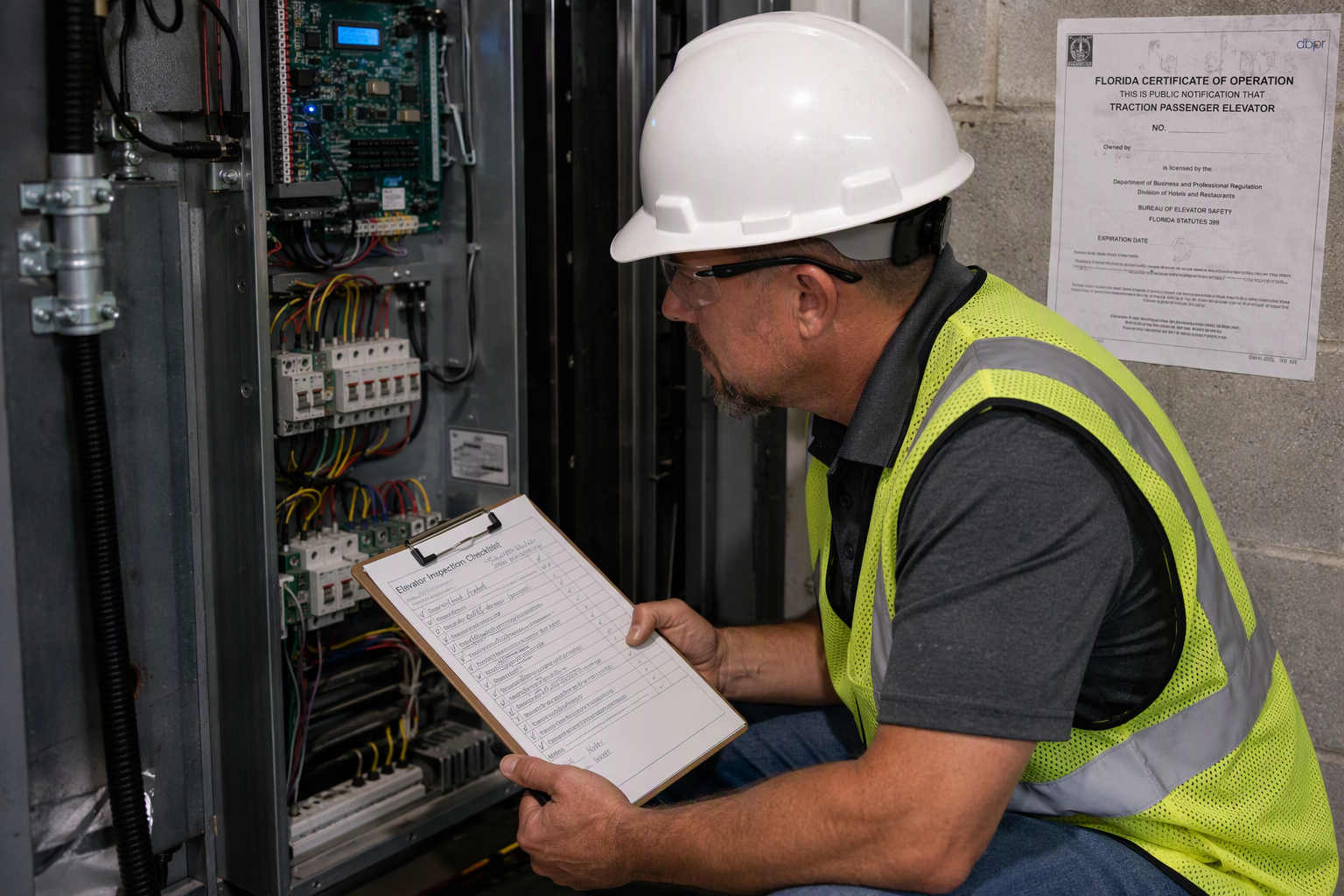
- Florida regulatory citations: The Florida Department of Business and Professional Regulation (DBPR) oversees elevator inspections and licensing in the state. Operating an elevator with an expired certificate of operation or unresolved violations can result in mandatory shutdown orders and civil penalties.
- Insurance claim complications: Insurers may deny or reduce coverage for incidents occurring on equipment with lapsed inspections or documented maintenance deferrals.
- Revenue and reputation damage: Negative guest reviews citing elevator failures are increasingly prominent on booking platforms, directly affecting occupancy rates.
What Florida-Specific Regulations Govern Hotel Elevator Safety?
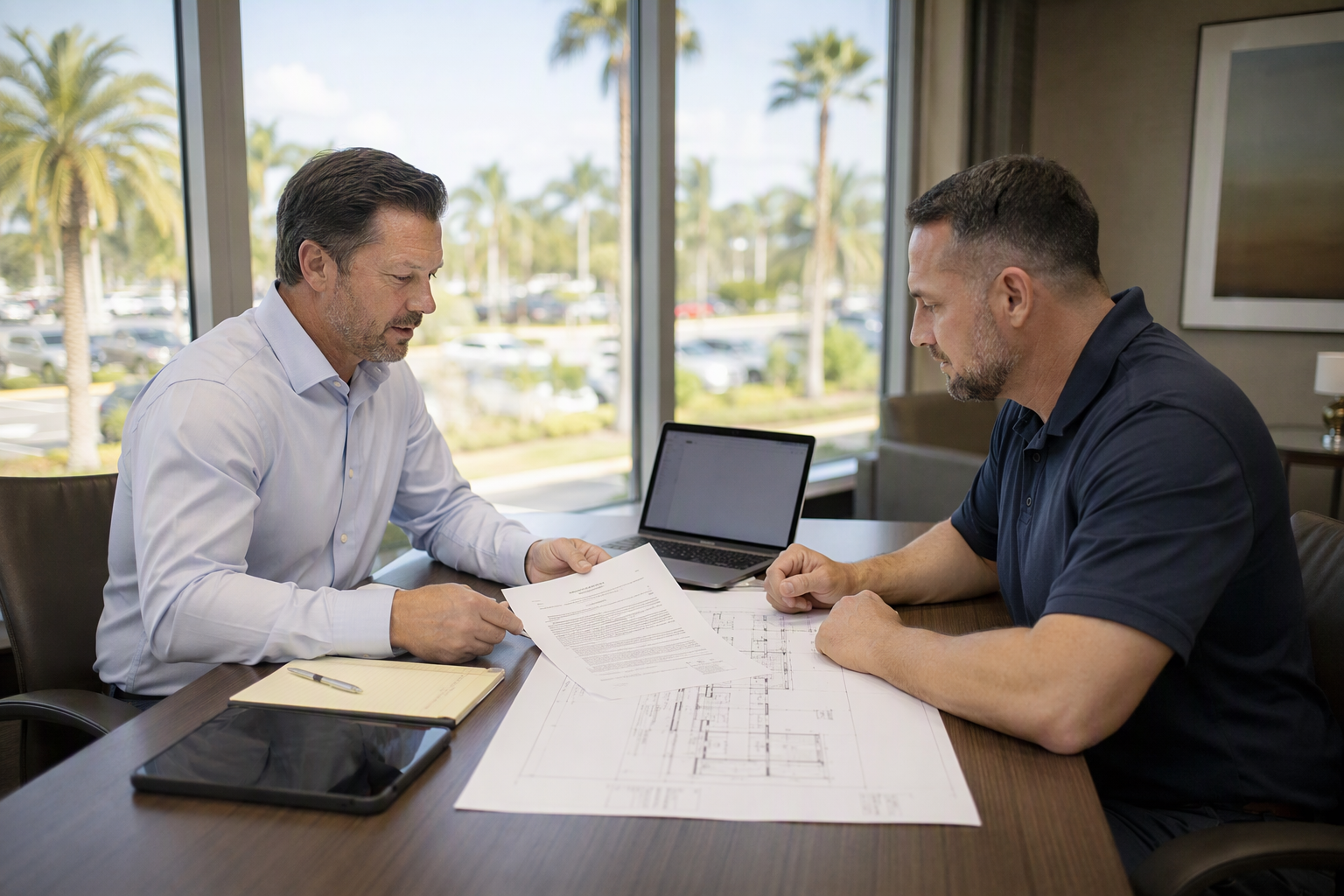
Florida hotel elevators are governed by a layered framework of state and federal requirements. Hotel owners in Pompano Beach, Sarasota, and across Florida must comply with all of the following:
- Florida Statutes Chapter 399: This chapter establishes the state’s elevator safety program, requiring periodic inspections, licensing of elevator contractors, and certificates of operation for every elevator unit. Operating without a current certificate is a violation subject to enforcement by the DBPR.
- ASME A17.1 Safety Code for Elevators and Escalators: Florida adopts ASME A17.1 as the foundational safety standard for new installations and major alterations. This code covers everything from hoistway construction to safety device testing intervals.
- ASME A17.3 Safety Code for Existing Elevators and Escalators: Existing hotel elevators must meet ASME A17.3 retrofit and maintenance requirements, which define minimum safety standards for equipment that was installed under older code editions.
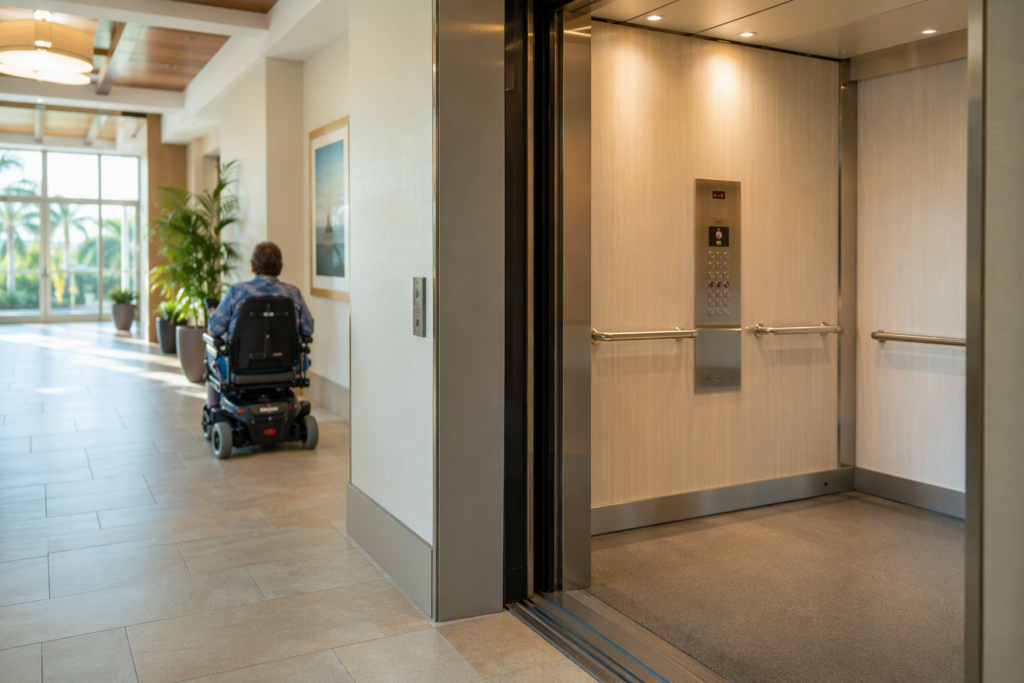
- ADA Standards for Accessible Design: Hotels are classified as places of public accommodation under Title III of the ADA. Elevators must meet dimensional, control height, door timing, and signage requirements to ensure accessibility for guests with disabilities.
- OSHA General Industry Standards: Hotel maintenance employees who work on or around elevator equipment are protected under applicable OSHA standards, and hotels bear responsibility for ensuring safe working conditions in mechanical rooms and hoistways.
How Does Deferred Maintenance Increase Legal Liability for Hotel Owners?
Courts and insurance adjusters examine maintenance records closely after an elevator incident. Deferred maintenance creates a documented history that plaintiffs’ attorneys use to establish a pattern of negligence. When a hotel owner cannot produce:
- Current inspection certificates
- Maintenance logs showing regular lubrication, adjustment, and parts replacement
- Documented responses to prior complaints or identified deficiencies
- Proof of licensed contractor work
…the legal presumption often shifts toward owner negligence. Florida’s comparative fault framework means that even partial liability findings can result in substantial damage awards. Proactive partnerships with certified elevator service providers — such as Axxiom Elevator Florida, serving hotel properties in Pompano Beach and Sarasota — are among the most effective risk mitigation strategies available.
What Happens if a Guest Becomes Trapped in a Hotel Elevator?
Entrapment is one of the most legally and operationally consequential elevator failures a hotel can experience. Under Florida Statutes Chapter 399 and applicable ASME A17.1 provisions, elevators must be equipped with emergency lighting, communication devices, and ventilation to protect entrapped passengers. When these systems fail or are absent:
- The hotel faces direct liability for the physical and psychological harm caused by the entrapment
- If emergency communication devices are non-functional, regulators may treat the failure as a serious violation
- ADA requirements also address emergency communication for guests with hearing impairments
A well-maintained elevator with functioning safety systems dramatically reduces both the likelihood of entrapment and the liability exposure if an entrapment does occur.
What Should a Hotel Owner Do Immediately After an Elevator Failure?
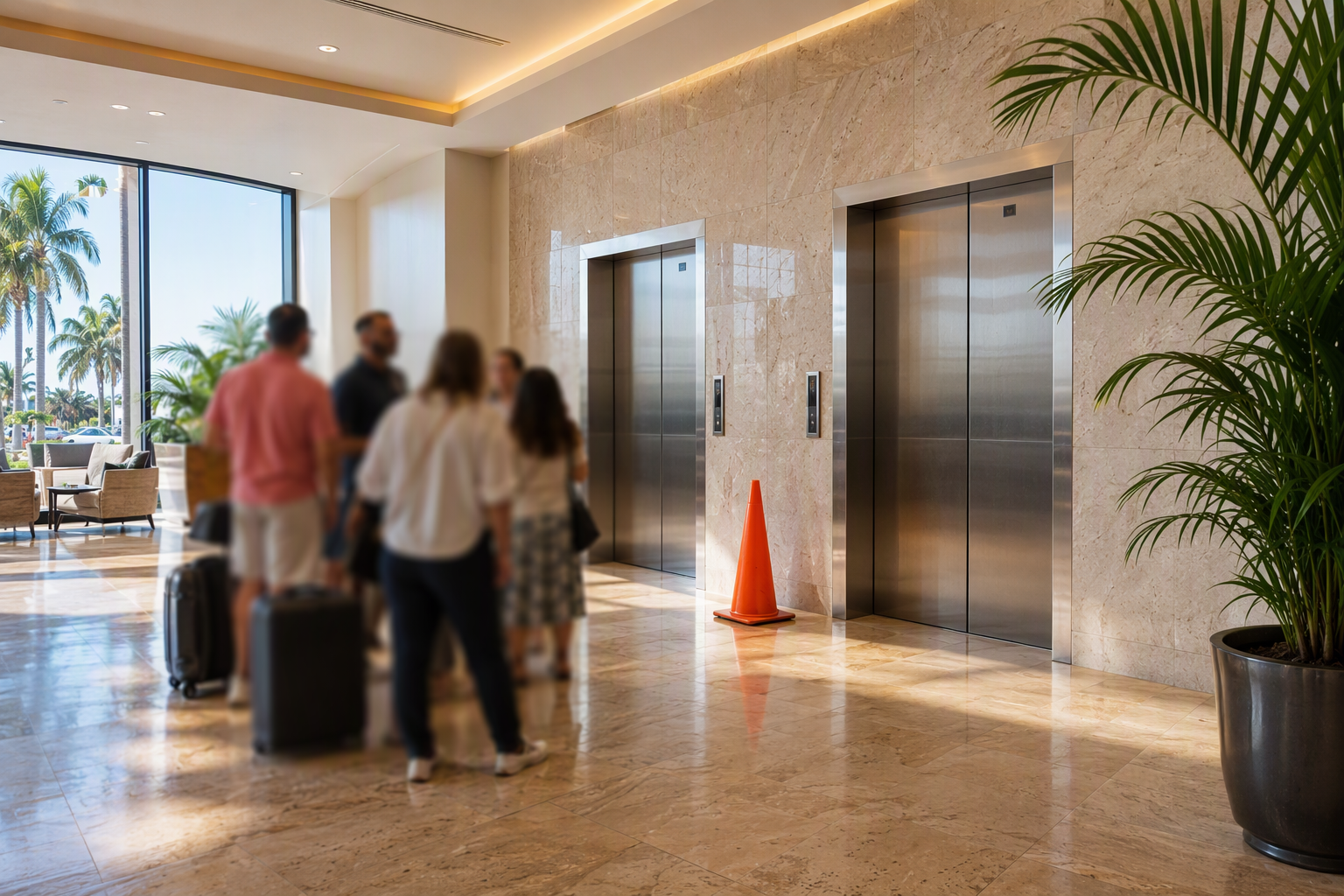
- Remove the elevator from service immediately. Post clear out-of-order signage and physically secure access to prevent additional guests from attempting to use the unit.
- Ensure no guests are entrapped. Confirm with front desk and security that no passengers are inside the cab. If entrapment is suspected, contact emergency services — do not attempt to release passengers without a licensed technician present.
- Notify your licensed elevator service provider. Contact a state-licensed elevator contractor such as Axxiom Elevator Florida to dispatch a qualified technician for diagnosis and repair.
- Document the failure thoroughly. Record the time, nature of the failure, any guest complaints or injuries, and all steps taken. This documentation is critical for insurance and regulatory purposes.
- Assess ADA impact. Determine whether the out-of-service elevator eliminates the only accessible route for guests with disabilities. If it does, identify and communicate an interim accessible alternative immediately.
- Review your certificate of operation status. Confirm with your elevator contractor that your DBPR certificate is current. If an inspection is overdue, coordinate an expedited inspection as part of the return-to-service process.
- Notify your insurance carrier. If any guest was injured or entrapped, report the incident to your liability insurer promptly to preserve coverage rights.
- Retain all maintenance records. Do not discard, alter, or lose any logs, work orders, or prior inspection reports — these will be requested if litigation follows.
How Often Are Hotel Elevators Required to Be Inspected in Florida?
Florida Statutes Chapter 399 requires periodic inspections by licensed inspectors as a condition of maintaining a valid certificate of operation. The specific inspection intervals are set by the DBPR and must be followed to keep the elevator legally operational. Owners should work with a licensed contractor to track these deadlines proactively rather than reactively — an expired certificate at the time of an incident significantly compounds liability exposure. Axxiom Elevator Florida assists hotel clients in Pompano Beach and Sarasota with compliance tracking as part of ongoing maintenance programs.
What ADA Violations Are Most Commonly Triggered by Elevator Failures in Hotels?
Under the ADA Standards for Accessible Design, hotels must maintain accessible routes to all levels and amenities. Common ADA violations arising from elevator failures include:
- Failure to provide an alternative accessible route when the primary elevator is out of service
- Non-functioning audible or visual floor indicators required for guests with sensory impairments
- Inoperable Braille or tactile control panels
- Emergency communication systems that do not function for guests with hearing loss
- Extended downtime without guest notification, leaving guests with disabilities stranded
ADA complaints can be filed directly with the Department of Justice and may result in remediation orders, civil penalties, and private lawsuits under Title III.
What Is the Difference Between Preventive Maintenance and a Full-Service Elevator Contract for Hotels?
Hotel owners often underestimate the difference between these two service models:
- Preventive maintenance agreements typically cover scheduled lubrication, adjustments, and safety tests at defined intervals. They reduce the frequency of failures but may not include parts replacement or emergency callback coverage.
- Full-service contracts cover parts, labor, callbacks, and often include regulatory compliance tracking. For high-traffic hotel elevators operating around the clock, full-service agreements provide more comprehensive risk transfer and are generally recommended by liability risk advisors.
When evaluating service providers, hotel owners should verify that the contractor holds the appropriate Florida elevator contractor license issued by the DBPR, and that all technicians performing work are properly certified under state requirements.
Can a Hotel Owner Be Held Liable Even If the Elevator Passed Its Last Inspection?
Yes. A certificate of operation confirms the elevator met code requirements at the time of inspection — it does not guarantee safe operation between inspections. Florida courts have recognized that ongoing maintenance obligations exist independent of inspection status. If an owner receives notice of a developing mechanical issue and fails to act, or if a component degrades and causes an injury between inspection cycles, liability can still attach based on the owner’s duty of care to guests. This is precisely why licensed elevator service providers such as Axxiom Elevator Florida emphasize continuous monitoring and prompt repair authorization, not just compliance-driven inspection scheduling.
Questions Your Inspector Will Ask
When a DBPR-licensed elevator inspector arrives at your Florida hotel property — whether for a routine inspection, a complaint investigation, or a return-to-service review after a failure — expect the following lines of inquiry:
- Can you produce the current certificate of operation for each elevator unit?
- Who is your licensed elevator contractor of record, and what does your maintenance agreement cover?
- When was the last maintenance performed, and do you have a written log?
- Have any deficiencies from the prior inspection been corrected? Can you provide documentation?
- Are all required safety devices — including governor, buffers, safeties, and emergency lighting — functional and within test intervals?
- Is the emergency communication system operational and ADA-compliant for guests with hearing impairments?
- Has any modernization or alteration been performed since the last inspection? Were permits pulled and inspections completed?
- Are the machine room, pit, and hoistway accessible, properly ventilated, and free of unauthorized storage?
- Have there been any guest complaints, entrapments, or incidents since the last inspection? Were they reported?
Hotel owners who cannot answer these questions confidently at inspection time are at risk of citations, conditional certificates, or mandatory shutdowns. Working with a qualified service partner to prepare for these questions before an inspector arrives is a core part of proactive risk management.
How Should Hotel Owners in Pompano Beach and Sarasota Select an Elevator Service Provider?
Selecting the right elevator service partner is a business and legal decision, not simply a facilities management choice. Hotel owners in Pompano Beach, Sarasota, and surrounding Florida markets should evaluate prospective providers on the following criteria:
- Valid Florida elevator contractor license issued by the DBPR
- Demonstrated experience with hotel and hospitality vertical applications
- Ability to maintain documentation supporting regulatory compliance
- Familiarity with ASME A17.1 and A17.3 requirements as adopted in Florida
- Clear scope definitions in service agreements, including what is and is not covered
- Responsiveness protocols for equipment failures affecting ADA-accessible routes
Axxiom Elevator Florida is a certified elevator service company serving hotel and commercial property owners throughout the Pompano Beach and Sarasota markets, with a focus on compliance-driven maintenance programs designed to reduce downtime risk and owner liability.
Protect Your Hotel Before Equipment Fails
Elevator failures do not announce themselves in advance. The compliance gaps and maintenance deferrals that expose hotel owners to liability are identifiable — and correctable — before an incident occurs. A professional elevator assessment is the starting point for every risk reduction strategy outlined on this page.
Contact Axxiom Elevator Florida for a free elevator assessment:
Need elevator service you can rely on? Axxiom Elevator Florida is ready to help.