Elevator Modernization for Florida Hospitals & Medical Office Buildings: Features and Technology Every Healthcare Facility Should Require
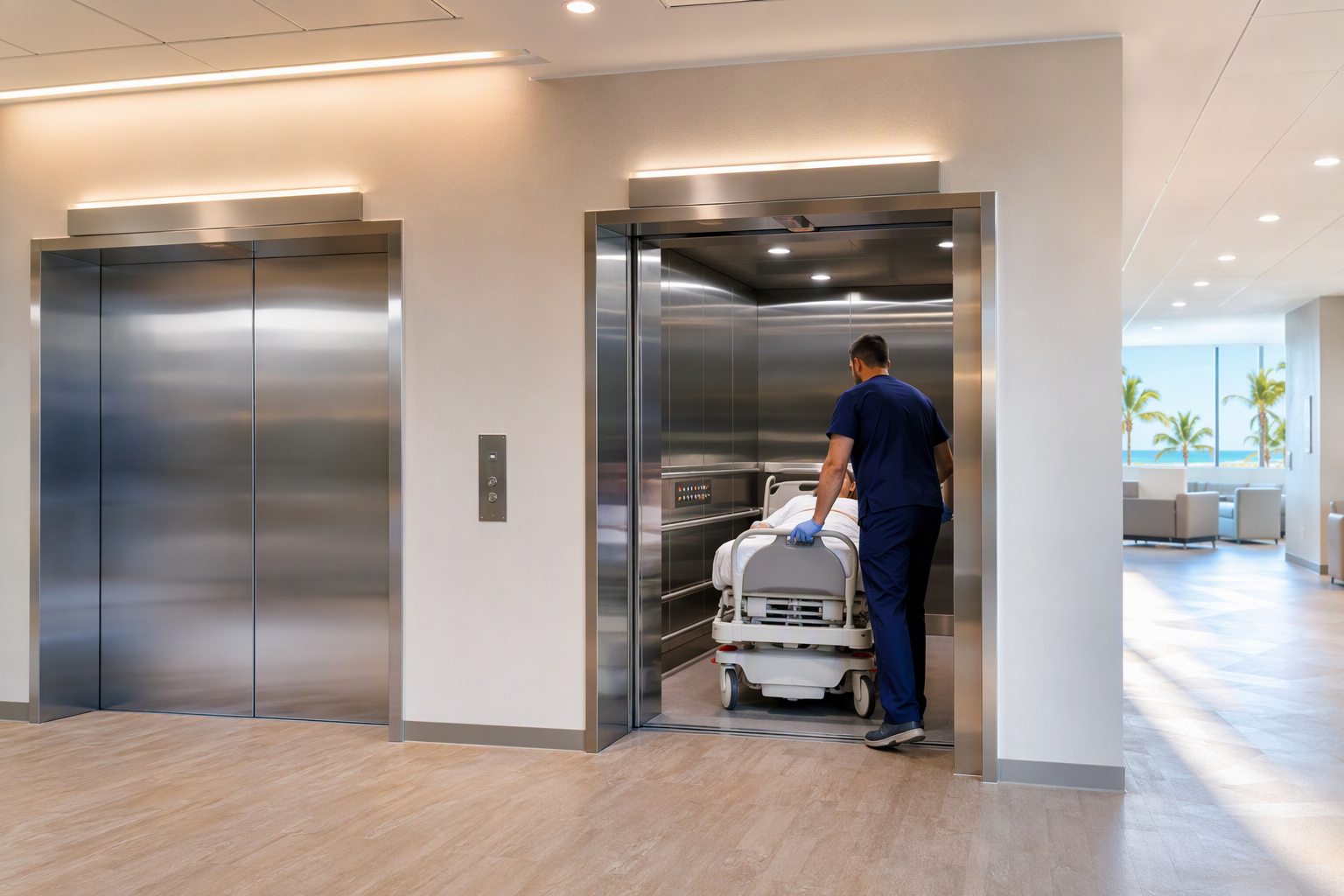
Florida hospitals, surgical centers, and medical office buildings face vertical transportation demands that go far beyond those of a standard commercial building. Patients on gurneys, medical staff with crash carts, visitors, and equipment must all move efficiently — and safely — between floors. A modernization project is an opportunity to bring an aging elevator into full compliance, improve reliability, and meet the specific operational needs of a healthcare environment. The guidance below covers every feature and technology upgrade worth requiring, along with the compliance framework that governs Florida healthcare facilities in 2026.
What Compliance Standards Govern Elevator Modernization in Florida Healthcare Facilities?
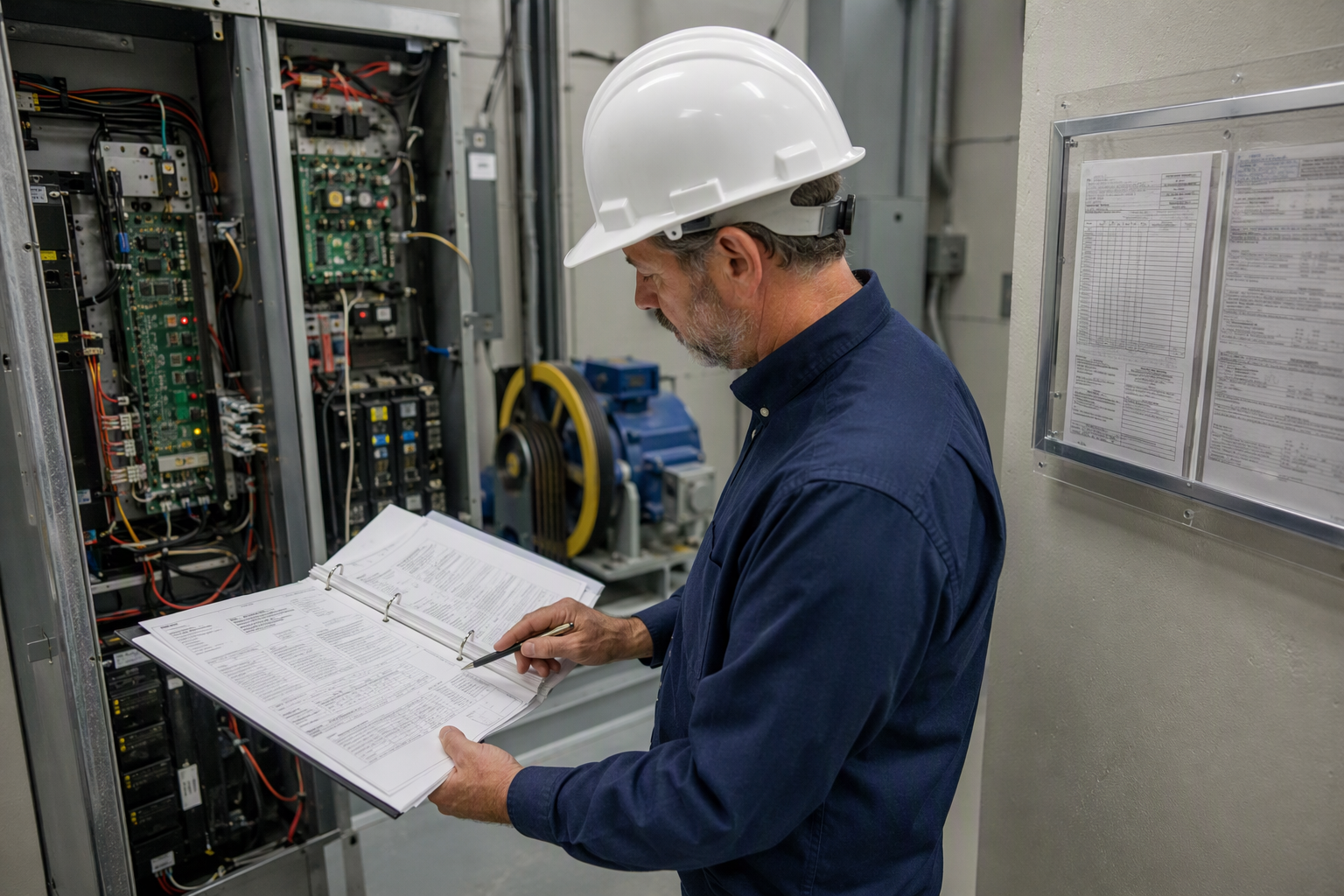
Florida elevator modernization is governed by a layered framework of federal and state requirements. Understanding all applicable layers before writing a modernization scope prevents costly change orders and failed inspections.
- ASME A17.1 Safety Code for Elevators and Escalators: This is the primary technical standard for new elevator equipment and major alterations. Florida adopts ASME A17.1 through its elevator safety program administered by the Florida Department of Business and Professional Regulation (DBPR), Bureau of Elevator Safety. Any modernization that rises to the level of a “major alteration” triggers full code compliance under the current adopted edition.
- ASME A17.3 Safety Code for Existing Elevators and Escalators: Applies to routine maintenance and minor alterations on existing installations, setting a baseline below which no elevator may fall.
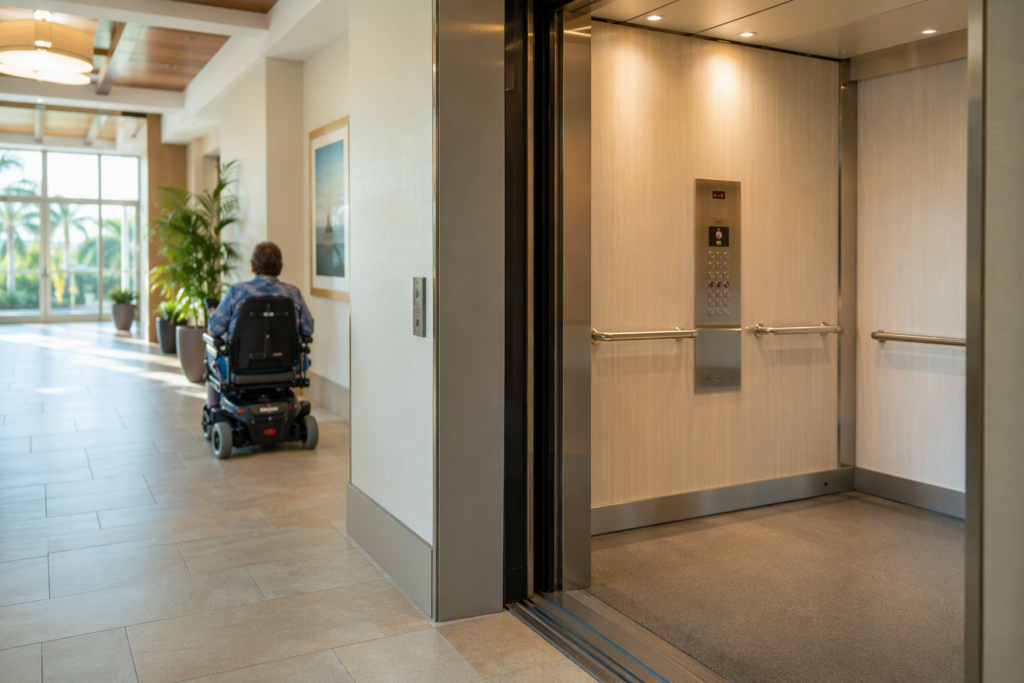
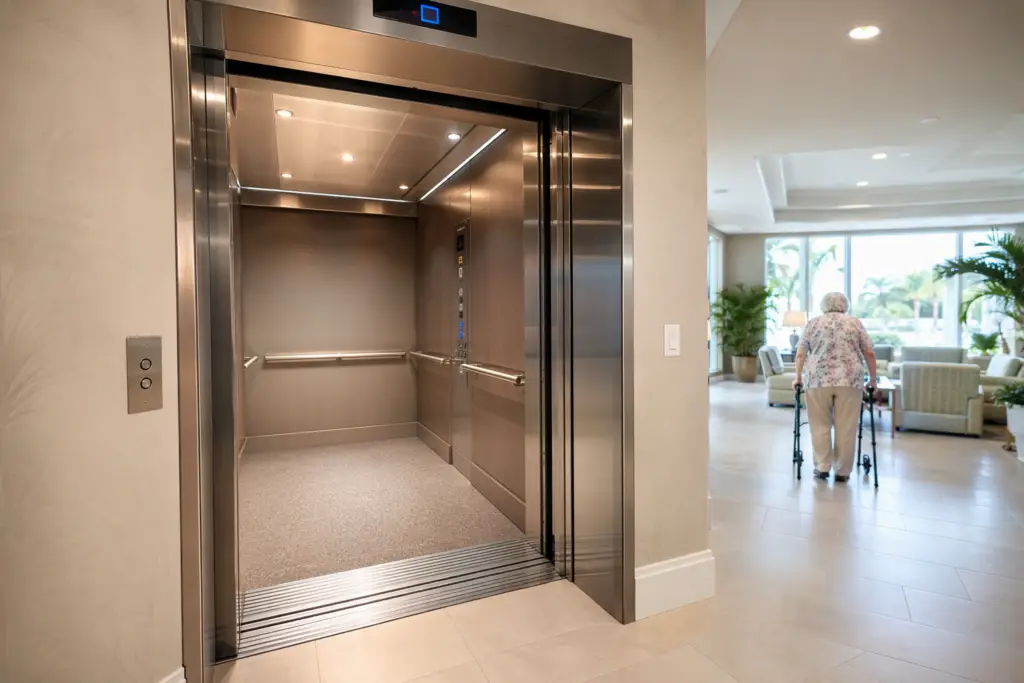
- Americans with Disabilities Act (ADA): Requires elevator cab dimensions, door widths, control panel heights, Braille markings, audible signals, and leveling accuracy that accommodate wheelchair users and individuals with sensory impairments — critically important in any patient-serving environment.
- Florida Statutes Chapter 399: Florida’s Elevator Safety Act establishes licensing requirements for elevator contractors, permitting requirements for new installations and alterations, and mandatory periodic inspections by licensed inspectors. No modernization work may begin without a permit issued through the DBPR Bureau of Elevator Safety.
- The Joint Commission (TJC) Environment of Care Standards: Hospitals pursuing or maintaining TJC accreditation must demonstrate that vertical transportation equipment is maintained in a safe, functional condition. Modernization records and ongoing maintenance logs factor into TJC surveys.
- FGI Guidelines for Design and Construction of Hospitals: While not a code, the Facility Guidelines Institute recommendations are widely adopted by Florida’s Agency for Health Care Administration (AHCA) when reviewing hospital construction and renovation plans. They address minimum cab sizes for patient transport and stretcher access.
What Cab Size and Door Configuration Should a Florida Hospital Elevator Have?
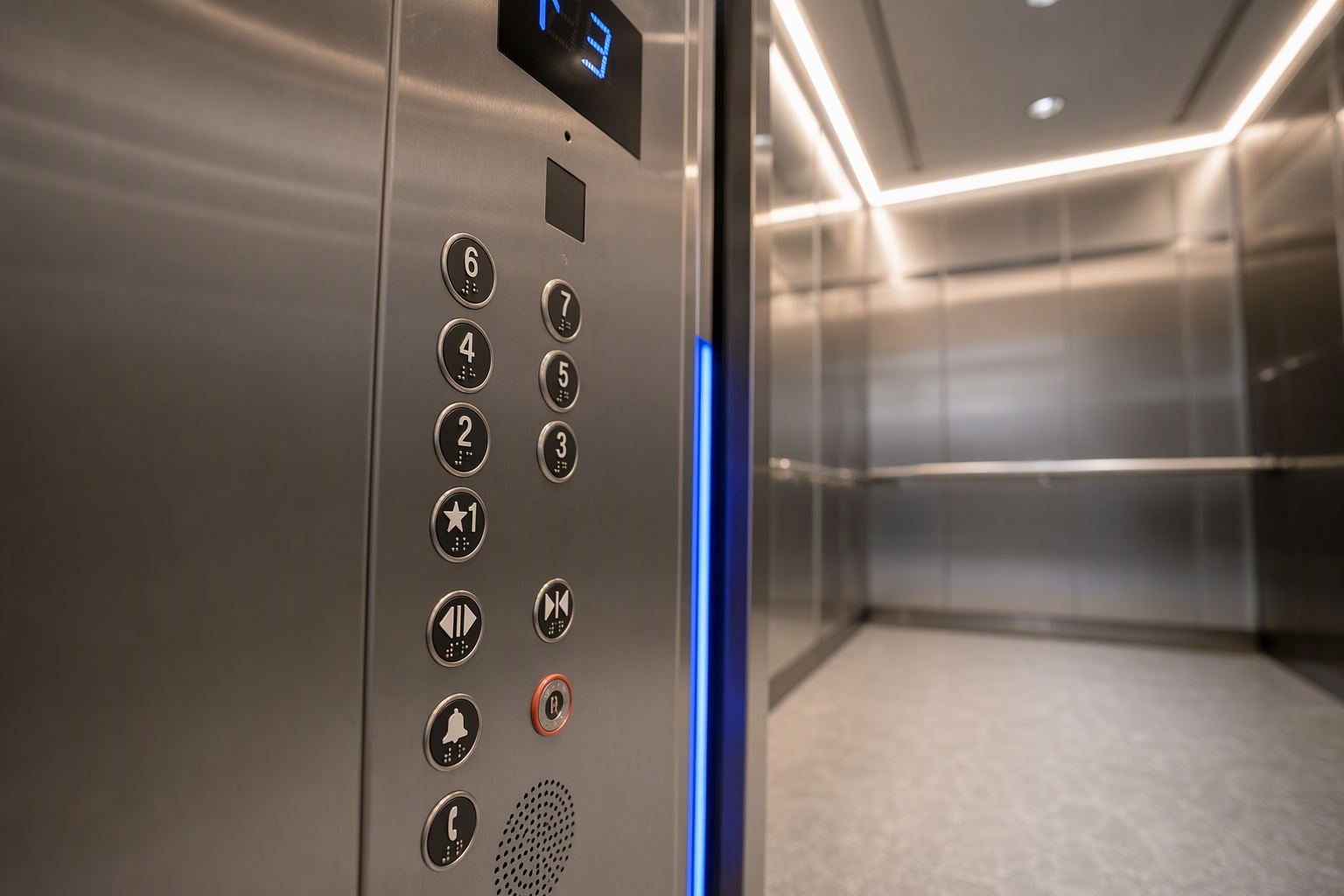
A hospital elevator modernization should prioritize cab dimensions large enough to accommodate a fully extended hospital gurney with attendants on both ends. The FGI Guidelines and common AHCA review criteria point to interior cab dimensions that allow stretcher transport — typically measured to ensure clearance for standard hospital beds and bariatric transport equipment.
Door width and opening speed also matter. Wider door openings reduce the friction points that delay patient transport. Specify a power-operated, heavy-duty door operator with a reopening device that responds to both light curtain interruption and contact. Healthcare environments see high door cycle counts; a residential-grade door operator fails quickly under that load. Require a door dwell time that can be extended for patients using mobility aids, consistent with ADA accessibility guidelines.
Why Is Independent Service Operation Critical in a Medical Facility Elevator?
Independent service operation allows designated staff to commandeer a single elevator for exclusive use — removing it from normal call service so it can be dedicated to patient transport, emergency response, or supply delivery without interruption. In a hospital or surgical center, the ability to hold a car at a specific floor while a patient is being prepared for transport can be the difference between a safe transfer and a dangerous delay.
During a modernization, require a keyed or card-access independent service switch on at least one elevator in every bank. The system should also support hospital service mode, which keeps the elevator at a designated floor between calls during high-traffic periods such as shift changes.
What Emergency Power and Backup Systems Are Required for Healthcare Elevators in Florida?
Florida’s exposure to hurricanes and severe weather makes emergency power provisions non-negotiable for healthcare facilities. Under ASME A17.1, elevators must be equipped with emergency lighting and communication systems. Healthcare facilities go further: hospitals must maintain elevator operation for at least a portion of their vertical transportation capacity on emergency generator power to support patient evacuation and continued operations during a grid outage.
A modernization scope for a hospital should include:
- Emergency power selector relay that automatically connects designated elevators to the facility’s emergency generator within seconds of a utility outage.
- Battery lowering device or automatic rescue operation that brings a stranded car to the nearest landing and opens doors if generator power is not immediately available.
- Emergency cab lighting with battery backup sufficient to illuminate the car interior until passengers can exit safely.
- Two-way emergency communication system compliant with ADA requirements, connecting passengers to a continuously monitored station — not just a phone that rings to an unmanned desk.
What Infection Control Features Should Be Specified for a Healthcare Elevator Modernization?
Infection control is a hospital operational priority that translates directly into elevator specifications. Modern healthcare elevator modernizations increasingly include:
- Antimicrobial stainless steel or coated surfaces: Cab interior panels and handrails finished with antimicrobial coatings reduce pathogen transfer on high-contact surfaces.
- Hands-free or touchless call and floor selection systems: Foot pedal controls, proximity sensors, or mobile app-based call registration reduce hand contact with control panels.
- UV-C air purification within the cab: Some elevator manufacturers offer HVAC modules with ultraviolet germicidal irradiation to reduce airborne pathogens inside the cab enclosure.
- Easy-clean flooring: Non-porous, impervious flooring materials that can withstand hospital-grade disinfectants without degrading.
Axxiom Elevator Florida can help healthcare facility managers evaluate which infection control specifications are compatible with the cab and mechanical components being retained during a partial modernization versus those available only on a full cab replacement.
What Leveling and Ride Quality Standards Matter Most in a Medical Facility?
Precise floor leveling is a patient safety issue, not just a comfort preference. A car that stops with even a small gap between the cab floor and the landing floor creates a trip and fall hazard for ambulatory patients, a tipping hazard for wheelchairs, and a wheel-catching hazard for gurneys and IV poles. ADA standards specify a maximum vertical tolerance for floor level differential, and healthcare environments benefit from specifying even tighter tolerances through the modernization contract.
Require a variable frequency drive (VFD) controller as part of the modernization. VFD systems deliver smooth acceleration and deceleration curves that reduce mechanical wear, improve leveling accuracy, and create a more comfortable ride for patients who may be sedated, in pain, or experiencing motion sensitivity. Modern VFD controllers also capture diagnostic data that supports predictive maintenance — reducing unplanned downtime in a facility where elevator failure has direct patient care consequences.
What ADA Upgrades Are Mandatory During an Elevator Modernization in Florida?
When a modernization project triggers major alteration status under Florida’s adopted elevator code, the altered elements must be brought into compliance with current ADA requirements. In a healthcare setting, full ADA compliance is also a condition of participation in Medicare and Medicaid programs, making non-compliance a billing and accreditation risk — not just a code violation.
Key ADA elements to verify and upgrade during a healthcare elevator modernization:
- Audible and visual floor indicators (arrival chimes and illuminated floor numbers)
- Braille and raised character markings on all control buttons
- Control panel mounted within ADA-specified reach ranges
- Door reopening devices that respond to obstruction at all heights, not just at a single sensor level
- Hall lanterns visible from the corridor approach
- Leveling within the ADA-specified vertical differential at each landing
How Long Does a Healthcare Elevator Modernization Take in Florida, and How Is Disruption Managed?
Project duration depends on the scope — a controls-only modernization for a single elevator is a fundamentally different timeline than a full cab, mechanical, and controls replacement across a multi-car bank. Healthcare facility managers should plan the modernization schedule around patient census data, planned low-traffic periods, and staggered shutdowns so that at least one elevator in each bank remains in service at all times.
Florida’s DBPR Bureau of Elevator Safety requires permits to be pulled before work begins, and a licensed elevator inspector must perform acceptance testing before the modernized elevator returns to service. Build realistic lead time for permitting and final inspection into the project schedule — rushing this stage risks failed inspections that extend the out-of-service period.
Axxiom Elevator Florida works with healthcare facility managers in Pompano Beach, Sarasota, and across Florida to develop phased modernization schedules that protect vertical transportation capacity throughout the project.
What Monitoring and Predictive Maintenance Technology Should a Hospital Elevator Include?
Modern elevator controllers offer remote monitoring capability that transmits real-time operational data — door cycle counts, leveling performance, fault codes, motor temperature — to a monitoring platform accessible by both the service contractor and facility engineering staff. For a hospital, this means potential issues can be identified and scheduled for correction during planned maintenance windows before they result in an unplanned shutdown.
Require that any new controller specified in the modernization have open protocol remote monitoring capability rather than proprietary monitoring that locks the facility into a single vendor for ongoing service. Open protocol systems allow the facility to change service providers without losing access to historical performance data.
Questions Your Inspector Will Ask
When the Florida DBPR Bureau of Elevator Safety inspector performs the acceptance inspection following a healthcare elevator modernization, expect the following areas to be examined. Facility managers and project teams should be prepared with documentation for each.
- Is the permit for this alteration current and properly posted at the job site? Florida law requires permits before work begins, not after the fact.
- Does the scope of work qualify as a major alteration under the adopted edition of ASME A17.1? The answer determines which code sections apply to the entire installation versus only the altered components.
- Is the emergency lighting functional and does the battery backup meet code duration requirements? This will be tested during the inspection.
- Does the two-way emergency communication system connect to a continuously monitored location? An unmanned or shared phone line will not pass.
- Is the car leveling within required tolerances at every landing? Inspectors will check each floor stop.
- Are all ADA-required control panel features present, functional, and correctly positioned? Braille, reach range, audible signals, and door reopening devices all receive individual review.
- Has the elevator contractor’s license been verified and is the licensed contractor of record the entity that performed the work? Florida Chapter 399 requires work to be performed by licensed elevator contractors only.
- Is the firefighter emergency operation (Phase I and Phase II) fully functional and tested? Fire service operation is required under ASME A17.1 and is always tested at acceptance.
How Does a Healthcare Elevator Modernization Differ from a Standard Commercial Project?
Commercial office buildings prioritize lobby aesthetics, energy efficiency, and dispatch efficiency for commuter traffic patterns. Healthcare elevator modernizations place equal or greater emphasis on reliability during emergencies, infection control, patient safety during transport, compliance with accreditation standards beyond the elevator code itself, and the operational continuity requirements that come with a 24-hour facility that cannot fully shut down vertical transportation for an extended period.
Axxiom Elevator Florida approaches healthcare modernization projects with this distinction in mind, specifying components and scheduling work in a manner consistent with the operational realities of Florida hospitals and medical office buildings — including facilities in Pompano Beach, Sarasota, and the surrounding service areas.
What Should a Healthcare Facility Include in the Modernization Scope Document?
A thorough scope of work protects the facility from change orders and ensures the modernization delivers the required outcome. A healthcare elevator modernization scope document should address:
- Full documentation of existing equipment — controller, drive, machine, door operator, fixtures, and cab — with condition assessment for each component.
- Clear identification of which elements are being replaced versus retained, and how retained elements comply with current code requirements.
- Specification of all required ADA features with reference to applicable standards.
- Emergency power interface requirements coordinated with the facility’s electrical engineering team.
- Infection control surface specifications for the cab interior.
- Remote monitoring protocol requirements and data ownership terms.
- Phased shutdown schedule with minimum in-service elevator requirements at each phase.
- Permitting, inspection, and acceptance testing responsibilities, including who is responsible for coordinating with the Florida DBPR Bureau of Elevator Safety.
- Warranty terms for replaced components, distinguishing manufacturer warranty from contractor workmanship warranty.
Axxiom Elevator Florida supports healthcare facility managers, hospital administrators, and medical building owners throughout Florida in navigating every stage of an elevator modernization — from initial assessment and scope development through permitting, installation, inspection, and ongoing maintenance. Facilities in Pompano Beach, Sarasota, and the surrounding communities rely on Axxiom’s knowledge of Florida’s elevator safety framework to keep vertical transportation compliant, reliable, and suited to the demands of patient care environments.
Ready to Modernize Your Healthcare Facility’s Elevators?
Contact Axxiom Elevator Florida for a free elevator assessment and let a licensed Florida elevator contractor evaluate your current equipment, identify compliance gaps, and develop a modernization scope tailored to your facility’s patient care mission.
Call Axxiom Elevator Florida today:
Need elevator service you can rely on? Axxiom Elevator Florida is ready to help.