Elevator Maintenance Tasks Before Hurricane Season in Florida: Who Is Responsible and What Must Be Done
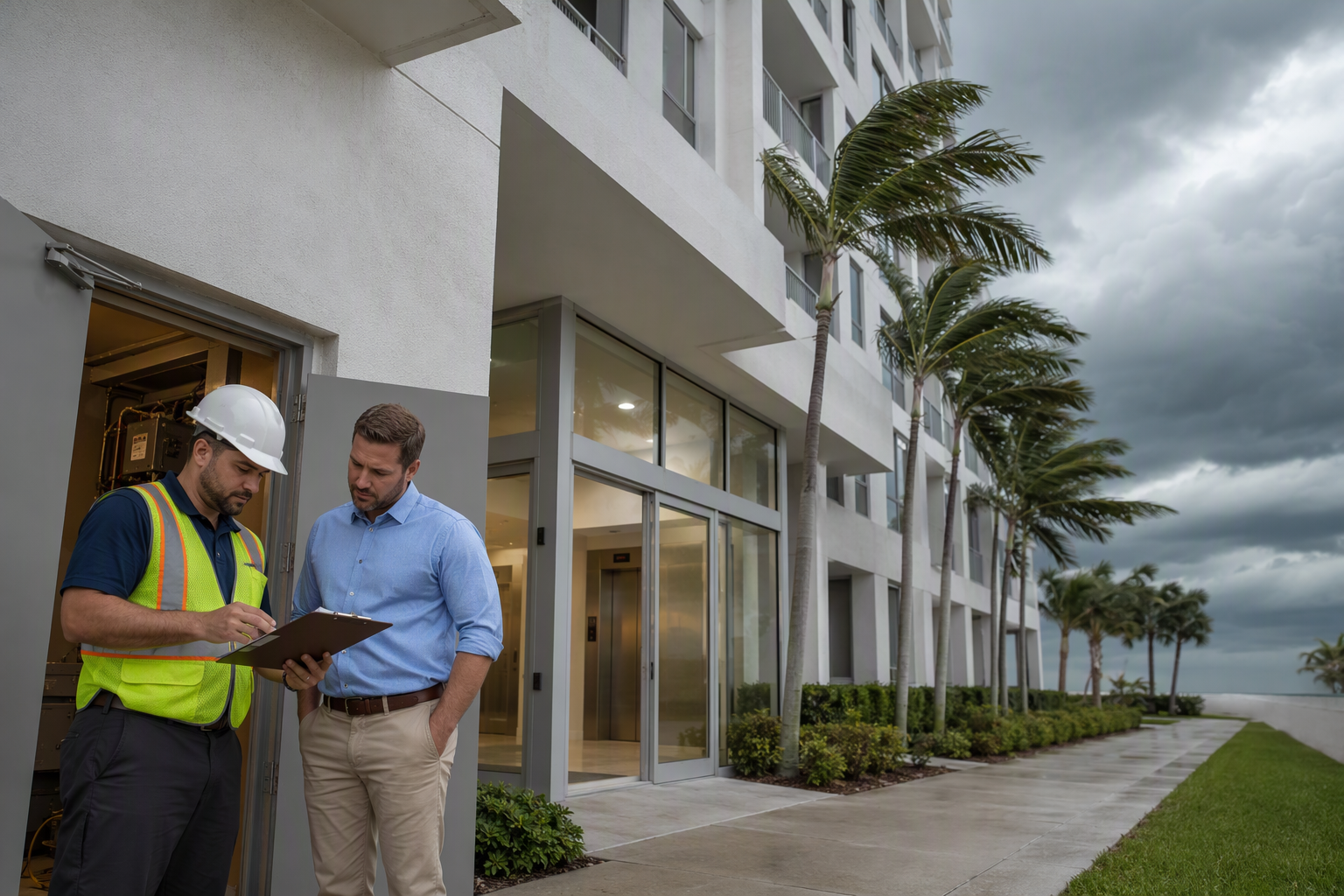
Florida’s hurricane season creates a unique set of risks for vertical transportation equipment. Flooding, power surges, high winds, and prolonged outages can compromise elevator hydraulics, electrical systems, and structural components. Knowing what to inspect, when to do it, and who bears legal responsibility is not optional for Florida building owners — it is a matter of statutory compliance and occupant safety.
Axxiom Elevator Florida provides data-driven pre-hurricane maintenance services for commercial, residential, and mixed-use properties throughout Florida, working within the framework established by the Florida Department of Business and Professional Regulation (DBPR), Division of Hotels and Restaurants, Bureau of Elevator Safety.
—
What Does Florida Law Say About Elevator Maintenance Responsibility?
Under Chapter 399, Florida Statutes (the Elevator Safety Act), and its companion rules in Chapter 61C-5, Florida Administrative Code, once a certificate of operation is issued, the elevator owner is directly responsible for:
- Safe operation of the conveyance
- Proper and ongoing maintenance
- Ensuring that certified inspections occur on schedule
- Correcting any identified code deficiencies promptly
This owner-responsibility standard does not pause during hurricane season. If an elevator causes injury due to deferred maintenance — including storm-related damage that was foreseeable — the certificate of operation holder can face regulatory penalties, civil liability, and the forced suspension of their certificate.
All maintenance and repair work must be performed by a Florida-registered elevator company staffed by Florida-certified elevator technicians who hold a current elevator certificate of competency issued by the state. That certificate must be renewed annually, and technicians must demonstrate eight hours of continuing education at each renewal. Building owners should verify these credentials before engaging any service provider.
—
Which Pre-Hurricane Elevator Maintenance Tasks Are Required?
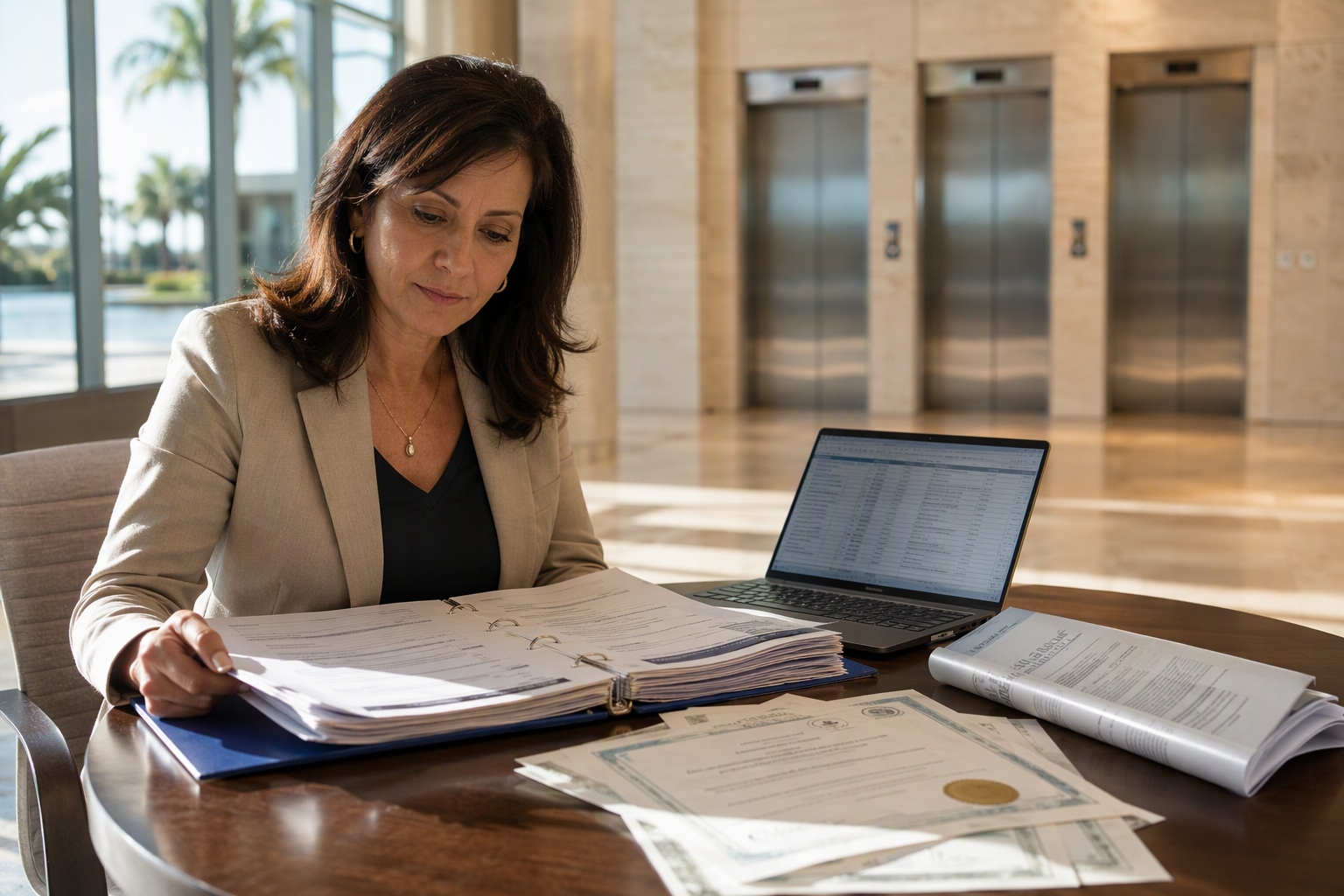
Florida code does not publish a hurricane-specific maintenance checklist by name. However, the obligations imposed by Chapter 399 and the ASME A17.1/CSA B44 Safety Code for Elevators and Escalators (2019 edition, adopted in Florida effective December 31, 2023) establish performance and maintenance standards that directly translate into pre-storm action items. The following tasks represent best-practice interpretations of those obligations for Florida’s storm environment:
Pit Inspection and Waterproofing
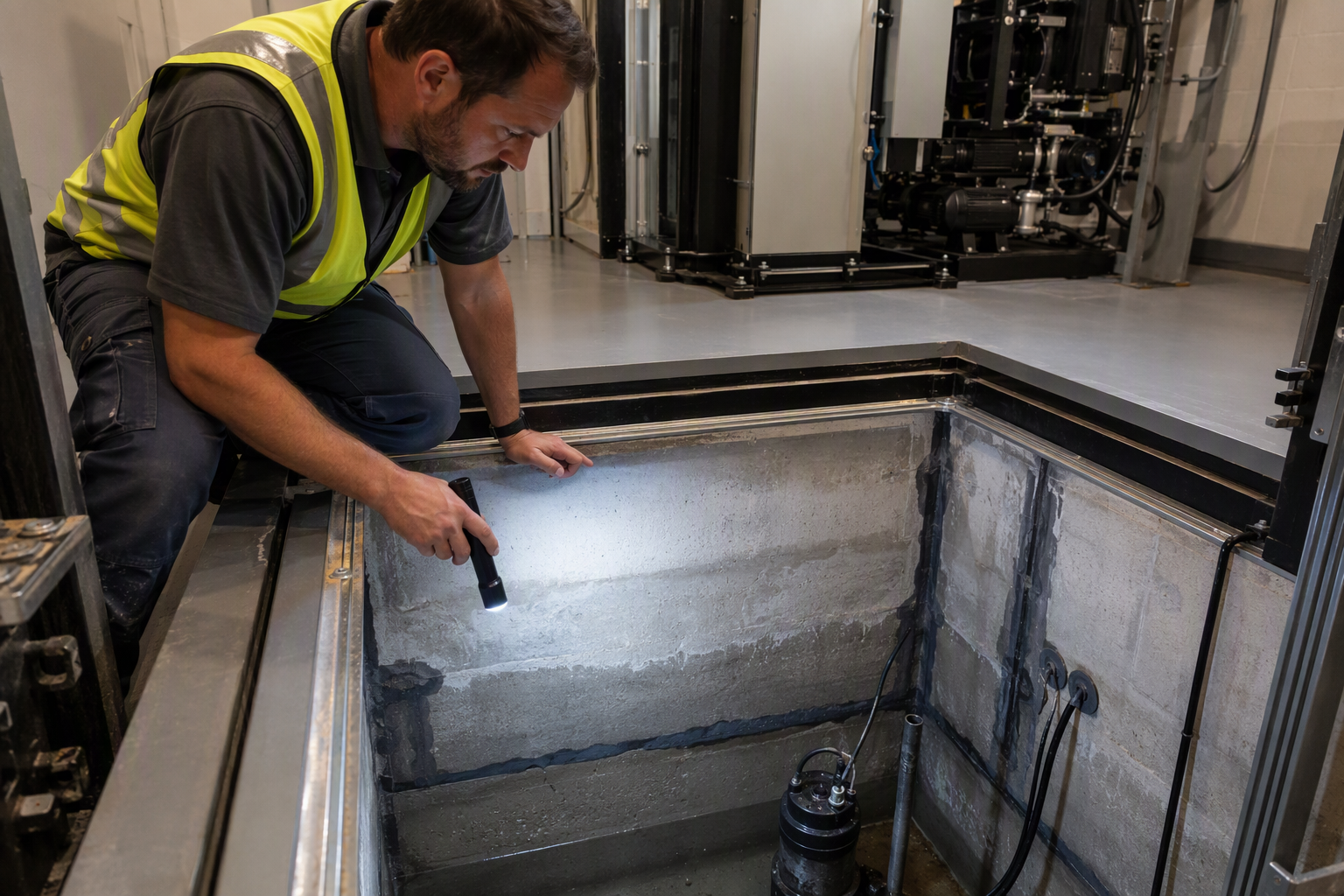
The elevator pit is the most flood-vulnerable component of any hydraulic or traction system. Water intrusion can destroy pit equipment, corrode wiring, contaminate hydraulic fluid, and trigger safety contacts that disable the entire system. Before hurricane season, a certified technician should inspect pit waterproofing, sump pumps, drain conditions, and pit lighting. Any existing moisture damage should be remediated before storm season begins.
Hydraulic System Inspection
Hydraulic elevators — which are common in low- and mid-rise Florida buildings — carry a flood risk that traction elevators do not. The hydraulic fluid reservoir, power unit, and underground or above-ground cylinder should be inspected for existing leaks or corrosion. A compromised hydraulic system that floods during a storm may require an emergency replacement, which costs significantly more than a pre-season service call.
Electrical System and Controller Review
Storm surge, heavy rain, and sustained humidity can compromise elevator controllers, relay panels, and wiring. A pre-hurricane electrical inspection should confirm that all junction boxes are properly sealed, that emergency lighting and communications equipment function correctly, and that the controller room has adequate environmental protection. The ASME A17.1 Safety Code establishes requirements for emergency operation and lighting that must remain intact regardless of weather conditions.
Emergency Power and ARO System Testing
Automatic Rescue Operation (ARO) systems allow elevators to bring cars to a designated floor and open doors during a power failure, preventing passengers from being trapped. Testing and servicing the ARO system and any battery backup or generator integration before hurricane season is a critical life-safety measure. Florida buildings that experience extended power outages — a common post-hurricane scenario — depend on these systems to avoid entrapments.
Seismic and Wind-Load Anchorage Review
While Florida’s primary storm hazard is wind and water rather than seismic activity, elevator machine room anchorage, overhead beam integrity, and rail fastening should be reviewed as part of any structural pre-storm inspection. High-wind events can transmit vibration and structural stress through a building that affects elevator guide rails and counterweight systems.
Door System and Safety Contact Testing
Door systems that are already marginal — worn gibs, misaligned sills, sticky operators — become failure points when buildings experience structural movement during a hurricane. Safety contacts that protect against door-related entrapments must function reliably. A door-system inspection and lubrication before storm season reduces the risk of post-storm service calls and entrapments.
Certificate of Operation Status Verification
Under Florida law, a certificate of operation is valid for no more than two years and may only be renewed following a satisfactory inspection. Operating on an expired certificate violates state law. Before hurricane season, building owners should verify their certificate’s expiration date and confirm it will remain valid through the storm season. An elevator taken out of service post-storm may require a new inspection and a current, valid certificate before it can be legally returned to use.
Accident Reporting Protocol Review
Florida requires that any elevator accident be reported to the state within five working days of occurrence. Building managers should review this protocol before hurricane season — post-storm conditions often involve disorganized communications and staff absences that can cause owners to miss this mandatory window.
—
What Is the Pre-Hurricane Elevator Maintenance Timeline?
Florida’s hurricane season begins June 1. The optimal window for pre-hurricane elevator maintenance runs from March through mid-May, allowing time to schedule a certified technician, order replacement parts if deficiencies are found, and complete any follow-up repairs before peak storm activity. Scheduling during this window also avoids the demand surge that occurs when building managers rush to prepare in late May.
- March–April: Contact a Florida-registered elevator company to schedule a comprehensive pre-hurricane inspection and maintenance visit. Verify that the company and its technicians hold current Florida credentials.
- April–early May: Complete the full inspection. Identify deficiencies in pit waterproofing, hydraulics, electrical systems, ARO, doors, and safety contacts. Order any parts with long lead times immediately.
- Mid-May: Complete all repairs and corrective work. Confirm that the certificate of operation is current and will remain valid through November 30.
- Before each named storm: Follow the elevator company’s storm shutdown procedure — typically returning cars to a designated floor above the flood zone, shutting down power at the disconnect, and securing machine room access.
- Post-storm: Do not restore elevator service until a certified technician has performed a post-storm inspection, confirmed that no water intrusion or structural damage has occurred, and cleared the equipment for safe operation.
—
Who Performs Pre-Hurricane Elevator Maintenance in Florida?
Only a Florida-registered elevator company staffed by technicians holding a current Florida elevator certificate of competency may legally perform elevator maintenance, repair, or alteration work. Building owners may not perform this work themselves, nor may they hire unlicensed contractors.
In counties and municipalities with delegated authority under Florida law, local inspectors may also be involved:
- Broward County (including Pompano Beach): Broward County Building Code Division enforces Chapter 399 through its own certified elevator inspectors.
- Miami-Dade County: The Miami-Dade County Office of Elevator Safety covers all municipalities except the City of Miami and the City of Miami Beach, which maintain their own elevator offices.
- City of Miami Beach: The Miami Beach Elevator Safety Division holds delegated authority under Florida law for permits, inspections, and certificates within city limits.
- City of Miami: The City of Miami Building Department Elevator Division reviews annual inspection reports and issues the Annual Elevator Certificate.
Regardless of local jurisdiction, the owner’s legal responsibility for maintenance under Chapter 399 does not transfer to the inspector or the local authority. Inspection confirms compliance; maintenance is the owner’s obligation.
—
What Florida Code Standards Apply to Hurricane-Related Elevator Maintenance?
The primary code framework includes:
- Chapter 399, Florida Statutes — the Elevator Safety Act, establishing owner responsibility, inspection requirements, and certificate of operation requirements.
- Chapter 61C-5, Florida Administrative Code — the Florida Elevator Safety Code, implementing the statute and adopting the ASME standard.
- ASME A17.1/CSA B44, 2019 edition — adopted in Florida effective December 31, 2023 — establishes maintenance, testing, and safety requirements for elevators and escalators.
- Americans with Disabilities Act (ADA) — requires that accessible routes, including elevators, remain operational. Extended post-hurricane outages may create ADA compliance concerns for buildings that rely on elevators as a required accessible route.
- OSHA — where elevator maintenance workers are on-site post-storm, OSHA general industry standards for confined space, lockout/tagout, and electrical safety apply to all work performed in and around elevator equipment.
—
Does the Annual Inspection Requirement Cover Hurricane Preparedness?
Florida requires that every elevator covered by Chapter 399 be inspected annually by a certified elevator inspector — with one limited exception: an elevator that serves only two adjacent floors and is covered by a service maintenance contract is exempt from the annual inspection while that contract remains in effect.
Annual inspections confirm code compliance at the time of inspection; they are not a substitute for pre-hurricane maintenance. An elevator can pass its annual inspection in January and still develop hydraulic, electrical, or pit-related deficiencies by May that would make it vulnerable to storm damage. Pre-hurricane maintenance is a separate, proactive step that building owners should take in addition to — not instead of — their required annual inspection.
—
What Happens If an Elevator Is Damaged During a Hurricane?
After a hurricane, no elevator should be returned to service until it has been cleared by a Florida-certified elevator technician. Post-storm risks include:
- Water in the pit or machine room that has not been fully removed or dried
- Electrical components compromised by flooding, moisture, or power surges
- Structural damage to the hoistway, guide rails, or machine room that affects safe operation
- Hydraulic fluid contamination or cylinder damage from floodwater
- Safety contact or door system damage from building movement or debris
If storm damage requires alterations to the elevator system — replacement of major components or structural changes — a state permit must be applied for by a registered elevator company before that work begins. The conveyance must then pass a pre-use inspection by a certified elevator inspector who has no conflict of interest with the permit holder or the owner before it can be legally returned to service.
Any accident that occurs to an elevator — including storm-related incidents — must be reported to the state within five working days.
—
How Does ADA Compliance Factor Into Post-Hurricane Elevator Outages?
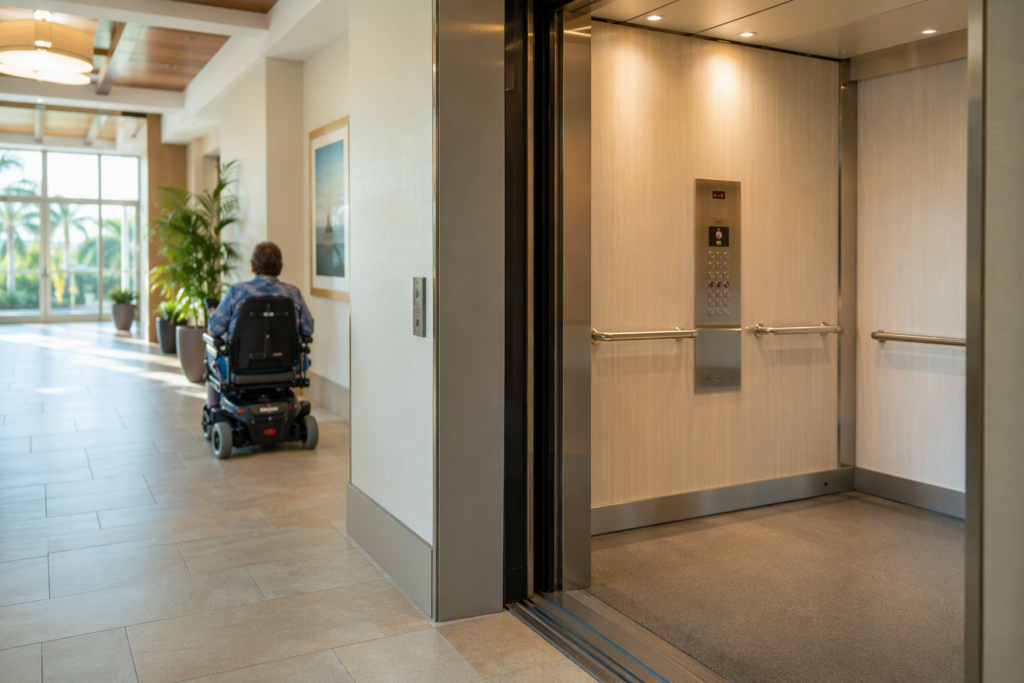
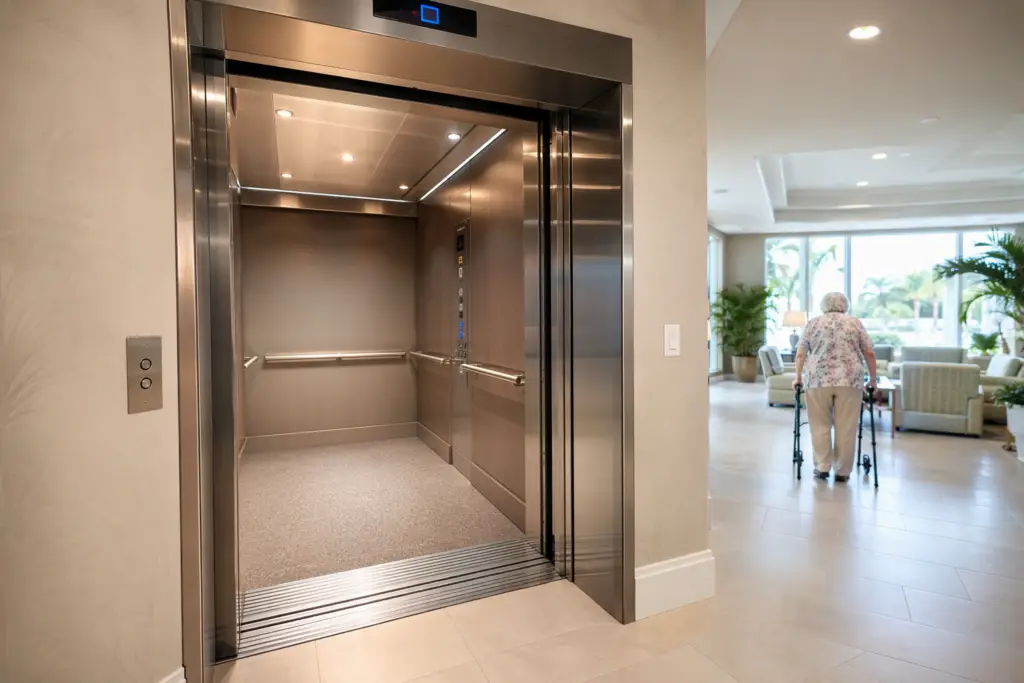
The Americans with Disabilities Act requires that elevators serving as part of a required accessible route remain accessible to people with disabilities. Extended post-hurricane outages — particularly those lasting days or weeks while repairs are made — may create ADA compliance exposure for building owners if no alternative accessible means of egress or entry exists. Building owners should consult with legal counsel and their elevator service provider about contingency planning for ADA-covered facilities.
—
What Are the Industry Trends for Elevator Hurricane Preparedness in 2025–2026?
Several qualitative trends are shaping how Florida building owners and elevator service providers approach pre-hurricane maintenance heading into 2025 and 2026:
- Remote monitoring adoption: More Florida elevator operators are integrating remote monitoring systems that can detect pit flooding, power anomalies, and mechanical alerts in real time — allowing faster post-storm triage without requiring a technician to physically access every site before knowing the severity of damage.
- Battery backup and ARO upgrades: As Florida buildings modernize aging elevator fleets, ARO systems and battery backup units are increasingly standard additions, reducing the risk of post-storm entrapments during extended power outages.
- Stronger emphasis on pre-storm documentation: Insurance carriers and building owners alike are placing greater weight on documented pre-hurricane maintenance records. A clear, dated service record from a registered elevator company can support insurance claims and demonstrate due diligence in the event of a post-storm regulatory review.
- Supply chain planning: Extended lead times for elevator parts — particularly hydraulic components, controllers, and door operators — have made early pre-hurricane ordering more important. Service providers who identify deficiencies in March or April give building owners a realistic window to receive parts before the season begins.
- Code alignment with ASME A17.1-2019: With Florida’s adoption of the 2019 ASME edition effective December 31, 2023, some older buildings are still working through code compliance for the adopted standard. Pre-hurricane inspections are an opportunity to identify any open items from that transition.
—
Does a Maintenance Contract Exempt a Building From Pre-Hurricane Inspection?
Under Florida law, an elevator serving only two adjacent floors that is covered by a service maintenance contract is exempt from the annual inspection requirement while the contract remains in effect. This exemption applies to the annual inspection cycle — it does not remove the owner’s legal obligation for safe operation and proper maintenance, nor does it eliminate the practical need for targeted pre-hurricane assessment. Building owners with maintenance contracts should confirm with their registered elevator company that the contract’s scope specifically includes pre-hurricane inspection and storm-readiness tasks.
—
What Should Building Managers Ask Their Elevator Company Before Hurricane Season?
Before engaging any elevator service provider for pre-hurricane work, building managers in Florida should confirm the following:
- Is the company currently registered as a Florida-registered elevator company with the DBPR Bureau of Elevator Safety?
- Do all technicians who will perform the work hold a current Florida elevator certificate of competency?
- Does the company carry current general liability insurance as required under Florida law?
- Will the company provide written documentation of all pre-hurricane inspection findings and completed work?
- Does the company have a post-storm emergency response protocol and the capacity to perform post-storm inspections?
- Will the company verify that the building’s certificate of operation is current and will not expire during hurricane season?
—
How Does Axxiom Elevator Florida Support Pre-Hurricane Compliance?
Axxiom Elevator Florida is a Florida-registered elevator company serving building owners, property managers, and condominium associations throughout the state. The team approaches pre-hurricane elevator maintenance through the same data-driven, code-grounded framework required by Chapter 399, Florida Statutes, the Florida Administrative Code, and the ASME A17.1/CSA B44, 2019 Safety Code for Elevators and Escalators.
Pre-hurricane assessments conducted by Axxiom Elevator Florida are documented in writing, performed by technicians holding current Florida credentials, and designed to identify deficiencies early enough in the pre-season window for repairs to be completed before June 1. The company is equipped to work within the local authority jurisdictions that have delegated elevator enforcement authority under Florida law, including Broward County, Miami-Dade County, the City of Miami, and the City of Miami Beach.
Building owners who have questions about their certificate of operation status, upcoming inspection timelines, or the scope of work needed to prepare their elevators for storm season are encouraged to reach out directly.
—
Need elevator service you can rely on? Axxiom Elevator Florida is ready to help.