Elevator Upgrades That Increase Property Value and Attract Tenants in Multifamily and Office Buildings
Elevators are not simply a code requirement — they are a visible, daily touchpoint that shapes tenant perception, drives lease renewal decisions, and influences how appraisers and buyers assess a property’s capital expenditure risk. For building owners and asset managers in Florida’s competitive multifamily and commercial real estate markets, understanding which elevator improvements deliver measurable value is essential to making smart capital investment decisions.
This page covers the full spectrum of elevator upgrade options, the compliance factors that can force or incentivize improvements, what the modernization process looks like, and how Axxiom Elevator Florida supports property owners with data-driven assessments.
—
Which Elevator Upgrades Have the Greatest Impact on Property Value?
Not all elevator improvements carry equal weight in the eyes of appraisers, tenants, or lenders. The upgrades that most consistently influence asset value and tenant retention fall into several categories:
- Destination dispatch and smart call systems: These systems group passengers traveling to similar floors, reducing average wait times and improving perceived building efficiency. In competitive Class A and Class B office environments, intelligent dispatching is increasingly viewed as a baseline amenity rather than a premium feature.
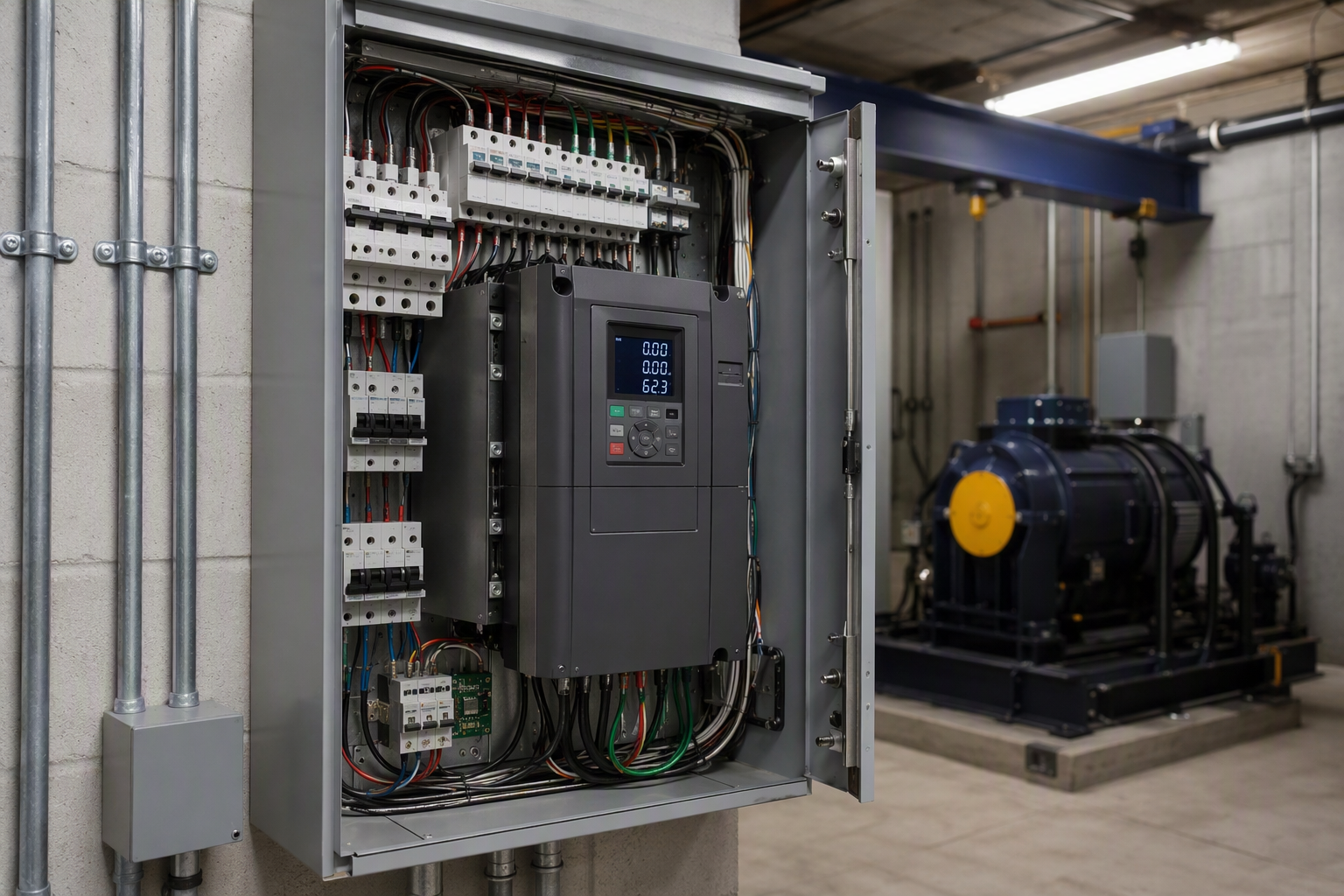
- Variable frequency drive (VFD) motor controllers: Replacing older hydraulic or single-speed traction systems with VFD-controlled motors improves ride quality, reduces mechanical wear, and lowers energy consumption — a factor that supports ENERGY STAR or LEED certification efforts that directly affect commercial property valuations.
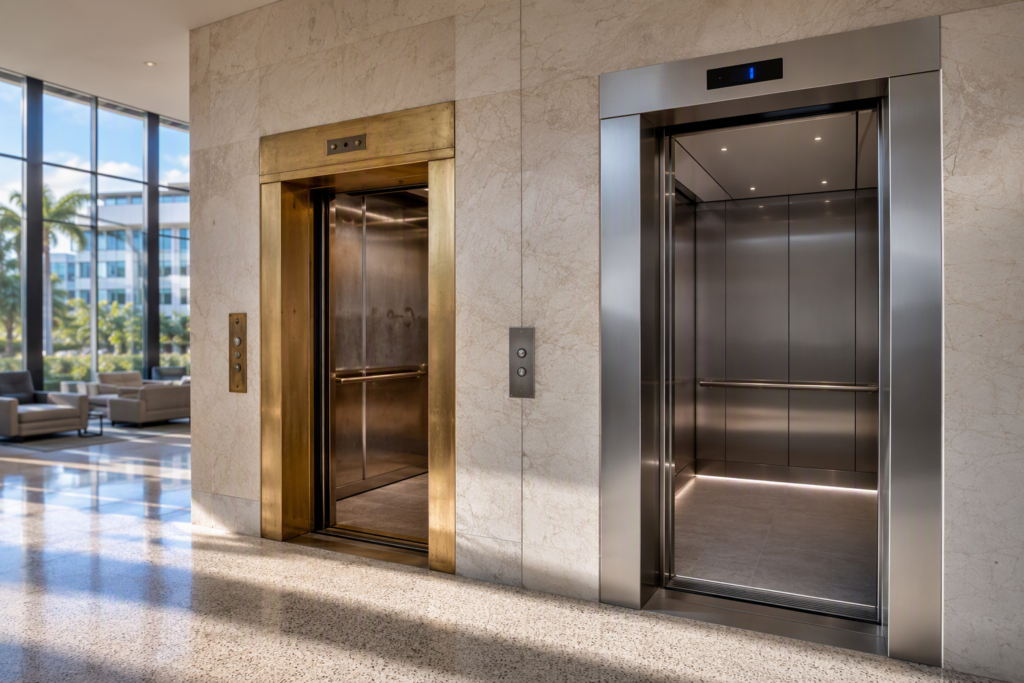
- Cab interior renovations: Updated finishes, lighting (particularly LED conversion), stainless steel or architectural panel systems, and modern flooring signal that a property is actively managed and maintained. These improvements carry outsized influence on first impressions during tenant tours and investor walkthroughs.
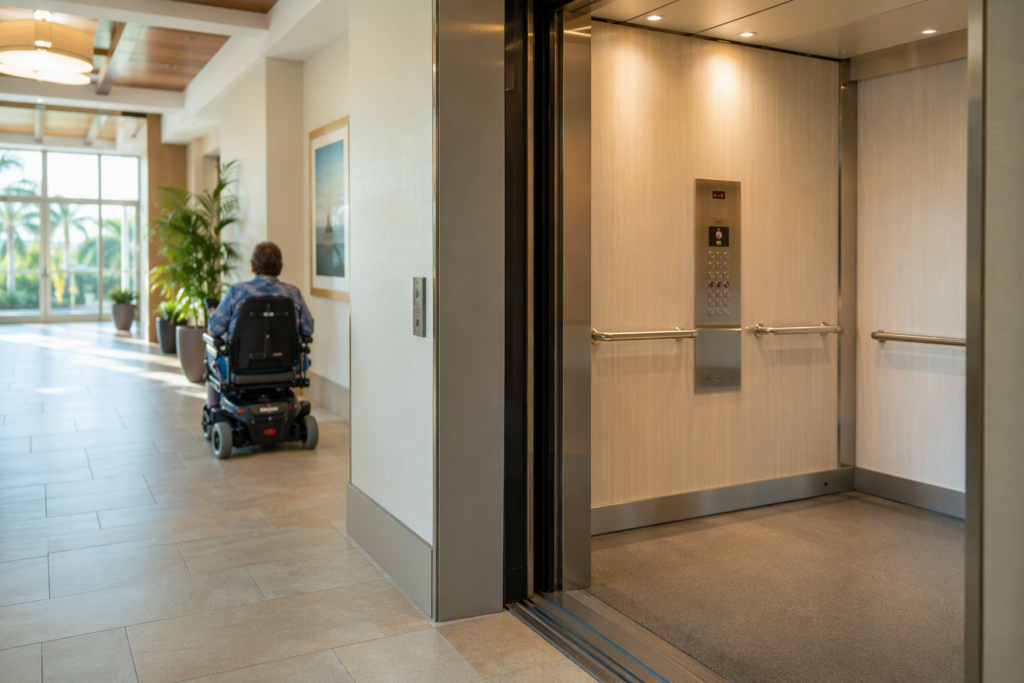
- ADA-compliant controls and fixtures: Bringing controls into full compliance with the Americans with Disabilities Act (ADA) requirements — including proper button heights, Braille signage, audible signals, and door timing — is not optional for buildings subject to ADA jurisdiction. Documented compliance reduces legal liability exposure, a factor that lenders and insurers weigh in underwriting.
- Door operator modernization: Older door systems are the leading source of elevator-related entrapments and service interruptions. Modern reopening devices, high-speed door operators, and multi-beam light curtains dramatically reduce downtime and liability risk — both of which affect net operating income calculations.
- Remote monitoring and IoT-enabled diagnostics: Cloud-connected monitoring systems allow building management teams and service providers to identify fault codes and performance degradation before a shutdown occurs. For multifamily operators, elevator downtime directly affects tenant satisfaction surveys and online review scores.
- Machine room-less (MRL) traction conversion: Where architecture permits, converting older hydraulic systems to MRL traction eliminates the environmental risk of hydraulic fluid leaks, reduces energy costs, and removes the need for dedicated machine room space — which can be converted to rentable square footage.
How Do Elevator Conditions Affect Commercial Property Appraisals?
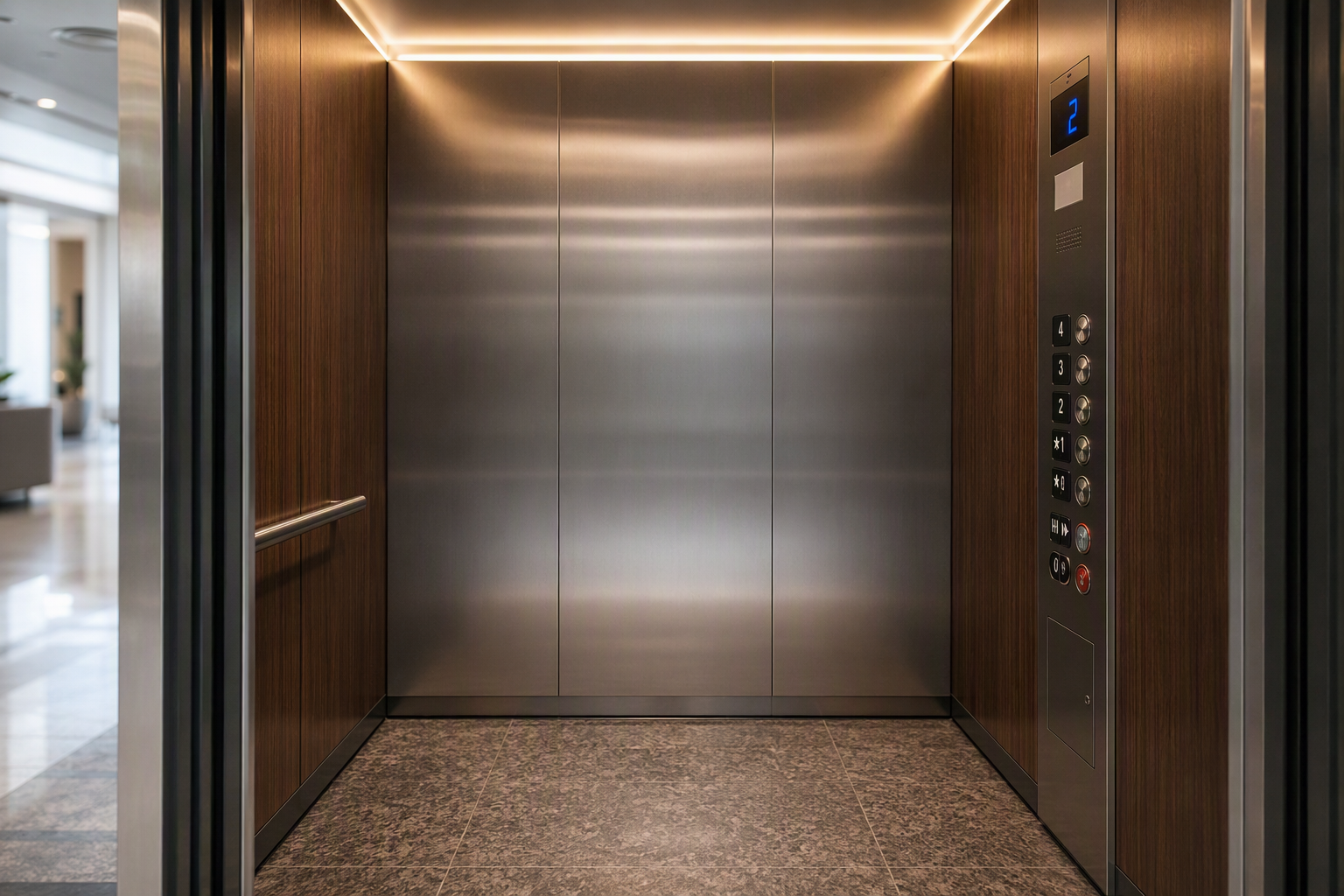
Commercial real estate appraisers evaluate elevator systems as part of the mechanical, electrical, and plumbing (MEP) component review within a property condition assessment (PCA). Elevators that are near the end of their expected service life, that show deferred maintenance, or that carry outstanding violation notices from state or local authorities are flagged as capital expenditure reserves — reducing the property’s appraised value and increasing the perceived risk for lenders.
In Florida, elevators are regulated under the Florida Department of Business and Professional Regulation (DBPR) and must pass periodic safety inspections. Buildings with lapsed inspections, unresolved violations, or outdated equipment that does not meet current editions of the ASME A17.1 Safety Code for Elevators and Escalators face forced shutdown orders that can render upper floors inaccessible — a catastrophic event for lease-up timelines and asset values.
Conversely, buildings that present documented modernization histories, current inspection certificates, and energy-efficient systems are positioned favorably in due diligence reviews. Sophisticated multifamily and commercial investors specifically seek properties where elevator capital expenditure risk has been mitigated.
What ADA Requirements Apply to Elevator Upgrades in Commercial Buildings?
Under the Americans with Disabilities Act, elevators in buildings with more than one floor are generally required to be accessible. Specific requirements govern:
- Call button height and size
- Floor designation signs with raised characters and Braille
- Audible and visible floor indicators
- Door timing and reopening devices
- Cab dimensions for wheelchair accessibility
- Emergency two-way communication systems
Buildings undergoing alterations are subject to the ADA’s path-of-travel obligations, which can trigger elevator upgrade requirements even when the elevator itself is not the primary scope of the renovation. Owners planning lobby renovations, restroom upgrades, or tenant improvement projects should evaluate whether those alterations create ADA obligations for the vertical transportation system.
Non-compliance with ADA elevator requirements exposes building owners to complaints, federal enforcement actions, and private litigation — all of which are material risks in commercial real estate transactions. Documented ADA compliance, by contrast, is a positive due diligence item.
How Do Elevator Upgrades Affect Multifamily Tenant Retention?
In multifamily residential buildings — particularly mid-rise and high-rise properties — elevator performance is one of the most frequently cited factors in tenant satisfaction surveys and online reviews. Residents who experience repeated service interruptions, long wait times, or uncomfortable rides are significantly more likely to decline lease renewals and to leave negative public reviews that affect future lease-up velocity.
Property management platforms and multifamily industry associations consistently identify vertical transportation among the top mechanical amenities influencing renewal decisions, alongside HVAC performance and parking availability. For Class A apartment communities competing for renters with high expectations, elevator modernization is often positioned as a quality-of-life investment with direct revenue implications through reduced concessions and improved renewal rates.
Buildings marketing to senior residents or residents with mobility limitations face even greater scrutiny, as elevator reliability is not a convenience — it is an accessibility requirement that directly affects habitability for that demographic.
What Is the Typical Timeline for an Elevator Modernization Project?
Modernization timelines vary significantly based on the scope of work, the number of units in a building, equipment lead times, and permit processing times with the Florida DBPR. The following represents a general sequence for a mid-scope modernization covering controls, door operators, and cab finishes:
- Initial assessment and scope development: A qualified elevator contractor evaluates the existing system, identifies code deficiencies, documents equipment age and condition, and develops a modernization specification. This phase typically takes one to three weeks depending on access scheduling.
- Engineering and equipment ordering: Custom control panels, cab components, and specialty fixtures are engineered and ordered. Equipment lead times in 2025–2026 can range from several weeks to several months depending on manufacturer and supply chain conditions.
- Permit application and DBPR approval: Florida requires permits for elevator modernization work through the DBPR elevator safety program. Permit review timelines vary by jurisdiction and scope complexity.
- Phased installation: In multi-car buildings, work is typically sequenced to keep at least one elevator in service during construction. Single-car buildings require temporary service planning, which may include portable lift arrangements or enhanced scheduling communication with residents or tenants.
- Inspection and certificate of operation: Following installation, a state-authorized inspector must witness testing and issue a new certificate of operation before the elevator returns to full service.
- Post-modernization commissioning and training: Building staff are trained on new control interfaces, monitoring systems, and emergency procedures.
Total project durations for a single elevator typically range from a few months to over six months when accounting for permitting and equipment lead times. Multi-car projects are planned in phases to minimize tenant impact.
Are There Energy Efficiency Benefits to Elevator Modernization?
Energy efficiency is an increasingly important driver of elevator modernization decisions, particularly for building owners pursuing green building certifications or responding to tenant ESG (environmental, social, and governance) requirements.
Modern variable frequency drives reduce energy consumption compared to older single-speed or two-speed motor systems by matching motor output precisely to the load demand. Regenerative drive systems go further by capturing energy generated during descent or when a lighter cab travels upward against a heavier counterweight, feeding that energy back into the building’s electrical system.
LED lighting conversion in elevator cabs reduces energy consumption and maintenance frequency compared to fluorescent or incandescent fixtures. Modern standby mode features reduce energy use during off-peak hours.
For properties pursuing LEED certification or targeting ENERGY STAR scores, elevator energy performance is a documented contributing factor. Buildings with certified green status or strong ENERGY STAR scores command measurable premiums in both sales and lease markets, making energy-efficient elevator systems a component of a broader value-creation strategy.
What Safety Code Requirements Drive Elevator Upgrades in Florida?
Florida elevator safety is governed by state administrative code that adopts and references the ASME A17.1 Safety Code for Elevators and Escalators as the baseline technical standard. Buildings that were constructed under older code editions may not be required to retrofit to current standards immediately, but specific triggering events — such as a major alteration, a change in use, or certain safety violations — can require upgrades to current code requirements.
Key safety-driven upgrade categories include:
- Phase I and Phase II firefighters’ emergency operations: Required for elevators in buildings where fire codes mandate this functionality, ensuring elevators can be safely recalled and controlled by emergency responders.
- Door reopening devices: Modern multi-beam light curtain technology replaces older safety edge systems, providing significantly improved door safety performance.
- Pit safety and machine room conditions: OSHA standards apply to elevator machine rooms and pit working environments. Ladder requirements, lighting levels, and electrical safety standards must meet current OSHA requirements for workers who service the equipment.
- Emergency lighting and communications: Current code requires battery-backed lighting and two-way emergency communication systems in elevator cabs.
- Seismic requirements: While Florida’s seismic risk profile differs from western states, certain code provisions still apply to equipment anchoring and bracing.
Building owners who delay safety-driven upgrades face the risk of violation orders, shutdown notices, and — in the event of an incident — significant legal liability exposure. Proactive compliance is both a safety imperative and a financial risk management strategy.
How Should Building Owners Prioritize Elevator Upgrade Investments?
Prioritization depends on the building’s current condition, competitive positioning, tenant profile, and capital budget cycle. A general framework for decision-making includes:
- Address any active code violations or outstanding inspection deficiencies first. Operating an elevator with unresolved violations creates liability exposure and risks forced shutdown.
- Evaluate door system condition. Door malfunctions are the leading cause of elevator-related incidents and service calls. Door operator and safety device upgrades often deliver the most immediate reliability improvement per dollar invested.
- Assess control system age and parts availability. Older relay-logic or early solid-state control systems become increasingly difficult to service as replacement parts are discontinued. Proactive control modernization avoids emergency replacement at premium cost.
- Consider cab appearance relative to the building’s competitive set. If neighboring properties have recently modernized interiors and the subject property’s cab appears dated, the cosmetic gap is depressing tenant perception and leasing velocity.
- Evaluate energy systems for long-term operating cost reduction. VFD and regenerative drive upgrades have ongoing energy cost savings that can be modeled against upfront capital outlay.
- Plan technology upgrades in alignment with building management system modernization. Remote monitoring and destination dispatch integrate most effectively when planned alongside other smart building technology investments.
What Is the Difference Between Elevator Modernization and Full Replacement?
Modernization — replacing individual components such as controls, door operators, motors, fixtures, and cab finishes while retaining the structural elements (hoistway, rails, and sling) — is the most common approach for buildings with structurally sound hoistways. It is typically less disruptive and less costly than full replacement.
Full replacement, which involves removing all equipment including guide rails and potentially modifying the hoistway, is warranted when the structural components are beyond useful life or when a change in use requires a fundamentally different system configuration. Full replacement projects carry longer timelines, greater structural coordination requirements, and higher capital costs.
Many Florida buildings that were constructed in the 1970s through 1990s are now reaching the age at which modernization is both technically necessary and financially optimal — old enough that original components are failing or obsolete, but with hoistways in good enough condition to avoid full replacement costs.
How Does Elevator Performance Affect Office Building Tenant Attraction?
In competitive office markets, elevator performance is a tangible differentiator during tenant prospective visits. Corporate tenants — particularly those in professional services, technology, finance, and healthcare — evaluate elevator wait times, cab condition, and building systems sophistication as indicators of overall building quality and management competence.
Destination dispatch systems, which allow tenants to enter their floor destination before entering the cab and then direct them to the most efficient car, are increasingly viewed as a baseline expectation in Class A office space. Buildings that cannot offer this technology or comparable performance metrics may struggle to compete for premium tenants who have alternatives in the same submarket.
For medical office buildings, elevator reliability and ADA accessibility are particularly critical, as patients with mobility limitations depend entirely on vertical transportation. A medical office building with unreliable elevator service faces tenant attrition risk that is difficult to reverse.
What Role Does Elevator Condition Play in Multifamily Investment Due Diligence?
Institutional multifamily investors and their lenders routinely commission property condition assessments (PCAs) as a condition of acquisition financing. PCAs evaluate elevator systems for remaining useful life, deferred maintenance, code compliance status, and estimated capital expenditure requirements over a 12-year horizon.
Elevators flagged with significant near-term capital requirements reduce a property’s net operating income projections and can affect loan proceeds, pricing negotiations, and deal structure. Sellers who can demonstrate recent modernization work, current inspection certificates, and a documented maintenance history are in a stronger negotiating position than those who have deferred investment.
In Florida’s active multifamily transaction market, elevator capital expenditure risk is a routine point of negotiation in purchase and sale agreements — making proactive modernization a value-preservation strategy for owners who anticipate a sale within a five-to-ten-year horizon.
What Trends Are Shaping Elevator Upgrades in 2025 and 2026?
Several trends are influencing elevator modernization decisions in the current environment:
- Smart building integration: Tenants and building operators increasingly expect elevator systems to integrate with access control, visitor management, and building management platforms. Elevators that can be controlled via mobile apps or that restrict access to specific floors by credential are becoming a competitive differentiator in Class A office and luxury residential buildings.
- Touchless and contactless interfaces: Interest in touchless call systems — accelerated by heightened hygiene awareness — has sustained into standard building specifications, particularly in healthcare-adjacent and high-traffic office environments.
- Predictive maintenance and IoT monitoring: Building owners are moving away from time-based maintenance contracts toward condition-based monitoring that uses real-time data to dispatch technicians before failures occur. This approach reduces emergency repair costs and downtime.
- ESG-driven capital allocation: Institutional owners with ESG mandates are prioritizing energy-efficient elevator systems as part of broader building decarbonization strategies. Energy consumption documentation for elevator systems is increasingly requested by tenants and required by ESG reporting frameworks.
- Supply chain normalization: After significant lead time disruptions in prior years, equipment supply chains have been gradually normalizing, though owners should continue to plan modernization projects with appropriate lead time buffers.
How Can Building Owners Work with Axxiom Elevator Florida on Upgrade Planning?
Axxiom Elevator Florida works with multifamily and commercial building owners and property managers across Florida to evaluate existing elevator systems, identify code compliance gaps, assess remaining useful life, and develop prioritized modernization plans aligned with capital budget cycles and leasing objectives.
The assessment process begins with a thorough on-site evaluation of all elevator system components — controls, mechanical systems, door operators, cab condition, safety devices, and compliance documentation. Findings are translated into a clear prioritization framework that distinguishes between immediate safety requirements, near-term reliability investments, and longer-term value-enhancement upgrades.
Axxiom Elevator Florida’s approach is grounded in current code standards, including the ASME A17.1 Safety Code for Elevators and Escalators, Florida DBPR requirements, and ADA accessibility guidelines, ensuring that modernization plans address both regulatory compliance and competitive positioning in the Florida real estate market.
For building owners preparing for a transaction, refinancing, or a capital improvement cycle, a documented elevator assessment from a qualified contractor provides the kind of credible, third-party evidence that strengthens due diligence packages and supports favorable appraised values.
—
Need elevator service you can rely on? Axxiom Elevator Florida is ready to help.