Elevator Maintenance and Inspection Requirements for Retail Shopping Centers and Mixed-Use Buildings in Florida
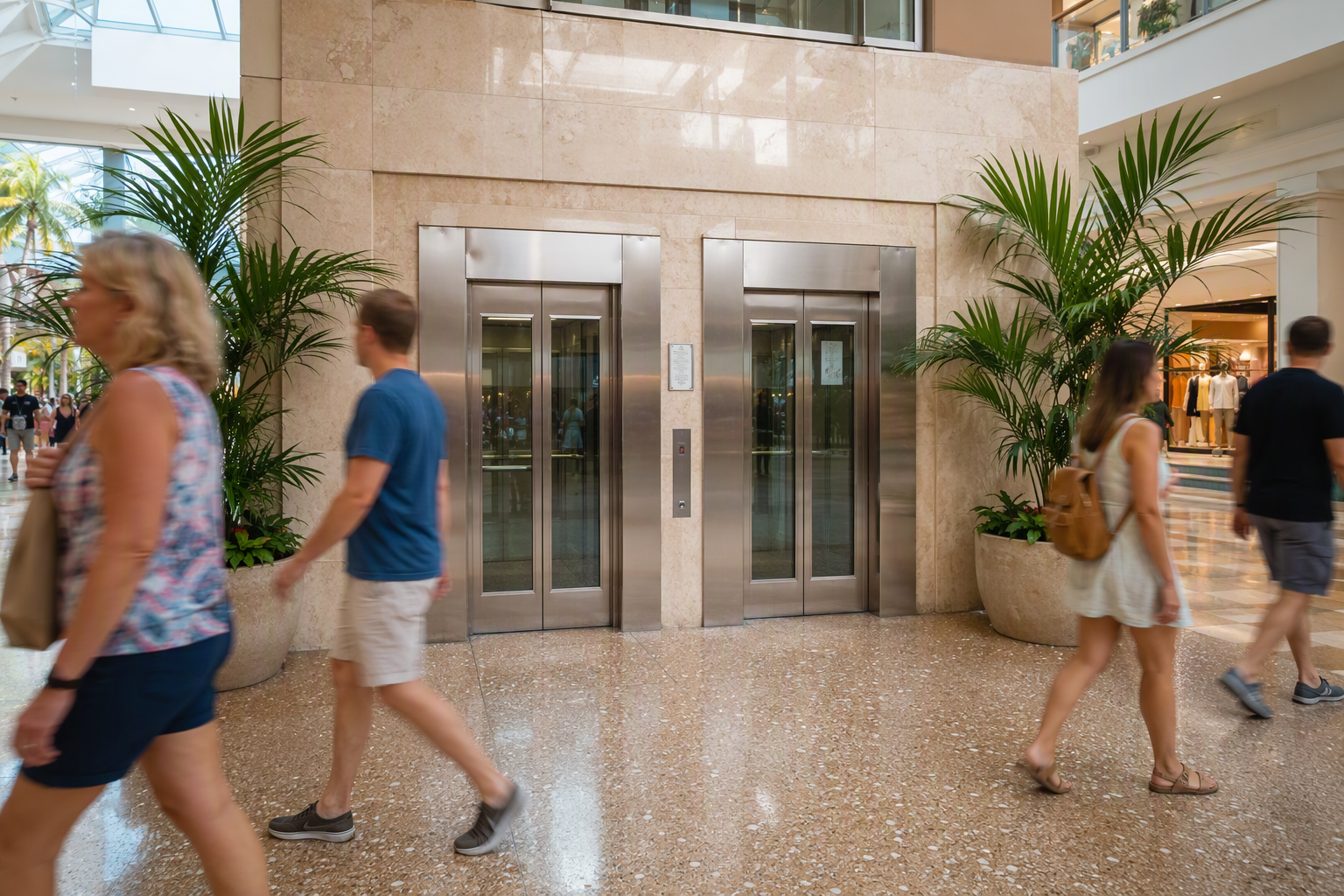
Retail shopping centers and mixed-use developments in Florida host thousands of visitors daily, which means elevator reliability and regulatory compliance are not optional — they are legal obligations with real consequences for building owners, property managers, and tenants. Whether a property sits in a high-traffic corridor in Pompano Beach or a waterfront mixed-use district in Sarasota, the state’s elevator safety framework applies uniformly. This page explains every layer of that framework so owners and facility teams can meet their obligations with confidence.
What Florida Laws Govern Elevator Safety in Retail and Mixed-Use Buildings?
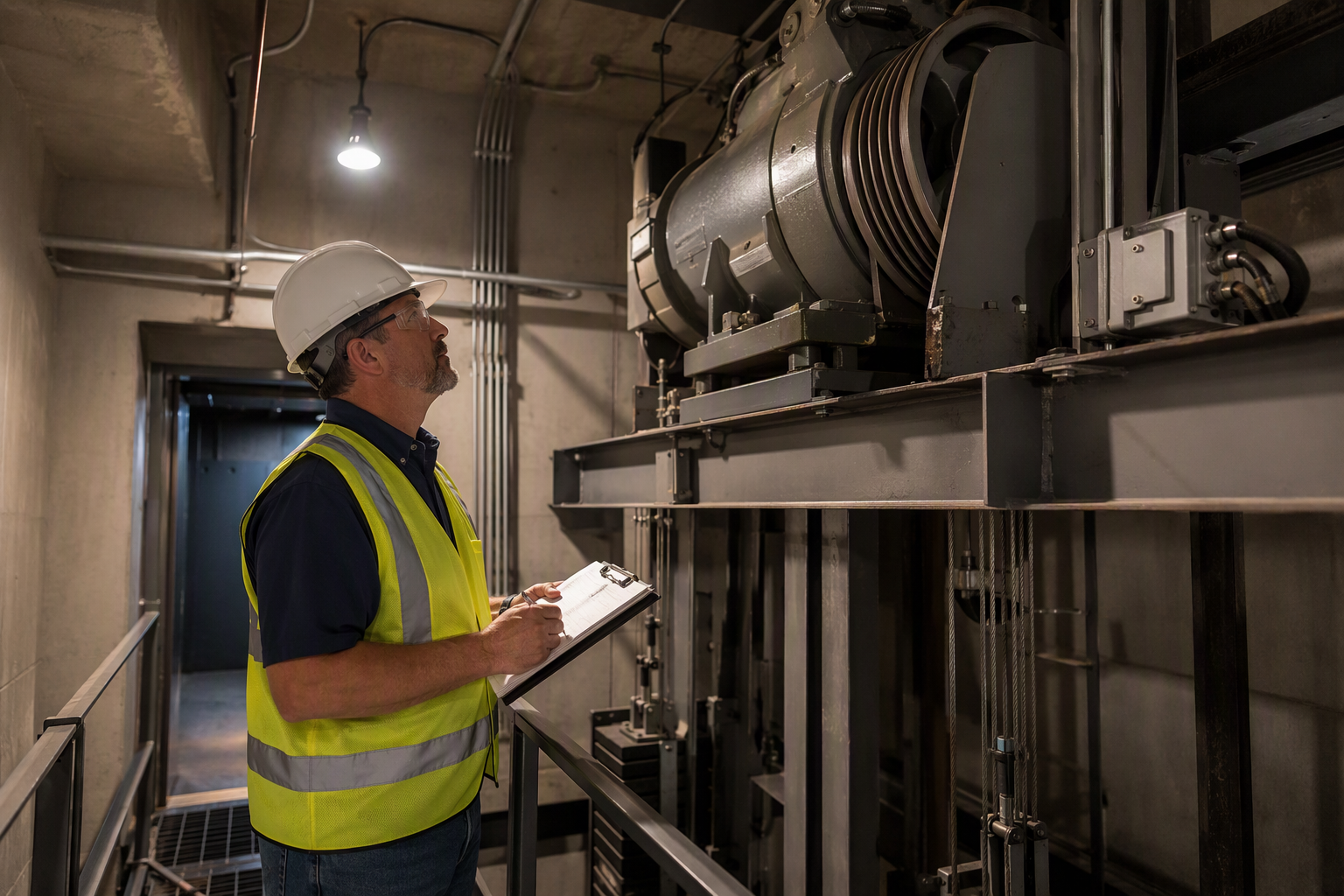
The primary legal framework is Chapter 399, Florida Statutes, commonly called the Florida Elevator Safety Act. The implementing regulations are found in Chapter 61C-5, Florida Administrative Code (Florida Elevator Safety Code). Together, these instruments give authority to the Florida Department of Business and Professional Regulation (DBPR), Division of Hotels and Restaurants, Bureau of Elevator Safety, which is the designated state elevator regulator.
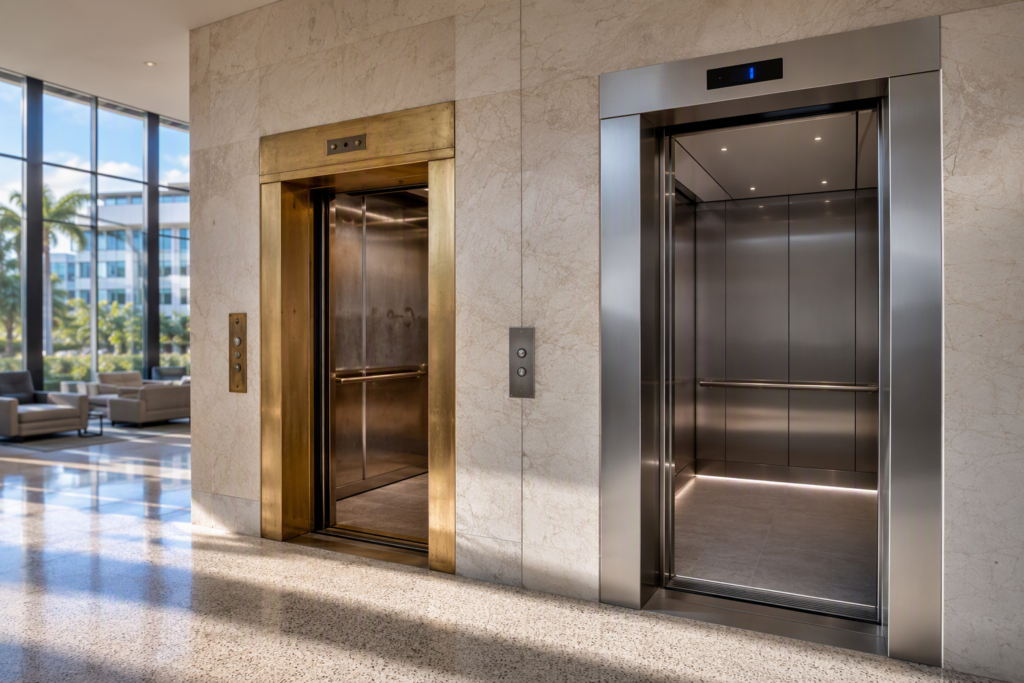
Florida adopted the ASME A17.1/CSA B44, 2019 edition as the technical standard for elevator construction, installation, and maintenance, effective December 31, 2023. All vertical transportation equipment in retail and mixed-use buildings — passenger elevators, service elevators, escalators, moving walks, and wheelchair lifts open to the public — must conform to this edition.
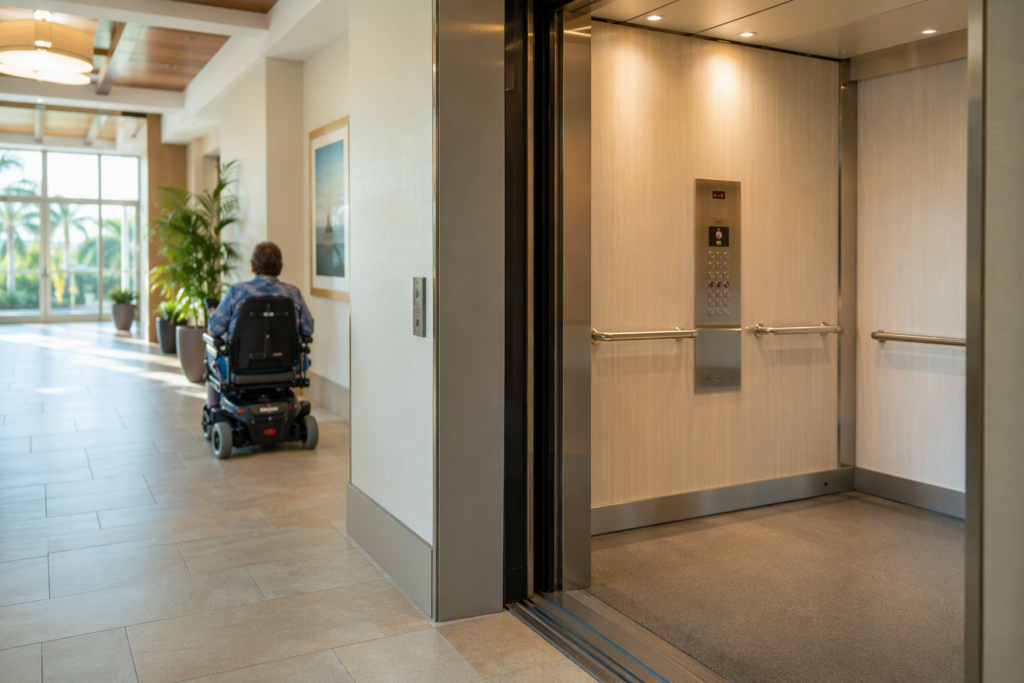
Federal law adds a second compliance layer. The Americans with Disabilities Act (ADA) requires that elevators in buildings open to the public meet accessibility standards covering cab dimensions, door timing, floor indicators, and tactile controls. A building that passes its state inspection but harbors an ADA deficiency remains exposed to federal civil rights liability.
How Often Must Elevators in Retail and Mixed-Use Buildings Be Inspected in Florida?
Florida requires every elevator or other conveyance covered by Chapter 399 to be inspected annually by a certified elevator inspector, or by a county or municipality operating under contract with the state. For most retail and mixed-use properties, that means a full inspection every calendar year.
There is a narrow statutory exemption: an elevator that is not an escalator or dumbwaiter, serves only two adjacent floors, and is covered by an active service maintenance contract is exempt from the annual inspection requirement while that contract remains in effect. The overwhelming majority of multi-floor shopping centers and mixed-use towers do not qualify for this exemption.
Axxiom Elevator Florida helps property managers track inspection due dates across multi-tenant portfolios so that no conveyance inadvertently lapses into non-compliant status.
What Is the Certificate of Operation and How Long Is It Valid?
A Florida certificate of operation authorizes a conveyance to remain in service. It is valid for no more than two years, and it can be renewed only for a conveyance that has received a current satisfactory inspection. Operating an elevator on an expired certificate is a violation of state law under Chapter 399.
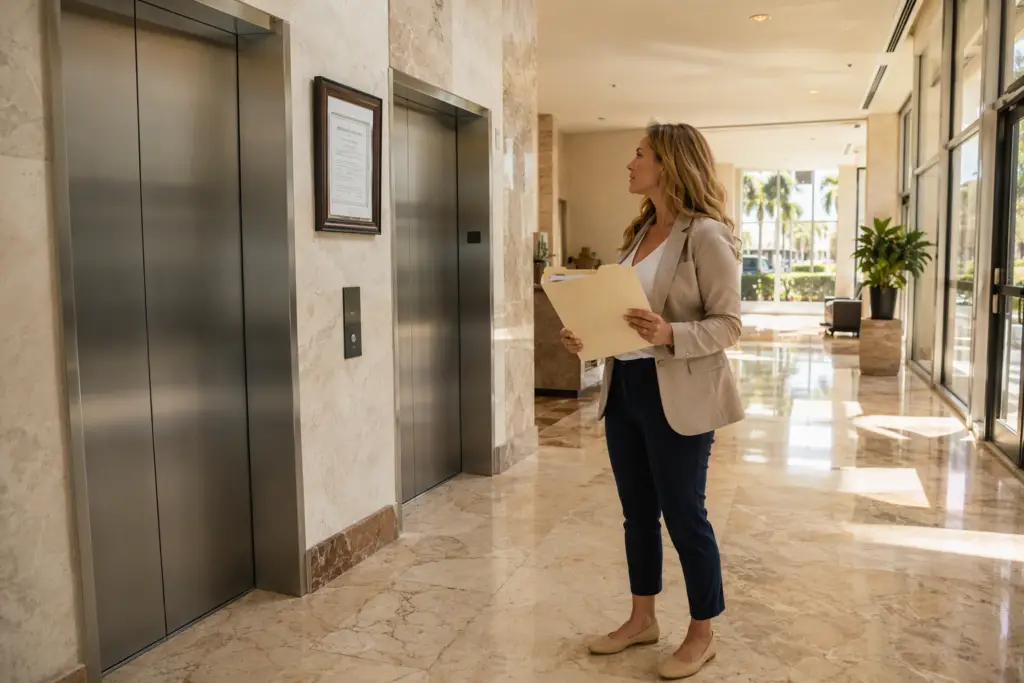
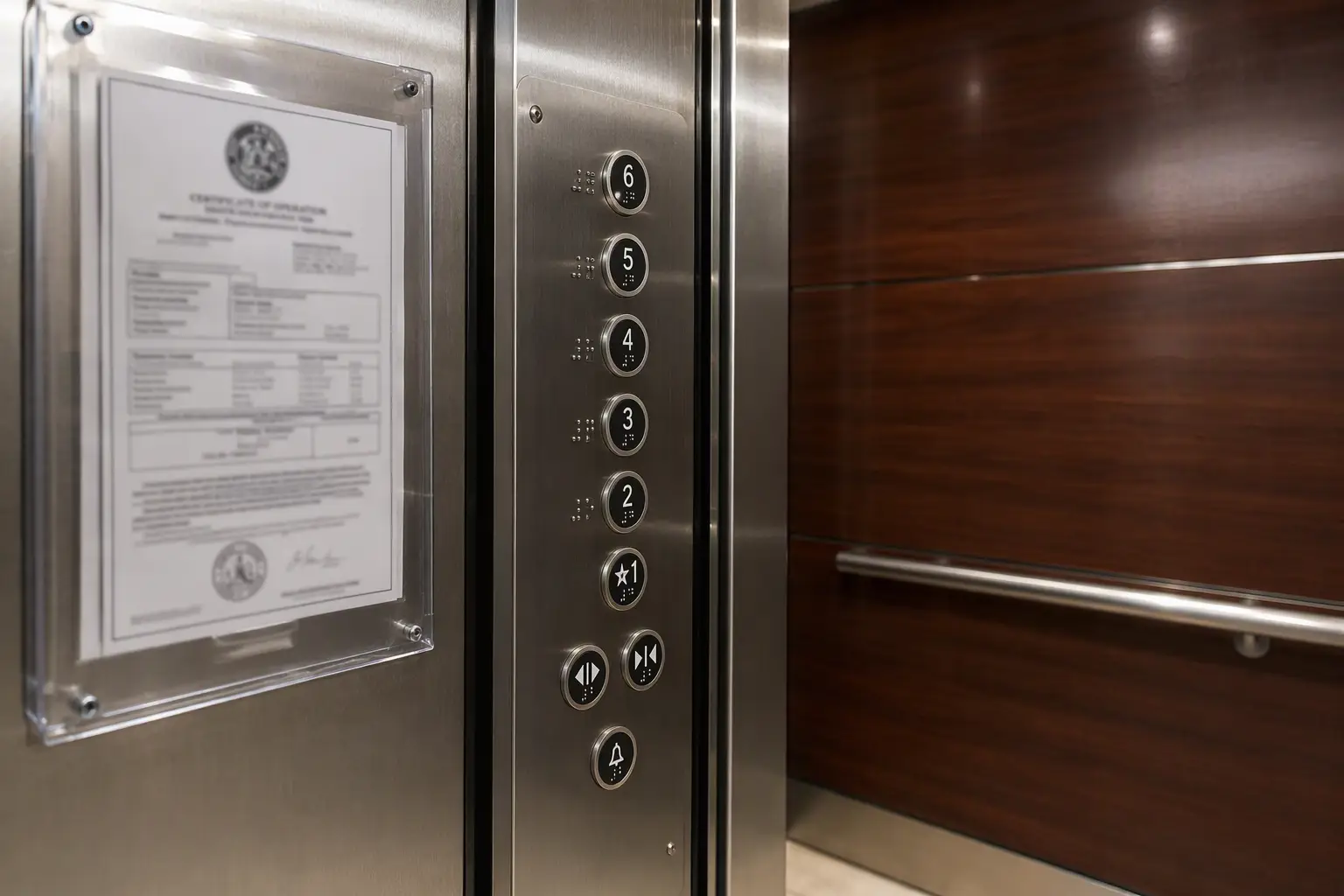
The certificate of operation must be posted in a conspicuous location inside the elevator cab, displayed in a frame with a transparent cover. Property managers at retail centers should verify that every cab — including service elevators and freight lifts that are accessible to tenants or employees — displays a current, visible certificate.
What Happens Before a New Elevator Is Installed or an Existing One Is Altered?
Florida law requires a state permit before any conveyance is installed or altered. That permit must be applied for by a registered elevator company — a firm that holds active state registration and required general liability insurance. All new conveyance installations in Florida must be performed by a registered elevator company.
Before a new conveyance is placed into service, it must be inspected by a certified elevator inspector who has no employment relationship, association, or conflict of interest with the permit holder or the building owner. Once the certificate of operation is issued following that inspection, the elevator owner assumes full responsibility for safe operation, ongoing maintenance, periodic inspections, and correction of any code deficiencies.
Retail developers planning new construction or major renovation in markets like Sarasota or Pompano Beach should engage a registered elevator company early in the design phase to ensure permit readiness aligns with the construction schedule.
What Are the Technician and Company Licensing Requirements That Affect Maintenance Contracts?
Florida certified elevator technicians are authorized to construct, install, maintain, or repair conveyances after the state issues them an elevator certificate of competency. That certificate expires after one year and is renewed with proof of eight hours of continuing education. Florida certified elevator technicians must also register with the state every year and carry general liability insurance.
Florida registered elevator companies must register with the state annually and maintain general liability insurance. When a retail property manager selects a maintenance vendor, verifying active state registration for both the company and its technicians is a fundamental due-diligence step — not a formality. Axxiom Elevator Florida maintains current state registration and employs certified elevator technicians who meet all continuing-education renewal requirements.
What Are the Local Authority Requirements in Broward County and Sarasota?
Florida’s elevator law contemplates that counties and municipalities may enforce Chapter 399 through their own certified inspectors under contract with the state.
In Broward County — which includes Pompano Beach — the Broward County Building Code Division enforces Florida’s elevator law through its own elevator inspectors. Retail and mixed-use buildings in Pompano Beach fall under Broward County’s jurisdiction for permit reviews and inspection coordination.
Sarasota is served by the state’s Bureau of Elevator Safety directly, as Sarasota County does not maintain a separate county-level delegated elevator authority comparable to Broward County’s arrangement. Property owners in the Sarasota market should direct permit and certificate inquiries to the DBPR Bureau of Elevator Safety.
Regardless of jurisdiction, the substantive requirements — ASME A17.1-2019, annual inspections, certificate of operation posting, accident reporting — remain the same statewide.
What ADA Compliance Requirements Apply to Elevators in Retail and Mixed-Use Properties?
Under the ADA, elevators in buildings that are open to the public must meet accessibility standards addressing cab interior dimensions, door clear widths, door reopening devices, floor call buttons, tactile floor designations, audible signals, and emergency two-way communication systems. Mixed-use buildings that combine retail, residential, and office components must ensure that every elevator serving a publicly accessible floor meets these requirements.
ADA compliance is a federal civil rights obligation enforced independently of the state’s certificate of operation process. A building can hold a current Florida certificate of operation and still be in violation of the ADA if cab dimensions, control placement, or communication systems fall short of federal standards. Axxiom Elevator Florida includes ADA-related observations in its maintenance assessments so that property teams can address accessibility gaps before they become complaints or litigation.
What Must a Building Owner Do After an Elevator Accident?
Florida law places the accident-reporting obligation squarely on the certificate of operation holder. Any elevator accident must be reported to the state within five working days. Retail center ownership groups and mixed-use property management companies should have an internal protocol — not just a maintenance vendor’s phone number — that captures this five-day window and routes notification to the DBPR Bureau of Elevator Safety.
Recommended Steps After an Elevator Incident
- Secure the elevator immediately and prevent further use until a certified elevator technician clears it for service.
- Document the incident with photographs, witness statements, and security footage where available.
- Notify building ownership, legal counsel, and your registered elevator maintenance company.
- File the required report with the Florida DBPR Bureau of Elevator Safety within five working days.
- Obtain a written clearance from a certified elevator inspector before returning the conveyance to service.
- Review maintenance records to identify any prior deficiency notices related to the incident.
- Update the property’s maintenance log and adjust the inspection schedule if warranted.
What Maintenance Practices Are Required to Keep Retail Elevators Compliant Between Inspections?
Florida law places ongoing maintenance responsibility on the elevator owner once a certificate of operation is issued. The ASME A17.1-2019 Safety Code establishes detailed maintenance requirements covering lubrication schedules, safety device testing, rope and chain inspections, door operator adjustments, and machine room environmental controls. Retail and mixed-use properties with high passenger volumes subject equipment to above-average wear cycles, making adherence to manufacturer-recommended maintenance intervals especially important.
Property managers should maintain a written maintenance log for each conveyance, retain inspection reports, and document all repairs and parts replacements. These records are reviewed by certified inspectors during annual inspections and are essential evidence of due diligence if a regulatory inquiry or liability claim arises.
Axxiom Elevator Florida provides maintenance programs structured around ASME A17.1-2019 intervals and tailored to the usage demands typical of retail and mixed-use environments in South Florida and the Gulf Coast.
Questions Your Inspector Will Ask
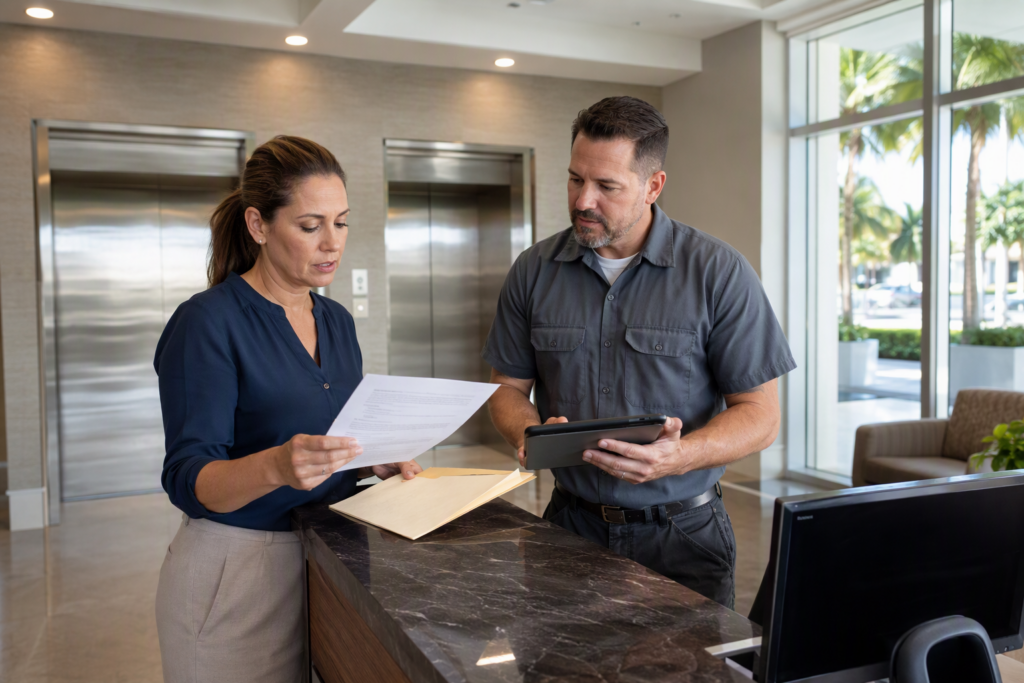
Certified elevator inspectors conducting annual inspections at retail shopping centers and mixed-use buildings routinely examine documentation as well as equipment. Property managers should be prepared to answer the following:
- Is the current certificate of operation posted in every cab in a frame with a transparent cover?
- Is your elevator maintenance company currently registered with the Florida DBPR?
- Can you produce a complete maintenance log for each conveyance for the past inspection period?
- Have any repairs or alterations been made since the last inspection, and were those performed by a registered elevator company?
- If any alterations were made, was the required state permit obtained before work began?
- Have there been any incidents or passenger complaints since the last inspection, and were they reported to the state within five working days?
- Are emergency lighting, two-way communication, and door reopening devices functioning in each cab?
- Are machine rooms clean, properly ventilated, and accessible only to authorized personnel?
- Are all safety device test records current and available for review?
- For escalators and moving walks: are comb plates, handrail entry guards, and emergency stop buttons intact and operational?
Do Escalators and Moving Walks in Retail Centers Face Different Requirements?
Yes. Escalators and moving walks are covered conveyances under Chapter 399, Florida Statutes, and must hold their own certificates of operation. They do not qualify for the two-adjacent-floor maintenance-contract exemption that applies to certain passenger elevators. The ASME A17.1-2019 Safety Code addresses escalator-specific requirements including step and skirt clearances, comb plate integrity, handrail speed differential, and emergency stop device placement. Large retail centers with multiple escalator runs should treat each unit as a separate compliance obligation with its own inspection timeline and maintenance log.
What Should Retail Property Managers Do to Prepare for an Annual Inspection?
Pre-Inspection Preparation Steps
- Confirm the current certificate of operation for each conveyance and verify it has not expired.
- Ensure each certificate is posted in its cab frame with a transparent cover.
- Pull the maintenance log and verify all scheduled service visits are documented for the inspection period.
- Confirm that the registered elevator company performing maintenance is currently registered with the Florida DBPR.
- Check that machine room access is clear and properly secured.
- Verify emergency lighting, two-way communication systems, and door reopening devices are functional in every cab.
- Review any repair records from the past year to confirm work was performed by a registered elevator company and that required permits were obtained.
- Address any open deficiency items carried forward from the previous inspection before the inspector arrives.
Florida’s elevator compliance landscape for retail shopping centers and mixed-use buildings is layered — state statute, administrative code, adopted ASME standards, federal ADA requirements, and local authority enforcement all intersect to define what property owners must do and document every year. Staying current requires more than a maintenance contract; it requires a registered partner who understands how these layers interact in the Florida markets where a property operates.
Contact Axxiom Elevator Florida for a free elevator assessment at 954-970-0020.
Need elevator service you can rely on? Axxiom Elevator Florida is ready to help.