
Selecting the right elevator maintenance contract is one of the most consequential facility management decisions a building owner or property manager can make. The wrong choice can result in unexpected repair bills, compliance gaps, extended downtime, and tenant dissatisfaction. This guide breaks down every dimension of the full-service vs. limited contract decision — including cost structure, compliance requirements, equipment considerations, and how to evaluate vendors — so building owners across Florida can make a confident, informed choice.
What Is a Full-Service Elevator Maintenance Contract?
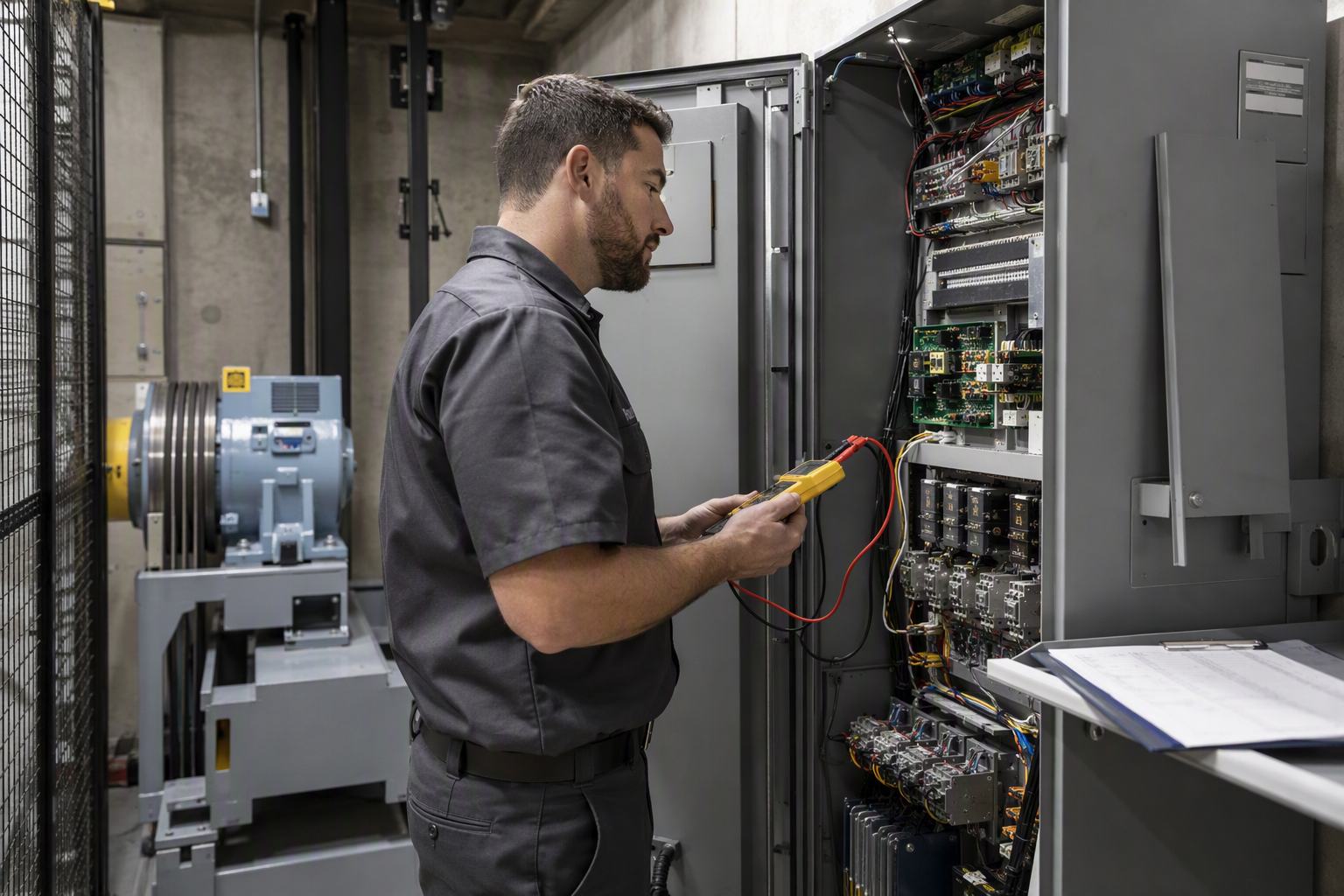
A full-service elevator maintenance contract — sometimes called a “comprehensive” contract — covers scheduled preventive maintenance visits, routine inspections, and most parts and labor costs for repairs that arise during the contract period. The defining characteristic is predictability: the building owner pays a consistent monthly or annual fee, and the maintenance provider absorbs the cost of most covered repairs and component replacements.
Full-service contracts typically include:
- Scheduled preventive maintenance at regular intervals
- Coverage for most mechanical and electrical component repairs
- Parts replacement for covered components (subject to exclusions)
- Callback service for unplanned outages
- Assistance with state and local inspection compliance
- Documentation and maintenance logs required by code
Compliance with ASME A17.1 Safety Code for Elevators and Escalators — the foundational safety standard adopted in whole or in part by most U.S. jurisdictions, including Florida — requires ongoing maintenance, periodic inspections, and accurate recordkeeping. A full-service contract is structured to keep all of these obligations continuously met.
What Is a Limited Elevator Maintenance Contract?

A limited elevator maintenance contract — also called a “parts and oil excluded,” “labor only,” or “oil and grease” contract — covers scheduled preventive maintenance visits and the technician’s labor, but excludes most or all parts replacement costs. When a component fails, the building owner receives a separate repair invoice for parts and, in some cases, additional labor.
Limited contracts typically include:
- Scheduled preventive maintenance visits
- Lubrication, adjustment, and minor servicing
- Technician labor during scheduled visits
- Basic documentation
Limited contracts typically exclude:
- Replacement parts (motors, controllers, door operators, cables, etc.)
- Major component overhauls
- Modernization work
- Some callback visits beyond a set number per year
Full-Service vs. Limited Contract: Side-by-Side Comparison
| Factor | Full-Service Contract | Limited Contract |
|---|---|---|
| Monthly Cost Structure | Higher fixed monthly fee; repairs largely included | Lower fixed monthly fee; repairs billed separately |
| Budget Predictability | High — costs are known in advance | Lower — repair bills can be unpredictable |
| Parts Coverage | Most covered (verify exclusions in contract) | Generally excluded; owner pays per incident |
| Labor Coverage | Included for covered repairs | Included for scheduled visits only |
| Best for Equipment Age | Older or high-usage equipment | Newer equipment under manufacturer warranty |
| Best for Traffic Volume | High-traffic commercial, residential, or medical buildings | Low-traffic or lightly used elevators |
| Compliance Support | Strong — documentation and inspection prep typically included | Basic — owner may need to coordinate inspections separately |
| Downtime Risk | Lower — repairs addressed under contract | Higher — repair delays possible while quotes are obtained |
| Vendor Accountability | Higher — vendor has financial stake in equipment health | Lower — vendor profit is not impacted by repair frequency |
| ADA Compliance Assistance | Often included as part of compliance scope | Typically not included |
Pros and Cons: Full-Service Elevator Maintenance Contract
| Pros | Cons |
|---|---|
| Predictable annual maintenance budget | Higher monthly contract fee |
| Vendor incentivized to maintain equipment proactively | May include exclusions for “major” components (read contract carefully) |
| Faster response when repairs are already covered | Can be over-coverage for very new or low-use elevators |
| Reduces administrative burden of approving individual repair invoices | Contract lock-in periods may limit flexibility |
| Supports compliance with ASME A17.1 maintenance documentation requirements | Value depends heavily on contractor quality and contract terms |
Pros and Cons: Limited Elevator Maintenance Contract
| Pros | Cons |
|---|---|
| Lower baseline monthly cost | Repair costs are variable and potentially significant |
| May make sense for nearly new equipment with manufacturer warranties | Vendor has less financial incentive to prevent component failure |
| Flexibility to obtain competitive bids on repair work | Repair approval delays can extend elevator downtime |
| Suitable for low-use elevators in small buildings | Budget surprises can disrupt annual operating plans |
| Easier to exit if service quality is poor (fewer bundled commitments) | Compliance documentation may require more owner oversight |
Which Contract Type Is Right for My Building?
The right contract depends on four core variables: equipment age, traffic volume, risk tolerance, and budget structure. Use the framework below as a starting point:
- Choose full-service if your elevator is more than ten years old, serves a high volume of daily riders, operates in a regulated environment (healthcare, ADA-critical accessibility), or your building cannot tolerate extended downtime.
- Choose limited if your elevator was installed recently and is still within a manufacturer’s warranty, serves a low-traffic environment such as a small residential building or storage facility, and your organization has the budget flexibility and internal capacity to manage repair invoicing.
Buildings subject to Americans with Disabilities Act (ADA) accessibility requirements — including most commercial, multifamily, and public facilities — face particular risk when elevator downtime is prolonged, as loss of vertical access can trigger compliance concerns beyond the mechanical issue itself.
How Does Florida Law Affect Elevator Maintenance Contract Requirements?
Florida elevator safety is governed at the state level through the Florida Department of Business and Professional Regulation (DBPR), which enforces elevator safety standards aligned with editions of the ASME A17.1 Safety Code for Elevators and Escalators. Florida law requires periodic inspections and mandates that elevators be maintained by licensed contractors. Building owners should confirm that any maintenance contract — full-service or limited — is performed by a Florida-licensed elevator contractor.
Whichever contract type is selected, the building owner retains legal responsibility for ensuring the elevator is properly maintained, inspected on schedule, and compliant with applicable codes. A full-service contract does not transfer legal liability — it distributes operational risk. Understanding this distinction is critical when reviewing contract language.
What Should I Look for in the Contract Language Before Signing?
Whether evaluating a full-service or limited contract, building owners and property managers should scrutinize the following contract elements:
- Define “covered” vs. “excluded” components — Get a complete list of what is and is not covered. Some contracts exclude controllers, hydraulic cylinders, or structural components even under “full-service” labels.
- Confirm inspection coordination — Verify whether the contractor handles coordination with the state inspector or whether the building owner must do so independently.
- Review callback provisions — Determine how many callback visits are included per year, what hours are covered, and what fees apply outside those parameters.
- Assess parts sourcing language — Some contracts require proprietary parts from the original manufacturer, which can significantly increase costs and extend repair timelines.
- Examine escalation clauses — Understand how and when the contract fee can be increased and whether notice is required.
- Check termination terms — Know the minimum contract term, auto-renewal provisions, and any early termination penalties.
- Verify documentation deliverables — Ensure maintenance logs and inspection records are provided in a format compatible with state recordkeeping requirements.
- Confirm licensing — The contractor must hold a current Florida elevator contractor license for the work to be legally compliant.
How Does Elevator Age Affect Which Contract Makes More Sense?
Equipment age is one of the most reliable indicators of which contract structure delivers better value. As elevator components age, the statistical probability of component failure increases, and the cost of reactive repairs can quickly exceed the premium difference between a limited and full-service contract. Older equipment — particularly hydraulic systems and traction elevators with older controllers — is more likely to experience unplanned failures.
Conversely, elevators that are newly installed or recently modernized have a lower near-term repair probability, and manufacturer warranties may cover certain components during an initial period, reducing the marginal value of a full-service contract during those early years. Building owners should review the manufacturer warranty terms carefully before signing a maintenance contract of either type.
Can I Switch Contract Types Mid-Term or When the Contract Renews?
Most elevator maintenance contracts include auto-renewal clauses with defined notice windows — often 30 to 90 days before renewal — during which changes or cancellations must be requested. Outside of renewal windows, switching contract types typically requires either negotiating with the existing provider or paying an early termination fee.
The most strategic time to re-evaluate contract type is when a major maintenance event has recently occurred (signaling aging equipment that warrants upgrading to full-service coverage), when an elevator modernization is completed (which may justify downgrading to limited coverage temporarily), or when a new vendor is being onboarded. Axxiom Elevator Florida offers independent contract reviews to help building owners assess their current coverage against their actual maintenance history.
What Are the Hidden Costs of a “Cheaper” Limited Contract?
The lower monthly fee of a limited contract can obscure the full cost picture. When a major component fails — a door operator, motor controller, hydraulic pump, or safety device — the repair invoice arrives entirely outside the contract. Depending on the component, the building may also face:
- Extended lead times for parts, especially for older or discontinued equipment
- Labor costs for diagnostic visits not covered under the limited agreement
- Potential code compliance issues if the elevator is out of service during an inspection window
- Tenant or building user impact costs — lost business, complaints, or ADA-related concerns
- Emergency service premiums if repairs are needed outside normal business hours
A true cost comparison requires projecting likely repair events over the contract term, not just comparing monthly fees. An independent elevator service company can review maintenance history and equipment condition to help model this accurately.
How Do I Evaluate an Elevator Maintenance Vendor Beyond the Contract Type?
Contract type is only one dimension of the decision. Vendor quality, local presence, and independence from manufacturer proprietary parts networks are equally important factors:
- Independence: Independent elevator service companies are not restricted to proprietary parts from one manufacturer, which typically means faster parts sourcing and competitive pricing on repairs.
- Local presence: A Florida-based service company with technicians familiar with local code enforcement, inspection schedules, and common equipment types in the region provides practical advantages that national chains may not.
- Transparency: A vendor willing to explain exclusions, provide maintenance logs promptly, and walk owners through repair recommendations — rather than simply issuing invoices — is a stronger long-term partner.
- References: Request references from buildings with similar elevator types, usage levels, and ages to your own.
Axxiom Elevator Florida is an independent certified elevator service company serving building owners and property managers throughout Florida. As an independent provider, Axxiom Elevator Florida is not tied to any single manufacturer’s parts network, giving clients access to a broader range of repair options and pricing. The company provides both full-service and limited maintenance contracts tailored to the specific needs of each building.
What Steps Should I Take to Evaluate My Current or Prospective Contract?
- Gather your current elevator maintenance records, including service logs, inspection reports, and repair invoices from the past three to five years.
- Identify your elevator’s age, model type, and any recent modernization work or manufacturer warranties in effect.
- Calculate total elevator-related expenditures over the past three years — including contract fees and all separate repair invoices — to establish a true cost baseline.
- List your building’s compliance obligations, including Florida DBPR inspection schedules and any ADA vertical accessibility requirements.
- Request proposals from at least two independent elevator service companies, specifying both full-service and limited contract options for comparison.
- Review all contract exclusions in detail before accepting any proposal, and request clarification on ambiguous language in writing.
- Consult with an independent elevator service provider — such as Axxiom Elevator Florida — for a professional assessment of your equipment’s condition and the contract type that best matches your risk profile.
Does Workplace Safety Regulation Affect Elevator Maintenance Decisions?
While elevator safety is primarily governed by state codes and ASME A17.1 Safety Code for Elevators and Escalators, building owners in commercial environments should also be aware that OSHA standards can apply to elevator-related maintenance work performed by employees or contractors in certain contexts. Ensuring that maintenance is performed by licensed, qualified contractors — as required under Florida law — addresses both state elevator code and general workplace safety obligations.
Summary: Decision Checklist — Full-Service vs. Limited Contract
| Building Situation | Recommended Contract Type |
|---|---|
| Elevator older than 10 years | Full-Service |
| High daily traffic volume | Full-Service |
| ADA-critical accessibility use | Full-Service |
| Limited budget flexibility for surprise repairs | Full-Service |
| Elevator newly installed or recently modernized | Limited (while warranty is active) |
| Low daily traffic, small residential or storage building | Limited |
| Strong internal capacity to manage repair procurement | Limited |
| History of frequent, costly repairs in past three years | Full-Service |
| Mixed-use building with multiple elevators of varying ages | Discuss hybrid options with provider |
Ready to Choose the Right Elevator Contract for Your Building?
Axxiom Elevator Florida provides independent, manufacturer-neutral elevator maintenance for buildings across Florida. Whether a full-service or limited contract is the right fit, the team at Axxiom Elevator Florida will assess your equipment condition, review your compliance obligations, and recommend coverage that matches your building’s real needs — not a one-size-fits-all package.
Contact Axxiom Elevator Florida for a free elevator assessment: