Elevator Service in Pompano, FL | Axxiom Elevator Florida
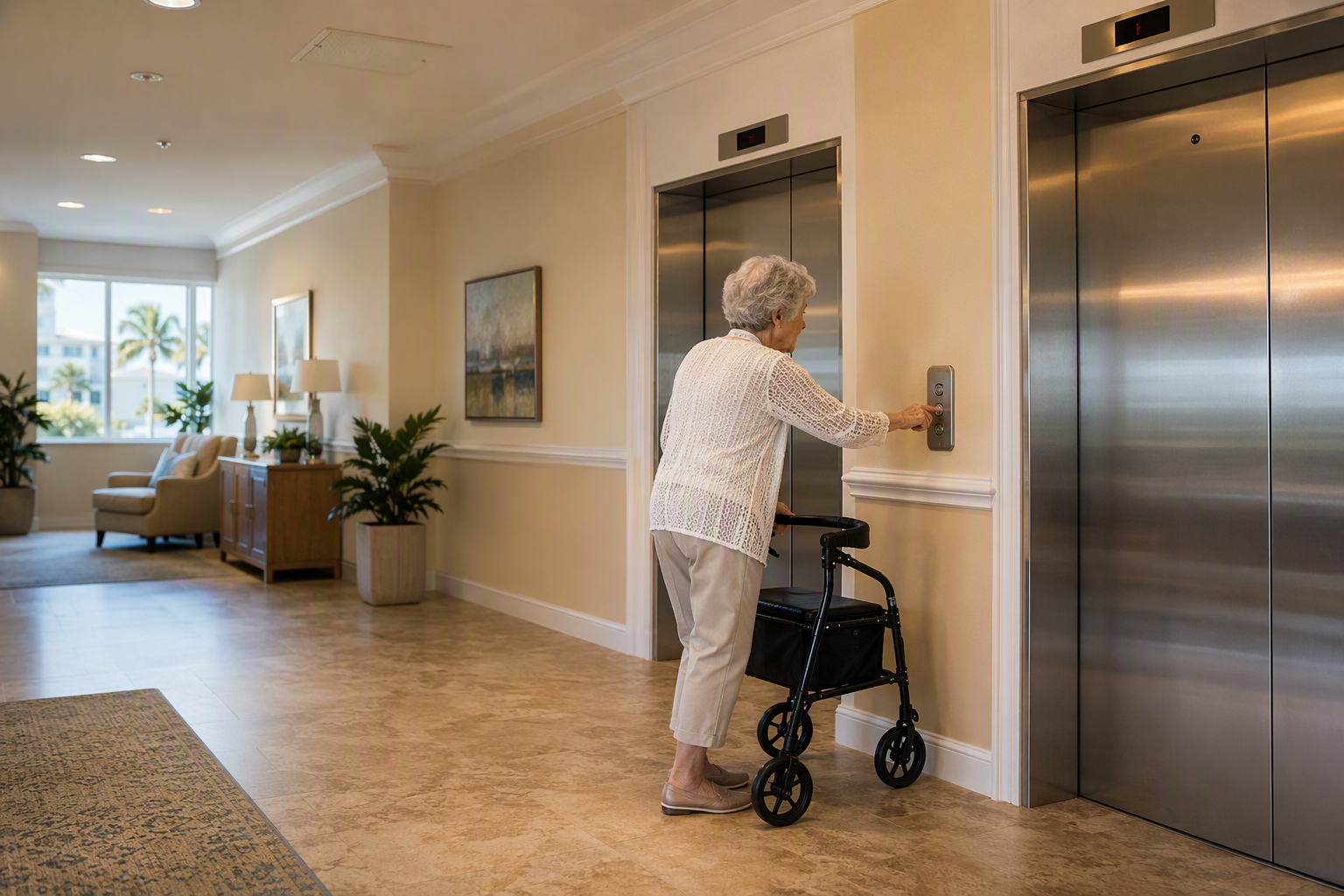
Senior living communities — from independent living residences to skilled nursing facilities — depend on elevators as essential infrastructure, not a convenience. When an elevator fails to meet safety or accessibility standards, the consequences range from regulatory citations to real harm for residents with limited mobility. Axxiom Elevator Florida provides certified elevator service throughout Pompano, FL and the surrounding South Florida region, helping senior living operators stay compliant and keep residents moving safely.
What Elevator Features Are Required for Senior Living Facilities?
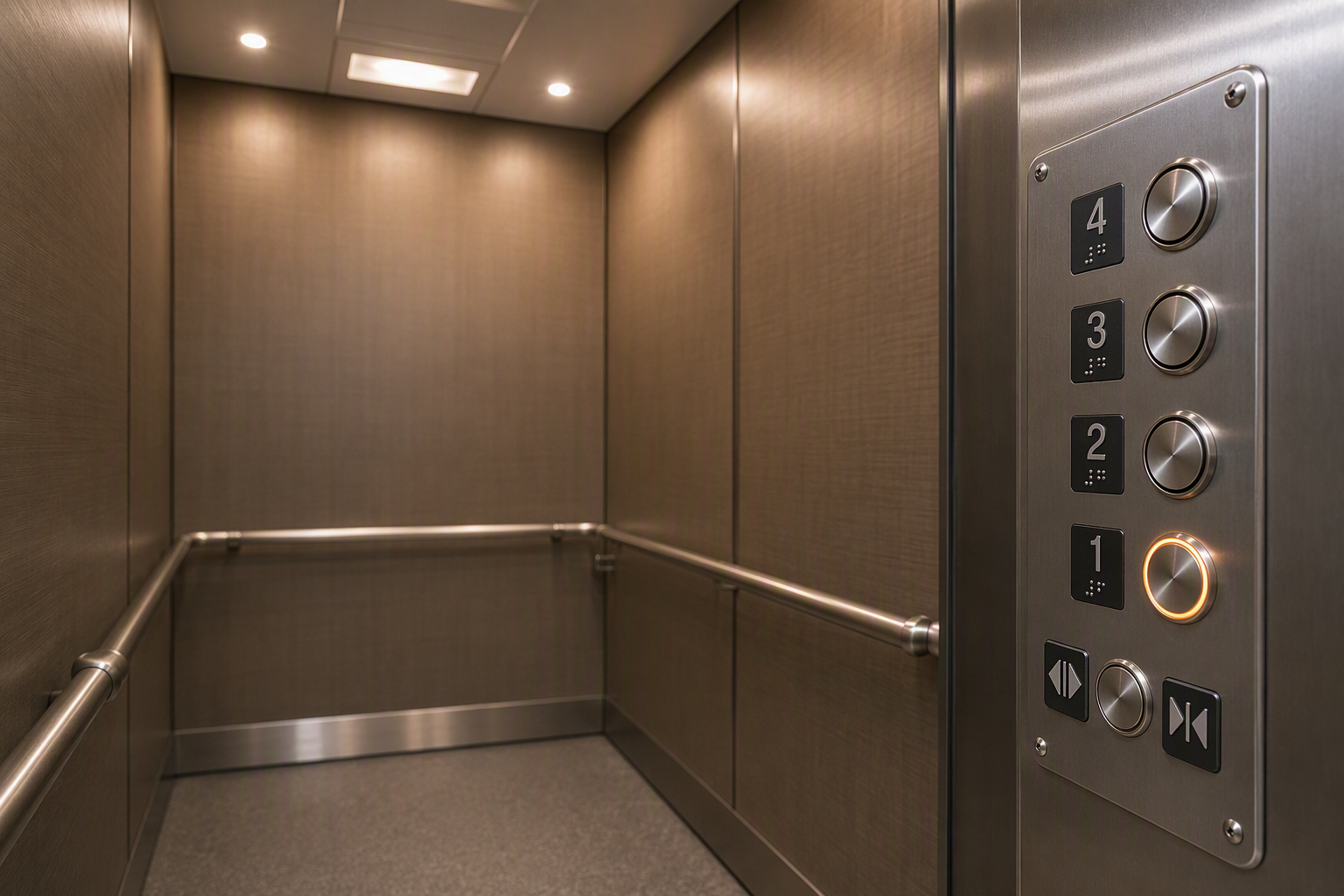
Senior living facilities must satisfy requirements drawn from multiple overlapping frameworks: Florida state elevator statutes, the ASME A17.1 Safety Code for Elevators and Escalators, and the Americans with Disabilities Act (ADA). The following features are commonly required or strongly recommended for residential care environments:
- Cab interior handrails: Continuous handrails on three walls of the cab provide fall support for residents using walkers, canes, or wheelchairs.
- Automatic door reopening devices: Doors must include a reopening device that activates if a passenger is detected in the door path, preventing closures on mobility equipment or residents moving slowly.
- Tactile and Braille controls: ADA standards require raised characters and Braille on all cab and hall call buttons, ensuring accessibility for visually impaired residents.
- Audible and visual signals: Both an audible signal and a visual indicator must announce floor arrivals. This dual-mode notification supports residents with hearing or vision impairments.
- Leveling accuracy: Florida-regulated elevators must level accurately at each floor to eliminate the step or gap between the cab floor and the corridor — a critical fall-prevention factor for residents using mobility aids.
- Cab dimensions for wheelchair access: ADA guidelines specify minimum clear floor dimensions to accommodate a standard power wheelchair and allow the operator to reach controls.
- Emergency two-way communication: A two-way communication system in each cab is required under ASME A17.1, allowing a trapped passenger to reach building staff or an emergency dispatcher.
- Emergency lighting: Battery-backed emergency lighting must activate automatically during a power failure to prevent cab occupants from being left in darkness.
How Does Florida State Law Govern Elevator Compliance in Senior Facilities?
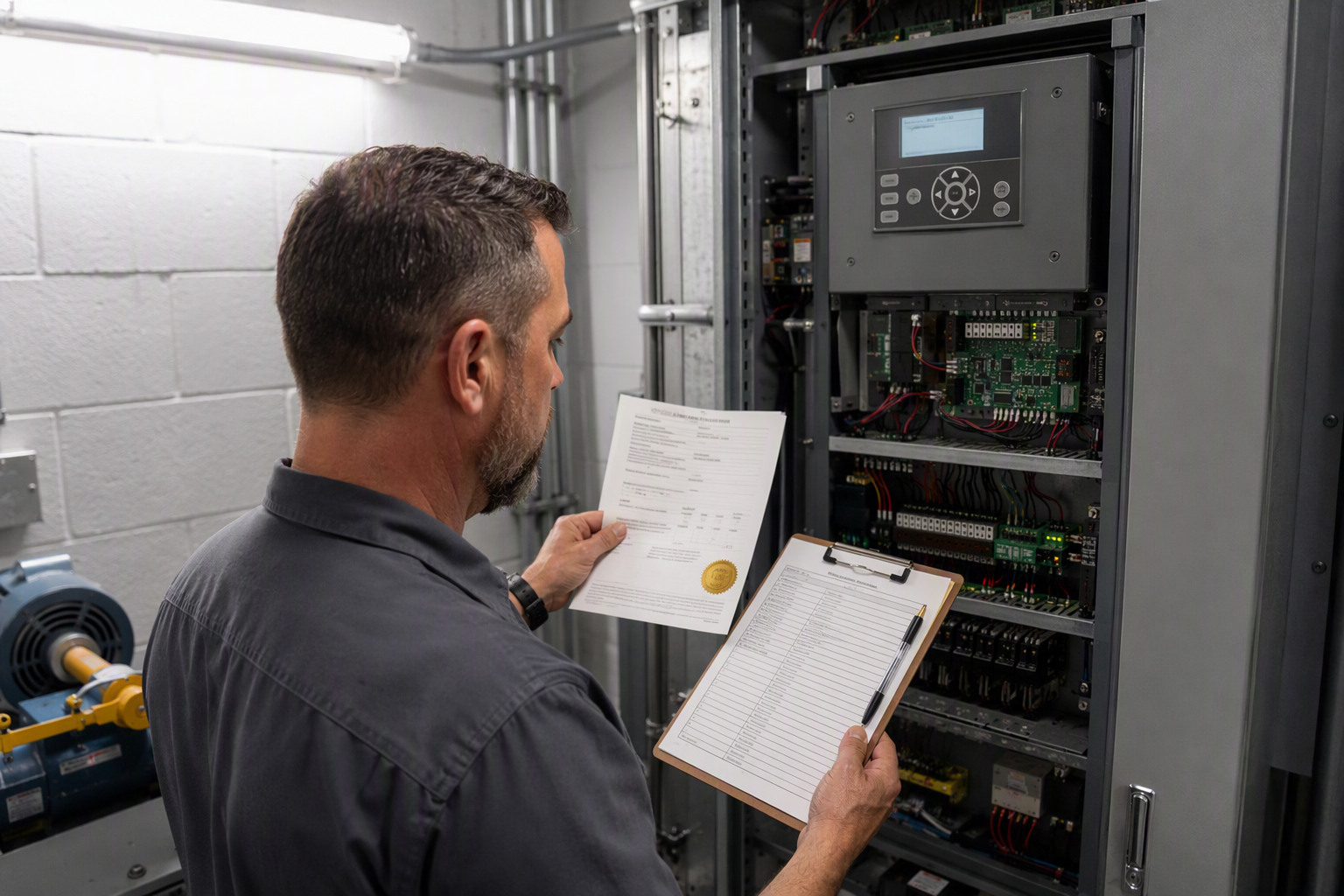
In Florida, the Department of Business and Professional Regulation (DBPR) administers elevator safety under Florida Statutes Chapter 399, which incorporates ASME A17.1 as the baseline technical standard. All elevators in public and commercial buildings — including senior living facilities — must be permitted, inspected, and certificated by a licensed elevator inspector. Certificates of operation must be displayed visibly in or near the elevator. Facilities operating with an expired certificate or unresolved violations risk enforcement action that can include mandatory shutdown of the elevator unit.
Senior living operators in Pompano, FL and throughout Broward County should also be aware that Florida’s adoption schedule for updated ASME code editions affects which technical requirements apply at the time of new installation, modernization, or major repair. Staying current with the 2025–2026 applicable code edition is part of responsible facility management.
What Upgrades Most Commonly Bring Senior Living Elevators Into Compliance?
Older elevator installations in assisted living and nursing home buildings often require targeted modernization projects. The upgrades most frequently needed to reach current safety and accessibility standards include:
- Replacement of outdated door operators with a certified door reopening device system
- Installation of cab handrails on rear and side walls
- Retrofit of ADA-compliant tactile/Braille control panels
- Upgrade of the emergency communications system to a monitored, two-way phone or intercom
- Leveling system recalibration or drive modernization to meet floor-level accuracy tolerances
- Addition of emergency battery lighting fixtures
- Cab interior refurbishment to increase usable floor area where structurally feasible
How Often Must Elevators in Senior Living Facilities Be Inspected?
Florida law requires periodic inspections by a licensed elevator inspection company or a QEI-certified inspector. The specific interval is governed by Florida Statute 399 and the applicable ASME A17.1 edition in effect. Routine maintenance visits between inspections are essential for identifying developing issues — such as door timing drift, leveling inaccuracies, or worn safety components — before they become code violations or safety incidents. Axxiom Elevator Florida provides full-service maintenance programs designed around the inspection schedule requirements applicable to senior living properties in Pompano, FL.
What Is the Process for Modernizing an Elevator in a Senior Living Facility?
- Compliance audit: A qualified technician conducts a detailed inspection of the existing elevator system, documenting all deviations from current Florida elevator statutes and ADA requirements.
- Scope development: Based on audit findings, a modernization scope is defined — distinguishing between code-required upgrades and optional enhancements that improve resident experience.
- Permit application: All modernization work requires a permit from the Florida DBPR prior to commencement. Axxiom Elevator Florida manages the permitting process on behalf of the facility.
- Scheduled installation: Work is sequenced to minimize elevator downtime, with scheduling coordinated around facility operations and resident needs.
- Final inspection and certificate: After modernization is complete, a licensed inspector performs the required acceptance inspection. The facility receives an updated certificate of operation upon passing.
- Ongoing maintenance enrollment: The modernized system is enrolled in a preventive maintenance program to protect the investment and maintain compliance between inspection cycles.
How Does Emergency Elevator Service Work for Senior Living Facilities?
Senior living facilities carry an elevated duty of care because residents may be unable to use stairs in any circumstance. For this reason, elevator emergency service coverage is not a luxury — it is an operational necessity. Axxiom Elevator Florida provides emergency service availability to senior living clients in Pompano, FL and the wider South Florida market. Facilities should confirm that their service agreement includes around-the-clock emergency response coverage and that the two-way emergency communication system in each cab is tested and functional as required by ASME A17.1 Safety Code for Elevators and Escalators.
How Should a Senior Living Facility Evaluate Elevator Service Vendors?
When comparing elevator service providers for a senior living property in Pompano, FL, facility managers should look for the following:
- Demonstrated experience with Florida DBPR permitting and inspection processes
- Familiarity with ASME A17.1 and ADA accessibility requirements as applied to senior care environments
- A clearly defined emergency service protocol with confirmation that coverage applies to the specific property location
- Transparent maintenance agreements that specify inspection documentation, parts coverage, and violation-response procedures
- Local presence in South Florida, reducing logistics time and supporting knowledge of Broward County building department coordination
Axxiom Elevator Florida is a certified elevator service company rooted in South Florida, serving senior living operators across Pompano, Fort Lauderdale, Deerfield Beach, Coral Springs, and surrounding communities.
What Are the ADA Requirements That Apply Specifically to Senior Living Elevators?
The Americans with Disabilities Act (ADA) establishes minimum accessibility requirements for elevators in multi-story buildings covered by the Act. For senior living facilities, the most operationally significant ADA provisions relate to: door clear width, cab clear floor space dimensions, reach range for controls, tactile and Braille labeling, audible and visual floor announcement systems, and the performance of door reopening devices. Facilities undergoing renovation that affects the path of travel are generally required to bring elevator accessibility into compliance as part of the renovation scope, making proactive upgrades more cost-effective than reactive repairs triggered by a renovation project.
Schedule a Free Consultation
Axxiom Elevator Florida works with senior living facilities throughout Pompano, FL and South Florida to assess compliance gaps, develop modernization plans, and provide ongoing elevator maintenance that meets Florida and federal standards. Contact the team today to schedule a no-obligation consultation for your property.
Call Axxiom Elevator Florida:
Need elevator service you can rely on? Axxiom Elevator Florida is ready to help.