Florida Elevator Permit Approval: How Long Does It Take for New Installation or Modernization?
Understanding the Florida elevator permitting timeline is essential for property owners, developers, general contractors, and facility managers planning a new installation or modernization project. Permit delays are among the most common causes of project cost overruns and schedule disruptions. This comprehensive FAQ covers every stage of the permitting process, compliance requirements, jurisdictional differences, and practical strategies to keep your project on track.
How long does it take to get an elevator permit approved in Florida?
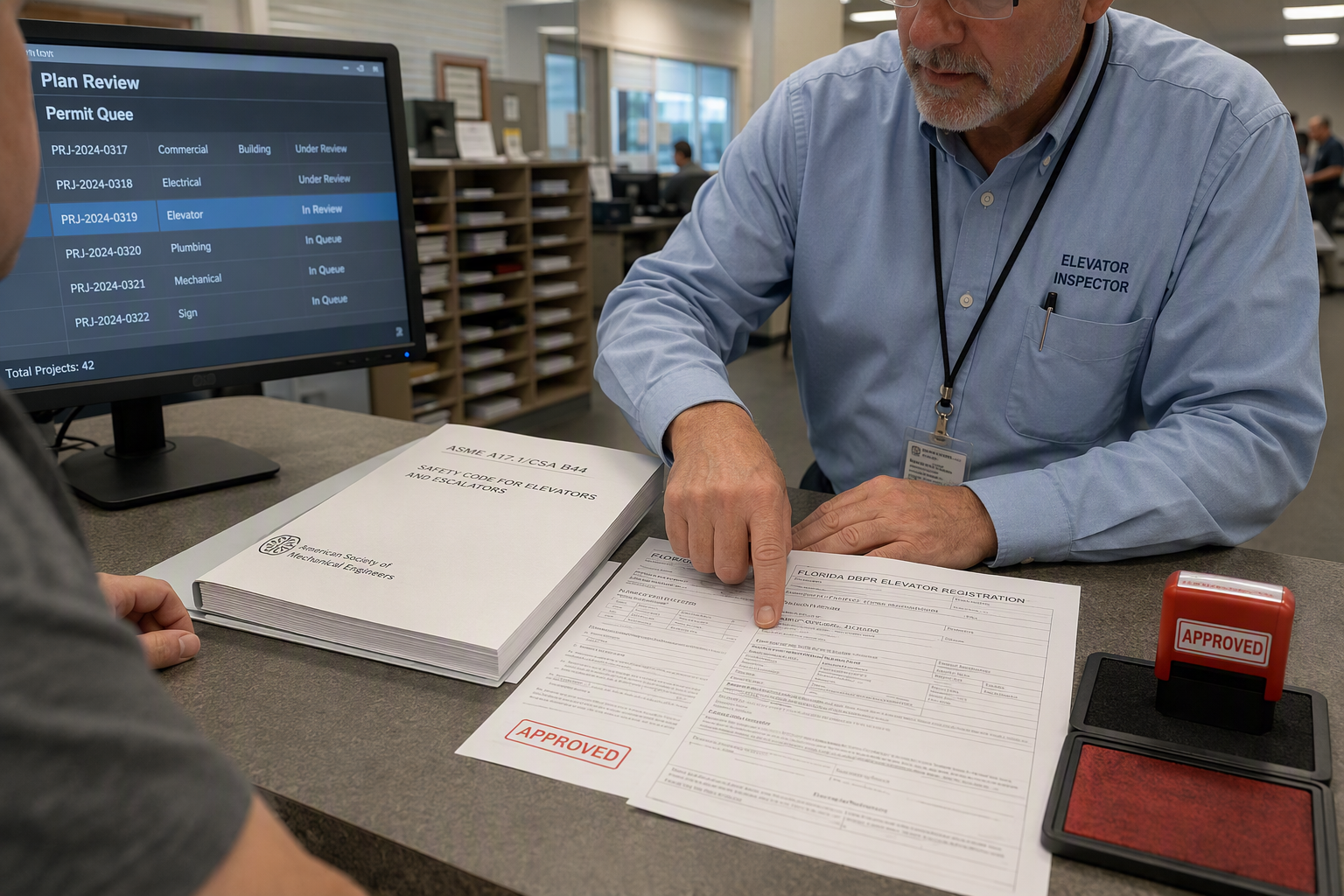
Permit approval for a Florida elevator project typically ranges from 4 to 16 weeks, though timelines vary significantly by county, project complexity, and the completeness of the application package submitted.
Florida elevator permits are issued at the local building department level, meaning Miami-Dade County, Broward County (which covers Pompano Beach), and Sarasota County each maintain their own plan review queues, fee schedules, and submittal requirements. A straightforward modernization project in a jurisdiction with a streamlined digital plan review system may receive approval in as little as four to six weeks. A complex new installation in a high-rise building, or any project submitted with incomplete documentation, can easily stretch to four months or longer when resubmittal cycles are factored in.
Working with an experienced elevator contractor such as Axxiom Elevator Florida, which serves both Pompano Beach and Sarasota, helps applicants submit complete, code-compliant packages the first time, reducing the risk of correction cycles that extend the timeline.
What state agency governs elevator permits and inspections in Florida?
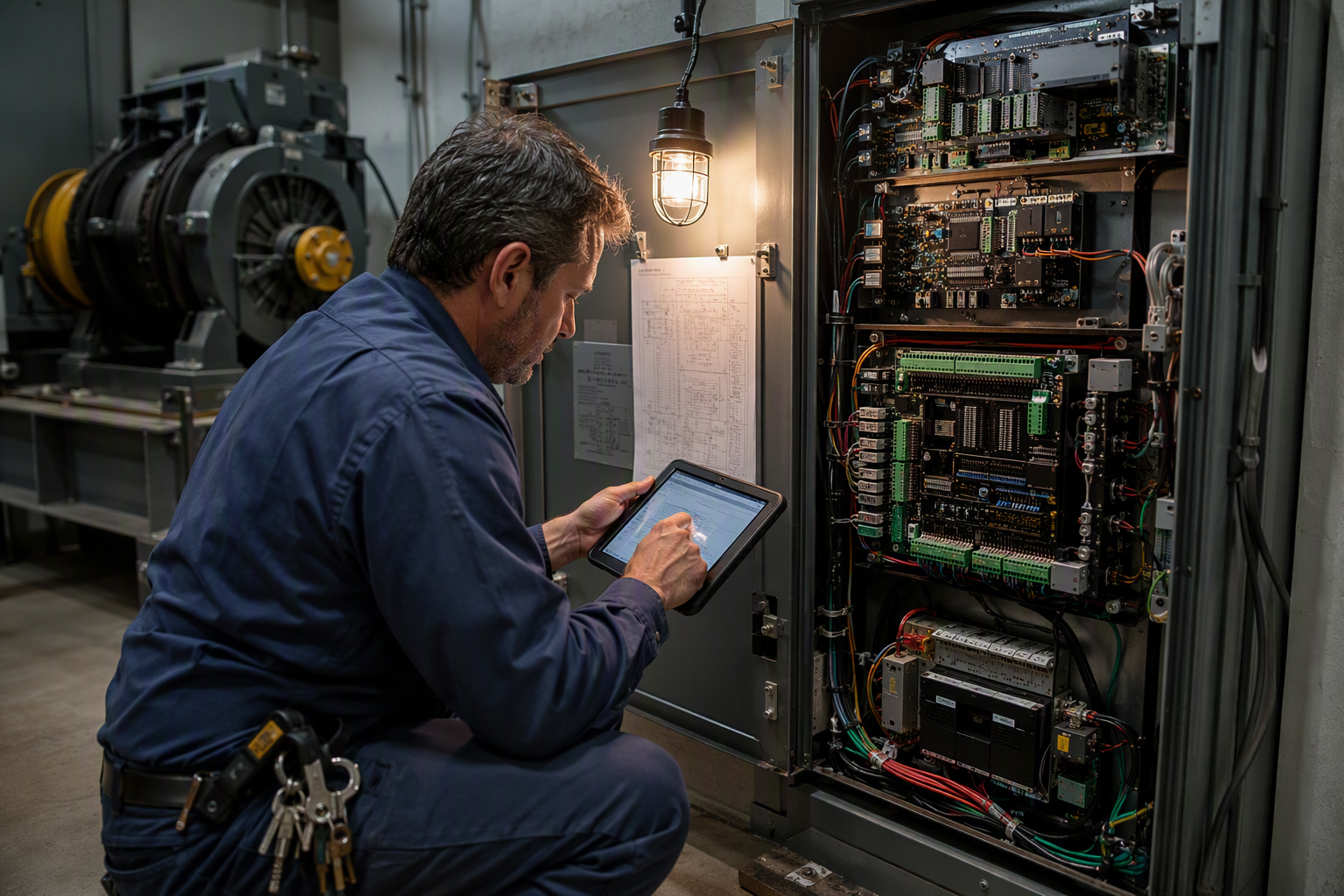
The Florida Department of Business and Professional Regulation (DBPR), Division of Hotels and Restaurants, has statewide authority over elevator safety, while local building departments issue construction permits and conduct plan reviews.
Under Florida Statute Chapter 399, all conveyances — elevators, escalators, dumbwaiters, moving walks, and platform lifts — must be registered with the DBPR and must pass inspections performed by DBPR-licensed inspectors or approved third-party inspection agencies. However, the construction permit and plan review process runs through the local Authority Having Jurisdiction (AHJ), typically the county or municipal building department.
This dual-track system means an applicant must satisfy both local building department requirements and DBPR registration requirements before a new or modernized elevator can be placed into legal operation. Failure to account for both tracks is a common source of delay.
What code standards must Florida elevator permits comply with?
Florida elevator permits must comply with the ASME A17.1 Safety Code for Elevators and Escalators, the Florida Building Code, and applicable federal accessibility standards under the Americans with Disabilities Act (ADA).
As of 2026, Florida has adopted the Florida Building Code, Mechanical volume, which incorporates ASME A17.1 by reference. The edition of ASME A17.1 enforced in any given jurisdiction depends on the Florida Building Code cycle currently adopted by that AHJ. Plan reviewers will check submitted drawings against dimensional requirements, hoistway clearances, machine room ventilation, pit depths, overhead clearances, and safety device specifications defined in ASME A17.1.
ADA compliance, governed by the ADA Standards for Accessible Design, applies to elevators serving the public in commercial and multi-family residential buildings. ADA requirements address door widths, cab dimensions, control panel button heights, Braille markings, and audible floor announcements. Plan reviewers will flag noncompliant cab configurations during the review cycle, triggering correction requests that add weeks to the approval timeline.
What documents are required in a Florida elevator permit application?
A complete Florida elevator permit application typically requires engineered shop drawings, equipment specifications, electrical load calculations, hoistway section drawings, and a completed permit application form with applicable fees.
While exact requirements vary by jurisdiction, the following documents are consistently required across Florida building departments:
- Architect- or engineer-stamped hoistway and machine room drawings (plan, section, and elevation views)
- Equipment specification sheets identifying the manufacturer, model, rated capacity, and rated speed
- Electrical single-line diagrams and load calculations
- Seismic compliance documentation where applicable
- Energy code compliance documentation (where required by the Florida Building Code, Energy Conservation volume)
- ADA compliance checklist or narrative
- Completed local permit application with owner and contractor information
- Proof of contractor licensure (Florida state elevator contractor license)
- Permit fee payment
Missing or incomplete documents are the single most preventable cause of plan review delays. Engaging a contractor that prepares permit packages routinely — such as Axxiom Elevator Florida serving Pompano Beach and Sarasota — significantly reduces the likelihood of correction cycles.
How does new installation permitting differ from modernization permitting?
New installation permits require full hoistway and structural documentation from scratch, while modernization permits scope to the components being replaced, but both trigger plan review and can require full code compliance upgrades depending on the extent of work.
ASME A17.1 defines modernization thresholds that determine how much of an existing installation must be brought up to current code. A “limited alteration,” such as replacing a worn door operator, may require only a straightforward permit. A major modernization — replacing the controller, machine, and cab finishes — can trigger a requirement to bring the entire installation into compliance with the current adopted edition of ASME A17.1, including updated safety devices, revised clearances, and updated accessibility features.
Because modernization scope directly impacts which code sections apply, it is critical to define the scope clearly in the permit application. An undersized scope description that omits work actually being performed can result in stop-work orders, additional inspections, and significant delay.
How does plan review workload affect permitting timelines in Broward and Sarasota Counties?
Jurisdictional plan review workload — which fluctuates with construction volume and staffing — is one of the most significant variables affecting how long permit approval takes in Pompano Beach (Broward County) and Sarasota.
Broward County operates one of the busiest building permit systems in Florida. During peak construction periods, mechanical and elevator plan review queues can extend substantially beyond advertised turnaround targets. Sarasota County and the City of Sarasota have each invested in online permit portals and digital plan review tools that can reduce administrative lag, but reviewer availability still determines actual throughput.
Some jurisdictions offer expedited or over-the-counter review for qualifying projects, typically simple modernizations with minimal code change exposure. Applicants should confirm expedited review eligibility directly with the building department before relying on an accelerated schedule in a project plan.
What are the typical stages of the Florida elevator permit process?
The Florida elevator permit process follows a defined sequence from pre-application through final inspection, and understanding each stage helps project teams set realistic schedules.
- Pre-application and scope definition: Define the full scope of work, identify applicable code editions, confirm AHJ requirements, and determine whether expedited review is available.
- Drawing and specification preparation: Licensed engineers or elevator contractors prepare stamped shop drawings, electrical diagrams, and all supporting documentation.
- Permit application submission: Submit the complete package to the local building department either electronically or in person, along with fees.
- Plan review: The AHJ reviews submitted documents for compliance with the Florida Building Code, ASME A17.1, ADA, and local amendments. This is typically the longest stage.
- Correction cycle (if applicable): If the reviewer issues a correction notice, the applicant responds with revised documents. Each cycle adds time to the approval timeline.
- Permit issuance: Once plan review is complete and fees are paid, the building department issues the permit.
- Construction and installation: Work proceeds under the issued permit. The contractor must post the permit on-site.
- Rough-in inspection: Building department inspector visits during construction to verify compliance of rough-in work (hoistway, pit, machine room).
- Final inspection: Upon completion, a final inspection is conducted by the local building department and, separately, by a DBPR-licensed elevator inspector.
- Certificate of Occupancy / Operating Certificate: Once all inspections are passed, the DBPR issues an operating certificate, and the elevator may be placed into service.
How long does the plan review stage typically take?
Plan review — the stage between application submission and permit issuance — is typically the longest single stage, ranging from two to eight weeks for a first review cycle in most Florida jurisdictions.
First-review cycle duration depends heavily on the building department’s current workload, the complexity of the project, and the completeness of the submitted package. Jurisdictions experiencing high construction volume may have backlogs that push even complete applications toward the longer end of that range. Each correction cycle typically adds two to four additional weeks per resubmittal as the reviewer’s queue resets.
Applicants can monitor review status through building department online portals, where available, and should maintain direct communication with plan review staff to address informal questions before a formal correction notice is issued.
What can cause a Florida elevator permit to be delayed or rejected?
The most common causes of delay or rejection are incomplete drawing packages, unlicensed contractors, code noncompliance, ADA deficiencies, and missing structural or electrical calculations.
Specific issues that frequently generate correction notices include:
- Hoistway overhead clearance or pit depth that does not meet ASME A17.1 minimums
- Control panel or machine room layout that does not provide required working clearances
- Missing or incorrect seismic design documentation
- ADA cab dimension or control panel height noncompliance
- Electrical drawings that omit required disconnects, lighting circuits, or GFCI protection
- Applying the wrong edition of ASME A17.1 for the jurisdiction
- Using a contractor who does not hold a valid Florida elevator contractor’s license
All of these issues are preventable through thorough pre-submittal review by a qualified elevator contractor and a licensed engineer familiar with Florida’s specific AHJ requirements.
Does the ADA affect elevator permitting timelines in Florida?
Yes — ADA compliance review is integrated into the building department plan review process, and any deficiency triggers a correction cycle that extends the permitting timeline.
The ADA Standards for Accessible Design establish specific requirements for elevator cab dimensions, door clear opening widths, hall call and car operating panel button sizes and Braille markings, two-way emergency communication systems, and floor designation requirements. Florida building codes incorporate accessibility standards by reference, so plan reviewers check ADA compliance as part of the standard plan review cycle.
For modernization projects, ADA compliance may trigger the need to upgrade components beyond those in the original scope — for example, replacing a noncompliant car operating panel when the controller is being modernized. Identifying these cascading requirements during scope definition avoids surprises during plan review.
What is the Florida DBPR operating certificate and how does it affect project completion?
The DBPR operating certificate is the legal authorization that allows an elevator to be placed into service in Florida, and it is issued only after a DBPR-licensed inspector has conducted and passed a final safety inspection.
Under Florida Statute Chapter 399, no conveyance may be operated without a valid operating certificate issued by the DBPR. The final inspection by a DBPR-licensed or approved third-party inspector is separate from the local building department final inspection. Both must be completed successfully before the elevator is legally permitted to operate.
Coordinating these two separate final inspections requires advance scheduling with both the building department and the DBPR inspector. Delays in inspector availability — particularly during high-construction-volume periods — can add additional time to project completion even after the permit itself has been issued and construction is complete.
How does elevator type affect permitting and approval timelines?
The type of elevator — hydraulic, traction, machine-room-less (MRL), or limited-use/limited-application (LULA) — affects the scope of required documentation, applicable ASME A17.1 sections, and the complexity of plan review.
| Project Type | Typical Permit Timeline | Key Complexity Drivers | Applicable Code Reference |
|---|---|---|---|
| New Hydraulic Installation | 6–12 weeks | Pit depth, environmental containment, fluid supply | ASME A17.1, Part 3 |
| New Traction (Geared/Gearless) Installation | 8–16 weeks | Overhead clearance, machine room layout, structural loads | ASME A17.1, Part 2 |
| Machine-Room-Less (MRL) Traction Installation | 8–16 weeks | Overhead machinery access, revised clearance requirements | ASME A17.1, Part 2/Appendix |
| Limited-Use/Limited-Application (LULA) Lift | 4–8 weeks | Capacity limits, travel height limits, door configuration | ASME A17.1, Part 5 |
| Major Modernization (Controller + Machine) | 6–14 weeks | Triggered full-compliance upgrades, existing structure limitations | ASME A17.1, Part 8 |
| Limited Modernization (Door Operator/Cab) | 4–8 weeks | Defined alteration scope, fewer triggered upgrades | ASME A17.1, Part 8 |
These ranges represent general estimates for well-prepared applications in typical Florida jurisdictions. Actual timelines can fall outside these ranges based on AHJ workload and project-specific conditions.
How can property owners and contractors reduce elevator permit approval time in Florida?
The most effective way to reduce permit approval time is to submit a complete, code-compliant application package on the first attempt, eliminating correction cycles that are the primary driver of extended timelines.
- Conduct a pre-application meeting with the AHJ: Many Florida building departments offer pre-application consultations where plan reviewers identify potential compliance issues before formal submission.
- Define the full scope of modernization work upfront: Clearly document all components being replaced to allow reviewers to determine which ASME A17.1 sections apply.
- Engage a licensed Florida elevator contractor early: Contractors familiar with local AHJ requirements and correction histories can tailor submittals to reviewer expectations.
- Use a licensed professional engineer for stamped drawings: Engineer-stamped drawings carry more credibility with reviewers and reduce informal questions that slow review.
- Verify ADA compliance independently before submission: A pre-submittal ADA review catches accessibility deficiencies before they become formal correction notices.
- Submit electronically where available: Electronic plan review systems often process applications faster than paper submittals and allow real-time status monitoring.
- Confirm equipment lead times align with permit timeline: Long equipment lead times from manufacturers can be planned against the permit timeline so that equipment arrives as the permit is issued, avoiding delays at the construction stage.
What OSHA requirements apply during elevator installation in Florida?
During construction and installation, elevator work is subject to OSHA general industry and construction safety standards, particularly those governing hoistway access, fall protection, and electrical safety.
OSHA standards applicable to elevator installation work include requirements for hoistway barricading, fall protection for workers in open hoistways, proper scaffolding and equipment staging, and lockout/tagout procedures for electrical systems. General contractors and elevator contractors share responsibility for maintaining a safe worksite during construction.
OSHA violations identified during a site inspection can result in stop-work orders that halt installation progress, adding additional delay to the overall project schedule beyond the permitting phase. Ensuring that the elevator contractor maintains robust safety programs is a critical element of schedule risk management.
Are there differences in elevator permit requirements between Pompano Beach and Sarasota?
Yes — while both cities operate under the Florida Building Code and ASME A17.1, local amendments, fee schedules, submittal portals, and plan review turnaround times differ between Broward County (Pompano Beach) and Sarasota County/City of Sarasota.
Pompano Beach projects are processed through Broward County’s building department system, which serves a very high volume of commercial and residential construction. The Broward County system has invested in digital permitting infrastructure, but review queues during active construction periods can be substantial. Local amendments to the Florida Building Code may impose additional requirements beyond the statewide minimum.
In Sarasota, both Sarasota County and the City of Sarasota operate separate building departments. Projects within the city limits go through the City of Sarasota Building Division, while unincorporated Sarasota County projects go through Sarasota County’s Development Services department. Each has its own fee schedule, turnaround targets, and inspector availability. Axxiom Elevator Florida operates in both markets and maintains familiarity with the specific procedures and expectations of each jurisdiction.
How often must Florida elevators be inspected after the operating certificate is issued?
Under Florida Statute Chapter 399, elevators must undergo periodic safety inspections at intervals established by the DBPR, and failure to maintain current inspection status can result in the operating certificate being suspended or revoked.
Florida’s inspection interval requirements are governed by DBPR rule and align with the periodic testing requirements of ASME A17.1, which establishes specific intervals for different categories of safety tests including governor and safety tests, oil buffer tests, pressure vessel tests for hydraulic elevators, and no-load safety tests. Building owners and property managers are responsible for ensuring that required tests are scheduled with a licensed elevator contractor and that inspection reports are submitted to the DBPR on time.
Maintaining continuous compliance with inspection requirements also preserves the elevator’s maintenance history, which is reviewed when a modernization permit is submitted. A well-documented maintenance record supports a smoother permitting process.
What happens if elevator work begins without a permit in Florida?
Performing elevator installation or modernization work without a required permit in Florida is a violation of the Florida Building Code and can result in stop-work orders, civil penalties, mandatory demolition or removal of unpermitted work, and criminal liability for contractors.
Building departments conduct periodic inspections of active construction sites and respond to complaints. An unpermitted elevator discovered during an inspection will be subject to a stop-work order. The owner may be required to expose completed work for inspection, which can mean removing enclosures that have already been installed. Civil penalties may be assessed against both the property owner and the contractor. DBPR may decline to issue an operating certificate for any installation that does not carry a valid building permit and completed inspection history.
Beyond the legal consequences, unpermitted elevator work creates significant liability exposure for property owners if an incident occurs involving unverified equipment.
How do equipment lead times from manufacturers interact with the permitting timeline?
Elevator equipment lead times — which can range from several weeks for standard hydraulic units to several months for custom or specialty traction equipment — must be coordinated with the permit approval timeline to avoid costly project delays.
A common planning mistake is to begin the permit process and wait for approval before ordering equipment. For projects involving custom cab dimensions, non-standard speed or capacity ratings, or specialty drive systems, the equipment may not arrive until weeks or months after the permit is issued — leaving an approved permit sitting idle and a mobilized crew with nothing to install.
The preferred approach is to initiate the permitting process and the equipment procurement process simultaneously, using the permit application drawings to lock in equipment specifications. This requires close coordination between the elevator contractor, the equipment manufacturer, and the general contractor to ensure that lead times, permit timelines, and site readiness all converge at the same point.
Can a property owner pull their own elevator permit in Florida?
In most Florida jurisdictions, elevator permits must be pulled by a licensed elevator contractor, not by the property owner, because elevator work is classified as a specialty trade requiring specific state licensure.
Florida’s contractor licensing framework requires that elevator installation and modernization work be performed by or under the direct supervision of a licensed elevator contractor. The licensed contractor is the permit holder of record and bears responsibility for code compliance, safety, and proper inspections. Property owners who attempt to pull permits without a licensed contractor face permit rejection, and any work performed without appropriate licensure may be considered unlicensed contracting, which carries its own legal penalties under Florida Statute Chapter 489.
What should property owners in Pompano Beach or Sarasota do before starting an elevator project?
Before initiating any elevator installation or modernization project, property owners should conduct a code compliance assessment, define the full project scope, verify budget alignment, and engage a licensed elevator contractor with demonstrated experience in the local jurisdiction.
- Assess the existing installation: For modernization projects, have a licensed elevator contractor evaluate the current equipment to identify all components that will be affected by the proposed scope and any triggered code upgrades under ASME A17.1 Part 8.
- Confirm building structural capacity: Traction elevator installations and major modernizations may require structural engineering review to confirm that the building can support new equipment loads.
- Contact the local building department: Request a pre-application meeting or written confirmation of current submittal requirements, fee schedules, and typical review timelines.
- Obtain contractor proposals with permit scope included: Ensure that the elevator contractor’s proposal explicitly includes permit preparation, submission, and management as part of the scope of services.
- Coordinate with other trades: Elevator projects often involve electrical, structural, and architectural work that requires coordination with the general contractor and other specialty subcontractors.
- Budget for permit fees and inspection costs: Permit fees vary by jurisdiction and project value; obtain a written estimate from the building department or the contractor before finalizing the project budget.
- Plan for DBPR registration and operating certificate: Confirm that the project schedule includes time for DBPR inspector availability after construction is complete.
Axxiom Elevator Florida provides elevator assessments for property owners in Pompano Beach and Sarasota, helping identify code compliance gaps, define modernization scope, and prepare accurate permit packages before work begins.
What is the role of a third-party inspection agency in the Florida elevator permit process?
Florida allows approved third-party inspection agencies to perform elevator safety inspections on behalf of the DBPR, and engaging a third-party agency early in the project can reduce scheduling delays for final inspections.
DBPR-approved third-party inspection agencies provide an alternative to waiting for a state inspector’s availability. Because final inspection availability can be a bottleneck — particularly during periods of high construction activity across Florida — property owners and contractors who proactively schedule a third-party inspection agency at the start of a project often avoid end-of-project delays. Third-party agencies must be approved by the DBPR and their inspectors must hold the required Florida certifications to issue valid inspection reports that the DBPR accepts for operating certificate issuance.
Get Expert Guidance on Your Florida Elevator Permit
Navigating Florida’s elevator permitting process — from plan preparation and AHJ submission to DBPR inspections and operating certificate issuance — requires technical expertise, code knowledge, and jurisdictional experience. Whether the project is a new installation in a Pompano Beach commercial building or a major modernization in a Sarasota residential community, the permitting timeline depends heavily on the quality of the application submitted and the experience of the contractor managing the process.
Contact Axxiom Elevator Florida for a free elevator assessment. The team serves property owners, facility managers, and general contractors across Pompano Beach and Sarasota, delivering code-compliant permit packages and end-to-end project management designed to keep elevator projects on schedule and in compliance with Florida Building Code, ASME A17.1, and ADA requirements.
Call Axxiom Elevator Florida today:
Need elevator service you can rely on? Axxiom Elevator Florida is ready to help.