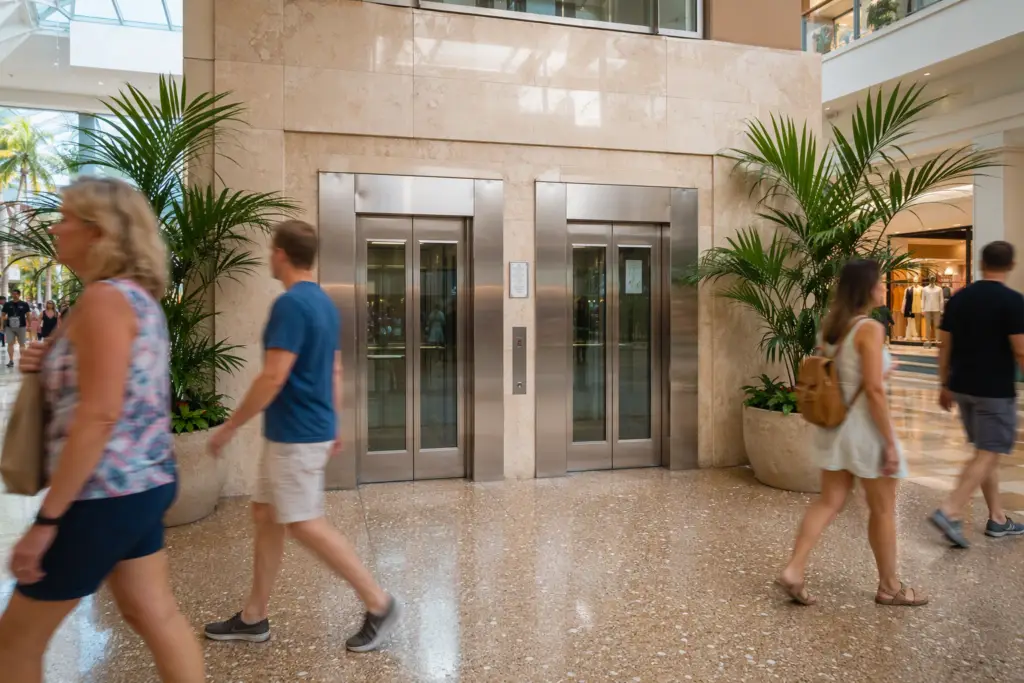
Elevator Parts and Components With the Longest Lead Times Right Now (2026 Guide)
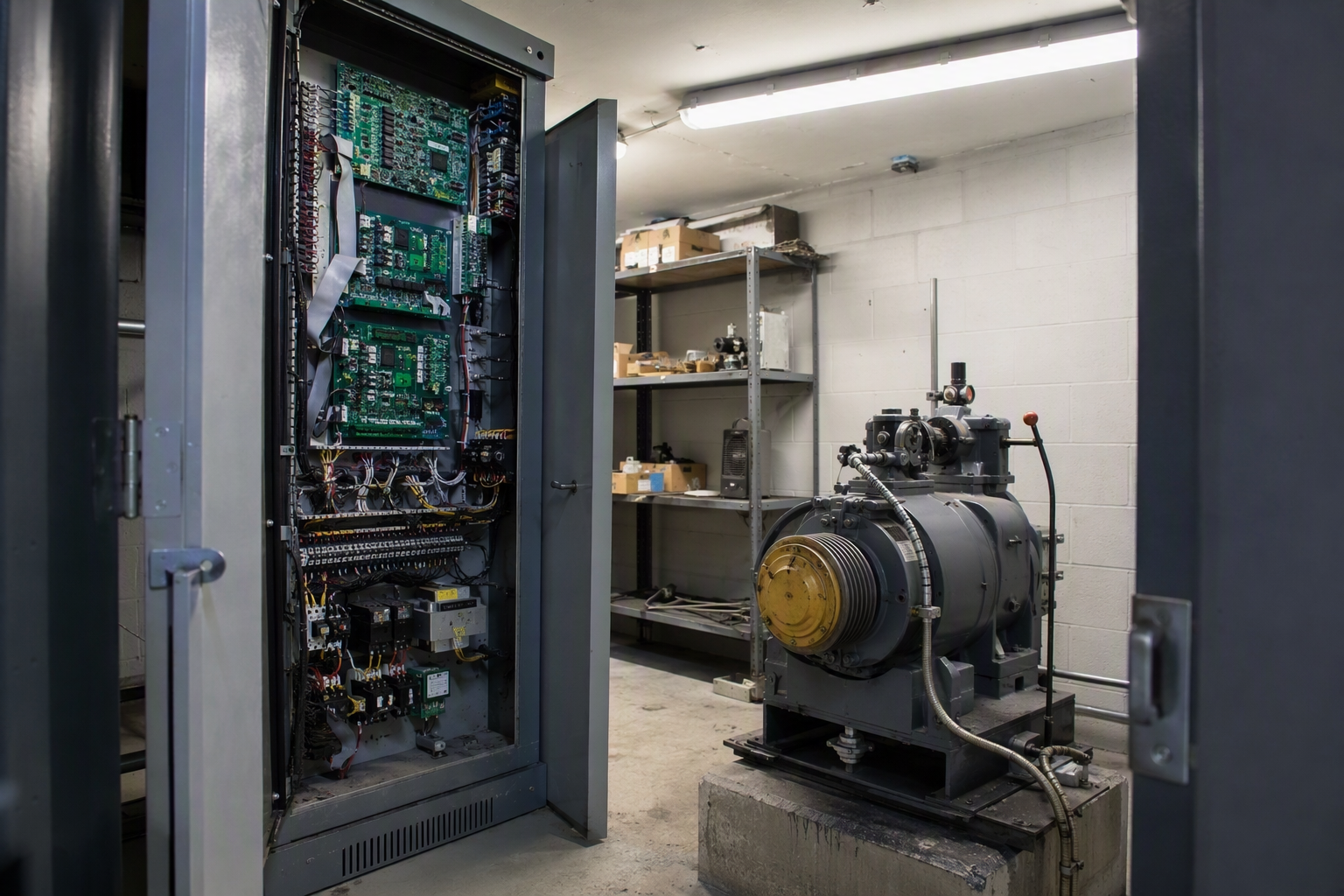
Global supply chain disruptions, semiconductor shortages, and the accelerating obsolescence of older elevator equipment have combined to create a procurement environment where waiting for a critical part to fail before ordering a replacement is no longer an acceptable strategy. For Florida building owners and property managers, understanding which components carry the longest lead times — and building a replacement plan around that reality — is the difference between a brief service interruption and an elevator that sits out of service for months.
This page breaks down the component categories most affected by extended lead times, explains what drives those delays, and offers a practical planning framework. Axxiom Elevator Florida provides data-driven assessment services to help Florida building owners get ahead of these challenges before they become emergencies.
Which Elevator Parts Currently Have the Longest Lead Times?
Lead times vary significantly by manufacturer, model vintage, and whether a component is proprietary or generic. That said, certain categories consistently require the longest procurement windows across the industry.
1. Elevator Controllers and Logic Boards
Solid-state elevator controllers and their associated printed circuit boards (PCBs) are among the most delay-prone components in the current market. Proprietary controllers tied to a single manufacturer’s system — common in elevators installed between the 1980s and early 2000s — may require custom fabrication or refurbishment when original inventory is exhausted. Semiconductor supply constraints, which have persisted since the early 2020s, continue to affect the availability of the microprocessors and integrated circuits used in these boards. When a controller fails without a replacement on hand, an elevator can be grounded indefinitely.
2. Traction Machine Motors and Gearboxes
Geared and gearless traction machines — the core drive units in mid- and high-rise elevators — are large, heavy, precision-manufactured components that are not stocked in large quantities. When a motor winding fails or a gearbox reaches the end of its service life, lead times for a new or rebuilt unit can extend considerably, particularly for older or less common configurations. Winding shops that rewind motors may offer faster turnaround than OEM replacement, but that depends on the motor’s design and condition.
3. Hydraulic Power Units (HPUs)
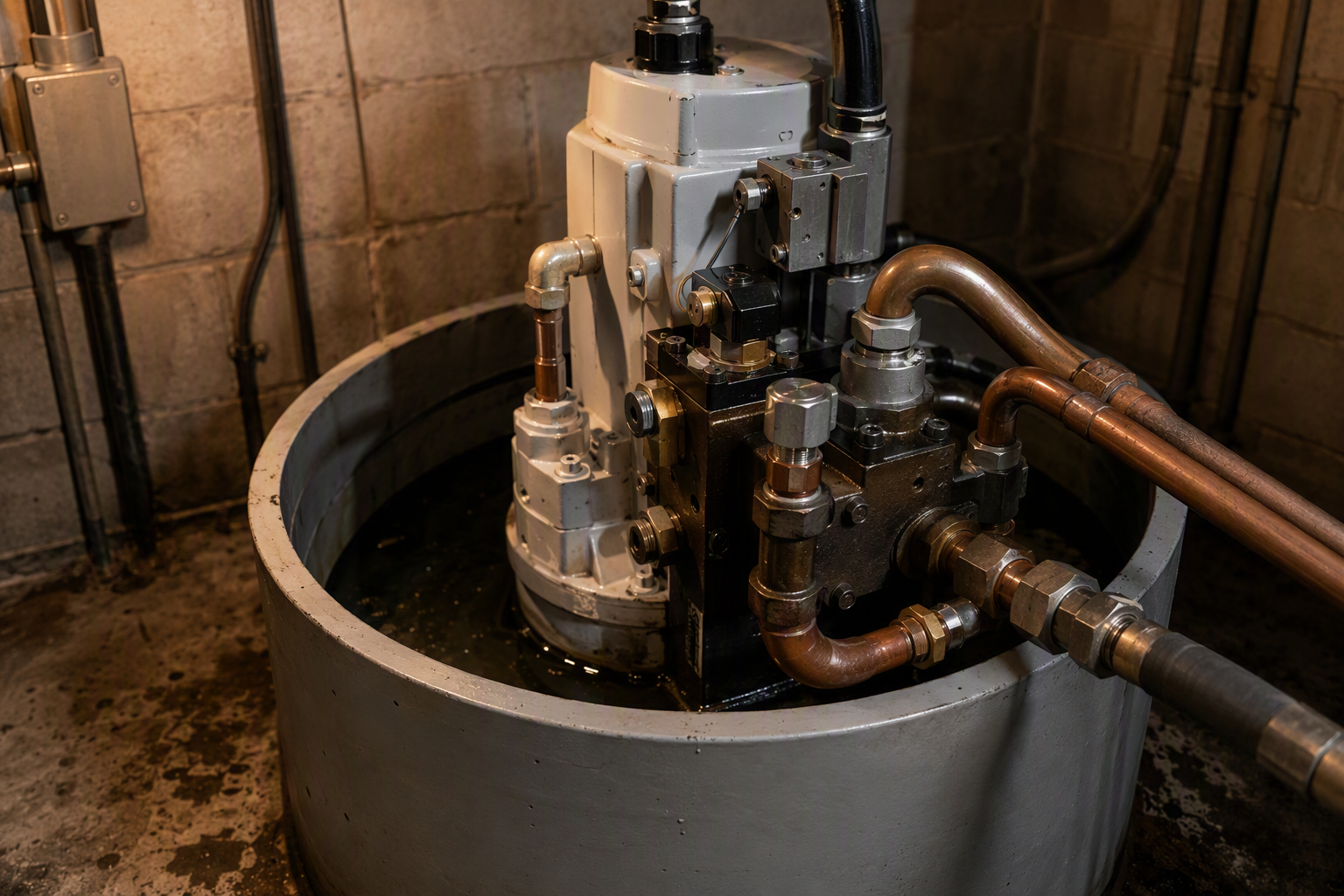
Hydraulic elevators — extremely common in Florida’s low-rise commercial and residential buildings — rely on power units that include a motor, pump, valve assembly, and fluid reservoir. Complete HPU replacements, or even major subassemblies like submersible pump-motor units, can have meaningful lead times when sourced new. Valve bodies for older systems are sometimes the most difficult to source because many manufacturers have discontinued those product lines.
4. Hydraulic Cylinders and Pistons
In-ground hydraulic cylinders are among the most complex replacement projects an elevator can require. The cylinder itself must be measured, manufactured to specification, and then installed with excavation work — a process that involves coordination among elevator contractors, environmental consultants (because of fluid containment requirements), and in some cases local permitting. Planning horizon for a full cylinder replacement is measured in months, not weeks.
5. Door Operators and Proprietary Door Hardware
Door operators — the electromechanical assemblies that open and close elevator doors — are a frequent source of service calls and are increasingly difficult to source for older systems. Many manufacturers have moved to new door operator platforms, leaving legacy systems without readily available parts. Door vanes, couplers, gibs, and sill assemblies for discontinued product lines may require custom fabrication or salvage sourcing.
6. Cab and Landing Fixtures (Proprietary Systems)
Hall call stations, car operating panels, and position indicators that were manufactured as proprietary assemblies are difficult to replace on an individual-component basis. When these systems fail on older elevators, the practical solution is often a full fixture replacement rather than a component-level repair, which carries both cost and lead-time implications.
7. Rope and Suspension Components
Wire rope and hoist cables for non-standard configurations — unusual diameters, strand counts, or lengths — may require custom manufacture. While standard rope is generally available, specialty suspension systems for older or unusual elevator configurations can involve delays.
8. Solid-State Variable Frequency Drives (VFDs)
Modern traction elevators use VFDs for motor speed control. When these drives fail, replacement units for specific legacy systems may be backordered or require programming by a factory-trained technician, adding time beyond the physical part procurement.
What Drives Elevator Parts Lead Times in 2026?

Several structural forces are converging to extend lead times across the elevator parts market:
- Semiconductor and electronics shortages: Ongoing constraints in the global chip supply chain continue to affect controller boards, VFDs, and safety circuit components.
- Manufacturer consolidation: Mergers and acquisitions in the elevator industry have reduced the number of independent parts suppliers, and some product lines have been discontinued entirely.
- Aging installed base: A large share of Florida’s elevator inventory was installed during construction booms in the 1980s and 1990s. Parts for these systems are increasingly unavailable through standard channels.
- Just-in-time supply chains: Industry-wide moves away from large parts inventories mean that distributors carry less safety stock, so demand spikes translate directly into delays.
- Global logistics variability: Shipping disruptions and port congestion, while less severe than peak pandemic levels, continue to create unpredictability in international parts sourcing.
How Should Florida Building Owners Plan for Elevator Part Replacements?
A proactive parts replacement strategy has two components: understanding what your elevator needs in the near future, and aligning procurement timelines with maintenance schedules before failure occurs.
What Is the Step-by-Step Process for Planning Elevator Part Replacements?
- Commission a comprehensive parts audit. Have a qualified elevator service company evaluate your system’s current condition, document component ages, and flag parts that are approaching end-of-life or are already on manufacturer discontinuation lists.
- Identify proprietary vs. generic components. Proprietary parts tied to a single manufacturer require earlier action because sourcing alternatives takes longer and may require controller reprogramming or system upgrades.
- Research current lead times for your specific components. Ask your elevator service provider to query their distributor network for current availability on any flagged parts. Lead time information should be gathered before a failure occurs, not after.
- Prioritize safety-critical components. Under ASME A17.1 Safety Code for Elevators and Escalators, numerous components are subject to mandatory inspection and testing. Safety circuits, governors, buffers, and safeties must be maintained in conformance with code — plan replacements for these first.
- Build a rolling procurement calendar. For components with lead times exceeding 60 days, consider staggered pre-ordering. Work with your elevator contractor to determine whether holding a spare for high-risk components is economically justified.
- Coordinate with your building’s capital expenditure cycle. Major elevator component replacements — controllers, machines, HPUs — are capital projects. Align procurement planning with your building’s budget cycle so funds are available when lead times require early ordering.
- Confirm Florida inspection compliance dates. The Florida Department of Business and Professional Regulation (DBPR) oversees elevator inspections in Florida. Replacement work must be completed and inspected within the timelines your jurisdiction requires — factor inspection scheduling into your project timeline.
- Document everything. Maintain a parts log that tracks component installation dates, serial numbers, warranty status, and any known discontinuation notices. This documentation accelerates future procurement and informs bidding when you seek competitive pricing.
How Do Florida Code Requirements Affect Parts Replacement Planning?
Florida elevator installations and major modifications must conform to ASME A17.1 Safety Code for Elevators and Escalators and, for existing equipment, ASME A17.3 Safety Code for Existing Elevators and Escalators. These codes govern inspection intervals, testing requirements, and the standards to which replacement components must perform.
When a major component is replaced — particularly a controller, machine, or safety system — the installation may trigger a code compliance review. In some cases, replacing one component requires bringing adjacent systems up to current code, which expands the scope and cost of the project. Understanding this “triggering” dynamic before procurement begins prevents budget surprises mid-project.
For elevators that serve the public or are located in buildings with public accommodations, ADA requirements for accessible features must be maintained throughout any modification. If a cab renovation accompanies a controls upgrade, ADA-compliant fixture placement and signage requirements apply.
Work performed on elevator equipment in Florida is also subject to OSHA general industry standards governing confined space entry, lockout/tagout, and fall protection — all of which affect how and when technicians can safely perform replacement work in machine rooms and hoistways.
Which Components Are Most Likely to Become Unavailable Entirely?
As elevator systems age beyond their design life, certain components cross from “long lead time” into “no longer manufactured” territory. This is particularly common with:
- Relay logic controllers predating solid-state systems (pre-1985 installations)
- Proprietary motion controllers from manufacturers that have exited the market or been absorbed by competitors
- Electromechanical relay panels with custom-wound coils
- Older hydraulic valve bodies with non-standard porting configurations
- First-generation microprocessor-based dispatch systems for multi-car installations
When a component crosses into unavailability, building owners typically face a choice between a targeted controller modernization — replacing just the control system — or a full elevator modernization that addresses machine, controls, and fixtures together. Either path involves substantial lead times and should be planned well in advance.
What Is the Difference Between a Repair and a Modernization, and How Does That Affect Lead Times?
A repair restores a specific failed component to working condition using the same or equivalent part. A modernization replaces an obsolete system — usually controls, machine, or both — with current-generation equipment. Modernizations generally carry longer lead times than repairs because they involve engineered submittals, permitting, custom equipment manufacturing, and post-installation inspection by the Authority Having Jurisdiction (AHJ) in Florida.
The planning horizon for a modernization project in Florida typically runs from the initial audit and engineering phase through permit approval, equipment fabrication, installation, and final inspection. Building owners who initiate this process only after a failure occurs will experience significantly longer downtime than those who plan proactively.
How Does Preventive Maintenance Reduce Lead Time Risk?
A robust preventive maintenance program does more than extend component life — it creates visibility into the condition of parts before they fail. Technicians performing regular maintenance can identify worn bearings, degraded insulation, corroding hydraulic lines, and controller anomalies before they become service-stopping failures. That advance notice is the most valuable commodity in a supply chain environment where replacement parts may not be immediately available.
Preventive maintenance records also provide the documentation base for a parts audit, making it faster and more accurate to assess replacement planning needs.
Should Building Owners Stock Spare Elevator Parts?
For most building owners, stocking a full inventory of spare parts is not practical. However, for high-traffic elevators where downtime has significant operational or financial consequences — hospitals, high-rise residential buildings, hotels — stocking a targeted selection of high-failure-rate, long-lead-time components can be justified. Common candidates for on-site or contractor-held spares include:
- Spare door operator motors or complete door operator assemblies for the specific model installed
- Replacement safety relay boards or critical PCBs (where the controller manufacturer offers them as serviceable spares)
- Hydraulic valve coils and solenoid assemblies for the specific valve body installed
- Hoist rope sections of the correct specification, particularly for non-standard configurations
The decision to stock spares should be made with input from the elevator service contractor, who can assess failure rates for the specific equipment in question and advise on storage requirements for sensitive electronic components.
How Do I Evaluate Vendors When Sourcing Hard-to-Find Elevator Parts?
When sourcing parts for older or discontinued elevator systems, building owners and their contractors may work with OEM distributors, independent parts suppliers, remanufacturers, or salvage networks. Each channel has different quality, warranty, and lead-time characteristics.
- OEM distributors offer the highest confidence in part authenticity and compatibility but may have the longest lead times and highest pricing for current production items.
- Independent distributors sometimes carry legacy inventory that OEMs have discontinued, but quality control practices vary and due diligence is required.
- Remanufacturers can be a cost-effective path for components like motors and gearboxes, provided the remanufacturer can certify the work meets applicable performance standards.
- Salvage sourcing — obtaining parts from decommissioned elevators — carries the highest risk because component history is often unknown and remaining service life cannot be reliably assessed.
Any replacement component must be appropriate for the intended application and must not compromise the elevator’s compliance with applicable codes under ASME A17.1 and ASME A17.3.
What Are the 2025–2026 Trends Affecting Elevator Parts Availability?
Several qualitative trends are shaping the parts procurement environment heading into 2026:
- Accelerating obsolescence cycles: Elevator manufacturers are updating their product platforms at a faster pace, which means equipment installed as recently as the early 2010s may already be facing parts discontinuation notices.
- Reshoring and regional warehousing: Some major elevator component manufacturers are investing in North American manufacturing and distribution capacity, which may gradually reduce lead times for certain categories — but the benefits of reshoring investments take years to fully materialize.
- Digital parts management: Elevator service providers are increasingly using digital inventory and parts-tracking platforms that give technicians real-time visibility into parts availability, enabling faster procurement decisions.
- Florida construction volume: Florida’s sustained population growth and construction activity mean high demand for both new elevator installations and maintenance resources, which can affect parts and technician availability in the state.
- Hydraulic cylinder replacement wave: A significant share of Florida’s hydraulic elevator inventory was installed in the 1980s and 1990s, and those cylinders are now reaching or exceeding typical service life. This is creating regional demand pressure for cylinder replacement contractors and specialty materials.
How Can Axxiom Elevator Florida Help With Parts Planning?
Axxiom Elevator Florida serves Florida building owners, property managers, and facilities teams with elevator assessment, maintenance, and modernization planning services. As a data-driven service provider, Axxiom Elevator Florida helps clients systematically evaluate their elevator inventory, identify components at risk of failure or obsolescence, and develop procurement timelines that account for current market lead times before downtime occurs.
For Florida properties with aging elevator systems — particularly those with proprietary controls, in-ground hydraulic cylinders, or components that are approaching manufacturer discontinuation — proactive engagement with a qualified elevator service partner is the most effective risk management strategy available.
Frequently Asked Questions: Elevator Parts Lead Times
What elevator component typically causes the longest unplanned downtime when it fails?
Elevator controllers and proprietary logic boards are consistently among the most disruptive components to source on an emergency basis. When a controller fails on an older elevator with a discontinued control platform, the building owner may face a choice between an extended wait for a refurbished unit or an unplanned full controller modernization — both of which take time to plan, permit, and execute.
How far in advance should I plan for a hydraulic cylinder replacement in Florida?
Given the coordination required among elevator contractors, environmental consultants, and permitting authorities, hydraulic cylinder replacement projects in Florida are generally planned with a multi-month lead horizon. The earlier in the planning process a building owner engages a qualified elevator contractor, the more options are available for minimizing disruption.
Are there parts I can legally stock myself as a building owner in Florida?
Elevator components are safety-critical equipment regulated under ASME A17.1 and Florida’s elevator safety requirements. While building owners may physically store spare parts, installation of those parts must be performed by licensed elevator contractors. Storing the wrong parts, or parts that are incompatible with the installed system, creates waste without reducing risk — which is why parts stocking decisions should be made in consultation with a qualified service provider.
Does replacing a controller require a permit in Florida?
Major modifications to elevator control systems typically require a permit from the Florida DBPR and may require review by the local AHJ. Work must be completed and inspected before the elevator returns to service. Building owners should confirm permitting requirements with their elevator contractor before procurement begins, because permitting timelines affect the overall project schedule.
What happens if my elevator fails inspection because a replacement part is on backorder?
An elevator that fails inspection or is tagged out of service must remain out of operation until the deficiency is corrected and re-inspection is completed. Extended parts backlogs do not create code exemptions. This is why identifying and addressing parts-at-risk before an inspection failure is the only reliable strategy for maintaining elevator availability.
How does the age of my elevator affect parts lead times?
Generally, the older the elevator, the longer the expected lead time for replacement parts. Elevators manufactured before widespread standardization of electronic components may require custom-wound motors, fabricated mechanical parts, or salvaged components — all of which extend procurement timelines significantly compared to current-generation systems with active OEM support.
Are VFD replacements for older elevators available off the shelf?
Standard VFDs are broadly available, but elevator-specific VFD applications often require programming and configuration to match the motor and control system characteristics of the installed elevator. When the original VFD manufacturer has updated their product line, a replacement unit may require re-engineering and commissioning by a qualified technician, which adds time beyond the physical part delivery.
What role does ADA compliance play in elevator parts replacement projects?
When a parts replacement project involves the cab interior — fixtures, panels, or signage — the work must maintain compliance with ADA requirements for accessible elevators. For older elevators that were not originally built to current ADA standards, a cab modification may trigger the need to bring accessible features into compliance, which affects both project scope and budget.
How should I budget for elevator parts replacement when lead times are uncertain?
Budgeting for elevator parts in a long-lead-time environment requires building contingency into both cost and schedule estimates. Because parts prices and availability can change between the time of assessment and actual procurement, replacement budgets should be established with a qualified elevator contractor who can provide current market intelligence, not historical averages.
What should I ask my current elevator contractor about parts availability?
Building owners should ask their elevator service contractor to provide a written assessment of: (1) which components on their elevator are on manufacturer discontinuation lists; (2) current lead times for the highest-risk components; (3) whether equivalent substitute parts are available for discontinued items; and (4) what the procurement and permitting timeline would be for each major replacement scenario. If a contractor cannot answer these questions, seeking a second assessment is a reasonable step.
Get a Free Elevator Assessment From Axxiom Elevator Florida
Florida building owners cannot afford to wait for a critical elevator component to fail before thinking about replacement timelines. Axxiom Elevator Florida provides data-driven elevator assessments that identify at-risk components, document current lead-time exposure, and help property owners build a proactive replacement and modernization plan — before downtime forces the issue.
Contact Axxiom Elevator Florida for a free elevator assessment:
Need elevator service you can rely on? Axxiom Elevator Florida is ready to help.