How Do I Know If My Elevator Maintenance Company Is Doing the Work They Are Contracted to Do?
Elevator maintenance contracts represent a significant operating expense and a critical safety obligation for building owners and property managers. Yet the technical nature of elevator systems makes it genuinely difficult for non-specialists to assess whether a service provider is delivering on every line item in a service agreement. This FAQ hub covers the full range of questions building owners, facility managers, and property administrators in Pompano Beach, Sarasota, and throughout Florida ask when evaluating their elevator maintenance provider.
What documentation should my elevator maintenance company provide after every service visit?
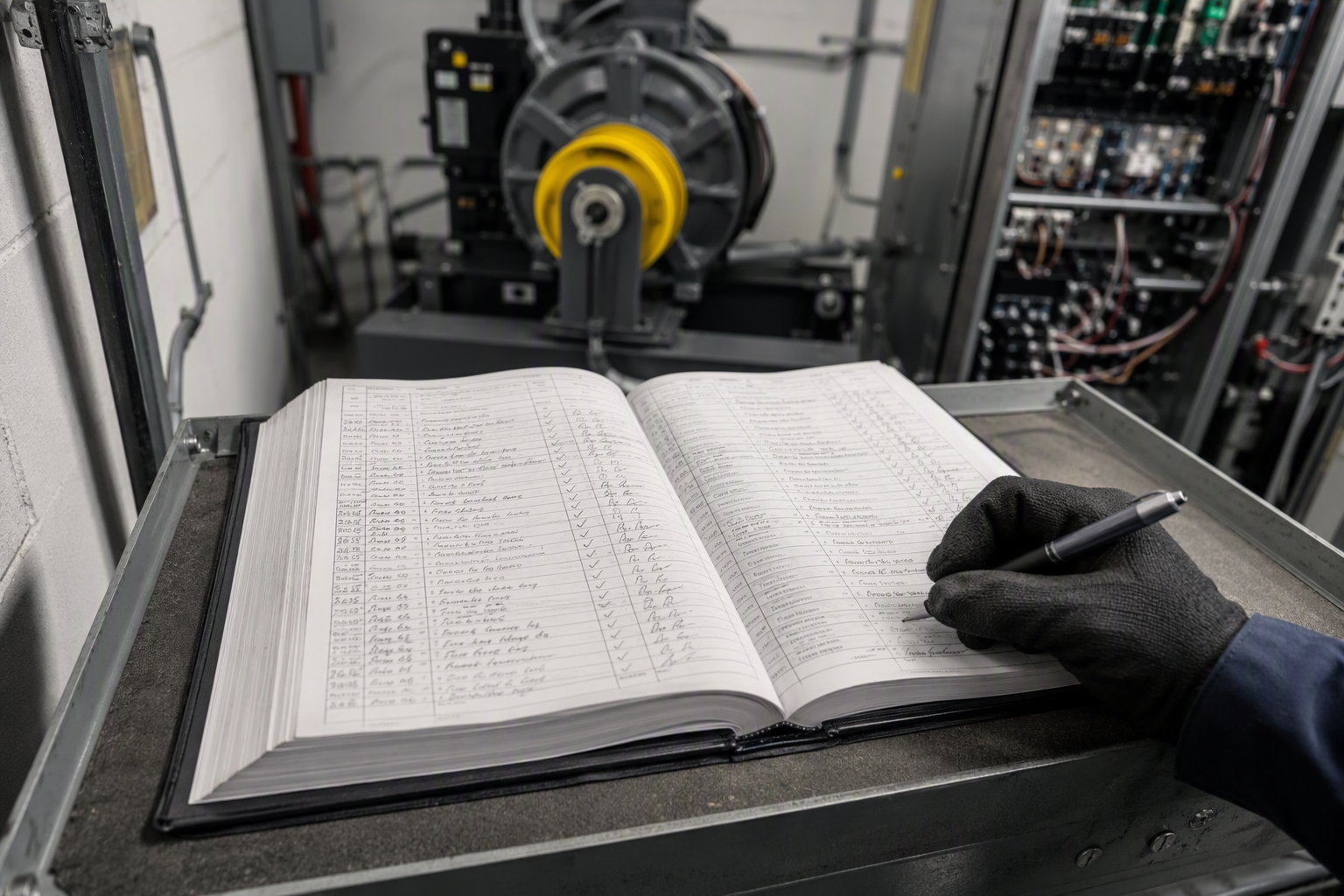
After every service visit, your elevator maintenance company should leave a written or electronic service report that details exactly what was inspected, lubricated, adjusted, tested, and replaced.
A compliant service report should include the date and time of the visit, the name and license number of the technician, the specific tasks completed, any deficiencies found, and whether those deficiencies were corrected on-site or flagged for a follow-up visit. It should also note the condition of safety-critical components such as the governor, buffers, safeties, door operators, and hydraulic fluid levels where applicable.
Building owners should insist that physical or digital copies of every service record be filed in the machine room logbook, which is a requirement under Florida elevator statutes. If a contractor cannot produce these records on demand, that alone is a significant red flag about whether contracted work is actually being performed.
What does a standard full-maintenance elevator contract actually require the company to do?
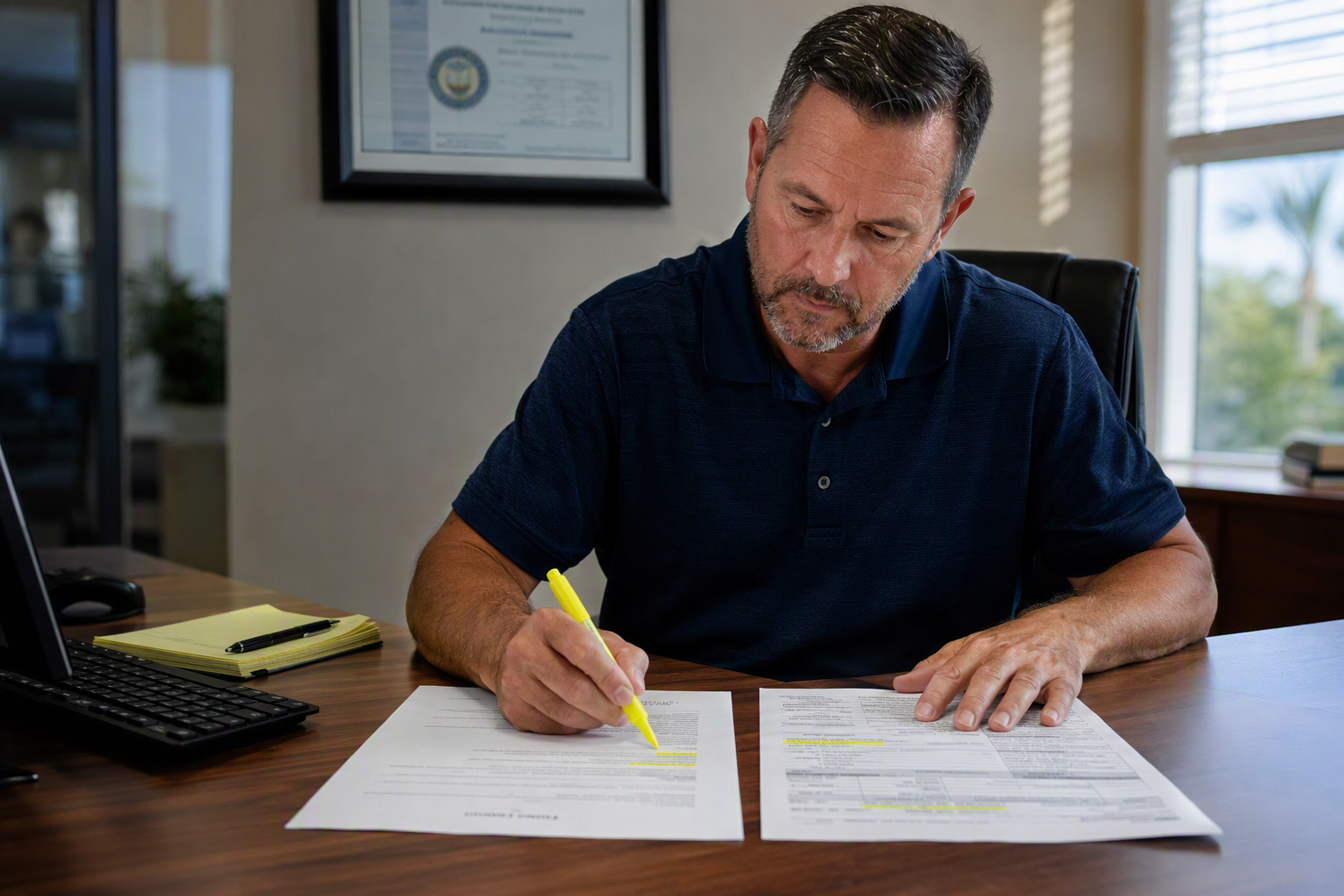
A full-maintenance elevator contract typically requires the service company to perform all routine lubrication, adjustment, cleaning, parts replacement, and safety testing needed to keep the elevator operating safely and in compliance with applicable codes.
Unlike a basic “oil and grease” or parts-and-labor contract, a full-maintenance agreement should cover the cost of parts replacements within the scope of normal wear. The contract language should specify which systems are included — traction machinery, controllers, door equipment, cab interiors, hydraulic power units — and which are excluded, such as structural cab renovations or modernization work.
Building owners should read the exclusions section of their contract with equal care to the inclusions. Vague language like “as needed” without defined intervals should be clarified in writing before signing. Comparing contract language against the maintenance requirements outlined in the ASME A17.1 Safety Code for Elevators and Escalators gives building owners a neutral technical benchmark against which any contractor’s scope of work can be evaluated.
How often should my elevator be serviced under Florida law?
Florida law requires periodic elevator inspections and maintenance, with most commercial elevators requiring a certificate of operation renewed annually following a state-approved inspection.
The Florida Department of Business and Professional Regulation (DBPR) oversees elevator safety in the state through its Bureau of Elevator Safety. Elevators must be inspected by a licensed elevator inspector, and the building owner is responsible for ensuring the current certificate of operation is posted inside or adjacent to the elevator. Failure to maintain a current certificate is a violation that can result in mandatory shutdown orders.
Routine maintenance intervals beyond the annual inspection are governed by the ASME A17.1 Safety Code for Elevators and Escalators, which specifies maintenance tasks and intervals at the component level. Buildings with high traffic volume may require more frequent service visits than the minimum intervals defined in the code. A qualified maintenance contractor should proactively recommend a visit frequency appropriate to the specific usage patterns of each installation.
What are the most common ways elevator maintenance companies cut corners?
The most common forms of elevator maintenance shortcuts include shortening service visit duration, skipping low-visibility tasks such as pit cleaning and governor lubrication, and deferring non-emergency adjustments without documenting them as open items.
Because the machine room and pit are not visible to building occupants, a contractor can sign a log and leave without completing every required task. Tasks that are most frequently skipped under time pressure include: thorough cleaning of the pit area, lubrication of governor rope and tension sheaves, adjustment of door timing and force settings, and testing of emergency lighting and communication systems.
Building owners can counter this by installing inexpensive time-stamp log systems in the machine room, reviewing the duration of service visits against reasonable time benchmarks for the tasks described, and periodically having an independent inspector or a different qualified elevator company audit the condition of the equipment.
What key performance indicators should I track to evaluate my elevator contractor?
The most meaningful key performance indicators for elevator maintenance quality are callback frequency, unplanned downtime hours, time-to-restore after failures, and the ratio of corrective to preventive maintenance tasks completed.
| Performance Indicator | What It Measures | Acceptable Benchmark | Warning Sign |
|---|---|---|---|
| Callback Frequency | Number of unplanned service calls per elevator per year | Low and decreasing over time | Frequent repeat calls for the same issue |
| Unplanned Downtime | Hours per year an elevator is out of service unexpectedly | Trending downward year over year | Increasing or plateau after maintenance contract start |
| Inspection Pass Rate | Whether annual state inspection passes first time | First-attempt pass every year | Recurring violations or conditional certificates |
| Open Deficiency Age | How long flagged deficiencies remain uncorrected | Non-safety items resolved within agreed SLA | Open items carried forward across multiple visits |
| Maintenance Log Completeness | Whether all required log entries are present and legible | Complete, dated, and signed every visit | Missing entries, illegible notes, or backdated records |
| Parts Replacement Documentation | Documentation of every part replaced with reason | Itemized with part number and justification | Vague entries or no documentation for replaced parts |
Building owners should request a monthly or quarterly performance summary from their contractor. Any provider unwilling to share this data in a clear format is limiting the owner’s ability to fulfill their own legal obligation to maintain safe equipment.
What Florida-specific regulations govern elevator maintenance accountability?
Florida’s elevator safety program is administered under Chapter 399 of the Florida Statutes and associated administrative rules, which establish licensure requirements for contractors, mandatory inspection intervals, and owner responsibilities for maintaining current certificates of operation.
Under Florida law, elevator contractors must be licensed through the DBPR Bureau of Elevator Safety. Building owners should always verify that their service provider holds a current, active Florida elevator contractor license before signing any agreement. A license number should appear on all service documentation.
The state’s inspection requirements work in parallel with, not as a replacement for, the manufacturer’s recommended maintenance schedules and the requirements of the ASME A17.1 Safety Code for Elevators and Escalators. For buildings that are ADA-accessible, additional obligations under the Americans with Disabilities Act apply to elevator operability and feature maintenance, including accessible controls and cab leveling accuracy.
How do I verify that my elevator passed its most recent state inspection?
Florida building owners can verify their elevator’s inspection status by checking the current certificate of operation posted in the elevator cab or by contacting the DBPR Bureau of Elevator Safety directly to confirm inspection records on file.
The certificate of operation must display an expiration date. If the date has passed and no renewed certificate is posted, the elevator is technically operating outside of legal compliance, and the responsibility for that gap falls on the building owner, not the contractor alone.
A reputable maintenance contractor proactively schedules and coordinates the annual inspection, tracks the certificate expiration, and notifies the building owner well in advance. If a building owner must chase their contractor for inspection scheduling, that is a significant indicator of a provider that is not managing its contracted obligations proactively.
What questions should I ask a new elevator maintenance company before hiring them?
Before hiring an elevator maintenance company, building owners should ask for proof of Florida licensure, a detailed written scope of work with defined visit intervals, references from comparable properties, and a clear explanation of how deficiencies are documented and resolved.
Additional questions worth asking include: What is your process when a safety deficiency is found during a routine visit? How do you document parts replacements? Can I access my service history records at any time? Who is the point of contact if I have questions between visits? What happens if my elevator fails inspection — what remediation process do you follow?
A contractor that answers these questions thoroughly, in writing, and without hesitation is demonstrating the kind of professional accountability that serious building management requires. Axxiom Elevator Florida serves property owners in Pompano Beach and Sarasota who are asking exactly these questions and want verifiable answers backed by proper documentation.
What should be included in a machine room logbook?
A machine room logbook should contain a dated and signed entry for every service visit, every test conducted, every part replaced, every deficiency identified, and every corrective action taken.
The logbook is not simply a courtesy record — it is a legal document in Florida. In the event of an accident, injury claim, or enforcement action, the logbook is the primary evidence of whether proper maintenance was performed. Incomplete, altered, or absent logbook entries can expose building owners to significant liability.
Under the ASME A17.1 Safety Code for Elevators and Escalators, specific records of tests, including the five-year full-load safety test for traction elevators and the periodic pressure tests for hydraulic units, must be maintained. Building owners should review the logbook at least once per quarter and request clarification on any entry that is incomplete or unclear.
What is the difference between a safety test and a routine maintenance visit?
A safety test is a formal, documented examination of specific safety devices — such as safeties, governors, buffers, and pressure relief valves — conducted at code-mandated intervals, while a routine maintenance visit covers ongoing lubrication, adjustment, cleaning, and operational checks.
Safety tests under ASME A17.1 include the Category 1 annual no-load safety test, the Category 3 and Category 5 tests conducted at five-year intervals depending on equipment type, and specific tests for hydraulic elevator pressure relief and cylinder integrity. These tests must be witnessed by a licensed inspector and the results formally recorded.
A common contractor shortcut is to perform routine maintenance without scheduling mandatory safety tests, or to perform safety tests without proper witnessing and documentation. Building owners should track which category tests apply to their equipment type and confirm in writing that each has been conducted and documented on schedule.
What are the warning signs that my elevator maintenance company is not performing contracted work?
The clearest warning signs include increasing callback frequency, vague or incomplete service reports, inability to produce test records on request, inspection failures that surprise the contractor, and visible deterioration of components between visits.
Additional warning signs to watch for include: technicians spending significantly less time on-site than the tasks described would require; repeat billing for the same parts or repairs within short intervals; contractor resistance to independent audits; and the absence of any proactive communication about aging components or upcoming required tests.
Physical signs of neglect in the elevator pit — standing water, accumulated debris, rust on guide rails, or frayed ropes — are visible indicators that routine cleaning and inspection tasks are being skipped. The machine room should also be clean, dry, and free of unauthorized materials, with all equipment in accessible condition for servicing.
How should my maintenance contract handle emergency calls and after-hours entrapments?
A well-structured elevator maintenance contract should clearly define the contractor’s obligations for emergency response, including entrapment situations, and specify what recourse is available to the building owner if those obligations are not met.
Under OSHA general duty clause obligations, employers and building owners must maintain equipment that does not expose workers and visitors to recognized hazards. Entrapments represent a safety event that requires a documented response. The contract should specify who the building owner contacts, what communication to expect during the response, and how the event is documented afterward.
Building owners should test the emergency communication protocol periodically — not during an actual entrapment — by contacting the contractor’s emergency line and measuring the quality of the response. Any difficulty reaching emergency support or receiving unclear guidance is a practical indicator that the contractor’s emergency procedures are not as robust as represented.
What should I do if I suspect my elevator contractor is not fulfilling their contract?
- Pull all available service records from the machine room logbook and any electronic records provided by the contractor, and organize them chronologically.
- Compare documented service visit dates and tasks against the required visit frequency and scope defined in your signed contract.
- Request a written summary of all open deficiencies and ask the contractor to explain the current status of each one in writing.
- Contact the Florida DBPR Bureau of Elevator Safety to confirm the current status of your elevator’s certificate of operation and any inspection records on file.
- Schedule an independent third-party assessment by a different licensed elevator company or a licensed elevator inspector to evaluate the actual condition of the equipment against what the logbook reports.
- Document all communications with your current contractor regarding your concerns, using email or other written channels to create a clear record.
- Consult your contract’s dispute resolution provisions and, if necessary, speak with legal counsel regarding your options for remediation or termination for cause.
- Begin evaluating qualified replacement contractors who can provide verifiable references and transparent documentation practices before formally terminating the current agreement.
Axxiom Elevator Florida provides independent assessments for building owners in Pompano Beach and Sarasota who need an objective, expert evaluation of their elevator’s current condition and maintenance history.
How does ADA compliance relate to elevator maintenance obligations?
Under the Americans with Disabilities Act, elevators that provide accessible routes in covered buildings must be maintained in operational condition, meaning maintenance failures that render an accessible elevator non-functional can constitute an ADA violation.
ADA Title III requirements state that accessible features must be maintained in working order. A repeatedly malfunctioning elevator in a building where it serves as part of an accessible route can expose building owners to complaints and enforcement actions. This means that elevator downtime is not just an inconvenience — it may carry civil rights compliance implications.
Maintenance contractors should be specifically asked about their protocols for prioritizing restoration of elevators that serve as the primary accessible route. Any contractor treating accessible elevator outages with the same priority as a secondary elevator in a high-rise building does not understand the compliance context in which their client is operating.
How do I evaluate whether a maintenance contract is appropriately priced for the scope of work?
Appropriate pricing for an elevator maintenance contract reflects the equipment type, age, usage intensity, visit frequency, and whether parts and emergency response are included — and should be evaluated against the documented scope of work rather than price alone.
A contract priced significantly below market rates for a full-maintenance agreement on comparable equipment is worth scrutinizing carefully. Unusually low pricing sometimes reflects a narrower scope of work than the building owner assumes, or it may indicate that parts are excluded, that visit frequency is reduced, or that the company is relying on deferred maintenance to contain costs during the contract term while deferring problems to a future period.
Building owners should request itemized breakdowns of what is and is not included, and compare at least two or three competitive proposals on an apples-to-apples basis — same equipment type, same visit frequency, same inclusion of parts and tests. The total cost of ownership calculation should include the cost of any items the contract excludes.
What records should I retain as a building owner for elevator maintenance compliance?
Building owners should retain all certificates of operation, test records, service reports, contractor license verifications, and correspondence related to deficiencies and repairs for the life of the equipment and in accordance with Florida record retention requirements.
Best practice is to maintain both physical copies in the machine room logbook and digital copies in a centralized property management file. In multi-elevator buildings, records should be organized by individual elevator unit and cross-referenced with the unit’s state identification number.
In the event of an insurance claim, legal dispute, or regulatory inquiry, complete records demonstrating a consistent history of professional maintenance are among the most valuable protective assets a building owner can have. A maintenance contractor that does not provide complete records is effectively leaving the building owner without this protection.
How do I compare elevator maintenance companies in Pompano Beach or Sarasota, Florida?
Comparing elevator maintenance companies in Florida requires verifying DBPR licensure, reviewing the specific contract scope in writing, checking references from similar property types in the same market, and evaluating the transparency of their documentation and reporting practices.
In markets like Pompano Beach and Sarasota, building owners benefit from working with a company that has direct familiarity with local building stock, Florida-specific inspection protocols, and established relationships with the DBPR Bureau of Elevator Safety. National firms operating through local subcontractors may not always provide the continuity of personnel and local accountability that complex properties require.
Axxiom Elevator Florida operates as a certified elevator service company directly serving building owners and property managers in both Pompano Beach and Sarasota, providing the local accountability and documentation transparency that the questions covered in this guide demand.
What is a third-party elevator audit and when should I request one?
A third-party elevator audit is an independent technical assessment of an elevator’s condition and maintenance records conducted by a qualified elevator professional who has no financial relationship with the current service contractor.
Building owners should consider a third-party audit when taking over management of a property with an existing maintenance contract, when renewing or re-bidding a maintenance contract, when performance indicators suggest deferred maintenance, when a state inspection yields unexpected violations, or when there is any reason to question the accuracy of the current contractor’s service records.
A thorough third-party audit examines the physical condition of all major elevator systems against the documented maintenance history, identifies any gap between what the logbook records and what the equipment’s actual condition indicates, and provides the building owner with an independent baseline against which future maintenance can be measured. This kind of objective assessment is among the most effective tools available for verifying contractor performance.
How does preventive maintenance compare to reactive maintenance for elevator longevity and cost?
Preventive maintenance — scheduled inspections and component servicing before failures occur — consistently extends equipment service life and reduces total maintenance costs compared to reactive maintenance, which addresses problems only after they cause failures or downtime.
Elevator equipment that receives consistent preventive maintenance tends to exhibit lower callback rates, longer intervals between major component replacements, and stronger performance on annual state inspections. Door systems, which are the most common source of elevator service calls, benefit substantially from regular adjustment and component inspection before wear progresses to failure.
When evaluating a maintenance contractor’s performance over time, a building owner who sees increasing rather than stabilizing or decreasing callback frequency despite an active maintenance contract should ask specifically whether the contract’s preventive maintenance scope is being fully executed. A contractor who completes only reactive service while billing for a preventive maintenance agreement is not fulfilling the contract’s fundamental purpose.
What role does the building owner play in elevator maintenance accountability?
Building owners bear the ultimate legal responsibility for maintaining elevators in safe, code-compliant operating condition, which means accountability for verifying contractor performance cannot be fully delegated to the contractor itself.
Florida statutes place the obligation to maintain a current certificate of operation and safe operating conditions on the building owner, not solely on the service contractor. This means that even if a contractor fails to schedule a required inspection, the legal and financial consequences fall on the property owner.
Practically, this means building owners should designate a responsible individual to track inspection expiration dates, review service reports quarterly, confirm that required category tests are scheduled and completed, and maintain organized records. The relationship between a building owner and an elevator contractor functions best as an accountable partnership, with clear documentation flowing in both directions, rather than a set-and-forget service arrangement.
How can Axxiom Elevator Florida help building owners verify or improve their elevator maintenance program?
Axxiom Elevator Florida provides certified elevator services to building owners and property managers in Pompano Beach and Sarasota, offering independent assessments, full-maintenance contracts with transparent documentation, and expert guidance on Florida elevator compliance requirements.
For building owners who have questions about whether their current maintenance provider is fulfilling contracted obligations, Axxiom Elevator Florida can conduct an independent assessment of the equipment’s current condition and review the adequacy of existing maintenance documentation. This gives building owners objective, technically grounded information to support maintenance contract decisions.
For properties seeking a new elevator maintenance partner, Axxiom Elevator Florida structures its service agreements with clear scope definitions, documented visit reports, and the kind of proactive communication that allows building owners to stay informed and compliant without having to chase their contractor for basic information.
Get an Independent Elevator Assessment Today
If you are not confident your elevator maintenance company is delivering on its contracted obligations, do not wait for a failed inspection or a safety incident to find out. Contact Axxiom Elevator Florida for a free elevator assessment and get objective, expert insight into the condition of your equipment and the adequacy of your current maintenance program. Serving building owners and property managers in Pompano Beach, FL and Sarasota, FL.
Call Axxiom Elevator Florida: