Elevator Service in Pompano, FL | Axxiom Elevator Florida
Florida’s K-12 schools and universities operate elevators under a layered framework of state law, national safety codes, and federal accessibility standards. For educational institutions in Pompano, FL and across Broward, Miami-Dade, and Palm Beach counties, understanding these requirements — and maintaining a certified service relationship — is essential for student safety, regulatory compliance, and uninterrupted building operations. Axxiom Elevator Florida serves educational campuses throughout South Florida, providing inspections, preventive maintenance, repairs, and compliance documentation.
What state law governs elevator safety in Florida schools?
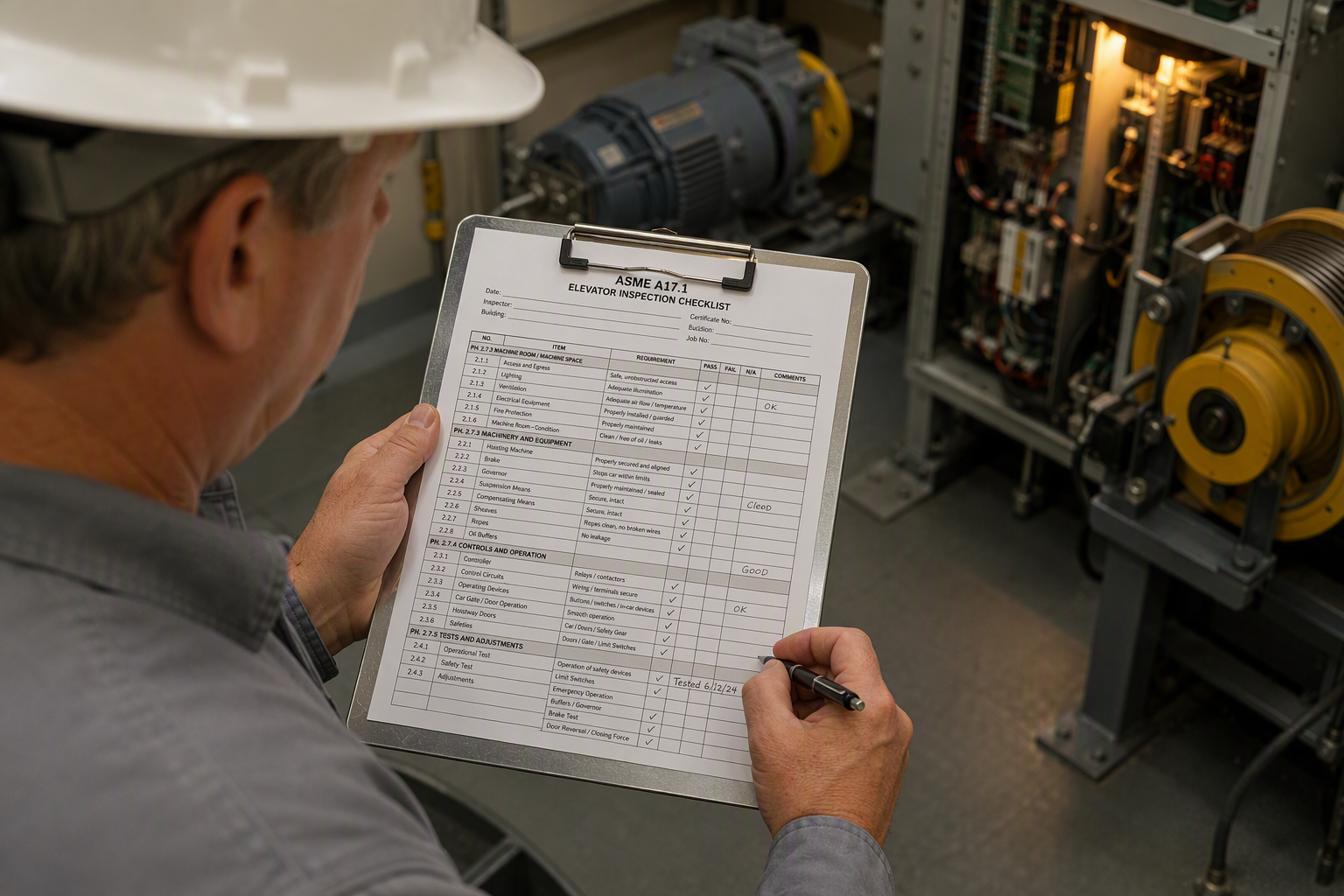
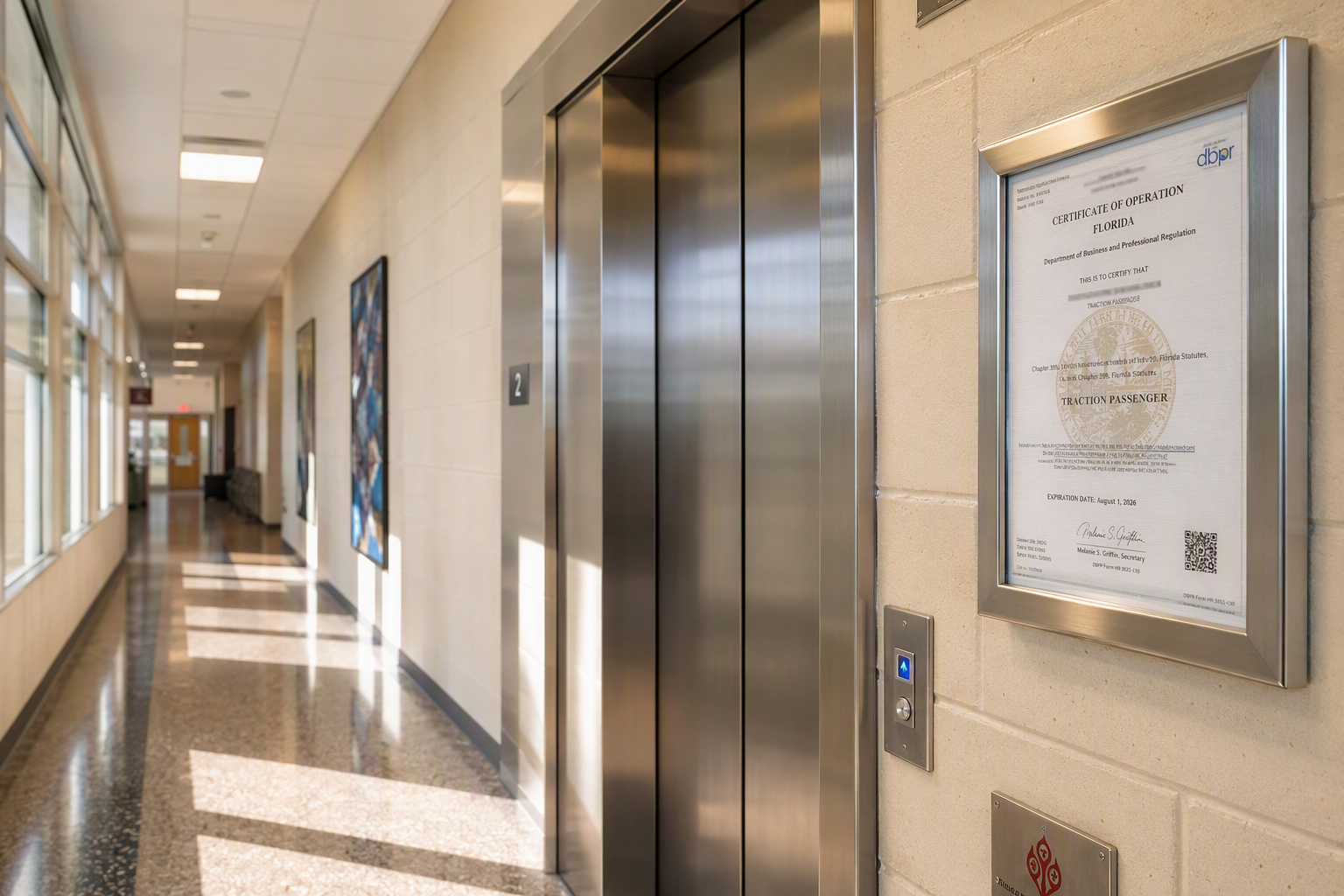
Florida Statutes Chapter 399 is the primary state law governing the construction, alteration, maintenance, and inspection of elevators and related equipment in Florida, including those installed in public and private school buildings and university facilities. The Florida Department of Business and Professional Regulation (DBPR) enforces this statute through its Elevator Safety Program, which requires every elevator in Florida to hold a valid certificate of operation.
A certificate of operation is issued only after a passing inspection by a licensed elevator inspector. Schools and universities must ensure their certificates remain current — an expired certificate means the elevator is legally prohibited from operation. Facilities managers on educational campuses should maintain organized records of all inspection certificates, maintenance logs, and repair documentation to present during any regulatory review.
Which national safety code applies to school elevators in Florida?
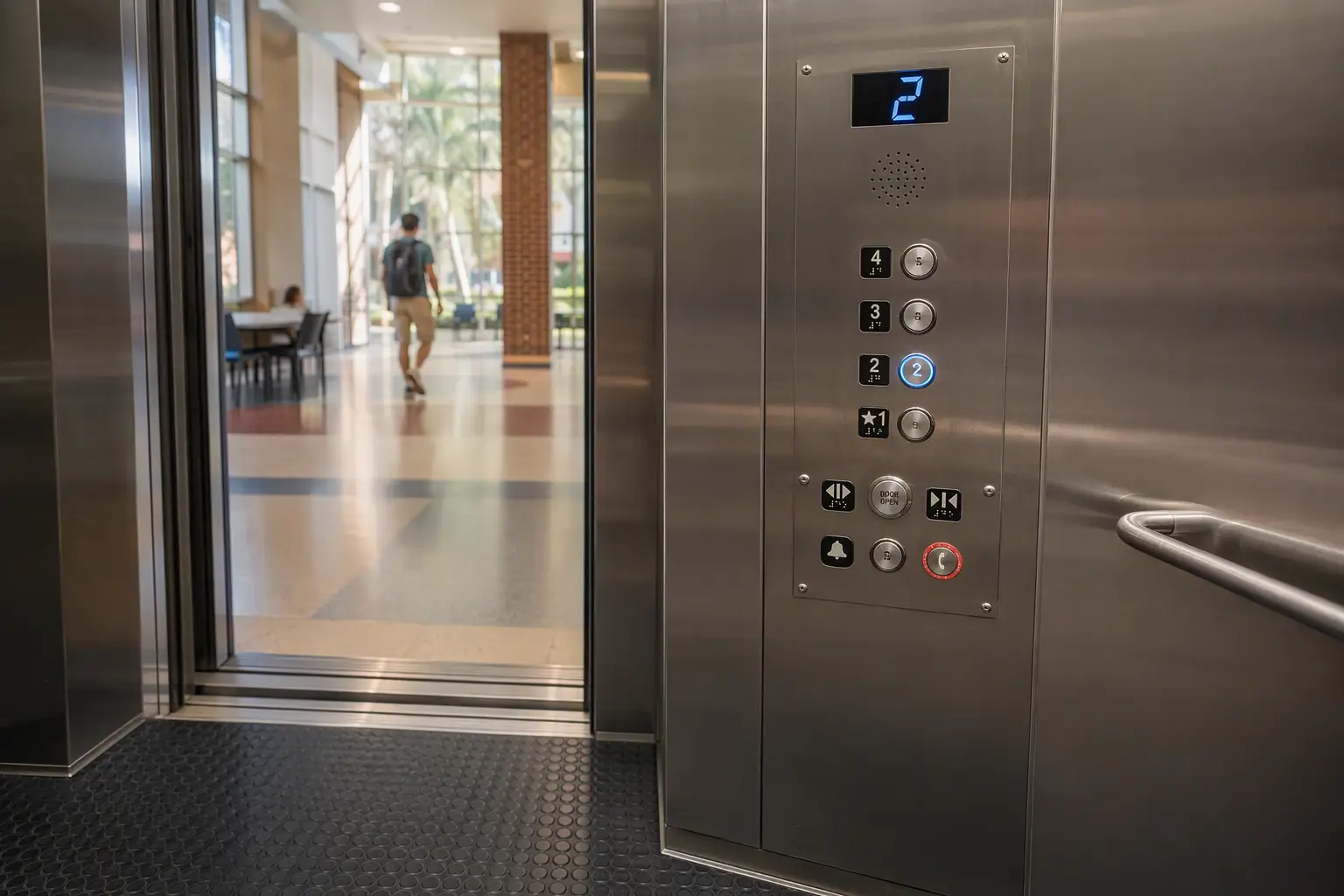
Florida adopts the ASME A17.1 Safety Code for Elevators and Escalators as the technical standard incorporated into state elevator law. This code governs equipment design, construction standards, operational safety devices, and inspection intervals for passenger elevators, freight elevators, limited-use/limited-application (LULA) elevators, and platform lifts commonly found in school buildings.
ASME A17.1 specifies requirements for safety devices such as governor-actuated safeties, door interlocks, car buffers, and emergency lighting — all of which must be verified during periodic inspections. For 2026, facilities should confirm they are referencing the current adopted edition of ASME A17.1 as recognized by Florida DBPR, since code editions are updated on a rolling basis and state adoption can lag the publication cycle.
What ADA requirements apply to elevators in Florida educational buildings?
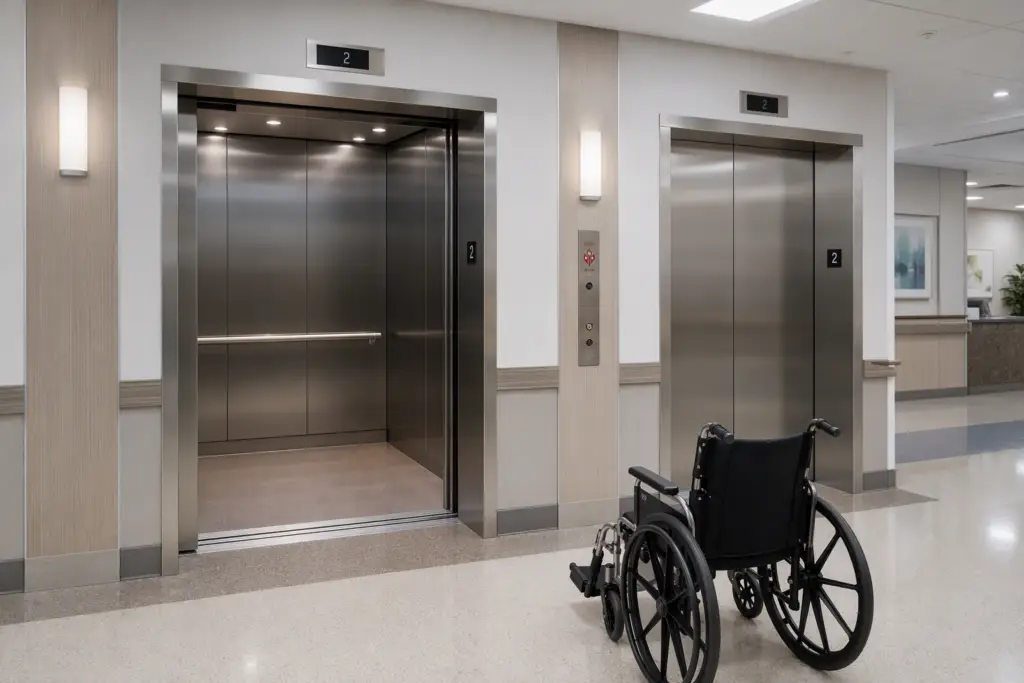
Under the Americans with Disabilities Act (ADA), elevators in multi-story educational facilities must meet accessibility standards to ensure equal access for students, staff, and visitors with disabilities. Key ADA elevator requirements for schools include:
- Minimum cab dimensions to accommodate wheelchair users
- Accessible control panels with raised characters and Braille
- Audible and visible floor indicators
- Door reopening devices to protect passengers in the door path
- Sufficient door-open dwell time to allow safe entry and exit
- Leveling accuracy so the cab floor aligns with the building floor within acceptable tolerances
Florida’s educational institutions that receive federal funding — including public K-12 schools and state universities — carry additional obligations under Section 504 of the Rehabilitation Act. An elevator that is out of service or operating outside ADA tolerances can trigger civil rights compliance issues, not just safety violations. Axxiom Elevator Florida supports campuses in conducting ADA-specific assessments as part of comprehensive maintenance programs.
How often must school elevators be inspected in Florida?
Florida law requires that elevators receive periodic inspections to maintain a valid certificate of operation. The inspection frequency is established by Florida Statutes Chapter 399 and the rules promulgated by DBPR. In general, Florida mandates routine periodic inspections as well as witnessing of certain periodic tests by a licensed elevator inspector.
Beyond state-mandated inspections, the ASME A17.1 Safety Code for Elevators and Escalators prescribes a schedule of periodic tests — including annual no-load safety tests and five-year full-load tests for certain equipment — that must be performed by qualified elevator mechanics and witnessed by a licensed inspector. Educational institutions should work with their elevator service contractor to calendar all required tests well in advance of deadlines to avoid lapses in certification.
What should a school do immediately if an elevator fails or traps a passenger?
- Contact building security or the main office immediately to alert staff that a passenger may be trapped.
- Communicate with any trapped passenger through the elevator’s emergency communication system — verify it is functioning and reassure the individual.
- Call 911 if the passenger reports a medical emergency or distress.
- Contact your certified elevator service provider to dispatch a qualified technician for emergency response.
- Do not attempt to open elevator doors or move the cab manually without a licensed elevator mechanic present.
- Post signage at all elevator landings to prevent additional passengers from attempting to use the unit.
- Document the incident, the time of the malfunction, and all actions taken for the required reporting and maintenance log.
- Report the entrapment to Florida DBPR as required and retain all service records related to the incident.
Are LULA elevators and platform lifts held to the same standards as full passenger elevators in schools?
Limited-use/limited-application (LULA) elevators and inclined or vertical platform lifts are common in older school buildings where full-cab elevators cannot be retrofitted due to structural constraints. In Florida, these units are still regulated under Chapter 399 and must hold a valid certificate of operation. They are inspected and maintained under the applicable sections of ASME A17.1 and ASME A18.1 (the Safety Standard for Platform Lifts and Stairway Chairlifts), as adopted by Florida.
Because LULA units and platform lifts are frequently the sole means of vertical access for students with mobility disabilities, their operational reliability carries both a compliance and a civil rights dimension. Schools should ensure these units are included in any preventive maintenance agreement, not treated as secondary equipment.
What does a compliant preventive maintenance program look like for a Florida school?
A compliant preventive maintenance program for an educational facility typically includes:
- Scheduled lubrication, adjustment, and cleaning of mechanical and electrical components at intervals recommended by the equipment manufacturer and ASME A17.1
- Testing of all required safety devices — including door interlocks, safeties, buffers, and emergency lighting — on the code-mandated schedule
- Written maintenance logs retained on-site and available for inspector review
- Coordination with a licensed elevator inspector to schedule and witness periodic tests before certificate renewal deadlines
- ADA functional checks including door timing, leveling, and control panel accessibility
- Emergency communication system verification, including the phone line or cellular connection required under ASME A17.1
Axxiom Elevator Florida structures maintenance agreements for K-12 campuses and university facilities throughout South Florida to meet all Florida DBPR and ASME requirements, with documentation organized to simplify inspection and certificate renewal.
Why does it matter whether a school uses a certified elevator contractor in Florida?
Florida law requires that elevator work — including maintenance, repair, and alteration — be performed by or under the supervision of a licensed elevator contractor. Using an unlicensed provider does not satisfy the maintenance documentation requirements under Chapter 399 and can jeopardize the validity of the certificate of operation. In the event of an incident, using an unlicensed contractor can also create significant liability exposure for the school district or university.
Choosing a certified contractor also means that the technicians performing work are qualified under Florida’s licensing framework and familiar with the specific equipment brands and configurations common to South Florida educational buildings. Axxiom Elevator Florida is a certified elevator service company serving campuses in Pompano, Fort Lauderdale, Boca Raton, Miami, and surrounding communities throughout South Florida.
Schedule Your School’s Elevator Compliance Review
Keeping student and staff safety at the center of campus operations means staying ahead of Florida’s elevator inspection deadlines, ASME testing requirements, and ADA obligations — not reacting to them. Axxiom Elevator Florida works with K-12 school districts and university facilities teams throughout South Florida to build compliant, documented maintenance programs and to respond when issues arise.
Schedule a Free Consultation with Axxiom Elevator Florida today:
Need elevator service you can rely on? Axxiom Elevator Florida is ready to help.