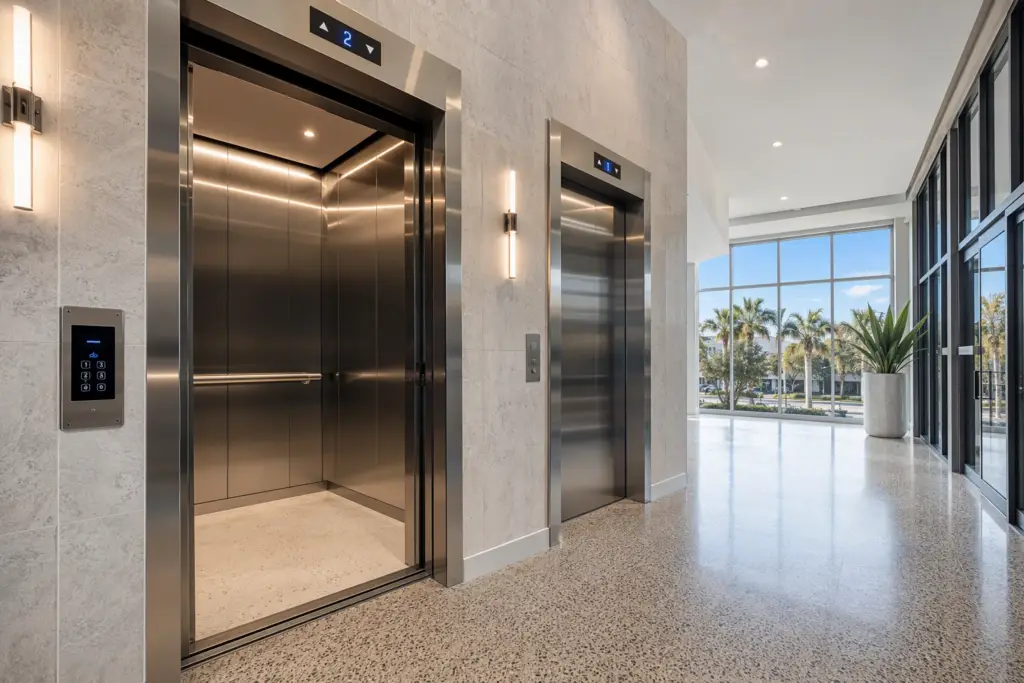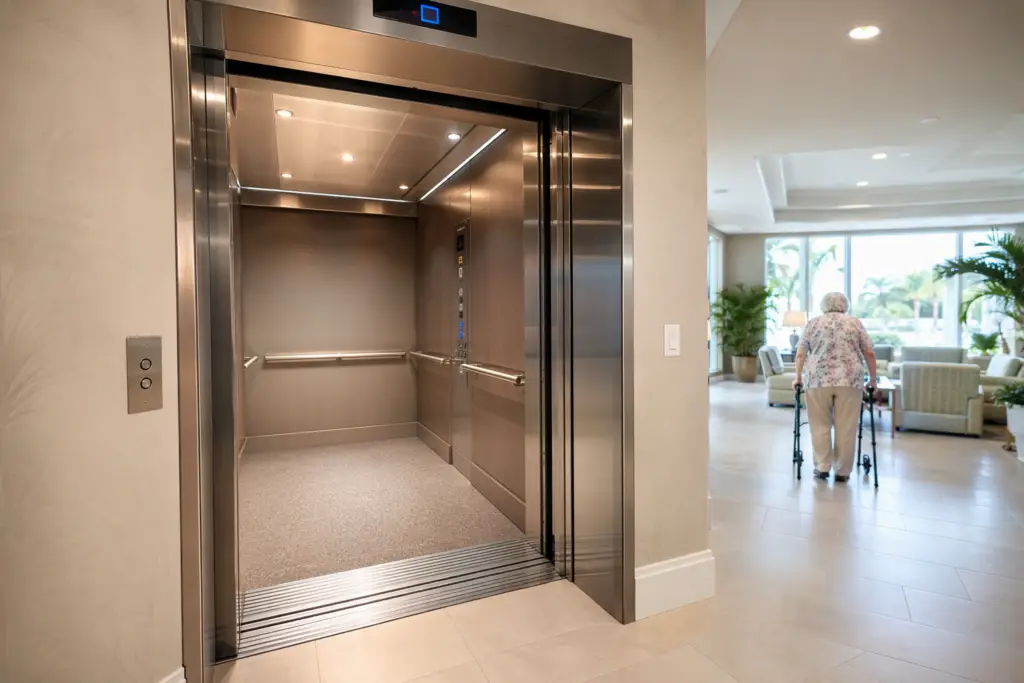
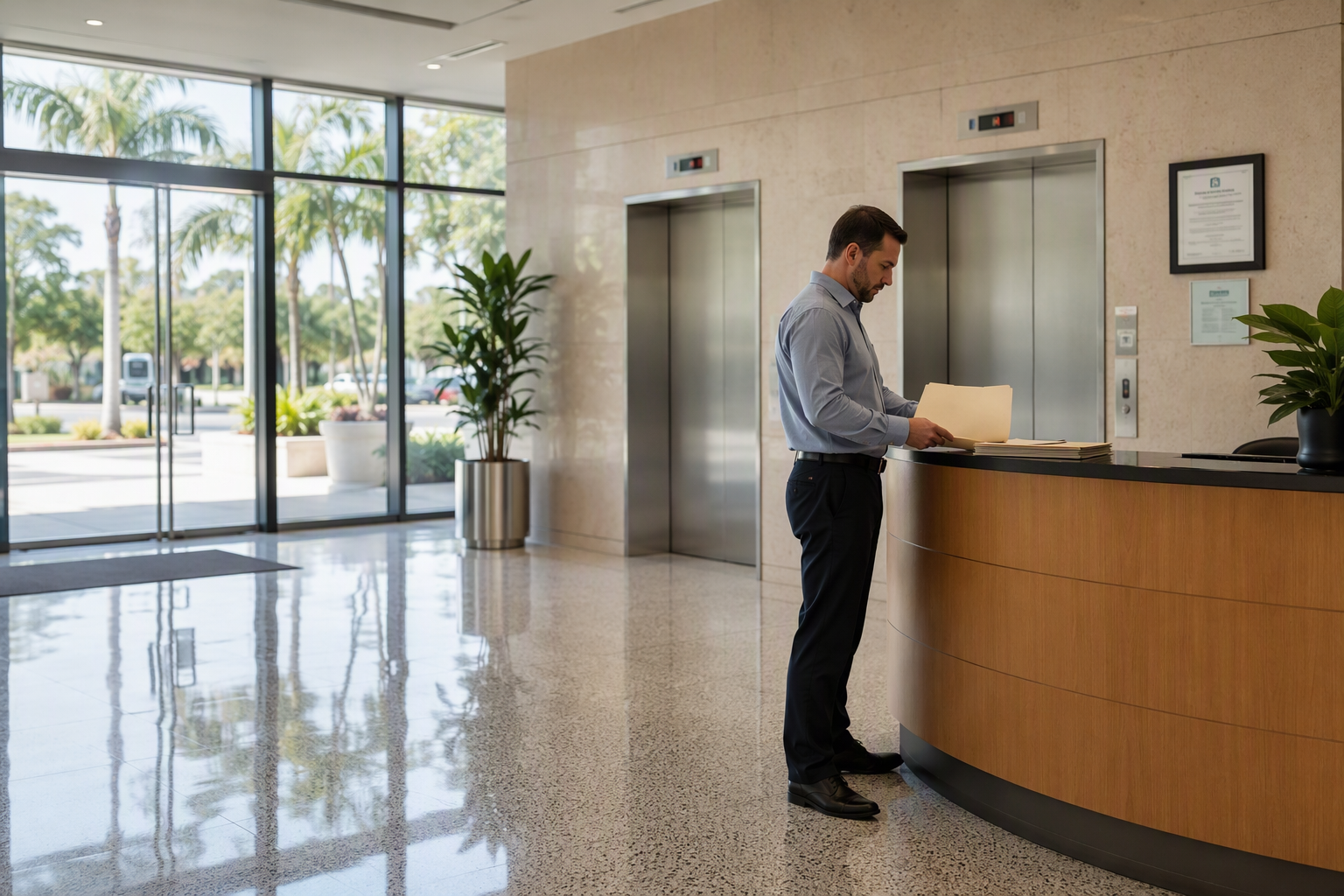
Florida commercial real estate transactions involving buildings with elevators carry a compliance layer that catches many owners off guard. Whether a lender’s inspector flags an expired certificate or a buyer’s due diligence uncovers deferred maintenance, elevator deficiencies can delay or derail a closing. This guide explains exactly what Florida requires, what buyers and lenders typically demand beyond the legal minimums, and how to resolve issues efficiently before they affect your deal.
What Does Florida Law Actually Require for Elevator Compliance?
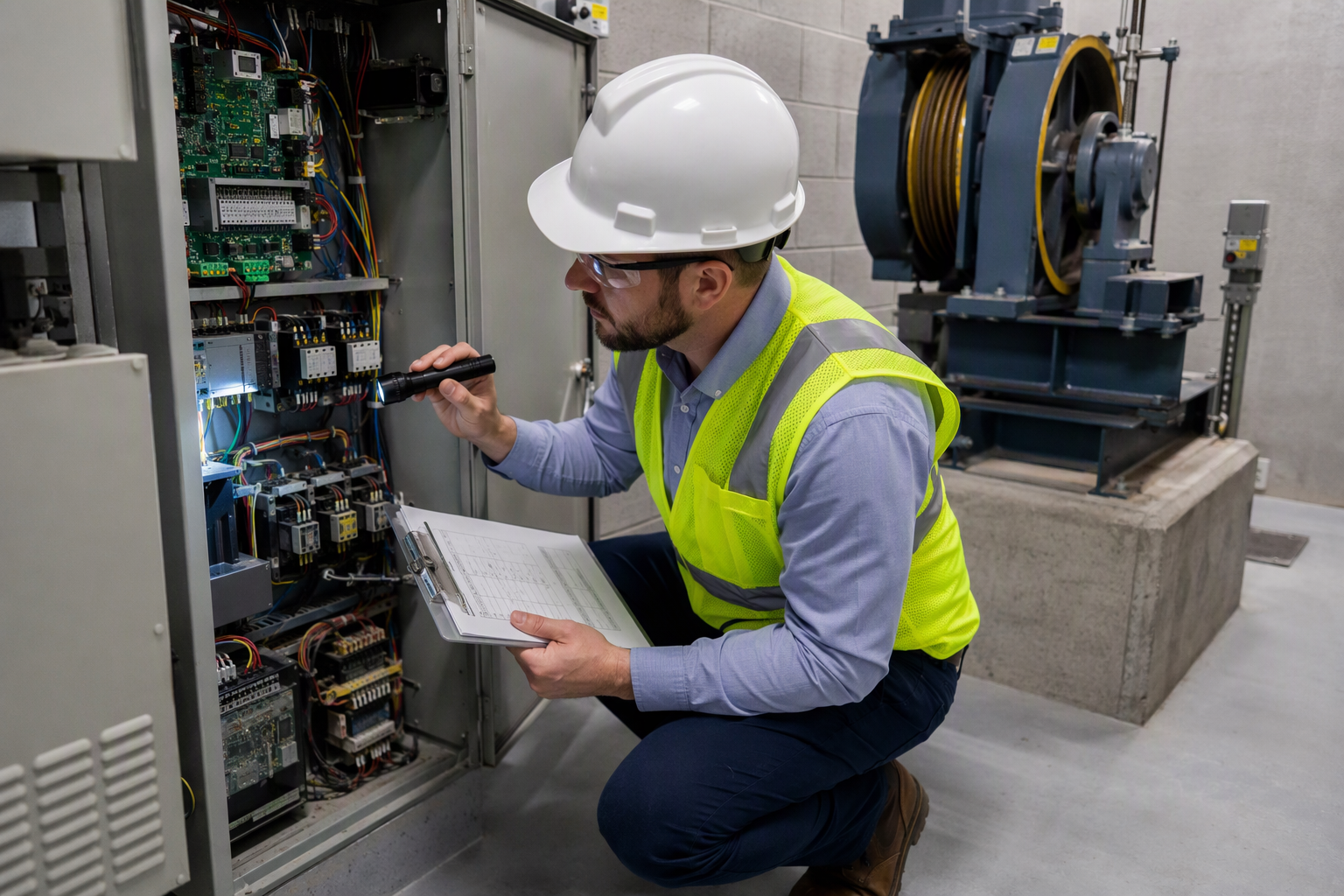
Florida elevator safety is governed at the state level through the Florida Department of Business and Professional Regulation (DBPR), Division of Hotels and Restaurants — the authority that administers the Florida Elevator Safety Code. Florida has adopted a version of the ASME A17.1 Safety Code for Elevators and Escalators and the ASME A17.3 Safety Code for Existing Elevators and Escalators as the basis for its requirements.
At a minimum, every commercial elevator in Florida must have:
- A current operating permit issued by the DBPR or the applicable local Authority Having Jurisdiction (AHJ)
- A valid periodic inspection certificate posted inside the elevator cab
- All open violation orders resolved before a permit can be renewed
- A licensed elevator contractor performing any maintenance, repair, or alteration under Florida Statute Chapter 399
When a building is sold or refinanced, these documents become part of the due diligence record. A lender’s commercial property inspection or a buyer’s engineering report will typically pull permit history and inspection records directly from the DBPR’s public database. Any lapse, open violation, or outstanding correction order will appear and must be addressed.
What Do Lenders Require Beyond the State Minimum?
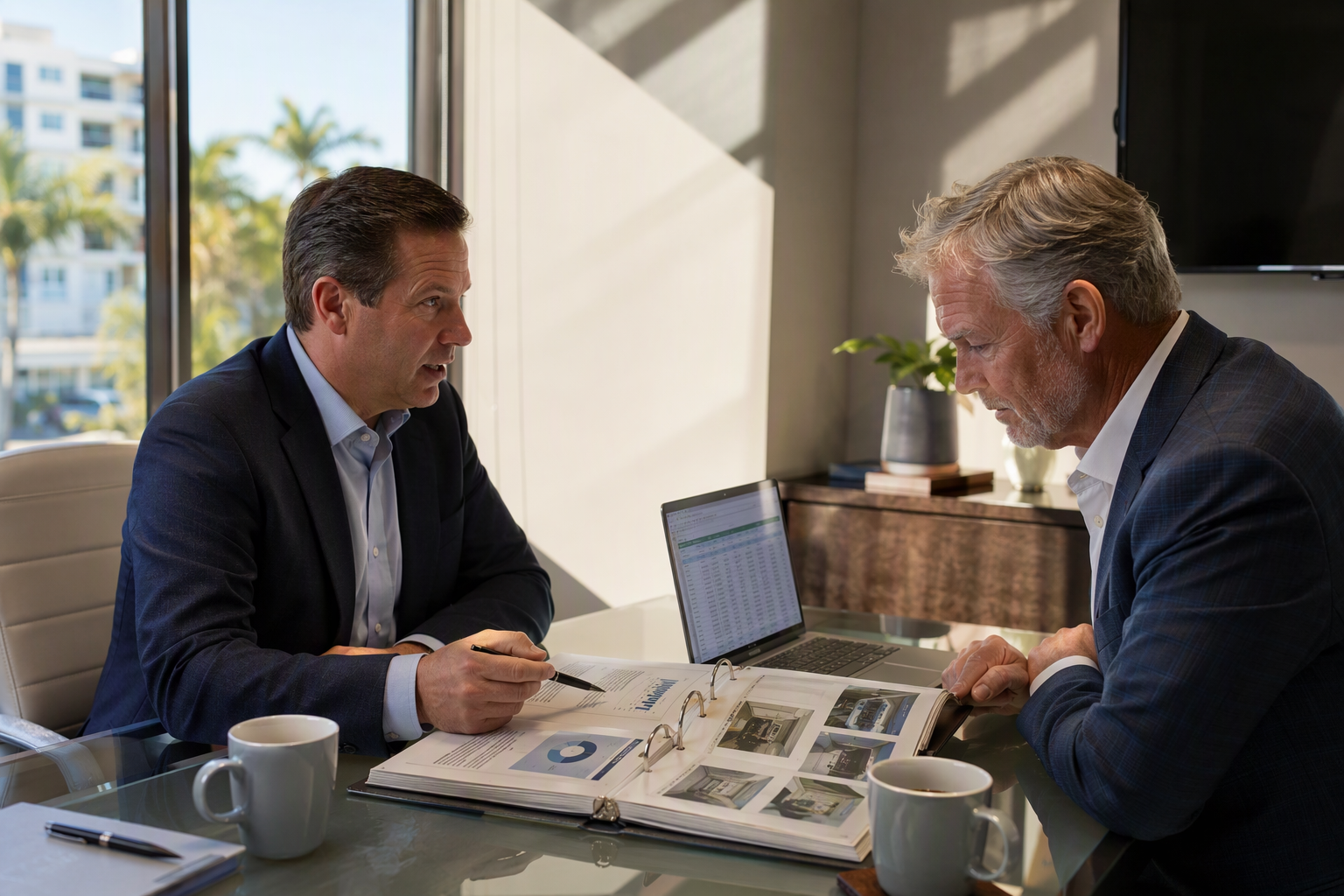
State law sets the floor; lenders and institutional buyers often set the ceiling. Commercial mortgage lenders — particularly those underwriting loans against CMBS pools, Fannie Mae-eligible mixed-use properties, or SBA-backed notes — frequently require:
- Proof that the elevator has received its most recent periodic inspection with no outstanding deficiencies
- A Property Condition Assessment (PCA) performed by a licensed engineer, which evaluates remaining useful life of elevator equipment
- A capital reserve requirement or escrow holdback if the PCA indicates the elevator is nearing end of useful life
- Written documentation of a current maintenance contract with a licensed Florida elevator contractor
- Evidence that ADA accessibility requirements are met under the Americans with Disabilities Act, particularly for public accommodations and commercial facilities
Even when the state inspection is current, a PCA finding that major components — the controller, drive system, or cab — are beyond their expected service life can trigger a lender-mandated repair or replacement escrow that effectively becomes a condition of closing.
What Are the Most Common Elevator Deficiencies Found During Commercial Due Diligence in Florida?
The following deficiencies appear most frequently in pre-sale and pre-refinance elevator assessments on Florida commercial properties:
| Deficiency | Compliance Standard | Typical Impact on Transaction | Urgency Level |
|---|---|---|---|
| Expired or lapsed operating permit | Florida Statute Ch. 399 / DBPR | Hard stop — elevator must be taken out of service | Critical |
| Unresolved DBPR violation or correction order | Florida Statute Ch. 399 | Blocks permit renewal; may delay closing | Critical |
| No current maintenance contract on file | Lender / ASTM E2018 PCA standard | Lender may require escrow holdback | High |
| Outdated hydraulic fluid / environmental risk | ASME A17.1 / EPA underground storage rules | Environmental liability flag in PCA | High |
| Non-compliant cab accessibility features | ADA / ASME A17.1 | Buyer may require remediation credit | Moderate–High |
| Obsolete relay logic controller | ASME A17.3 modernization triggers | PCA flags end-of-life; lender may escrow | Moderate |
| Missing or non-functional door restrictor | ASME A17.1 / A17.3 | Safety violation; must be corrected before permit renewal | High |
| Pit water intrusion or sump pump absence | ASME A17.1 | Inspection failure; can ground elevator | High |
What Is the Difference Between a Repair, a Modernization, and an Alteration — and Why Does It Matter for Your Transaction?
The distinction between these three categories under ASME A17.1 and A17.3 directly affects permit requirements, inspection scope, and cost:
| Category | Definition | Permit Required? | Triggers Full Code Upgrade? | Typical Transaction Context |
|---|---|---|---|---|
| Repair | Restoration of a component to its original design condition | Sometimes (depends on scope) | No | Correcting a specific DBPR violation |
| Alteration | Change to equipment that affects safety or performance | Yes — always | Partial — affected components must meet current code | Adding a new floor stop; changing door operator type |
| Modernization | Replacement of major systems (controller, drive, cab) | Yes — always | Yes — full ASME A17.3 compliance required | End-of-life equipment replacement before sale or refinance |
Understanding this distinction is essential when negotiating seller concessions or repair credits. A buyer who asks for a “full modernization” is requesting something categorically different — and significantly more involved — than a seller who offers to “repair” a flagged item.
What Is the Step-by-Step Process to Bring an Elevator into Compliance Before Closing?
- Pull current permit and inspection records from the Florida DBPR’s online portal to identify any open violations, expired permits, or lapsed certificates of operation.
- Engage a licensed Florida elevator contractor (such as Axxiom Elevator Florida) to conduct a pre-sale condition assessment of all elevator equipment, reviewing mechanical, electrical, and accessibility components.
- Obtain a written scope of work categorizing each deficiency as a repair, alteration, or modernization item, with associated permit requirements.
- File required permit applications with the DBPR or local AHJ for any alterations or modernizations before work begins — unpermitted work can void the operating certificate.
- Complete all required repairs and corrections using licensed technicians; keep dated work orders and parts documentation for the due diligence file.
- Schedule and pass the post-work inspection with the DBPR-licensed elevator inspector or the local AHJ, obtaining a fresh certificate of inspection.
- Renew the operating permit once all violations are cleared and the inspection is passed; confirm the permit is posted in the cab.
- Compile a compliance package for the lender or buyer’s attorney: current permit, inspection certificate, maintenance contract, work order history, and any alteration permits issued.
How Do ADA Requirements Affect Elevator Compliance During a Florida Commercial Sale?
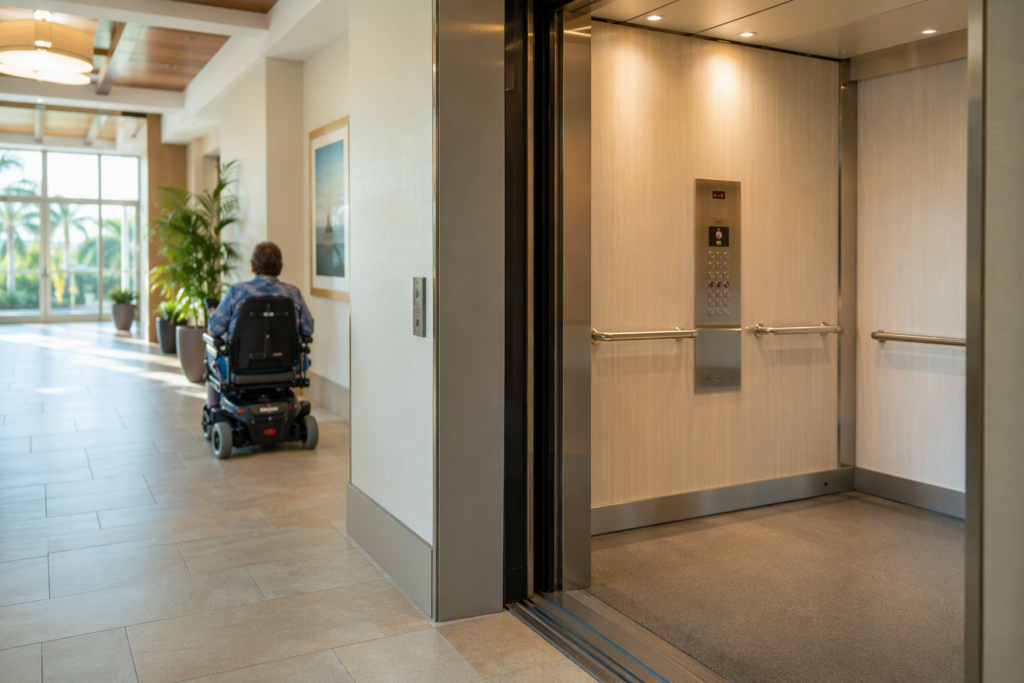
The Americans with Disabilities Act requires that elevators in commercial facilities covered by the ADA meet specific accessibility standards. During a sale, buyers of commercial properties open to the public — retail, office, hospitality, healthcare — will often require confirmation that elevators meet ADA Standards for Accessible Design. Common ADA-related elevator issues that surface during due diligence include:
- Call button height and placement outside the cab
- Cab interior dimensions and door clear width
- Audible and visual floor indicators
- Braille and raised character floor designations
- Accessible emergency communication systems
ADA compliance is a civil rights obligation, not a building-code permit matter — meaning it travels with the property and cannot be transferred away at closing. Buyers assume ADA liability when they acquire the building, which is why sophisticated purchasers and their counsel scrutinize elevator accessibility carefully.
What Elevator Upgrades Provide the Best Return When Preparing a Florida Commercial Building for Sale?
| Upgrade / Repair | Primary Benefit | Transaction Impact | Timeline to Complete | Relative Cost Level |
|---|---|---|---|---|
| Resolve open DBPR violations | Restores legal operability | Removes deal-stopper; required for permit renewal | Days to weeks depending on parts | Low–Moderate |
| Renew operating permit | Legal compliance | Required; without it, elevator cannot operate | Days once violations cleared | Low (permit fee only) |
| Execute a maintenance contract | Lender documentation; reliability | Satisfies lender PCA requirement; low cost | Immediate | Low (ongoing) |
| ADA cab and entrance upgrades | Accessibility compliance | Removes buyer liability concern; broadens buyer pool | Weeks | Moderate |
| Controller modernization | End-of-life replacement; reliability | Eliminates lender escrow holdback; improves valuation | Weeks to months | High |
| Full cab interior refurbishment | Aesthetic and first impression | Positive impact on NOI perception; not a compliance item | Days to weeks | Moderate |
| Hydraulic unit / oil replacement | Environmental compliance; reliability | Removes PCA environmental flag; prevents permit issues | Days | Low–Moderate |
The highest-ROI actions before a sale or refinance are almost always the compliance items first — permit renewal, open violation resolution, and obtaining a current inspection — because they remove hard deal-blockers at the lowest relative cost. Capital-intensive modernizations are worth evaluating only when a PCA finding creates a lender escrow that exceeds the cost of doing the work proactively.
How Long Does It Take to Resolve Elevator Compliance Issues Before a Florida Commercial Closing?
Timeline is one of the most consequential variables in a transaction. Here is a realistic sequence:
| Task | Realistic Timeline | Key Variables |
|---|---|---|
| Pre-sale condition assessment | 1–5 business days to schedule and complete | Contractor availability; building access |
| Minor repairs / safety device replacement | Days to 2 weeks | Parts availability; permit requirements |
| Permit application processing (DBPR) | Varies — check current DBPR processing times | Completeness of application; DBPR workload |
| Controller or drive modernization | 4–12 weeks or more | Equipment lead times; permit; inspection scheduling |
| Post-work inspection and certificate issuance | 1–3 weeks after work completion | Inspector availability; corrections required |
The practical implication: do not wait for the purchase and sale agreement to be signed before assessing elevator compliance. A controller modernization initiated too late can push a closing well past the contractual deadline, triggering extension fees or termination rights.
What Should a Seller Disclose About Elevator Condition in a Florida Commercial Transaction?
Florida commercial real estate transactions are generally conducted under a “buyer beware” standard for sophisticated parties, but sellers can face liability if they actively conceal known material defects. Elevator compliance issues — particularly known DBPR violations, pending correction orders, or prior inspection failures — can constitute material defects. Sellers should consult their real estate attorney, but best practice includes disclosing:
- Any open DBPR violation or correction order
- Any instance where the elevator was taken out of service in the past several years and the reason
- Any known deferred maintenance items not yet repaired
- The age and maintenance history of major components
Proactive disclosure backed by a completed compliance package — permits, inspection certificates, maintenance records — is generally more favorable to a seller than having a buyer’s engineer surface the same issues during due diligence.
What Is the Role of the Local Authority Having Jurisdiction (AHJ) Versus the Florida DBPR?
Florida’s elevator regulatory structure can involve both the state DBPR and local AHJs depending on the municipality. Some Florida jurisdictions have assumed local enforcement authority for elevator permits and inspections, meaning the relevant body for permit applications, inspections, and violation corrections may be a city or county building department rather than — or in addition to — the DBPR. Before beginning any compliance work, confirm with a licensed Florida elevator contractor which authority governs the specific property location. Filing a permit with the wrong agency is a common and costly mistake that can delay a transaction.
Does a Change of Ownership Trigger New Elevator Compliance Requirements in Florida?
In most cases, a change of commercial building ownership does not automatically trigger new elevator inspections or code upgrades beyond what is already required. However, several scenarios can create new compliance obligations at the time of transfer:
- A lapse in the operating permit — if the prior owner allowed the permit to expire, the new owner inherits a non-compliant elevator that cannot legally operate until violations are cleared and the permit is renewed.
- A change in use or occupancy — converting a building from one use category to another (e.g., office to residential) can trigger code upgrade requirements under ASME A17.3 and applicable Florida building codes.
- Planned alterations by the new owner — any alteration to the elevator after acquisition requires permitting and compliance with current code for affected components.
How Can Axxiom Elevator Florida Help with Pre-Transaction Elevator Compliance?
Axxiom Elevator Florida is an independent, licensed Florida elevator service company specializing in maintenance, repair, modernization, and compliance assessments for commercial elevators throughout Florida. As an independent provider, Axxiom Elevator Florida is not affiliated with a single equipment manufacturer, which allows for objective assessment of what a specific elevator genuinely needs — rather than what aligns with a manufacturer’s product line.
For commercial property owners preparing for a sale or refinance, Axxiom Elevator Florida provides:
- Pre-sale elevator condition assessments that identify open violations, permit status, and component conditions before a buyer’s engineer does
- Coordination with the DBPR and local AHJs for permit applications and inspection scheduling
- Repair and modernization services performed by licensed Florida elevator contractors
- Compliance documentation packages suitable for lender and buyer due diligence files
- Ongoing maintenance contracts that satisfy lender documentation requirements
Working with an independent provider like Axxiom Elevator Florida means the scope of work recommended is driven by what the code, the lender, and the transaction require — not by equipment sales quotas.
Key Takeaways: Elevator Compliance Checklist for Florida Commercial Sellers and Borrowers
- ✔ Confirm the operating permit is current and posted in the elevator cab
- ✔ Verify no open DBPR violation or correction orders exist in the public record
- ✔ Obtain a pre-sale condition assessment from a licensed Florida elevator contractor
- ✔ Resolve all violations and obtain a current inspection certificate before marketing the property
- ✔ Confirm ADA accessibility compliance for all elevator call stations, cabs, and communication systems
- ✔ Secure a written maintenance contract and retain it for the lender’s due diligence file
- ✔ Identify the correct AHJ (DBPR or local) for the property’s jurisdiction before filing any permits
- ✔ Begin compliance work as early as possible — equipment lead times and inspection scheduling can extend timelines beyond what a standard closing period allows
Need elevator service you can rely on? Axxiom Elevator Florida is ready to help.