Elevator Requirements and Compliance Obligations for Warehouses and Industrial Buildings in Florida
Florida warehouses and industrial facilities operate in a high-demand, high-consequence environment. Elevators and vertical transportation equipment in these settings carry heavy loads, face constant use cycles, and must remain accessible and safe for both workers and visitors. Failing to meet code obligations can result in inspection failures, stop-work orders, liability exposure, and injury risk. This guide covers every compliance dimension property managers, facility directors, and operations teams need to understand in 2026.
What Federal and State Codes Govern Elevators in Florida Warehouses?
Florida elevator compliance is governed by a layered framework of federal, state, and local requirements:
- ASME A17.1 Safety Code for Elevators and Escalators: The primary technical standard in Florida, adopted by reference under Florida Statutes Chapter 399. It specifies design, construction, installation, inspection, testing, maintenance, and repair requirements for passenger, freight, and service elevators.
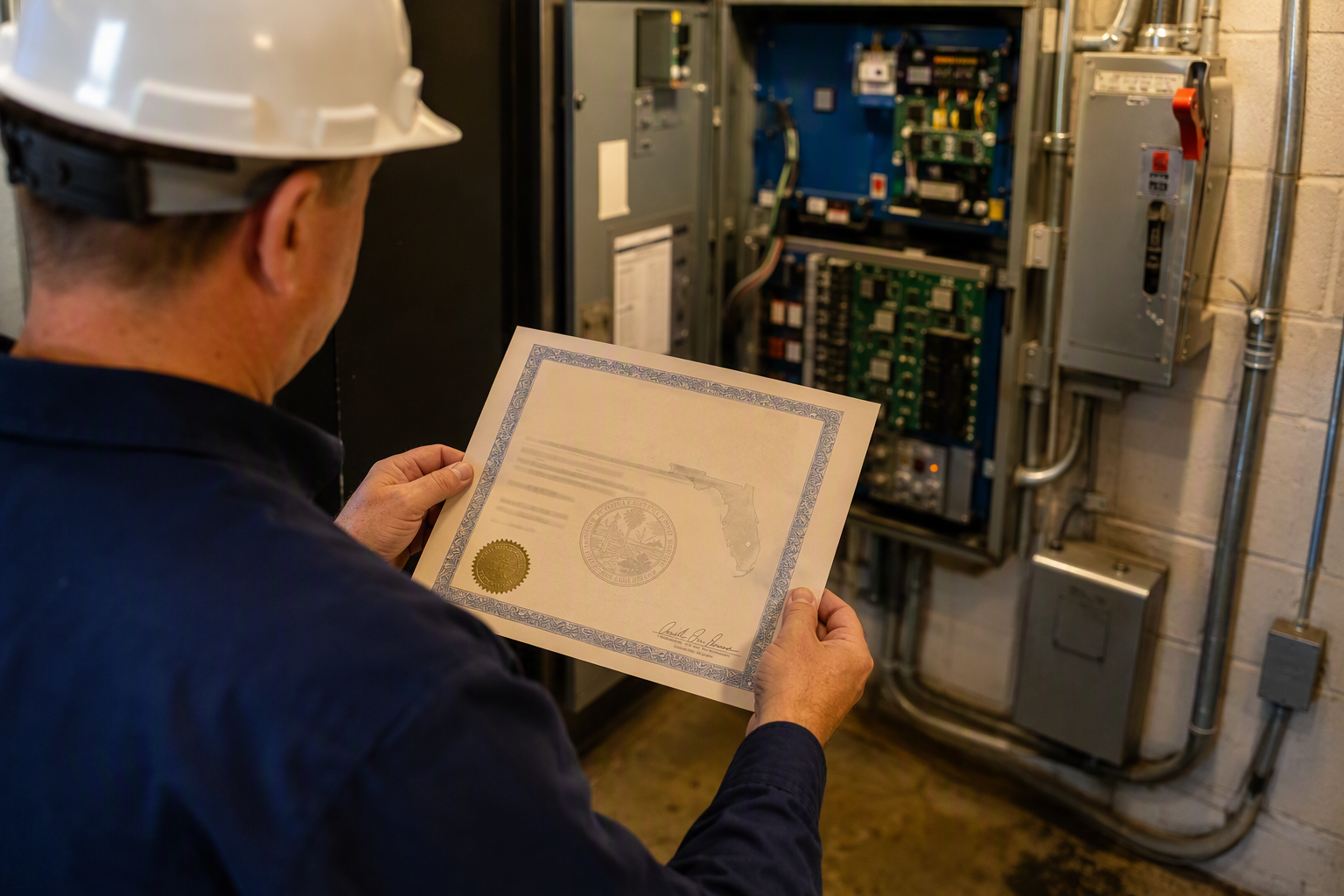
- Florida Statutes Chapter 399: Florida’s Elevator Safety Act requires all elevators operating in the state to hold a valid Certificate of Operation issued by a licensed elevator inspection agency. Industrial and warehouse elevators are not exempt.
- Americans with Disabilities Act (ADA): Facilities that employ people or serve the public must maintain accessible vertical access where required. ADA Standards for Accessible Design apply to new construction and alterations.
- OSHA General Industry Standards (29 CFR Part 1910): OSHA regulates powered platforms, manlifts, and vehicle-mounted work platforms used in industrial settings and may apply when personnel are transported on freight equipment.
- Local Authority Having Jurisdiction (AHJ): Counties and municipalities in Florida — including those governing facilities in Pompano Beach and Sarasota — may impose additional permitting, inspection scheduling, and fire/life safety coordination requirements on top of state minimums.
Axxiom Elevator Florida works with facility managers across Pompano Beach, Sarasota, and surrounding markets to navigate this multi-layer compliance environment and keep equipment current with each applicable standard.
What Types of Elevators Are Typically Found in Warehouses and Industrial Buildings?
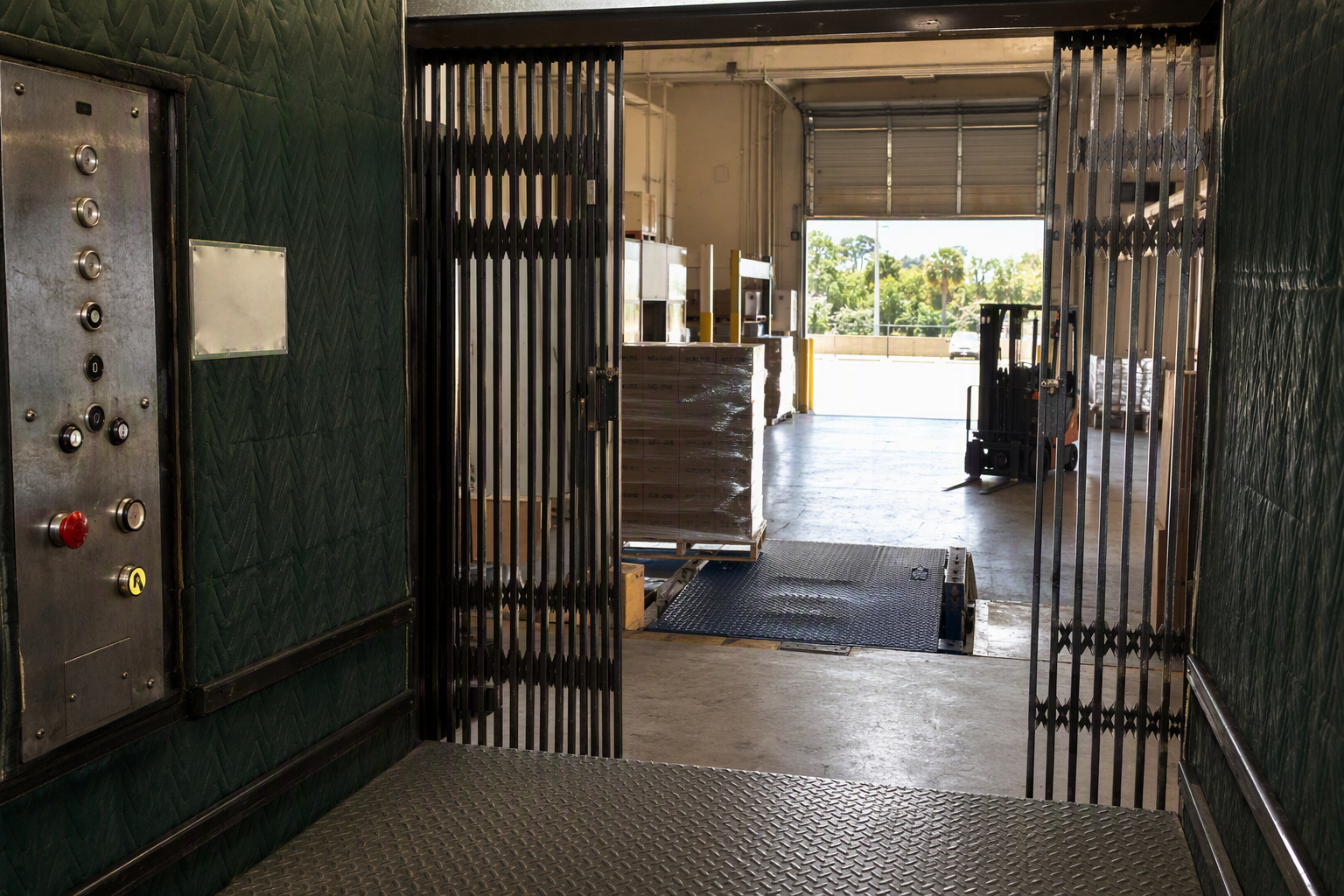
Not every vertical transportation device in an industrial facility is a conventional passenger elevator. The equipment category determines which specific sections of ASME A17.1 apply:
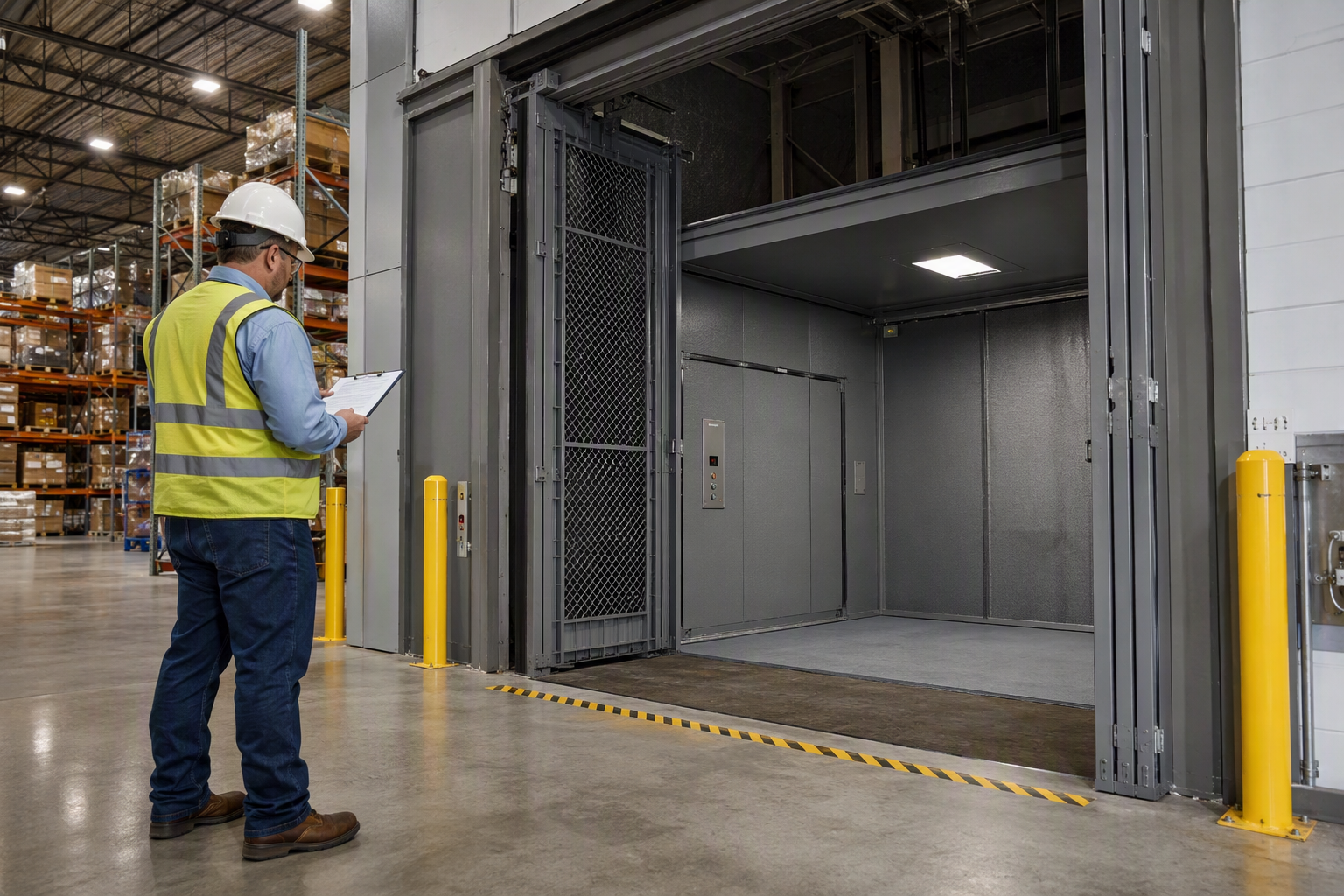
- Freight Elevators: Designed to carry materials and goods, with load ratings defined by the ASME A17.1 code. Personnel may ride only under specific conditions outlined in the standard.
- Combination Passenger/Freight Elevators: Carry both people and materials; must meet the higher safety requirements that apply to passenger service.
- Hydraulic Elevators: Common in low- to mid-rise warehouse structures; governed by ASME A17.1 provisions specific to hydraulic systems, including fluid containment and seismic requirements.
- Vertical Reciprocating Conveyors (VRCs): Mechanically move materials between levels but are not classified as elevators under ASME A17.1. However, they are subject to ASME B20.1 and OSHA standards for conveyors and must not be used to transport people.
- Dumbwaiters: Covered under ASME A17.1 when installed in industrial settings; strictly limited to materials, not personnel.
- Limited-Use/Limited-Application (LULA) Elevators: Occasionally used in smaller industrial structures; comply with ASME A17.1 provisions specific to LULA equipment.
What Are the Inspection and Certificate of Operation Requirements in Florida?
Under Florida Statutes Chapter 399, every elevator in a warehouse or industrial building must:
- Be inspected by a licensed elevator inspector at intervals set by rule — typically on an annual basis for most equipment categories, though the exact interval depends on the elevator type and use classification under ASME A17.1.
- Pass a witnessing test (a full operational and safety test) at intervals prescribed by ASME A17.1 — commonly every five years for most hydraulic and traction units — conducted by a licensed elevator contractor in the presence of an inspector.
- Maintain a current Certificate of Operation, which must be posted in or near the elevator car and renewed following each successful inspection cycle.
- Address all deficiencies noted on the inspection report within the timeframe specified by the AHJ or the Florida Department of Business and Professional Regulation (DBPR), which oversees elevator licensing in Florida.
- Retain maintenance and inspection records in a log accessible to inspectors upon request.
Axxiom Elevator Florida assists warehouse and industrial clients in Pompano Beach and Sarasota with pre-inspection maintenance, witnessing test coordination, and deficiency correction to keep certificates current and avoid operational shutdowns.
How Do ADA Requirements Apply to Industrial and Warehouse Elevators?
The Americans with Disabilities Act applies to facilities that employ individuals with disabilities or are open to the public. Key obligations include:
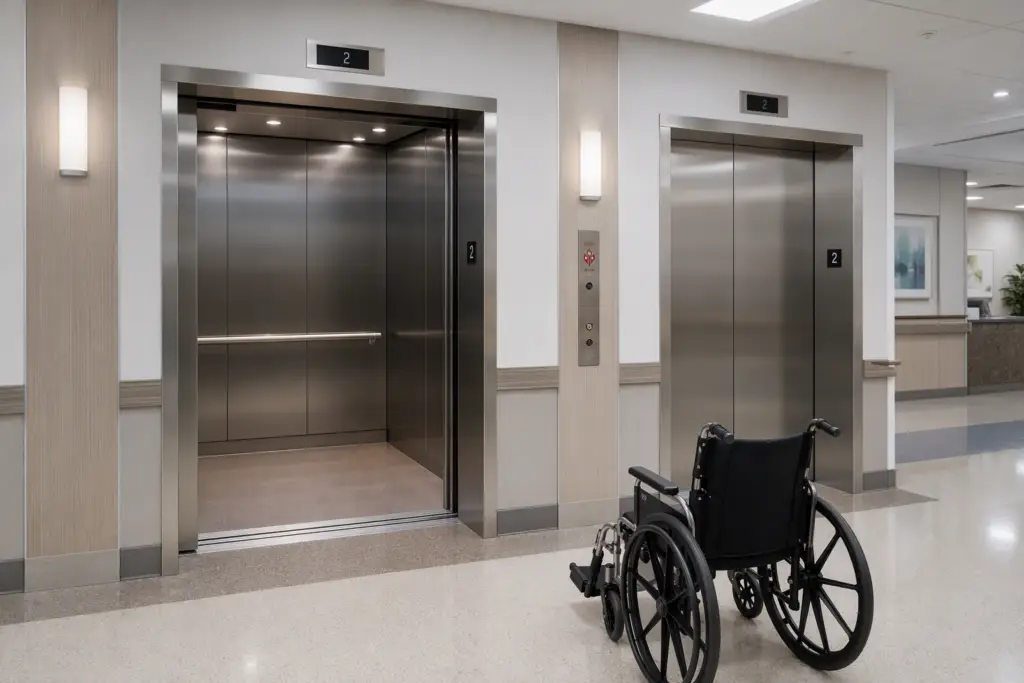
- New Construction: Multi-story facilities must provide accessible vertical access, which typically requires an elevator meeting ADA Standards for Accessible Design — including minimum car dimensions, door width, control height, tactile buttons, and audible signals.
- Alterations: When a facility undergoes alterations to a primary function area, the path of travel to that area — including vertical access — must be made accessible to the maximum extent feasible.
- Existing Facilities: Title I (employment) obligations mean that reasonable accommodations may require accessible elevator access for employees with disabilities, even in older industrial buildings not otherwise required to retrofit.
- Freight Elevators as Accessible Routes: A freight elevator does not satisfy ADA accessible route requirements unless it fully complies with ADA Standards for passenger elevators.
What OSHA Obligations Apply to Elevator Use in Industrial Workplaces?
OSHA standards intersect with elevator compliance in Florida warehouses in several ways:
- OSHA 29 CFR 1910.178 governs powered industrial trucks and indirectly affects how freight elevators are loaded and accessed by forklifts.
- OSHA requires that employees who operate freight elevators receive appropriate training on rated load limits, safe loading procedures, and emergency stop functions.
- Manlifts used in industrial buildings fall under OSHA 29 CFR 1910.68, which mandates specific construction, inspection, and operational requirements distinct from elevator standards.
- Employers bear a General Duty Clause obligation to maintain all vertical transportation equipment free from recognized hazards — meaning deferred maintenance that creates risk can generate OSHA citations even when the equipment holds a current Florida Certificate of Operation.
What Maintenance Obligations Does an Industrial Building Owner Have?
ASME A17.1 establishes that the owner of an elevator is responsible for its safe operation, maintenance, and compliance. In practice this means:
- Executing a maintenance contract with a licensed elevator contractor that covers all elements required by ASME A17.1 — not just emergency callbacks.
- Ensuring maintenance is performed by or under the supervision of a licensed elevator mechanic as required by Florida law.
- Maintaining a current maintenance examination record (MER) log in or near the elevator machine room.
- Promptly taking equipment out of service when it presents an unsafe condition and notifying the AHJ as required.
- Ensuring that any repair or alteration is performed under permit, with inspection and approval before the equipment returns to service.
Are There Special Requirements for Freight Elevator Load Ratings and Signage?
Yes. ASME A17.1 requires freight elevators to be rated for a specific capacity — expressed in pounds — based on their class of freight loading. The rated load must be posted conspicuously inside the car. Classes of freight loading under the standard include:
- Class A: General freight loading where the load is handled on and off by hand trucks or similar equipment and the weight of any single piece does not exceed a fraction of the rated load.
- Class B: Motor vehicle loading, where automobiles or trucks drive directly into the car.
- Class C: Industrial truck loading, where the elevator is loaded and unloaded by an industrial truck (forklift). Class C has sub-categories based on whether the truck rides with the load.
Overloading a freight elevator beyond its rated capacity is a code violation and an OSHA hazard. Proper signage and operator training are both compliance requirements.
What Happens If a Florida Warehouse Elevator Fails Inspection?
When a licensed elevator inspector identifies violations or unsafe conditions, the following sequence typically applies:
- The inspector issues a written violation notice identifying each deficiency and the applicable code section.
- Depending on severity, the inspector or AHJ may order the elevator taken out of service immediately (for imminent hazards) or may assign a deadline for correction.
- The building owner or manager engages a licensed elevator contractor to perform necessary repairs or alterations under permit.
- After corrections are made, a follow-up inspection or witnessing test is scheduled to verify compliance.
- Once the elevator passes, the Certificate of Operation is reinstated or renewed.
- Operating an elevator with a suspended or expired Certificate of Operation in Florida exposes the owner to civil penalties and potential liability in the event of an incident.
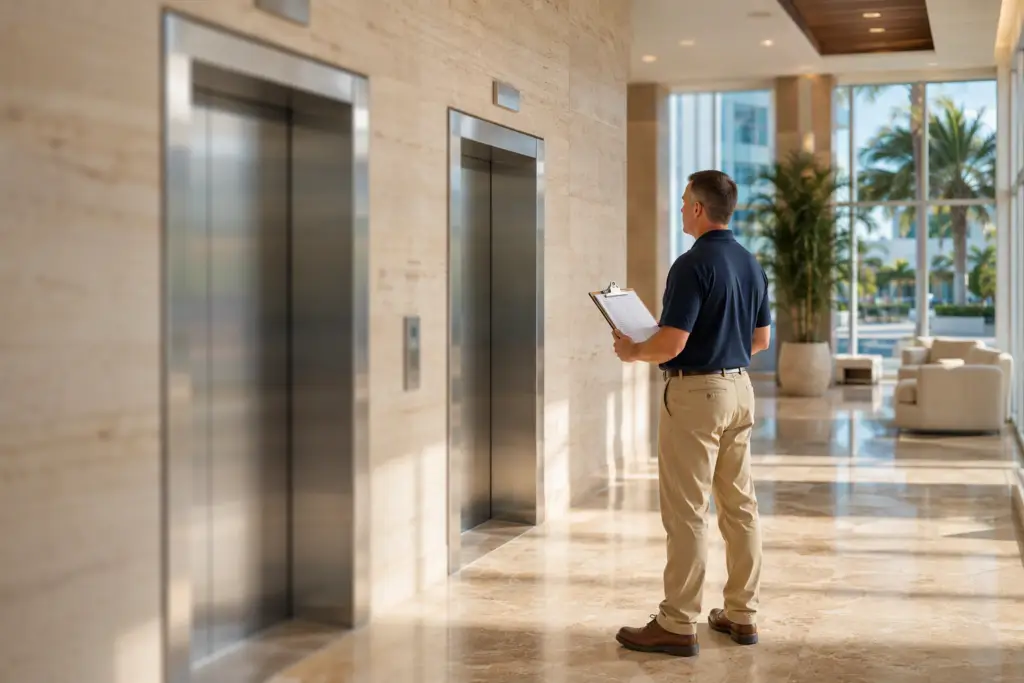
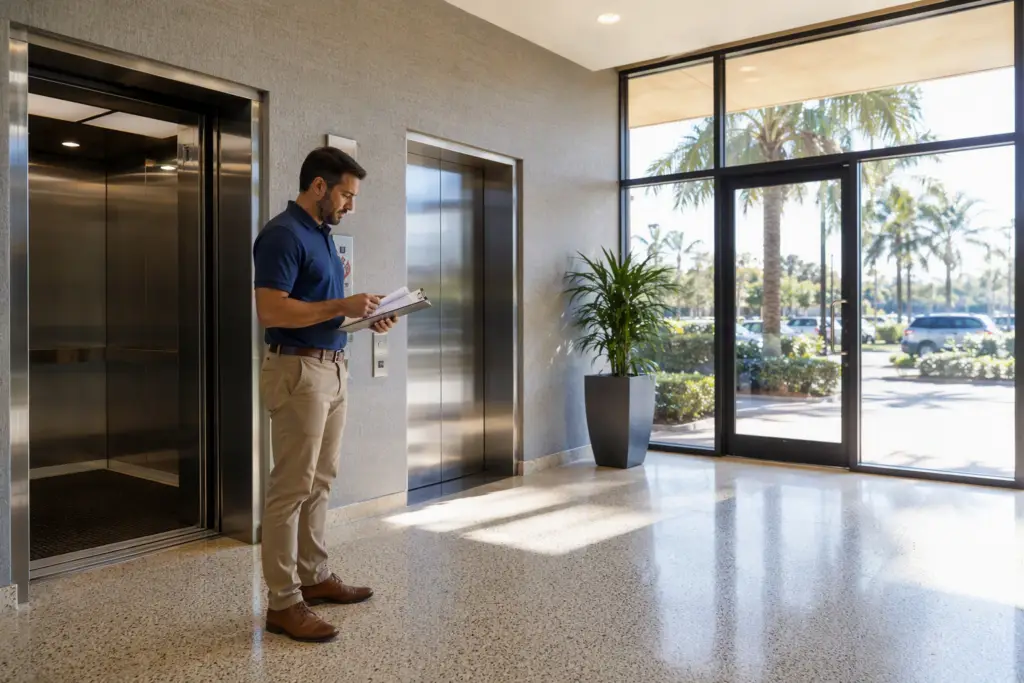
How Should a Warehouse Manager Prepare for an Elevator Inspection?
- Review the previous inspection report and confirm all prior deficiencies were corrected and documented.
- Verify that the maintenance examination record log is complete, legible, and stored in the machine room.
- Confirm the current Certificate of Operation is posted in the elevator car.
- Ensure the machine room is clean, accessible, properly lit, and free of stored materials that do not belong there.
- Test all car lighting, emergency lighting, emergency communication (phone or intercom), and alarm bell.
- Verify that load capacity signage is posted and legible.
- Confirm that door safety devices, buffers, and safeties are functional and have been recently serviced.
- Coordinate with the licensed elevator contractor to conduct a pre-inspection maintenance check and address any identified issues before the official inspection date.
Questions Your Inspector Will Ask
When a licensed elevator inspector arrives at a Florida warehouse or industrial facility, expect direct questions and documentation requests including:
- “Where is the Certificate of Operation?” — It must be posted in or near the elevator car. An expired or missing certificate is an immediate violation.
- “Can I see the maintenance examination record log?” — The inspector will review dates, technician signatures, and whether maintenance tasks align with ASME A17.1 requirements.
- “When was the last five-year witnessed test performed?” — If the test is overdue, the elevator may be ordered out of service.
- “Who is the elevator contractor of record?” — The inspector may verify the contractor holds a current Florida license.
- “Have any repairs or alterations been made since the last inspection?” — Work performed without a permit or uninspected alterations are code violations.
- “What is the rated load, and is signage posted?” — For freight elevators, this is a baseline safety and code requirement.
- “Is the machine room accessible and free of unauthorized materials?” — ASME A17.1 mandates that machine rooms be used only for elevator-related equipment.
- “Has the emergency communication device been tested?” — Two-way communication in the elevator car is a life-safety requirement under ASME A17.1 and ADA Standards.
How Does Elevator Compliance Differ Between Pompano Beach and Sarasota Facilities?
The state framework under Florida Statutes Chapter 399 and ASME A17.1 applies uniformly statewide. However, local AHJ requirements — including permit processing timelines, inspection scheduling, and any county or municipal amendments — vary by jurisdiction. Warehouse and industrial facilities in Pompano Beach operate under Broward County’s permitting and inspection coordination, while facilities in Sarasota work through the City of Sarasota or Sarasota County processes depending on location. Axxiom Elevator Florida’s familiarity with both markets helps clients avoid delays caused by local procedural differences when scheduling inspections, pulling permits for alterations, or responding to violation notices.
What Should a Facility Do When Elevator Equipment Reaches End of Life?
Aging elevator equipment in industrial settings presents compounding compliance risk: older hydraulic systems may require environmental containment upgrades for fluid management, legacy controllers may no longer support code-required safety features, and parts availability for obsolete equipment can make timely repair impossible. When an elevator reaches the point where repairs are no longer cost-effective or compliant, a full modernization or replacement — permitted and inspected under current ASME A17.1 — is the path to restoring a clean compliance record. Any modernization affecting the hoistway, machine, or controls requires a permit and final inspection before the equipment returns to service.
Axxiom Elevator Florida provides compliance assessments for warehouse and industrial facilities in the Pompano Beach and Sarasota markets, helping owners understand the current condition of their equipment, identify code gaps, and plan maintenance or modernization accordingly.
Get a Free Elevator Compliance Assessment for Your Florida Warehouse or Industrial Facility
Navigating ASME A17.1, Florida Statutes Chapter 399, ADA, and OSHA requirements is complex — and the cost of non-compliance can be significant. Contact Axxiom Elevator Florida for a free elevator assessment and let a licensed team evaluate your equipment’s compliance status, inspection history, and maintenance program.
Call Axxiom Elevator Florida today:
Serving warehouse and industrial facilities in Pompano Beach, Sarasota, and throughout Florida.
Need elevator service you can rely on? Axxiom Elevator Florida is ready to help.