Florida Hotel & Apartment Building Elevator Requirements: ADA Compliance Guide (2026)
Hotels and apartment buildings across Florida face a layered set of obligations when it comes to elevator accessibility and safety. Federal civil rights law, state statute, state-adopted mechanical codes, and local authority requirements all apply simultaneously. Understanding how these layers interact — and where gaps in compliance create liability — is essential for property owners, managers, and developers operating in Florida in 2026.
—
What Federal ADA Rules Apply to Elevator Accessibility in Florida Hotels and Apartments?
The Americans with Disabilities Act (ADA) establishes federal baseline accessibility standards for elevators in places of public accommodation and commercial facilities. Florida hotels are classified as places of public accommodation under Title III of the ADA and are required to provide accessible elevator service unless a specific statutory exemption applies.
The key ADA elevator exemption is the “elevator exemption” for facilities that are fewer than three stories or have fewer than 3,000 square feet per story — but this exemption does not apply to shopping centers, shopping malls, professional offices of health care providers, terminals, depots, or stations used for specified public transportation, or airports. Crucially, the exemption also does not apply to hotels. A Florida hotel with multiple floors is generally required to provide at least one accessible elevator regardless of building size.
For private residential apartment buildings, the ADA elevator exemption may apply to smaller structures, but the Fair Housing Act (FHA) imposes separate design-and-construction requirements for multifamily dwellings built for first occupancy after March 13, 1991. Buildings of four or more units with an elevator must provide accessible public and common-use areas, accessible routes into and through covered units, and compliant features within units. These FHA requirements operate in parallel with — and independently from — both ADA and Florida building code obligations.
Core ADA Elevator Accessibility Requirements
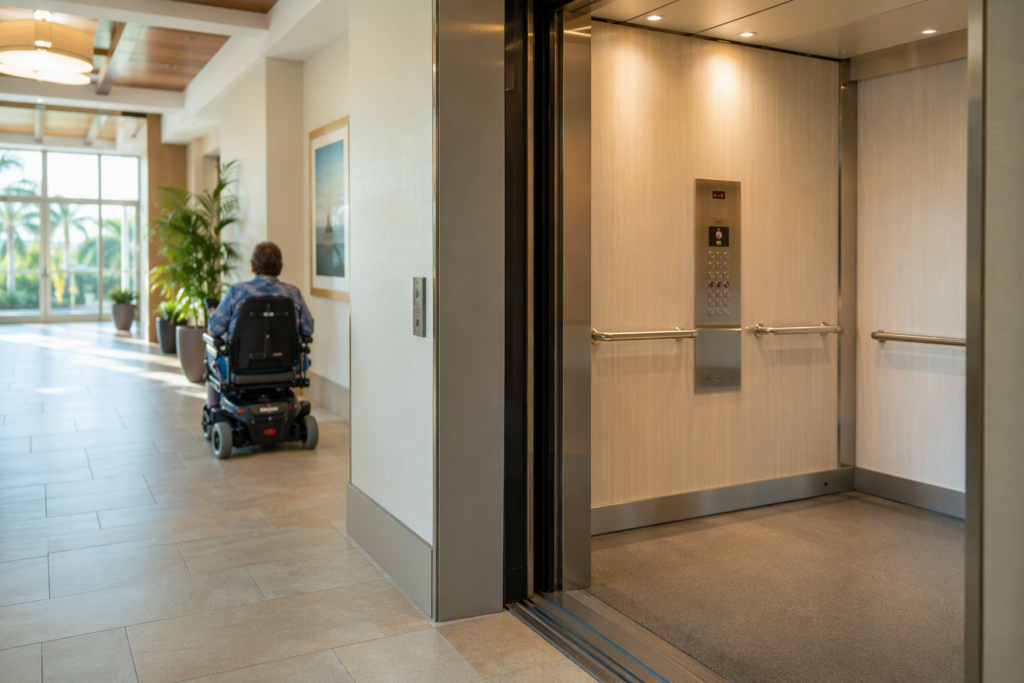
When an elevator is required or provided voluntarily, the ADA Standards for Accessible Design specify detailed requirements. These include, but are not limited to:
- Call buttons: Hall call buttons must be centered at a height of 42 inches above the floor, with raised indicators and visual signals.
- Cab dimensions: Elevator cars must provide a clear floor area large enough to accommodate a wheelchair and allow the user to access controls — minimum dimensions are specified in the ADA Standards.
- Door timing: Doors must remain open long enough to allow a person using a mobility device to enter safely, with a door reopening device that does not require physical contact.
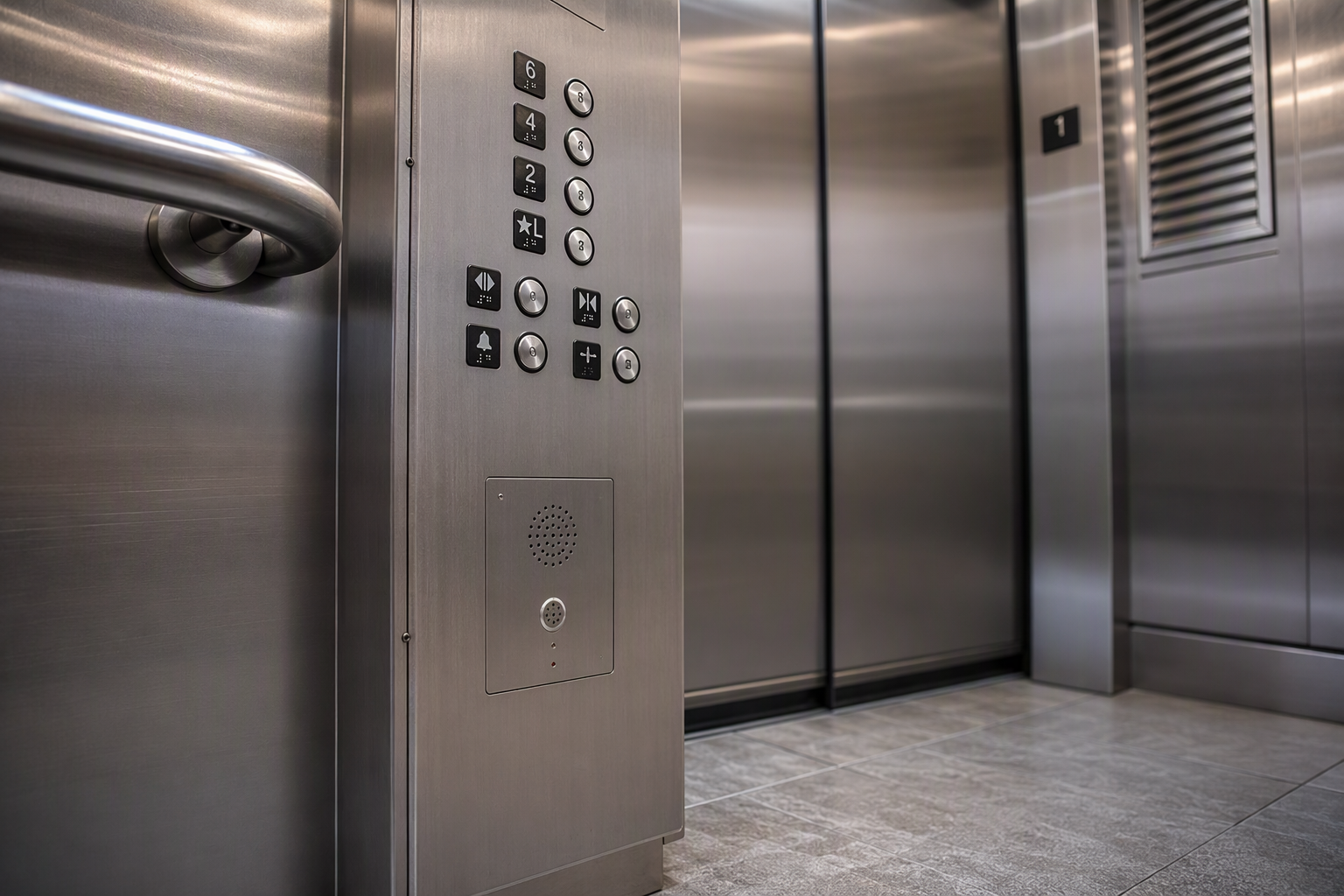
- Controls: Car operating panels must have buttons with raised and Braille designations, located within accessible reach ranges.
- Audible and visual signals: The elevator must announce the arrival of each car, the direction of travel, and each floor with both audible and visible signals.
- Leveling: The elevator must automatically level within a tolerance specified in the ADA Standards.
These requirements apply to new construction and alterations. When a Florida hotel or apartment building undertakes alterations to a path of travel that includes elevator service, the altered elements must meet current ADA Standards to the extent technically feasible.
—
What Florida State Laws Govern Hotel and Apartment Elevators?
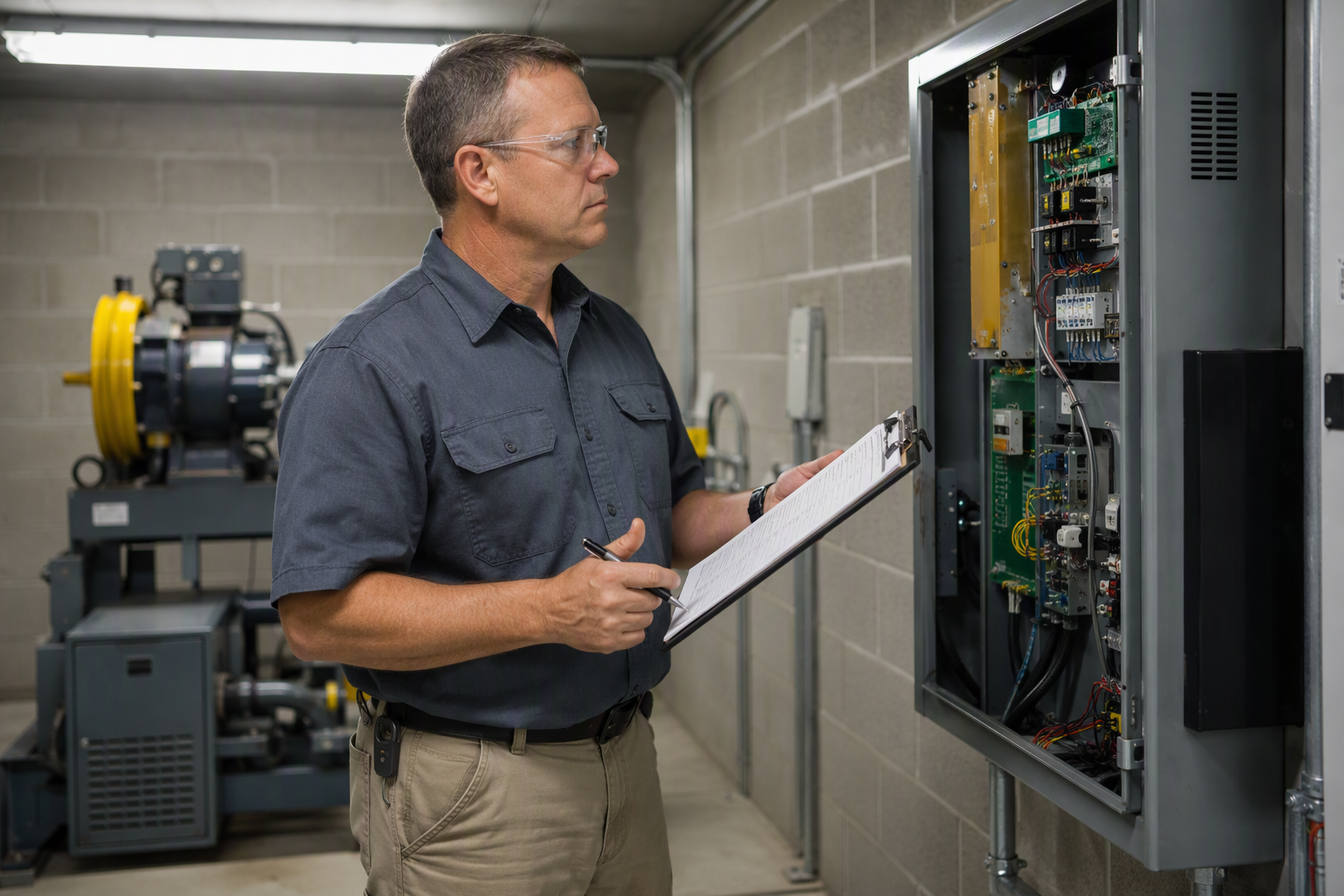
At the state level, Florida elevator regulation is governed by Chapter 399, Florida Statutes (the Elevator Safety Act), administered by the Florida Department of Business and Professional Regulation (DBPR), Division of Hotels and Restaurants, Bureau of Elevator Safety. Chapter 61C-5, Florida Administrative Code (the Florida Elevator Safety Code), contains the implementing rules.
The mechanical safety standard Florida has adopted is the ASME A17.1/CSA B44, 2019 edition (ASME A17.1-2019), Safety Code for Elevators and Escalators, which became effective in Florida on December 31, 2023. All covered conveyances in Florida hotels and apartment buildings must meet this edition.
Key Florida Statutory Requirements for Hotel and Apartment Elevators
- Annual inspection: Every elevator or other conveyance covered by Chapter 399 must be inspected annually by a certified elevator inspector, or by a county or municipality operating under contract with the state. The only exemption is a non-escalator, non-dumbwaiter elevator that serves only two adjacent floors and is covered by a qualifying service maintenance contract.
- Certificate of operation: A Florida certificate of operation is valid for no more than two years and may only be renewed for a conveyance with a current satisfactory inspection. Operating an elevator on an expired certificate violates state law.
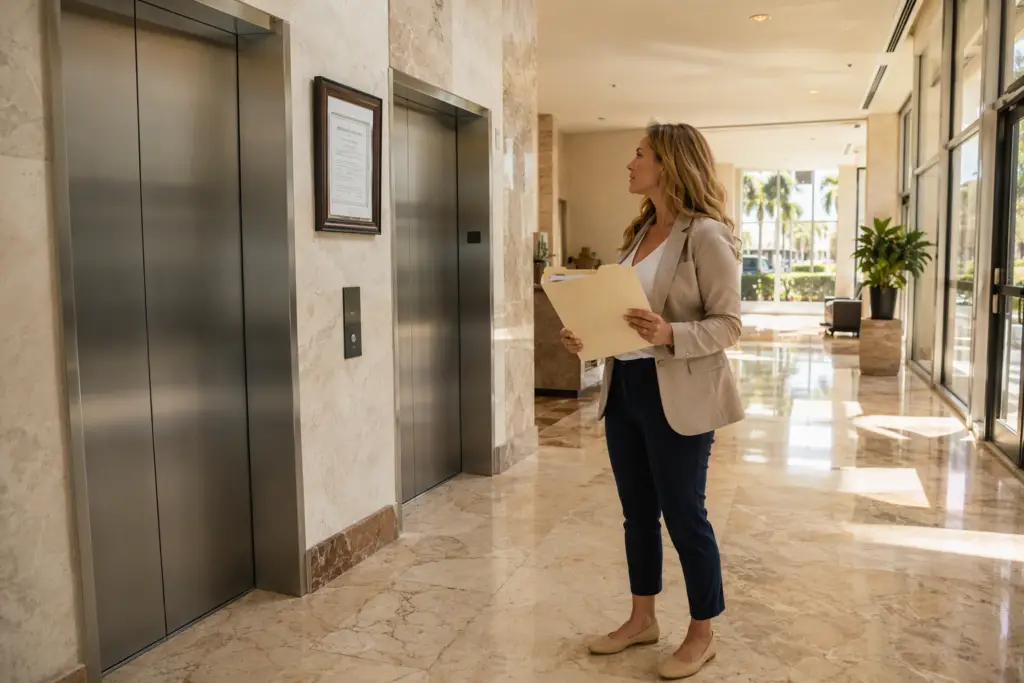
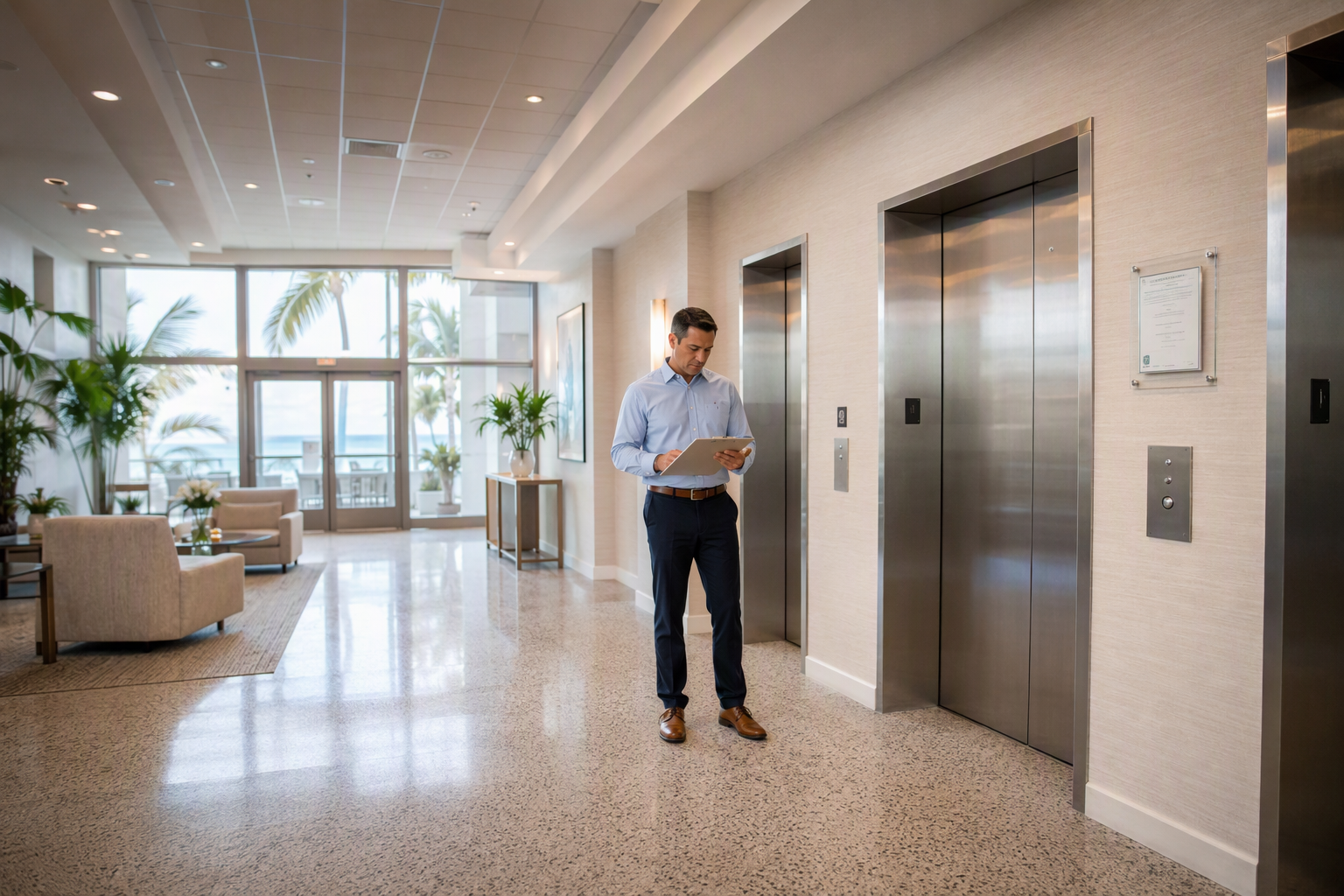
- Posted certificate: The certificate of operation must be posted in a conspicuous location inside the elevator cab in a frame with a transparent cover.
- Permits for new or altered elevators: A state permit — applied for by a registered elevator company — is required before any conveyance is installed or altered. Before a new conveyance is placed into service, it must be inspected by a certified elevator inspector with no conflict of interest with the permit holder or the building owner.
- Owner responsibility: Once a certificate of operation is issued, the elevator owner bears responsibility for safe operation, proper maintenance, inspection scheduling, and correction of any code deficiencies.
- Accident reporting: The certificate of operation holder must report any elevator accident to the state within five working days.
- Registered elevator companies: All new conveyance installations must be performed by a company registered with the DBPR. Registered elevator companies must renew their registration annually and maintain general liability insurance.
- Certified elevator technicians: Only a Florida-certified elevator technician — holding a state-issued certificate of competency, renewed annually with proof of eight hours of continuing education — is authorized to construct, install, maintain, or repair conveyances in Florida.
—
How Do Local Authorities Affect Elevator Compliance in Florida?
Florida’s elevator regulatory framework allows certain counties and municipalities to exercise delegated authority under Chapter 399. Property owners in the following jurisdictions should contact the relevant local authority in addition to — or in some cases instead of — the state Bureau of Elevator Safety:
- Broward County: The Broward County Building Code Division enforces Chapter 399 through its own certified elevator inspectors, including in Pompano Beach and other Broward communities.
- Miami-Dade County: The Miami-Dade County Office of Elevator Safety covers all municipalities in the county except the City of Miami and the City of Miami Beach, which operate their own programs.
- City of Miami Beach: The City of Miami Beach Elevator Safety Division holds delegated authority under Florida law for elevator permits, inspections, and certificates within Miami Beach.
- City of Miami: The City of Miami Building Department Elevator Division reviews annual inspection reports and issues the Annual Elevator Certificate for elevators within the City of Miami.
Hotels and apartment buildings operating in these jurisdictions should confirm which authority issues their certificate of operation and schedule inspections accordingly. Requirements and timelines may differ at the local level within the framework that Chapter 399 permits.
—
What Is the Difference Between ADA Compliance and Florida Safety Code Compliance?
These two compliance frameworks address different concerns and are enforced by different agencies. ADA compliance is a federal civil rights obligation enforced primarily through the U.S. Department of Justice and through private litigation. It focuses on whether people with disabilities can access and use the elevator independently and safely.
Florida’s Elevator Safety Act and the adopted ASME A17.1-2019 address the mechanical safety and operational integrity of the elevator as a piece of equipment — door safety, hoistway protection, car leveling, emergency communications, and fire service operation, among many other technical requirements.
A hotel or apartment building can be mechanically safe under ASME A17.1 while still failing ADA accessibility requirements, and vice versa. Full compliance requires satisfying both frameworks. Axxiom Elevator Florida provides assessments that address both the mechanical safety requirements under Florida’s adopted codes and the accessibility features required by federal law.
—
What Are the Inspection and Certificate Requirements for Florida Hotel Elevators?
Hotel elevators in Florida must be inspected annually by a certified elevator inspector. The inspector must have no employment, business association, or conflict of interest with the elevator company performing maintenance or with the property owner when conducting the pre-operation inspection for a new installation.
Following a satisfactory inspection, the DBPR or the applicable local authority issues a certificate of operation. That certificate is valid for no more than two years and must be displayed in the elevator cab in a transparent-covered frame. Operating without a valid certificate — whether because it has expired or because the elevator failed inspection — violates Chapter 399 and exposes the owner to enforcement action.
If an elevator fails inspection, the owner is responsible for correcting all identified deficiencies before the certificate can be renewed. The correction work must be performed by a registered elevator company using certified elevator technicians.
—
What Are the ADA Requirements for Emergency Communication in Hotel and Apartment Elevators?
The ADA Standards for Accessible Design require that emergency two-way communication systems in elevator cabs be accessible to people who are deaf or hard of hearing. The system must provide both audible and visible signals and must not require voice communication as the sole means of summoning help. This requirement is particularly relevant for Florida hotels, where guests with hearing disabilities may be unfamiliar with the building layout in an emergency.
The ASME A17.1-2019 code also contains independent requirements for emergency communication devices within elevator cars, including two-way communication capability and automatic connection features. Florida hotels and apartment buildings must ensure their elevator emergency communication systems satisfy both the ADA accessibility standards and the ASME mechanical code requirements.
—
What Happens If a Florida Hotel or Apartment Elevator Is Found Non-Compliant?
- Identify the deficiency: Determine whether the non-compliance is a mechanical/safety issue under Chapter 399 and ASME A17.1-2019, an ADA accessibility deficiency, or both.
- Notify the relevant authority: For safety deficiencies found during inspection, the certified inspector will document the findings. The owner receives notice of deficiencies that must be corrected.
- Remove the elevator from service if required: If the elevator poses an imminent safety risk, the DBPR or local authority may require it to be taken out of service until deficiencies are corrected.
- Engage a registered elevator company: Only a Florida-registered elevator company with certified technicians may perform the corrective work required to bring the elevator back into compliance.
- Schedule a re-inspection: After corrective work is completed, schedule a re-inspection with a certified elevator inspector to verify the deficiencies have been resolved.
- Obtain a new or renewed certificate of operation: Once the elevator passes inspection, obtain the updated certificate and post it in the cab immediately.
- For ADA deficiencies: Consult with qualified accessibility professionals to develop a remediation plan. ADA corrections in existing buildings must meet current standards to the extent technically feasible.
- Document all corrective actions: Maintain records of inspections, deficiency notices, corrective work performed, and re-inspection results as evidence of due diligence.
—
What Elevator Types Are Covered — and Which Are Exempt — Under Florida Law?
Chapter 399 covers a broad range of conveyances, including passenger elevators, freight elevators, escalators, moving walks, dumbwaiters, wheelchair lifts, and stairway chairlifts in commercial and multifamily residential settings. However, Florida law expressly exempts elevators, stairway chairlifts, and wheelchair lifts located in private residences from the certificate of operation requirement.
Additionally, an elevator that is not an escalator or dumbwaiter, serves only two adjacent floors, and is covered by a qualifying service maintenance contract is exempt from the annual inspection requirement while that contract remains in effect. For most Florida hotel and apartment elevator situations — involving multiple floors and multiple users — these exemptions will not apply.
—
What Are the Trends Shaping Florida Hotel and Apartment Elevator Compliance in 2025–2026?
Several developments are shaping how Florida property owners approach elevator compliance heading into 2026:
- ASME A17.1-2019 enforcement maturation: Florida’s adoption of ASME A17.1-2019 became effective at the end of 2023. As the 2024 and 2025 inspection cycles have progressed, certified inspectors are applying the 2019 edition requirements more rigorously, particularly for newer installations and recent alterations. Properties that have not yet assessed their equipment against the 2019 edition should prioritize doing so.
- ADA enforcement activity: Federal and private ADA litigation targeting hotel accessibility — including elevator accessibility — has remained active. Florida’s large hospitality sector makes it a frequent focus. Hotels undergoing renovations should treat any path-of-travel alteration as a trigger for a full elevator accessibility review.
- Emergency communication upgrades: Both ADA standards and ASME A17.1-2019 include requirements for elevator emergency communication systems. Property owners are increasingly upgrading older analog systems to digital or IP-based two-way communication that meets both accessibility and mechanical code requirements.
- Fair Housing Act scrutiny in multifamily: As Florida’s multifamily housing market continues to grow, FHA design-and-construction requirements for elevator-served buildings are receiving greater attention from enforcement agencies and advocacy organizations. Developers and owners of newer apartment buildings should document FHA compliance at the design stage.
- Workforce and inspection scheduling: The demand for certified elevator inspectors and technicians across Florida has grown alongside construction volume. Property owners who allow certificates to lapse may face extended timelines to schedule re-inspection and restore service.
—
How Often Must Florida Hotel and Apartment Elevators Be Inspected?
Under Chapter 399, Florida Statutes, every covered elevator must be inspected annually by a certified elevator inspector. The certificate of operation issued after a satisfactory inspection is valid for no more than two years. This means that while the certificate can span up to two years under certain circumstances, the inspection itself must occur on an annual basis.
Property owners — not the elevator company or the inspector — bear ultimate responsibility for ensuring the inspection is scheduled and completed on time. A missed annual inspection can result in a lapsed certificate, which makes elevator operation a violation of state law.
—
What Documentation Should Florida Hotel and Apartment Owners Maintain for Elevator Compliance?
A well-maintained compliance file for a Florida hotel or apartment elevator should include:
- Current certificate of operation (original posted in cab; copy in building files)
- All prior inspection reports and any deficiency notices received
- Records of corrective work performed, including the name and registration number of the elevator company and technicians involved
- State permit documentation for any installation or alteration work
- Service maintenance contract (if applicable, as evidence of the two-floor inspection exemption or for general maintenance records)
- Any accident reports filed with the state within the required five-working-day window
- ADA accessibility assessment reports and any remediation documentation
- For new construction or major renovation: architect and contractor certifications of ADA and Fair Housing Act compliance at time of completion
Axxiom Elevator Florida assists hotel and apartment property teams in organizing and maintaining the documentation frameworks that support both state compliance and ADA due diligence.
—
How Can a Property Owner Verify That an Elevator Company Is Qualified to Work on Florida Hotel and Apartment Elevators?
Under Chapter 399, Florida Statutes, only elevator companies registered with the Florida DBPR may perform installation, alteration, maintenance, or repair work on covered conveyances in Florida. Registered companies must renew their registration annually and maintain general liability insurance. Individual technicians must hold a Florida certificate of competency, renewed annually with eight hours of continuing education.
Property owners can verify the registration status of an elevator company and the competency certificate status of individual technicians through the DBPR. Engaging an unregistered company or unqualified technician is a violation of state law and may void the certificate of operation.
Axxiom Elevator Florida operates as a registered elevator company under Florida law, with certified elevator technicians qualified to perform maintenance, repair, and compliance work on hotel and apartment elevators throughout Florida.
—
What ADA Requirements Apply Specifically to Apartment Building Elevators in Florida?
The ADA elevator exemption — which excuses facilities under three stories or under 3,000 square feet per story from providing elevator access — can apply to certain apartment buildings. However, this exemption is more limited than many property owners assume, and it does not affect obligations under the Fair Housing Act.
For apartment buildings with four or more units that are served by an elevator and were built for first occupancy after March 13, 1991, the Fair Housing Act requires that all public and common-use areas be accessible, that there be an accessible route into and through covered dwelling units, and that certain accessibility features be present inside units. The elevator itself must be on an accessible route and must meet the accessibility specifications that apply to covered multifamily dwellings.
For apartment communities that include leasing offices, fitness centers, lobbies, or other common areas that constitute places of public accommodation, Title III of the ADA may also apply to those specific areas, triggering full ADA elevator accessibility requirements for the portions of the building that serve those spaces.
—
What Should Florida Hotel and Apartment Owners Do Right Now to Assess Their Elevator Compliance Status?
- Locate and review the current certificate of operation for every elevator on the property. Confirm the expiration date and the inspection date on the certificate.
- Confirm the certificate is posted in the elevator cab in a transparent-covered frame as required by Florida law.
- Identify the applicable local authority — DBPR Bureau of Elevator Safety, Broward County, Miami-Dade County, City of Miami, or City of Miami Beach — and confirm which entity issues your certificate of operation.
- Schedule the next annual inspection with a certified elevator inspector before the current inspection period lapses, allowing adequate lead time given inspector availability.
- Conduct an ADA accessibility walkthrough of each elevator cab and hoistway entrance, checking call button height, door timing, audible and visible signals, Braille designations, car leveling, and emergency communication accessibility.
- Review any outstanding deficiency notices from prior inspections and confirm all required corrective work has been completed by a registered elevator company.
- Contact Axxiom Elevator Florida for a professional assessment that covers both Florida mechanical code compliance under ASME A17.1-2019 and ADA accessibility requirements applicable to your property type.
—
Why Work with Axxiom Elevator Florida for ADA and State Compliance?
Navigating the intersection of federal ADA requirements, Florida’s Chapter 399 Elevator Safety Act, the ASME A17.1-2019 code, and local authority requirements demands a service provider with specific knowledge of Florida’s regulatory environment. Axxiom Elevator Florida is a registered elevator company serving hotel and apartment property owners across Florida, with certified elevator technicians qualified under Florida law to perform maintenance, repair, and compliance work on commercial and multifamily conveyances.
Axxiom Elevator Florida approaches compliance through a data-driven lens — reviewing current certificates of operation, past inspection records, and equipment documentation to identify gaps before they become enforcement issues or litigation risks. For hotel and apartment clients, that means coordinating annual inspections, supporting permit applications for alterations, assisting with deficiency correction, and providing the documentation support that complex properties require.
Whether a property is facing a first inspection under the ASME A17.1-2019 edition, an ADA complaint, a certificate renewal, or a planned renovation that triggers accessibility upgrades, Axxiom Elevator Florida provides the regulatory knowledge and qualified workforce that Florida law requires.
—
Need elevator service you can rely on? Axxiom Elevator Florida is ready to help.