Elevator Maintenance & Inspection Requirements for Florida Hospitals and Healthcare Facilities
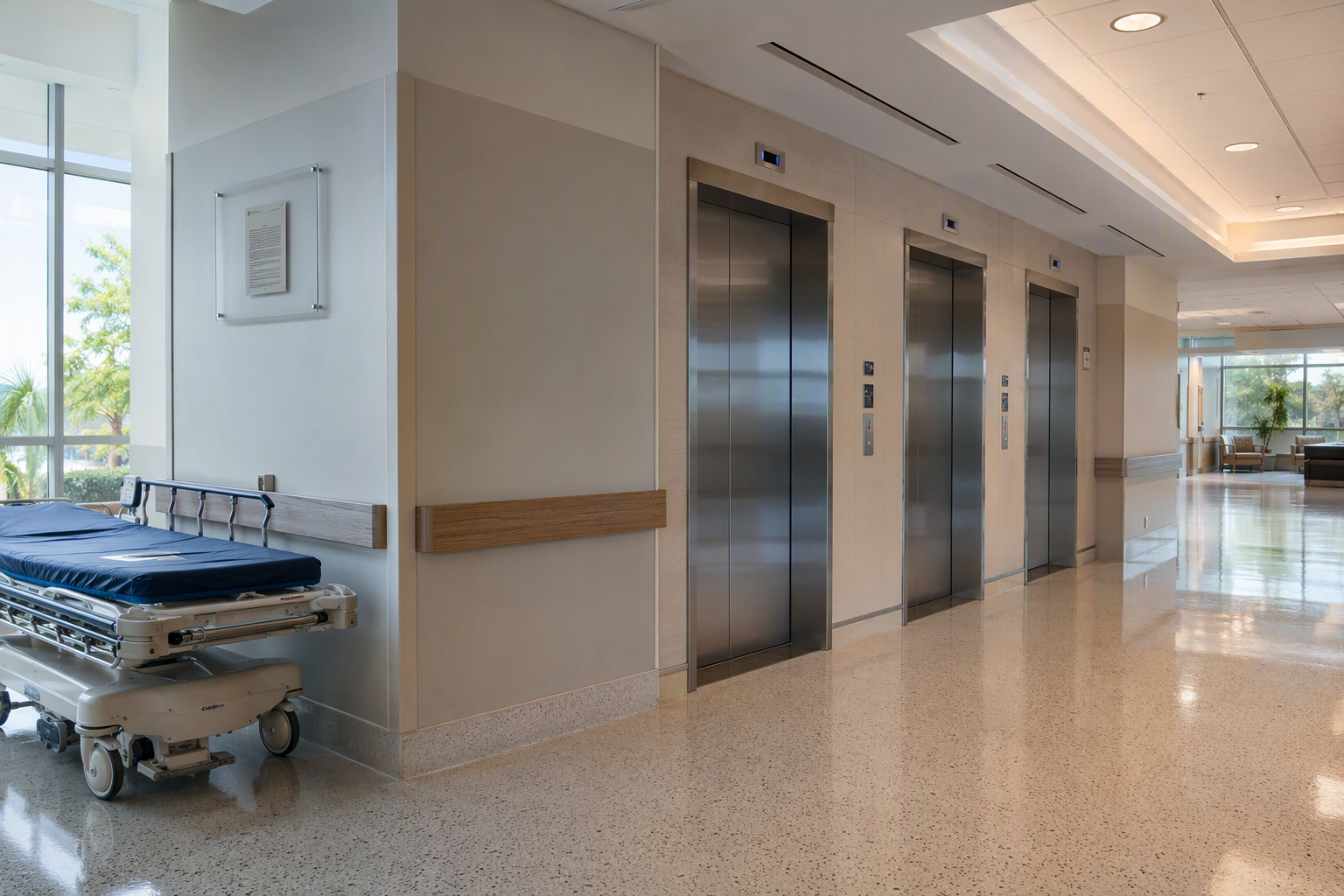
For Florida hospitals, surgical centers, rehabilitation facilities, and medical office buildings, elevator reliability is not simply a convenience — it is a patient safety and regulatory compliance matter. A single out-of-service elevator in a healthcare setting can delay medication delivery, impede emergency response, and expose a facility to regulatory action. The following guide covers every layer of compliance healthcare facility managers in markets such as Pompano Beach and Sarasota must understand in 2026.
Which State Agency Enforces Elevator Law in Florida Healthcare Facilities?
The primary regulatory authority is the Florida Department of Business and Professional Regulation (DBPR), Division of Hotels and Restaurants, Bureau of Elevator Safety. The bureau enforces Chapter 399, Florida Statutes — the Elevator Safety Act, and the implementing rules found in Chapter 61C-5, Florida Administrative Code.
Certain counties and municipalities hold delegated enforcement authority under contract with the state. Healthcare facilities in Pompano Beach fall under the Broward County Building Code Division, which enforces Chapter 399 through its own certified elevator inspectors. Facilities in Sarasota are subject to DBPR’s statewide bureau unless the local jurisdiction holds a separate delegation agreement.
Facility directors should confirm the exact authority having jurisdiction (AHJ) for each building address before scheduling inspections or filing for permits, because the issuing AHJ determines where permit applications are submitted and where certificates of operation originate.
What Elevator Code Does Florida Require Healthcare Facilities to Follow?
Florida adopted the ASME A17.1/CSA B44-2019 Safety Code for Elevators and Escalators as the statewide technical standard, effective December 31, 2023, with specific exclusions for equipment types such as private residence and marine elevators. All new installations, alterations, and ongoing maintenance compliance for healthcare facility elevators are evaluated against this edition.
For existing equipment that pre-dates the 2019 adoption, the ASME A17.3 Safety Code for Existing Elevators and Escalators provides the applicable retrofit and maintenance benchmarks. A registered elevator company can help a healthcare facility determine which edition governs each specific conveyance based on its installation date and permit history.
Federal overlay requirements include:
- Americans with Disabilities Act (ADA) — Establishes accessible route and cab dimension standards for facilities serving the public, directly applicable to hospitals and outpatient clinics.
- OSHA — Covers employee safety in elevator machine rooms and during maintenance and repair work, relevant to any healthcare facility with in-house engineering staff.
How Often Must Florida Healthcare Elevators Be Inspected?
Under Chapter 399, Florida Statutes, every elevator or conveyance covered by the Elevator Safety Act must be inspected at least once every year by a certified elevator inspector. The inspection must be performed by an inspector who carries a qualified elevator inspector (QEI) credential in good standing and who registers annually with the state, demonstrating eight hours of continuing education and maintaining general liability insurance.
One narrow exemption applies: an elevator that is not an escalator or dumbwaiter, serves only two adjacent floors, and is covered by a service maintenance contract is exempt from the annual inspection requirement while that contract remains active. This exemption is unlikely to apply to the multi-story elevator banks typical in hospital settings, but smaller two-story medical office buildings should confirm eligibility with their AHJ.
The Florida certificate of operation issued after a satisfactory inspection is valid for no more than two years. Operating on an expired certificate violates state law, and a healthcare facility doing so would face regulatory action and potential liability exposure.
What Is a Florida Certificate of Operation and Where Must It Be Posted?
A Florida certificate of operation is the official state authorization allowing a conveyance to be placed in service. It can only be renewed for a conveyance that has received a current satisfactory inspection. Once issued, state law requires the certificate to be posted in a conspicuous location inside the elevator cab, in a frame with a transparent cover. Healthcare facilities should incorporate certificate posting into routine compliance rounds — a missing or expired certificate is immediately visible to inspectors and accreditation surveyors alike.
Once the certificate of operation is issued, the elevator owner — typically the hospital or property management entity — becomes legally responsible for safe operation, proper maintenance, inspection scheduling, and correction of any identified code deficiencies.
What Permits Are Required Before Installing or Altering a Healthcare Elevator in Florida?
A Florida state permit must be obtained before any conveyance is installed or altered. The permit application must be submitted by a registered elevator company — a company that registers with the state annually and maintains general liability insurance. All new conveyance installations must be performed by a registered elevator company; unlicensed contractors are not legally authorized for this work.
Before a newly installed conveyance is placed in public service, it must be inspected by a certified elevator inspector who has no employment relationship, association, or conflict of interest with the permit holder or the building owner. This independence requirement is especially important for healthcare facility administrators contracting new elevator installations as part of expansion or renovation projects.
Axxiom Elevator Florida is a registered Florida elevator company and can assist healthcare facility teams in navigating the permit application process, coordinating independent inspections, and ensuring new equipment is cleared for operation before patient areas open.
What Happens After an Elevator Accident in a Florida Healthcare Facility?
Florida law is explicit: the certificate of operation holder must report any elevator accident to the state within five working days. In a healthcare setting, this requirement intersects with the facility’s own incident reporting obligations under Joint Commission standards and applicable federal healthcare regulations. Facilities should have a written protocol that captures both the regulatory reporting deadline and the internal risk management workflow.
Steps a healthcare facility should take immediately following an elevator incident:
- Secure the elevator and take it out of service if there is any indication of mechanical failure or injury.
- Document the incident with photographs, witness statements, and a time-stamped log entry.
- Notify risk management, legal counsel, and the facility’s elevator service provider.
- Engage a certified elevator inspector to conduct a post-incident assessment before the elevator is returned to service.
- File the required accident report with the Florida DBPR Bureau of Elevator Safety within five working days of the incident.
- Retain all documentation, inspection records, and maintenance logs related to the conveyance for the period required by state and accreditation standards.
How Do ADA Requirements Apply to Hospital and Healthcare Elevator Installations?
The Americans with Disabilities Act requires that elevators serving as part of an accessible route meet specific standards for cab dimensions, door timing, control button placement, audible signals, and Braille markings. In healthcare settings, these requirements carry heightened importance because patients, visitors, and staff with mobility impairments depend on elevators as essential infrastructure — not a secondary amenity.
ADA compliance is evaluated separately from the Florida certificate of operation process, and a facility can hold a valid state certificate while still having ADA deficiencies. Regular accessibility audits should be conducted alongside the annual elevator inspection to identify and remediate any gaps before they become barriers or complaints.
Who Is Qualified to Perform Elevator Maintenance in a Florida Healthcare Facility?
In Florida, a certified elevator technician is the legally authorized individual for constructing, installing, maintaining, or repairing conveyances. The state issues an elevator certificate of competency to qualified technicians. That certificate expires annually and is renewed with proof of eight hours of continuing education. Technicians must also register with the state each year and maintain general liability insurance.
Healthcare facility procurement and facilities management teams should verify that any elevator service provider employs state-certified technicians. Axxiom Elevator Florida employs certified elevator technicians whose credentials are maintained in good standing with the state, providing healthcare clients in the Pompano Beach and Sarasota areas with a compliant, qualified service team.
What Are the Maintenance Documentation Standards Healthcare Facilities Should Follow?
While Chapter 399 and Chapter 61C-5 establish inspection and certificate requirements, healthcare-specific accreditation bodies — including The Joint Commission — typically require facilities to maintain comprehensive maintenance logs demonstrating that elevators are being serviced in accordance with the manufacturer’s recommendations and the applicable ASME standard. These records are reviewed during accreditation surveys and can determine whether a deficiency is classified as an isolated event or a systemic compliance failure.
Best practice for Florida healthcare facilities includes maintaining:
- A complete inspection history for each conveyance, including the most recent certificate of operation and inspection report.
- A log of all maintenance performed, noting the date, technician, work scope, and parts replaced.
- Records of any callbacks, entrapments, or incidents, including the corrective action taken.
- Copies of current state registrations for the elevator service company and technicians performing work on-site.
Questions Your Inspector Will Ask
When a certified elevator inspector arrives at a Florida hospital or healthcare facility, the following are among the areas they will review. Facility directors working with Axxiom Elevator Florida can prepare for each of these in advance:
- Is the current certificate of operation posted in the cab in a frame with a transparent cover? Inspectors verify posting compliance as a first step.
- Has the conveyance been maintained under a service contract by a registered elevator company? Maintenance records will be requested.
- Are all safety devices — door restrictors, safeties, buffers, and governor — functioning within the parameters established by ASME A17.1-2019?
- Have any alterations been made since the last inspection? Unpermitted alterations are a significant compliance finding.
- Is the machine room secured, properly ventilated, and free of storage unrelated to elevator equipment?
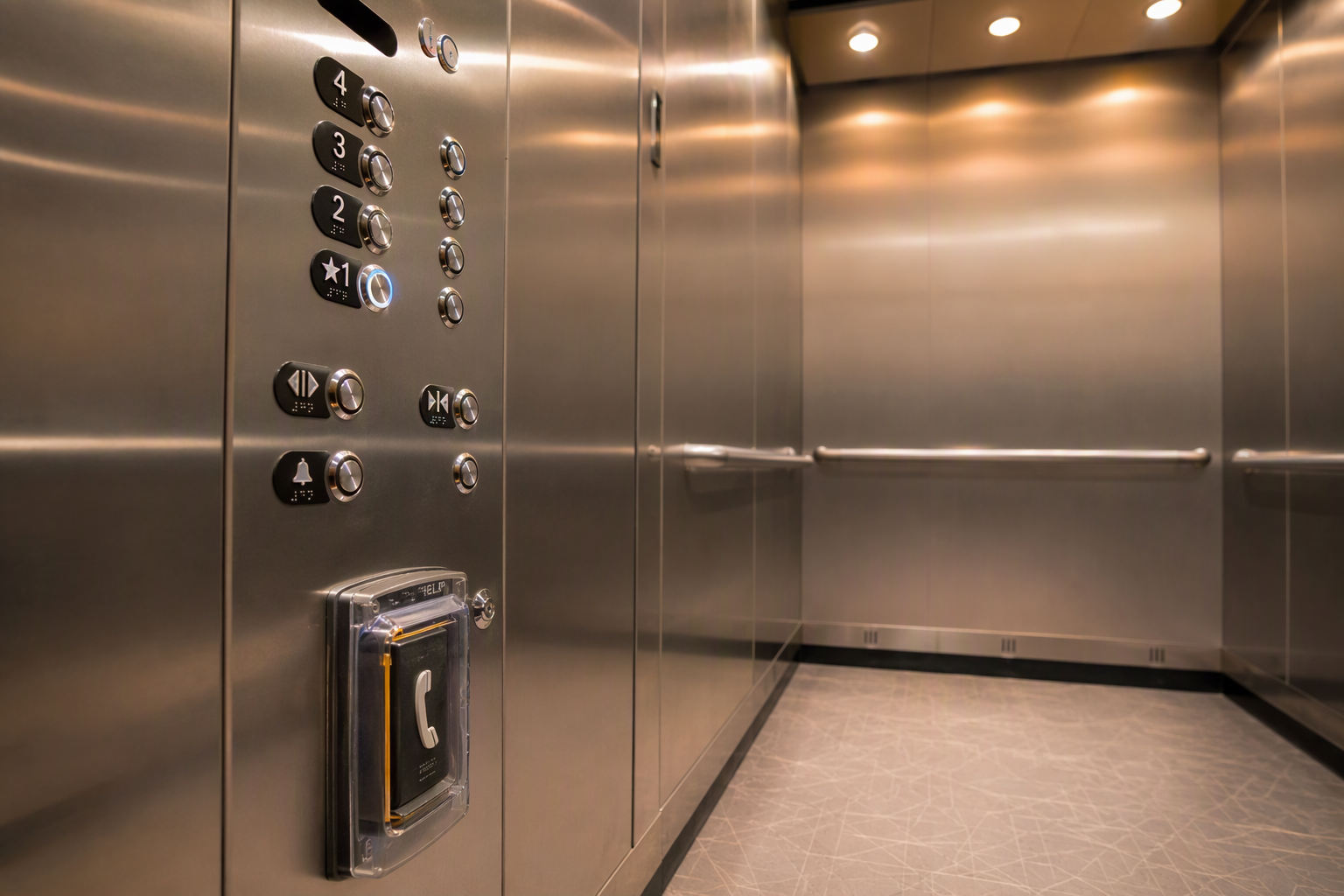
- Are emergency lighting, alarm systems, and two-way communication operational in every cab? This is especially critical in a healthcare setting where a patient or visitor entrapment could become a medical emergency.
- Are all cab interiors, handrails, and thresholds in safe condition and consistent with ADA requirements?
- Has any accident or incident involving this conveyance been reported to the state within the required five working days?
What Should Healthcare Facilities Look for in a Florida Elevator Service Partner?
Selecting an elevator maintenance provider for a healthcare facility involves considerations that go beyond price. Facilities should confirm that any prospective vendor:
- Is registered annually with the DBPR Bureau of Elevator Safety as a Florida elevator company.
- Employs certified elevator technicians with current Florida certificates of competency.
- Maintains general liability insurance as required by state law.
- Has documented experience with the specific equipment types used in healthcare settings, including heavy-duty traction elevators, hydraulic systems, and dumbwaiters used for specimen or supply transport.
- Can provide structured maintenance documentation sufficient to satisfy both state inspection and accreditation audit requirements.
Axxiom Elevator Florida serves healthcare and medical facility clients across Pompano Beach and Sarasota, providing maintenance, inspection coordination, and compliance documentation support tailored to the demands of regulated healthcare environments.
Get Your Florida Healthcare Facility Into Full Elevator Compliance
Regulatory gaps in elevator compliance can translate directly into patient safety risks, accreditation findings, and legal exposure. Contact Axxiom Elevator Florida for a free elevator assessment and let a team of state-registered professionals evaluate your facility’s current compliance posture, certificate status, and maintenance documentation. Serving healthcare facilities in Pompano Beach, Sarasota, and throughout Florida.
Contact Axxiom Elevator Florida for a free elevator assessment — call today.
Need elevator service you can rely on? Axxiom Elevator Florida is ready to help.