Florida Elevator Inspection: What Happens and Why Elevators Fail
Florida building owners, property managers, and facility directors face recurring questions about the elevator inspection process: what inspectors actually check, how long it takes, what triggers a failed inspection, and what comes next. This comprehensive FAQ hub covers every aspect of the Florida elevator inspection process — from the legal framework and inspection intervals to the most common failure points and how to achieve a clean certificate of operation.
What exactly happens during a Florida elevator inspection?
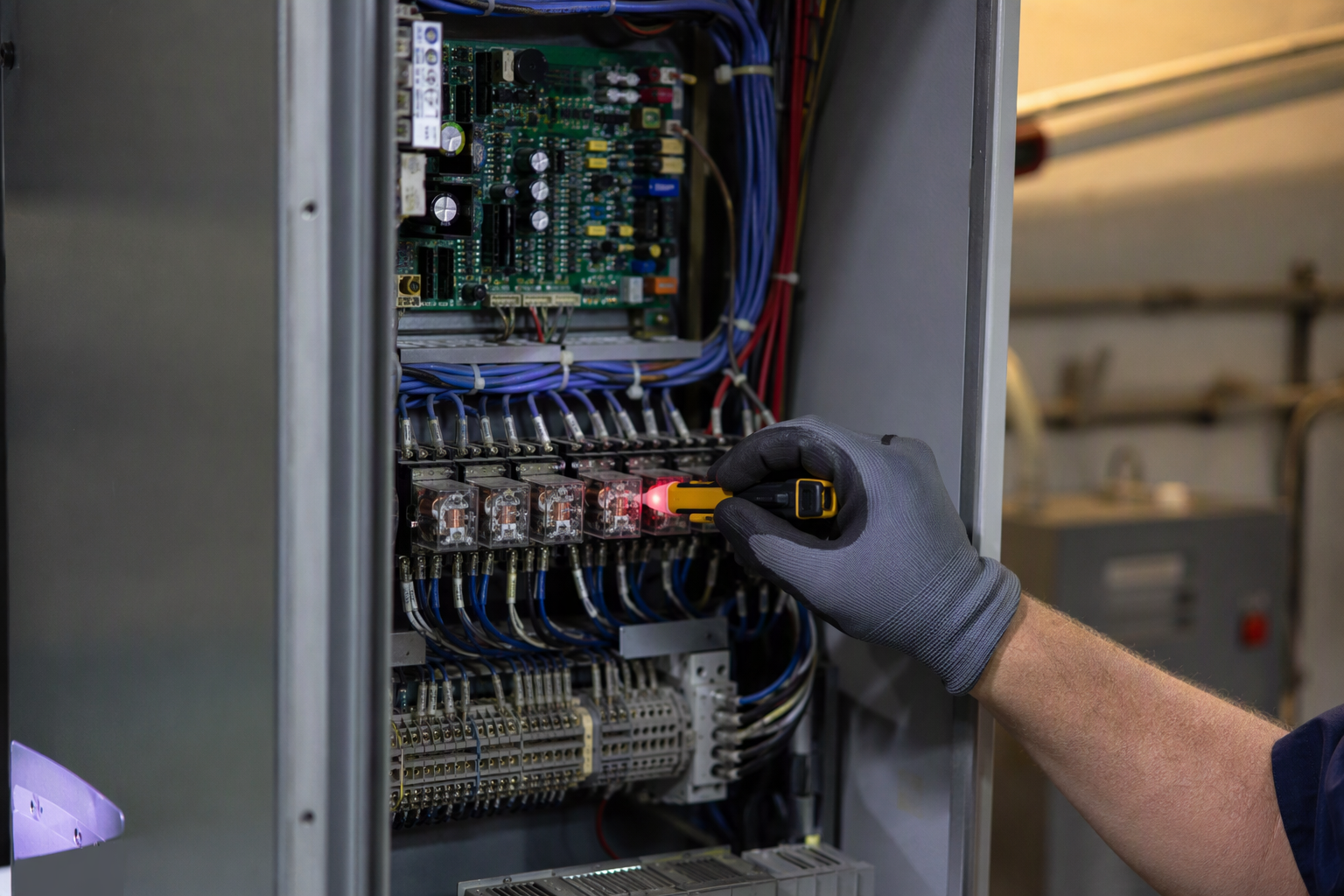
A Florida elevator inspection is a systematic, code-driven examination of every major safety system on the unit, conducted by a licensed inspector under Florida’s Division of Hotels and Restaurants or a local authority having jurisdiction (AHJ), using the ASME A17.1 Safety Code for Elevators and Escalators as the governing technical standard.
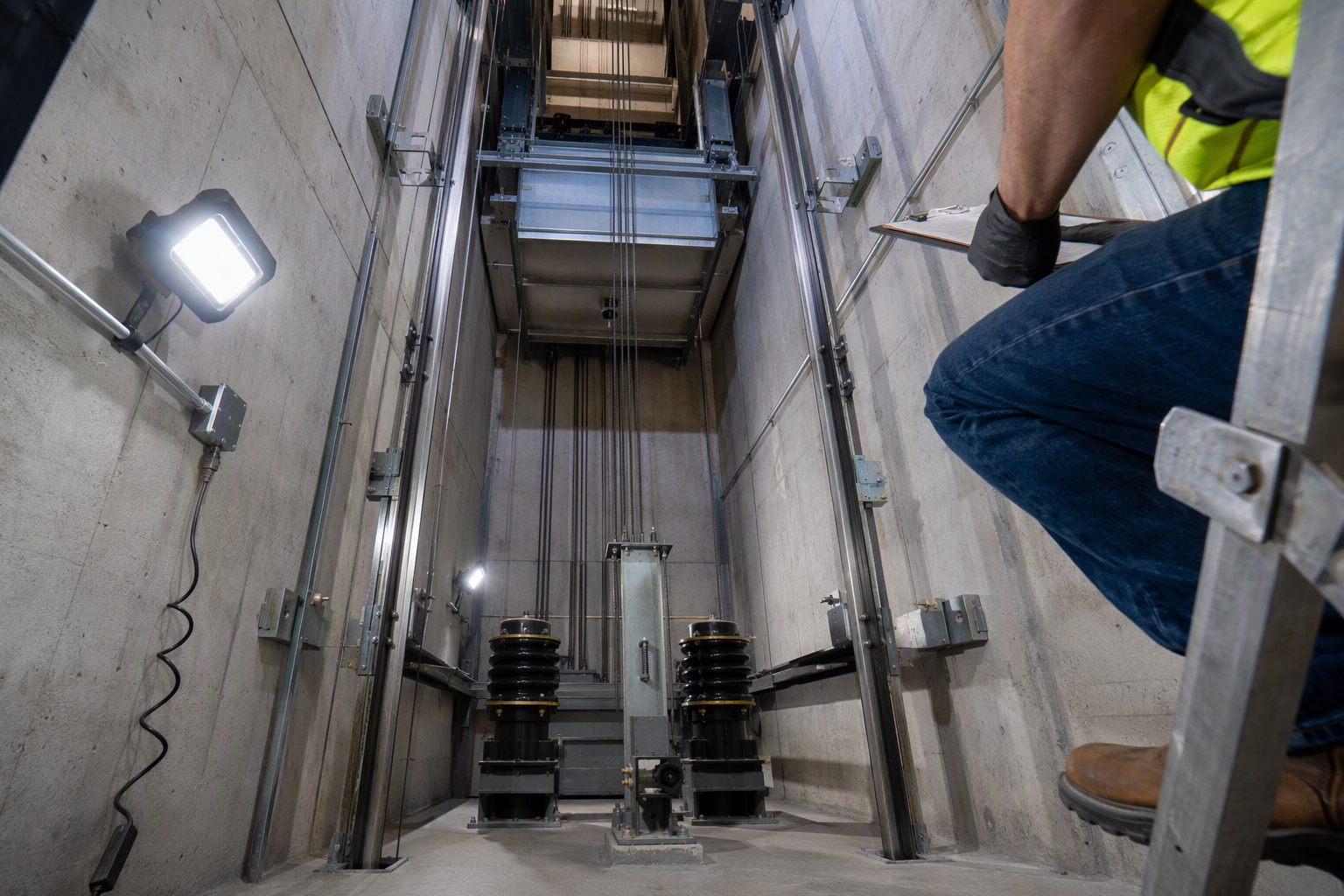
The inspection is not a casual walkthrough. Inspectors methodically evaluate mechanical components, electrical systems, safety devices, and physical conditions throughout the elevator car, machine room, hoistway, and pit. They verify that the unit operates within the parameters established by its original design and that all safety mechanisms function correctly under load and at speed.
The inspection typically concludes with the inspector issuing either a certificate of operation, a conditional approval with required corrections, or an order to cease operation until deficiencies are remedied. Building owners receive a written report identifying every item that requires attention, with a compliance timeline.
Who is legally authorized to inspect elevators in Florida?
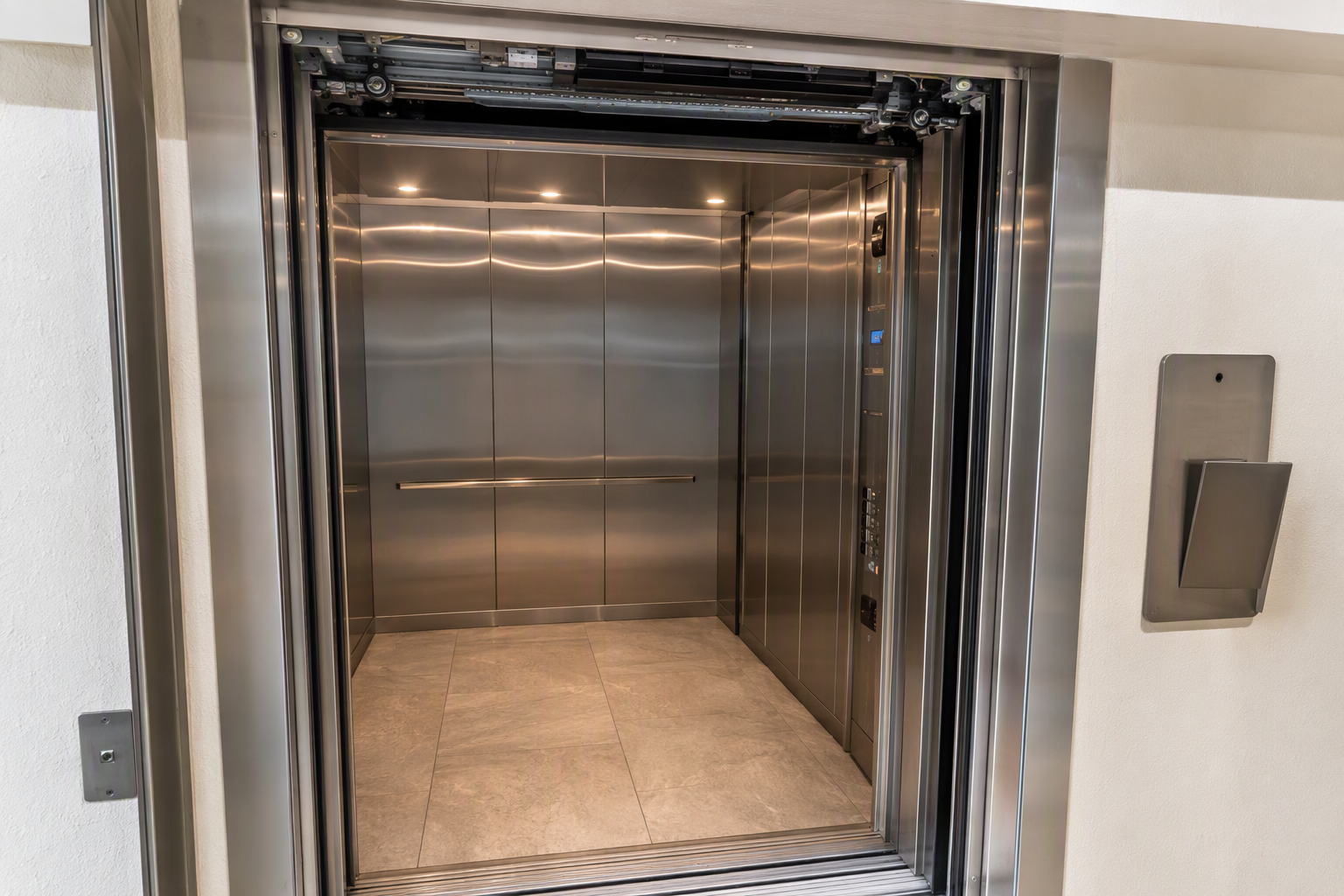
Florida elevator inspections must be performed by inspectors licensed through the Florida Department of Business and Professional Regulation (DBPR), which oversees elevator safety through its Division of Hotels and Restaurants for many building types, while local AHJs handle inspection authority in certain jurisdictions.
Florida Statute Chapter 399 governs elevator safety in the state. Under this framework, inspectors must hold a valid Florida elevator inspector license. Property owners may also engage Qualified Elevator Inspection Companies (QEICs) — private third-party firms whose inspectors are certified and approved to conduct inspections on behalf of the state or local AHJ.
In cities such as Pompano Beach and Sarasota, the local building department may serve as the AHJ, setting specific scheduling and permitting requirements on top of the state baseline. Building owners should confirm with their local authority which entity holds inspection jurisdiction over their specific property type.
How often are Florida elevators required to be inspected?
Florida requires periodic safety inspections on a schedule aligned with ASME A17.1 requirements, with most traction and hydraulic elevators subject to annual inspections and periodic tests at longer intervals depending on the test type.
The ASME A17.1 code distinguishes between routine periodic inspections and more intensive periodic tests. Full-load safety tests, governor tests, and hydraulic pressure tests occur on cycles ranging from one to five years depending on the specific test category and the jurisdiction’s adopted code edition. Florida’s adoption of ASME standards means these test cycles apply statewide, though local AHJs may impose stricter schedules.
Newly installed elevators require an acceptance inspection before being placed in service. Any elevator that has undergone major alteration also requires a new inspection and acceptance process before resuming operation. Axxiom Elevator Florida assists property owners in Pompano Beach and Sarasota in tracking these multi-year test cycles so no deadline is missed.
What specific components does a Florida elevator inspector examine?
Inspectors evaluate the car and hoistway, machine room, pit, safety devices, door systems, electrical controls, buffers, guide rails, ropes or hydraulic cylinders, emergency lighting, and all communication systems.
The examination is organized around the major subsystems of the elevator installation. Below is a structured overview of what falls under each inspection zone:
| Inspection Zone | Key Items Examined | Common Issues Found |
|---|---|---|
| Car Interior | Emergency lighting, phone/intercom, capacity placard, certificate posting, handrails, flooring | Missing or expired certificate, non-functional emergency phone, dim emergency lighting |
| Door System | Door reopening devices, closing force, speed, gibs, hangers, sills, interlocks | Worn door gibs, failed door operator, excessive closing force, faulty interlocks |
| Hoistway | Guide rails, brackets, buffers, counterweight, clearances, lighting, pit ladder | Inadequate clearances, corroded components, hoistway lighting failure |
| Machine Room | Motor, controller, selector, drive sheave, ropes/chains, temperature controls, housekeeping | Excessive heat, worn ropes, improper storage, unlicensed equipment modifications |
| Pit | Buffers, compensation, pit lighting, stop switch, ladder, sump pump, cleanliness | Water intrusion, non-functional pit light, missing stop switch, debris accumulation |
| Safety Devices | Governor, safeties, overspeed protection, rupture valve (hydraulic), slack rope device | Governor out of calibration, safety device not tested per schedule, rupture valve malfunction |
| ADA Compliance | Button height, braille, audible signals, door timing, cab dimensions | Missing braille, non-compliant button height, insufficient door open time |
What are the most common reasons a Florida elevator fails inspection?
The most frequent causes of failed Florida elevator inspections are door system deficiencies, inoperative safety devices, lapsed or missing certificates, non-functional emergency communications, pit water intrusion, and ADA non-compliance.
Door-related failures top the list because door equipment experiences the highest cycle count of any elevator component. Worn gibs, damaged hangers, sluggish operators, and failed door reopening devices are cited repeatedly across inspection reports. Florida’s humid climate accelerates corrosion in door hardware, making regular lubrication and adjustment especially important in coastal markets like Pompano Beach and Sarasota.
Safety device failures — including governors that have not been tested on schedule, safeties that fail to engage properly during testing, and hydraulic rupture valves that do not activate — represent serious code violations under ASME A17.1 and can result in immediate out-of-service orders. Emergency communication systems, including the required two-way phone in the elevator car, are also a consistent failure point when equipment ages or phone service contracts lapse.
ADA compliance deficiencies, while sometimes treated as secondary issues, can result in violations under ADA Standards for Accessible Design that carry separate federal enforcement consequences beyond the state inspection process.
What happens if an elevator fails its Florida inspection?
When an elevator fails inspection in Florida, the inspector issues a written deficiency report and, depending on severity, either sets a correction deadline or orders the elevator taken out of service immediately until repairs are completed and verified.
Minor deficiencies — such as a faded capacity placard or a missing cover plate — may be corrected within a specified timeframe without halting elevator operation. Major deficiencies involving safety devices, structural integrity, or door interlocks typically require the elevator to be removed from service until a licensed elevator mechanic completes the repairs and a follow-up inspection confirms compliance.
Building owners who continue operating a failed elevator risk civil penalties, insurance claim denials in the event of an incident, and personal liability exposure. Florida Statute Chapter 399 authorizes enforcement action against non-compliant property owners, including fines and mandatory closure orders.
What is the process for correcting deficiencies after a failed inspection?
After receiving a deficiency report, building owners must engage a licensed elevator contractor to complete all required repairs, then schedule and pass a follow-up inspection before the elevator may return to service.
- Review the deficiency report in detail with a licensed elevator contractor who can interpret code references and prioritize repairs by safety impact.
- Obtain any required permits from the local AHJ before beginning repair work, as unpermitted repairs can themselves become inspection violations.
- Complete all repairs using a licensed elevator mechanic. Florida requires elevator work to be performed only by individuals holding a valid state elevator certificate of competency.
- Document all work performed with repair records, parts documentation, and contractor sign-offs to present to the inspector at follow-up.
- Schedule the follow-up inspection with the AHJ or QEIC promptly — delays extend the period the elevator remains out of service or legally non-compliant.
- Confirm the updated certificate of operation is issued and posted inside the elevator car as required.
Axxiom Elevator Florida works with property managers in Pompano Beach and Sarasota to move through this correction cycle efficiently, ensuring all documentation is in order before the reinspection appointment.
How long does a Florida elevator inspection typically take?
A standard periodic safety inspection on a single elevator typically takes between one and three hours, depending on the elevator type, age, number of stops, and whether any performance tests are included in that inspection cycle.
Acceptance inspections on newly installed equipment or post-alteration inspections tend to run longer because inspectors must verify every aspect of the installation against submitted plans and specifications. Five-year load tests and governor/safety tests add significant time compared to an annual visual and operational check. Building owners should plan for elevator downtime during the inspection and communicate expected outages to tenants or residents in advance.
Does Florida require elevator inspections for all building types?
Florida’s elevator inspection requirements apply broadly across commercial, residential, and public-use buildings, with the applicable AHJ determined by building classification under Florida Statute Chapter 399 and local ordinances.
Hotels, condominiums, office buildings, hospitals, shopping centers, and government facilities all fall within the scope of mandatory inspection. Private single-family residences with residential elevators have different — often less frequent — requirements, though they must still meet installation standards under ASME A17.1. Any elevator accessible to the public carries the highest compliance burden.
What role does ASME A17.1 play in Florida elevator inspections?
ASME A17.1, the Safety Code for Elevators and Escalators, is the primary technical standard adopted by Florida and forms the basis for virtually every inspection requirement, safety test, and equipment specification that inspectors apply.
Florida adopts and references ASME A17.1 through its regulatory framework, meaning the code’s requirements for construction, installation, operation, inspection, testing, and maintenance carry the force of law in the state. Inspectors use the code to evaluate everything from minimum pit depth clearances to the maximum allowable door closing force. When disputes arise over whether a specific condition constitutes a violation, the relevant ASME A17.1 section is the decisive reference.
ASME A17.3, the Safety Code for Existing Elevators and Escalators, applies to equipment already in service, establishing what retroactive improvements are required as code editions advance. Building owners with older equipment should understand that A17.3 compliance may require upgrades even without any alteration or repair triggering the requirement.
How does ADA compliance factor into elevator inspections?
While ADA compliance is technically a separate federal obligation from Florida’s state inspection process, inspectors routinely flag accessibility deficiencies, and non-compliance with ADA Standards for Accessible Design can expose building owners to federal complaints and litigation independent of the state certificate of operation.
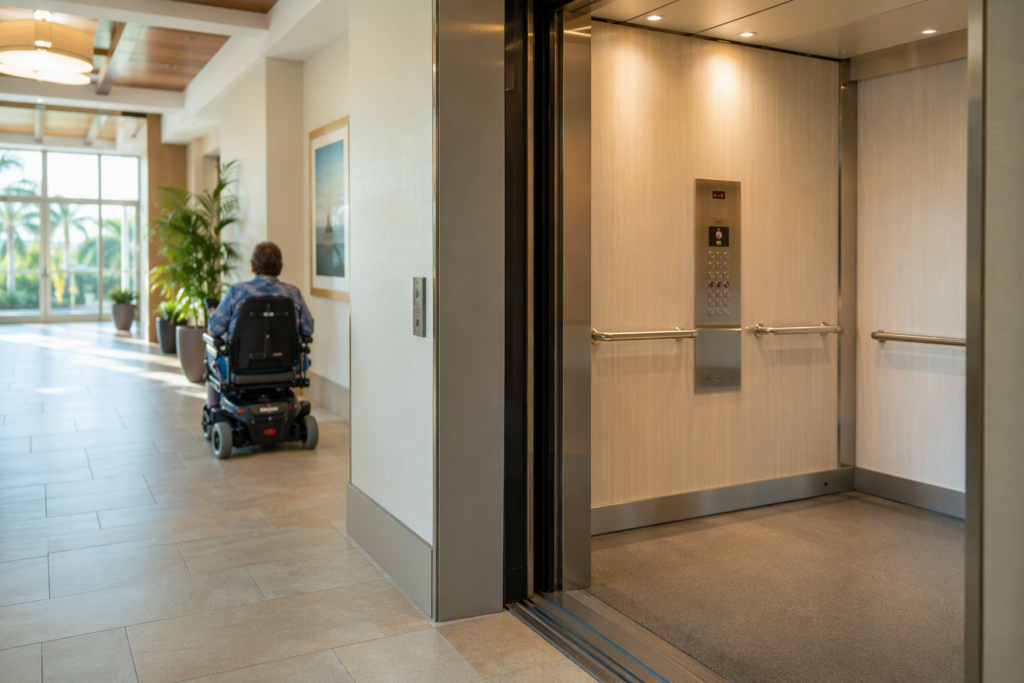
Common ADA issues identified during elevator inspections include call buttons mounted at heights outside the accessible range, missing or incorrect braille, audible and visual floor indicators that are non-functional, door open times that are too short for passengers using mobility aids, and cab dimensions that do not accommodate wheelchair users. Correcting these issues benefits all building users and reduces liability exposure under federal law.
What is the difference between an inspection and a maintenance visit?
An inspection is a formal, government-mandated evaluation conducted by a licensed inspector to issue or deny a certificate of operation, while a maintenance visit is a routine service call performed by an elevator contractor to keep the equipment in safe, reliable operating condition between inspections.
Regular maintenance is what makes inspections go smoothly. Elevators on consistent maintenance programs are far less likely to accumulate the deferred deficiencies that lead to failed inspections. Florida’s ASME-based framework includes maintenance requirements — elevator owners are not simply obligated to pass periodic inspections, they are obligated to keep equipment in safe condition continuously.
A well-structured maintenance agreement covers lubrication, adjustment, cleaning, parts replacement, and safety device testing on a schedule aligned with the manufacturer’s recommendations and code requirements. Axxiom Elevator Florida provides maintenance services in Pompano Beach and Sarasota designed to keep equipment in inspection-ready condition year-round.
What is a certificate of operation and where must it be displayed?
A certificate of operation is the official document issued by the AHJ confirming that an elevator has passed inspection and is authorized for use; Florida law requires it to be conspicuously posted inside the elevator car where passengers can see it.
The certificate displays the elevator’s unique identification number, the inspection date, and the expiration of the current inspection period. Building owners and managers should verify that a valid, unexpired certificate is posted in every elevator. An expired or missing certificate is itself an inspection violation and can be identified by any inspector, code enforcement officer, or observant tenant.
What triggers a special or unscheduled inspection in Florida?
Special inspections can be triggered by an accident or entrapment, a consumer complaint filed with the AHJ, a major repair or modernization, or an inspector’s observation during a routine visit that warrants closer follow-up examination.
Florida residents and building occupants have the right to file complaints about elevator conditions, and AHJs are obligated to investigate. Entrapments, free-falls, door strikes, and leveling failures are all events that typically prompt mandatory incident reporting and follow-up inspection. Building owners should have a documented protocol for responding to elevator incidents, including immediate notification of the elevator contractor, the AHJ, and their insurance carrier.
Are elevator machine rooms subject to OSHA requirements during inspection?
Machine rooms fall under OSHA general industry standards for electrical safety, housekeeping, and worker protection, which inspectors and elevator mechanics must follow, and building owners must ensure these spaces meet both OSHA and ASME standards.
Machine rooms must be kept clean, dry, and free of storage unrelated to elevator equipment. Temperature must be maintained within the range specified for the installed electrical equipment. Adequate lighting, clearly marked disconnects, and appropriate fire protection are all required. Inspectors who identify machine room conditions that create worker hazards — excessive clutter, trip hazards, exposed live conductors — will cite these as deficiencies even when the elevator mechanical systems themselves are in good condition.
How can building owners in Pompano Beach and Sarasota prepare for an upcoming inspection?
Proactive preparation involves scheduling a pre-inspection maintenance visit, verifying that all certificates and documentation are current, testing emergency systems, and ensuring machine rooms and pits are clean and accessible.
- Confirm the inspection date with the AHJ and notify the elevator contractor at least several weeks in advance.
- Request a pre-inspection service visit from a licensed elevator contractor to identify and correct any visible deficiencies before the inspector arrives.
- Verify the emergency phone line is active and that a live operator responds within the required time.
- Test emergency lighting in the car and pit to confirm it activates and provides adequate illumination on power loss.
- Confirm the current certificate of operation is posted and unexpired.
- Clear the machine room and pit of any unauthorized storage or debris.
- Ensure the machine room access key is available and that the room is at proper temperature.
- Review prior inspection reports and confirm all previously cited deficiencies were corrected and documented.
What is a five-year load test and when is it required in Florida?
A five-year load test is a comprehensive safety test required under ASME A17.1 in which the elevator operates at full rated capacity to verify that safety devices, buffers, and structural components perform correctly under maximum load conditions.
The test must be performed by a licensed elevator contractor in the presence of a qualified inspector. For traction elevators, this typically includes a full-load governor and safety test in which the car is brought to speed and the safety is intentionally triggered to verify the car stops within code limits. For hydraulic elevators, pressure tests verify the integrity of the cylinder, piping, and rupture valve. The five-year test cycle means building owners need to plan for this more involved testing every five years alongside the annual routine inspection.
What happens to an elevator’s warranty or insurance if it operates without a valid certificate?
Operating an elevator without a valid certificate of operation typically voids manufacturer warranties, triggers policy exclusions in property and liability insurance, and creates direct legal exposure for the building owner in the event of any passenger incident.
Insurance carriers increasingly require proof of current inspection certificates as a condition of coverage. A claim arising from an elevator incident — passenger injury, property damage, or wrongful entrapment — investigated after the fact may be denied entirely if records show the certificate had lapsed. Building owners should treat elevator certificate currency with the same urgency as any other required permit or license.
How does elevator modernization affect the inspection process in Florida?
Any modernization — including controller replacement, drive system upgrades, door operator replacement, or cab renovation — constitutes an alteration under ASME A17.1 and requires a permit, licensed contractor work, and a new acceptance inspection before the elevator returns to service.
Modernization projects offer the opportunity to bring older equipment into full compliance with current ASME A17.1 and A17.3 requirements and to address ADA accessibility gaps. However, they also reset the inspection clock and require full documentation. Florida’s permitting process for elevator alterations involves plan submission to the AHJ, approval before work begins, and inspection of the completed work. Skipping any step — even for what seems like a straightforward upgrade — can result in the alteration being deemed unpermitted and the equipment being ordered out of service.
What should a building owner do immediately after an elevator accident or entrapment?
After any elevator accident or entrapment, building owners must take the elevator out of service, notify the AHJ and the elevator contractor immediately, preserve all records and surveillance footage, and not return the elevator to service until an inspection or investigation clears it.
- Ensure all passengers are safely evacuated and any injuries receive immediate medical attention.
- Place the elevator out of service and post clear signage so no one attempts to use it.
- Contact the elevator contractor for an emergency inspection of the equipment.
- Notify the AHJ of the incident as required by Florida statute — failure to report is itself a violation.
- Preserve all available evidence: surveillance footage, maintenance logs, the most recent inspection report, and any witness accounts.
- Notify the building’s insurance carrier and legal counsel.
- Do not attempt repairs that would alter the scene before the AHJ investigation is complete, unless the contractor determines an immediate safety hazard requires emergency stabilization.
- Obtain written clearance from the AHJ before returning the elevator to service.
How does working with a local Florida elevator service company affect inspection outcomes?
Working with a Florida-based, licensed elevator service company that understands the specific requirements of local AHJs in markets like Pompano Beach and Sarasota results in better-maintained equipment, fewer inspection surprises, and faster resolution of any deficiencies that do arise.
Local expertise matters because inspection requirements are administered differently across Florida’s various AHJs. The documentation, scheduling processes, and specific enforcement priorities in Broward County differ from those in Sarasota County. A service provider with established relationships and direct experience in these local markets navigates the process more efficiently than a national firm unfamiliar with local requirements.
Axxiom Elevator Florida serves building owners and property managers throughout Pompano Beach and Sarasota, providing maintenance, repair, modernization, and inspection support services. The company’s work is grounded in full compliance with Florida Statute Chapter 399, ASME A17.1, and applicable ADA requirements — ensuring clients are positioned to achieve and maintain their certificates of operation without disruption.
Get Your Elevator Inspection-Ready
Whether you manage a residential high-rise in Sarasota, a commercial property in Pompano Beach, or any Florida building with vertical transportation equipment, keeping your elevator in full compliance is a legal obligation and a safety imperative. Don’t wait for a failed inspection or an out-of-service order to act.
Contact Axxiom Elevator Florida for a free elevator assessment. A licensed elevator professional will review your equipment’s current condition, documentation status, and upcoming inspection obligations — giving you a clear picture of where you stand and what steps keep you compliant.
Call us today:
Serving Pompano Beach, FL • Sarasota, FL
Need elevator service you can rely on? Axxiom Elevator Florida is ready to help.