Elevator Inspection Checklist: Requirements, Frequency & Compliance Guide
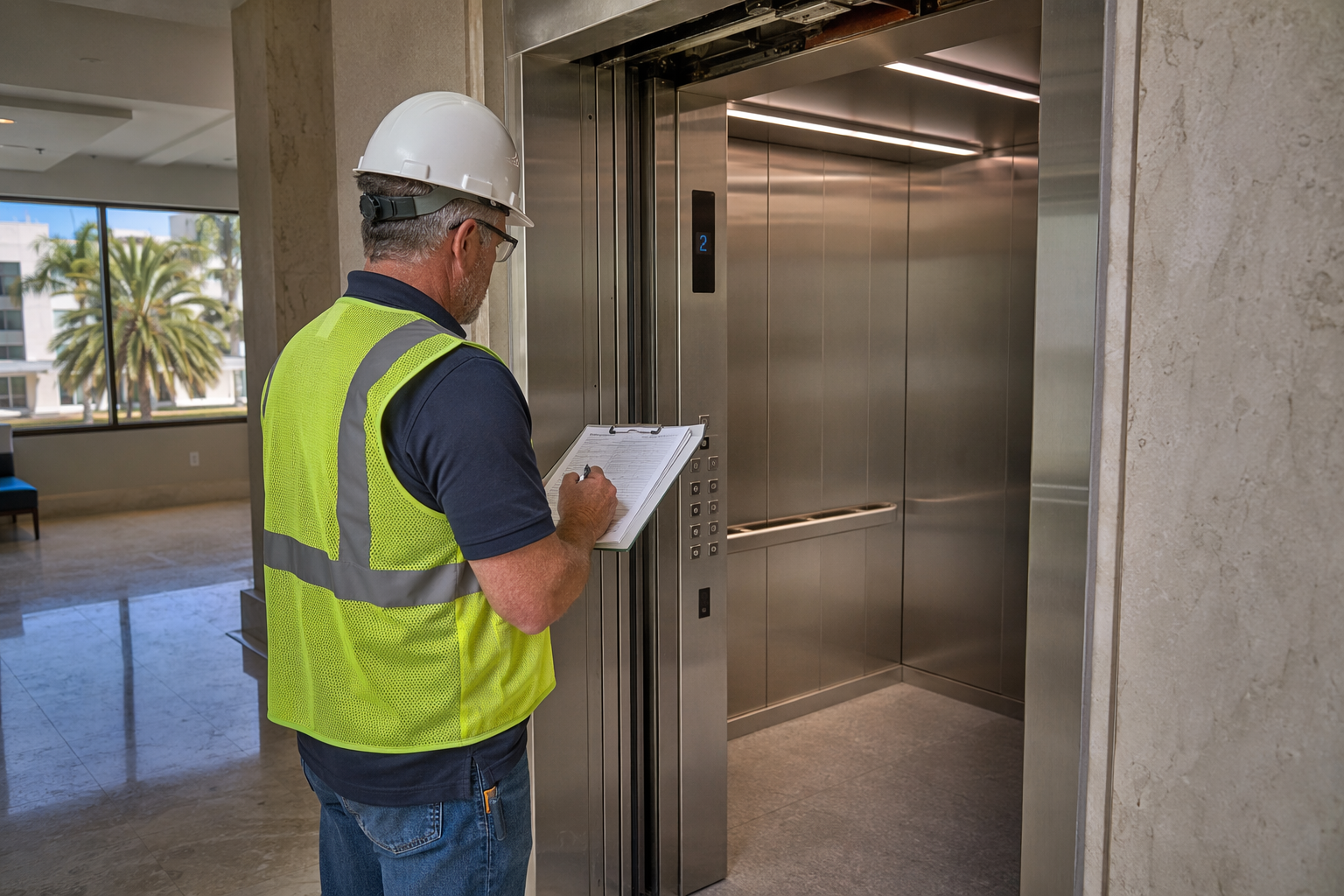
Elevator inspections are a non-negotiable safety and legal obligation for building owners and property managers throughout Florida. Whether managing a commercial high-rise, a residential condominium, or a healthcare facility, understanding exactly what an elevator inspection checklist entails — and what happens when items fail — is critical to protecting occupants, avoiding penalties, and staying compliant with state and federal codes. This guide covers every major checklist category, compliance requirements, common failure points, and what to expect from the inspection process.
What Does a Complete Elevator Inspection Checklist Include?
A comprehensive elevator inspection checklist is organized into several major categories. Each category corresponds to specific provisions outlined in the ASME A17.1 Safety Code for Elevators and Escalators, which serves as the foundational national standard adopted — in whole or with state modifications — by Florida and most other U.S. jurisdictions.
The major categories of a standard elevator inspection checklist include:
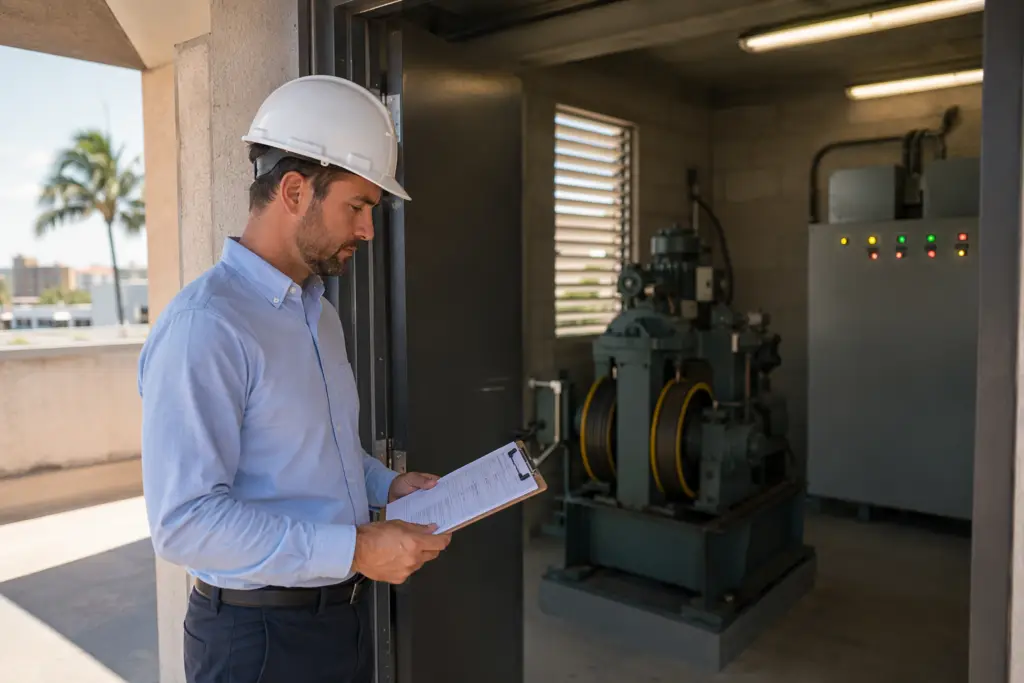
- Hoistway and Machine Room: Structural integrity of the hoistway, clearances, lighting, ventilation, access restrictions, and housekeeping conditions in the machine room.
- Traction or Hydraulic Machinery: Drive sheaves, ropes or chains, hydraulic cylinders, pistons, fluid levels, pump units, and motor condition.
- Safety Devices: Overspeed governors, safeties, buffers, car and counterweight guide rails, and terminal stopping devices.
- Doors and Gates: Door operator condition, interlock mechanisms, door reopening devices, closing force limits, and timing.
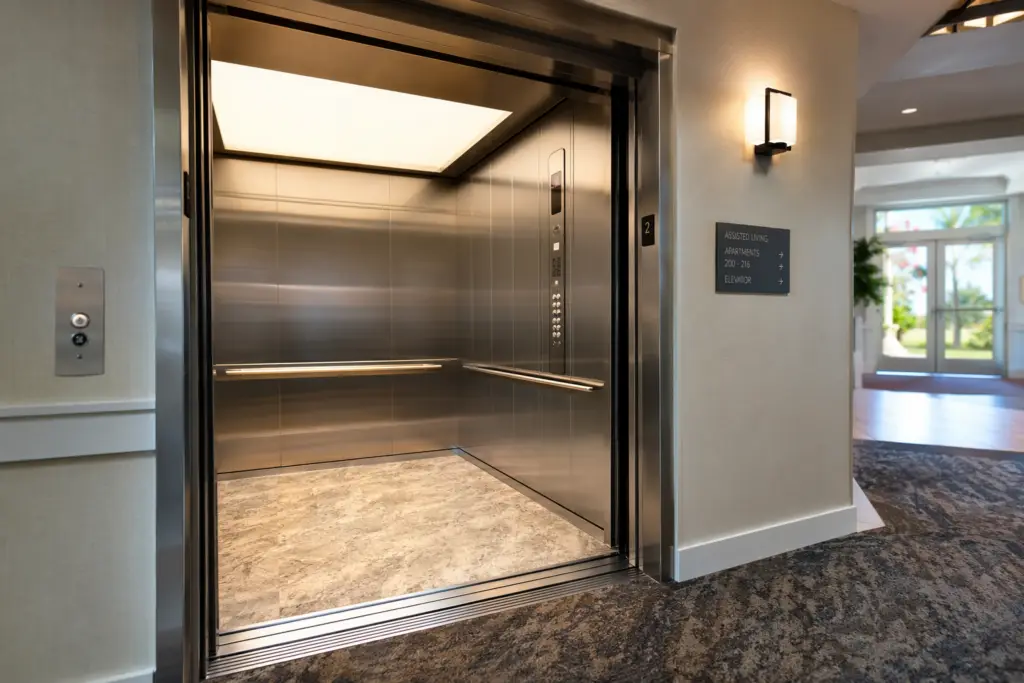
- Car Interior and Platform: Lighting, ventilation, emergency lighting, cab flooring, handrails, and capacity posting.
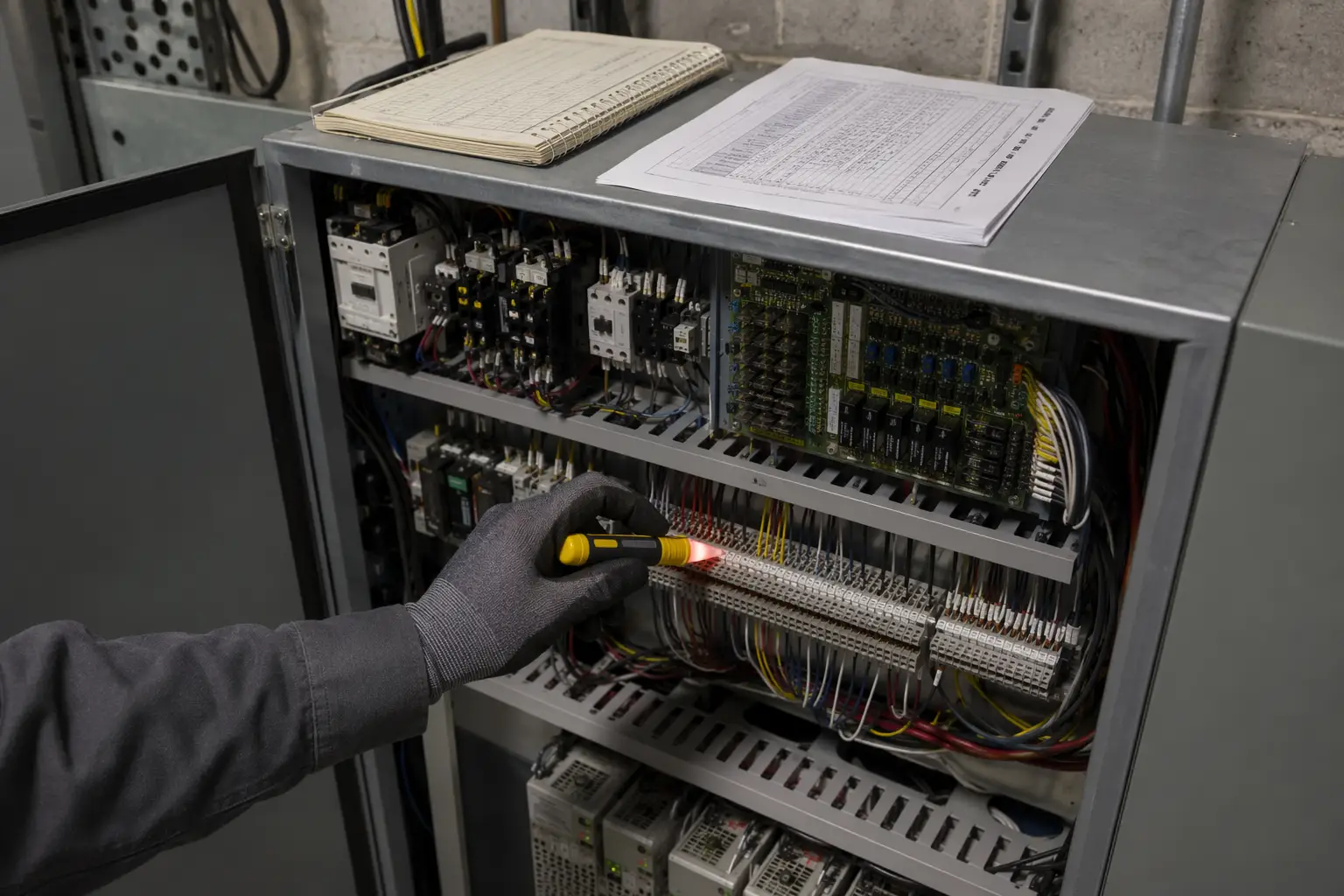
- Control Systems and Wiring: Electrical panels, wiring condition, control boards, ground fault protection, and emergency communication systems.
- Emergency Features: Two-way communication, emergency lighting duration, firefighter service operation, and alarm systems.
- Accessibility Compliance: Leveling accuracy, door timing, audible and visual signals, and cab dimensions as required by the Americans with Disabilities Act (ADA).
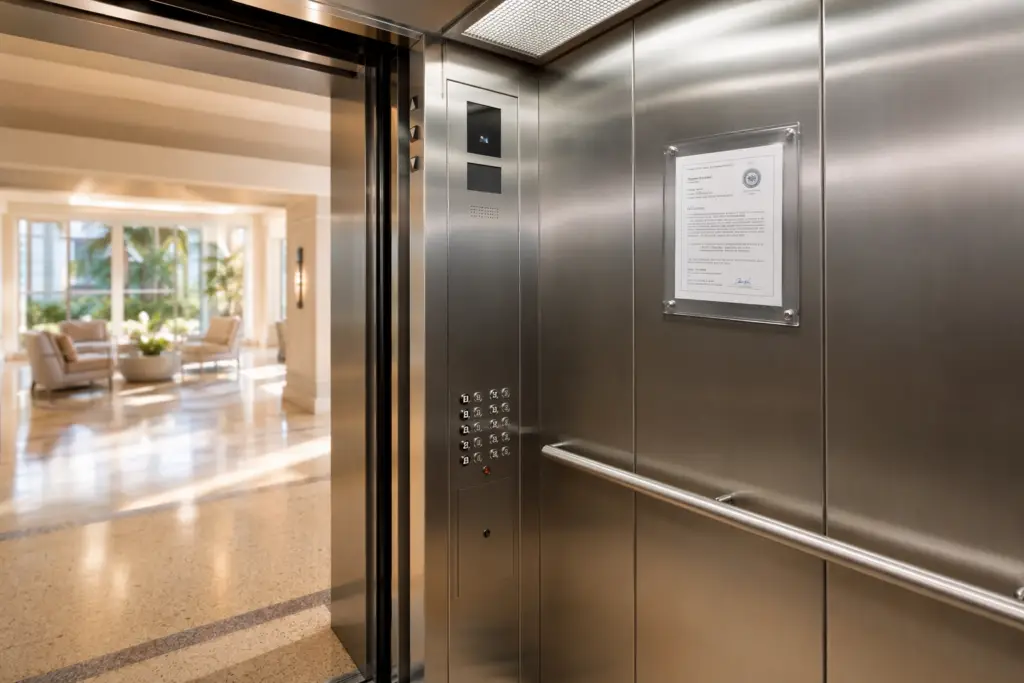
- Documentation and Certificates: Current inspection certificate posted in the cab, maintenance logs, and alteration permits.
How Often Does an Elevator Need to Be Inspected?
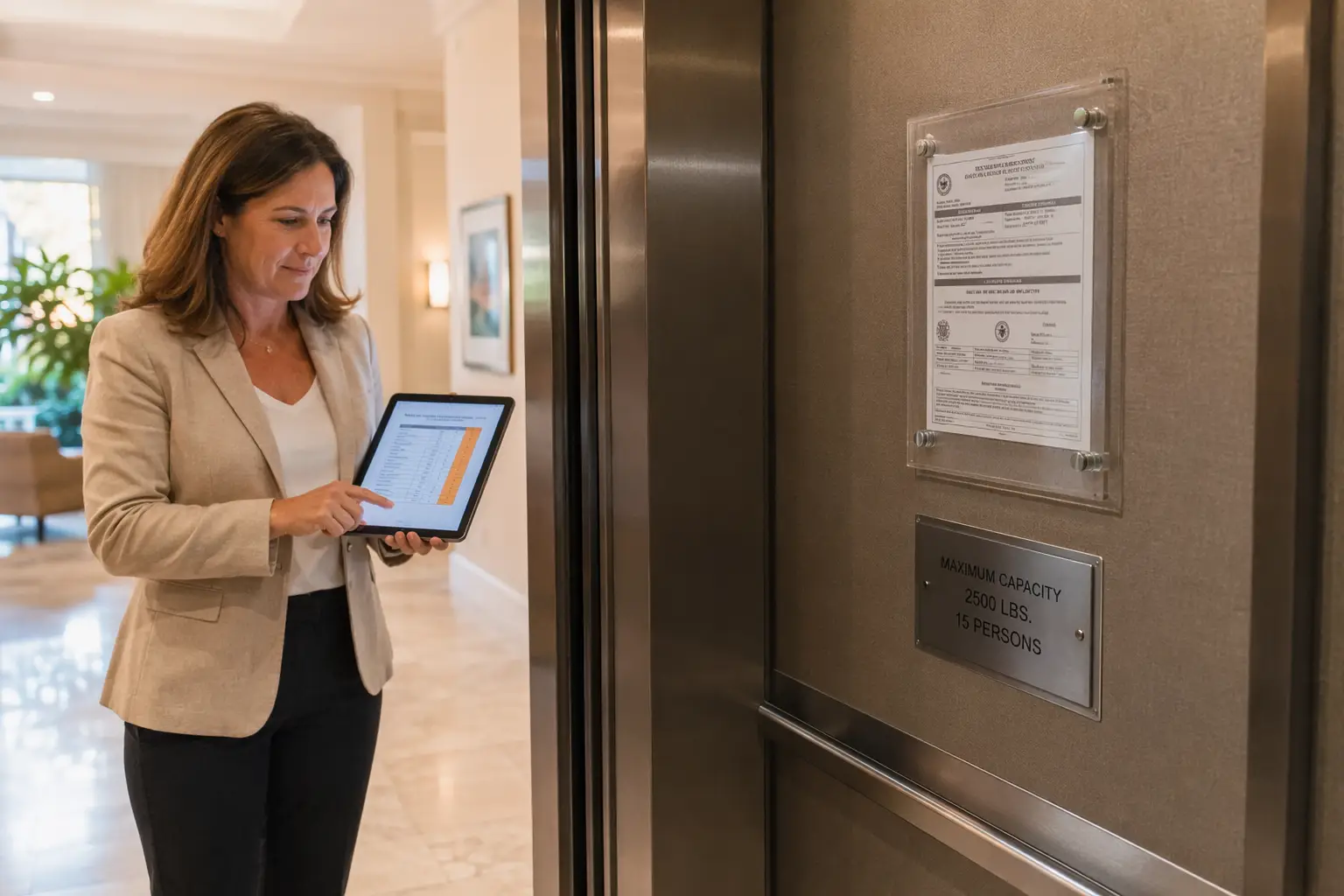
Inspection frequency is governed by the ASME A17.1 Safety Code for Elevators and Escalators and Florida’s adopted elevator safety statutes. The code establishes different inspection and test categories:
- Periodic Inspections: Required at regular intervals — typically annually — to verify that the elevator remains in safe operating condition without requiring the unit to be taken out of service for extended testing.
- Periodic Tests: Certain safety tests, including governor and safety tests, are required on a recurring basis set by the applicable code edition. The interval differs by test type and equipment category.
- Category 1 Tests: Annual no-load safety and governor tests for most traction elevators.
- Category 5 Tests: Full-load, full-speed safety and governor tests required at five-year intervals for traction elevators under ASME A17.1.
- Acceptance Inspections: Required before a new elevator is placed into service or after major alterations, ensuring the installation fully complies with the code edition in effect at the time of the permit.
Florida property owners should consult the Florida Department of Business and Professional Regulation (DBPR) for the current state-adopted code edition and any Florida-specific amendments, as state requirements may be more stringent or modified from the base ASME standard.
What Are the Most Common Elevator Inspection Failures?
While specific failure-rate statistics vary by jurisdiction and are not universally published, inspection professionals consistently identify several recurring deficiency categories across elevator types and building ages:
- Door and Gate Malfunctions: Worn door operators, misaligned interlocks, and door closing force exceeding allowable limits are among the most frequently cited deficiencies. Door-related issues are directly linked to entrapment and injury risk.
- Lubrication and Mechanical Wear: Inadequate lubrication of guide rails, sheaves, and moving mechanical components accelerates wear and creates safety risks.
- Emergency Communication Failures: Two-way communication systems that do not function reliably, including phone lines that are disconnected or audio that is inaudible, represent a code violation and a serious life-safety concern.
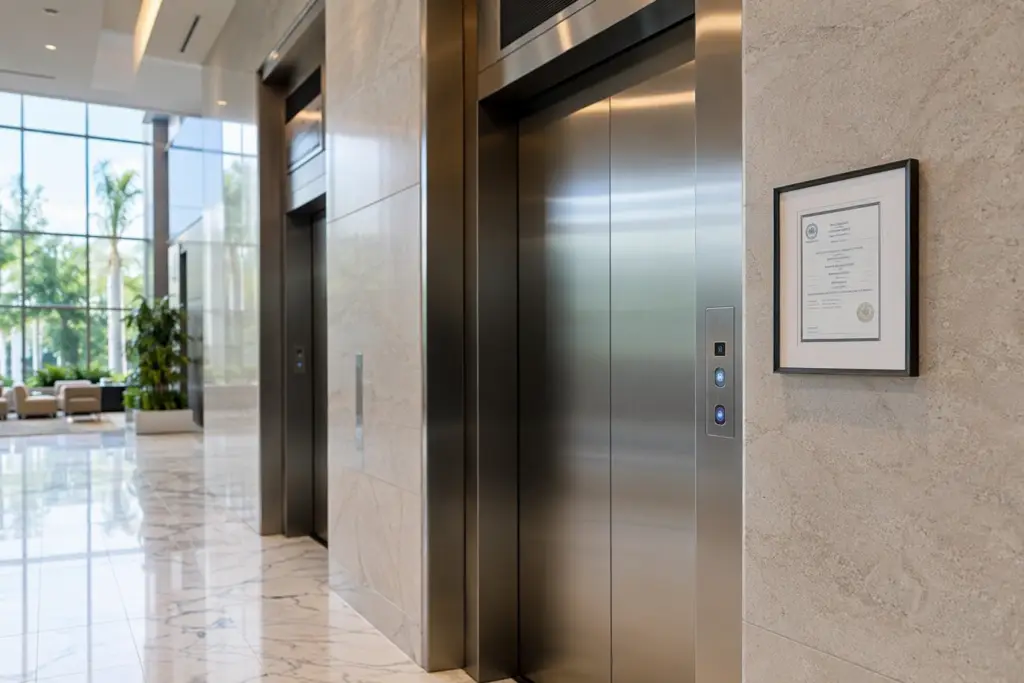
- Expired or Missing Inspection Certificates: Operating an elevator without a current, posted inspection certificate is a compliance violation in Florida, regardless of the mechanical condition of the unit.
- Hydraulic Fluid Leaks: For hydraulic elevators, fluid leaks — whether from the cylinder, fittings, or underground components — create both safety hazards and environmental compliance concerns.
- Worn or Damaged Ropes and Chains: Traction elevator wire ropes that are corroded, broken-stranded, or worn beyond allowable tolerances require immediate replacement.
- Firefighter Service Failures: Phase I and Phase II firefighter emergency service that does not operate correctly is a code violation with direct life-safety implications for first responders.
What Is the Difference Between an Inspection and a Maintenance Visit?
These two activities are distinct and serve different purposes. A maintenance visit is performed by a licensed elevator contractor on a routine service schedule — typically monthly or quarterly — to lubricate, adjust, clean, and replace components proactively before failures occur. The maintenance technician is employed by the building’s elevator service provider.
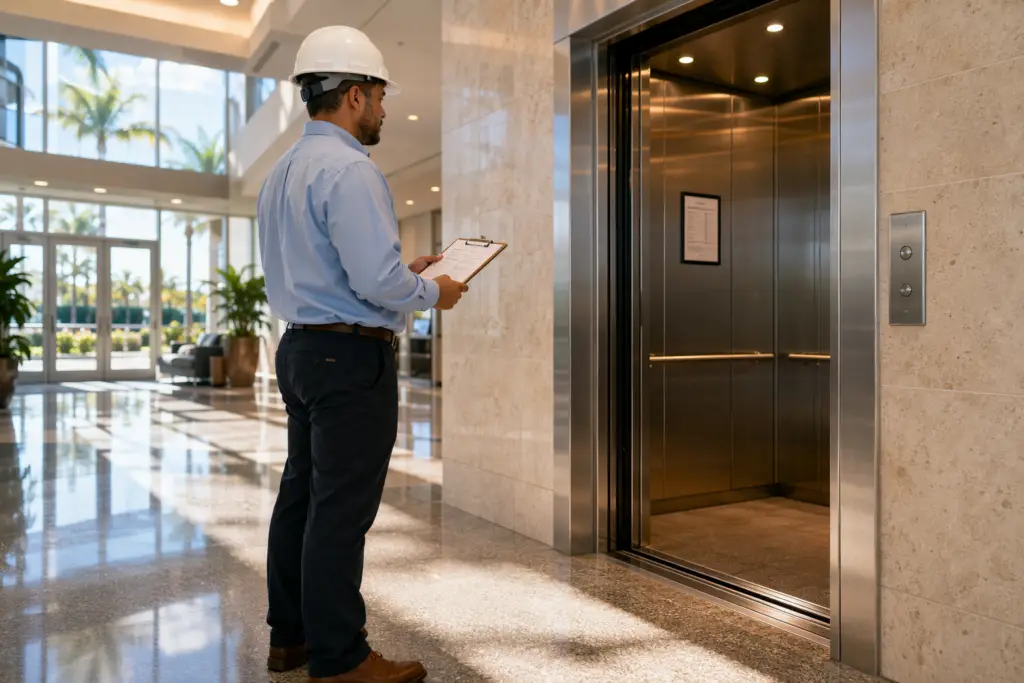
An inspection is performed by a licensed or certified elevator inspector — often a third-party inspector or a state-authorized inspector — who evaluates the elevator’s condition against the applicable code standard and issues a pass, conditional pass, or fail determination. The inspector does not perform repairs; they document findings for the authority having jurisdiction (AHJ).
Florida requires that inspections be performed by inspectors qualified under state statute. Building owners should verify that their inspector holds the appropriate credentials recognized by the Florida DBPR.
What Happens If an Elevator Fails Inspection?
When an elevator fails inspection in Florida, the consequences depend on the severity and category of the deficiency:
- Minor Deficiencies: The inspector issues a written deficiency report specifying the items that require correction. The elevator may remain in service while repairs are scheduled, provided no immediate safety hazard exists.
- Major Safety Hazards: If the inspector identifies a condition that poses an immediate risk to occupants — such as a faulty door interlock, non-functional safety device, or structural issue — the elevator may be ordered out of service immediately.
- Notice of Violation: The building owner receives formal notice from the AHJ documenting the deficiencies and the required timeframe for correction.
- Correction and Re-inspection: Repairs must be completed by a licensed elevator contractor. Once repairs are made, a follow-up inspection or documentation of correction is submitted to the AHJ.
- Reinstatement: The elevator is returned to service only after the AHJ is satisfied that deficiencies have been resolved and, where required, a new inspection certificate is issued.
- Penalties for Non-Compliance: Operating an elevator under a violation order or without a valid certificate of operation can result in fines and increased regulatory scrutiny of the building’s entire elevator portfolio.
How Does ADA Compliance Factor Into an Elevator Inspection Checklist?
The Americans with Disabilities Act (ADA) establishes accessibility requirements for elevators in public accommodations and commercial facilities. While ADA compliance is technically distinct from a state safety inspection, many inspection checklists include accessibility-related items because non-compliance creates significant legal liability for property owners.
ADA-related elevator checklist items typically include:
- Floor leveling within allowable tolerances to ensure wheelchair users can safely enter and exit
- Door timing — minimum dwell time at landings before doors begin closing
- Audible and visible floor signals and direction indicators
- Raised and Braille floor designations on control panels at the correct height
- Cab interior dimensions meeting minimum width and depth requirements
- Handrail placement and dimensions within the cab
- Emergency communication systems usable by individuals with hearing impairments
Property owners in Florida should be aware that ADA compliance obligations exist independently of passing a state safety inspection — an elevator can pass its annual safety inspection and still present ADA violations that expose the building to civil complaints.
What Are OSHA’s Requirements Related to Elevator Inspections?
OSHA regulations govern elevators primarily in the context of employee safety in workplaces. Under OSHA standards, employers have a general duty to maintain equipment — including elevators used by workers — in safe operating condition. OSHA references consensus standards such as ASME A17.1 when evaluating elevator safety in workplace settings.
For construction hoists and temporary personnel/material hoists on job sites, OSHA has specific regulations under 29 CFR 1926 that govern inspection requirements, load ratings, and operator qualifications. Building owners and general contractors managing construction projects in Florida should ensure that all temporary hoisting equipment meets OSHA’s applicable standards in addition to Florida state elevator requirements.
How Much Does an Elevator Inspection Cost in Florida?
Inspection costs in Florida vary based on several factors and cannot be generalized to a single figure without misleading property owners. Key cost drivers include:
- Elevator type and technology: Hydraulic, traction, MRL (machine room-less), and specialty lifts each require different inspection protocols and time investments.
- Number of units: Buildings with multiple elevators may qualify for volume pricing from inspection firms.
- Test category: A Category 5 full-load safety test involves more preparation, equipment, and time than a standard annual periodic inspection, which affects cost accordingly.
- Geographic location and inspector availability: Inspection fees in high-demand metropolitan areas of Florida may differ from rural counties.
- State fees: Florida state permit and certificate fees are set by the DBPR and are separate from the inspector’s professional fee.
Property managers should obtain itemized quotes from licensed inspection entities and compare them against the scope of tests required under the applicable code cycle for their equipment.
What Is the Step-by-Step Process for Scheduling and Completing an Elevator Inspection in Florida?
- Confirm the required inspection type: Review the elevator’s inspection history and consult the Florida DBPR to determine whether the upcoming inspection is a periodic inspection, a Category 1 test, Category 5 test, or acceptance inspection.
- Engage a licensed elevator maintenance contractor: Ensure the elevator is current on all maintenance. Any known deficiencies should be repaired before the inspection to avoid avoidable failures.
- Gather documentation: Collect the maintenance log, previous inspection reports, any permits for recent alterations, and the current certificate of operation.
- Schedule with a qualified inspector: Contact a Florida-licensed or DBPR-authorized elevator inspector or inspection company and confirm the date, time, and test requirements.
- Prepare the machine room and hoistway access: Ensure the machine room is clean, well-lit, and accessible. Remove any stored items that obstruct access or create a housekeeping violation.
- Coordinate building access: Notify tenants or residents of the scheduled inspection window. Arrange for a building representative to be present during the inspection.
- Witness the inspection: A maintenance technician from the elevator contractor should be present during the inspection to operate the equipment and assist the inspector safely.
- Receive the inspection report: Review all findings with the inspector. Request clarification on any deficiencies and the required timeline for correction.
- Complete required repairs: Engage a licensed elevator contractor to address all noted deficiencies. Document all repairs with written records.
- Obtain and post the new certificate: Once the inspection passes and any required follow-up is complete, ensure the new certificate of operation is posted in the elevator cab as required by Florida statute.
What Are the 2025–2026 Trends in Elevator Inspection Requirements?
The elevator inspection landscape is evolving in several meaningful directions heading into 2026:
- Remote Monitoring and Predictive Maintenance: Building owners and elevator service providers are increasingly adopting IoT-based monitoring systems that track door cycles, motor temperatures, and control faults in real time. While this technology does not replace required code inspections, it is changing how maintenance intervals are prioritized and how pre-inspection preparation is managed.
- Code Edition Adoption Cycles: States periodically update the edition of ASME A17.1 they have formally adopted. Florida property owners should monitor DBPR announcements for any new edition adoptions that could introduce revised inspection intervals or test requirements.
- Modernization Compliance Triggers: As older hydraulic and traction elevator fleets age, modernization projects are triggering acceptance inspections under newer code editions. This is creating compliance complexity for building owners who must navigate which code edition applies to existing equipment versus modernized components.
- Increased Enforcement Activity: Regulatory agencies in Florida have demonstrated heightened attention to elevator compliance, particularly in residential high-rise buildings following broader building safety conversations in the state. Property owners should expect more rigorous enforcement of inspection certificate requirements.
- Sustainability and Hydraulic Fluid Regulations: Environmental concerns around petroleum-based hydraulic fluids continue to influence inspection practices, with increasing emphasis on leak detection and the integrity of underground hydraulic systems.
How Does Axxiom Elevator Florida Approach Data-Driven Elevator Compliance?
Axxiom Elevator Florida operates as a data-driven elevator service provider serving commercial, residential, and specialty property owners throughout Florida. Rather than relying on a one-size-fits-all service approach, Axxiom applies systematic documentation practices — tracking maintenance history, inspection outcomes, and component condition data — to help property owners anticipate compliance needs before inspections occur.
This approach is grounded in the recognition that elevator inspection failures are rarely unpredictable. Most deficiencies stem from deferred maintenance, aging components, or documentation gaps that a proactive service framework addresses systematically. By aligning maintenance schedules with the specific inspection categories required under ASME A17.1 Safety Code for Elevators and Escalators and Florida state requirements, Axxiom helps property owners avoid the operational disruption and regulatory exposure that comes with unexpected inspection failures.
Axxiom also assists property managers in understanding how ADA accessibility requirements intersect with state safety inspection obligations — an area where many building owners underestimate their exposure — and ensures that all documentation required for a clean inspection record is current and organized.
What Documentation Should Always Be Present in an Elevator?
Florida requires specific documentation to be present and accessible at all times. An elevator that is otherwise mechanically sound can receive a violation if required documents are absent or expired. A compliant documentation package includes:
- Current certificate of operation posted in the elevator cab in a visible location
- Rated load capacity signage clearly displayed inside the cab
- Emergency instructions posted for occupants
- Maintenance logs accessible to the inspector in or near the machine room
- Records of any permits issued for alterations, modernizations, or major repairs
- Documentation of the most recent periodic inspection and any Category test results
How Do Property Managers Choose the Right Elevator Inspection Vendor?
Selecting an elevator inspection vendor involves more than comparing prices. Property managers should evaluate vendors across several dimensions:
- Licensing and authorization: Confirm that the inspector holds qualifications recognized by the Florida DBPR for the type of equipment being inspected.
- Independence from the maintenance contractor: In many jurisdictions, best practice — and sometimes regulation — requires that the inspector be independent from the entity performing maintenance to avoid conflicts of interest.
- Report clarity: Quality inspection reports are specific about deficiency locations, the applicable code section that has been violated, and the corrective action required. Vague reports create ambiguity in repair scoping.
- Experience with equipment type: Inspectors who specialize in the specific equipment type in a building — hydraulic, traction, MRL, limited-use/limited-application — will conduct more accurate evaluations.
- Responsiveness to scheduling: Inspection scheduling that aligns with certificate expiration timelines is critical to avoiding lapses in compliance. Vendors who cannot schedule within the required window create unnecessary risk for building owners.
Are There Special Inspection Requirements for Residential Elevators and Home Lifts?
Residential elevators and private residence lifts in Florida are subject to different regulatory treatment than commercial or public-use elevators. The ASME A17.1 Safety Code for Elevators and Escalators includes specific provisions for private residence elevators, as does the ASME A18.1 standard for platform lifts and stairway chairlifts.
In Florida, the inspection and permitting obligations for residential elevators depend on whether the unit is in a single-family private residence or in a multi-family residential building used by the general public. Units in multi-family buildings typically fall under the same commercial inspection requirements as other public-use elevators. Property owners with private residence elevators should consult with their local building department and the Florida DBPR to understand the specific obligations that apply to their installation.
Get Expert Elevator Compliance Support
Staying ahead of Florida’s elevator inspection requirements takes systematic documentation, proactive maintenance, and a clear understanding of the ASME A17.1 Safety Code for Elevators and Escalators and ADA accessibility standards. Axxiom Elevator Florida provides data-driven elevator maintenance and compliance support designed to help Florida property owners pass inspections, avoid violations, and protect building occupants.
Contact Axxiom Elevator Florida for a free elevator assessment: