How to Pass Elevator Inspection: A Complete Comparison & Decision Guide
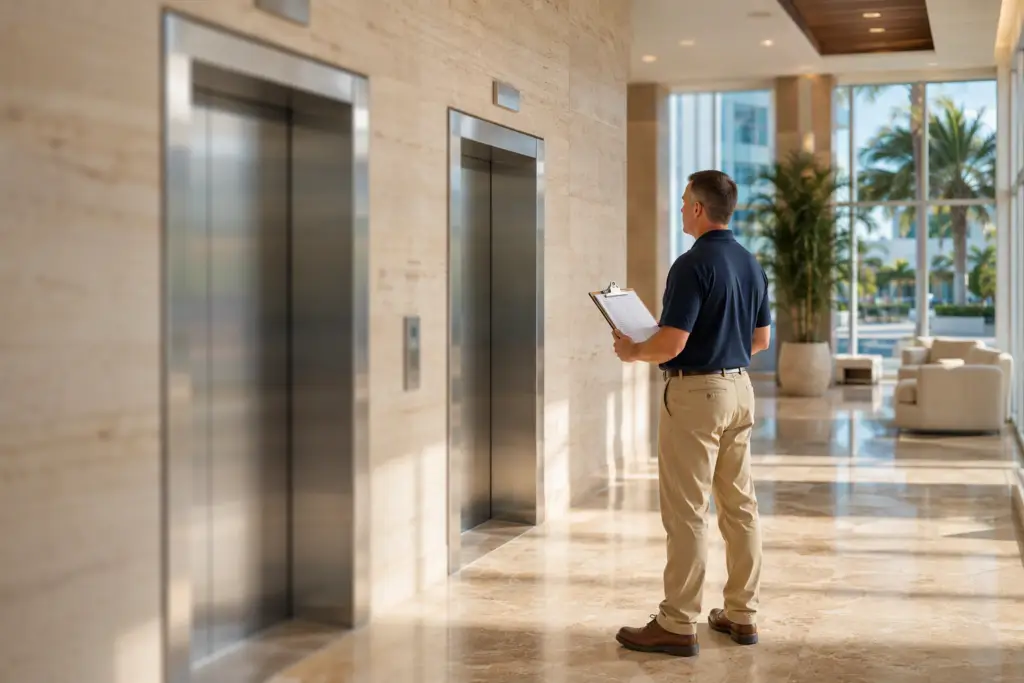
Elevator inspections are a legal requirement for virtually every commercial and residential building in Florida that operates a passenger or freight elevator. Failing an inspection can result in an elevator being taken out of service, costly emergency repairs, and potential liability exposure for building owners. Understanding exactly what inspectors look for — and taking deliberate steps to prepare — is the most reliable path to a successful outcome.
This guide covers the full inspection process, common failure points, preparation strategies, cost considerations, vendor comparison factors, and compliance timelines so building owners and facility managers have everything they need to make informed decisions.
What Does an Elevator Inspection Actually Cover?
Florida elevator inspections are conducted under a framework aligned with the ASME A17.1 Safety Code for Elevators and Escalators, which sets the national standard for elevator design, installation, operation, and maintenance. State and local inspectors evaluate an elevator against this code to determine whether it is safe for continued operation.
A standard inspection typically covers the following areas:
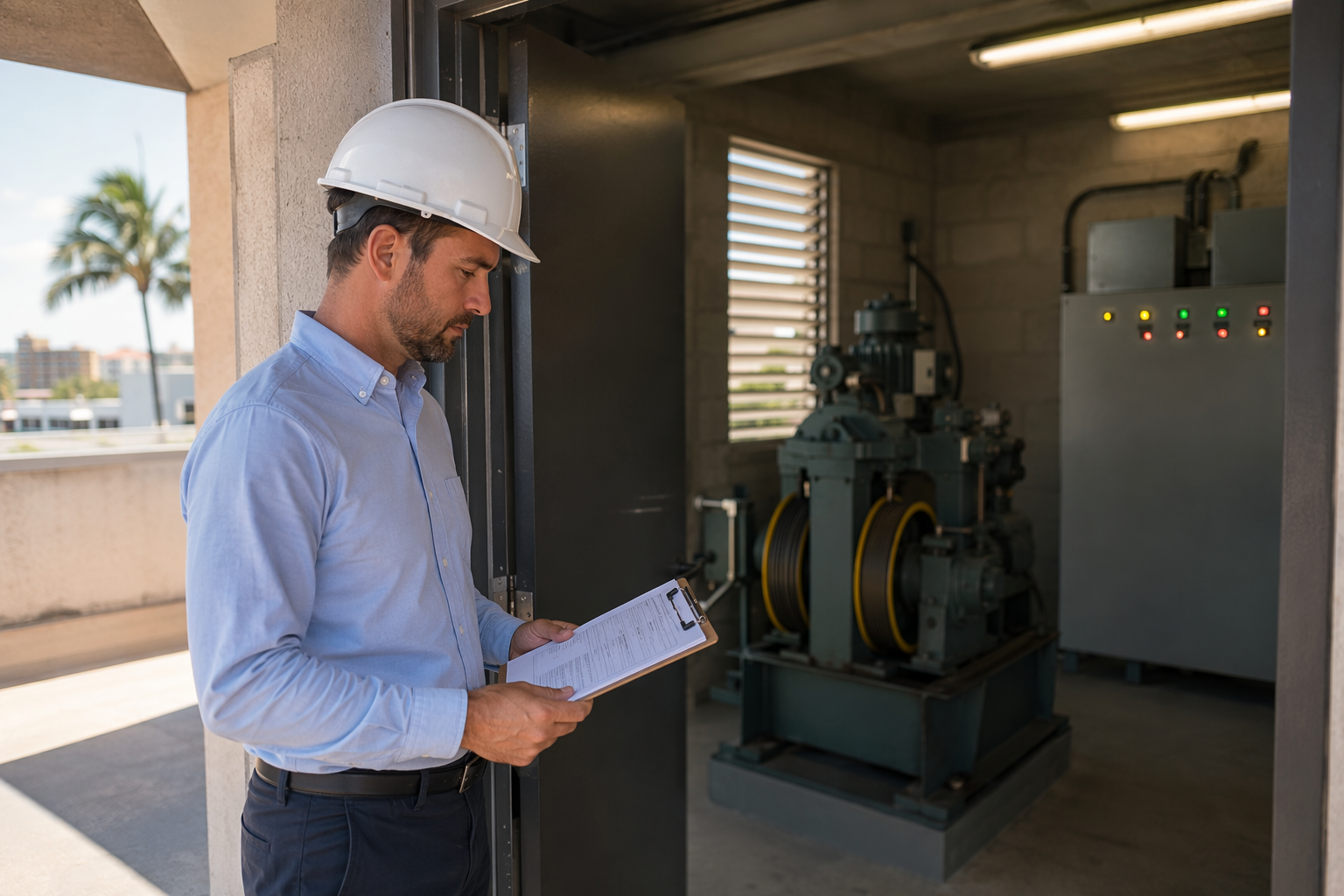
- Machine room and mechanical components: Condition of the drive machine, motor, sheaves, and ropes or hydraulic components.
- Safety devices: Governor, safeties, buffers, and interlocks must all function correctly.
- Cab interior: Emergency lighting, alarm bell, telephone or communication system, and door operation.
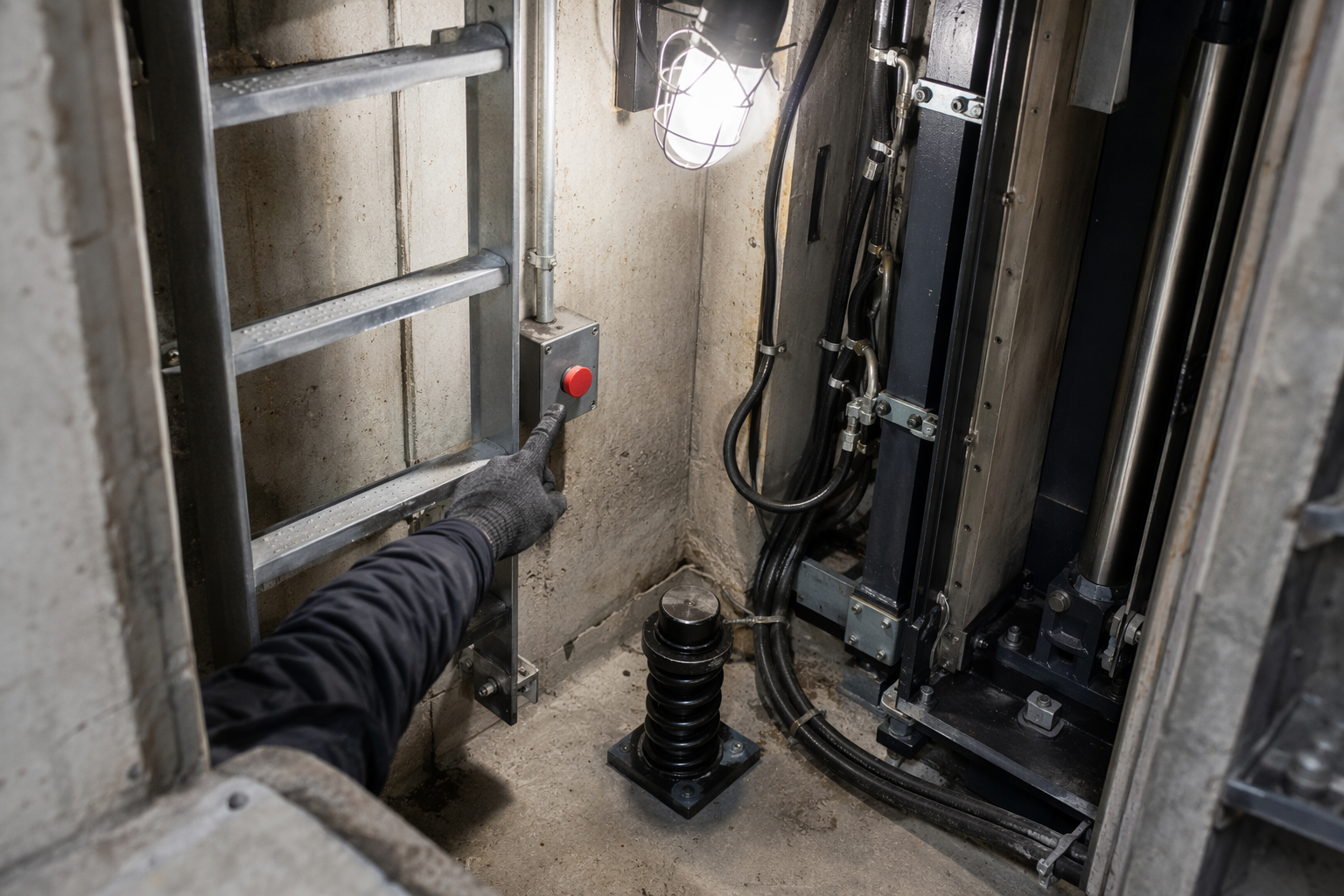
- Hoistway and pit: Lighting, pit ladder, stop switch, and clearances.
- Door operation: Door closing force, reopening devices, and timing must comply with code.
- Load and speed testing: The elevator must operate within rated capacity and speed parameters.
- Certificates and documentation: Current maintenance logs, prior inspection certificates, and required postings inside the cab.
Accessibility requirements for public accommodations are also relevant. The Americans with Disabilities Act (ADA) establishes standards that affect cab dimensions, button height, and audible/visual signals, and inspectors or plan reviewers may flag ADA non-compliance as part of a broader evaluation.
What Are the Most Common Reasons Elevators Fail Inspection?
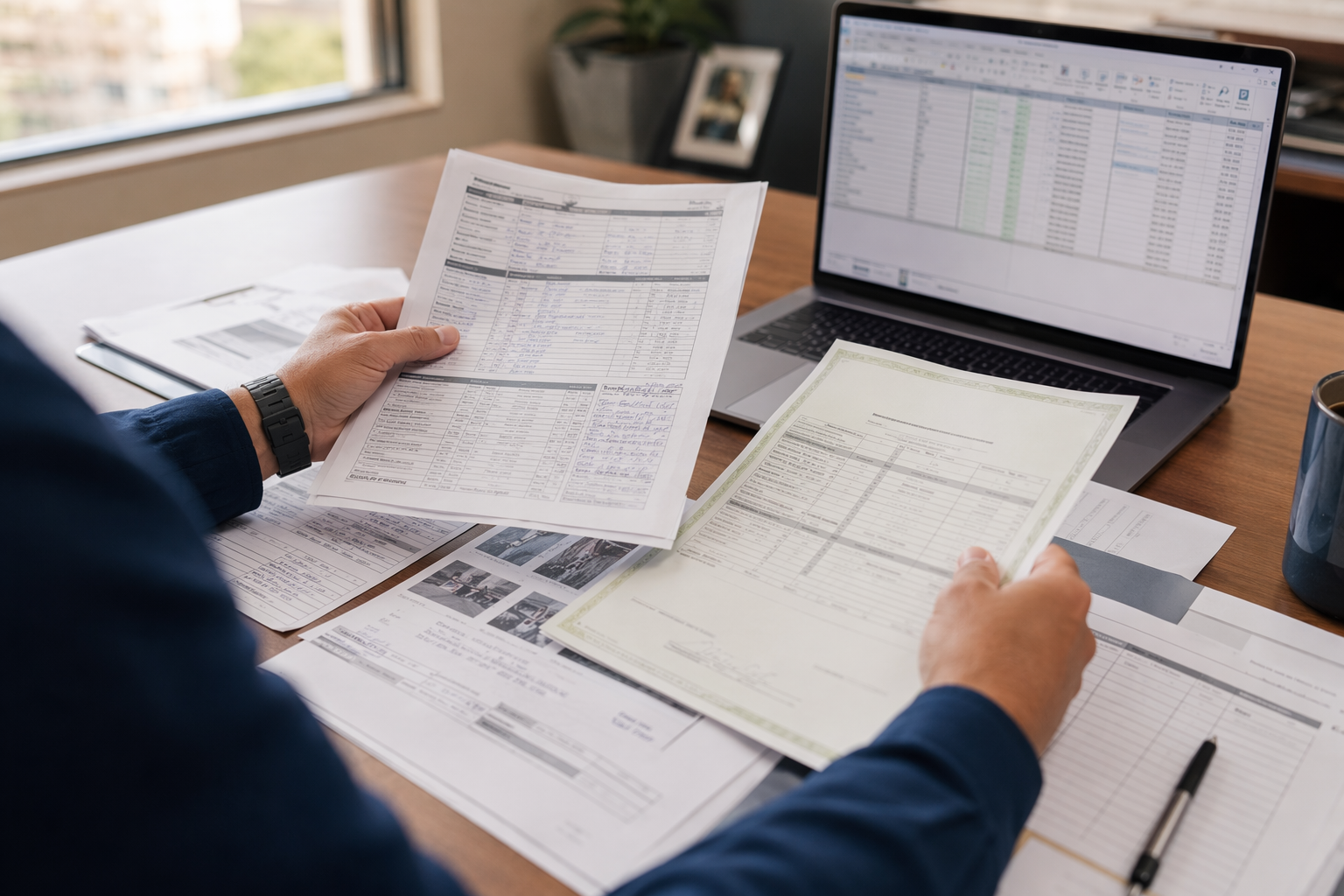
Understanding the most frequent failure points is the foundation of any effective preparation strategy. Common deficiencies cited during elevator inspections include:
- Expired or missing inspection certificates posted in the cab
- Inoperative emergency lighting or alarm systems
- Non-functioning or improperly adjusted door safety edges and reopening devices
- Oil leaks in hydraulic systems or machine rooms
- Insufficient pit lighting or a missing or broken pit stop switch
- Worn wire ropes or hydraulic hoses that have not been replaced on schedule
- Governor and safety device failures during load tests
- Incomplete or falsified maintenance logs
- Unsecured or improperly ventilated machine rooms
- Missing or expired firefighters’ emergency operation (FEO) certification
How Should Building Owners Prepare for an Elevator Inspection?
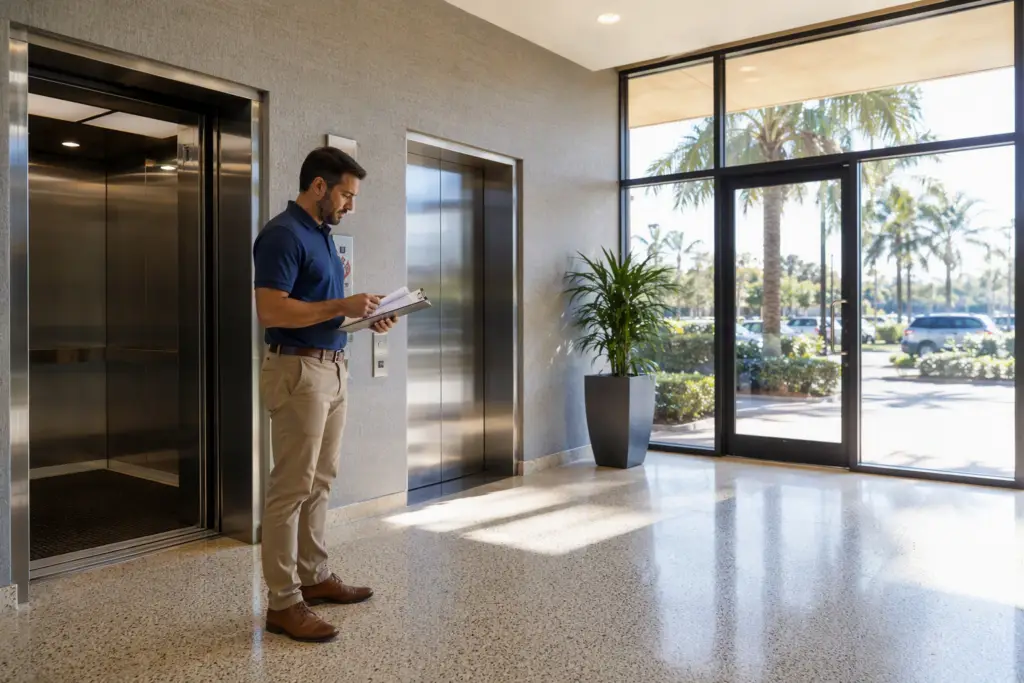
Preparation is the single most important factor in passing an elevator inspection. The following steps outline a structured pre-inspection protocol that building owners and facility managers should follow:
- Confirm the inspection date and type. Identify whether the upcoming inspection is a periodic maintenance inspection, a Category 1 (annual) test, or a Category 5 (five-year full-load safety test) as defined under ASME A17.1. Each test type has different requirements.
- Review maintenance logs and documentation. Ensure all maintenance records are up to date, legible, and accessible. Inspectors will ask to see them.
- Schedule a pre-inspection maintenance visit. Engage a qualified elevator service provider to perform a thorough pre-inspection check at least two to four weeks before the scheduled inspection date.
- Test all safety devices. Verify that emergency lighting, alarm bells, the two-way communication system, and door reopening devices all function correctly.
- Inspect the machine room and pit. Confirm that lighting is operational, the pit is clean and dry, the stop switch is accessible and functional, and no oil or hydraulic fluid is leaking.
- Check all posted certificates and required signage. The current operating certificate must be posted in the cab. Verify that load capacity signage and emergency contact information are current and visible.
- Address any open violations or deferred repairs. Any items flagged on a previous inspection report must be corrected before the new inspection. Inspectors will verify prior violation closure.
- Confirm that all required tests are scheduled and witnessed. Some tests, such as the Category 5 safety test, require advance scheduling with the authority having jurisdiction (AHJ) and must be witnessed by an inspector.
- Verify firefighters’ emergency operation (FEO) is fully functional. Test Phase I and Phase II emergency recall and operation per applicable code requirements.
- Prepare the physical space. Ensure the machine room is accessible, clean, properly lit, and free of unauthorized storage — a cluttered or inaccessible machine room is a common citation.
What Is the Difference Between a Category 1 and Category 5 Elevator Test?
Under the ASME A17.1 Safety Code for Elevators and Escalators, different test categories apply at different intervals, each with a distinct scope:
| Test Category | Frequency | Scope | Load Requirement | Who Typically Performs It |
|---|---|---|---|---|
| Category 1 | Annual | Operational safety test of all safety devices without imposing full rated load | No full rated load required | Qualified elevator contractor, witnessed by inspector |
| Category 3 | Varies by jurisdiction | Operational test of safeties and governors | Partial load in some cases | Qualified elevator contractor, witnessed by inspector |
| Category 5 | Every 5 years | Full-load safety test, including rated-load governor tripping and safety engagement | Full rated load required | Qualified elevator contractor, witnessed by inspector |
Building owners should track which category test is due and ensure the appropriate equipment and personnel are available on the inspection day. Missing a required test category is itself a code violation.
How Does DIY Preparation Compare to Hiring a Professional Elevator Service Provider?
Some building managers attempt to prepare for elevator inspections using in-house maintenance staff. While basic visual checks can be done by trained building staff, elevator inspection preparation involves code-specific technical knowledge that generally requires a licensed elevator technician.
| Factor | In-House / DIY Preparation | Professional Elevator Service Provider |
|---|---|---|
| Code Knowledge | Often limited; risk of missing code-specific deficiencies | Up to date on ASME A17.1 and Florida-specific requirements |
| Safety Device Testing | Cannot perform governor trip tests or safety engagement tests | Qualified to perform and document all required test categories |
| Documentation | May miss required formats or missing entries in maintenance logs | Maintains compliant maintenance records on building’s behalf |
| Liability | Building owner assumes full liability for any oversight | Work is performed by licensed, insured professionals |
| Pre-Inspection Repair Turnaround | May not have access to elevator-specific parts or tools | Can source parts and complete repairs ahead of inspection |
| Inspection Outcome Risk | Higher likelihood of failed or deferred items | Lower risk of violations; issues identified and resolved in advance |
| Recommended For | Visual housekeeping tasks only (lighting, signage checks) | All technical preparation, testing, and repair work |
What Are the Consequences of Failing an Elevator Inspection?
A failed elevator inspection carries significant operational and financial consequences for building owners:
- Elevator shutdown: An inspector may issue an order to cease operation immediately, removing the elevator from service until violations are corrected and a re-inspection is passed.
- Re-inspection fees: Most jurisdictions charge additional fees for re-inspections, adding to the cost of the original failure.
- Emergency repair costs: Repairs performed under a shutdown order often carry premium pricing due to urgency and limited planning time.
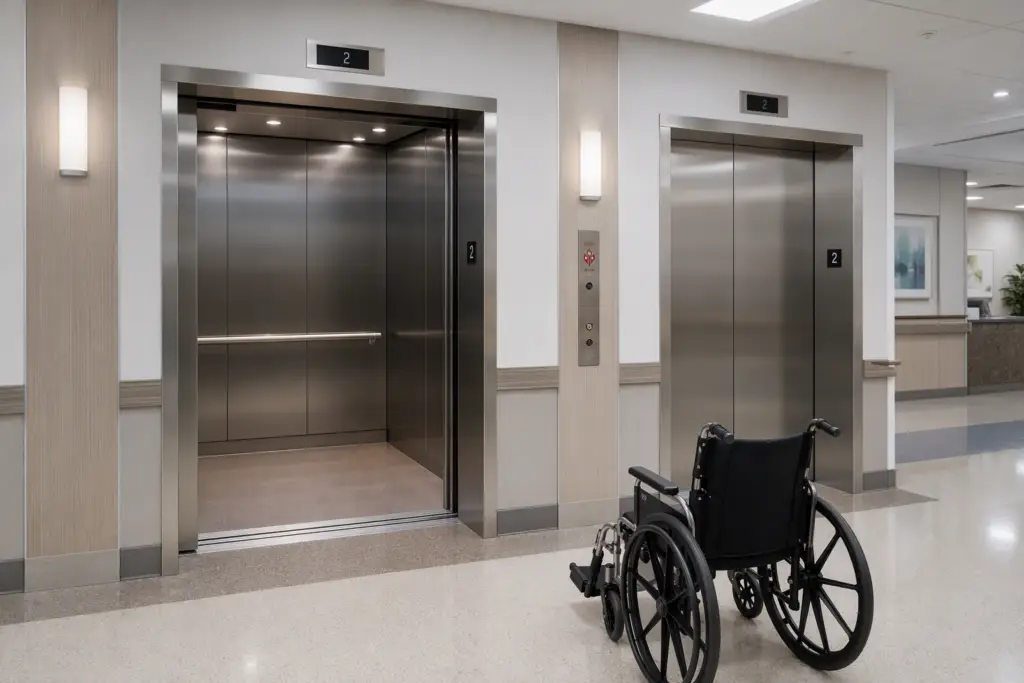
- Tenant and occupant impact: In multi-story residential or commercial buildings, an elevator outage can significantly impact accessibility, particularly for individuals with disabilities — creating potential ADA exposure.
- Legal and liability risk: Operating an elevator in violation of code — or failing to disclose a known deficiency — can create liability exposure in the event of an incident.
- Workplace safety citations: In certain commercial settings, OSHA standards may intersect with elevator safety, particularly for freight or construction lifts.
How Long Does It Take to Correct Elevator Violations Before Re-Inspection?
The timeline for correcting elevator violations depends on the nature of the deficiency. Minor items — such as replacing a burned-out light bulb, posting a missing certificate, or testing a communication device — can often be addressed within days. More significant repairs, such as replacing worn wire ropes, overhauling a hydraulic unit, or updating outdated safety devices, may require weeks of lead time for parts procurement and labor scheduling.
Building owners should never assume that violations can be corrected overnight. A pre-inspection assessment performed well in advance — ideally 30 to 60 days before the scheduled inspection date — provides enough runway to source parts, schedule technicians, and complete all required work before the inspector arrives.
What Documentation Must Be Present During an Elevator Inspection?
Inspectors routinely request or verify the following documentation during an elevator inspection:
- Current, valid operating certificate displayed inside the cab
- Maintenance logs covering the period since the last inspection
- Records of any prior violation corrections with confirmation sign-offs
- Category 1 and Category 5 test reports, signed by the performing contractor
- Load capacity placard inside the cab
- Emergency contact information posting
- Firefighters’ emergency operation (FEO) records where applicable
- Permit for any modifications made to the elevator since the last inspection
Disorganized or incomplete documentation is one of the most easily preventable reasons an inspection results in a citation. Maintaining a dedicated inspection binder for each elevator in the building is a best practice recommended by elevator service professionals.
How Do Inspection Requirements Differ for Hydraulic vs. Traction Elevators?
Both hydraulic and traction (cable-driven) elevators must comply with ASME A17.1, but certain inspection and test requirements differ based on drive type:
| Inspection Element | Hydraulic Elevator | Traction (Cable) Elevator |
|---|---|---|
| Safety Test Focus | Pressure relief valve, hydraulic fluid containment, rupture valve | Governor and safety device engagement, wire rope condition |
| Machine Room Location | Ground level or below grade; may include underground cylinder | Typically at top of hoistway (overhead machine room or machine-room-less) |
| Common Violation | Oil leaks, underground cylinder corrosion, overpressure issues | Worn ropes, sheave wear, counterweight clearance issues |
| Environmental Consideration | Hydraulic fluid containment is required to prevent soil/groundwater contamination | Less environmental risk; focus is on mechanical wear |
| Category 5 Test Complexity | Involves pressure testing of hydraulic system | Involves governor trip test under full rated load |
What Should Building Owners Look for When Choosing an Elevator Service Provider for Inspection Prep?
Not all elevator service companies offer the same level of expertise or service scope. When evaluating providers, building owners should consider the following criteria:
| Selection Criteria | What to Look For | Red Flags |
|---|---|---|
| Licensing | State-licensed elevator contractor in Florida | Unable to provide license number on request |
| Code Knowledge | Demonstrates familiarity with ASME A17.1 and Florida amendments | Vague or generic answers about code requirements |
| Service Scope | Offers pre-inspection assessments, repairs, and test witnessing support | Refuses to perform pre-inspection check before the formal inspection |
| Documentation Support | Provides written reports, maintains records, and assists with log compliance | No written records provided after service visits |
| Independence | Independent provider not tied to a single OEM; can service multiple brands | Restricted to servicing only one manufacturer’s equipment |
| Responsiveness | Can respond to urgent pre-inspection repair needs in a timely manner | Long lead times for even routine service visits |
Axxiom Elevator Florida is a certified independent elevator service provider serving building owners and facility managers throughout Florida. As an independent provider, Axxiom Elevator Florida is not limited to servicing a single manufacturer’s equipment, which means the team can support pre-inspection preparation, maintenance, and repairs across a broad range of elevator makes and models. Building owners looking for a provider who prioritizes compliance, thorough documentation, and responsive service should consider Axxiom Elevator Florida for their inspection preparation needs.
What Is the Typical Timeline for a Full Elevator Inspection Preparation Process?
A structured pre-inspection timeline helps building owners avoid last-minute surprises. The following general framework reflects industry best practices:
- 60+ days before inspection: Review maintenance logs, identify any open violations from prior inspections, and confirm test category due.
- 45–60 days before inspection: Schedule pre-inspection assessment with a qualified elevator service provider.
- 30–45 days before inspection: Begin procurement of any parts needed for repairs identified during the pre-inspection assessment.
- 14–30 days before inspection: Complete all repairs, re-test safety devices, and update maintenance documentation.
- 7–14 days before inspection: Confirm machine room access, verify postings and signage in the cab, and ensure documentation binder is complete.
- Day of inspection: Ensure a qualified representative is on site, machine room is accessible, and the elevator is operational and clean.
Does Elevator Compliance Affect Workplace Safety Requirements Under OSHA?
In settings where elevators are used for material handling, construction, or freight operations, OSHA standards may apply in addition to state elevator inspection requirements. OSHA maintains standards for powered platforms, manlifts, and vehicle-mounted work platforms that overlap with elevator safety in certain industrial and construction contexts. Building owners and employers should be aware that a failed state elevator inspection in a workplace setting may also trigger OSHA scrutiny if the elevator was being used in any capacity related to employee work activities.
How Does Regular Maintenance Affect Inspection Outcomes?
The single most reliable predictor of a successful elevator inspection is consistent, properly documented preventive maintenance. Elevators that receive scheduled maintenance visits — during which a qualified technician inspects, lubricates, adjusts, and tests all components — are significantly less likely to carry unresolved deficiencies into an inspection. Maintenance also creates the paper trail that inspectors require: a complete log demonstrating that the elevator has been actively managed and that any issues identified between formal inspections were addressed promptly.
Deferred maintenance is the root cause of most elevator inspection failures. Building owners who treat maintenance as an optional expense rather than a compliance requirement consistently face higher costs, longer outages, and more difficult inspection outcomes than those who maintain their elevators on a consistent schedule.
Pros and Cons Summary: Proactive Preparation vs. Reactive Compliance
| Approach | Pros | Cons |
|---|---|---|
| Proactive Preparation (Regular maintenance + pre-inspection assessment) |
Higher pass rate; lower emergency repair costs; complete documentation; minimal downtime; reduced liability | Requires advance scheduling and budget planning |
| Reactive Compliance (Address issues only after a failed inspection) |
No upfront preparation cost | Higher risk of elevator shutdown; emergency repair premiums; re-inspection fees; potential ADA and liability exposure; tenant disruption |
Ready to Pass Your Next Elevator Inspection?
Passing an elevator inspection in Florida requires more than showing up on the day of the test. It demands consistent maintenance, organized documentation, timely repairs, and a clear understanding of what code categories apply to each elevator in a building. The building owners and facility managers who consistently pass their inspections are those who treat compliance as an ongoing process — not a one-time event.
Axxiom Elevator Florida works with building owners throughout Florida to provide pre-inspection assessments, maintenance, repairs, and documentation support tailored to the requirements of Florida elevator compliance. As a certified independent elevator service company, Axxiom Elevator Florida brings technical expertise and code knowledge to every service engagement without being tied to a single manufacturer.
Take the First Step Toward a Successful Inspection
Do not wait until violations are cited to take action. A proactive approach protects your building, your tenants, and your investment.
Contact Axxiom Elevator Florida for a free elevator assessment:
Need elevator service you can rely on? Axxiom Elevator Florida is ready to help.