Office Building Elevator Inspection Schedule: Requirements, Timelines & Compliance Guide
Office building owners and property managers face a non-negotiable compliance obligation: keeping elevators inspected, tested, and certified on a defined schedule. Falling behind on inspections risks equipment shutdown orders, liability exposure, and — most critically — passenger safety. This guide covers every layer of the inspection schedule, from routine annual examinations to multi-year load tests, with authoritative code references and practical guidance for Florida office properties.
What Does the ASME A17.1 Code Require for Inspection Intervals?
The ASME A17.1 Safety Code for Elevators and Escalators is the foundational standard adopted — often by reference — in the majority of U.S. state and local elevator safety laws. It establishes a layered inspection and testing framework:
- Category 1 (Annual): A no-load safety test performed every 12 months. This covers brake function, door operation, safeties, and governor function without applying a full rated load to the car.
- Category 3 (One to Three Years): A governor and safety test performed under load conditions, with intervals varying by jurisdiction and equipment type.
- Category 5 (Five Years): The most comprehensive test — a full rated-load pressure test of hydraulic systems or a full-load safety and brake test for traction elevators. This test confirms that the elevator can safely carry its maximum rated capacity.
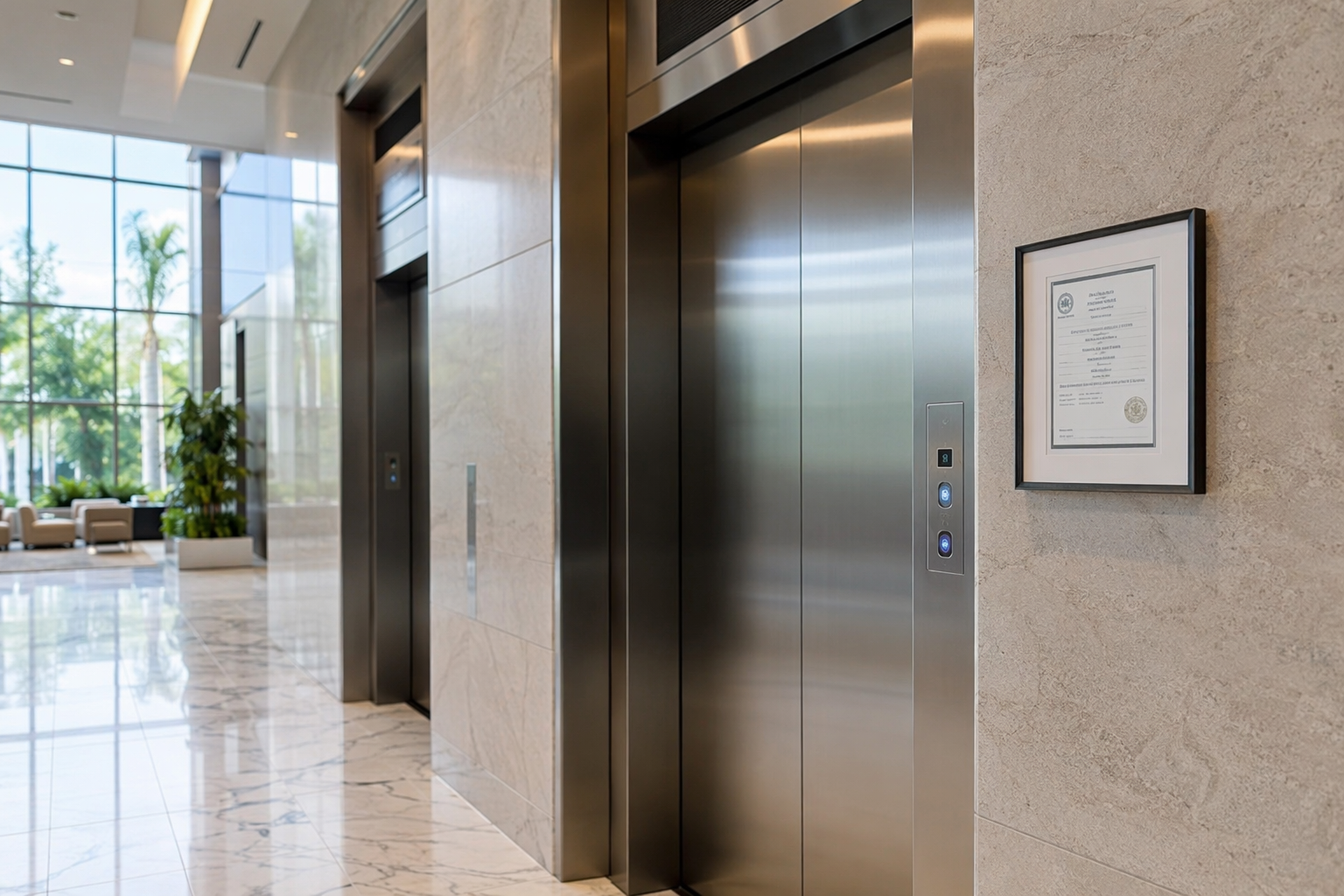
Individual states and municipalities may adopt stricter schedules or add supplemental requirements. Florida, for example, operates its elevator safety program through the Florida Department of Business and Professional Regulation (DBPR), which adopts the ASME A17.1 code by reference and requires annual inspections with a valid Certificate of Operation posted in each elevator cab.
How Often Should an Office Building Elevator Be Inspected?
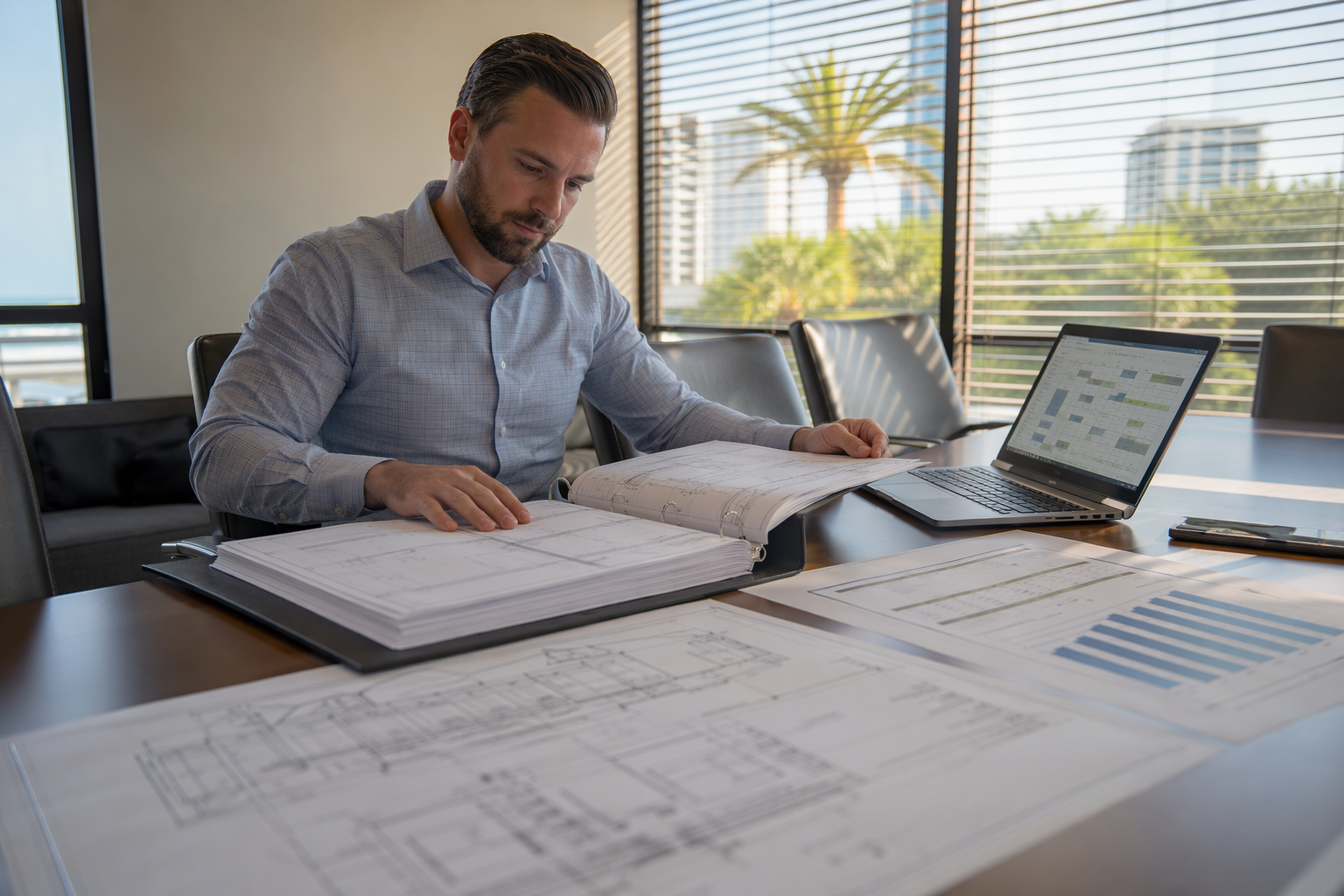
The straightforward answer: at minimum, once per year for a routine safety inspection, and once every five years for a comprehensive load test. However, several factors push responsible office building operators toward more frequent monitoring:
- Traffic volume: High-rise office towers with hundreds of daily users cycle their elevator components far faster than low-rise buildings. Increased usage correlates with accelerated wear on doors, rollers, cables, and brake components.
- Equipment age: Older traction or hydraulic systems may have manufacturer or insurer requirements for more frequent inspection intervals than code minimums.
- Post-incident review: Any safety-related event — an entrapment, a door malfunction, or an unusual noise report — should trigger an unscheduled inspection regardless of where the elevator stands in its annual cycle.
- Modernization work: After any major component replacement or modernization project, a new acceptance inspection and test is required under ASME A17.1 before the elevator returns to passenger service.
What Types of Inspections Apply to Office Building Elevators?
Understanding the distinct inspection categories prevents scheduling confusion and ensures no required test is overlooked:
| Inspection Type | Trigger / Interval | Governing Standard |
|---|---|---|
| Acceptance Inspection | Before any new or modernized elevator enters service | ASME A17.1 |
| Category 1 Annual Test | Every 12 months | ASME A17.1 |
| Category 5 Periodic Test | Every 5 years (hydraulic & traction) | ASME A17.1 |
| State/Local Routine Inspection | Annually (Florida DBPR requirement) | Florida Statute / ASME A17.1 by reference |
| Post-Incident Inspection | Following any safety event or entrapment | Jurisdiction-specific; OSHA workplace safety standards may apply |
Source: ASME A17.1 Safety Code for Elevators and Escalators. State-level intervals should be confirmed with the applicable authority having jurisdiction (AHJ).
What Happens During an Annual Elevator Inspection?
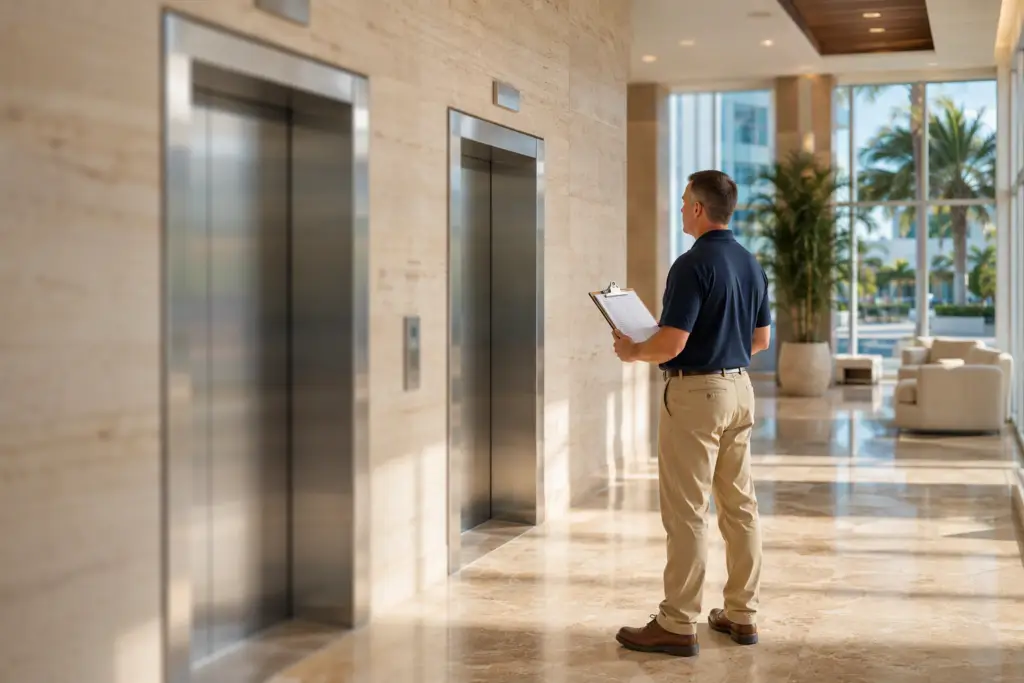
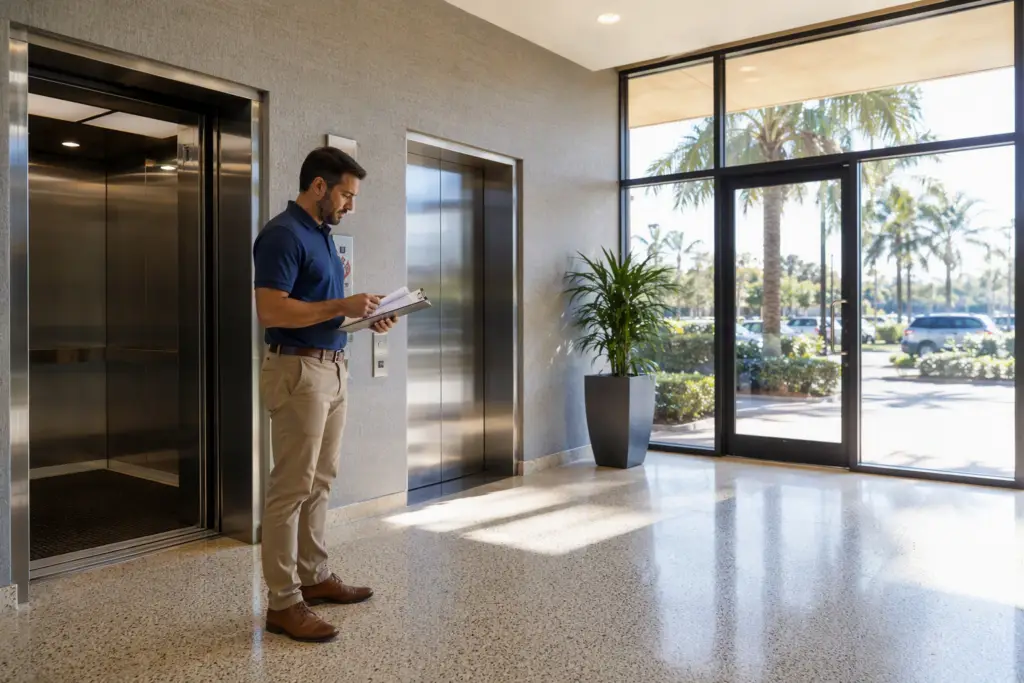
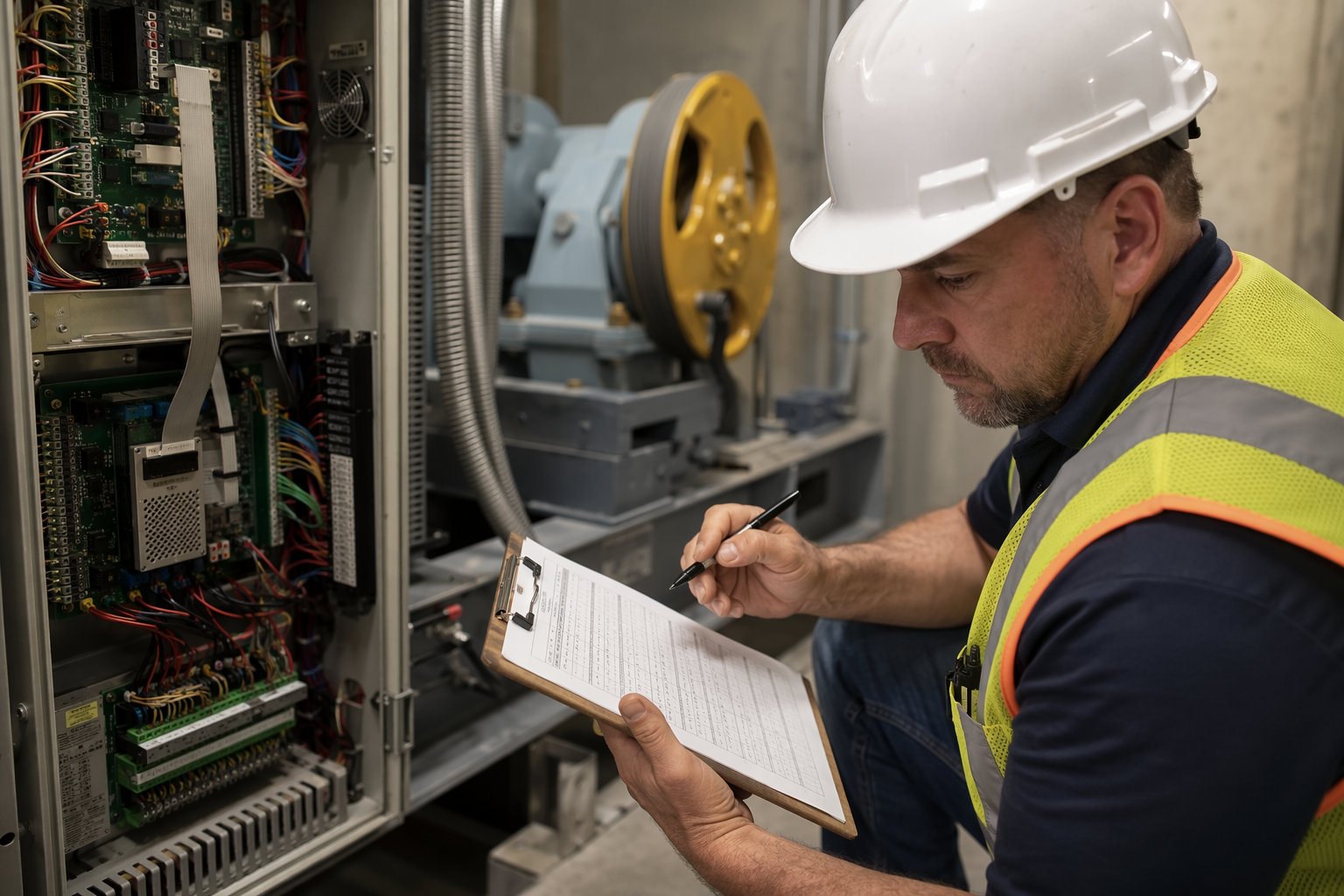
A licensed elevator inspector working through a standard annual examination typically covers the following systems and components during a Category 1 inspection:
- Machine room equipment: motor, controller, governor, and sheave condition
- Hoistway: guide rails, brackets, buffers, traveling cables, and pit condition
- Car interior: lighting, emergency phone, capacity posting, door operation, and leveling accuracy
- Safety devices: overspeed governor, safeties, door interlocks, and emergency stop switches
- Operational test: door timing, leveling, car calls, and hall calls throughout the travel range
After the inspection, the inspector generates a written report noting any violations or deficiencies. In Florida, a Certificate of Operation is issued when the elevator passes; deficiencies must be corrected within the timeframe specified by the authority having jurisdiction before the certificate is granted or renewed.
What Is the Step-by-Step Process for Scheduling a Code-Compliant Elevator Inspection?
- Identify your authority having jurisdiction (AHJ). In Florida, this is the Department of Business and Professional Regulation (DBPR) Elevator Safety Unit. Confirm which edition of ASME A17.1 your jurisdiction has adopted for 2026.
- Audit your inspection records. Pull the previous Certificate of Operation and all prior inspection reports to determine when the last Category 1 and Category 5 tests were completed.
- Calculate upcoming test due dates. Subtract the date of the last Category 5 test from today to determine whether a five-year load test is approaching. Note the annual inspection expiration date from the current certificate.
- Engage a licensed elevator service provider. Retain a company whose inspectors or affiliated third-party inspectors hold the appropriate QEI (Qualified Elevator Inspector) certification recognized under ASME QEI-1.
- Schedule the inspection with sufficient lead time. Plan at least four to six weeks ahead of your certificate expiration date to allow time for any deficiency corrections before the certificate lapses.
- Prepare the machine room and pit. Ensure the machine room is clean, dry, accessible, and properly lit. Clear the pit of standing water or debris. Confirm emergency lighting is functional.
- Coordinate tenant communications. For multi-tenant office buildings, notify occupants of any planned outage windows needed for load testing, which typically requires taking the elevator out of service.
- Review the inspection report and address deficiencies. Upon receipt of the written report, prioritize any items classified as imminent hazards, which may require immediate equipment shutdown, before addressing lower-priority items.
- Obtain and post the Certificate of Operation. Once all deficiencies are resolved and the inspection passes, ensure the certificate is posted inside the elevator cab as required by Florida law.
- File records and set calendar reminders. Retain all inspection reports for the period required by your AHJ and set advance reminders for the next annual inspection and upcoming five-year test.
What Are the ADA Accessibility Requirements Related to Elevator Inspections?
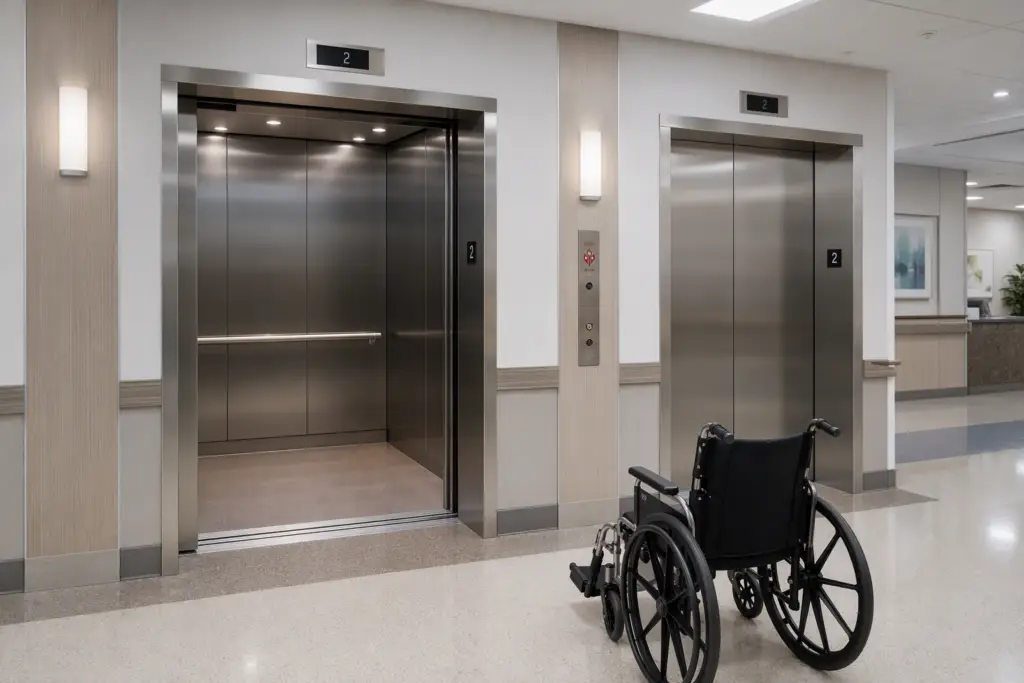
While the Americans with Disabilities Act (ADA) does not set its own inspection schedule, it does require that elevators in office buildings subject to the ADA remain operational and accessible. Key ADA-related considerations during inspections include:
- Leveling accuracy: the car must stop within a specified tolerance of the landing to allow wheelchair access without a gap hazard
- Door timing: doors must remain open long enough for individuals using mobility devices to enter and exit safely
- Auditory and visual signals: floor indicators, door-open chimes, and emergency communication devices must be functional
- Emergency communication: the ADA requires a two-way communication system in elevator cabs so that passengers with disabilities can summon help during an entrapment
Office building managers should use the annual inspection as an opportunity to document that all ADA-required features are operational, reducing liability exposure and ensuring equitable access for all tenants and visitors.
What Are the Consequences of Missing an Elevator Inspection Deadline?
The consequences of an expired or missed elevator inspection escalate quickly and affect multiple areas of building operations:
- Equipment shutdown orders: Florida DBPR inspectors have authority to order an elevator taken out of service immediately if its Certificate of Operation has lapsed or if imminent hazards are identified.
- Civil penalties: Operating an elevator without a valid certificate can expose building owners to monetary fines assessed by the authority having jurisdiction on a per-day basis.
- Insurance complications: Many commercial property and liability insurers require current inspection certificates. A lapse may void coverage for elevator-related claims or trigger a policy review.
- Tenant and lease implications: Office leases often include building systems availability as part of the landlord’s obligations. An extended elevator shutdown can create lease disputes or rent abatement claims.
- Liability exposure: In the event of a passenger injury on an elevator with a lapsed inspection record, the absence of a current certificate significantly strengthens a negligence claim against the building owner.
What Drives the Cost of an Office Building Elevator Inspection?
Because pricing varies widely by equipment type, jurisdiction, and scope, specific dollar figures are not cited here. However, the primary factors that drive inspection and testing costs are well established in the industry:
- Number of elevators: Multi-elevator office buildings incur costs per unit, though some service providers offer portfolio-level efficiencies.
- Type of test required: A Category 5 five-year test is substantially more involved — and therefore more costly — than a routine Category 1 annual inspection, because it requires load weights, additional personnel, and longer equipment downtime.
- Equipment age and condition: Older equipment that requires pre-inspection remediation work before it can pass adds to the total engagement cost.
- Travel and access logistics: High-rise buildings with complex machine room configurations or pit access challenges may require additional labor time.
- Deficiency correction work: Any repairs or parts replacements identified during the inspection are priced separately from the inspection fee itself.
- Third-party vs. in-house inspection: Some jurisdictions require independent third-party inspectors; others allow the maintaining company’s personnel to conduct certain tests. The inspection model affects cost structure.
How Should an Office Building Create an Ongoing Elevator Inspection Calendar?
A proactive inspection calendar transforms compliance from a reactive scramble into a managed operational process. Best practices include:
- Maintaining a single master log for each elevator unit that records all inspection dates, test categories, certificate numbers, and deficiency resolution dates
- Setting automated reminders at 90 days, 60 days, and 30 days before each certificate expiration
- Scheduling the Category 5 five-year test at least three months in advance to allow for load-weight logistics and tenant notification
- Aligning maintenance contract renewals with the inspection calendar so the maintaining company is under contract and accountable when inspection dates arrive
- Reviewing the calendar annually with the service provider to flag any changes in code adoption or local regulatory updates that may affect interval requirements
What Industry Trends Are Shaping Elevator Inspection Practices in 2025–2026?
Several meaningful shifts are influencing how office building elevator inspections are conducted and documented heading into 2026:
- Remote monitoring and predictive maintenance: Building owners are increasingly deploying connected elevator monitoring systems that track door cycle counts, leveling deviations, and motor performance data in real time. This data supplements — but does not replace — mandatory code inspections, and helps maintenance teams identify issues between annual examinations.
- Digital inspection records: Authorities having jurisdiction in multiple states are moving toward digital certificate issuance and online inspection report portals, replacing paper-based systems and allowing building managers to verify certificate status instantly.
- Increased enforcement activity: Post-pandemic, many state elevator safety programs have resumed active enforcement after period of reduced inspections, creating a backlog of buildings that need to come into compliance.
- Code edition adoption updates: As states continue to adopt newer editions of ASME A17.1, office building operators should confirm with their AHJ which edition governs their equipment in 2026, as newer editions may introduce revised test intervals or procedures.
- Sustainability and modernization overlap: Energy-efficiency modernization projects — replacing older hydraulic systems with machine-room-less traction units — trigger acceptance inspections and reset the inspection calendar, creating an opportunity for buildings to start fresh with a compliant, documented inspection history.
How Does Axxiom Elevator Florida Support Office Building Inspection Compliance?
Axxiom Elevator Florida provides data-driven elevator maintenance and inspection coordination services for office buildings across Florida. The team works with building owners and property managers to audit current inspection records, identify approaching Category 1 and Category 5 test deadlines, and coordinate with licensed third-party inspectors to ensure certificates are obtained before expiration dates. By treating inspection compliance as an ongoing managed process rather than an annual event, Axxiom Elevator Florida helps office building operators avoid shutdown orders, reduce liability exposure, and maintain uninterrupted elevator service for tenants.
What Records Should an Office Building Retain After an Elevator Inspection?
Proper recordkeeping is itself a compliance obligation and a risk management tool. Office buildings should retain:
- All inspection reports, including any deficiency notices, for the period required by the Florida DBPR (confirm current retention requirements with the AHJ)
- Copies of all Certificates of Operation, both current and historical
- Documentation of all deficiency corrections, including dates of repair and the identity of the personnel who performed the work
- Maintenance logs from the elevator service contractor, which may be requested during an inspection or in the event of a legal claim
- Records of any acceptance inspections following modernization or major component replacement
Are There OSHA Requirements That Affect Elevator Inspections in Office Buildings?
OSHA general duty clause obligations require employers to provide a workplace free from recognized hazards. While OSHA does not administer elevator-specific inspection programs for passenger elevators (that authority rests with state elevator safety agencies), OSHA standards do apply to the maintenance and service personnel who work on elevator equipment. Construction elevators and material hoists on office building renovation projects fall under specific OSHA standards for personnel hoists. Building managers overseeing renovation projects with temporary lifting equipment should confirm applicable OSHA requirements with their contractor.
What Is the Difference Between an Elevator Inspection and an Elevator Maintenance Contract?
These two services are distinct and should not be treated as interchangeable:
- Inspection: A formal examination conducted by a qualified or licensed inspector to assess code compliance and produce a documented report. In Florida, many inspections must be conducted by a third party independent of the maintaining company.
- Maintenance contract: An ongoing service agreement with an elevator company that covers routine lubrication, adjustment, parts replacement, and emergency callback response. Maintenance work keeps the elevator running reliably between inspections but does not fulfill the inspection requirement.
A well-structured maintenance contract reduces the likelihood of deficiencies being cited during an inspection, but building owners must still ensure that the formal inspection and testing schedule is met independently.
Frequently Asked Questions: Office Building Elevator Inspection Schedule
How often are office building elevators required to be inspected?
Under the ASME A17.1 Safety Code for Elevators and Escalators, office building elevators require a Category 1 annual inspection every 12 months and a comprehensive Category 5 test every five years. Florida follows these intervals through its DBPR elevator safety program.
What is a Category 5 elevator test and when is it required?
A Category 5 test is the most rigorous periodic examination required under ASME A17.1. It involves applying the elevator’s full rated load to test brakes, safeties, and — for hydraulic elevators — pressure-relief valves. It is required every five years for most elevator types.
Can an office building elevator operate without a current Certificate of Operation?
No. In Florida and most U.S. jurisdictions, operating an elevator without a current valid Certificate of Operation is a violation that can result in mandatory shutdown, civil penalties, and insurance complications. The certificate must be visibly posted inside the elevator cab.
Who is qualified to inspect an office building elevator in Florida?
Florida requires elevator inspections to be conducted by inspectors certified under the ASME QEI-1 standard or licensed by the state. Many jurisdictions additionally require that the inspector be independent of the company maintaining the elevator for routine service.
What happens if an elevator fails its annual inspection?
If an elevator fails its annual inspection, the inspector issues a deficiency report. Imminent hazards may result in an immediate out-of-service order. Non-imminent deficiencies must typically be corrected within a specified timeframe before a Certificate of Operation is issued. The elevator cannot legally carry passengers until it passes reinspection.
How long does an annual elevator inspection typically take?
The duration depends on elevator type, age, number of floors served, and the inspector’s findings. A routine annual inspection for a single mid-rise office elevator commonly requires several hours, while a Category 5 test requiring load weights and comprehensive testing typically takes longer and may necessitate a full day or more for complex equipment.
Does a new office building elevator need an inspection before it can be used?
Yes. Under ASME A17.1, any new elevator installation must pass a formal acceptance inspection and test before it is placed into passenger service. This applies equally to newly constructed buildings and to existing buildings receiving a new elevator installation.
What maintenance tasks should be completed before an annual elevator inspection?
Before the annual inspection, the maintaining company should ensure the machine room is clean and accessible, all lighting is functional, the pit is dry and clear of debris, lubrication is current, door operation is smooth and within timing tolerances, and all safety devices have been recently tested and logged. Addressing known deficiencies before the inspection avoids unnecessary failures and reinspection scheduling.
Are older office building elevators subject to the same inspection schedule as new ones?
Yes, the annual and five-year inspection intervals apply to elevators regardless of age. However, older equipment may be subject to additional mandatory upgrade requirements under the edition of ASME A17.1 adopted by the local authority having jurisdiction, and may also carry more frequent inspection recommendations from the maintaining company due to component wear patterns.
How does elevator inspection scheduling affect tenant relations in office buildings?
Proactive scheduling with adequate tenant notification minimizes disruption. Category 5 five-year tests that require load weights and extended equipment downtime should be scheduled during off-peak hours — typically early mornings, evenings, or weekends — and communicated to tenants well in advance. Unannounced shutdowns resulting from failed inspections or expired certificates create far greater tenant relations challenges than planned, well-communicated maintenance windows.
Get Expert Elevator Inspection Compliance Support for Your Office Building
Maintaining a compliant elevator inspection schedule protects tenants, limits liability, and keeps office building operations running without costly interruptions. Axxiom Elevator Florida works with office building owners and property managers throughout Florida to audit inspection records, coordinate required testing, and ensure that every elevator in the portfolio holds a current Certificate of Operation.
Contact Axxiom Elevator Florida for a free elevator assessment:
Need elevator service you can rely on? Axxiom Elevator Florida is ready to help.