State Elevator Inspection Frequency: What Building Owners Need to Know
Elevator inspection frequency is one of the most consequential compliance questions a building owner or facility manager faces. Miss a required inspection cycle and the consequences range from fines and permit revocations to elevator shutdowns and liability exposure. This authority page consolidates what the codes require, how states differ, what drives compliance timelines, and how building owners in Florida can stay ahead of every inspection cycle.
What Is the Standard Baseline for Elevator Inspection Frequency?
The foundational reference for elevator safety in the United States is the ASME A17.1 Safety Code for Elevators and Escalators. This code, maintained by the American Society of Mechanical Engineers and updated on a regular edition cycle, establishes minimum requirements for the design, construction, operation, inspection, testing, and maintenance of elevators and related conveyances.
Under the ASME A17.1 framework, elevators are subject to periodic inspections and tests that are defined by category — ranging from routine periodic inspections to more comprehensive Category 1 and Category 5 tests that occur on different intervals depending on the type of equipment and its drive system. States adopt these requirements either wholesale or with modifications, which is why inspection frequency is not uniform across the country.
The key principle is this: the ASME A17.1 code sets a floor, not a ceiling. Any state can — and many do — impose stricter or more frequent inspection requirements than the model code prescribes.
How Does Elevator Inspection Frequency Vary by State?

Because elevator regulation in the United States is administered at the state level (and sometimes delegated further to counties or municipalities), inspection frequency varies meaningfully across jurisdictions. Some states inspect annually, others every six months for high-traffic or high-risk equipment, and a small number have adopted risk-based inspection models that tie frequency to elevator usage patterns, maintenance history, and equipment age.
States that have adopted the most current editions of the ASME A17.1 Safety Code for Elevators and Escalators generally align with its inspection intervals for periodic inspections and Category tests. States using older adopted editions may have different — sometimes less stringent — requirements, though local amendments can work in either direction.
In Florida, the Department of Business and Professional Regulation (DBPR) oversees elevator safety through the Bureau of Elevator Safety. Florida law requires that most elevators under state jurisdiction receive an annual safety inspection conducted by a licensed elevator inspector. Certain categories of equipment, including those in private residences, may be subject to different rules, but commercial and publicly accessible elevators in Florida are firmly in the annual inspection cycle.
What Are the ASME A17.1 Inspection Categories and Their Frequencies?
The ASME A17.1 Safety Code for Elevators and Escalators organizes tests into categories that correspond to different levels of inspection depth and different intervals:
- Periodic Inspections: These are the routine safety inspections that occur at the intervals established by the authority having jurisdiction (AHJ) — typically annually in most states. They cover operational safety, door functioning, safety devices, and general condition.
- Category 1 Tests: Required at intervals specified in the code (generally annual for most hydraulic and traction elevators), these tests verify the operation of safety and control devices without full-load, rated-speed testing of buffers and safeties.
- Category 3 Tests: Applicable to certain escalators and moving walks; intervals are defined by equipment type.
- Category 5 Tests: The most comprehensive test tier, required at five-year intervals for most traction elevators. Category 5 testing involves full-load, full-speed testing of buffers, safeties, and governor — a significant undertaking that requires advance planning and qualified personnel.
Building owners often conflate “inspection” with “test,” but these are distinct events with distinct intervals. A building may pass its annual periodic inspection and still have an upcoming Category 5 test obligation that requires separate scheduling and preparation.
Why Do Some Elevators Require More Frequent Inspections Than Others?
Several factors can drive a higher inspection frequency for a specific elevator, even within the same state:
- Equipment age: Older elevators with aging components may be flagged for more frequent monitoring by the AHJ following a violation or near-miss.
- Violation history: Elevators with prior inspection failures or unresolved violations may be placed on an accelerated re-inspection schedule until compliance is confirmed.
- Occupancy and traffic: High-traffic facilities such as hospitals, airports, and transit hubs may face shorter inspection intervals or supplemental safety reviews due to the volume of daily use.
- Equipment type: Hydraulic elevators, traction elevators, limited-use/limited-application (LULA) elevators, and platform lifts each carry different inspection and test interval requirements under the code.
- State or local amendments: A municipality may amend the state code to require semi-annual inspections in certain building classifications.
What Happens If an Elevator Fails a State Inspection?
When a state-licensed inspector identifies violations during a periodic inspection, the sequence of events follows a defined regulatory process:
- Violation notice issued: The inspector documents each deficiency and issues a formal notice to the building owner or responsible party, citing the specific code sections violated.
- Correction timeline assigned: Depending on the severity of the violation, the AHJ assigns a deadline for corrective action. Imminent hazard violations may result in an immediate out-of-service order.
- Elevator placed out of service (if warranted): For violations that present a risk to public safety, the elevator must be taken offline until repairs are completed and verified. Operating an out-of-service elevator exposes building owners to significant liability.
- Corrective work performed: A licensed elevator contractor completes the required repairs or modifications to bring the equipment into code compliance.
- Re-inspection scheduled: The building owner requests a follow-up inspection, and a state-licensed inspector returns to verify that all cited deficiencies have been resolved.
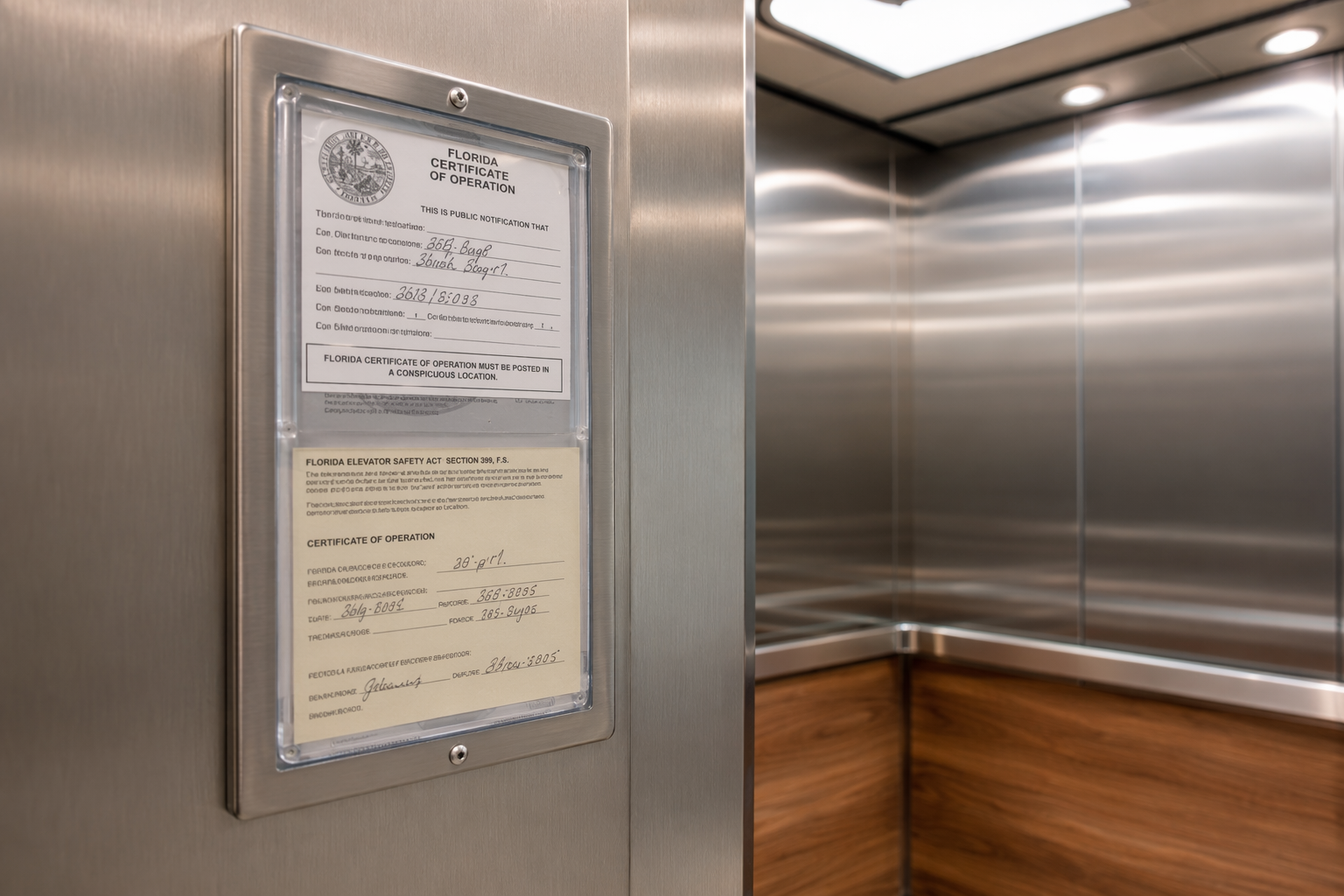
- Certificate of operation reinstated: Once the elevator passes re-inspection, the operating certificate is updated and the elevator may return to service.
The cost and disruption associated with reactive compliance — repairing an elevator after it has been cited and removed from service — is substantially higher than proactive maintenance and pre-inspection preparation. This is a central reason why many building owners partner with qualified elevator contractors to conduct maintenance inspections in advance of the official state inspection cycle.
How Does ADA Compliance Intersect with Elevator Inspection Requirements?
The Americans with Disabilities Act (ADA) imposes accessibility requirements on elevators in buildings subject to its scope. While ADA compliance is not a component of the state elevator safety inspection in the same way that mechanical safety is, accessibility deficiencies can surface during inspections or audits and may require separate remediation.
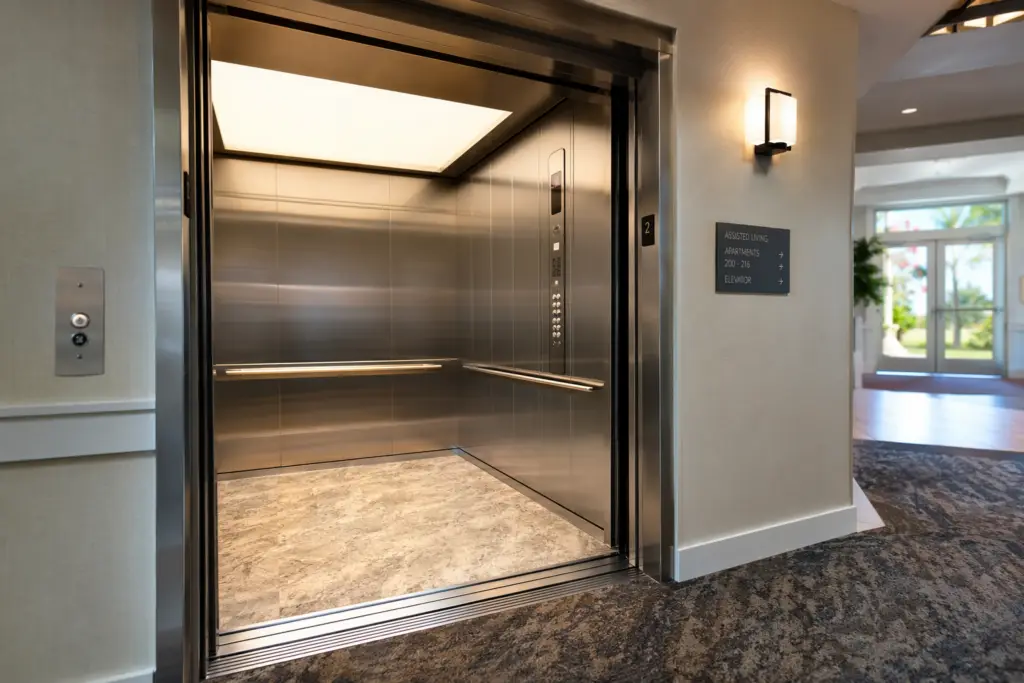
Under the ADA, elevators in multi-story facilities that are not exempt (the ADA provides limited exemptions for certain small facilities) must meet standards for cab dimensions, door operation, floor designation signage, control panel height and Braille, and audible signals, among other requirements. Building owners should treat ADA accessibility as a parallel compliance obligation that runs alongside — not as a substitute for — state elevator safety inspection requirements.
What Role Does OSHA Play in Elevator Inspection Frequency?
For elevators in workplace settings — including construction hoists, material lifts, and freight elevators used by workers — OSHA (Occupational Safety and Health Administration) standards apply in addition to state elevator safety codes. OSHA regulations address worker safety during elevator operation, maintenance, and inspection activities and can impose obligations on employers regarding the condition of elevators in their facilities.
In states that operate their own OSHA-approved State Plans, workplace elevator requirements may differ slightly from federal OSHA standards. Building owners and facility managers with freight or service elevators used by employees should ensure that their compliance program addresses both the state elevator code inspection cycle and applicable OSHA workplace safety standards.
What Should Building Owners Do to Prepare for a State Elevator Inspection?
- Confirm the inspection due date: Review the current operating certificate to identify the expiration date. State inspection cycles are typically tied to certificate expiration, so knowing the deadline is the starting point for all preparation.
- Audit maintenance records: Compile all maintenance logs, repair invoices, and prior inspection reports. Inspectors review records as part of the inspection process, and gaps in documentation can result in violations independent of the elevator’s physical condition.
- Schedule a pre-inspection maintenance visit: A qualified elevator contractor can conduct a thorough review of the elevator’s mechanical, electrical, and safety systems before the official inspection, identifying and resolving deficiencies in advance.
- Verify that required Category tests are current: Confirm whether any Category 1 or Category 5 test obligations are due alongside or within the same cycle as the periodic inspection. Scheduling these in advance of the inspection avoids compliance gaps.
- Check for open permits or prior violations: Unresolved violations or open permits from prior inspection cycles can complicate or delay a new certificate of operation.
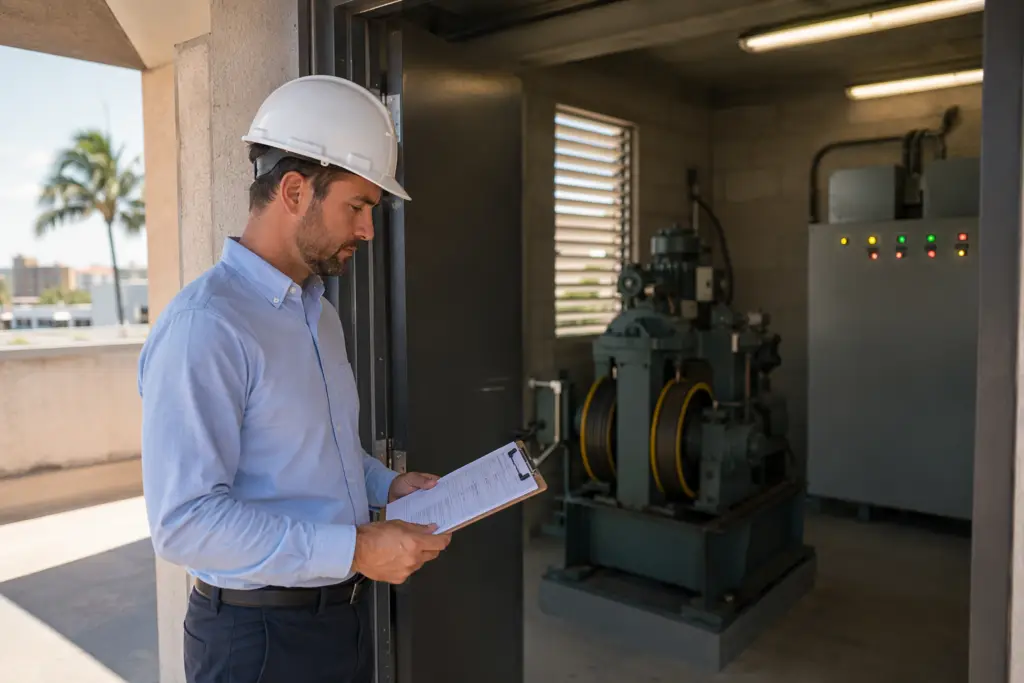
- Ensure machine room and pit access: Inspectors require access to the machine room, pit, and all elevator components. Blocked access or unsafe conditions in these areas are citable violations.
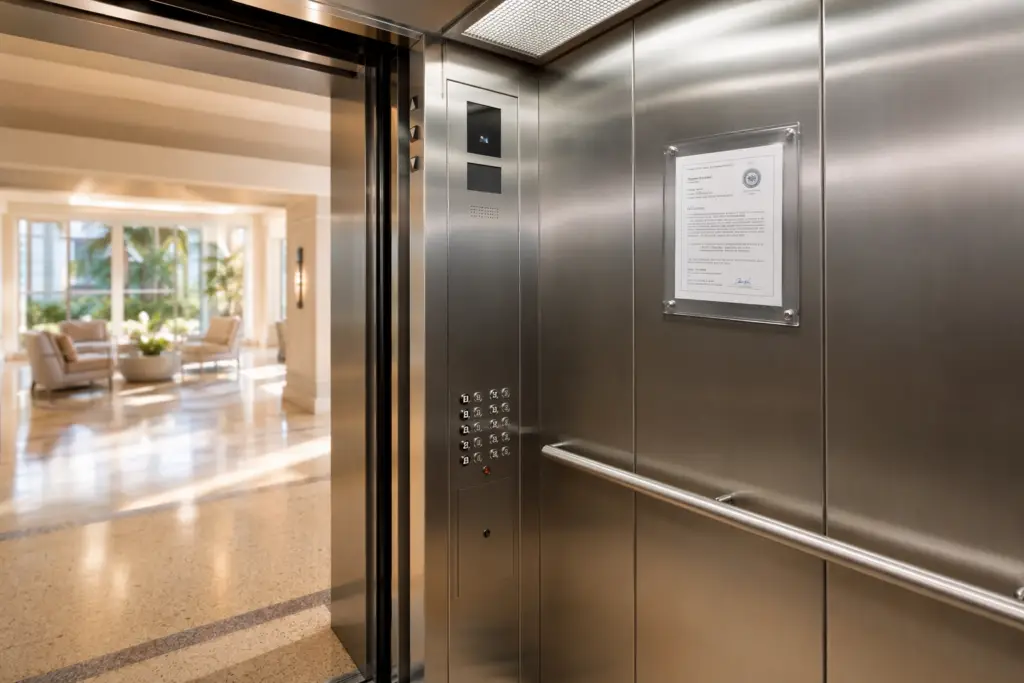
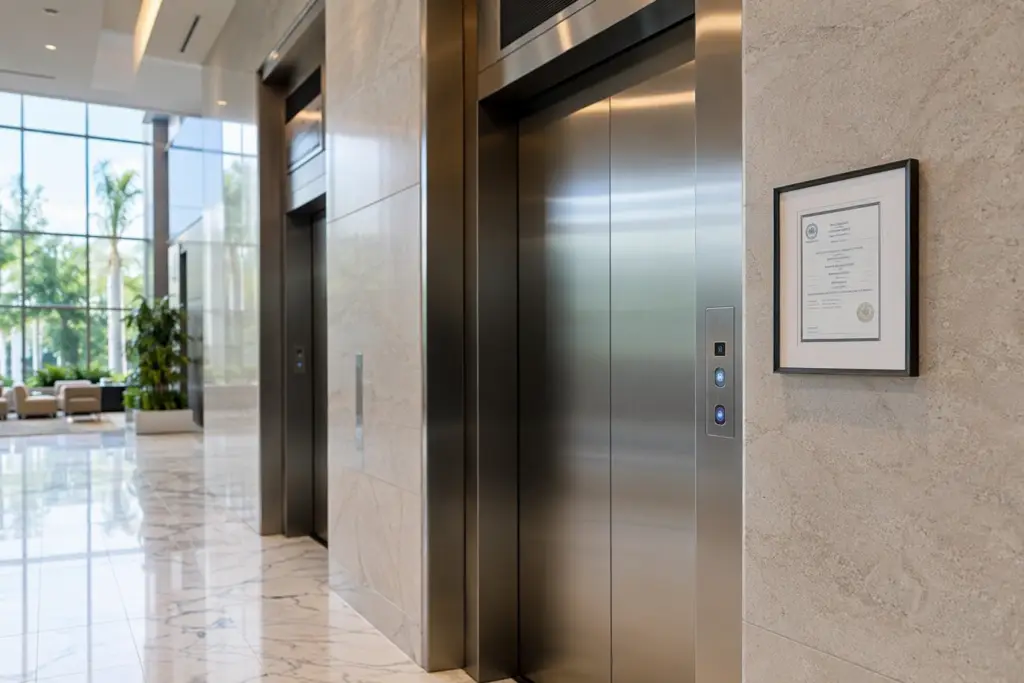
- Confirm that all required signage and certificates are posted: State law typically requires that the current operating certificate and other specified notices be posted in or near the elevator cab.
How Are Elevator Inspection Frequencies Changing in 2025 and 2026?
Several qualitative trends are shaping how states approach elevator inspection frequency heading into 2025 and 2026:
Risk-based inspection models: A growing number of state regulators and industry bodies are examining risk-based inspection frameworks that would tie inspection frequency to objective risk indicators — including equipment age, maintenance compliance history, and usage intensity — rather than applying a uniform calendar interval to all elevators regardless of condition. This approach, already in use in some industries, is under discussion in the elevator sector as a way to allocate limited inspector resources more efficiently.
Code edition adoption cycles: States that are still operating under older adopted editions of the ASME A17.1 Safety Code for Elevators and Escalators are under ongoing pressure from industry advocates and safety groups to update their adoptions. As states update to more recent code editions, inspection and test interval requirements may shift — in some cases becoming more rigorous, in others becoming better aligned with actual risk profiles.
Remote monitoring and predictive maintenance: Technology that enables continuous remote monitoring of elevator performance is increasingly influencing regulatory conversations about what constitutes adequate oversight. While no state has yet replaced mandatory physical inspections with remote monitoring alone, these technologies are beginning to inform maintenance protocols and may eventually factor into how AHJs calibrate inspection intervals for well-maintained, monitored equipment.
Inspector workforce capacity: Many state elevator inspection programs face workforce constraints as experienced inspectors retire and the pipeline of licensed replacements grows more slowly than demand. This is a practical factor that can affect inspection scheduling timelines and underscores the importance of building owners requesting inspections well in advance of certificate expiration.
How Does Elevator Type Affect Inspection Frequency?
Not all elevators are subject to identical inspection schedules. The ASME A17.1 Safety Code for Elevators and Escalators distinguishes among equipment types, and state codes follow suit. Common distinctions include:
- Hydraulic elevators: Subject to annual periodic inspections and Category 1 tests, with specific requirements related to hydraulic fluid containment and pressure testing that do not apply to traction equipment.
- Traction elevators (geared and gearless): Annual periodic inspections and Category 1 tests, plus Category 5 testing at five-year intervals — the most demanding test cycle in the code.
- Limited-use/limited-application (LULA) elevators: Governed by ASME A17.1 provisions specific to LULA equipment, with inspection intervals set by the AHJ.
- Platform lifts and stairway chairlifts: Covered under ASME A18.1 (the Safety Standard for Platform Lifts and Stairway Chairlifts), a separate but related standard, with inspection intervals that vary by state adoption.
- Escalators and moving walks: Subject to their own periodic inspection and Category 3 test requirements under ASME A17.1.
What Are the Consequences of Operating an Elevator Without a Valid Inspection Certificate?
Operating an elevator without a current, valid certificate of operation is a violation of state law in virtually every U.S. jurisdiction that regulates elevator safety. The consequences can include:
- Civil fines assessed per day of non-compliant operation
- Mandatory shutdown orders requiring the elevator to be taken out of service immediately
- Increased liability exposure in the event of an injury, as plaintiffs may point to lapsed certification as evidence of negligence
- Complications in property sales, leasing, or insurance renewals where current elevator certificates are required as part of due diligence
Proactive compliance — maintaining a continuous, uninterrupted inspection and certification record — is the most effective risk management strategy available to building owners.
How Can Building Owners Track Multiple Elevators and Multiple Inspection Deadlines?
Facilities with multiple elevators, escalators, or other conveyances face a layered compliance calendar. Each unit may carry its own certificate expiration date, its own Category test schedule, and potentially its own violation history requiring follow-up. Effective tracking typically involves:
- A centralized compliance calendar that maps each unit’s inspection type, due date, and responsible party
- Reminders built at least 60 to 90 days in advance of each deadline to allow adequate time for maintenance preparation and inspector scheduling
- Coordination with a qualified elevator contractor who can serve as a compliance partner across the full portfolio
- Documentation management practices that maintain accessible records of all inspections, tests, repairs, and permits for each unit
What Makes Axxiom Elevator Florida a Qualified Partner for Inspection Compliance?
Axxiom Elevator Florida approaches elevator inspection compliance as a data-driven service discipline. Rather than treating the annual inspection as an isolated event, Axxiom structures its maintenance programs around the full code compliance calendar — including periodic inspections, Category 1 tests, and Category 5 test cycles — so that building owners in Florida are never caught off guard by an upcoming obligation.
For Florida building owners, the annual inspection cycle under state jurisdiction requires consistent, qualified maintenance between inspection events. Elevators that are properly maintained throughout the year arrive at their inspection date in a state of readiness, reducing the likelihood of violations, re-inspections, and the costs and disruptions that follow. Axxiom Elevator Florida provides the ongoing maintenance and pre-inspection support that supports this outcome — grounded in the requirements of the ASME A17.1 Safety Code for Elevators and Escalators and Florida’s regulatory framework.
Frequently Asked Questions: State Elevator Inspection Frequency
How often are elevators required to be inspected by the state?
In most U.S. states, including Florida, commercial and publicly accessible elevators are required to undergo a full safety inspection at least once per year. The precise interval is set by the state’s authority having jurisdiction (AHJ) and may be more frequent for high-risk equipment or following prior violations. The baseline framework comes from the ASME A17.1 Safety Code for Elevators and Escalators.
Does Florida require annual elevator inspections?
Yes. Florida’s Bureau of Elevator Safety, operating under the Department of Business and Professional Regulation, requires annual safety inspections for most elevators under state jurisdiction. Building owners must maintain a valid certificate of operation, which is tied to the successful completion of each annual inspection.
What is a Category 5 elevator test and how often is it required?
A Category 5 test is the most comprehensive performance test required under the ASME A17.1 Safety Code for Elevators and Escalators. It involves full-load, full-speed testing of the elevator’s safeties, buffers, and governor. For most traction elevators, Category 5 testing is required at five-year intervals. It is a distinct obligation from the annual periodic inspection and must be planned and scheduled separately.
What happens if an elevator is out of compliance with inspection requirements?
An elevator operating without a current inspection certificate or with unresolved violations is in violation of state law. Consequences can include civil fines, mandatory shutdown orders, and heightened liability exposure. The elevator must be brought into compliance and re-inspected before it can legally return to service.
Are there different inspection frequencies for different types of elevators?
Yes. Hydraulic elevators, traction elevators, LULA elevators, and platform lifts are each subject to inspection and test requirements that reflect their specific design and risk profile under the ASME A17.1 Safety Code for Elevators and Escalators and applicable state rules. Escalators and moving walks also carry distinct inspection intervals.
What is the difference between a periodic inspection and a Category test?
A periodic inspection is a routine safety review conducted at regular intervals — typically annually — that assesses the general condition and operation of the elevator. Category tests are more specific, code-defined performance tests that verify the function of safety-critical components. Category 1 tests are generally annual; Category 5 tests occur at five-year intervals for traction elevators. Both are required; one does not substitute for the other.
Does ADA compliance affect elevator inspection requirements?
ADA compliance and state elevator safety inspections are parallel obligations, not interchangeable ones. The ADA governs accessibility features of elevators in covered facilities, while state inspections focus on mechanical and operational safety. Building owners must address both frameworks independently.
How far in advance should a building owner schedule a state elevator inspection?
Given inspector availability constraints in many states, including Florida, building owners are generally advised to initiate the scheduling process at least 60 to 90 days before the certificate expiration date. Pre-inspection maintenance work should be completed before the inspector arrives, which adds additional lead time to the preparation process.
Can an elevator fail inspection for maintenance record deficiencies alone?
Yes. State inspectors review maintenance documentation as part of the inspection process. Gaps, inconsistencies, or missing records can result in violations independent of the elevator’s physical condition. Maintaining complete, organized maintenance logs throughout the certificate period is a compliance requirement, not merely a best practice.
How does OSHA relate to elevator inspection requirements for workplaces?
For elevators used in workplace settings — including freight elevators, construction hoists, and material lifts — OSHA standards impose additional obligations on employers regarding equipment condition and worker safety. OSHA compliance runs alongside, not in place of, state elevator inspection requirements. Building owners and employers with workplace elevators should ensure their compliance program addresses both frameworks.
What should a building owner do immediately after receiving an elevator violation notice?
- Read the violation notice carefully to identify each cited deficiency and the corresponding code section.
- Note the correction deadline assigned by the AHJ — this date is legally binding.
- Contact a qualified elevator contractor immediately to evaluate the cited deficiencies and provide a corrective action plan.
- Confirm whether the elevator must be taken out of service pending repairs, as operating a cited-out elevator increases liability exposure.
- Document all corrective work performed, including dates, personnel, and parts replaced or adjusted.
- Request a re-inspection once corrective work is complete, ensuring the inspector has access to all documentation of repairs.
- File all records associated with the violation and its resolution for future reference and audit readiness.
Summary: Key Takeaways on State Elevator Inspection Frequency
- Most states, including Florida, require annual elevator inspections for commercial and publicly accessible conveyances.
- The ASME A17.1 Safety Code for Elevators and Escalators establishes the baseline inspection and test framework; states may impose stricter requirements.
- Periodic inspections and Category tests (including the five-year Category 5 test for traction elevators) are distinct obligations with separate schedules.
- Elevator type, occupancy, violation history, and state-specific amendments all influence actual inspection frequency.
- ADA accessibility compliance and OSHA workplace safety standards are parallel obligations that building owners must address alongside state inspection requirements.
- Proactive maintenance and pre-inspection preparation are the most effective tools for maintaining continuous compliance and avoiding the costs of reactive remediation.
- Trends toward risk-based inspection models, updated code adoption, and remote monitoring technology are shaping the regulatory landscape heading into 2025 and 2026.
Ready to Confirm Your Elevator’s Inspection Status?
Staying ahead of state inspection requirements protects your building, your tenants, and your liability exposure. Axxiom Elevator Florida provides data-driven maintenance and inspection support designed to keep Florida building owners in continuous compliance with state elevator safety requirements and the ASME A17.1 Safety Code for Elevators and Escalators.
Contact Axxiom Elevator Florida for a free elevator assessment — call today.