Elevator Industry Statistics 2025: Who to Contact and Where to Find Authoritative Data

The elevator and escalator industry touches virtually every commercial building, healthcare facility, hospitality property, and multi-family residential complex in the United States. Whether a building owner is assessing safety risk, a facilities manager is benchmarking maintenance costs, or a researcher is tracking workforce trends, knowing which organizations publish verified elevator industry statistics is the essential first step. This page identifies the key sources, explains what each publishes, and covers the compliance frameworks that shape industry data for 2025 and into 2026.
What Are the Primary Sources for Elevator Industry Statistics in 2025?
Several national and federal organizations compile and publish elevator industry data. Each covers a distinct slice of the industry:
- National Elevator Industry Inc. (NEII) — NEII is the leading trade association representing elevator manufacturers and major contractors. It publishes industry trend reports, workforce data, and policy positions. Their website at neii.org is a starting point for market sizing and advocacy data.
- Elevator Escalator Safety Foundation (EESF) — EESF focuses specifically on public safety education and publishes incident and injury data related to elevators and escalators. Their resources at eesf.org are frequently cited in safety research.
- U.S. Bureau of Labor Statistics (BLS) — The BLS tracks employment, wages, and occupational injury rates for elevator installers and repairers under Standard Occupational Classification codes. Their data is publicly searchable at bls.gov.
- Occupational Safety and Health Administration (OSHA) — OSHA maintains inspection records, violation data, and fatality and injury statistics relevant to elevator construction and maintenance worksites.
- ASME (American Society of Mechanical Engineers) — ASME does not publish ridership or market statistics, but its ASME A17.1 Safety Code for Elevators and Escalators is the foundational technical standard that shapes how compliance data is reported and interpreted across the industry.
- State regulatory agencies — In Florida, the Department of Business and Professional Regulation (DBPR) maintains records of licensed elevator contractors, inspection results, and permit activity statewide.
- Market research firms — Organizations such as IBISWorld, Grand View Research, and Mordor Intelligence publish paid market reports with revenue, growth, and segmentation data. These are useful for financial benchmarking but require subscription or purchase.
Why Does the Source of Elevator Statistics Matter?
Not all elevator data is created equal. A statistic published in a trade press release may reflect a single manufacturer’s sales pipeline, while a BLS figure represents a national survey methodology with defined confidence intervals. Building owners, insurers, and legal professionals all rely on source credibility when making decisions. Misattributed or unverified numbers can lead to improper risk assessments, underinsurance, or non-compliant maintenance schedules. When evaluating any elevator statistic, the first questions to ask are: who collected the data, what methodology was used, and when was it last updated?
What Does OSHA Track Specifically Related to Elevators?
OSHA tracks elevator-related workplace incidents primarily in two contexts: construction sites where elevator shafts and equipment are being installed, and maintenance environments where technicians service existing equipment. OSHA’s inspection and enforcement database (ITA — Injury Tracking Application) contains establishment-level injury and illness data submitted by employers, which researchers can query for elevator installer and repairer occupational codes. OSHA also publishes fatality notices and significant enforcement actions, which are searchable by industry sector. For 2025 compliance purposes, facilities managers should review OSHA’s general industry standards alongside the ASME A17.1 Safety Code for Elevators and Escalators, as the two regulatory frameworks intersect significantly during maintenance and modernization work.
What Does ASME A17.1 Govern and Why Is It Cited in Industry Data?
The ASME A17.1 Safety Code for Elevators and Escalators is the primary technical standard adopted (in whole or by reference) by most U.S. state and local jurisdictions. It establishes minimum requirements for the design, construction, installation, operation, inspection, testing, maintenance, alteration, and repair of elevators and escalators. Because A17.1 defines inspection intervals, testing frequencies, and equipment specifications, any data related to compliance rates, inspection pass/fail outcomes, or maintenance frequency is measured against A17.1 benchmarks. Researchers and regulators cite A17.1 edition years to clarify which version of the code a dataset was collected under — an important distinction as code editions are updated on a regular cycle. For 2025 and 2026 planning, facilities teams should confirm which edition of A17.1 their jurisdiction has adopted, as states vary in adoption timelines.
What ADA Requirements Generate Elevator Compliance Data?
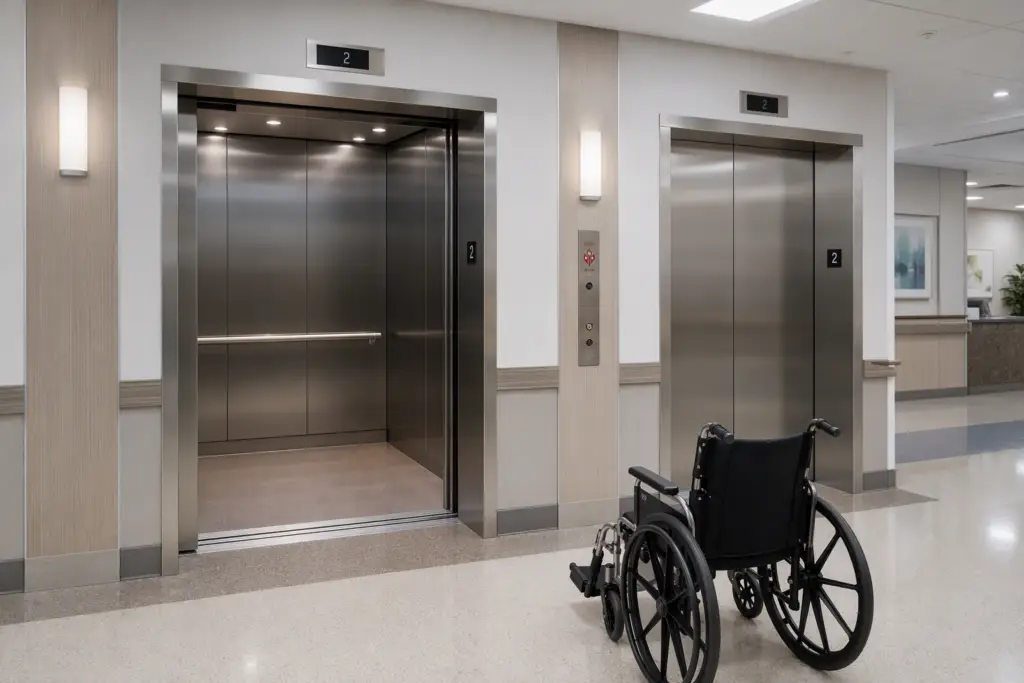
The Americans with Disabilities Act (ADA) requires that elevators in multi-story facilities be accessible, and the ADA Standards for Accessible Design specify cab dimensions, door timing, control panel height, and auditory/visual signaling requirements. Compliance surveys and accessibility audits generate a secondary category of elevator data — particularly relevant for older commercial buildings undergoing renovation. The ADA’s accessibility requirements also intersect with local building codes and Florida’s own accessibility code, meaning Florida-specific compliance data often reflects a layered regulatory environment. Facilities managers seeking accessibility compliance statistics should consult both the ADA.gov technical guidance documents and their state’s accessibility enforcement agency.
What Industry Trends Are Shaping Elevator Data Collection in 2025–2026?
Several qualitative trends are reshaping how elevator industry data is gathered, reported, and used heading into 2026:
- Predictive maintenance and IoT integration: Elevator manufacturers and independent service providers are increasingly deploying connected sensors that generate continuous performance data. This shift is moving the industry from periodic inspection snapshots toward real-time operational datasets, which will eventually produce richer longitudinal statistics on component failure rates, ride quality, and energy consumption.
- Modernization demand: A significant portion of the installed elevator base in the United States is aging, and building owners are facing pressure from code updates, insurance requirements, and tenant expectations to modernize equipment. This trend is generating growing datasets around modernization project timelines, costs, and compliance outcomes — though comprehensive national figures are not yet uniformly published.
- Workforce dynamics: The elevator installer and repairer trade faces workforce pipeline considerations that are likely to influence labor cost trends through 2026. The BLS tracks this occupational category and periodically updates employment projections.
- Energy efficiency reporting: As ESG (Environmental, Social, and Governance) reporting requirements expand, building owners are beginning to track elevator energy consumption as part of broader sustainability disclosures. Standardized metrics for this category are still developing.
- State-level regulatory evolution: Florida, like many states, periodically updates its adoption of model codes. Tracking which version of ASME A17.1 Florida has adopted — and any state-specific amendments — is essential context for interpreting Florida-specific elevator compliance data in 2025.
How Do Building Owners Typically Use Elevator Industry Statistics?
Building owners and facilities managers use elevator industry data in several practical ways:
- Benchmarking maintenance costs against industry norms to evaluate whether their current service contract is competitively priced.
- Insurance underwriting — carriers may request inspection history and compliance documentation, and they use industry loss data to price elevator liability coverage.
- Capital planning — understanding the typical useful life of elevator components (which ASME A17.1 maintenance requirements help define) supports long-term reserve fund planning, particularly for condominium associations and commercial property managers.
- Regulatory compliance documentation — maintaining records of inspections, tests, and repairs as required by ASME A17.1 and state regulators.
- Litigation support — when elevator incidents occur, industry statistics on maintenance practices and failure rates become relevant to legal proceedings.
What Should I Look for When Evaluating a Third-Party Elevator Market Report?
Paid market research reports on the elevator industry vary considerably in methodology and reliability. When assessing a third-party report, consider the following:
- Confirm the report discloses its data collection methodology — primary surveys, government data, or modeled estimates each have different reliability profiles.
- Check whether the base year and forecast horizon are clearly stated and whether they align with your planning period.
- Verify that the geographic scope matches your need — global or North American figures are not directly applicable to Florida-specific decisions.
- Look for citations to government datasets (BLS, Census, OSHA) as a sign the report is grounded in verifiable primary data.
- Assess whether the publisher has a track record in the vertical transportation sector specifically, rather than publishing broadly across all construction categories.
- Determine whether the report separates new installation from maintenance/modernization segments, as these sub-markets behave differently.
Are There Florida-Specific Elevator Statistics I Should Know About?
Florida’s elevator regulatory environment is administered through the Department of Business and Professional Regulation (DBPR), which oversees elevator contractor licensing, inspection requirements, and permit records. Florida has one of the largest installed elevator bases in the United States due to its concentration of high-rise residential condominiums, hospitality properties, healthcare facilities, and commercial real estate. Florida-specific compliance data — including inspection pass rates and permit volumes — is most directly available through DBPR public records rather than national industry publications. Building owners and property managers operating in Florida should treat DBPR data as the most authoritative local source, supplemented by national benchmarking from NEII and EESF.
How Does Axxiom Elevator Florida Approach Data-Driven Service?
Axxiom Elevator Florida operates as a data-informed service provider, grounding its maintenance and modernization recommendations in compliance requirements established by the ASME A17.1 Safety Code for Elevators and Escalators, ADA accessibility standards, and OSHA workplace safety requirements. Rather than relying on unverified estimates, Axxiom Elevator Florida bases its assessments on documented inspection findings, equipment manufacturer specifications, and applicable code editions. Property owners in Florida working with Axxiom Elevator Florida receive service recommendations that are traceable to regulatory requirements — supporting both compliance documentation and capital planning decisions. This approach reflects the broader industry trend toward transparency and accountability in elevator service delivery.
What Is the Difference Between Elevator Safety Data and Elevator Market Data?
These two categories of data serve different audiences and come from different sources. Elevator safety data — covering incidents, injuries, fatalities, and inspection outcomes — is primarily generated by OSHA, state labor and building departments, and organizations like EESF. This data is most relevant to risk managers, attorneys, regulators, and safety researchers. Elevator market data — covering revenue, unit installations, service contract volumes, and workforce size — is produced by trade associations like NEII, the BLS, and commercial market research firms. This data is most relevant to investors, business strategists, and contractors planning capacity. A comprehensive analysis of the elevator industry for 2025 typically requires drawing from both categories, with careful attention to source methodology in each case.
What Compliance Documentation Should Elevator Owners Maintain?
Proper documentation not only supports regulatory compliance but also provides the internal data record that enables meaningful benchmarking over time. The following documentation categories are typically required or strongly recommended under applicable codes and regulations:
- Maintain a current certificate of inspection issued by a licensed inspection agency or state authority, as required by jurisdiction — typically renewed annually or on a cycle specified in the adopted edition of ASME A17.1.
- Retain records of all required periodic tests (e.g., full-load safety tests, governor and buffer tests) with dates, test results, and the identity of the licensed firm that performed them.
- Document all maintenance performed under your service agreement, including lubrication, adjustment, and parts replacement, with dates and descriptions.
- Record any deficiencies noted during inspections along with the corrective actions taken and their completion dates.
- Maintain ADA accessibility compliance records, including documentation of any variances or modifications approved under ADA guidelines.
- Keep copies of all permits issued for installation, alteration, or modernization work, along with final inspection sign-offs from the authority having jurisdiction.
- Retain equipment manuals, wiring diagrams, and as-built drawings — these are frequently required by inspectors and are essential for accurate maintenance and repair work.
How Can Facilities Managers Stay Current on Elevator Industry Statistics and Code Updates?
Staying informed in a regulatory environment that evolves across multiple jurisdictions requires a multi-source approach:
- Subscribe to NEII’s industry updates and policy communications for market and regulatory news.
- Monitor OSHA‘s website for rulemaking activity and enforcement guidance affecting elevator maintenance environments.
- Track ASME’s code development cycle at asme.org/codes-standards to anticipate upcoming changes to A17.1.
- Review DBPR communications for Florida-specific code adoption updates and licensing requirement changes.
- Engage with a qualified, licensed elevator service provider who monitors regulatory changes as a core part of their service offering — this is one of the practical ways building owners in Florida work with firms like Axxiom Elevator Florida to stay ahead of compliance requirements.
What Should I Do If My Elevator Fails Inspection or Has a Safety Incident?
When an elevator fails inspection or is involved in a safety incident, the response sequence matters for both regulatory compliance and liability management:
- Remove the elevator from service immediately if the authority having jurisdiction or the inspector has issued a stop-use order or if there is any risk of injury to occupants.
- Notify your licensed elevator service contractor promptly and provide them with a copy of the inspection report identifying the deficiency or violation.
- Preserve any available documentation related to the incident, including maintenance logs, inspection certificates, and any surveillance footage, without alteration.
- If the incident involved a personal injury, report to OSHA as required under applicable reporting thresholds and timelines.
- Obtain a written scope of repair from your service contractor that specifically addresses the cited deficiency and references the applicable code section under ASME A17.1.
- Schedule and complete the required follow-up inspection with the authority having jurisdiction before returning the elevator to service.
- File all corrective action documentation with your property records and update your compliance file accordingly.
Summary: Key Organizations for Elevator Industry Statistics in 2025
| Organization | Type of Data | Primary Use Case |
|---|---|---|
| National Elevator Industry Inc. (NEII) | Market, workforce, policy | Industry benchmarking, advocacy |
| Elevator Escalator Safety Foundation (EESF) | Safety incidents, public education | Risk assessment, safety research |
| OSHA | Workplace injuries, enforcement actions | Regulatory compliance, legal research |
| U.S. Bureau of Labor Statistics | Employment, wages, occupational injuries | Workforce planning, cost benchmarking |
| ASME (A17.1 Code) | Technical standards, compliance frameworks | Inspection, maintenance, code compliance |
| ADA.gov | Accessibility requirements | ADA compliance audits, renovation planning |
| Florida DBPR | State licensing, permits, inspection records | Florida-specific compliance verification |
Note: This table lists organizational types and data categories only. Specific numerical figures from these sources should be retrieved directly from each organization’s current publications to ensure accuracy.
Contact Axxiom Elevator Florida for a Free Elevator Assessment
Property owners, facilities managers, and building operators across Florida who want a compliance-grounded, data-driven evaluation of their elevator equipment can reach out to Axxiom Elevator Florida directly. Axxiom Elevator Florida’s assessment process is anchored in the requirements of the ASME A17.1 Safety Code for Elevators and Escalators, ADA accessibility standards, and OSHA workplace safety requirements — providing building owners with a clear, documented picture of their elevator’s compliance status and maintenance needs.
Contact Axxiom Elevator Florida for a free elevator assessment.
Call us at to schedule your consultation with the Axxiom Elevator Florida team.
Need elevator service you can rely on? Axxiom Elevator Florida is ready to help.