Quick Answer: An elevator typically warrants repair when issues are isolated, components are still supported by manufacturers, and the unit remains code-compliant; full replacement becomes the smarter choice when recurring breakdowns, outdated technology, widespread mechanical failure, or persistent ADA and ASME A17.1 Safety Code for Elevators and Escalators compliance gaps make ongoing repair costs disproportionate to the elevator’s remaining useful life.
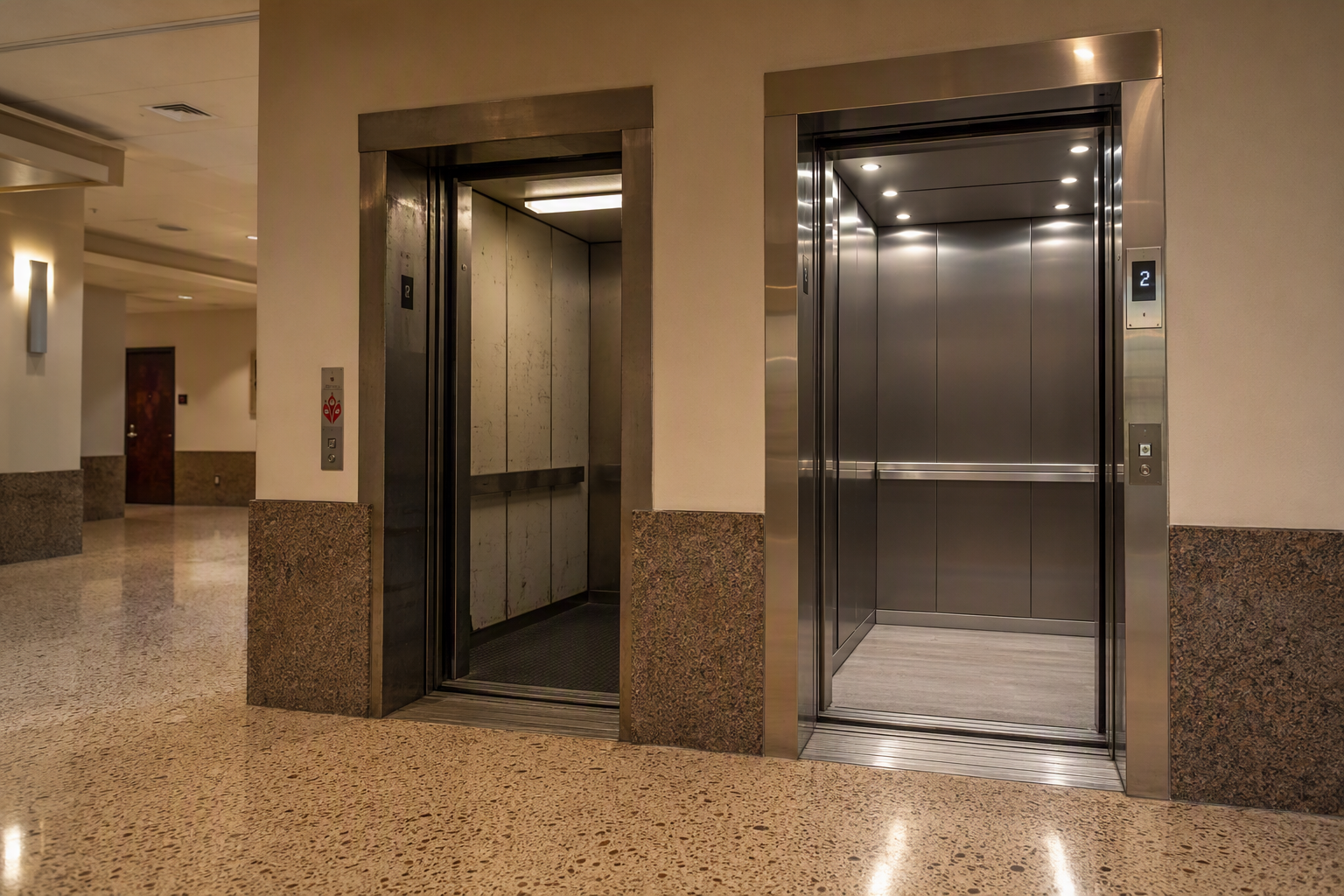
Deciding between repairing and replacing a commercial or residential elevator is one of the most consequential—and costly—decisions a building owner or property manager can face. The wrong choice leads to either unnecessary capital expenditure or a cycle of compounding repair bills that quietly erodes a building’s budget and tenant satisfaction. This guide breaks down every factor that should inform that decision, from warning signs and compliance requirements to cost comparisons and local service options in Florida.
What Are the Warning Signs That an Elevator Needs Repair?
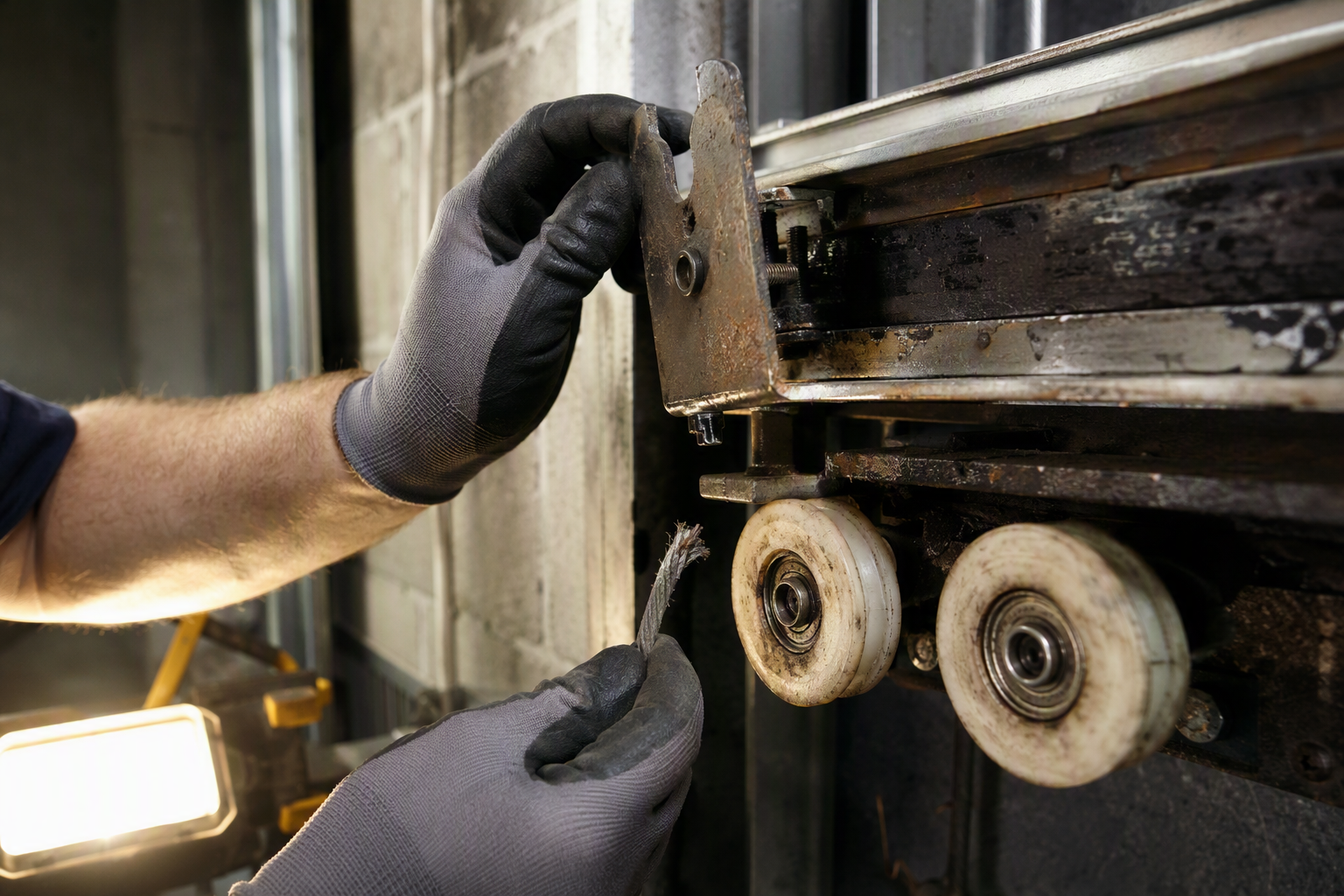
Repair is appropriate when problems are discrete and traceable to a specific component or subsystem. The following signs typically point toward a targeted repair rather than full replacement:
- Intermittent door malfunctions: Doors that fail to open, close, or re-open consistently often indicate worn door operators, rollers, or sensors—components that can be replaced without touching the entire system.
- Unusual noises during travel: Grinding, banging, or squealing during cab movement frequently signals worn guide shoes, frayed hoist cables, or lubrication deficiencies—all addressable through targeted service.
- Slow leveling or floor misalignment: If the cab stops slightly above or below a floor landing, the leveling system or selector components may need adjustment or replacement.
- Occasional control panel unresponsiveness: Sporadic button failures or erratic floor selection can stem from a failing relay, printed circuit board, or wiring connection—none of which require system replacement.
- Minor hydraulic leaks (hydraulic elevators): Small fluid leaks around the power unit are often resolved by replacing seals or valve components.
- Single-incident electrical faults: Tripped breakers or momentary power irregularities may be traced to a specific electrical component rather than systemic failure.
The critical qualifier in each scenario above is isolation. When a problem is clearly localized and the rest of the elevator infrastructure is in sound condition, repair is the logical and cost-effective path.
What Are the Signs an Elevator Needs Full Replacement?

Replacement becomes the more prudent investment when multiple systems are failing simultaneously, when parts are no longer manufactured, or when compliance gaps cannot be closed through component upgrades alone.
- Obsolete or discontinued equipment: When the elevator’s controller, drive system, or hydraulic jack is no longer manufactured, sourcing replacement parts becomes unreliable, expensive, and time-consuming. Continued operation on obsolete equipment also creates liability exposure.
- Recurring breakdown pattern: An elevator that requires service calls every few weeks is exhibiting systemic failure. The cumulative cost of repeated repairs—plus the cost of downtime—can quickly surpass the investment in a modern replacement.
- ADA accessibility non-compliance: Older elevators may lack compliant cab dimensions, Braille markings, audible signals, or door timing controls required under the Americans with Disabilities Act. In many cases, retrofitting an aging cab to full ADA compliance is more expensive than a modern replacement unit that ships compliant from the factory.
- Structural or pit deterioration: When the hoistway, pit, or machine room structure itself is compromised, replacement paired with civil repairs is often the only viable path.
- Energy inefficiency: Older traction and hydraulic drives consume significantly more energy than modern variable-voltage, variable-frequency (VVVF) drive systems. In high-traffic buildings, the energy savings from a modern system contribute meaningfully to the total return on replacement investment.
- Major code modernization requirements: As editions of the ASME A17.1 Safety Code for Elevators and Escalators are adopted by Florida jurisdictions, older elevators may require extensive and expensive retrofits. When the cost of mandated upgrades approaches or exceeds a substantial portion of replacement cost, replacement often makes more economic and operational sense.
- Persistent safety device failures: Repeated failure of the governor, safety, or buffer systems signals that the elevator’s core safety architecture is degrading—a scenario where replacement is the responsible choice.
Repair vs. Replacement: Side-by-Side Comparison
| Factor | Repair | Full Replacement |
|---|---|---|
| Upfront Cost | Lower — addresses specific components | Higher — complete system and installation |
| Long-Term Cost | Can escalate if root cause is systemic | Lower ongoing maintenance costs with modern equipment |
| Downtime | Hours to days for targeted repairs | Weeks to months for full modernization |
| ADA Compliance | May require additional retrofit work | Modern units typically ship ADA-compliant |
| Parts Availability | Risk with obsolete systems | Full manufacturer support for new equipment |
| Energy Efficiency | Marginal improvement possible | Significant improvement with VVVF drives and LED cab lighting |
| Code Compliance | May require additional modernization work | Built to current edition of ASME A17.1 |
| Tenant/Occupant Experience | Dependent on scope; may not improve ride quality | Improved ride quality, reliability, and aesthetics |
| Asset Value Impact | Maintains current value | Increases building value and marketability |
| Best For | Isolated failures, younger systems, budget constraints | Aging systems, compliance gaps, recurring failures, planned capital projects |
How Do Florida Code Requirements Affect the Repair vs. Replacement Decision?
Florida elevator regulations are administered by the Florida Department of Business and Professional Regulation (DBPR) and incorporate provisions aligned with the ASME A17.1 Safety Code for Elevators and Escalators. Building owners should be aware that:
- Elevators in Florida are subject to periodic inspections. Deficiencies identified during inspection may carry mandatory correction timelines.
- When a major alteration is performed—such as replacing a controller, drive system, or hydraulic jack—the work may trigger a requirement to bring the entire elevator up to the current applicable edition of ASME A17.1 in Florida’s adopted code cycle.
- Accessibility requirements under the Americans with Disabilities Act apply to elevators in places of public accommodation and commercial facilities. Non-compliant features must be addressed during any significant renovation or alteration.
- Workplace safety requirements for elevator machine rooms and maintenance personnel fall under OSHA standards, which may affect the scope of any modernization project.
Understanding the regulatory trigger points is essential: a repair that appears minor on paper may, under Florida’s adopted code, constitute a “major alteration” that opens the door to broader compliance requirements. A qualified elevator contractor can identify these triggers before work begins.
What Is the Decision-Making Process When Evaluating Repair vs. Replacement?
Follow these steps when an elevator is exhibiting problems and a decision must be made:
- Document the symptom history. Compile a log of every service call, breakdown, and repair over the past three to five years. Pattern recognition is the most reliable indicator of systemic versus isolated failure.
- Request a comprehensive condition assessment. Have a qualified, independent elevator contractor inspect every major subsystem: controller, drive, hoist motor (or hydraulic power unit and jack), guide rails, ropes or chains, door systems, cab, pit, and machine room.
- Identify parts availability. Ask the service contractor to confirm whether key components—especially the controller and drive—are still actively manufactured and available. Discontinued equipment changes the risk calculus significantly.
- Evaluate compliance gaps. Cross-reference the elevator’s current configuration against the edition of ASME A17.1 adopted by the applicable Florida jurisdiction and against current ADA requirements. Quantify the cost of bringing the existing unit into compliance.
- Compare total cost of ownership. Calculate the projected cost of repairs and ongoing maintenance over a five- to ten-year horizon against the all-in cost of replacement. Factor in energy savings, reduced service calls, and reduced downtime risk for the replacement scenario.
- Consider building lifecycle and capital planning. If a major renovation or change of use is planned, synchronizing elevator replacement with broader construction work typically reduces overall project cost.
- Obtain independent recommendations. Avoid relying solely on the incumbent maintenance contractor, who may have an interest in continuing service revenue. An independent assessment from a contractor like Axxiom Elevator Florida provides an unbiased evaluation.
- Make the decision and plan the timeline. If repair is selected, document a clear scope, warranty on parts and labor, and a defined trigger point at which replacement will be reconsidered. If replacement is selected, develop a project schedule that minimizes building disruption.
How Long Does Elevator Replacement Take Compared to Repair?
Timeline is one of the most operationally significant factors in this decision, particularly for buildings with a single elevator or where elevator access is critical to daily operations.
| Scope of Work | Typical Timeline Range | Key Variable |
|---|---|---|
| Targeted component repair (e.g., door operator, relay) | Hours to 1–2 days | Parts availability |
| Controller modernization only | 1–3 weeks | Lead time for custom controller; permit approval |
| Drive and motor replacement | 1–4 weeks | Equipment lead time |
| Full hydraulic jack replacement | 2–6 weeks | Permit, environmental requirements, jack lead time |
| Complete elevator replacement (traction) | 6–16 weeks | Equipment lead time, permit, inspection scheduling |
| Complete elevator replacement (hydraulic) | 4–12 weeks | Permit, environmental compliance, equipment lead time |
Timeline estimates vary based on jurisdiction, permit processing speed, equipment lead times from manufacturers, and building-specific conditions. Florida’s permit and inspection process should be factored into any project schedule from the outset.
Does an Older Elevator Always Need to Be Replaced?
Not necessarily. Age alone is not a sufficient reason to replace an elevator. The relevant questions are whether the equipment remains safe, whether parts are available, whether the system meets current code requirements (or can be brought into compliance affordably), and whether the pattern of maintenance costs is sustainable. A well-maintained elevator with available parts, strong mechanical condition, and no significant compliance gaps may be a strong candidate for continued service with targeted repairs.
Conversely, a relatively newer elevator that suffered improper installation, inadequate maintenance, or water or electrical damage may reach a point where replacement is more cost-effective than restoration.
What Happens if an Elevator Fails Inspection in Florida?
When an elevator fails a required Florida DBPR inspection, the unit is typically placed out of service until the cited deficiencies are corrected and a reinspection confirms compliance. Building owners should:
- Obtain a written copy of the inspection report and understand every cited deficiency.
- Determine whether each deficiency is an isolated component issue or a symptom of systemic failure.
- Engage a qualified elevator contractor promptly to assess the scope and cost of correction.
- Review whether the correction work constitutes a major alteration under Florida’s adopted edition of the ASME A17.1 Safety Code for Elevators and Escalators, as this may expand the required scope of compliance work.
- Communicate proactively with building tenants or occupants about the timeline for return to service.
- Work with the contractor to schedule reinspection at the earliest available date to minimize downtime.
A failed inspection is often the inflection point at which the repair-versus-replacement decision can no longer be deferred. Treating it as a planning opportunity rather than a crisis leads to better outcomes.
How Does Hydraulic Elevator Replacement Differ from Traction Elevator Replacement?
The technology type significantly affects both the decision criteria and the replacement process:
| Factor | Hydraulic Elevator | Traction Elevator |
|---|---|---|
| Key Aging Components | Hydraulic jack, cylinder, power unit, fluid, seals | Hoist ropes, sheaves, gearbox or gearless motor, controller |
| Environmental Concern | Underground cylinder leaks can create soil/groundwater contamination requiring remediation | Less environmental risk; oil in gearbox is contained |
| Energy Efficiency | Older units are energy-intensive; modern units significantly improved | Modern gearless MRL (machine room-less) systems are highly efficient |
| Replacement Trigger | Leaking underground cylinder is often a decisive replacement trigger | Rope/sheave wear, controller obsolescence, or gearbox failure |
| Code Considerations | Florida may require single-bottom hydraulic jack or PVC liner for in-ground cylinders | Rope testing, governor, and safety device requirements under ASME A17.1 |
How Can Building Owners Reduce the Risk of Facing This Decision Unexpectedly?
The repair-versus-replacement decision is most stressful—and most expensive—when it arrives without warning. Proactive building owners take the following steps to maintain visibility into elevator condition:
- Maintain a full-coverage preventive maintenance contract with a qualified, independent elevator service provider. Review the contract to confirm it covers all major components, not just selected systems.
- Request annual condition reports from the maintenance contractor that document the current status of all major components and flag items approaching end of useful life.
- Budget for capital replacement as part of a long-range capital improvement plan. Elevator systems should be treated as depreciating assets with a defined replacement horizon.
- Stay current on permit and inspection records to avoid lapses that can result in immediate out-of-service orders.
- Engage an independent contractor for a second opinion whenever the incumbent maintenance provider recommends a major repair or replacement. Independent assessment removes conflicts of interest.
Is It Worth Modernizing an Elevator Instead of Full Replacement?
Modernization—selectively upgrading major subsystems (controller, drive, cab finishes, door systems) while retaining the hoistway and structural components—occupies the middle ground between targeted repair and full replacement. It is worth considering when:
- The hoistway, pit, and machine room structure are in good condition.
- The primary issue is an obsolete controller or drive system rather than mechanical deterioration throughout.
- Full replacement would require significant hoistway modification that drives cost disproportionately.
- The goal is to extend service life by a defined period (often ten to fifteen years) while deferring the capital expenditure of full replacement.
Modernization also allows phased investment, spreading cost across multiple budget cycles. However, a thorough condition assessment is essential before committing to modernization—if underlying structural or mechanical issues are concealed, modernization can become a costly intermediate step on the way to eventual full replacement.
Why Choose Axxiom Elevator Florida for This Assessment?
Axxiom Elevator Florida is an independent, certified elevator service company serving commercial and residential properties throughout Florida. As an independent provider, Axxiom Elevator Florida’s recommendations are not influenced by manufacturer quotas or service contract revenue incentives. The company performs comprehensive condition assessments that evaluate every major elevator subsystem, identify compliance gaps against the ASME A17.1 Safety Code for Elevators and Escalators and ADA requirements, and help building owners make repair-versus-replacement decisions based on documented evidence rather than speculation or sales pressure.
For Florida building owners and property managers navigating this decision, an independent assessment from Axxiom Elevator Florida provides the clarity needed to make a financially sound, safety-compliant choice.
Summary: Key Decision Factors at a Glance
| Condition | Recommended Action |
|---|---|
| Single, isolated component failure with parts available | Repair |
| Recurring breakdowns across multiple systems | Replacement or comprehensive modernization |
| Obsolete controller or drive; parts discontinued | Modernization or replacement |
| Significant ADA compliance gaps | Modernization or replacement |
| Failed inspection with systemic deficiencies | Comprehensive assessment; likely replacement |
| Leaking underground hydraulic cylinder | Replacement (environmental and safety priority) |
| Good mechanical condition, isolated door or control issue | Targeted repair |
| Building renovation or change of use planned | Synchronize replacement with broader project |
Not Sure Whether Your Elevator Needs Repair or Replacement?
Contact Axxiom Elevator Florida for a free elevator assessment. An independent evaluation of your elevator’s condition, compliance status, and cost outlook gives you the information needed to make a confident, well-documented decision.
Axxiom Elevator Florida — Independent Elevator Service You Can Trust Throughout Florida