Senior Living Elevator Requirements: A Compliance Guide for Florida Facilities
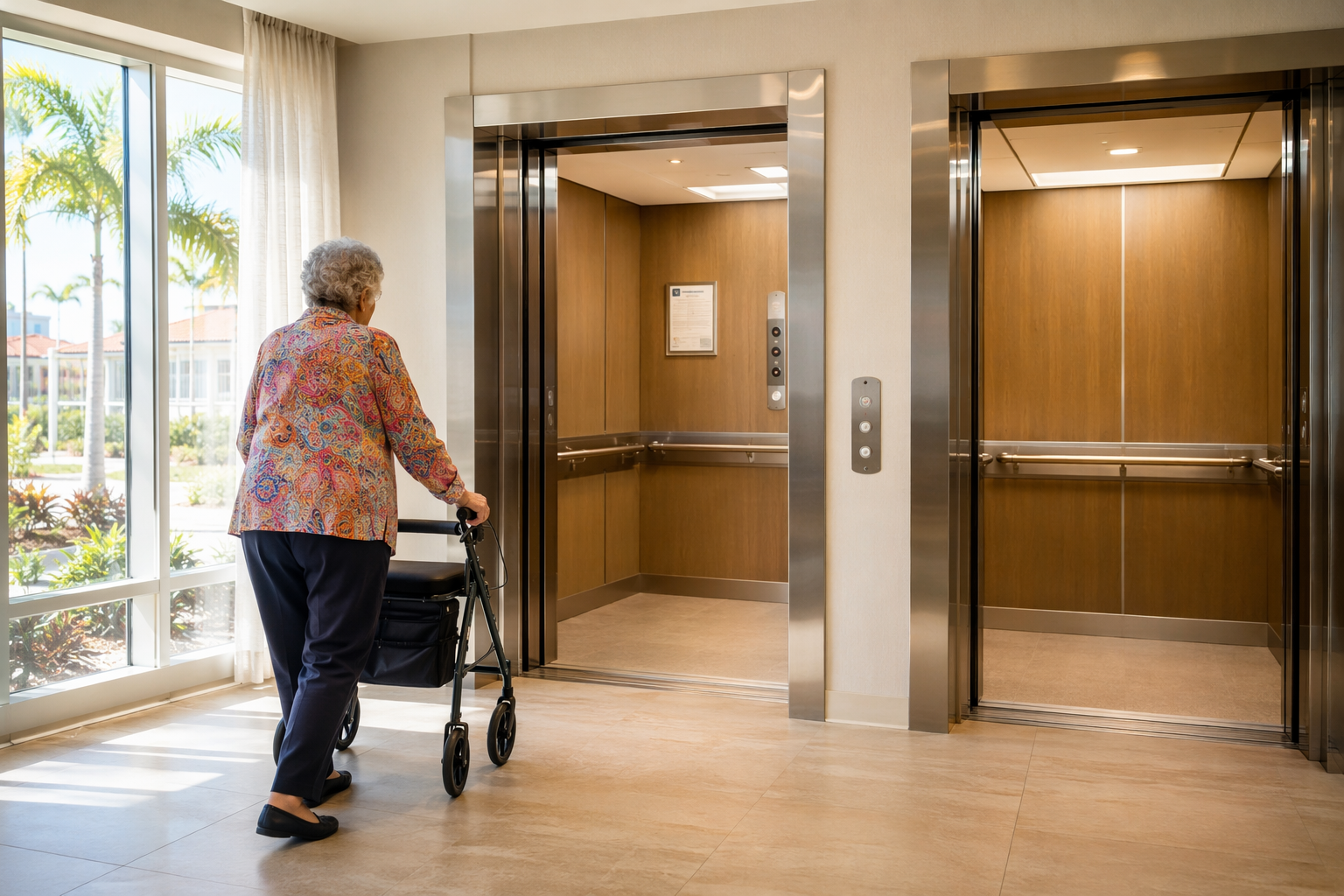
Senior living communities — including assisted living facilities (ALFs), memory care centers, independent living campuses, and skilled nursing facilities — have some of the most demanding elevator compliance obligations in Florida. Residents rely on elevators for daily mobility, and regulatory agencies take non-compliance seriously. This guide covers every layer of the requirement stack so facility administrators, owners, and maintenance directors can stay ahead of inspections, protect residents, and avoid costly violations.
What Compliance Standards Apply to Senior Living Elevators in Florida?
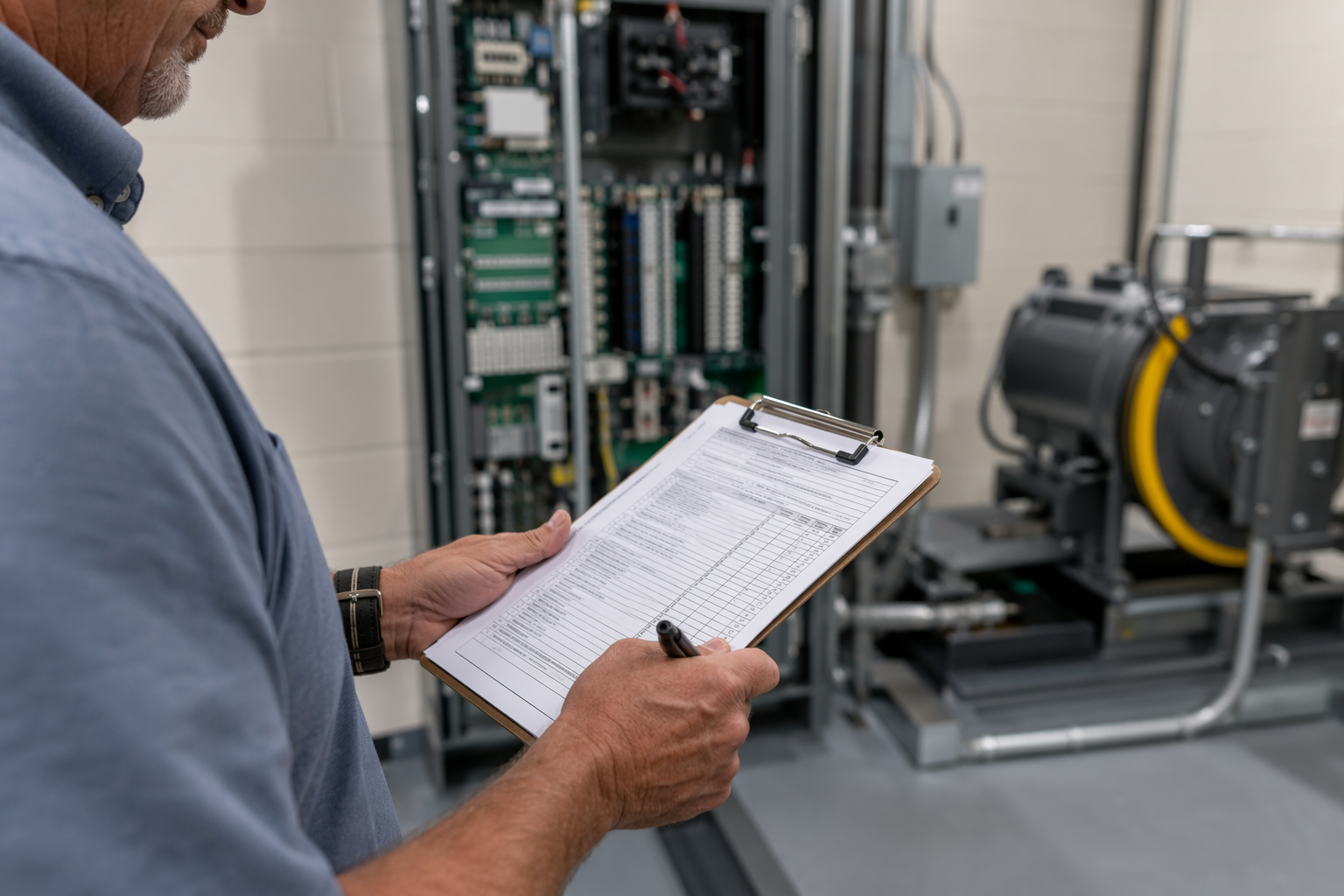
Senior living elevator compliance in Florida is governed by a layered framework of national codes and state-level enforcement. Understanding each layer is essential before scheduling an inspection or planning any modernization work.
- ASME A17.1 Safety Code for Elevators and Escalators: This is the foundational national standard governing the design, construction, operation, inspection, testing, and maintenance of elevators. Florida adopts and enforces this code through the Florida Building Code and the Florida Department of Business and Professional Regulation (DBPR).
- Americans with Disabilities Act (ADA): Title III of the ADA requires that elevators in multi-story facilities serving the public — including senior living communities — meet specific accessibility requirements for controls, cab size, door clearance, and signage.
- Florida Statutes Chapter 399: Florida’s elevator safety law requires that all commercial elevators be inspected annually by a licensed elevator inspector and that certificates of operation be maintained and displayed inside the cab.
- Florida Building Code (FBC): The FBC incorporates ASME A17.1 provisions and adds state-specific amendments. The 2023 edition (effective in 2026 permit cycles) is the current reference for new installations and significant modernizations.
- AHCA Regulations: The Agency for Health Care Administration (AHCA) licenses and inspects ALFs and skilled nursing facilities in Florida. AHCA surveyors review elevator maintenance records, certificates of operation, and emergency call system functionality as part of licensure surveys.
Axxiom Elevator Florida works with senior living operators across Pompano Beach and Sarasota to navigate this multi-agency compliance landscape — ensuring that every system in a facility meets all applicable codes simultaneously.
What Are the ADA Requirements for Elevators in Senior Living Facilities?
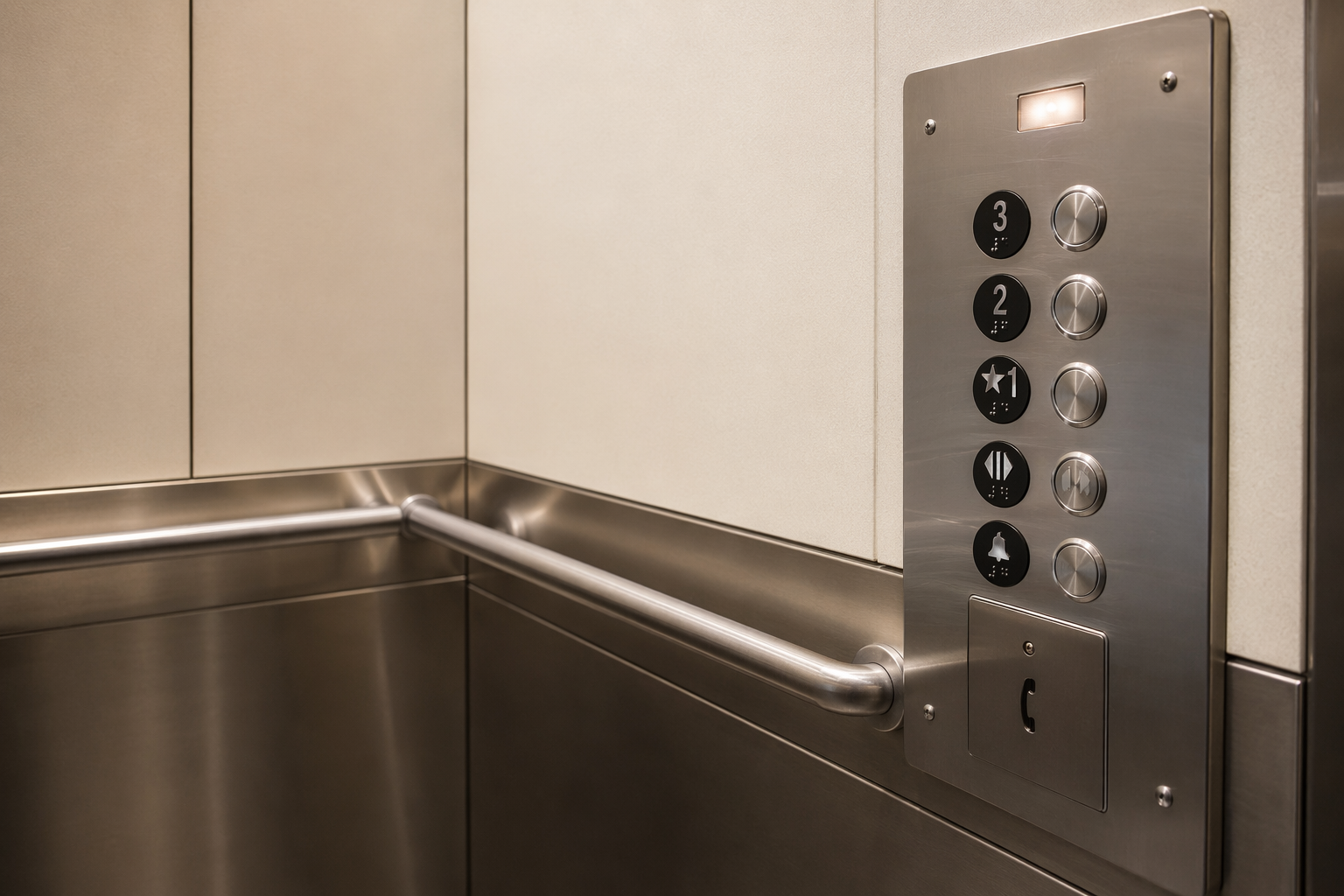
The ADA sets specific, measurable requirements for elevators in facilities that serve people with disabilities — a category that includes virtually every resident of a senior living community. Key requirements include:
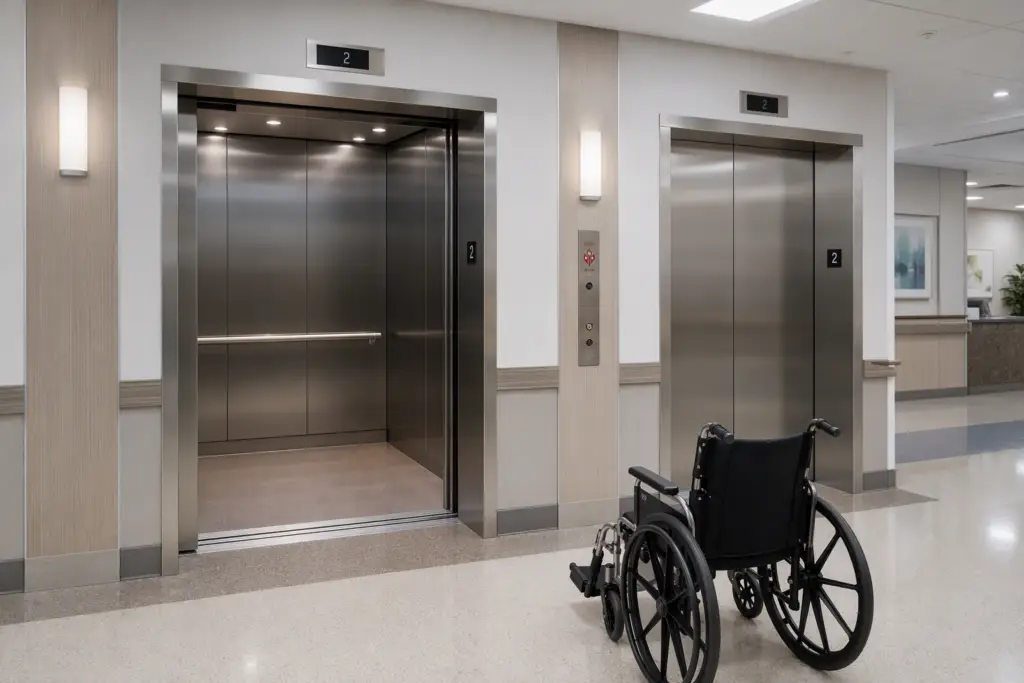
- Cab interior dimensions: The minimum clear floor area must accommodate a wheelchair with adequate turning radius. Automatic passenger elevators must provide sufficient depth and width to allow entry, turning, and exit without assistance.
- Door clear width: A minimum clear opening width is required to allow wheelchair and mobility device passage.
- Door timing: Doors must remain open long enough for a person using a mobility aid to enter or exit safely. Reopening devices must respond to obstructions without requiring physical contact.
- Control panel height: Operable controls must be mounted within reach ranges accessible to individuals using wheelchairs. Raised characters and Braille are required on all control buttons.
- Hall call buttons: Illuminated hall call buttons with audible signals are required at each floor landing.
- Emergency two-way communication: Enclosed elevators must provide a hands-free, two-way communication system inside the cab — a critical life-safety feature for senior residents who may be unable to use a standard telephone handset.
How Often Must Senior Living Elevators Be Inspected in Florida?
Florida Statutes Chapter 399 mandates that elevators in commercial and residential facilities — including senior living properties — undergo a periodic inspection by a licensed elevator inspector. The certificate of operation issued after a passing inspection must be posted inside the elevator cab and renewed on the schedule established by the DBPR.
In addition to state-mandated inspections, the ASME A17.1 Safety Code for Elevators and Escalators outlines testing and maintenance intervals for specific components, including periodic no-load safety tests and full-load tests for hydraulic systems. AHCA surveyors may also review inspection records during licensure visits, making documentation continuity essential.
Axxiom Elevator Florida provides maintenance programs designed around Florida’s inspection calendar, so senior living operators in Pompano Beach and Sarasota are never caught off-guard at renewal time.
What Emergency Communication Requirements Apply Inside Senior Living Elevator Cabs?
Emergency communication is a life-safety priority in senior living elevators. Both ASME A17.1 and ADA requirements address this area, and the two standards must be satisfied together:
- A two-way voice communication system must be operable without requiring the user to hold a handset — this hands-free requirement is especially important for residents with limited hand strength or dexterity.
- The system must connect to a location that is continuously monitored — typically a staffed nurses’ station, a building security desk, or a third-party monitoring center.
- Visual signals (illuminated indicators) must accompany audible signals to accommodate residents with hearing loss.
- Emergency lighting must activate automatically upon power failure and maintain illumination for a code-specified duration.
- An alarm bell, operable from inside the cab, must be provided as a secondary alert mechanism.
Florida’s updated building code provisions also address cellular and VoIP compatibility for elevator emergency phones — an increasingly relevant issue as analog phone lines are phased out across the state.
What Door and Threshold Requirements Protect Senior Living Residents?
Door-related incidents are among the most common causes of elevator injury for older adults. Senior living facilities should ensure their elevators meet or exceed the following requirements:
- Non-contact door reopening devices: Infrared or light curtain systems that detect obstructions without requiring physical contact are required under ADA and strongly recommended under ASME A17.1 maintenance guidance.
- Extended door dwell time: Adjustable timing allows doors to remain open longer, accommodating residents using walkers, wheelchairs, or moving at a slower pace.
- Level landing: The elevator car sill must level within a tight tolerance at each floor to prevent trip hazards — a critical consideration for residents with balance issues or mobility aids.
- Threshold beveling: Any vertical edge at the cab threshold must be beveled to reduce trip risk.
- Low-force door operation: The maximum force required to stop a closing door must not exceed limits established in the applicable code edition.
What Handrail and Interior Finish Requirements Apply to Senior Living Elevator Cabs?
While ASME A17.1 governs the mechanical and safety systems, ADA and Florida Building Code provisions address interior accessibility features:
- Handrails are required on at least one wall of the elevator cab to provide stability for standing passengers during travel.
- Handrail height must fall within the reach range specified by ADA accessibility guidelines.
- Cab interior wall surfaces must provide sufficient contrast at handrail locations to assist residents with low vision.
- Floor surfaces must be slip-resistant and free of protrusions that could catch wheels or cane tips.
- Cab capacity signage must be clearly posted and legible.
How Should a Senior Living Facility Prepare for an Elevator Modernization?
When an existing elevator no longer meets current code requirements — or when a facility is undergoing renovation — a modernization project may be triggered. The following steps outline a compliant modernization process for senior living operators:
- Conduct a compliance gap assessment. A licensed elevator contractor reviews the existing installation against current ASME A17.1, ADA, and Florida Building Code requirements to identify deficiencies.
- Obtain permits through the Florida DBPR. Any modernization work requires a permit from the Department of Business and Professional Regulation before work begins.
- Develop a scope of work. The scope should address all identified deficiencies — mechanical, electrical, and accessibility — to avoid triggering additional requirements on a future inspection.
- Coordinate with AHCA if the facility is licensed. ALF and skilled nursing facility operators should notify AHCA of planned elevator outages that may affect resident mobility and emergency egress planning.
- Schedule work to minimize resident disruption. Phased modernization schedules allow one elevator to remain operational in multi-elevator buildings.
- Complete all required testing prior to reopening. Post-modernization testing under ASME A17.1 must be performed and documented before the elevator returns to service.
- Obtain a new certificate of operation. The DBPR inspector must issue a new certificate before the modernized elevator is placed back in service.
- Update maintenance documentation. All new components should be logged in the facility’s elevator maintenance records to support future inspections.
What Are the Consequences of Non-Compliance for a Senior Living Facility?
Non-compliance with elevator codes carries significant consequences for senior living operators in Florida:
- DBPR enforcement: The Florida DBPR has authority to issue stop-operation orders for elevators that fail inspection or operate without a valid certificate. An out-of-service elevator in a multi-story senior living building creates an immediate operational and safety crisis.
- AHCA licensure risk: Elevator violations discovered during an AHCA survey can result in deficiency citations, fines, or conditions on a facility’s operating license.
- ADA complaints and litigation: Inaccessible elevators expose facilities to formal complaints filed with the U.S. Department of Justice and potential private litigation under the ADA.
- Liability exposure: An injury caused by a non-compliant door, threshold, or emergency communication failure creates significant civil liability for the facility operator.
How Does Preventive Maintenance Reduce Risk in Senior Living Elevators?
A structured preventive maintenance program is the most reliable way to avoid unexpected breakdowns, inspection failures, and safety incidents in senior living elevators. Effective programs address lubrication, adjustment, and inspection of all major components on a regular schedule — catching wear before it becomes failure.
Under ASME A17.1, maintenance must be performed by qualified elevator mechanics. Maintenance records must be kept and made available to inspectors. For AHCA-licensed facilities, these records may also be reviewed during routine surveys.
Axxiom Elevator Florida provides preventive maintenance programs tailored to the operational demands of senior living communities in Pompano Beach and Sarasota — including documentation packages formatted to satisfy both DBPR and AHCA record-keeping requirements.
Questions Your Inspector Will Ask
When a Florida DBPR inspector or AHCA surveyor reviews your senior living facility’s elevators, expect questions and documentation requests that include the following:
- Is the current certificate of operation posted inside the cab? Inspectors will check that the certificate is valid, current, and visible.
- Where are your maintenance records? Records must document all maintenance performed, by whom, and when. Gaps in documentation can result in deficiency findings.
- When was the last full safety test performed? ASME A17.1 requires periodic testing of safety devices. Inspectors will ask for test documentation.
- Is the emergency two-way communication system operational? Inspectors will test the system and verify that it connects to a continuously monitored location.
- Does the door reopening device function without contact? Inspectors will observe door operation and may test the non-contact reopening device.
- Is the cab leveling within acceptable tolerance? A significant threshold gap will be noted as a deficiency and a trip hazard.
- Are all control button labels accurate, raised, and in Braille? Missing or damaged Braille labels are a common ADA deficiency in older cabs.
- Has the emergency lighting been tested? Inspectors may ask for documentation of battery backup lighting tests.
- Are permits on file for any recent modernization work? Unpermitted modifications are a serious violation under Florida Statutes Chapter 399.
Why Do Senior Living Operators in Pompano Beach and Sarasota Work With Axxiom Elevator Florida?
Senior living communities in South Florida and the Gulf Coast operate in a high-scrutiny regulatory environment. Axxiom Elevator Florida understands the layered compliance obligations — DBPR, AHCA, ADA, and ASME A17.1 — that apply specifically to this sector. The company’s service programs are structured to keep certificates of operation current, maintenance records complete, and elevator systems operating safely for residents who depend on them every day.
From assisted living facilities in Pompano Beach to continuing care retirement communities in Sarasota, senior living operators rely on Axxiom Elevator Florida for maintenance programs, code-compliant modernization work, and inspection-readiness support that addresses the full compliance picture — not just the mechanical basics.
Get Your Free Senior Living Elevator Assessment
Is your senior living facility’s elevator fully compliant with ASME A17.1, ADA, and Florida’s current code requirements? Do you have a documentation package ready for your next DBPR inspection or AHCA survey? Don’t wait for a violation to find out.
Contact Axxiom Elevator Florida for a free elevator assessment. Call to speak with a certified elevator professional serving Pompano Beach, Sarasota, and senior living communities throughout Florida.
Need elevator service you can rely on? Axxiom Elevator Florida is ready to help.