Elevator Service in Pompano, FL | Axxiom Elevator Florida
Florida elevator code update requirements mandate that vertical transportation equipment comply with the adopted edition of the ASME A17.1 Safety Code for Elevators and Escalators as enforced by the Florida Department of Business and Professional Regulation (DBPR), including periodic inspections, load testing, and retrofits triggered by modernization or change of use.
Florida building owners, property managers, and facilities directors in Pompano Beach and throughout Broward County face a layered set of elevator code obligations. Meeting those obligations requires a service partner who understands both the state-level regulatory framework and the practical steps involved in bringing equipment into full compliance. Axxiom Elevator Florida provides certified elevator inspection, maintenance, modernization, and code-compliance services across South Florida, including Pompano Beach, Fort Lauderdale, Deerfield Beach, Coconut Creek, and surrounding communities.
What Are the Core Elevator Code Update Requirements in Florida?
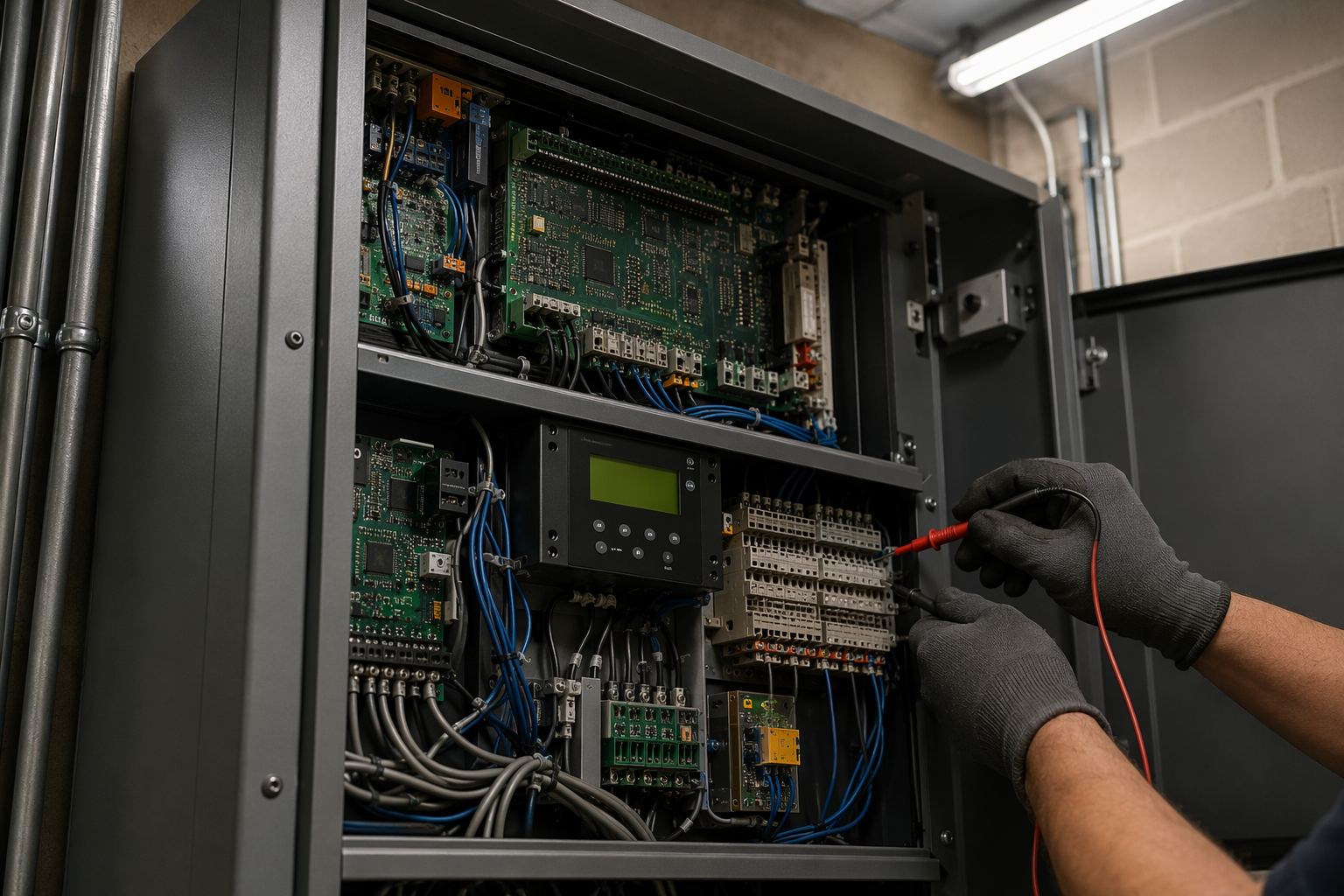
Florida adopts and enforces vertical transportation safety standards through the Florida Department of Business and Professional Regulation (DBPR), Bureau of Elevator Safety. The bureau references the ASME A17.1 Safety Code for Elevators and Escalators as the primary technical standard, with Florida-specific amendments codified in Chapter 399, Florida Statutes, and the associated Florida Administrative Code.
Key obligations under Florida elevator code include:
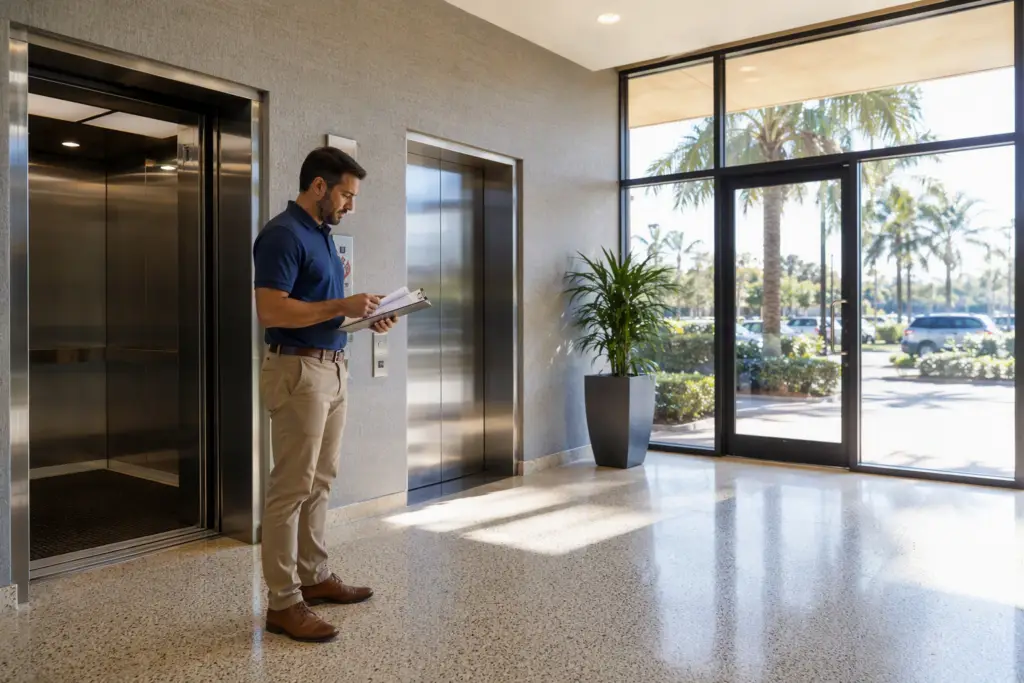
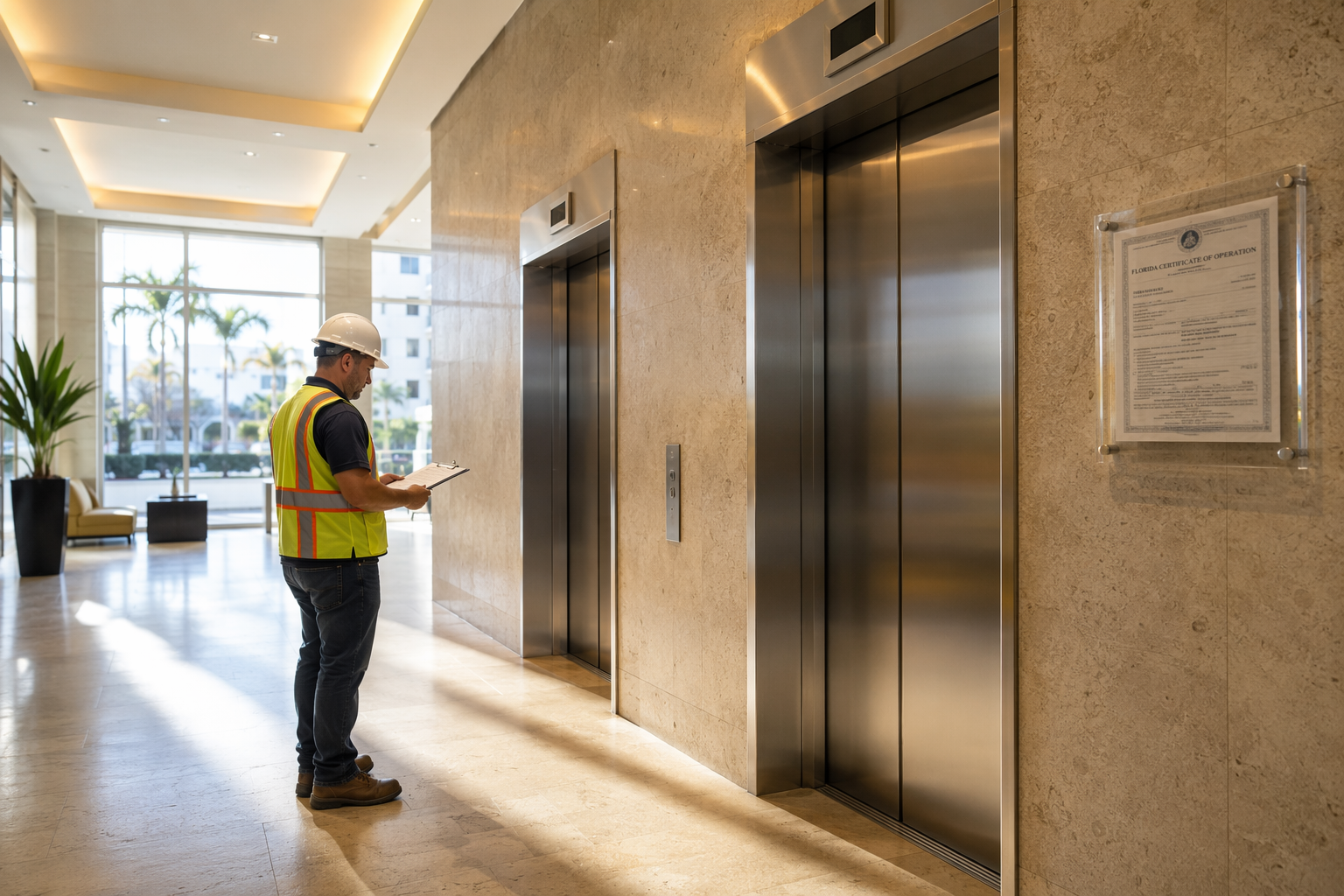
- Annual inspections: All passenger and freight elevators must undergo a periodic inspection by a licensed elevator inspector and receive a current Certificate of Operation before continued use.
- Five-year load tests: Full-load and safety tests are required on a defined cycle to verify that suspension components, safeties, and buffers perform to code specifications.
- Modernization triggers: Any significant alteration — including controller replacement, cab renovation, or drive system upgrades — activates a requirement to bring the affected systems into compliance with the code edition current at the time of the alteration.
- Category tests: Florida follows the ASME A17.1 framework for Category 1 and Category 5 testing, which establishes frequency and scope of safety device verification.
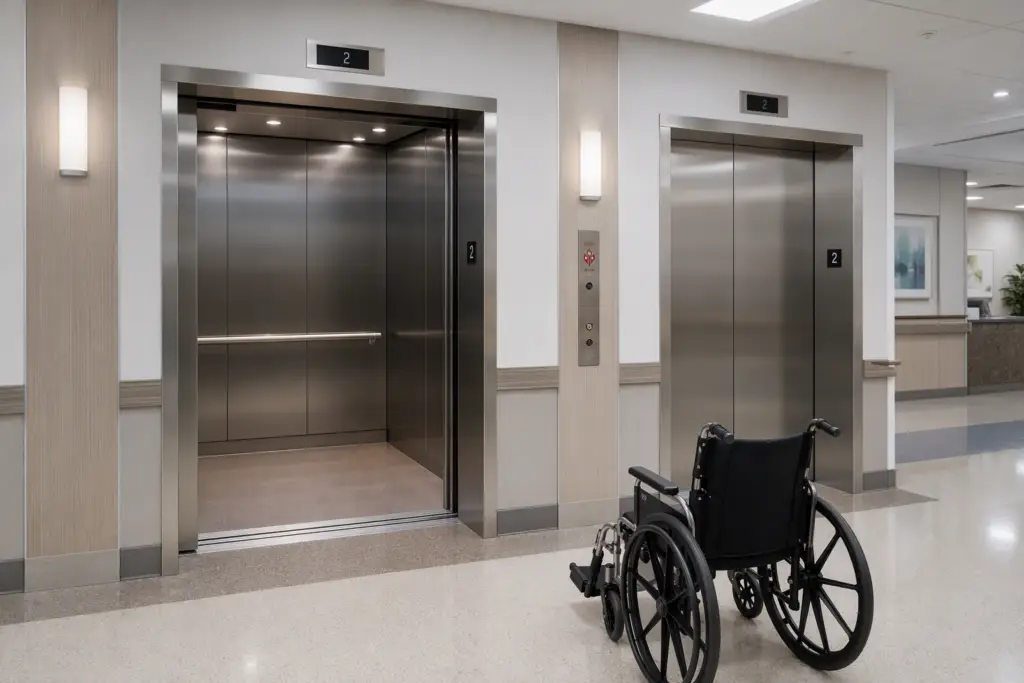
- ADA compliance: Elevator equipment serving the public must meet applicable accessibility standards under the Americans with Disabilities Act, including requirements for cab dimensions, control panel height, and audible/visual indicators.
- Emergency operation: Florida code requires functioning firefighters’ emergency operation (Phase I and Phase II) on all elevators in buildings above a defined height threshold.
As of 2026, building owners should verify that their equipment reflects any DBPR-adopted amendments to ensure continued certificate validity and avoid stop-work orders or fines.
What Triggers a Mandatory Code Update for an Existing Elevator?
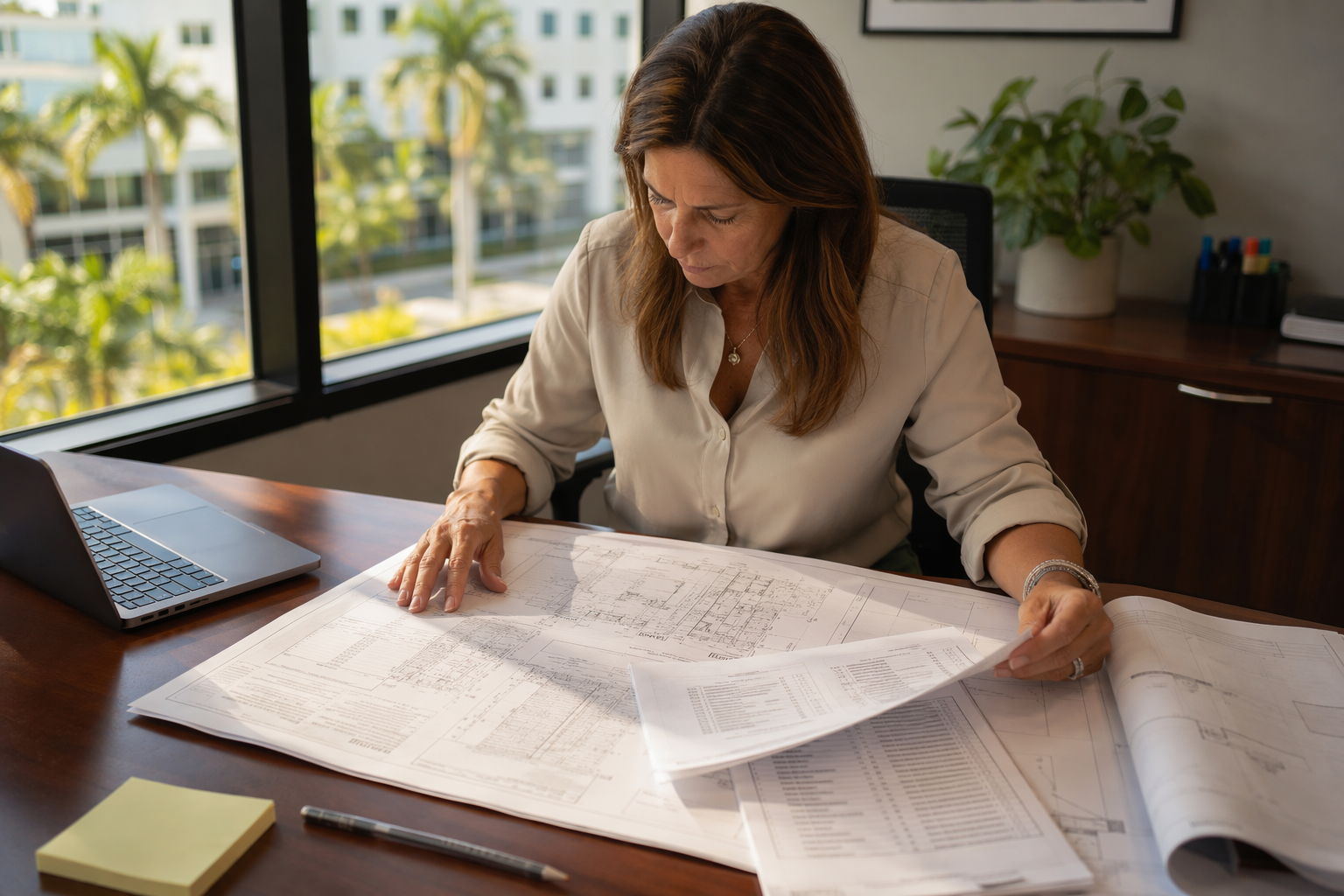
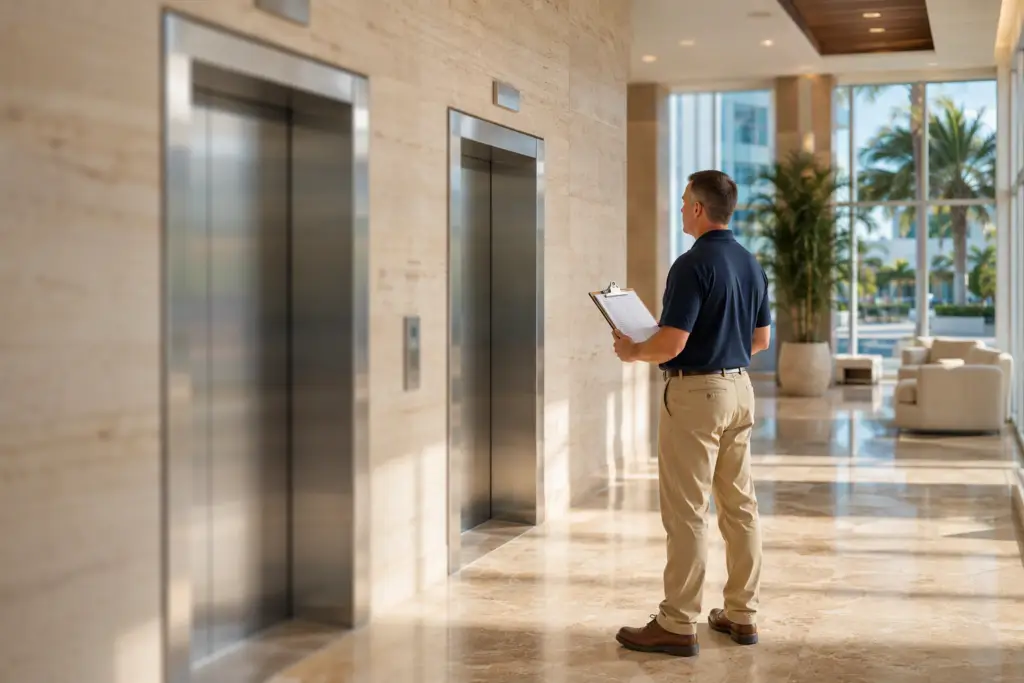
Not every repair triggers a full code upgrade, but several circumstances create a mandatory compliance review under Florida law and ASME standards:
- Alterations: Replacing a controller, upgrading the drive system, or modifying the car enclosure constitutes an alteration. Altered components must comply with current code requirements at the time of the alteration.
- Change of use: Converting a freight elevator to passenger service, or changing occupancy classification, triggers a comprehensive code review.
- Building renovation: Significant structural changes to the hoistway or machine room may require modernization of associated elevator components.
- Failed inspection: When an annual inspection reveals non-compliant conditions, the DBPR can issue a notice requiring correction before the Certificate of Operation is renewed.
- Voluntary modernization: Owners who choose to upgrade aging equipment for energy efficiency or reliability improvements must ensure the modernized system meets current code from the point of alteration forward.
What Is the Difference Between an Inspection, a Test, and a Modernization?
These three activities are frequently confused but carry distinct regulatory meanings in Florida:
- Inspection: A visual and operational examination performed by a licensed elevator inspector to verify that equipment is installed correctly and operating safely. Annual inspections are required to maintain the Certificate of Operation.
- Test: A performance verification procedure — such as a Category 1 or Category 5 test under ASME A17.1 — that applies load, activates safeties, and measures results against code thresholds. Tests must be performed by a licensed elevator contractor under the observation of an inspector.
- Modernization: A planned replacement or upgrade of major elevator components — controls, machines, doors, cabs, or safety systems — intended to extend service life, improve performance, or achieve code compliance. Modernization projects require permits, inspections at defined phases, and a final acceptance inspection before return to service.
How Does the Permit and Approval Process Work in Pompano Beach, FL?
Elevator work in Pompano Beach falls under dual jurisdiction: the Florida DBPR Bureau of Elevator Safety administers statewide licensing and inspection, while the City of Pompano Beach Building Division may require local building permits for structural or electrical work associated with elevator projects.
- Engage a licensed Florida elevator contractor to assess the scope of work and identify applicable code requirements.
- Submit permit applications to the Florida DBPR and, where required, to the City of Pompano Beach Building Division.
- Obtain permit approval before commencing installation, alteration, or modernization work.
- Complete required progress inspections at defined milestones (e.g., rough-in, controller installation).
- Schedule the final acceptance inspection with a licensed elevator inspector.
- Receive the updated Certificate of Operation from the DBPR before returning the elevator to service.
- Post the Certificate of Operation in the elevator cab as required by Florida Statute 399.
What Workplace Safety Standards Apply to Elevator Maintenance Work?
Elevator maintenance and modernization activities are subject to workplace safety regulations enforced by OSHA. Relevant standards include lockout/tagout procedures for controlling hazardous energy, confined space entry protocols for pit and machine room work, and fall protection requirements. A qualified elevator service company maintains documented safety programs that align with these federal standards, protecting both technicians and building occupants throughout the service process.
What Should a Property Manager Do When an Elevator Fails Inspection?
- Receive and carefully review the written inspection report identifying each cited deficiency and the applicable code reference.
- Contact a licensed Florida elevator contractor promptly to evaluate the cited conditions and provide a scope of corrective work.
- Do not return the elevator to passenger service if the DBPR has issued a stop-use order or the Certificate of Operation has been suspended.
- Obtain the necessary permits for any alteration-level repairs before work begins.
- Have the corrective work completed by the licensed contractor and document all replaced or repaired components.
- Schedule a reinspection with the DBPR to verify that deficiencies have been resolved.
- Retain all inspection reports, permits, test records, and certificates for the life of the installation — Florida law requires maintenance of these records.
How Does ADA Compliance Intersect with Elevator Code Requirements?
The Americans with Disabilities Act establishes accessibility requirements that apply independently of — and in addition to — ASME and Florida safety codes. An elevator may hold a valid Certificate of Operation under Florida law while still presenting ADA compliance gaps. Common areas of concern include cab interior dimensions, the height and reach range of control panels, door timing and reopening sensitivity, floor designation signage in Braille and raised characters, and audible and visual floor indicators. When modernization work is undertaken, it presents an opportunity to address accessibility gaps alongside safety upgrades, often achieving both regulatory objectives in a single project.
Why Is Local Expertise Important for Elevator Code Compliance in South Florida?
South Florida’s climate, building stock, and regulatory environment create conditions that differ meaningfully from other parts of the country. High humidity accelerates corrosion in elevator pits and hoistways. Coastal air affects electrical components and hydraulic systems. The concentration of high-rise residential buildings, hospitality properties, healthcare facilities, and commercial towers in Broward and Miami-Dade counties means that local elevator service providers encounter a wide range of equipment types and occupancy classifications on a regular basis.
Axxiom Elevator Florida serves property owners and managers throughout Pompano Beach, Fort Lauderdale, Deerfield Beach, Lighthouse Point, Coconut Creek, Margate, and neighboring communities. The company’s familiarity with the DBPR inspection process, local permitting offices, and the specific equipment types common to South Florida’s building inventory enables more accurate scoping, fewer project delays, and inspections that proceed without unexpected findings.
What Ongoing Maintenance Practices Support Long-Term Code Compliance?
Achieving code compliance at inspection is one milestone; maintaining that compliance between inspection cycles is an ongoing responsibility. A structured preventive maintenance program addresses lubrication of mechanical components, adjustment of door operators and safety edges, testing of emergency lighting and communication systems, inspection of pit conditions and sump pumps, and monitoring of hydraulic fluid levels and hose integrity. Documentation of all maintenance activities supports a defensible compliance record and helps identify developing issues before they result in equipment failure or inspection citations.
Property managers seeking to minimize compliance risk should ensure their elevator service agreement specifies the scope and frequency of maintenance visits, the documentation provided after each visit, and the process for addressing items that arise between scheduled visits. Axxiom Elevator Florida offers maintenance programs designed around the specific equipment and occupancy requirements of each property it serves in the Pompano Beach area and throughout South Florida.
Schedule a Free Consultation with Axxiom Elevator Florida
If your property in Pompano Beach or greater South Florida has an upcoming inspection, a pending DBPR citation, or equipment approaching the end of its service life, Axxiom Elevator Florida is ready to help you navigate the code update process from permit to certificate. Contact the team today to schedule a no-obligation consultation and code compliance assessment.
Call Axxiom Elevator Florida: