Elevator Service in Pompano, FL | Axxiom Elevator Florida
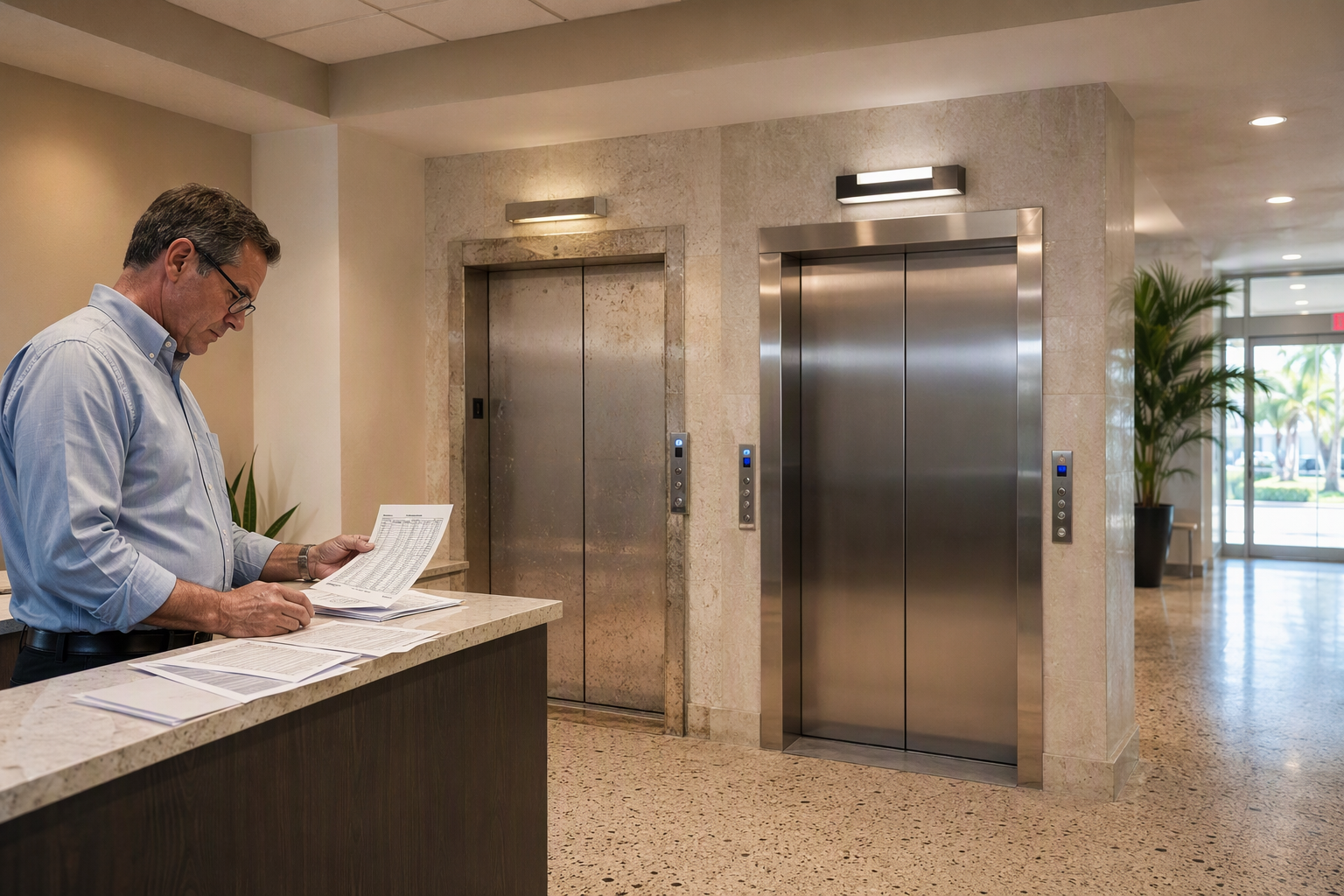
Deciding whether to keep repairing an aging elevator or invest in full replacement is one of the most consequential financial decisions a building owner in Pompano Beach can face. The answer is rarely obvious, and a wrong call in either direction costs money. This guide walks through the repair-vs.-replace framework, the Florida-specific compliance factors that affect the math, and a straightforward method for calculating your personal break-even point.
—
How Do I Know Whether Repairing or Replacing My Elevator Makes Financial Sense?
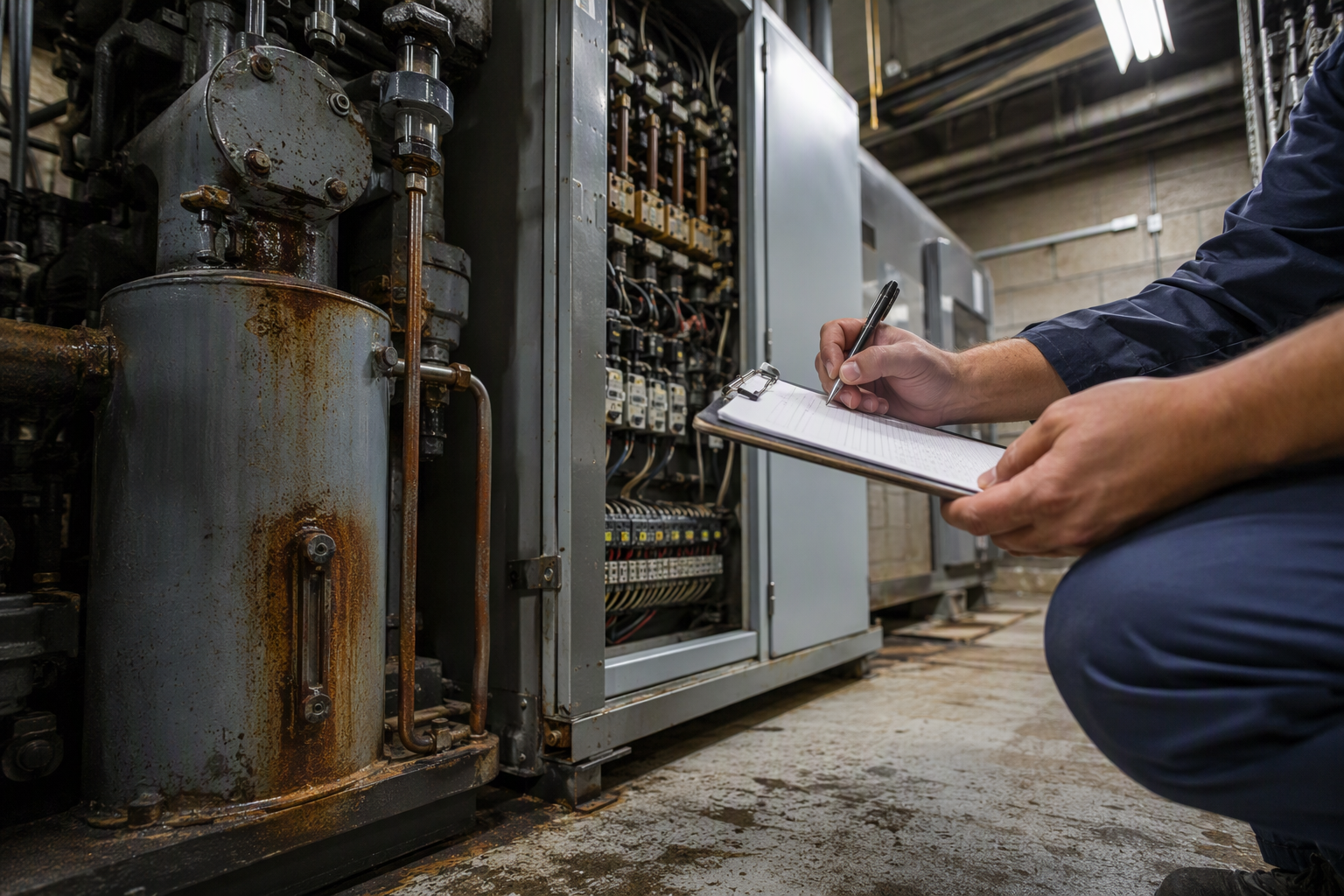
The repair-versus-replace decision hinges on comparing the total cost of continued repairs against the annualized cost of replacement. Neither answer is universally correct — an elevator that has been well-maintained and serves a lightly trafficked two-story commercial building may have many productive years left after targeted repairs. A high-traffic residential tower elevator with aging hydraulic components, repeated callback visits, and approaching major-modernization milestones is a different story.
The key variables to gather before making any decision include:
- Current repair history: A clear log of every service call, part replaced, and associated cost over the past three to five years
- Remaining useful life: An honest assessment from a qualified elevator professional of how many additional years the unit can operate reliably
- Modernization code requirements: Any upgrades required to bring the unit into conformance with the ASME A17.1/CSA B44 Safety Code for Elevators and Escalators (Florida adopted the 2019 edition, effective December 31, 2023)
- Downtime costs: Lost revenue, tenant dissatisfaction, or ADA liability exposure every time the elevator is out of service
- Energy consumption: Older drive systems and hydraulic power units typically consume significantly more electricity than modern equivalents
- Florida certificate of operation status: A unit operating on an expired certificate violates state law under Chapter 399
—
What Is the Break-Even Calculation and How Do I Run It for My Elevator?
The break-even point is the moment at which the cumulative cost of ongoing repairs equals the net cost of replacing the elevator. Once repair costs cross that threshold, replacement typically offers better long-term value. Here is a step-by-step method for calculating it:
- Document your annual repair spend. Pull invoices for every repair, emergency service call, and unplanned part replacement for the last three to five years. Average them to establish an annual repair cost baseline.
- Add mandatory compliance upgrade costs. Obtain a written estimate for any code-required upgrades your elevator needs to maintain or renew its Florida certificate of operation. These are unavoidable costs that belong on the repair side of the ledger.
- Estimate replacement cost. Get a firm quote for a fully modernized or new elevator, including installation, permitting fees required under Chapter 399 (a state permit from the DBPR Bureau of Elevator Safety is required before any installation or alteration), and commissioning inspection.
- Calculate net replacement cost. Subtract the value of any energy savings, reduced maintenance contract costs, and downtime reduction from the gross replacement cost to arrive at a net annual ownership cost for the new unit.
- Divide replacement cost by annual repair savings. Use this formula: Break-Even Years = Net Replacement Cost ÷ (Annual Repair Cost − Annual Cost of New Elevator Ownership). If the result is fewer years than the expected remaining life of the replacement unit, replacement is the financially sound choice.
- Factor in downtime value. Assign a dollar figure to every day the elevator is out of service — lost rent, tenant lease risk, or ADA exposure under the Americans with Disabilities Act. Chronic downtime on an aging unit often accelerates the break-even point considerably.
- Review the result with a certified professional. Have the numbers validated by a registered elevator company whose technicians hold Florida certificates of competency, so the estimate accounts for local labor, permit timelines, and Broward County inspection requirements.
—
What Florida Compliance Obligations Affect the Repair-vs.-Replace Math?
Florida elevator owners in Pompano Beach operate under a specific regulatory framework that adds compliance costs to both sides of the equation.
Under Chapter 399, Florida Statutes and Chapter 61C-5 of the Florida Administrative Code, most elevators must be inspected annually by a certified elevator inspector. In Pompano Beach, which falls within Broward County, the Broward County Building Code Division enforces Florida’s elevator law through its own certified inspectors. A Florida certificate of operation is valid for no more than two years, and renewal requires a current satisfactory inspection. Operating on an expired certificate violates state law — a risk that can result in forced shutdown, which carries its own business interruption cost.
If repairs require altering the elevator’s systems, a state permit — applied for by a registered elevator company — must be obtained before work begins. Once a certificate of operation is issued, the elevator owner is solely responsible for safe operation, proper maintenance, inspection, and correction of any code deficiencies. That responsibility does not pause because a repair is in progress.
When replacement is chosen, the new installation must be performed by a Florida-registered elevator company, and before the unit enters service it must be inspected by a certified elevator inspector with no conflict of interest with the permit holder or owner.
—
At What Age Does an Elevator Typically Favor Replacement Over Repair?
Age alone is not a reliable trigger, but it is a useful signal. Older elevators accumulate multiple converging problems: mechanical wear on ropes, sheaves, and safeties; obsolete control systems for which replacement parts are scarce; hydraulic systems that no longer meet current environmental or efficiency standards; and cab finishes that no longer meet modern accessibility expectations under the ADA.
A professional condition assessment — performed by a certified elevator technician holding a Florida certificate of competency — can identify which components are approaching end of useful life, which are already beyond it, and which mandatory code upgrades are on the horizon. That assessment is the most important input into any financial analysis, and Axxiom Elevator Florida provides exactly that kind of evaluation for building owners throughout Pompano Beach and the surrounding South Florida market.
—
How Does Elevator Downtime Factor Into the Total Cost of Repeated Repairs?
Downtime is frequently underweighted in repair-vs.-replace analyses, and it is often the variable that tips the calculation toward replacement. Every hour an elevator is out of service in a multistory building creates measurable consequences: tenants are inconvenienced or stranded, ADA accessibility obligations under federal law may be temporarily unmet, and in a commercial or hospitality setting, the cost to the business can be immediate and direct.
When calculating total repair cost, building owners should assign a realistic dollar value to each day of downtime based on their specific context — lost rent per floor, projected tenant turnover risk, or estimated lost revenue — and add that to the direct parts-and-labor cost of each repair event. Recurring failures on a chronically unreliable unit often reveal a total ownership cost that is substantially higher than the invoice record alone suggests.
—
Can Energy Savings From a New Elevator Help Justify Replacement Costs?
Yes, and this factor is frequently overlooked. Modern elevator drive systems, regenerative drives, and LED cab lighting can reduce electrical consumption compared to older hydraulic or DC-drive systems. Over a multi-year ownership horizon, those energy savings contribute meaningfully to the net cost of replacement and can shorten the break-even period in the step-by-step calculation above.
An energy cost comparison should be included in any comprehensive repair-vs.-replace analysis. Axxiom Elevator Florida’s team can help Pompano Beach building owners model projected energy savings as part of a full consultation.
—
Why Should Pompano Beach Building Owners Choose a Florida-Registered Elevator Company for This Assessment?
Florida law requires that all elevator installations and alterations be performed by a registered elevator company. Florida certified elevator technicians must hold a state-issued elevator certificate of competency, renew it annually with proof of continuing education, and carry general liability insurance. Florida registered elevator companies must also maintain general liability insurance and renew their registration with the state each year.
Working with a company that meets these requirements protects building owners from unlicensed work that could jeopardize a certificate of operation, create liability exposure under OSHA standards, or fail a Broward County inspection. Axxiom Elevator Florida is a Florida-registered elevator company serving Pompano Beach, Fort Lauderdale, and the broader Broward and South Florida market, with certified technicians qualified to perform the full range of assessments, repairs, and installations that local building owners require.
—
What Should I Do If My Elevator Fails Inspection or Has an Accident During This Decision Period?
- Take the elevator out of service immediately if directed by an inspector or if continued operation poses a safety risk.
- Contact a Florida-registered elevator company to assess the deficiency and provide a written scope of work for correction.
- Report any elevator accident to the state within five working days — this is a mandatory requirement under Chapter 399, Florida Statutes; the certificate of operation holder is responsible for making this report.
- Do not restore service until a certified elevator inspector has confirmed the deficiency is corrected and any required documentation is in order.
- Use the incident as a data point in your repair-vs.-replace analysis — a serious failure event often signals that broader component degradation has reached a critical stage.
- Verify your certificate of operation is current and posted conspicuously in the elevator cab in a frame with a transparent cover, as required by Florida law.
- Contact Axxiom Elevator Florida to schedule an emergency service visit and a comprehensive condition assessment.
—
Ready to Calculate Your Elevator’s Break-Even Point?
Axxiom Elevator Florida works with building owners, property managers, and HOAs throughout Pompano Beach and South Florida to conduct honest, data-driven repair-vs.-replace assessments. The team understands Broward County’s inspection requirements, Florida DBPR compliance obligations, and the technical realities of aging elevator equipment in the South Florida environment.
Do not make a six-figure capital decision without the full picture. Schedule a Free Consultation with Axxiom Elevator Florida today.
Call:
Need elevator service you can rely on? Axxiom Elevator Florida is ready to help.