How Long Does a New Elevator Installation Take in a Commercial Building?
Understanding the full timeline for a commercial elevator installation helps building owners, developers, and property managers plan construction schedules, coordinate contractors, and avoid costly delays. This FAQ hub covers every stage of the process — from design and permitting through final state inspection — along with compliance requirements, equipment considerations, and what to expect when working with a certified elevator contractor in Florida.
What Is the Typical Timeline for a New Commercial Elevator Installation?
Most new commercial elevator installations take between 4 and 12 weeks of active on-site work, but the complete project lifecycle — including equipment lead times, permitting, and final inspection — commonly runs 3 to 9 months from contract execution.
The on-site construction phase is only one segment of the overall timeline. Before a single component arrives at the job site, engineers must finalize equipment specifications, manufacturers must build and ship the unit, and local authorities having jurisdiction (AHJ) must review and approve permit applications. In Florida, the elevator permit process is governed at the state level, adding a defined layer of regulatory review that must be factored into every project schedule.
After on-site installation is complete, the unit must pass a state-mandated acceptance inspection before it can legally carry passengers. Building owners who understand each phase of this process are far better positioned to set realistic occupancy timelines and avoid surprises.
What Are the Main Phases of a Commercial Elevator Installation Project?
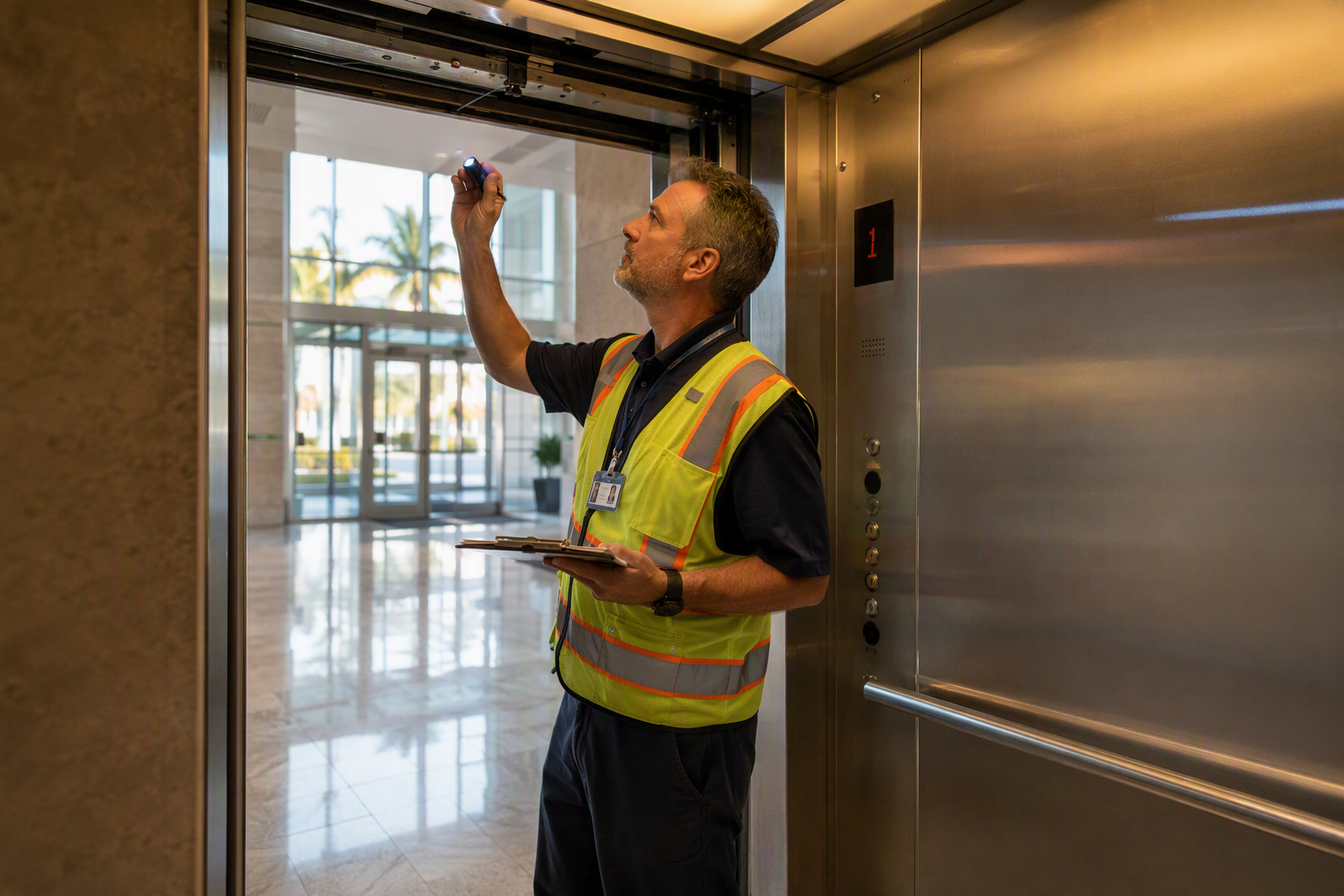
A commercial elevator installation moves through five distinct phases: pre-construction and design, permitting, equipment fabrication and delivery, on-site installation, and final inspection and commissioning.
Phase 1: Pre-Construction and Design
During this phase, the elevator contractor works with the building architect and structural engineer to confirm shaft dimensions, pit depth, overhead clearance, machine room requirements (if applicable), and electrical load specifications. Scope decisions made here — such as choosing a hydraulic versus traction system — directly affect both cost and timeline.
Phase 2: Permitting
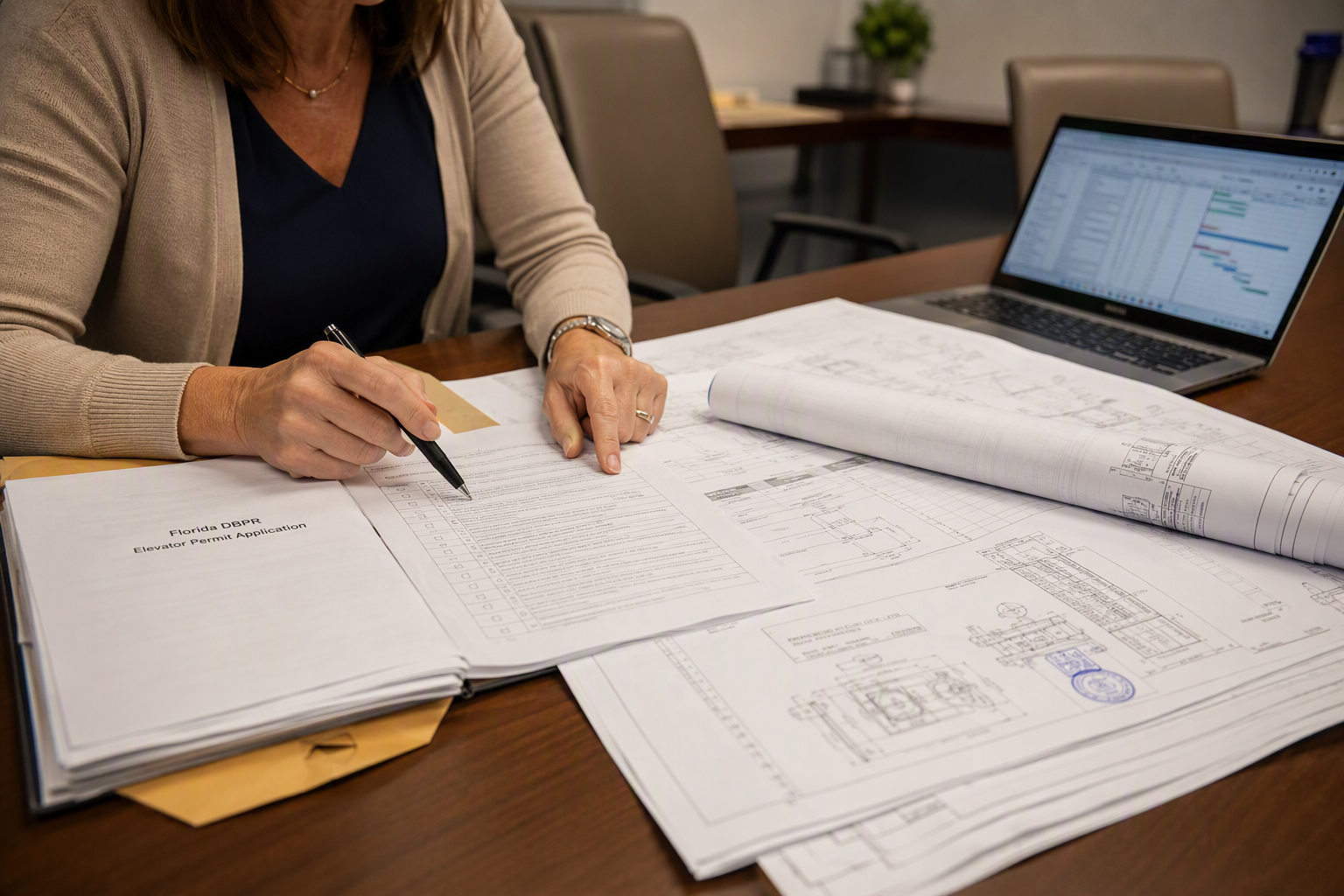
In Florida, elevator installations require a permit from the Florida Department of Business and Professional Regulation (DBPR) under Chapter 399, Florida Statutes, in addition to local building permits. Permit review periods vary by jurisdiction but commonly add four to ten weeks to the overall schedule.
Phase 3: Equipment Fabrication and Delivery
After permits are approved, the elevator manufacturer begins fabricating the unit to project specifications. Lead times for commercial elevator equipment typically range from six to twenty weeks depending on elevator type, manufacturer backlog, and whether custom cab finishes or special capacity ratings are required. Supply chain conditions in 2026 continue to influence these windows, and experienced contractors factor current lead times into their project proposals.
Phase 4: On-Site Installation
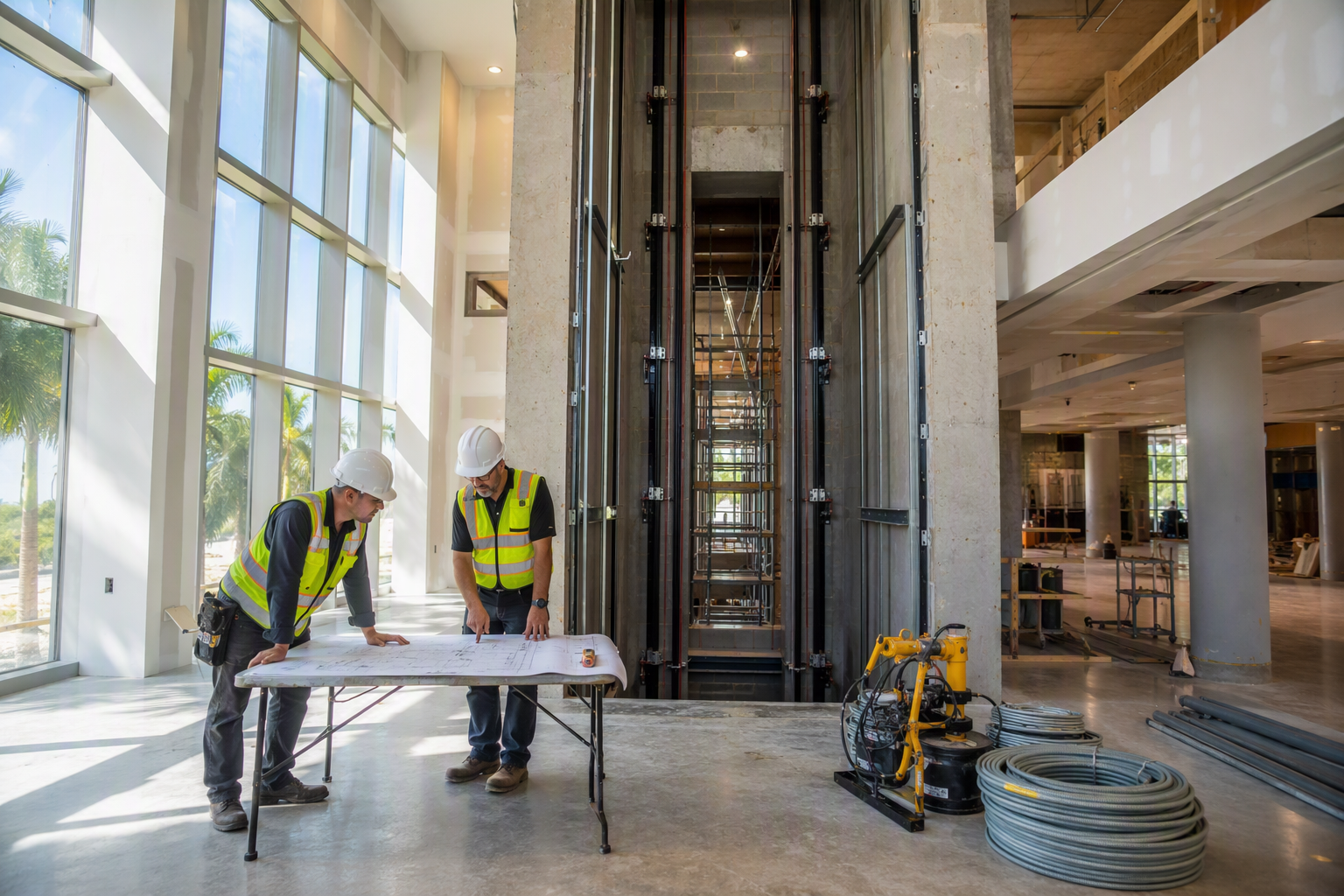
Once equipment arrives, certified elevator mechanics install the hoistway components, guide rails, drive system, cab, doors, controls, and safety devices. This phase ranges from four weeks for a straightforward low-rise hydraulic installation to twelve or more weeks for a multi-stop traction system in a high-rise building.
Phase 5: Final Inspection and Commissioning
Before the elevator opens to public use, it must pass a state acceptance inspection conducted by a licensed elevator inspector pursuant to Florida Statute 399.061. Scheduling the inspection, completing any required corrections, and receiving the Certificate of Operation typically adds one to four weeks to the close of the installation phase.
How Does Elevator Type Affect Installation Time?
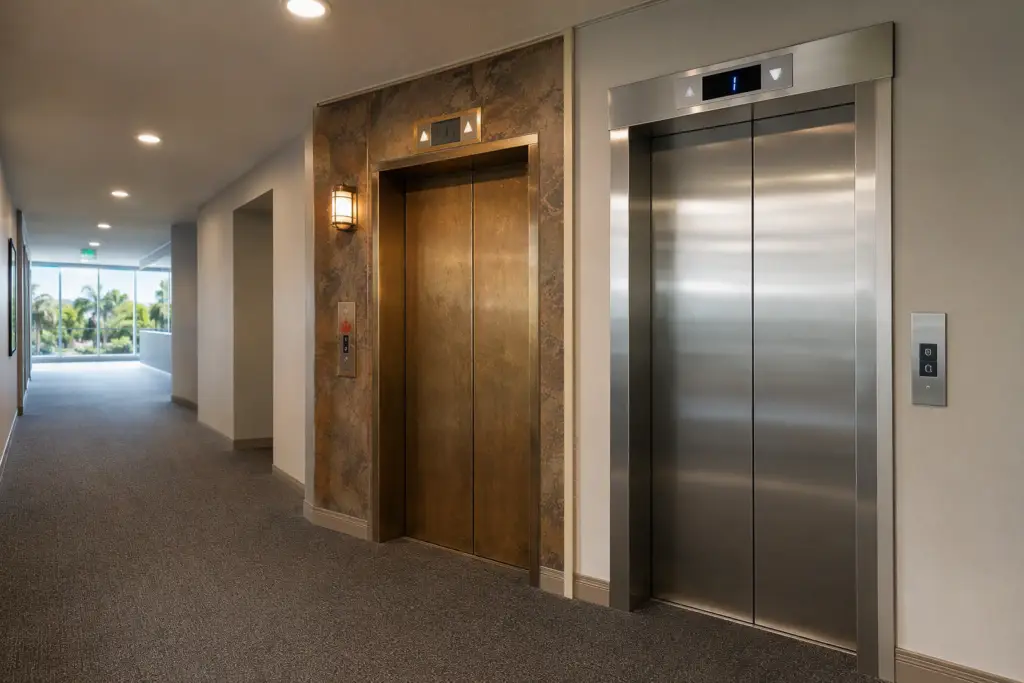
Hydraulic elevators generally install faster than electric traction elevators, while machine-room-less (MRL) traction systems fall between the two in complexity and time requirements.
| Elevator Type | Typical On-Site Installation Time | Common Commercial Application | Key Installation Variables |
|---|---|---|---|
| Hydraulic (in-ground or holeless) | 3–6 weeks | Low-rise buildings, 2–5 stops | Pit excavation, underground cylinder (in-ground type) |
| Machine-Room-Less (MRL) Traction | 5–8 weeks | Mid-rise commercial, office buildings | Overhead clearance, overhead machine bracket installation |
| Geared Traction | 6–10 weeks | Mid-rise, 5–15 stops | Machine room construction, rope configuration |
| Gearless Traction | 8–14 weeks | High-rise commercial, 10+ stops | High-capacity counterweight, complex control systems |
| Limited-Use / Limited-Application (LULA) | 2–4 weeks | Low-traffic ADA access, small commercial | Simpler mechanical systems, smaller hoistway |
The choice of drive system also affects long-term maintenance schedules, energy consumption, and lifecycle costs — all factors a qualified elevator contractor should discuss with the property owner before equipment is specified.
What Permits and Inspections Are Required for a Commercial Elevator in Florida?
In Florida, commercial elevator installations require both a state elevator permit from the DBPR and applicable local building permits, followed by a mandatory acceptance inspection before the elevator may be placed into public service.
Florida Statute Chapter 399 establishes the framework for elevator regulation in the state. The DBPR’s Division of Hotels and Restaurants oversees elevator permitting and inspection statewide. All work must be performed by contractors and mechanics who hold appropriate state licensure. Inspections are conducted by licensed elevator inspectors, who verify compliance with the adopted edition of the ASME A17.1 Safety Code for Elevators and Escalators as adopted by Florida rule.
In Pompano Beach and Sarasota, local building departments may impose additional plan review requirements or fire code coordination, which can affect the permitting timeline. Axxiom Elevator Florida is familiar with the jurisdictional requirements in both markets and coordinates permit submissions on behalf of clients to minimize administrative delays.
How Do ADA Requirements Affect a Commercial Elevator Installation?
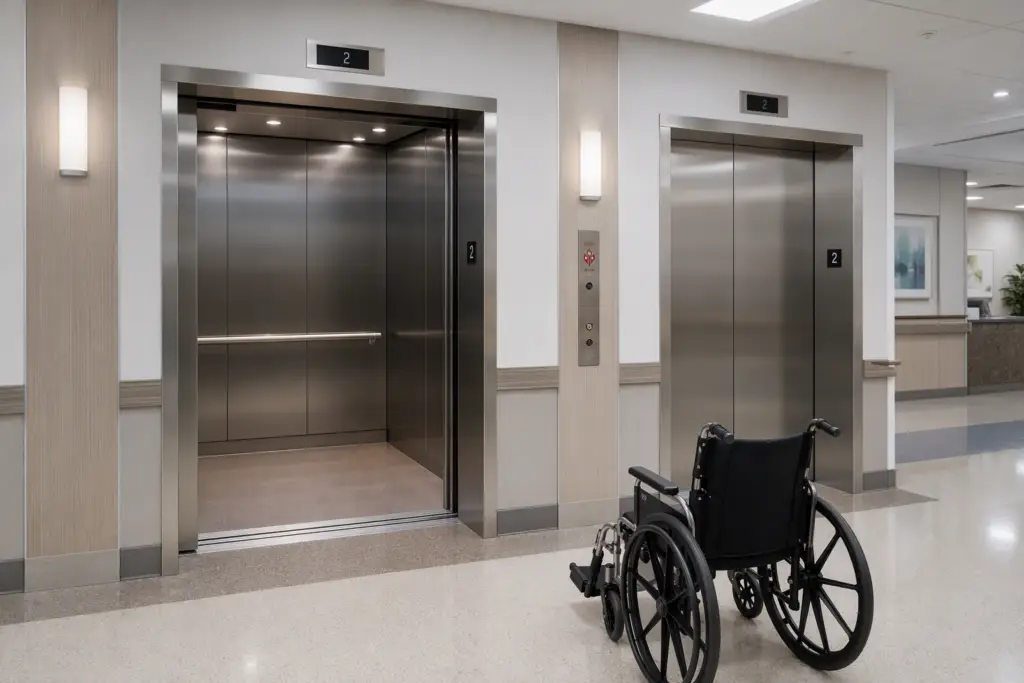
Commercial elevators serving multiple floors in new construction must comply with the Americans with Disabilities Act (ADA) accessibility standards, which specify minimum cab dimensions, door clear widths, control panel heights, and audible and visual signals — requirements that must be incorporated into design before fabrication begins.
The ADA Standards for Accessible Design reference ASME A17.1 provisions for accessible elevator features. Key ADA requirements for commercial elevators include a minimum clear floor area inside the cab, accessible call buttons at heights usable by wheelchair users, Braille and raised character floor designations, and door reopening devices. Failure to incorporate these requirements during design — rather than retrofitting afterward — is one of the most common and costly mistakes in new commercial elevator projects.
For buildings undergoing renovation rather than new construction, ADA path-of-travel obligations may require elevator upgrades even when the elevator itself is not the primary scope of work. A knowledgeable elevator contractor can assess which ADA provisions apply to a specific project scenario.
What ASME A17.1 Code Requirements Apply to New Installations?
All new commercial elevator installations in the United States, including Florida, must comply with the ASME A17.1 Safety Code for Elevators and Escalators, which governs design, construction, installation, operation, inspection, testing, maintenance, alteration, and repair of elevators.
ASME A17.1 establishes requirements for safety devices including governor-operated safeties, buffers, interlocks, and emergency lighting. It specifies load ratings, speed tolerances, and the mandatory acceptance tests that must be performed and witnessed by a licensed inspector before a new installation is placed into service. Florida adopts ASME A17.1 by reference into its administrative code, meaning the ASME requirements carry the force of state law for Florida elevator installations.
The 2019 edition of ASME A17.1 is widely referenced in current Florida rulemaking, and contractors should confirm with the AHJ which edition is currently enforced in a given jurisdiction as of 2026. Differences between code editions can affect specific technical requirements for control systems, door timing, and seismic provisions.
How Does Shaft and Pit Readiness Affect the Installation Schedule?
The single most common cause of commercial elevator installation delays is an incomplete or non-compliant hoistway — including inadequate pit depth, insufficient overhead clearance, missing sump pit, or structural walls that are not plumb — which can halt installation until corrections are made.
The hoistway must be completed by the general contractor to the elevator contractor’s specifications before elevator mechanics can begin work. ASME A17.1 prescribes minimum pit depths, overhead clearances, and structural requirements that vary by elevator type and rated speed. When these dimensions are not met, the elevator contractor cannot proceed, and schedule impacts can range from days to several weeks depending on the severity of the deficiency.
Best practice is for the elevator contractor to review architectural and structural drawings before the hoistway is constructed and to perform a pre-installation site visit once the rough hoistway is complete but before finishes are applied. This step is standard practice for Axxiom Elevator Florida on all new installation projects in the Pompano Beach and Sarasota markets.
What Steps Are Involved in the On-Site Installation Process?
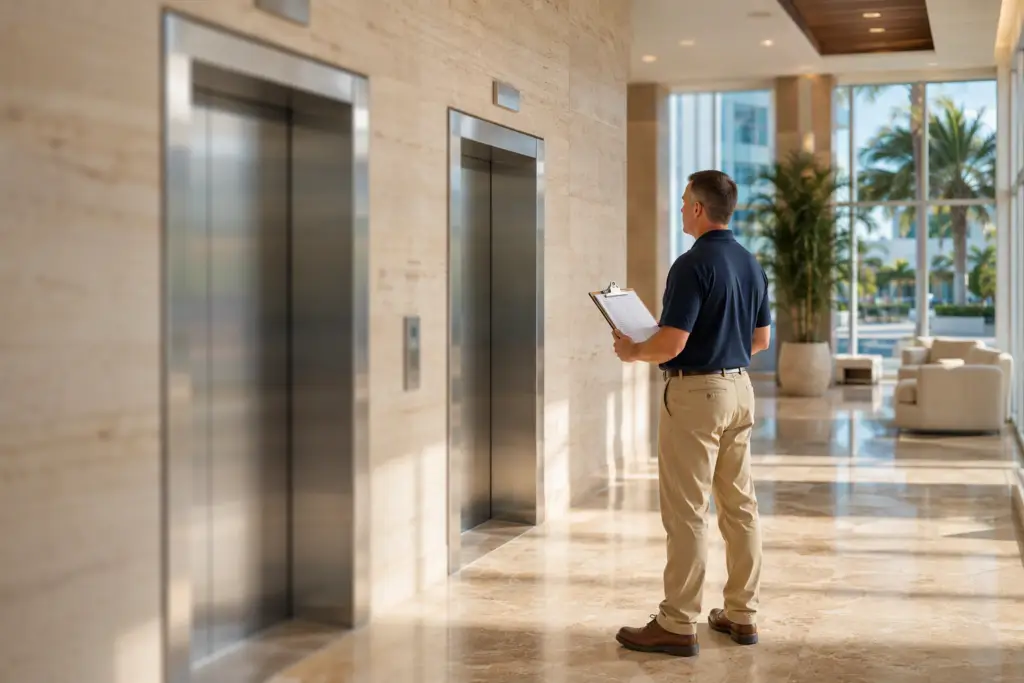
The on-site installation of a commercial elevator follows a defined sequence of tasks that must be completed in order, with each step requiring inspection or sign-off before the next phase begins.
- Confirm hoistway dimensions and structural readiness against approved shop drawings and ASME A17.1 requirements.
- Install guide rail brackets and sills at each floor landing, ensuring plumb alignment throughout the full travel height.
- Set guide rails and verify alignment with laser or plumb line tools to within manufacturer and code tolerances.
- Install pit components including buffers, sump pump (if required), pit ladder, lighting, and stop switch per code.
- Install drive system — hydraulic power unit and cylinder (for hydraulic) or machine, motor, and sheave assembly (for traction) — in the machine room or overhead space.
- String hoist ropes or connect hydraulic piping and pressure-test hydraulic lines per code requirements.
- Install car frame and platform on the guide rails within the hoistway.
- Hang and align cab enclosure including walls, ceiling, floor, and doors.
- Install hoistway door assemblies and interlocks at each landing, verifying interlock function per ASME A17.1.
- Install control panel, wiring, and signal fixtures including call buttons, position indicators, and emergency communication systems.
- Perform no-load and full-load operational testing including speed, leveling accuracy, door timing, and safety device tests.
- Schedule and pass state acceptance inspection with a licensed Florida elevator inspector.
- Obtain Certificate of Operation from the DBPR before opening the elevator to public use.
How Long Does the Permitting Process Take in Florida?
Florida elevator permit review timelines vary by jurisdiction but typically range from four to ten weeks, with local building permit reviews adding additional time in jurisdictions like Pompano Beach (Broward County) and Sarasota.
Submitting complete, accurate permit documentation — including sealed engineering drawings, equipment specifications, and contractor license verification — is the most effective way to minimize review delays. Incomplete submissions result in requests for additional information that can add weeks to the review cycle. Working with an elevator contractor experienced in Florida’s permit submission requirements significantly reduces the risk of administrative delays.
What Factors Can Delay a Commercial Elevator Installation?
Common causes of commercial elevator installation delays include incomplete hoistways, equipment delivery delays, permit processing backlogs, change orders that require re-engineering, electrical supply not ready when elevator work begins, and scheduling conflicts with other trades.
Coordination between the elevator contractor, general contractor, electrical contractor, and structural team is essential to maintaining the installation schedule. Elevators require dedicated electrical circuits, and if the electrical rough-in is delayed, elevator work cannot be completed and tested. Similarly, if ceiling finishes or flooring are applied before door sills are set correctly, costly rework may be required.
In active commercial renovation projects, construction elevator access for materials and personnel may also be a scheduling variable that the general contractor must manage carefully alongside the permanent elevator installation.
Does Building Height or Number of Stops Affect Installation Time?
Yes — installation time increases with the number of floors served, because each additional stop requires guide rail sections, a landing door assembly, landing controls, and structural coordination at that floor level.
A two-stop hydraulic elevator in a Sarasota medical office building will install considerably faster than a ten-stop gearless traction system in a Pompano Beach mid-rise. The incremental time per additional stop varies by system type, but building owners should expect that each additional landing adds meaningful on-site labor time and inspection scope. High-rise installations may also require phased testing as guide rails and ropes are installed in sections.
What Electrical and Structural Requirements Must Be in Place Before Installation Begins?
Before elevator mechanics can begin work, the building must provide a dedicated electrical circuit of the voltage, amperage, and phase specified by the elevator equipment manufacturer, along with a completed hoistway, machine room or overhead space, and a clear path for material delivery to the hoistway entrance.
Electrical requirements vary significantly by elevator type. Hydraulic systems commonly require three-phase power for the pump motor, while some MRL traction systems operate on single-phase power in smaller capacities. Control systems require separate low-voltage circuits for communications and monitoring. The elevator contractor’s submittal package will include an electrical specification sheet that the project electrician must follow precisely to avoid compatibility issues during commissioning.
OSHA standards applicable to construction site safety also govern the work environment during elevator installation. Hoistway openings must be guarded per applicable OSHA fall protection requirements until permanent doors are installed and functional.
How Does Equipment Lead Time Affect the Overall Project Schedule?
Equipment lead times for commercial elevator components commonly range from six to twenty weeks and represent one of the largest schedule variables in the overall project timeline, particularly for custom configurations or specialty equipment.
Standard commercial hydraulic units with conventional cab finishes tend to have shorter lead times than gearless traction systems with high-capacity ratings or premium interior packages. Supply chain conditions, manufacturer production schedules, and freight logistics all influence delivery windows. Experienced elevator contractors order equipment as early in the project lifecycle as possible — sometimes before permits are fully approved — to compress the overall schedule where contract terms allow.
Axxiom Elevator Florida assists clients in understanding current lead time realities during the proposal phase, so that project schedules reflect accurate equipment availability rather than optimistic assumptions.
What Are the Acceptance Testing Requirements for a New Commercial Elevator in Florida?
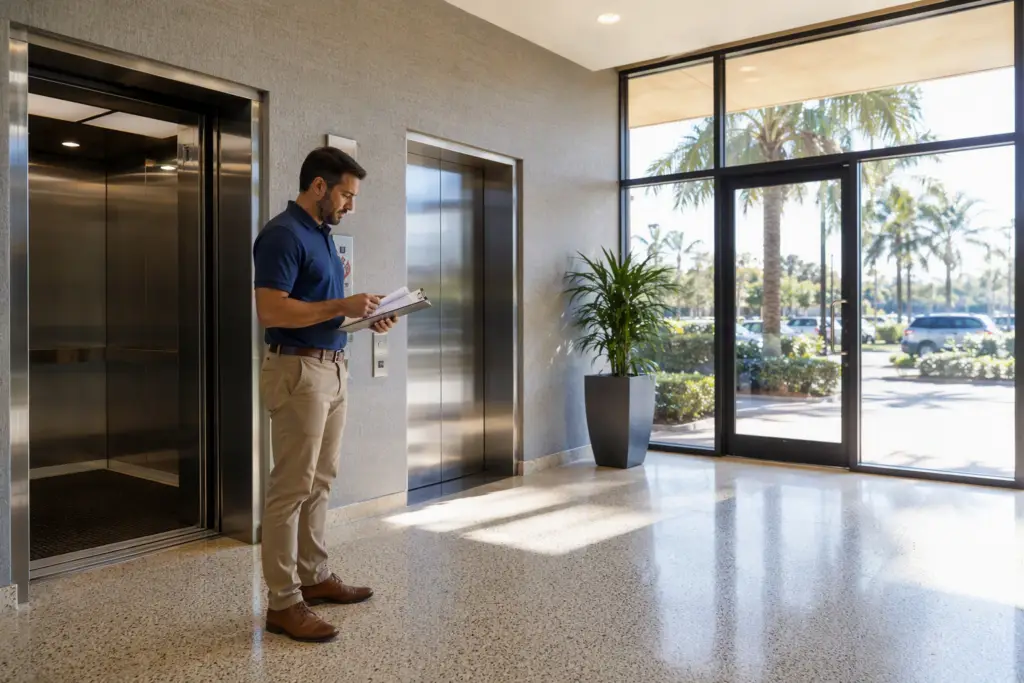
Before a new commercial elevator in Florida may be placed into service, it must undergo a formal acceptance inspection and witnessed testing performed by a licensed elevator inspector, verifying compliance with ASME A17.1 as adopted by Florida rule.
Acceptance tests required under ASME A17.1 for new installations include load tests, speed tests, governor and safety tests, buffer tests (where applicable), door force and timing tests, and verification of all required safety devices. The inspector witnesses these tests performed by the elevator contractor’s mechanics and signs off on the inspection report. If deficiencies are found, corrections must be made and re-inspected before the Certificate of Operation is issued.
What Ongoing Maintenance and Inspection Obligations Begin After Installation?
Once a commercial elevator in Florida receives its Certificate of Operation, the building owner becomes responsible for maintaining a periodic maintenance contract and ensuring the elevator passes annual inspections as required by Florida Statute Chapter 399.
Florida requires periodic inspections of all conveyances, with the frequency and type of inspection governed by state rule. Owners must maintain the elevator in compliance with ASME A17.1 on an ongoing basis, and a current Certificate of Operation must be posted in the elevator cab. Failure to maintain required inspections and certifications can result in mandatory shutdown of the elevator by the DBPR. Establishing a maintenance agreement with a qualified elevator service company at the time of installation — rather than waiting for the first service need — is strongly recommended by industry professionals.
How Should a Building Owner Choose a Qualified Elevator Contractor in Florida?
Building owners should select a Florida-licensed elevator contractor with demonstrated experience in commercial new installation, familiarity with Florida DBPR permitting requirements, and the ability to coordinate with architects, general contractors, and inspectors throughout the project lifecycle.
Verify that the contractor holds an active Florida elevator contractor’s license issued by the DBPR. Ask for a detailed project schedule broken down by phase, including equipment lead time, permit submission dates, and anticipated inspection scheduling. Request references from comparable commercial installation projects in the same geographic market. A contractor with specific experience in Broward County or Sarasota County will understand local plan review processes and inspection scheduling, which can meaningfully affect overall project duration.
Axxiom Elevator Florida serves commercial clients in Pompano Beach and Sarasota with new installation services coordinated by technicians familiar with the permitting and inspection requirements of both markets.
What Is the Difference Between a New Installation and a Modernization in Terms of Timeline?
A full new elevator installation — where no existing elevator infrastructure is present — typically takes longer than a modernization of an existing elevator, because new installations require complete hoistway construction coordination, full equipment fabrication, and new-installation acceptance testing rather than the alteration inspection process applicable to modernizations.
Modernizations update the drive system, controls, cab, or other components of an existing elevator and often benefit from an already-approved hoistway and established electrical infrastructure. However, modernizations may require their own permit and inspection process under Florida rules for alterations, and the scope of code compliance upgrading required can be substantial depending on the age of the existing installation. Building owners comparing a new installation versus a major modernization should request a detailed scope and timeline comparison from their elevator contractor before committing to either path.
How Can a Building Owner Minimize Delays During a Commercial Elevator Installation?
The most effective strategies for minimizing delays in a commercial elevator installation are early engagement of the elevator contractor during the design phase, prompt permit submission with complete documentation, ensuring hoistway and electrical work are complete before elevator mechanics mobilize, and maintaining clear communication among all project trades throughout construction.
Early contractor involvement allows the elevator team to confirm hoistway dimensions before concrete is poured and structural steel is set — avoiding the costly scenario of discovering non-compliant pit depth or overhead clearance after the building shell is complete. Prompt responses to any requests for additional information from the DBPR or local building department also prevent avoidable weeks of delay in permit processing.
Are There Specific Considerations for Commercial Elevator Installation in Pompano Beach or Sarasota?
Yes — both Pompano Beach and Sarasota have local building department plan review processes that operate alongside Florida DBPR oversight, and coastal construction considerations in Broward and Sarasota counties may affect structural requirements and equipment specifications for elevator installations.
Broward County, where Pompano Beach is located, and Sarasota County both enforce Florida Building Code provisions that interact with elevator code requirements, including wind load and flood zone considerations for buildings in coastal areas. Elevator contractors working in these markets must be knowledgeable about local amendments and the specific plan review workflows of each jurisdiction. Axxiom Elevator Florida operates in both markets and brings that jurisdictional familiarity to every new installation project.
What Should Be Included in a Commercial Elevator Installation Proposal?
A complete commercial elevator installation proposal should include equipment specifications, a phased project schedule with milestone dates, permit and inspection coordination responsibilities, electrical and structural interface requirements, warranty terms for equipment and labor, and a clear scope of work defining what is and is not included in the contract price.
Pay particular attention to how the proposal addresses equipment lead time, hoistway readiness requirements, and who is responsible for coordinating the state acceptance inspection. Proposals that do not address these items explicitly may result in scope disputes and schedule conflicts later in the project. A well-structured proposal reflects the contractor’s experience and organizational discipline — both of which are predictors of how well the installation itself will be managed.
Summary: Key Takeaways on Commercial Elevator Installation Timelines
The total time from contract to a fully operational commercial elevator typically ranges from 3 to 9 months, with on-site installation representing 4 to 12 of those weeks. The largest schedule variables are equipment lead time, permit review duration, and hoistway readiness. Florida requires state permitting and a mandatory acceptance inspection under Chapter 399 before any new elevator may carry passengers. Compliance with ASME A17.1 and ADA accessibility standards must be addressed during design — not after fabrication. Building owners who engage a qualified, Florida-licensed elevator contractor early in the design phase are best positioned to achieve a predictable, compliant installation on schedule.
Ready to Plan Your Commercial Elevator Installation?
Contact Axxiom Elevator Florida for a free elevator assessment. Serving commercial property owners, developers, and building managers in Pompano Beach, FL and Sarasota, FL, Axxiom Elevator Florida provides new installation services with full coordination of Florida DBPR permitting, ASME A17.1 compliance, and state acceptance inspections.
Call today:
Get expert guidance on elevator type selection, hoistway requirements, project scheduling, and ongoing maintenance obligations — before your project breaks ground.