Healthcare Elevator Budgeting: How to Plan for Repairs and Maintenance in Your 2027 Fiscal Year Capital Plan
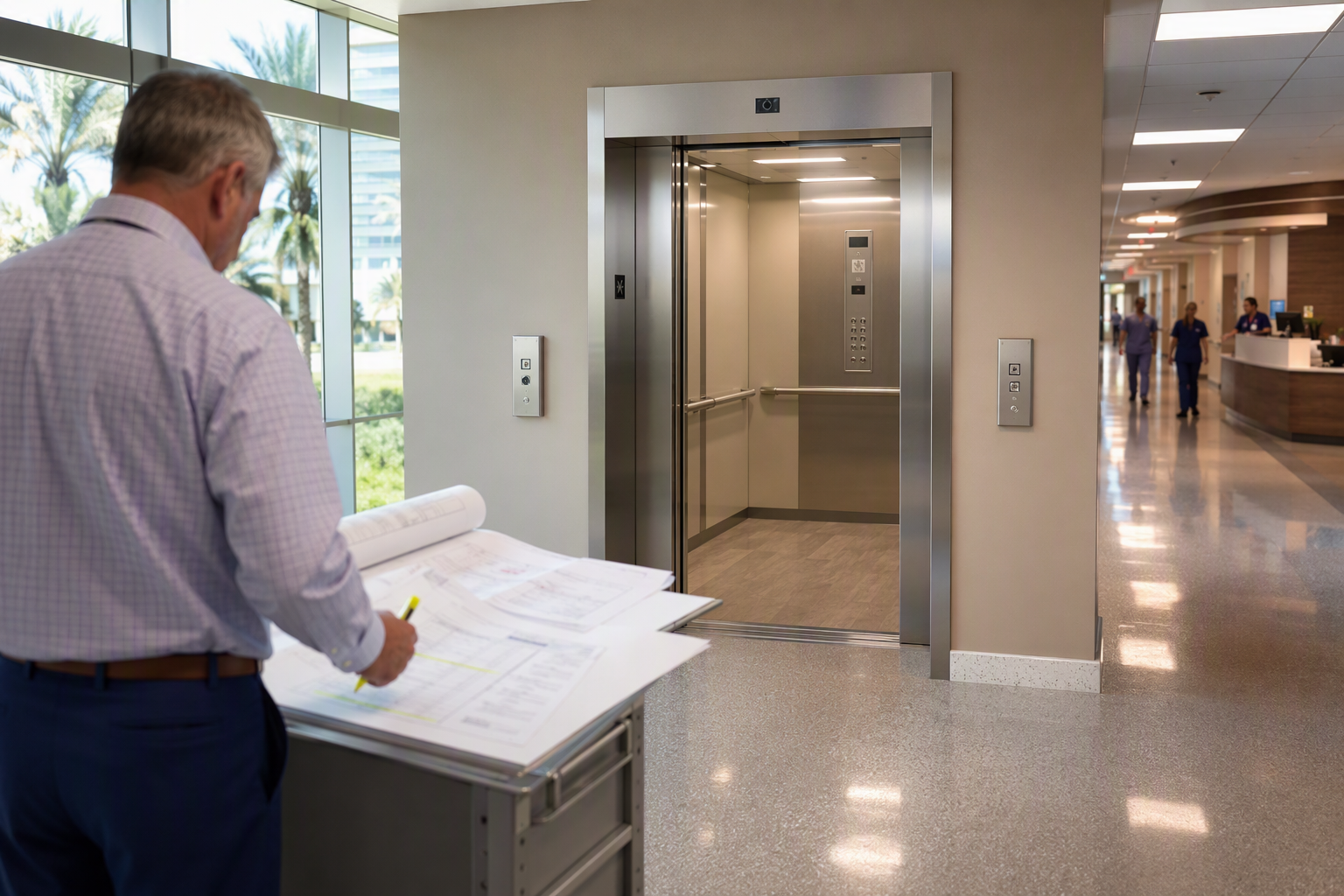
For hospital CFOs, facility directors, and healthcare real estate managers in Pompano Beach and Sarasota, elevator systems represent one of the most mission-critical — and frequently underestimated — line items in a capital plan. Unlike a leaking roof or a failing HVAC unit, a non-compliant or out-of-service elevator in a healthcare environment carries patient safety consequences, regulatory exposure, and potential Joint Commission findings. Getting the numbers right for 2027 starts with asking the right questions in 2026.
This guide walks healthcare facility teams through every layer of elevator budgeting: compliance obligations, cost categories, inspection requirements, vendor selection, and the planning timeline that gives capital committees the documentation they need to approve funding.
—
What Are the Compliance Requirements That Drive Elevator Costs in Healthcare Facilities?

Healthcare elevator budgets are shaped — and often expanded — by a layered compliance framework that facility managers must understand before they can write an accurate capital request.
- ASME A17.1 Safety Code for Elevators and Escalators: This is the primary safety standard governing elevator design, installation, inspection, and testing in the United States. Florida adopts ASME A17.1 by reference, meaning periodic inspections, load tests, and safety device certifications are legal requirements — not optional best practices. Code editions are updated on a regular cycle; facilities should confirm with their service provider which edition has been adopted by the Florida Department of Business and Professional Regulation for the current compliance period.
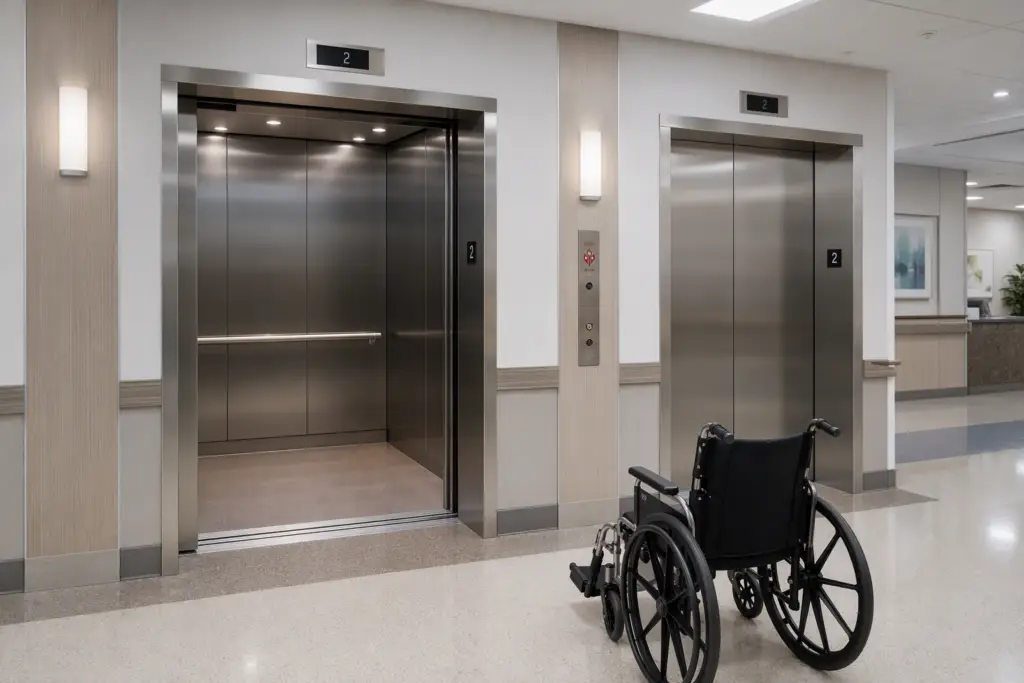
- Americans with Disabilities Act (ADA): Patient-serving elevators must meet ADA accessibility standards for cab dimensions, door timing, button height, auditory signals, and Braille signage. Older hospital elevators that predate ADA updates are frequently non-compliant and require capital investment to remediate.
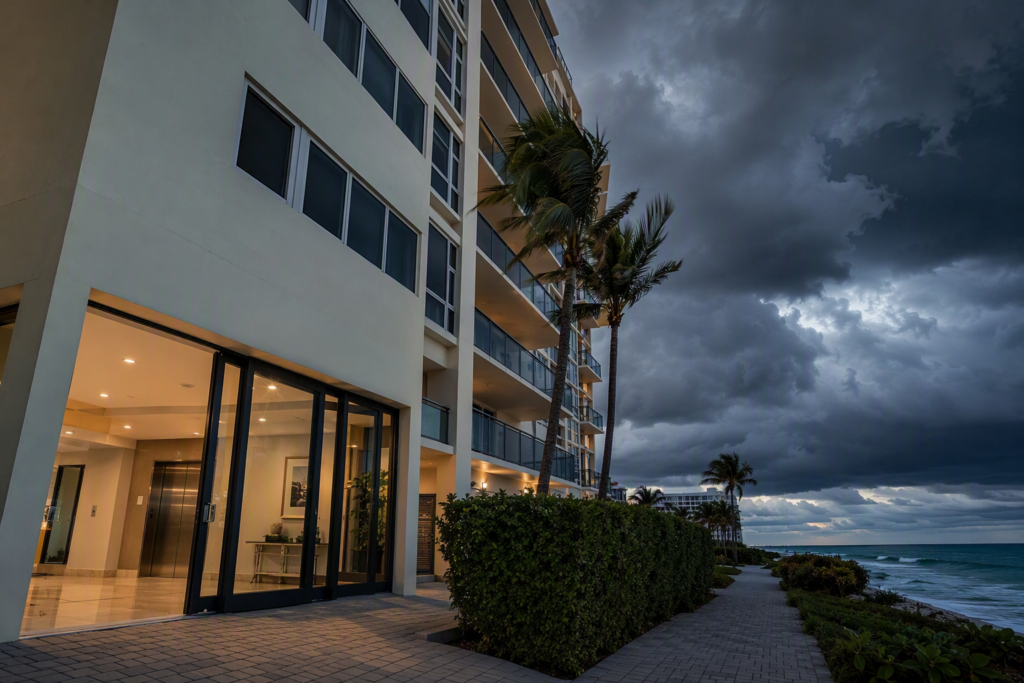
- Florida Building Code (FBC): Florida’s local amendments add requirements on top of ASME A17.1, particularly around hurricane preparedness, fire service recall, and seismic considerations in certain coastal zones — relevant for both Pompano Beach and Sarasota locations.
- The Joint Commission Environment of Care Standards: Hospitals seeking Joint Commission accreditation must document elevator maintenance programs, corrective action timelines, and safety incident tracking as part of the Environment of Care (EC) chapter. A lapsed inspection or deferred repair can generate a finding during survey.
- OSHA General Duty Clause: Elevator hazards that expose healthcare workers — patient transport staff, housekeeping, dietary — to recognized dangers can trigger OSHA liability even when state elevator codes are technically satisfied.
Each of these frameworks generates specific cost drivers. Budgeting without mapping line items back to compliance requirements leaves capital requests vulnerable to rejection or mid-year emergency spending.
—
What Cost Categories Should a Healthcare Facility Include in Its 2027 Elevator Budget?
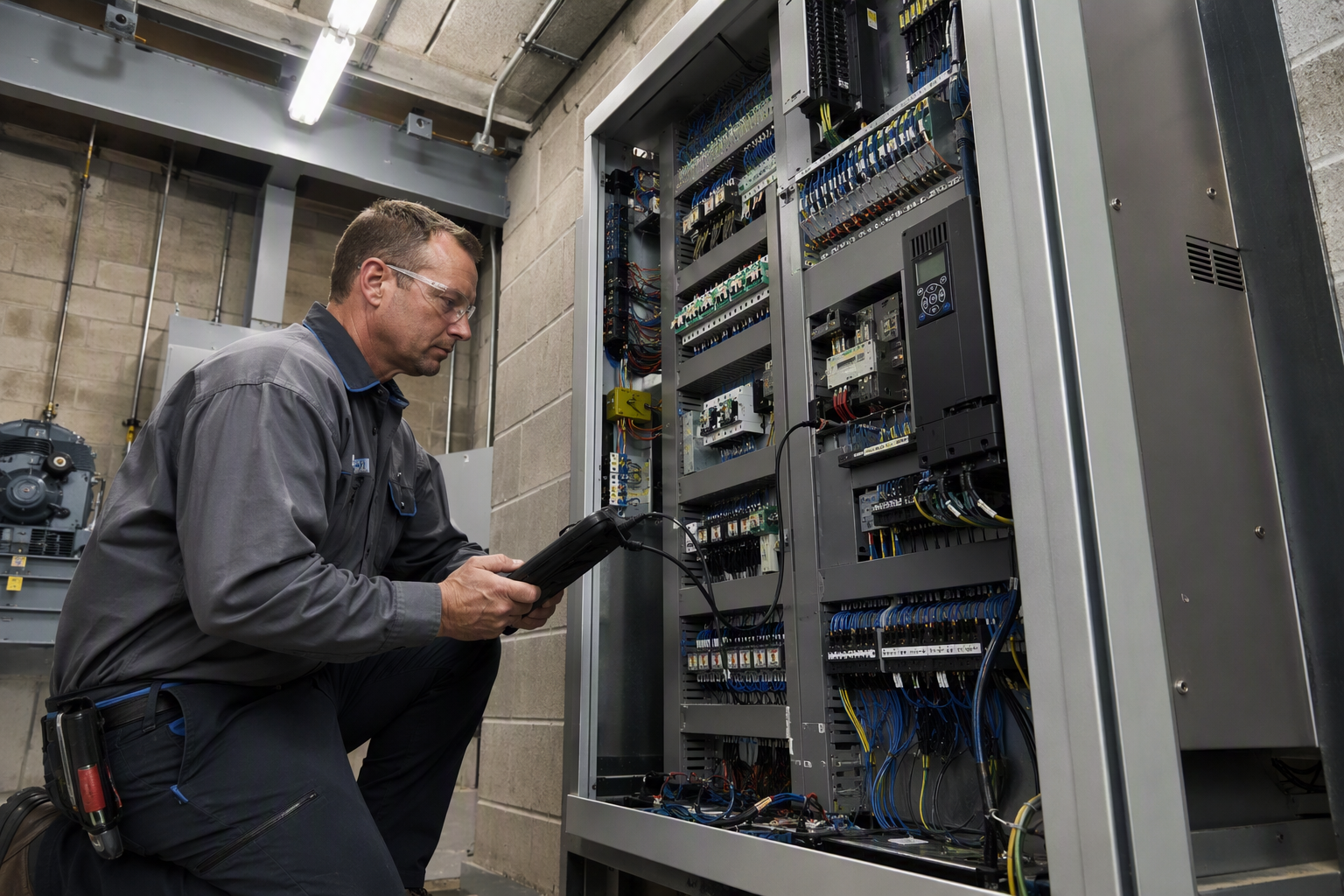
A well-structured elevator capital plan for a healthcare facility typically includes four distinct cost buckets:
- Preventive Maintenance (PM) Contracts: Annual or multi-year service agreements covering scheduled lubrication, adjustments, safety device testing, and minor component replacements. PM contracts are the foundation of any defensible maintenance program and are frequently required as evidence in Joint Commission surveys.
- Code-Compliance Upgrades: Retroactive modifications required by adopted editions of ASME A17.1, ADA remediation work, or Florida Building Code amendments. These are often one-time capital expenditures but can recur when new code editions are adopted.
- Major Component Replacements: Drive machines, controllers, door operators, hydraulic cylinders, and cab interiors have finite service lives. Replacing aging components before failure reduces emergency repair costs and minimizes downtime in patient-care settings where elevator outages directly affect clinical operations.
- Full Modernizations: When the cumulative cost of component replacements and compliance upgrades approaches or exceeds a significant portion of full modernization cost, a complete elevator modernization often becomes the more economical capital investment. Modernizations also reset the compliance clock and can extend useful asset life substantially.
Facilities served by Axxiom Elevator Florida benefit from condition assessments that categorize existing deficiencies into these four buckets, giving capital planners the documentation needed to justify each line item to finance committees and boards.
—
When Should a Healthcare Facility Begin the Assessment Process for Its 2027 Budget?
Capital plan submissions for fiscal year 2027 typically require documented justification well in advance — often during Q2 or Q3 of calendar year 2026. That means formal elevator condition assessments should be completed no later than early-to-mid 2026 to allow time for vendor quotes, engineering review, and internal approval workflows.
- Schedule a formal elevator condition assessment with a qualified service provider in Q1–Q2 2026.
- Receive a written assessment report categorizing each unit by condition, compliance status, and recommended action timeline.
- Obtain detailed scope-of-work documents and preliminary cost estimates for each recommended action.
- Classify each item as operating expense (PM contracts, minor repairs) or capital expenditure (modernizations, major component replacements) with guidance from your finance team.
- Submit capital requests with supporting documentation during your organization’s annual capital planning window.
- Confirm vendor selection and finalize contracts early enough to schedule work without disrupting clinical operations in 2027.
—
How Does Deferred Maintenance Affect a Healthcare Elevator Budget?
Deferred elevator maintenance in healthcare settings does not reduce costs — it redistributes them into more expensive categories while adding operational and liability risk. A component that could have been replaced during a scheduled PM visit at manageable cost becomes an emergency repair when it fails mid-shift, potentially stranding patients on floors or triggering a regulatory notification.
For Joint Commission-accredited facilities, documented deferred maintenance can be flagged as an Environment of Care finding. For facilities subject to state health department licensing surveys, elevator outages in patient-transport zones may require formal incident documentation. Capital planners who can demonstrate a proactive maintenance program — supported by service records from a provider like Axxiom Elevator Florida — are in a stronger position during both regulatory surveys and internal budget negotiations.
—
What ADA Requirements Specifically Apply to Hospital Elevator Cabs?
Under the Americans with Disabilities Act, passenger elevators in healthcare facilities must meet specific accessibility standards. Common compliance gaps in older hospital elevators include:
- Insufficient cab dimensions to accommodate power wheelchairs and stretcher transport
- Door open timing that does not accommodate patients with mobility limitations
- Non-compliant control panel heights and button sizes
- Missing or illegible Braille signage on call buttons and cab controls
- Inadequate auditory floor announcements
- Lighting levels that do not meet accessibility standards for visually impaired users
ADA remediation is frequently triggered by facility renovation projects. When a healthcare organization renovates a floor or wing, the path of travel to renovated areas — including elevators — may require ADA upgrades as a condition of building permit approval. Budgeting for ADA compliance as a standalone line item, rather than absorbing it into renovation contingency, improves capital planning accuracy.
—
How Should Multi-Site Healthcare Systems Budget Across Multiple Florida Locations?
Healthcare systems operating facilities in multiple Florida markets — for example, a system with campuses in both Pompano Beach and Sarasota — benefit from a portfolio-level approach to elevator budgeting rather than site-by-site reactive planning.
A portfolio assessment allows facility management to:
- Prioritize capital investment across sites based on equipment age, condition, and compliance risk
- Negotiate more favorable multi-site service agreements
- Standardize elevator equipment across campuses to reduce parts inventory costs and technician training requirements
- Phase modernization projects across multiple fiscal years to smooth capital expenditure curves
- Create a centralized maintenance documentation repository that supports system-wide Joint Commission surveys
Axxiom Elevator Florida serves healthcare and commercial facilities across South and Central Florida, including the Pompano Beach and Sarasota markets, making coordinated multi-site service planning achievable under a single provider relationship.
—
What Is the Difference Between a Maintenance Contract and a Full-Service Contract for a Healthcare Facility?
Healthcare facility managers evaluating elevator service agreements typically encounter two broad contract structures:
- Maintenance-Only Contracts: Cover scheduled preventive maintenance visits, lubrication, adjustments, and safety testing. Parts and repairs beyond routine maintenance are billed separately. These contracts offer lower annual costs but expose facilities to unpredictable repair expenses — a significant budget risk for healthcare operations departments.
- Full-Service (Comprehensive) Contracts: Include preventive maintenance plus labor and parts for most repairs, often excluding major component replacements and vandalism. These contracts convert variable repair costs into predictable operating expenses, which aligns well with healthcare budgeting models and simplifies year-over-year forecasting.
The appropriate contract type depends on equipment age, condition, and the facility’s risk tolerance. Newer or recently modernized equipment may perform well under a maintenance-only contract. Aging equipment with known deficiencies is better served by comprehensive coverage that protects against unexpected repair costs during the budget year.
—
Questions Your Inspector Will Ask
When a Florida-licensed elevator inspector arrives at a healthcare facility — whether for a routine annual inspection, a complaint investigation, or a post-repair acceptance test — the documentation they request directly reflects the line items that belong in a capital plan. Be prepared to provide answers and supporting records for the following:
- When was the last full load test performed? ASME A17.1 specifies testing intervals for hydraulic and traction elevators. Missing or overdue load tests are a common compliance finding.
- Are all safety devices — governors, buffers, safeties — current on their test schedule? Inspectors will review documentation for each device.
- Has the fire service recall system been tested in accordance with the current code cycle? Fire service Phase I and Phase II testing is required and must be documented.
- Are all outstanding correction notices from prior inspections resolved? Open correction items from previous inspection cycles escalate to violation status and can affect certificate of operation renewal.
- Is the certificate of operation current and posted in the elevator cab? Operating an elevator without a current, posted certificate is a violation under Florida law.
- What is the maintenance history for this unit over the past 12 months? Inspectors may request service logs to evaluate whether the maintenance program meets ASME A17.1 requirements.
- Have any modifications been made since the last inspection? Unpermitted modifications are a serious compliance issue that can require retroactive engineering review and permit filings.
- Are hydraulic cylinders tested and documented for units over the applicable age threshold? Single-bottom hydraulic cylinders have specific testing requirements that affect older hospital elevators.
If a facility cannot produce complete documentation in response to these questions, the gaps represent budget items — either for deferred maintenance remediation or records reconstruction.
—
How Does Elevator Age Affect Capital Planning in Healthcare Settings?
Equipment age is one of the most reliable predictors of capital expenditure in an elevator portfolio. Elevator components have defined service life expectations based on manufacturer specifications, usage cycles, and environmental conditions. In high-use healthcare environments — where elevators may run continuously across multiple shifts, seven days a week — component wear accelerates relative to typical commercial usage.
A condition assessment from a qualified provider identifies where individual units stand relative to expected component life and flags items approaching end-of-service thresholds. This data transforms elevator budgeting from reactive guesswork into defensible, evidence-based capital planning.
—
How Do You Select the Right Elevator Service Vendor for a Healthcare Facility?
Vendor selection for healthcare elevator service involves criteria beyond price. Facility managers should evaluate:
- Healthcare-specific experience: Elevator service in clinical environments requires coordination with infection control protocols, patient safety procedures, and facility operations — not all service providers are experienced in these requirements.
- Local presence and familiarity with Florida codes: Florida-specific code adoptions, inspection processes, and permit requirements are handled more efficiently by providers with established relationships with Florida’s inspection authorities.
- Documentation capabilities: Joint Commission surveys and capital planning both require detailed, organized service records. Vendors should provide documentation that meets healthcare compliance standards.
- Scope of services: A provider capable of handling everything from routine PM to full modernization reduces the coordination burden on facility management teams.
Axxiom Elevator Florida is a certified elevator service company serving healthcare and commercial facilities in the Pompano Beach and Sarasota markets, providing the local expertise and service range that healthcare capital planners need when building a defensible 2027 budget.
—
What Steps Should a Healthcare Facility Take Right Now to Prepare for 2027 Elevator Budgeting?
- Pull all current elevator certificates of operation and confirm none are expired or approaching expiration.
- Gather maintenance service records for the past two years and identify any open correction notices or outstanding violations.
- Review the age and last modernization date for each elevator unit in the portfolio.
- Contact a qualified elevator service provider to schedule a formal condition assessment.
- Request a written assessment report with itemized findings, recommended actions, and preliminary cost estimates.
- Categorize each recommended action as operating or capital expense with finance team input.
- Incorporate documented estimates into the 2027 capital plan submission with compliance rationale for each line item.
- Confirm a service contract structure — maintenance-only or comprehensive — that aligns with the facility’s budget risk tolerance for 2027.
—
Start Your 2027 Elevator Capital Plan With a Free Assessment
Healthcare facility teams in Pompano Beach, Sarasota, and across Florida can take the uncertainty out of elevator budgeting by starting with a structured condition assessment. A written assessment gives capital planners the documentation, cost estimates, and compliance rationale needed to build an accurate, defensible 2027 capital plan — and to avoid mid-year emergency expenditures that derail operating budgets.
Contact Axxiom Elevator Florida for a free elevator assessment:
Need elevator service you can rely on? Axxiom Elevator Florida is ready to help.