How Long Does a New Elevator Installation Take From Permit to First Use in a Florida Commercial Building?
In Florida, a new commercial elevator installation typically takes between 4 and 12 months from the date of permit application to authorized first use by the public. Hydraulic elevators in straightforward commercial builds tend to fall toward the shorter end of that range, while traction systems in high-rise or complex structures, or projects encountering AHJ comment cycles, can extend well beyond six months. No elevator in Florida may be placed into service without a valid Certificate of Operation issued after a successful DBPR inspection.
What are the major phases that determine how long a Florida commercial elevator installation takes?
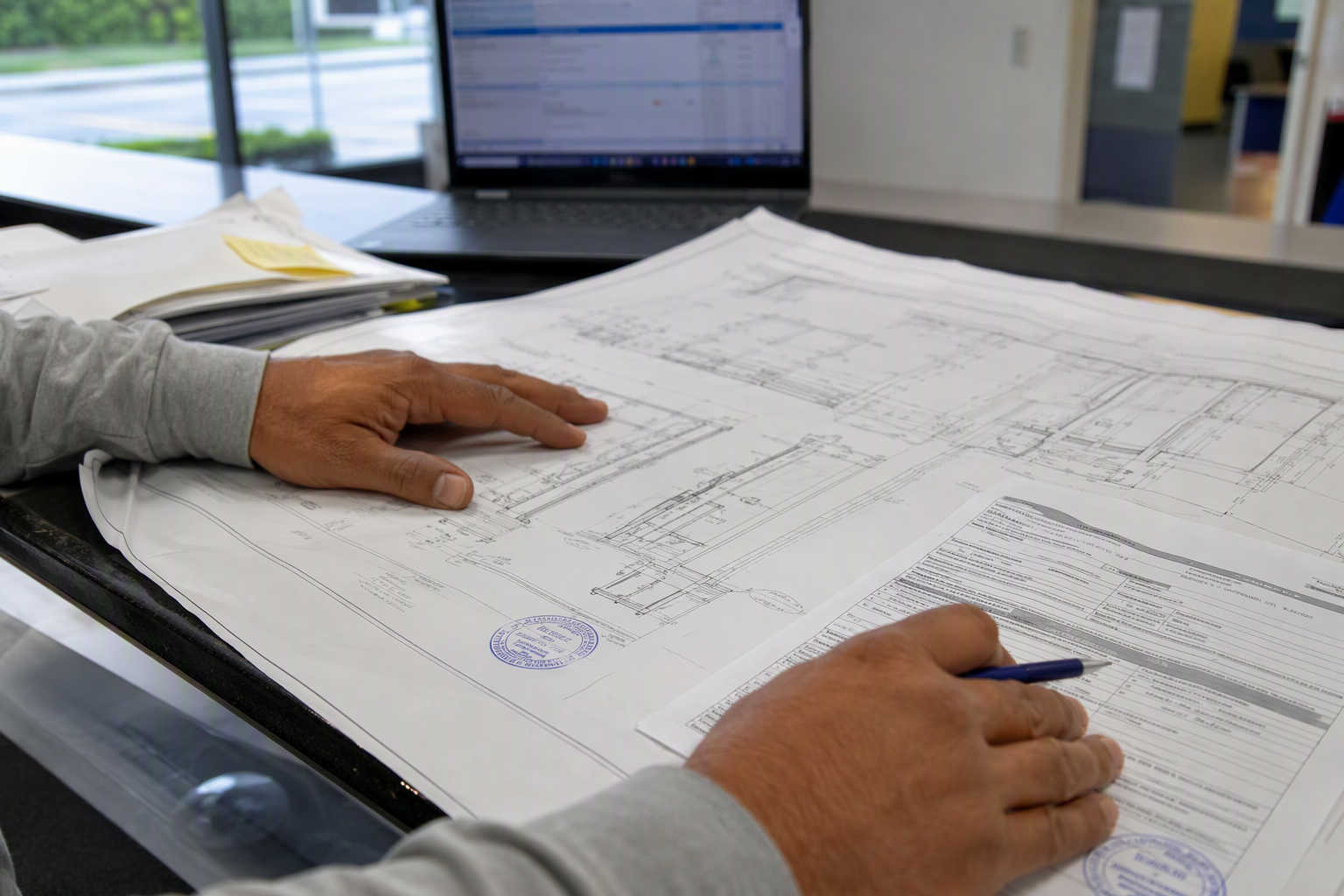
Every Florida commercial elevator project moves through four sequential phases: design and permit review, equipment procurement, physical installation, and state inspection and certification — and delays in any single phase extend the entire timeline.
The design and permit phase requires submission of engineering drawings stamped by a Florida-licensed engineer to the local building department (the AHJ). Plan review alone can take two to eight weeks in most Florida jurisdictions, though busy offices such as those serving dense South Florida or Gulf Coast markets can add additional review cycles if drawings require corrections. The equipment procurement phase follows permit approval and is often overlooked as a schedule driver: commercial elevator equipment — especially gearless traction machines, custom cab finishes, and proprietary controls — frequently carries a lead time of eight to twenty-four weeks from the manufacturer, and supply chain conditions in 2026 continue to affect availability. Physical installation, once the hoistway is ready and equipment is on site, typically requires four to twelve weeks depending on elevator type and building access. Finally, the DBPR inspection and Certificate of Operation phase requires scheduling a state-certified inspector, which adds additional calendar time.
What permits and approvals are required before a Florida elevator can be installed?
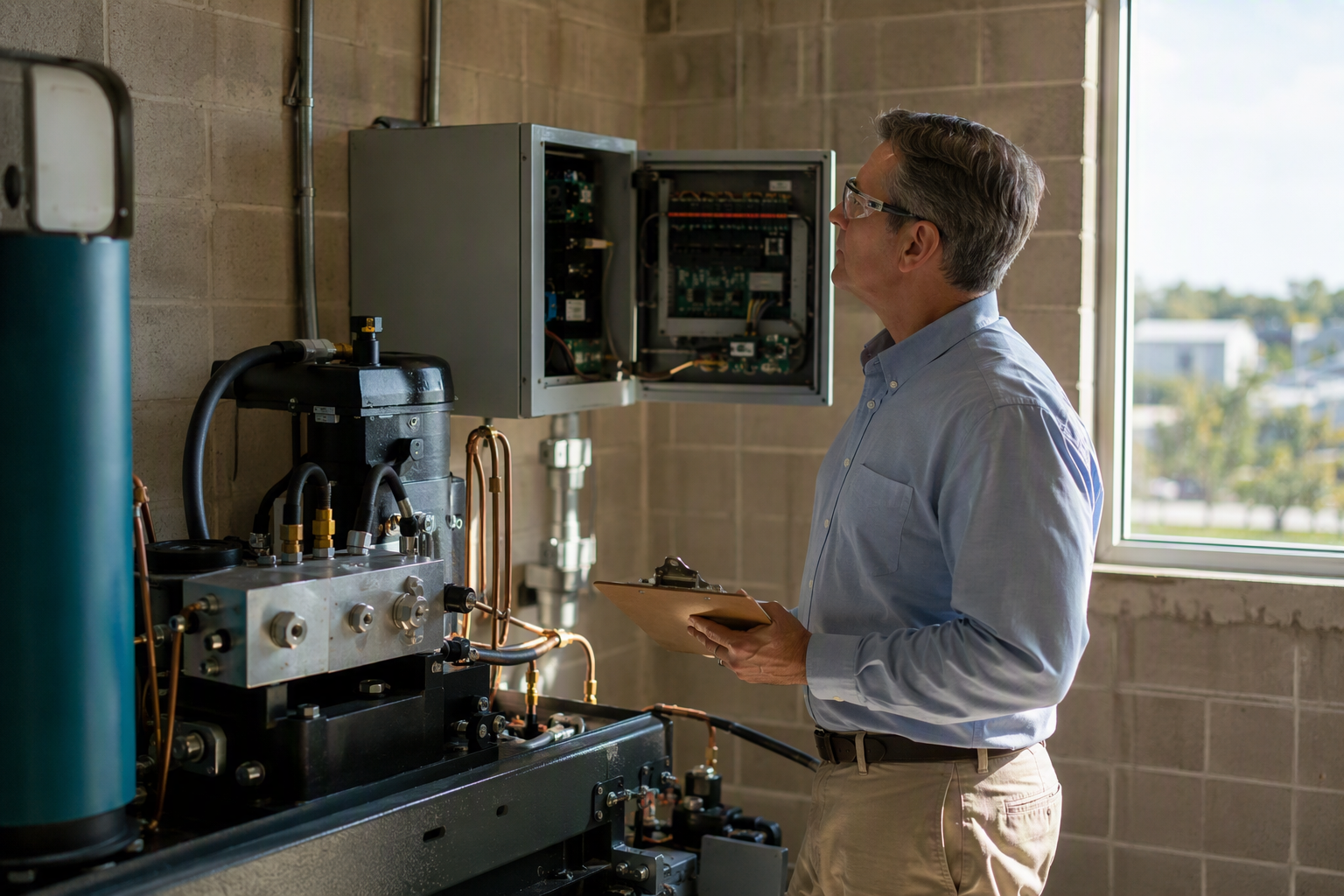
Florida law requires both a local building permit and a separate elevator permit from the DBPR, Bureau of Elevator Safety, before installation work begins.
The local building permit covers the structural elements — the hoistway, machine room, pit, and electrical service — while the DBPR elevator permit governs the lift equipment itself. Applications to the DBPR must include construction drawings that comply with the ASME A17.1 Safety Code for Elevators and Escalators, the governing safety standard adopted in Florida. The AHJ reviews structural plans concurrently, but neither permit is a substitute for the other. Submitting both applications simultaneously, with fully coordinated drawing sets, is one of the most effective ways to compress the overall schedule.
Which code governs elevator installation safety standards in Florida commercial buildings?
Florida commercial elevator installations are governed primarily by the ASME A17.1 Safety Code for Elevators and Escalators, as adopted and enforced by the Florida DBPR Bureau of Elevator Safety.
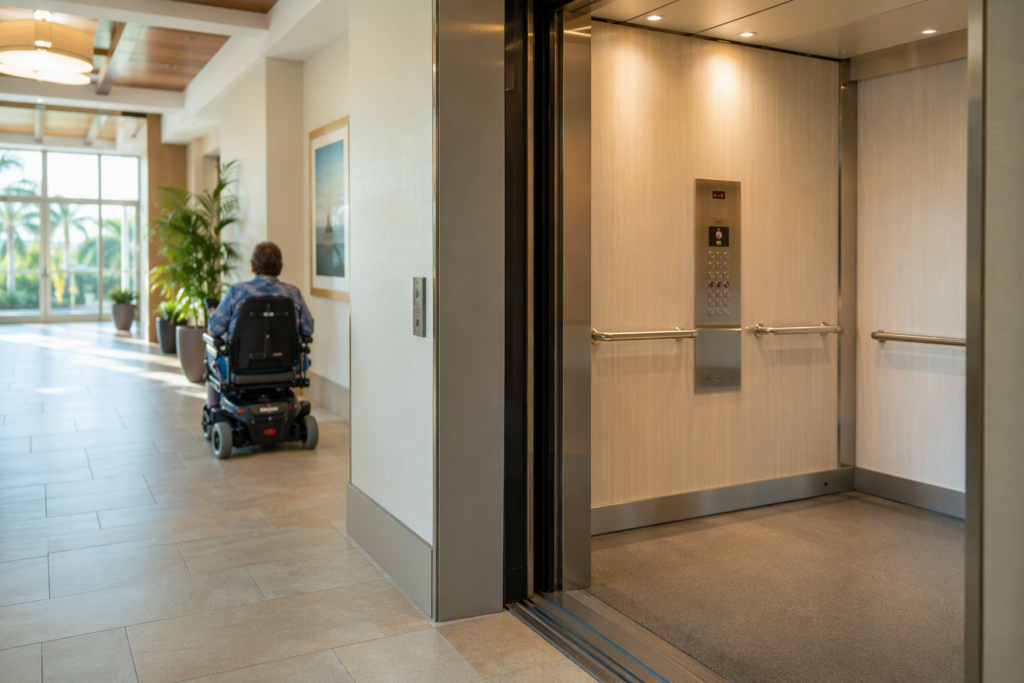
ASME A17.1 establishes requirements for hoistway construction, machine room conditions, safety devices, controls, lighting, emergency communication, and electrical equipment. Florida statutes and administrative code further require that all elevator work be performed by licensed elevator contractors and that all installations receive a witnessed inspection by a DBPR-authorized inspector before a Certificate of Operation is issued. Compliance with the Americans with Disabilities Act (ADA) is also mandatory for commercial buildings, governing cab dimensions, door timing, control panel height, and Braille/tactile markings, and is reviewed as part of the building permit process.
How does elevator type affect installation time in a Florida commercial building?
Elevator type is one of the single largest variables in installation duration — hydraulic systems generally install faster than traction systems, which in turn install faster than machine-room-less (MRL) systems in complex builds.
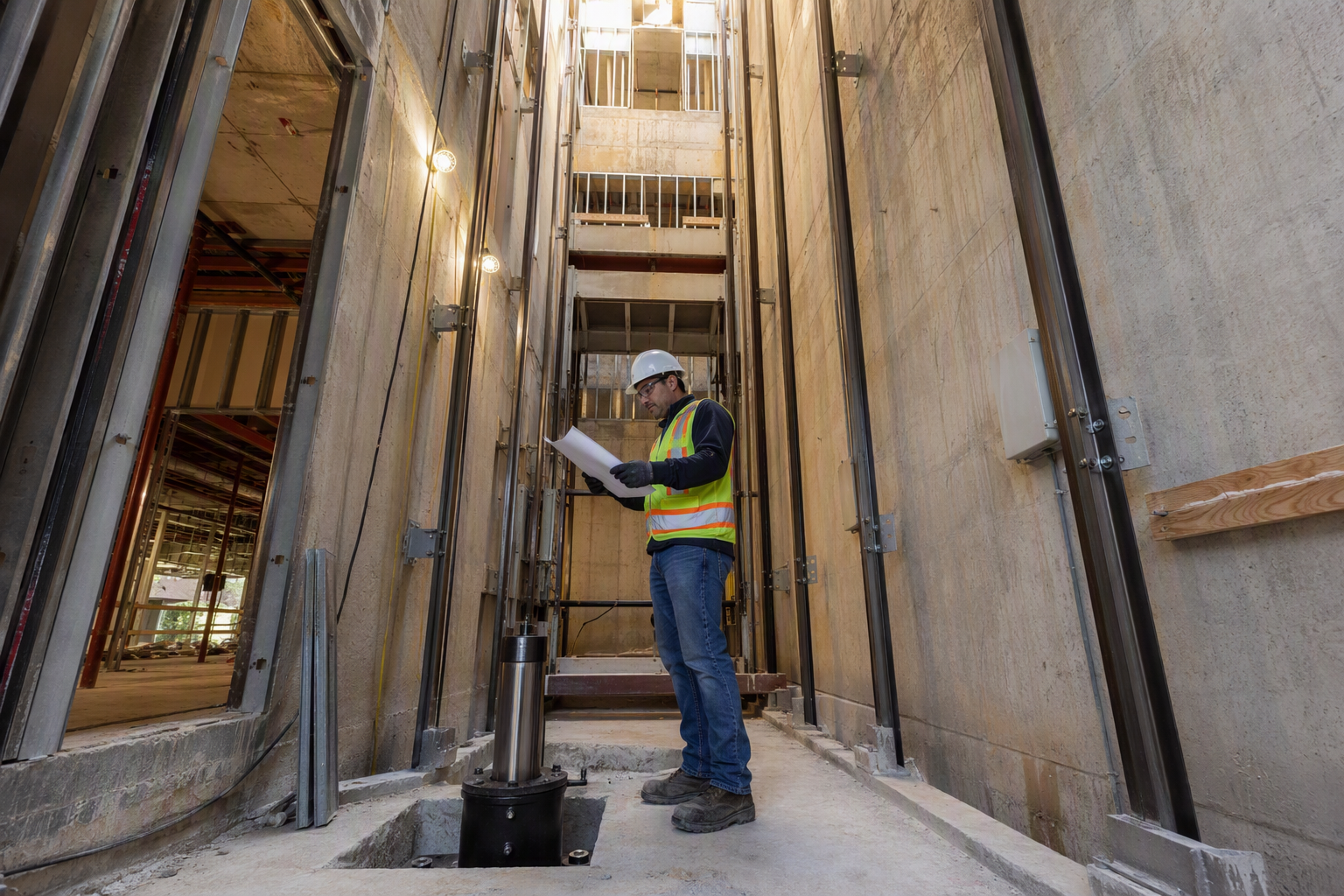
Hydraulic elevators require excavating a cylinder pit below the hoistway, which is a discrete civil work item that must cure before equipment arrives, but their machine rooms are typically located adjacent to the hoistway on the lowest floor, simplifying electrical routing. Conventional traction elevators require an overhead machine room and more extensive structural steel coordination. MRL traction elevators eliminate the overhead room but demand tighter hoistway tolerances and more complex rail and control installations. Low-rise commercial buildings in Pompano Beach and Sarasota most commonly use hydraulic or MRL systems, while mid-rise and high-rise structures use gearless traction. Each type also carries different equipment lead times from manufacturers.
What is a realistic month-by-month timeline for a typical Florida commercial elevator installation?
A realistic timeline for a mid-complexity hydraulic or MRL elevator in a Florida commercial building follows a structured sequence that typically spans five to eight months under favorable conditions.
- Month 1 – Design finalization and dual permit submission: The elevator contractor and engineer of record complete hoistway drawings; applications are submitted simultaneously to the local AHJ and the DBPR Bureau of Elevator Safety.
- Month 1–2 – Plan review cycles: Both agencies review drawings; comment letters are addressed and revised drawings resubmitted if required. Two review cycles are common.
- Month 2–3 – Permit issuance and equipment order: Once both permits are issued, the elevator contractor places the equipment order with the manufacturer. Lead times vary widely by supplier and model.
- Month 3–5 – Hoistway and pit construction: The general contractor completes the hoistway, pit, machine room or control cabinet alcove, and rough electrical. This phase proceeds in parallel with equipment manufacturing.
- Month 5–7 – Equipment delivery and installation: Elevator components arrive on site. The licensed elevator contractor installs rails, equipment, cab, doors, and controls in sequence.
- Month 7–8 – Contractor final inspection and punch list: The elevator contractor performs internal acceptance testing and resolves all deficiencies before requesting the state inspection.
- Month 8 – DBPR inspection: A state-authorized inspector witnesses load, safety, and operational tests. If the unit passes, the Certificate of Operation is issued and the elevator may be placed into service.
Projects with AHJ comment cycles, equipment back-orders, hoistway construction delays, or scheduling conflicts with DBPR inspectors can extend this timeline by weeks or months. Axxiom Elevator Florida works with clients in Pompano Beach and Sarasota to coordinate permitting and procurement concurrently, reducing schedule gaps where possible.
What is the comparative installation timeline for different elevator types in Florida?
| Elevator Type | Typical Permit-to-Certificate Timeline | Key Schedule Drivers | Common in Florida Commercial Use |
|---|---|---|---|
| Hydraulic (in-ground or hole-less) | 4–8 months | Pit excavation, cylinder lead time, fluid management | Low-rise retail, medical offices, 2–4 stop buildings |
| Machine-Room-Less (MRL) Traction | 5–9 months | Hoistway tolerances, control alcove coordination, MRL equipment availability | Mid-rise offices, hotels, mixed-use |
| Geared Traction | 6–10 months | Machine room construction, overhead clearance, equipment lead time | Mid-rise commercial, older construction |
| Gearless Traction (High-Rise) | 8–12+ months | Custom engineering, AHJ complexity, extended equipment lead times | High-rise office towers, hospitals |
| Limited-Use / Limited-Application (LULA) | 3–6 months | Simplified hoistway requirements, smaller equipment | Historic buildings, small commercial retrofit |
How does the DBPR Bureau of Elevator Safety inspection process work in Florida?
The Florida DBPR Bureau of Elevator Safety must conduct a witnessed acceptance inspection before any new elevator is authorized for public use, and scheduling this inspection is a step that cannot be skipped or self-certified by the contractor.
Once the elevator contractor has completed installation and performed internal testing, they submit a request for inspection to the DBPR. A state-authorized inspector is assigned and must be present during load testing, safety device testing, and operational testing. The inspector verifies conformance with the adopted ASME A17.1 Safety Code for Elevators and Escalators and reviews documentation including the contractor’s certificate of compliance, test reports, and ADA-related certifications. If deficiencies are found, a re-inspection must be scheduled after corrections, adding additional calendar time. Only when the inspector approves the installation does the DBPR issue the Certificate of Operation — the legal document that authorizes use of the elevator.
What role does the local Authority Having Jurisdiction (AHJ) play in the timeline?
The local AHJ — typically the county or municipal building department — independently reviews structural, electrical, and fire/life safety elements of the elevator installation and issues the building permit that must be in place before any hoistway or pit construction begins.
In South Florida jurisdictions including Broward County (which covers Pompano Beach) and Sarasota County, AHJ plan review queues, third-party review options, and the availability of expedited review pathways can significantly affect timeline. Large commercial projects may require fire department review of machine room suppression systems, electrical department sign-off on feeder circuits and disconnects, and structural peer review of hoistway penetrations. Coordinating all submittals into a single, complete package — rather than submitting in stages — is widely regarded as the most effective way to minimize AHJ-related delays.
How do ADA requirements affect the elevator installation timeline and scope?
ADA compliance requirements must be incorporated into the elevator design from the outset — retrofitting non-compliant features after installation is costly and can delay the Certificate of Occupancy for the entire building.
The Americans with Disabilities Act mandates specific requirements for elevators in commercial buildings open to the public, including minimum cab dimensions, door width and timing parameters, control panel button size and placement, floor designation raised characters and Braille, audible signals, and accessible call button height. These requirements are reviewed by the local AHJ as part of the building permit and are also checked during the DBPR inspection. Specifying ADA-compliant equipment at the time of the initial order — rather than attempting to modify controls or cab panels after fabrication — avoids costly delays and potential re-fabrication lead times.
What OSHA requirements apply during elevator installation in a Florida commercial building?
Workers performing elevator installation in Florida must comply with applicable OSHA standards governing construction safety, including fall protection, electrical safety, and hoistway access protocols.
OSHA construction standards apply to the hoistway during the active construction phase, before the elevator is enclosed and operational. Hoistway openings must be guarded, and workers at elevation must have fall protection in place. The elevator contractor’s licensed workforce is responsible for compliance within their scope of work, while the general contractor retains overall site safety responsibility. Non-compliance with OSHA requirements can result in stop-work orders that extend the project timeline, making safety planning an integral part of schedule management.
What factors most commonly cause delays in Florida commercial elevator installations?
The most common causes of schedule extension in Florida commercial elevator projects fall into four categories: permitting, procurement, construction coordination, and inspection availability.
Permitting delays arise from incomplete drawing submissions, engineering comment cycles at the AHJ or DBPR, and — in active construction markets like Broward and Sarasota counties — simply high application volumes at the reviewing agencies. Procurement delays are driven by manufacturer lead times, which fluctuate with industry demand and supply chain conditions. Construction coordination delays occur when the hoistway is not ready to receive equipment on the day of scheduled delivery, requiring re-sequencing. Inspection delays arise when DBPR inspector availability in a particular region does not align with contractor readiness. Engaging an experienced elevator contractor early in the design process — before construction documents are finalized — is the most reliable way to identify and mitigate these risks. Axxiom Elevator Florida provides installation services in the Pompano Beach and Sarasota markets and can assist project teams with pre-construction planning to reduce schedule exposure.
Does the number of floors or stops affect the installation timeline?
Yes — elevator systems serving more floors require more rail sections, more landing doors, more wiring runs, and more testing stops, each of which adds installation time.
A two-stop elevator serving a ground floor and one upper floor has a fundamentally simpler installation scope than a twelve-stop building elevator. Each additional landing requires a door assembly, door operator, landing buttons, hall lantern, and wiring termination. Additional rail sections must be plumbed, aligned, and secured. Full-load and safety testing must be performed at each floor. For multi-stop, high-rise installations, it is not uncommon for the installation labor phase alone to extend to three months or more, independent of permitting and procurement time.
What should a commercial building owner do to prepare the site for faster elevator installation?
Site readiness is entirely within the building owner’s and general contractor’s control and is one of the most actionable ways to protect the elevator installation schedule.
- Complete the hoistway to the specified dimensions: The hoistway must be plumb, dimensionally accurate, and fully enclosed (including fireproofing where required) before elevator equipment is delivered.
- Provide a clean, dry pit: The elevator pit must be free of debris, water, and obstructions. Florida’s high water table makes waterproofing and sump provisions critical, especially for in-ground hydraulic systems.
- Confirm electrical service: The dedicated feeder circuit, disconnect, and emergency lighting circuit for the machine room or control alcove must be energized and tested before elevator start-up work begins.
- Verify machine room or control alcove conditions: Temperature and humidity must be within the equipment manufacturer’s specified ranges — an important consideration in Florida’s subtropical climate.
- Confirm overhead clearances: Final overhead dimensions must match permitted drawings exactly; even small discrepancies can require engineering modifications and re-approval.
- Schedule building access and staging: Coordinate with the general contractor to ensure unobstructed access for large equipment delivery and to designate a secure lay-down area near the hoistway.
How long is a Florida elevator Certificate of Operation valid, and what happens next?
Once issued, a Florida elevator Certificate of Operation is valid for a defined period, after which the elevator must pass a periodic inspection to remain in legal service.
Florida requires periodic inspections of elevators in commercial buildings, and the Certificate of Operation must be renewed following each successful inspection. The ASME A17.1 Safety Code for Elevators and Escalators and ASME A17.3, the Safety Code for Existing Elevators, provide frameworks for the ongoing maintenance and inspection requirements that apply after an elevator enters service. Building owners are responsible for ensuring that maintenance agreements are in place and that the elevator remains in compliant condition between inspections. Allowing a Certificate of Operation to lapse renders the elevator legally inoperable until a successful inspection is completed and the certificate is renewed.
Is a licensed elevator contractor required for all phases of a Florida commercial elevator installation?
Yes — Florida law requires that elevator installation, alteration, and repair work be performed exclusively by contractors licensed by the DBPR, and this requirement applies to every phase of the elevator scope.
This means that even preparatory work directly connected to the elevator — such as installing the pit ladder and lighting, or making final connections to the elevator disconnect — must be within the scope of the licensed elevator contractor. General contractors may perform the hoistway structural work, but any element that is part of the elevator system itself is reserved for licensed elevator professionals. Failure to use a licensed contractor can result in permit revocation, DBPR enforcement action, and inability to obtain a Certificate of Operation, which in turn blocks issuance of the building’s Certificate of Occupancy.
What is the difference between a new installation inspection and a periodic inspection in Florida?
A new installation inspection is a witnessed acceptance test that authorizes an elevator to enter service for the first time, while a periodic inspection is a recurring compliance check that authorizes continued operation of an elevator already in service.
The new installation acceptance inspection requires comprehensive testing of all safety systems, load-bearing capacity, and operational functions — it is the most rigorous inspection type. The periodic inspection focuses on confirming that the elevator continues to meet applicable code requirements and that maintenance has been properly performed. Both types are conducted by DBPR-authorized inspectors, but the documentation requirements and test procedures differ. Building owners transitioning from a new installation to ongoing operations should immediately establish a preventive maintenance program with a licensed elevator company to ensure the elevator remains in compliance between periodic inspection cycles.
How does Florida’s climate affect elevator installation and timeline in cities like Pompano Beach and Sarasota?
Florida’s subtropical climate introduces specific technical and logistical considerations that can affect both the construction schedule and the long-term performance of elevator equipment.
High ambient humidity and temperatures in coastal markets like Pompano Beach and Sarasota place additional demands on machine room climate control, which is required to protect elevator controls and hydraulic fluid from heat and moisture-related degradation. In-ground hydraulic cylinders face elevated groundwater and soil corrosion concerns that require appropriate corrosion-resistant casing and fluid management systems. Hurricane season scheduling — roughly June through November — can affect material delivery and construction activity on open job sites. Finally, salt air in coastal environments accelerates corrosion on exposed components, making material selection and protective finishes important considerations during equipment specification. These factors are familiar to elevator contractors with active operations in the South Florida and Gulf Coast markets.
Can a phased occupancy or temporary certificate of occupancy affect when an elevator can be used?
A temporary Certificate of Occupancy (TCO) does not substitute for the DBPR Certificate of Operation — both documents are independently required, and the elevator cannot be used publicly until both are in place.
In large commercial projects where phased occupancy is common, the building department may issue a TCO for occupied floors while other portions of the building remain under construction. However, the elevator serving those floors must still have a valid DBPR Certificate of Operation before it can be used. Coordinating the DBPR inspection timeline with the general contractor’s TCO strategy is a common scheduling challenge that is best addressed during the project planning phase, not at the close of construction.
What should building owners ask an elevator contractor before signing an installation contract in Florida?
Selecting the right elevator contractor is as important to project success as any technical specification, and building owners should ask targeted questions before committing to a contractor.
- Is your company licensed as an elevator contractor by the Florida DBPR?
- Will you manage both the DBPR elevator permit application and coordination with the local AHJ, or is that the owner’s responsibility?
- What is your estimated equipment lead time for this specific elevator type, and is that lead time locked at contract signing or at purchase order?
- What is your process for preparing the DBPR inspection package, and how do you coordinate inspection scheduling?
- What maintenance agreement options are available after the Certificate of Operation is issued?
- Do you have direct experience with the local AHJ in this jurisdiction?
- What are the contract terms for delays caused by AHJ comment cycles or equipment back-orders?
Axxiom Elevator Florida serves commercial clients in the Pompano Beach and Sarasota markets and is positioned to answer each of these questions with direct knowledge of local AHJ processes and regional project conditions.
What ongoing maintenance obligations begin immediately after a Florida elevator receives its Certificate of Operation?
The moment a Florida commercial elevator receives its Certificate of Operation and enters public service, the building owner assumes ongoing legal obligations for maintenance, periodic inspections, and operational safety.
Florida’s elevator safety regulations require that elevators in commercial use be maintained in safe operating condition at all times. This obligation is typically fulfilled through a preventive maintenance agreement with a licensed elevator company. Maintenance tasks include lubrication of mechanical components, inspection and adjustment of safety devices, testing of emergency communication systems, checking hydraulic fluid levels and condition, and maintaining the hoistway, pit, and machine room in clean and compliant condition. Records of maintenance visits and any repairs must be kept available for inspection. The ASME A17.1 Safety Code for Elevators and Escalators and ASME A17.3 both provide technical frameworks for maintenance practices. Building owners who defer or neglect maintenance risk equipment failures, safety incidents, and failed periodic inspections that can result in mandatory shutdown orders. Axxiom Elevator Florida provides ongoing maintenance services for commercial elevators in Pompano Beach and Sarasota, helping building owners stay ahead of compliance obligations from day one of operation.
Need elevator service you can rely on? Axxiom Elevator Florida is ready to help.