How to Plan and Budget for an Elevator Modernization Project During Q4 Capital Planning Season
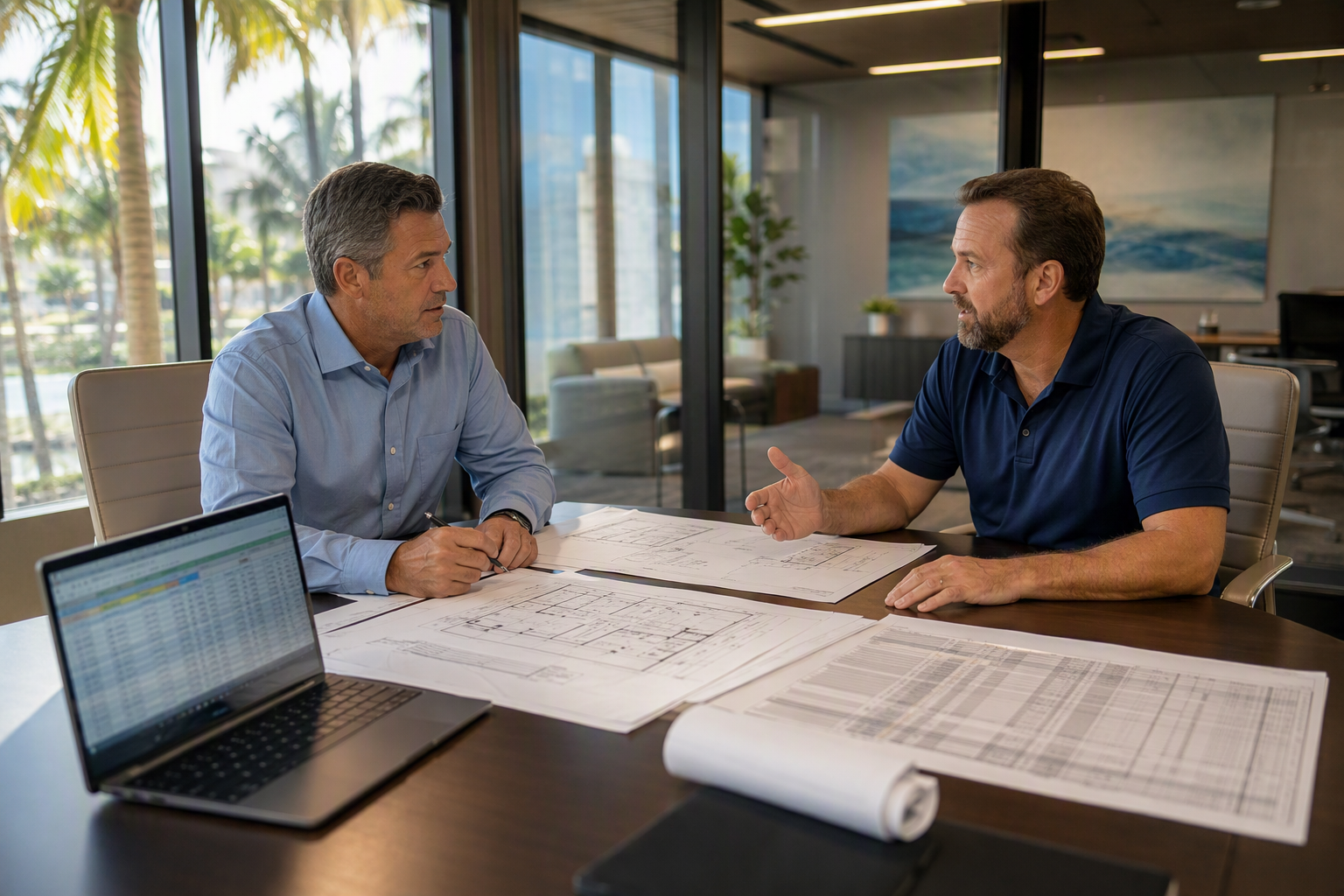
Q4 is the most consequential planning window of the year for Florida facility managers, property owners, and capital planners with aging vertical transportation assets. Decisions made between October and December directly shape whether an elevator modernization project launches efficiently in Q1 or stalls in permit backlogs, equipment delays, and compliance risk. This resource walks through every major planning dimension — from code-driven scope to vendor selection — so Florida building stakeholders can enter the new budget cycle with a defensible, accurate capital plan.
Why Does Q4 Timing Matter for Elevator Modernization Budgeting?
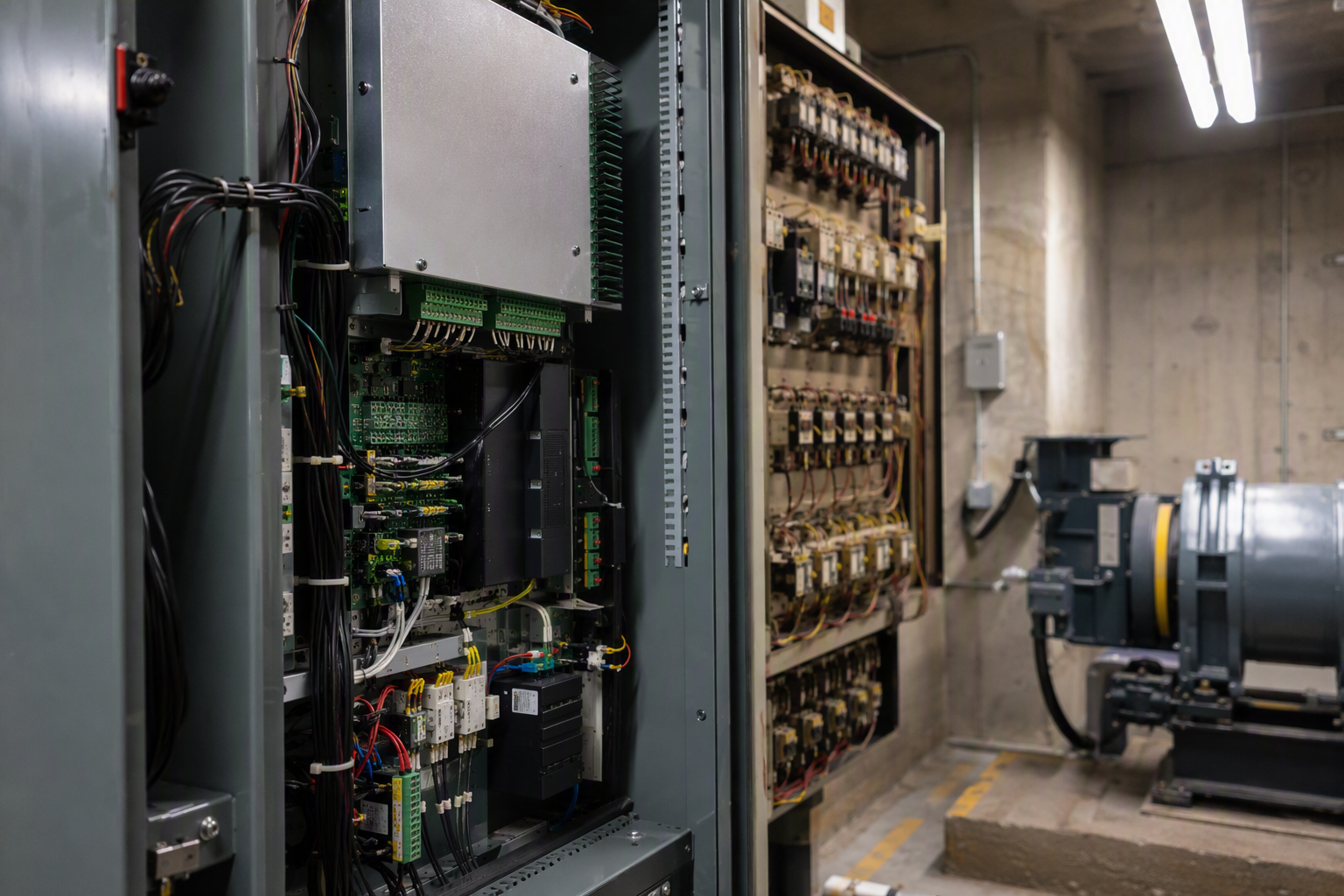
Elevator modernization is not a purchase that can be expedited at the last minute. Major components — traction machines, drive systems, control panels, door operators, and cab interiors — are manufactured to order and carry lead times that vary with supply chain conditions. Florida building owners who wait until Q1 to begin planning typically discover that equipment they need will not arrive until well into the second or third quarter, pushing the project timeline out by six months or more.
Q4 capital planning season aligns directly with the fiscal year budgeting cycles of most commercial property owners, condominium associations, hospitals, government buildings, and educational institutions. Submitting a modernization line item during this window allows the project to receive proper capital appropriations approval, eliminates the need for emergency budget amendments, and gives the procurement team time to issue a proper request for proposal (RFP) rather than a rushed verbal quotation.
Florida’s construction permitting environment adds additional lead time to the schedule. Elevator modernization projects require a permit from the local building department acting as the AHJ, and permit review timelines vary significantly across Florida counties and municipalities. Planning in Q4 means permit applications can be submitted shortly after the new year begins, keeping the project on track for a mid-year completion.
What Are the Core Code Requirements That Define Modernization Scope in Florida?
Scope definition is the foundation of any accurate modernization budget. Florida elevator modernization is governed by two primary code frameworks that capital planners must understand:
- ASME A17.1 Safety Code for Elevators and Escalators — the national standard that governs the design, construction, operation, inspection, testing, and maintenance of new elevator installations and applies to new components introduced during modernization.
- ASME A17.3 Safety Code for Existing Elevators and Escalators — the retroactive safety standard that sets minimum safety requirements for existing elevators, including those undergoing modernization in Florida. When components are replaced, the new components must comply with the edition of A17.1 in effect at the time of the modernization.
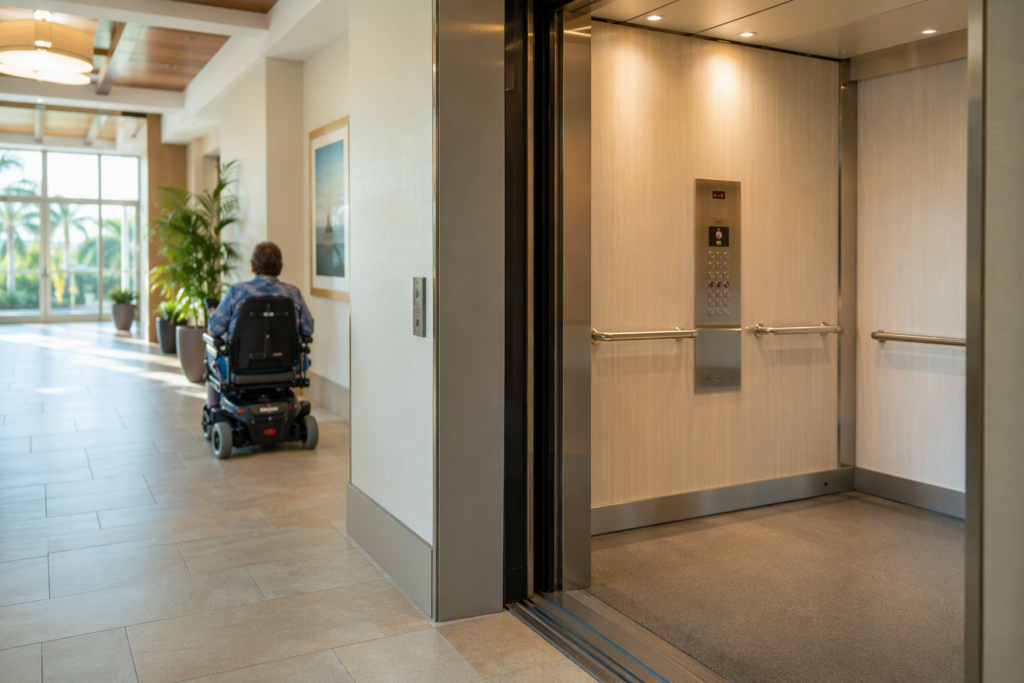
- Americans with Disabilities Act (ADA) — accessibility requirements for cab dimensions, controls, signage, door timing, and related features that apply when a building elevator is being upgraded.
- OSHA — workplace safety standards that govern contractor behavior during modernization work, particularly in occupied buildings.
When any major component — the controller, driving machine, or safety devices — is replaced, Florida’s AHJ typically requires that the modernized system be brought into compliance with current code. This code-triggered compliance is one of the most common reasons modernization budgets are underestimated: a single component replacement can trigger a cascade of required upgrades that were not originally anticipated. A thorough scope assessment before budgeting eliminates this risk.
What Should a Florida Elevator Modernization Needs Assessment Include?
A needs assessment is the document that translates the physical condition of an elevator system into a project scope and, ultimately, a budget. Without a formal needs assessment, any cost figure is speculative. A professionally conducted assessment for a Florida property should address the following areas:
- Age and service history — the age of major components (controller, machine, ropes, door equipment, cab) and documented maintenance records that indicate recurring failures or deterioration patterns.
- Code compliance gaps — a comparison of the existing installation against current ASME A17.3 requirements and any outstanding violations noted by the Florida AHJ during the most recent inspection.
- ADA accessibility review — evaluation of cab dimensions, control panel height and Braille, door dwell times, audible signals, and other ADA accessibility elements.
- Modernization versus replacement analysis — a documented comparison of the cost and benefit of partial modernization, full modernization, and full replacement, including projected remaining useful life for each scenario.
- Energy efficiency opportunity — an assessment of whether regenerative drive technology or other energy-reducing components are feasible given the existing hoistway and machine room configuration.
- Downtime and business impact — an estimate of the outage duration associated with different scope options and the corresponding impact on building tenants, residents, or patients.
Axxiom Elevator Florida provides data-driven needs assessments for Florida building owners as part of the modernization planning process, enabling property teams to enter Q4 budget discussions with documented, defensible scope and cost estimates rather than rough guesses.
What Are the Main Cost Categories in an Elevator Modernization Budget?
A well-structured modernization budget separates costs into distinct categories so that capital planners can understand what is driving the total figure and where contingency reserves are most needed. The main categories are:
- Equipment and materials — the single largest line item, covering the controller, drive system, motor or machine (if being replaced), door operators, fixtures, cab finishes, ropes or belts, safety components, and any specialty items such as machine-room-less (MRL) conversion hardware.
- Labor — installation labor performed by licensed elevator contractors under Florida’s elevator specialty contractor licensing requirements administered through the Florida Department of Business and Professional Regulation (DBPR).
- Permits and fees — AHJ permit fees, which vary by Florida county and project valuation, plus inspection fees payable to the state or local authority.
- Engineering and design — professional engineering documentation required by the AHJ for permit submission, particularly for projects involving structural modifications or machine-room-less conversions.
- Contingency reserve — a budget reserve to absorb unforeseen conditions discovered during demolition and removal of existing equipment, which is a common occurrence in older Florida buildings.
- Temporary service and logistics — costs associated with providing temporary vertical transportation or notifying building occupants during the outage period.
Because equipment is the dominant cost driver, the difference between a partial modernization (replacing controls and fixtures only) and a full modernization (replacing all major components including the machine) can be substantial. Both options must be documented in the capital plan with their respective trade-offs in terms of useful life extension, compliance risk reduction, and future maintenance cost.
How Long Does an Elevator Modernization Project Typically Take in Florida?
Project duration varies based on the scope of work and the specific Florida county where the building is located, but capital planners should model the following phases when constructing a project timeline:
- Needs assessment and scope definition — typically several weeks, depending on the number of elevators being assessed and the availability of historical maintenance records.
- RFP preparation and vendor selection — allow four to six weeks minimum to prepare a detailed scope of work, solicit competitive proposals, evaluate responses, and execute a contract.
- Permit application and review — Florida AHJ review timelines range from a few weeks in some counties to several months in larger urban jurisdictions with high permit volumes. Submit as early as possible.
- Equipment manufacturing and delivery — custom elevator control systems and drive components are manufactured to order. Lead times are determined by the equipment manufacturer and vary with order volume; capital planners should request confirmed lead time estimates from vendors at the proposal stage.
- Installation and testing — the active construction phase duration depends on scope and elevator count but typically spans several weeks to a few months per elevator.
- Final inspection and certificate of operation — the Florida AHJ conducts a final inspection and issues the certificate of operation before the elevator returns to service. Scheduling this inspection requires coordination with the AHJ and may add additional lead time.
End-to-end, a single-elevator full modernization in Florida can reasonably require six to twelve months from needs assessment to certificate of operation. Multi-elevator projects or projects with complex permitting situations require proportionally more time. This timeline reinforces why Q4 planning is critical: a capital commitment made in November can yield a permit application by January and a realistic completion before the following Q4.
What Compliance Risks Does Delaying Modernization Create for Florida Building Owners?
Deferred modernization is not a risk-free strategy. Florida building owners who delay necessary upgrades face a compounding set of compliance and liability exposures:
- AHJ violation notices — Florida elevator inspectors have authority to issue violation orders requiring corrective action within defined timeframes. Unresolved violations can result in shutdown orders that take the elevator out of service, creating an immediate accessibility and operational crisis.
- ADA exposure — buildings subject to ADA requirements that have not addressed known accessibility deficiencies in their elevator equipment face potential complaints and litigation.
- Insurance implications — property insurers and risk managers increasingly scrutinize deferred maintenance documentation during policy renewals; outdated elevator equipment with a history of failures can affect coverage terms.
- Escalating repair costs — aging elevator components fail more frequently and with less predictability. Emergency repair costs for obsolete equipment, where parts may no longer be available through normal supply channels, can approach or exceed the cost of planned modernization over a multi-year period.
- Reduced property value and tenant satisfaction — in competitive Florida commercial and multifamily markets, elevator reliability directly affects tenant retention, lease renewal rates, and property appraisal values.
How Should Florida Building Owners Evaluate and Compare Elevator Modernization Vendors?
Vendor selection is one of the most consequential decisions in the modernization process. Florida building owners evaluating proposals should apply a structured comparison framework that goes beyond the total price figure:
- Florida DBPR licensing — confirm that the elevator contractor holds a current, valid specialty contractor license issued by the Florida Department of Business and Professional Regulation before accepting any proposal.
- Scope equivalency — verify that competing proposals cover identical scope. A lower-priced proposal that excludes cab work, door operators, or safety device upgrades is not comparable to a full-scope proposal.
- Equipment brand and availability — evaluate the long-term parts availability and local service support for the control system and drive components being proposed. Proprietary systems that lock the building into a single service provider can increase long-term maintenance costs significantly.
- References in Florida — request references from Florida building owners with similar property types who have completed modernization projects with the vendor within the past two to three years.
- Project management and communication plan — evaluate how the vendor will manage the permit process, communicate schedule changes, and coordinate with building management during the outage.
- Warranty terms — compare warranty coverage on both equipment and labor, noting any exclusions or conditions.
Axxiom Elevator Florida supports Florida building owners through the vendor evaluation process by providing independent, data-driven assessments that give property teams the technical foundation needed to evaluate proposals objectively.
What Are the Industry Trends Shaping Elevator Modernization Decisions in 2025 and 2026?
Several industry-wide trends are influencing how Florida building owners approach elevator modernization planning as they enter 2026 budget cycles:
- Machine-room-less (MRL) retrofits — advances in traction elevator technology have made MRL conversions increasingly feasible for existing hoistways in Florida buildings. This approach can recover valuable machine room floor space and reduce energy consumption, making it an attractive option for commercial properties and condominium towers.
- Destination dispatch and smart controls — modern control systems that group passengers by destination and optimize car assignments are becoming more accessible for mid-size buildings, not just large high-rises. These systems can meaningfully reduce average wait times in high-traffic Florida commercial and residential properties.
- Remote monitoring and predictive maintenance technology — new control platforms increasingly include connectivity features that allow condition monitoring of key components and early detection of developing faults, shifting maintenance from time-based to condition-based and reducing unplanned downtime.
- Energy efficiency and ESG reporting — Florida commercial property owners with sustainability or ESG commitments are incorporating elevator energy efficiency into their capital planning calculus, particularly as regenerative drive systems that return energy to the building’s electrical system become more widely available.
- Supply chain and lead time management — the global elevator equipment supply chain has experienced notable volatility in recent years. Capital planners should treat vendor-confirmed lead time estimates as a critical planning input rather than an afterthought, and they should build contingency into both their timeline and budget to account for potential delays.
- Code adoption cycles — Florida’s adoption of updated editions of ASME A17.1 and A17.3 continues to evolve. Capital planners should confirm with their AHJ which edition is currently enforced in their jurisdiction so that modernization specifications are written to the correct code cycle.
What Is the Step-by-Step Process for Planning an Elevator Modernization Budget in Q4?
- Audit your elevator inventory. Document every elevator in the portfolio — age, type, last modernization date, current maintenance history, outstanding AHJ violations, and any known reliability issues. This inventory is the foundation for prioritization.
- Order professional needs assessments. Engage a qualified elevator contractor or independent elevator consultant to conduct documented condition assessments for each unit under consideration. Assessments should include code compliance gap analysis against ASME A17.3 and ADA requirements.
- Define modernization scope options. For each elevator, develop at least two scope scenarios — a minimum-compliance partial modernization and a full modernization — so that capital planners and decision-makers can evaluate trade-offs.
- Obtain competitive proposals. Issue an RFP or request detailed written proposals from at least two to three Florida-licensed elevator contractors for each defined scope option. Ensure proposals include itemized equipment lists, confirmed lead times, and detailed warranty terms.
- Build the capital budget line item. Construct the budget using the proposal data, including all cost categories: equipment, labor, permits, engineering, contingency, and any business interruption or temporary service costs.
- Document the compliance and risk rationale. Prepare a written summary of the compliance risks, liability exposure, and operational impact of deferring modernization. This documentation is essential for securing capital committee approval.
- Submit the capital request. Present the modernization budget with full supporting documentation through the organization’s formal capital appropriations process during Q4.
- Select a vendor and execute a contract. Once capital is approved, move immediately to vendor selection and contract execution so that the permit application and equipment order can be placed as early as possible in Q1.
- Initiate permit application. Submit permit documentation to the Florida AHJ promptly after contract execution. Do not wait for equipment delivery to begin the permit process — permit review and equipment manufacturing can proceed in parallel.
- Monitor the schedule actively. Track equipment delivery milestones, permit review status, and inspection scheduling throughout the project. Address delays proactively to protect the project completion timeline.
What Sourced Data Is Available on Elevator Safety and Compliance Standards?
Capital planners building a compliance rationale for their modernization budget request can reference the following authoritative sources:
| Standard / Authority | Relevance to Florida Modernization | Source |
|---|---|---|
| ASME A17.1 Safety Code for Elevators and Escalators | Governs new components installed during modernization in Florida | ASME Codes & Standards |
| ASME A17.3 Safety Code for Existing Elevators and Escalators | Sets minimum retroactive safety requirements for existing Florida elevators | ASME Codes & Standards |
| Americans with Disabilities Act (ADA) | Accessibility requirements applicable to elevator cabs, controls, and door operations | ADA.gov |
| OSHA General Industry Standards | Governs contractor safety practices during elevator modernization in occupied buildings | OSHA.gov |
How Does Florida’s AHJ Structure Affect Modernization Planning?
Florida does not operate under a single statewide elevator inspection program in the same manner as some other jurisdictions. Instead, elevator inspection and enforcement authority in Florida is administered at the local level through county and municipal building departments acting as the AHJ. This decentralized structure has direct implications for modernization planning:
- Permit fee schedules, review timelines, and inspection scheduling processes vary meaningfully from one Florida county to the next. A project in Miami-Dade County will navigate a different permitting environment than a project in Hillsborough County or Brevard County.
- Capital planners should not assume that permit timelines experienced in one Florida jurisdiction will apply to a project in a different county.
- Pre-application meetings with the local AHJ before permit submission can clarify submittal requirements and reduce the risk of permit rejection or lengthy comment cycles.
- The edition of ASME A17.1 and A17.3 that a Florida AHJ enforces may vary based on the local building code adoption cycle. Confirming the applicable edition before writing the modernization specification is a necessary step that is often overlooked until it creates a submittal problem.
When Is Full Replacement a Better Option Than Modernization?
While modernization is the appropriate solution for most aging Florida elevators, there are circumstances where full replacement — installing a new elevator system in the existing hoistway — offers better long-term value. Capital planners should evaluate replacement when any of the following conditions apply:
- The existing hoistway dimensions or structural configuration cannot accommodate modern equipment without significant civil or structural work that inflates the total project cost above the replacement threshold.
- The existing elevator type (for example, a hydraulic unit with underground cylinders) presents environmental or operational concerns that make conversion to a different system type desirable.
- The cumulative remaining useful life of all major components is so limited that a partial modernization would simply defer another major capital outlay within a short timeframe.
- The building is undergoing a comprehensive renovation where the disruption cost of elevator work is partially absorbed by the broader project.
A full replacement versus modernization analysis should be part of every professional needs assessment. Axxiom Elevator Florida structures its Florida assessments to address this decision point explicitly, giving capital planners the data they need to make the right long-term choice.
What Contingency Reserve Is Appropriate for a Florida Elevator Modernization Budget?
Contingency planning is an area where elevator modernization budgets are frequently underprepared. Unlike new construction, modernization involves removing and replacing equipment in an existing hoistway and machine room where hidden conditions are common. Factors that commonly trigger contingency use in Florida elevator modernization projects include:
- Discovery of deteriorated hoistway structural elements, guide rail conditions, or pit conditions not visible during the pre-contract assessment.
- Code compliance requirements triggered by the scope of work that were not identified in the original assessment due to incomplete documentation of the existing installation.
- Changes in AHJ requirements or interpretation during permit review that require specification revisions and associated cost impacts.
- Supply chain delays that extend the outage period and increase associated costs.
- Asbestos or other hazardous material abatement requirements discovered during demolition in older Florida buildings.
Capital planners should discuss the appropriate contingency level for their specific project with their elevator contractor based on the age of the equipment, the completeness of existing documentation, and the complexity of the scope. Including a clearly documented contingency line item in the capital request is preferable to submitting a low number and returning to the capital committee for additional appropriations mid-project.
How Can Axxiom Elevator Florida Support Q4 Capital Planning?
Axxiom Elevator Florida is a data-driven elevator service provider operating exclusively in Florida, positioned to support building owners, property managers, condominium associations, and facility teams through every stage of the Q4 modernization planning process. The Axxiom team assists Florida clients with professional needs assessments, scope development, compliance gap analysis against applicable ASME codes and ADA requirements, and the preparation of capital budget documentation that meets the standard of scrutiny applied by capital committees, lenders, and property boards.
Beginning the modernization planning engagement during Q4 — rather than waiting until capital is approved — is the approach that consistently produces the most accurate budgets, the most competitive vendor proposals, and the most achievable project timelines for Florida building owners.
Need elevator service you can rely on? Axxiom Elevator Florida is ready to help.