What Happens If My Elevator Fails Inspection in Florida — And How to Get It Back in Service Fast
A failed elevator inspection is one of the most disruptive compliance events a property manager or building owner in Florida can face. Whether the property is in Pompano Beach or Sarasota, the consequences are immediate, the regulatory pathway is non-negotiable, and every day the elevator sits idle creates liability exposure, tenant frustration, and ADA accessibility concerns. This FAQ hub covers every dimension of the failed-inspection process — from the moment the inspector hands over a violation notice to the final certificate that puts the elevator back in lawful service.
What exactly happens the moment an elevator fails inspection in Florida?
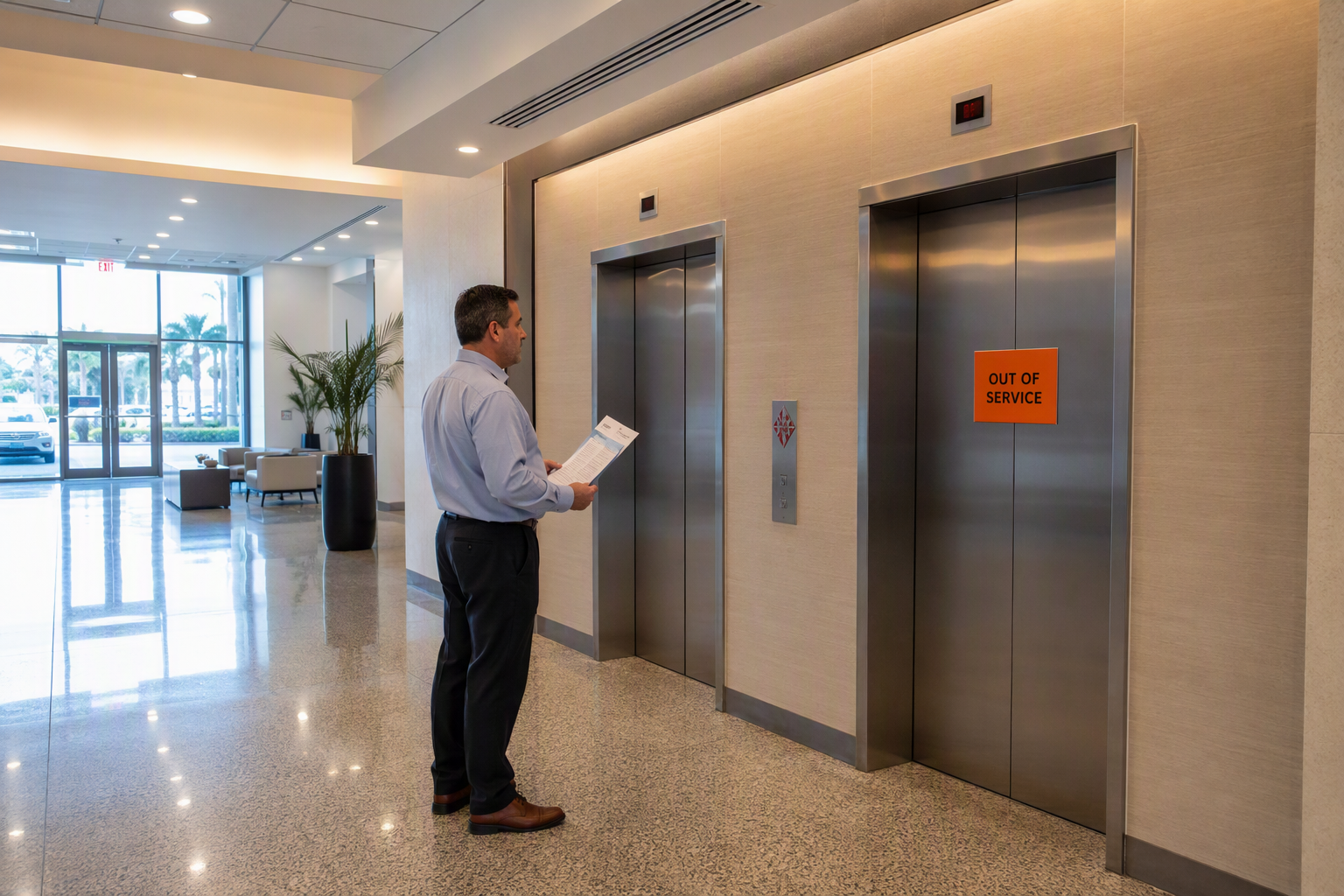
When an elevator fails inspection, the AHJ issues a written violation or “out-of-service” order that legally prohibits the elevator from carrying passengers until every cited defect is corrected and a re-inspection is passed.
Florida’s elevator safety program is administered through the Florida Department of Business and Professional Regulation (DBPR), Bureau of Elevator Safety. Inspectors — either state-employed or third-party certified inspectors authorized by the bureau — conduct periodic inspections against the safety requirements adopted by Florida statute. When a unit fails, the inspector documents each deficiency on an official inspection report and posts a “Do Not Use” or equivalent notice on or near the elevator. That notice carries the force of law. Operating the elevator in violation of an out-of-service order can expose a property owner to civil penalties and, in the event of an injury, significant liability.
The building owner, property manager, or their designated elevator contractor receives a copy of the inspection report. That document is the roadmap for everything that follows.
Is a failed elevator legally required to be shut down immediately in Florida?
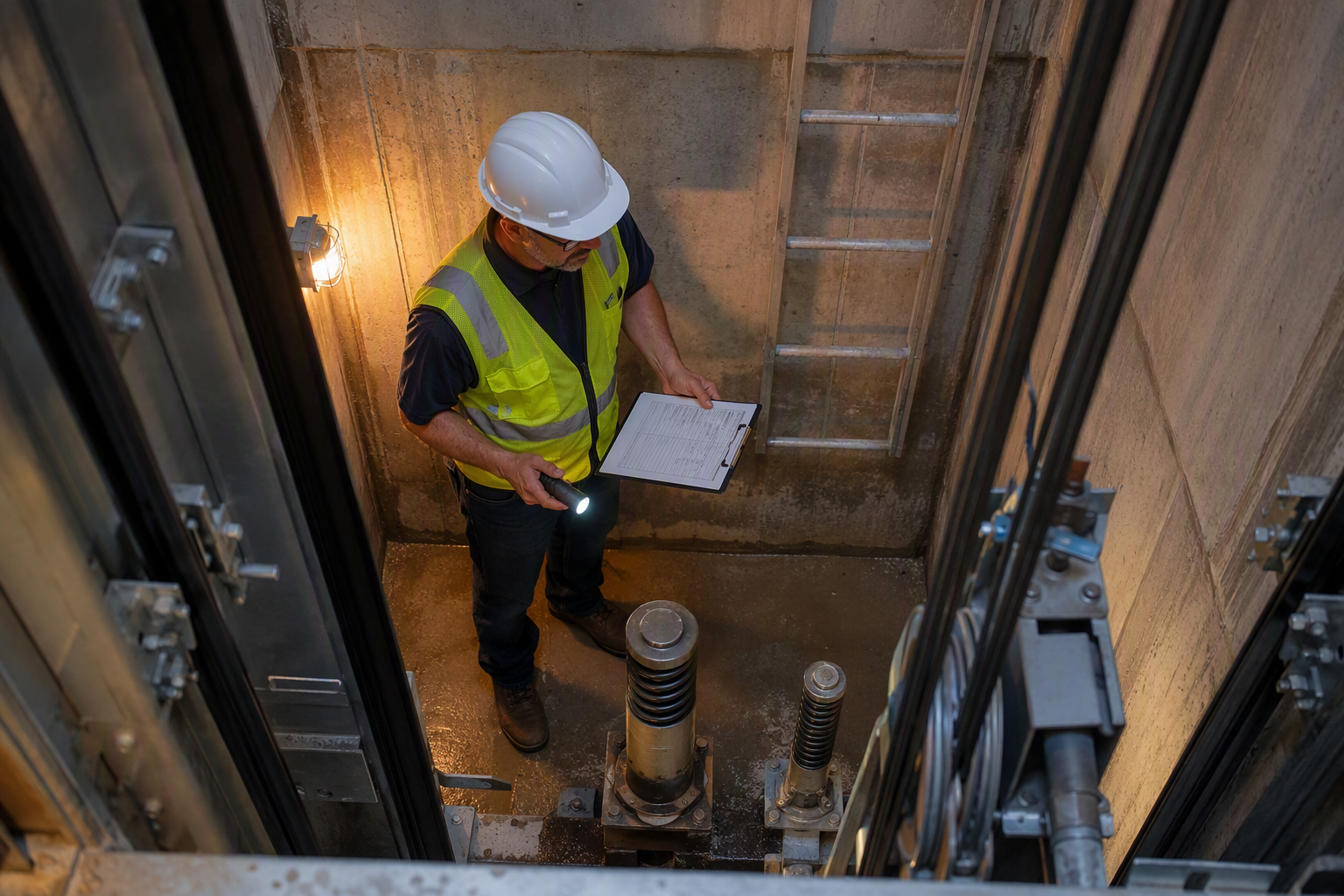
Yes — an elevator cited as unsafe or out-of-service by a Florida AHJ inspector must stop carrying passengers immediately; continued operation is a violation of state law and creates direct liability for the property owner.
Florida Statutes governing elevator safety grant the DBPR Bureau of Elevator Safety authority to order the immediate cessation of elevator operation when an unsafe condition is found. There is no grace period for unsafe-condition violations. Some administrative or paperwork violations may carry a correction deadline without an immediate shutdown, but any structural, mechanical, electrical, or safety-device deficiency that presents a risk of injury triggers immediate out-of-service status. Property owners should read the inspection report carefully and, if unclear about the classification of a violation, contact both the bureau and a licensed elevator contractor before making any decision about continued operation.
What are the most common reasons elevators fail inspection in Florida?
The most frequently cited failure categories involve safety device deficiencies, overspeed governor issues, door operation problems, pit condition violations, and expired or missing certificates — all evaluated against the ASME A17.1 Safety Code for Elevators and Escalators and Florida’s adopted amendments.
Florida inspectors evaluate equipment against both the edition of the code that was in effect when the elevator was installed (the “installation code”) and current safety requirements under ASME A17.3, Safety Code for Existing Elevators and Escalators, which governs retroactive safety upgrades. Common failure points include:
- Door safety devices: Malfunctioning door reopening devices, worn gibs, or door closing force exceeding code limits
- Governor and safety systems: Overspeed governors that fail to trip within the required parameters
- Pit conditions: Water intrusion, inadequate lighting, missing or inoperable pit stop switches, or clearance violations
- Machine room conditions: Improper storage, inadequate lighting, or temperature extremes affecting equipment
- Emergency communication: Non-functioning two-way communication systems required under ASME A17.1 and ADA requirements
- Load and capacity markings: Missing, illegible, or incorrect capacity postings
- Certificate of operation: Expired operating certificate, a purely administrative failure that nonetheless mandates shutdown
- Hydraulic system issues: Oil leaks, inadequate pressure relief valve function, or cylinder integrity concerns
What is the step-by-step process to get a failed elevator back in service in Florida?
Restoring an out-of-service elevator in Florida requires a structured sequence of corrective and administrative actions that must be completed in order before the AHJ will authorize the elevator to return to passenger service.
- Secure the elevator immediately. Physically lock out and tag out the elevator to prevent unauthorized operation. Post the out-of-service notice prominently at every landing.
- Read the inspection report in full. Identify every cited deficiency, its code basis, and whether it is classified as an imminent hazard, a safety violation, or an administrative deficiency. Priority and timeline differ by category.
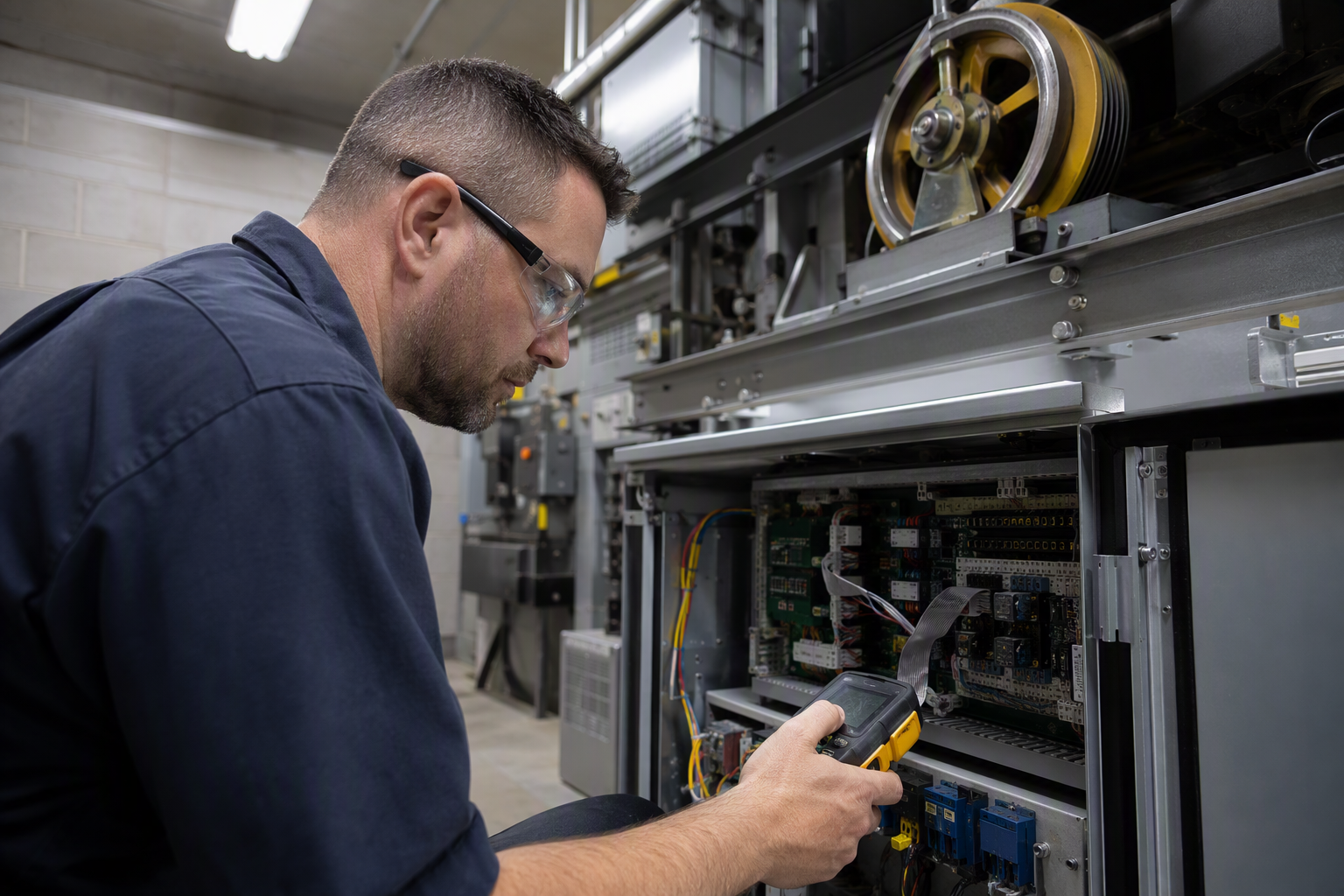
- Engage a licensed Florida elevator contractor. Only a contractor holding a current Florida elevator contractor’s license may perform corrective work on a commercial elevator. Contact a qualified firm — such as Axxiom Elevator Florida, which serves Pompano Beach and Sarasota — as quickly as possible to begin assessment and scheduling.
- Obtain required permits. Many corrective repairs require a permit from the local building department or the DBPR before work begins. Skipping this step can void the repair and delay re-inspection.
- Complete all cited repairs. Address every deficiency on the report. Inspectors will check each item; an incomplete correction will result in a second failure and another scheduling delay.
- Document the repairs. Maintain written records of parts replaced, tests performed, and technician certifications. This documentation supports the re-inspection and protects the owner in any future liability dispute.
- Request a follow-up inspection. Contact the DBPR Bureau of Elevator Safety or the authorized third-party inspection firm to schedule a re-inspection. In some jurisdictions, the local building department coordinates this step.
- Pass the re-inspection and receive written clearance. The inspector must sign off on every previously cited item. Once clearance is issued in writing, the out-of-service notice can be removed and the elevator returned to service.
- Post the renewed certificate of operation. Florida law requires a valid certificate of operation to be displayed in the elevator car or machine room as specified by the bureau. Ensure the new certificate is posted before resuming service.
- Update maintenance logs and schedule preventive maintenance. A failed inspection is a signal to review the ongoing maintenance program. Consistent preventive maintenance under a written contract is the most effective way to prevent future failures.
How long does it typically take to get an elevator back in service after a Florida inspection failure?
The timeline depends on the nature and number of deficiencies cited — straightforward administrative or minor mechanical corrections may be resolved in days, while major component replacements requiring parts procurement and permitting can extend the process to several weeks.
There is no single mandated correction deadline that applies to all violation types. The DBPR inspection report or the AHJ order will specify correction timeframes for each cited item. Administrative deficiencies such as an expired certificate of operation can sometimes be resolved in one to two business days once the underlying renewal requirements are met. Mechanical deficiencies requiring replacement parts — especially for older hydraulic or traction units where parts availability is limited — can extend the timeline significantly. Engaging a contractor with established parts sourcing relationships, such as Axxiom Elevator Florida, is one of the most practical ways to compress the repair timeline.
What does it cost to correct a failed elevator inspection in Florida?
Correction costs vary widely based on the type of deficiency, the age and make of the equipment, parts availability, and the scope of permits required — ranging from minimal administrative fees to substantial capital expenditures for major component replacement.
Rather than citing figures that would vary by situation and cannot be verified without a site assessment, property owners should request a written, itemized estimate from a licensed Florida elevator contractor immediately after receiving the inspection report. The estimate should break out labor, parts, permit fees, and re-inspection fees separately. Comparing estimates from multiple licensed contractors is advisable for major repairs. Note that the lowest bid is not always the fastest path to compliance; a contractor’s parts inventory, permit relationships with local AHJs, and scheduling capacity all affect how quickly the elevator returns to service.
Can a building owner be fined for a failed elevator inspection in Florida?
Yes — the DBPR Bureau of Elevator Safety has statutory authority to assess civil penalties against property owners who operate elevators without a valid certificate of operation or who fail to correct cited violations within the timeframes specified by the AHJ.
Penalty amounts are established by Florida statute and can accumulate on a per-day basis for continuing violations. Beyond state penalties, local building departments in cities such as Pompano Beach and Sarasota may assess their own code-compliance fines. Property owners who allow passengers to use an elevator after an out-of-service order has been issued face the most serious exposure, including potential criminal liability if an injury results. Prompt corrective action is always the least expensive path.
What role does ASME A17.1 play in Florida elevator inspections?
Florida has adopted the ASME A17.1 Safety Code for Elevators and Escalators as the foundational technical standard against which new elevator installations are inspected, and inspectors use it alongside ASME A17.3 for evaluating existing equipment.
ASME A17.1 establishes detailed requirements for construction, installation, operation, inspection, testing, maintenance, alteration, and repair of elevators and escalators. When an inspector cites a deficiency, the violation notice will typically reference the specific ASME A17.1 or A17.3 requirement that was not met. Understanding that citation is essential for the corrective action — repairs must restore compliance with the exact code section cited, not simply address the surface symptom. A licensed elevator contractor will be familiar with mapping inspection deficiencies to the correct code-compliant repair specification.
How does an elevator failure affect ADA compliance obligations?
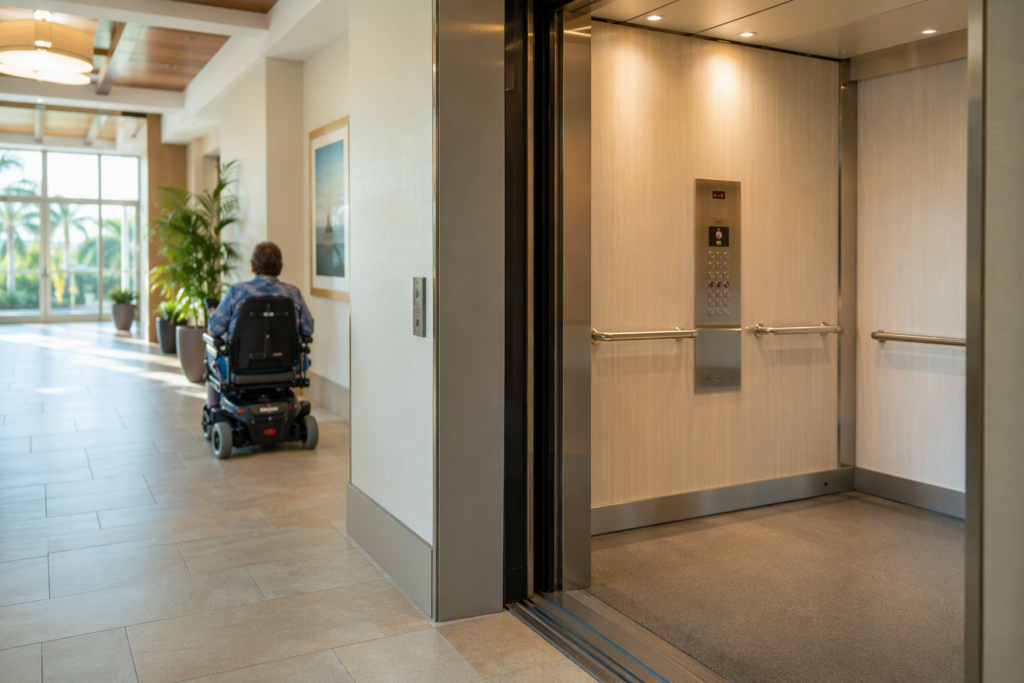
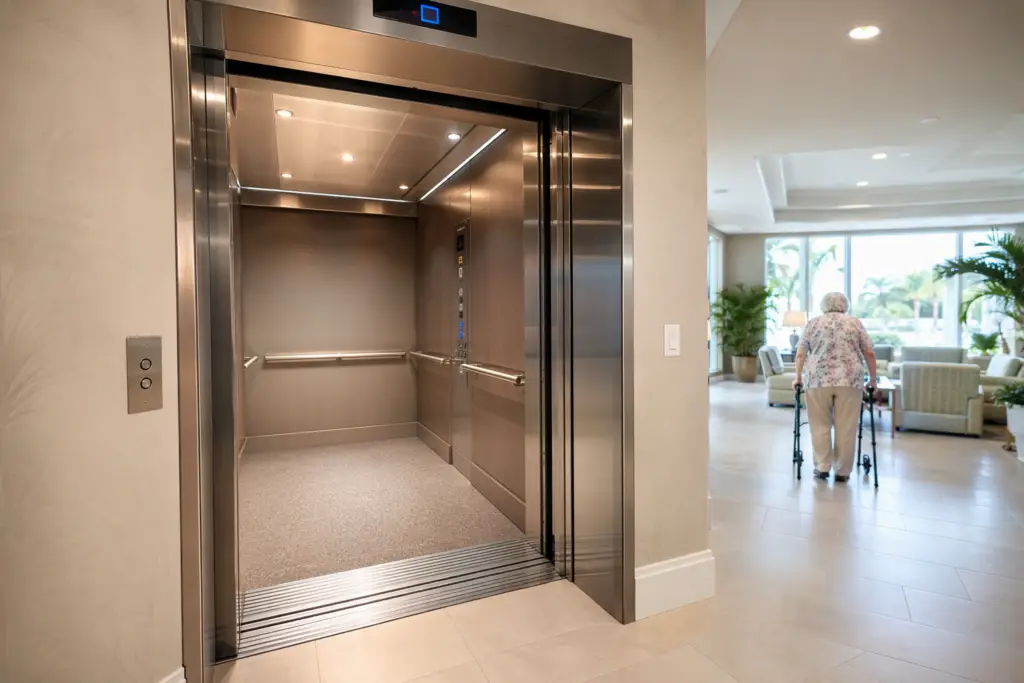
When an elevator is the primary accessible means of vertical travel in a multi-story building, taking it out of service creates an immediate ADA accessibility gap that building owners must address through alternative accommodations or expedited repair.
Under the ADA, covered entities — including most commercial buildings, places of public accommodation, and employers — must ensure that individuals with disabilities have access to goods, services, and employment opportunities. An out-of-service elevator does not automatically create an ADA violation if the building owner takes prompt steps to provide equivalent access, such as temporarily relocating services to an accessible floor, providing staff assistance, or offering services remotely. However, prolonged elevator outages with no alternative accommodation can trigger ADA complaints filed with the U.S. Department of Justice. Building owners in Pompano Beach and Sarasota should document every accommodation measure taken during an elevator outage and pursue repairs without delay.
What is the difference between a routine inspection failure and a “condemned” elevator in Florida?
A routine inspection failure means the elevator did not meet one or more code requirements but can be returned to service after correction and re-inspection; a condemned elevator has been found to present an imminent hazard that warrants more severe regulatory action, potentially including physical impoundment of the equipment.
The DBPR Bureau of Elevator Safety reserves the most serious enforcement actions for elevators where continued operation poses an immediate risk of death or serious injury. In practice, most failed inspections fall into the correctable-violation category. Property owners who receive any order beyond a standard violation notice — including any language about condemnation or imminent hazard — should treat the situation as urgent and engage legal counsel alongside a licensed elevator contractor.
How often are elevators inspected in Florida, and when is the next inspection due?
Florida requires periodic inspections for elevators, with the DBPR Bureau of Elevator Safety establishing inspection intervals based on equipment type and use — building owners can confirm their next due date by checking their current certificate of operation or contacting the bureau directly.
The ASME A17.1 and A17.3 standards provide the technical framework for what is examined at each inspection. Florida’s periodic inspection program is designed to ensure that every elevator in the state is evaluated by a qualified inspector on a regular cycle. Because inspection schedules are tied to the specific unit’s certificate of operation and classification, the most reliable way to confirm the next due date is to review the posted certificate or contact the DBPR. Allowing a certificate to lapse — even briefly — constitutes an administrative violation that can result in immediate out-of-service status.
What should property managers do between inspections to avoid a failed inspection?
A consistent, documented preventive maintenance program performed by a licensed Florida elevator contractor is the single most effective strategy for avoiding inspection failures and the costly out-of-service periods that follow.
Preventive maintenance should follow the manufacturer’s recommended service intervals and the requirements of ASME A17.1, which includes provisions for maintenance, testing, and record-keeping. Key practices include:
- Maintaining a complete maintenance log with dates, tasks performed, and technician identification
- Conducting monthly safety device checks including door reopening devices and emergency lighting
- Testing the two-way emergency communication system regularly
- Inspecting the pit for water intrusion, debris, and lighting adequacy
- Monitoring hydraulic fluid levels and checking for leaks in hydraulic units
- Verifying that the certificate of operation is current and posted
- Scheduling a pre-inspection walk-through with the elevator contractor before the formal inspection date
Axxiom Elevator Florida provides preventive maintenance services for elevator owners in Pompano Beach and Sarasota, helping properties stay ahead of compliance requirements and reduce the risk of inspection failures.
Can a property owner perform elevator repairs themselves to save money?
No — Florida law requires that elevator repair, alteration, and maintenance work be performed by or under the direct supervision of a licensed elevator contractor; self-performed repairs by unlicensed individuals are illegal and will not satisfy inspection requirements.
This restriction exists because elevator systems involve complex mechanical, electrical, and hydraulic interactions where an improper repair can create a new hazard more serious than the original deficiency. Beyond the legal prohibition, an inspector will ask for documentation of who performed corrective work and what qualifications they hold. Work performed by an unlicensed party will not be accepted as satisfying a violation, and the property owner may face additional penalties for the unlicensed work itself. All corrective work must be performed by a Florida-licensed elevator contractor, and permits must be obtained where required.
What documentation should be kept after a failed inspection and subsequent repair?
Property owners should retain the original inspection failure report, all repair invoices and parts documentation, permit records, and the re-inspection clearance certificate — this file is essential for legal protection, future inspections, and demonstrating due diligence.
A complete compliance file for each elevator unit should include:
- All historical inspection reports (pass and fail)
- The current and all previous certificates of operation
- Maintenance logs going back as far as available
- Repair work orders and invoices with dates and technician information
- Permits issued for repair work
- Re-inspection reports and clearance letters
- Any correspondence with the DBPR or local building department
In the event of a personal injury claim arising from an elevator, this documentation is often the difference between demonstrating reasonable care and facing punitive exposure. Many property managers store digital copies in a cloud system with physical backups in the building management office.
What is the re-inspection process in Florida after repairs are completed?
After all cited deficiencies are corrected, the property owner or elevator contractor requests a re-inspection from the DBPR Bureau of Elevator Safety or the authorized third-party inspection agency, which must verify every repair before issuing written clearance and an updated certificate of operation.
The re-inspection is not a new periodic inspection — it is targeted specifically at the items that were cited in the failure report. Inspectors will check each cited deficiency point by point. If any item is found to be inadequately corrected, or if the inspector identifies a new deficiency that creates an imminent hazard, the elevator will not receive clearance. This is why thorough, code-compliant repair work is far more cost-effective than a quick fix that fails re-inspection and requires a second scheduling cycle. Some third-party inspection agencies offer priority re-inspection scheduling for an additional fee; ask about this option when the urgency of restoring service is high.
How does elevator age affect inspection outcomes and repair decisions in Florida?
Older elevators face greater inspection risk because they may not meet retroactive safety requirements under ASME A17.3, and because aging components are more likely to fail between maintenance cycles — making modernization an increasingly cost-effective alternative to repeated repairs for some building owners.
ASME A17.3 is specifically designed for existing elevator installations and establishes which safety features must be retrofitted onto older equipment even if those features were not required when the elevator was originally installed. Florida inspectors apply A17.3 requirements to existing units, which means an elevator that passed inspection under older code editions may now require upgrades it did not originally need. Building owners with elevators that are frequently cited or require recurring repairs should ask their elevator contractor for a modernization assessment. In many cases, modernization reduces long-term maintenance costs, improves reliability, and provides a longer window of clean inspections.
What is the role of the local Authority Having Jurisdiction (AHJ) versus the state DBPR in Florida?
In Florida, the DBPR Bureau of Elevator Safety is the primary AHJ for most elevator matters statewide, but local building departments in cities such as Pompano Beach and Sarasota may also exercise jurisdiction over permitting and certain code enforcement activities.
The interplay between state and local authority means that a property owner correcting a failed inspection may need to coordinate with both the DBPR and the local building department. Permit applications for repair work are often filed at the local building department level, while the re-inspection itself is coordinated through the DBPR or its authorized inspection agents. An experienced Florida elevator contractor will know the specific procedural requirements of the local jurisdictions in which they operate and can manage this coordination on the property owner’s behalf. Axxiom Elevator Florida works within the regulatory frameworks of both Pompano Beach and Sarasota, navigating local permitting processes alongside state compliance requirements.
Are there OSHA requirements that apply to elevator safety in Florida workplaces?
Yes — OSHA standards apply to elevator safety in the context of construction and general industry workplaces, and Florida employers must address both OSHA requirements and DBPR elevator safety regulations when an elevator in a workplace setting is cited.
OSHA’s general duty clause requires employers to provide a workplace free from recognized hazards, which includes elevator hazards. OSHA also has specific standards that apply to the use of elevators during construction activities. For commercial and residential building owners, the DBPR elevator safety program is the primary regulatory framework, but any workplace where employees regularly use the elevator — including office buildings, hotels, and retail centers — must also satisfy OSHA’s general duty obligations. A failed elevator inspection in a workplace setting should be communicated to the employer’s safety officer or risk manager immediately, in addition to engaging an elevator contractor.
What should tenants and building occupants be told when an elevator fails inspection?
Building owners and property managers should promptly notify all tenants and occupants of the out-of-service status, explain what alternative access arrangements are in place, provide a realistic timeline for repair, and keep occupants updated as the repair progresses.
Transparent communication during an elevator outage reduces tenant complaints, limits reputational damage, and demonstrates that management is handling the situation responsibly. Notifications should be posted at every elevator landing, distributed via email or building management portal if available, and delivered in person to tenants with known accessibility needs who rely on the elevator. For buildings subject to ADA obligations, direct outreach to tenants or visitors with disabilities to discuss alternative accommodations is a best practice that should be documented. Property managers should update occupants when re-inspection is scheduled and again immediately when the elevator is returned to service.
Why is choosing the right elevator contractor critical after a failed inspection in Florida?
The contractor selected to perform corrective work directly determines how quickly, completely, and cost-effectively an elevator returns to compliance — a contractor with strong code knowledge, parts sourcing capability, and established relationships with Florida AHJs will significantly compress the out-of-service period.
Not all licensed elevator contractors have equal experience with the full spectrum of elevator types, ages, and manufacturers present in Florida’s building stock. The right contractor will review the inspection report and translate each cited deficiency into a specific, code-compliant repair specification before work begins. They will obtain required permits without delay, document the work in a manner that satisfies the re-inspection, and manage communication with the DBPR or local AHJ. Axxiom Elevator Florida serves property owners in Pompano Beach and Sarasota with the full range of corrective repair, modernization, and ongoing maintenance services needed to navigate a failed inspection and maintain long-term compliance.
Inspection Failure: What to Expect at Each Stage
| Stage | Action Required | Who Is Responsible | Typical Timeframe | Key Risk If Delayed |
|---|---|---|---|---|
| Inspection failure issued | Immediately lock out elevator; post out-of-service notice | Property owner / manager | Same day | Civil penalty; liability if passenger injured |
| Contractor engagement | Contact a licensed Florida elevator contractor for assessment | Property owner / manager | Same day or next business day | Extended out-of-service period; ADA exposure |
| Permitting | Obtain repair permits from local building department | Licensed elevator contractor | Varies by jurisdiction; days to weeks | Non-compliant repair; re-inspection rejection |
| Corrective repairs | Complete all cited deficiencies per ASME A17.1 / A17.3 | Licensed elevator contractor | Days to several weeks depending on parts | Second inspection failure; additional penalties |
| Re-inspection request | Schedule re-inspection with DBPR or authorized agent | Property owner / contractor | After repairs complete | Continued out-of-service status |
| Re-inspection | Inspector verifies all cited items corrected | DBPR / authorized inspection agency | Scheduling-dependent | Second failure if repairs incomplete |
| Certificate of operation issued | Post renewed certificate; return elevator to service | Property owner / manager | Upon written clearance | Operating without certificate = new violation |
| Maintenance program review | Update preventive maintenance contract to prevent recurrence | Property owner / contractor | Within 30 days of return to service | Future inspection failures; recurring downtime |
Key Codes and Regulatory Resources for Florida Elevator Compliance
- ASME A17.1 Safety Code for Elevators and Escalators — the foundational technical standard for new elevator installation and inspection in Florida
- ASME A17.3 Safety Code for Existing Elevators and Escalators — governs retroactive safety requirements applied to existing equipment
- Americans with Disabilities Act (ADA) — federal accessibility requirements that intersect with elevator availability obligations
- OSHA — federal workplace safety requirements applicable to elevator environments in Florida workplaces
Get Your Elevator Back in Service — Contact Axxiom Elevator Florida
A failed inspection does not have to mean weeks of downtime. Axxiom Elevator Florida works with property owners and managers in Pompano Beach and Sarasota to assess failed inspections, develop code-compliant corrective action plans, obtain permits, complete repairs, and coordinate re-inspection — all under a single licensed contractor relationship.
Do not wait. Every day the elevator sits idle creates liability exposure, accessibility gaps, and tenant dissatisfaction.
Contact Axxiom Elevator Florida for a free elevator assessment:
Need elevator service you can rely on? Axxiom Elevator Florida is ready to help.