Elevator Service in Pompano, FL | Axxiom Elevator Florida
For hospital administrators, nursing home operators, and outpatient clinic managers across Pompano Beach and Broward County, elevator reliability is not a facilities convenience — it is a clinical necessity. When a patient transport elevator goes down during a shift change or a surgical supply car stalls between floors, the consequences ripple across patient care, staff workflows, and regulatory compliance. Choosing the right elevator service vendor means understanding what features and reliability standards actually matter in a healthcare environment, and what Florida law requires.
What Florida Code Requirements Apply to Hospital Elevators?
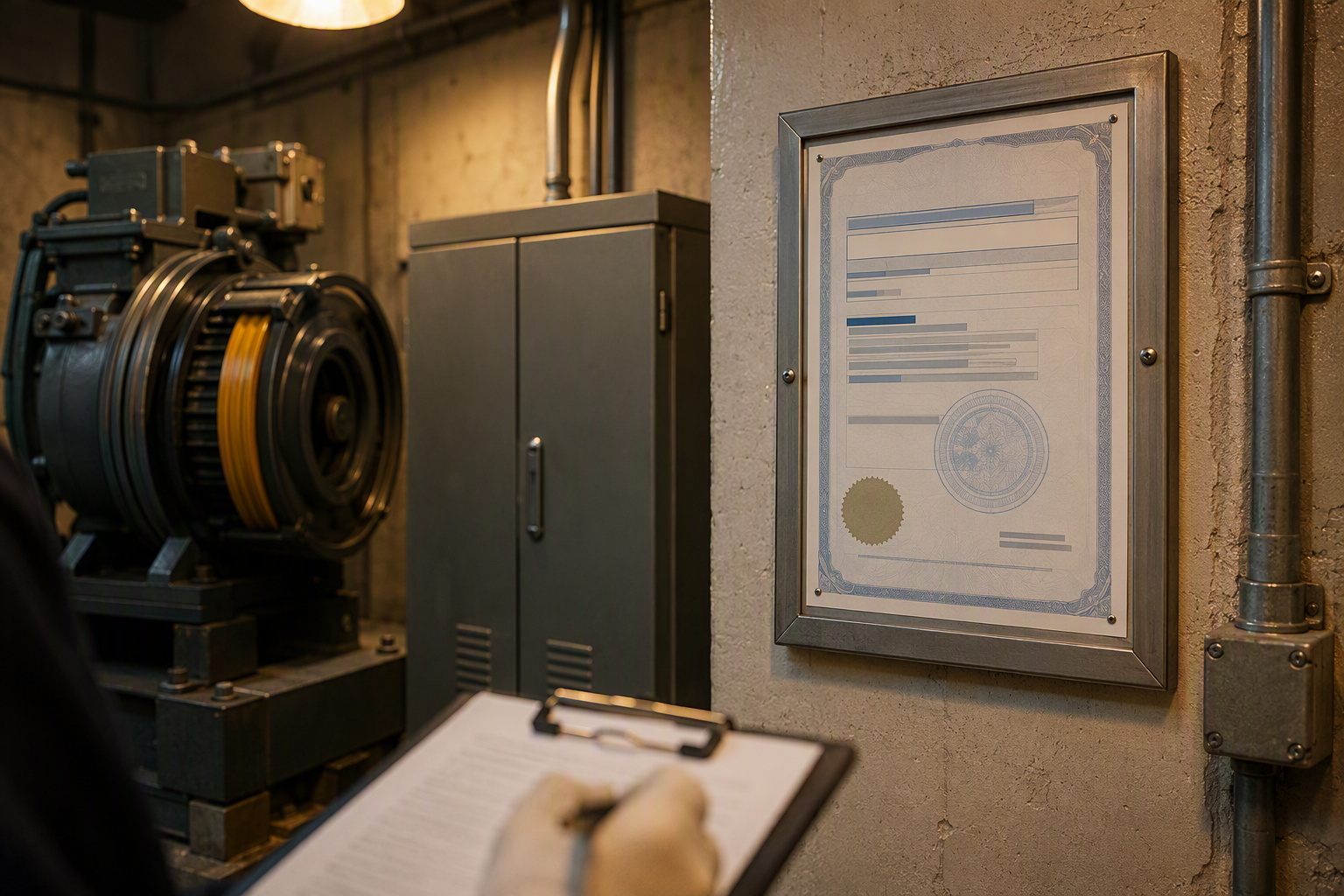
Elevators installed or maintained in Florida healthcare facilities must comply with a layered framework of federal and state standards. At the foundation is the ASME A17.1 Safety Code for Elevators and Escalators, which governs design, installation, and maintenance of new elevator equipment, and ASME A17.3, which applies to existing elevator installations. Florida adopts and enforces these standards through the Florida Department of Business and Professional Regulation (DBPR), which oversees elevator licensing, inspections, and permitting statewide.
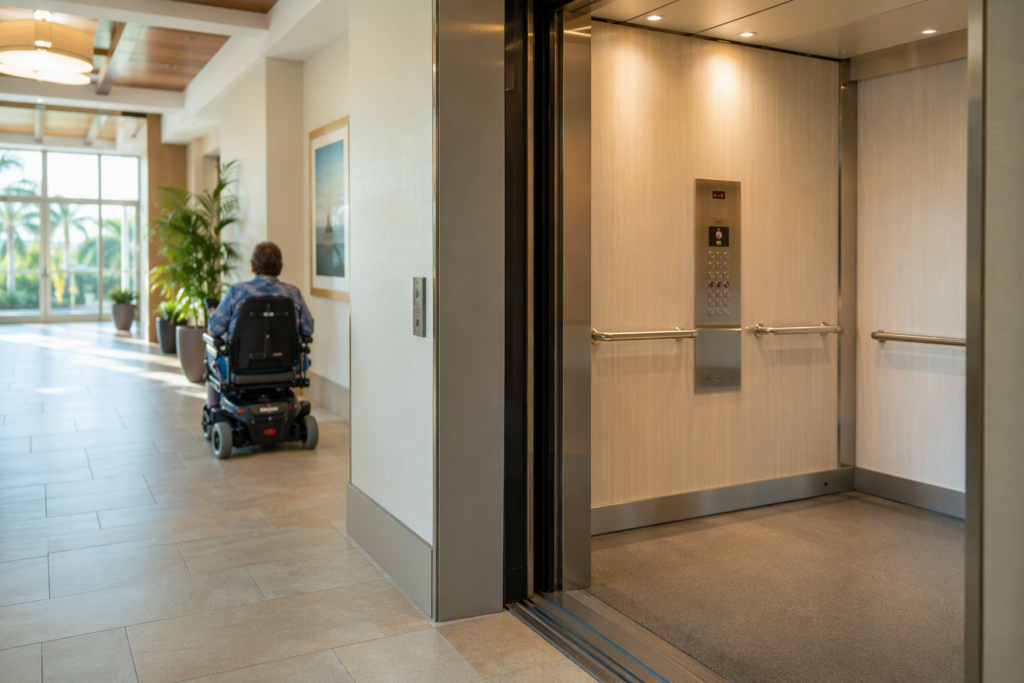
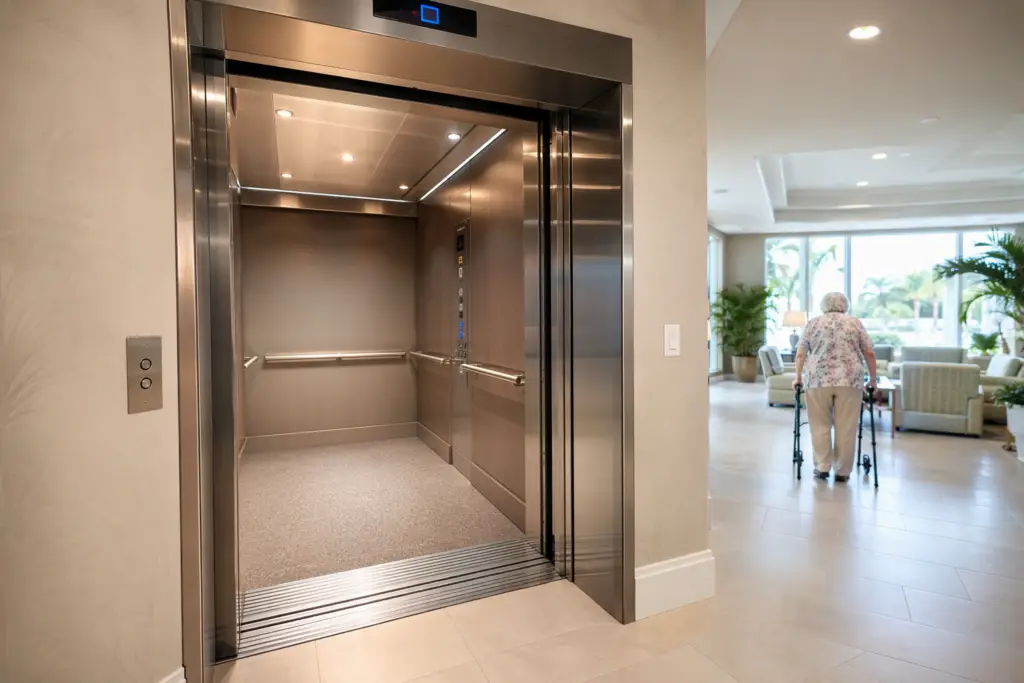
In addition to ASME standards, healthcare facilities must satisfy ADA accessibility requirements, including cab dimensions, door timing, control height, and auditory signaling features that ensure elevator access for patients using wheelchairs, stretchers, and mobility aids. Workplace safety compliance for elevator maintenance activities falls under OSHA regulations.
Florida’s DBPR requires that all elevator contractors and mechanics hold active state licensure. Before engaging any vendor, healthcare administrators should verify that the company and its field personnel are licensed through DBPR — a public record lookup that takes minutes and protects the facility from liability exposure.
What Elevator Features Are Most Critical for Hospital and Healthcare Environments?
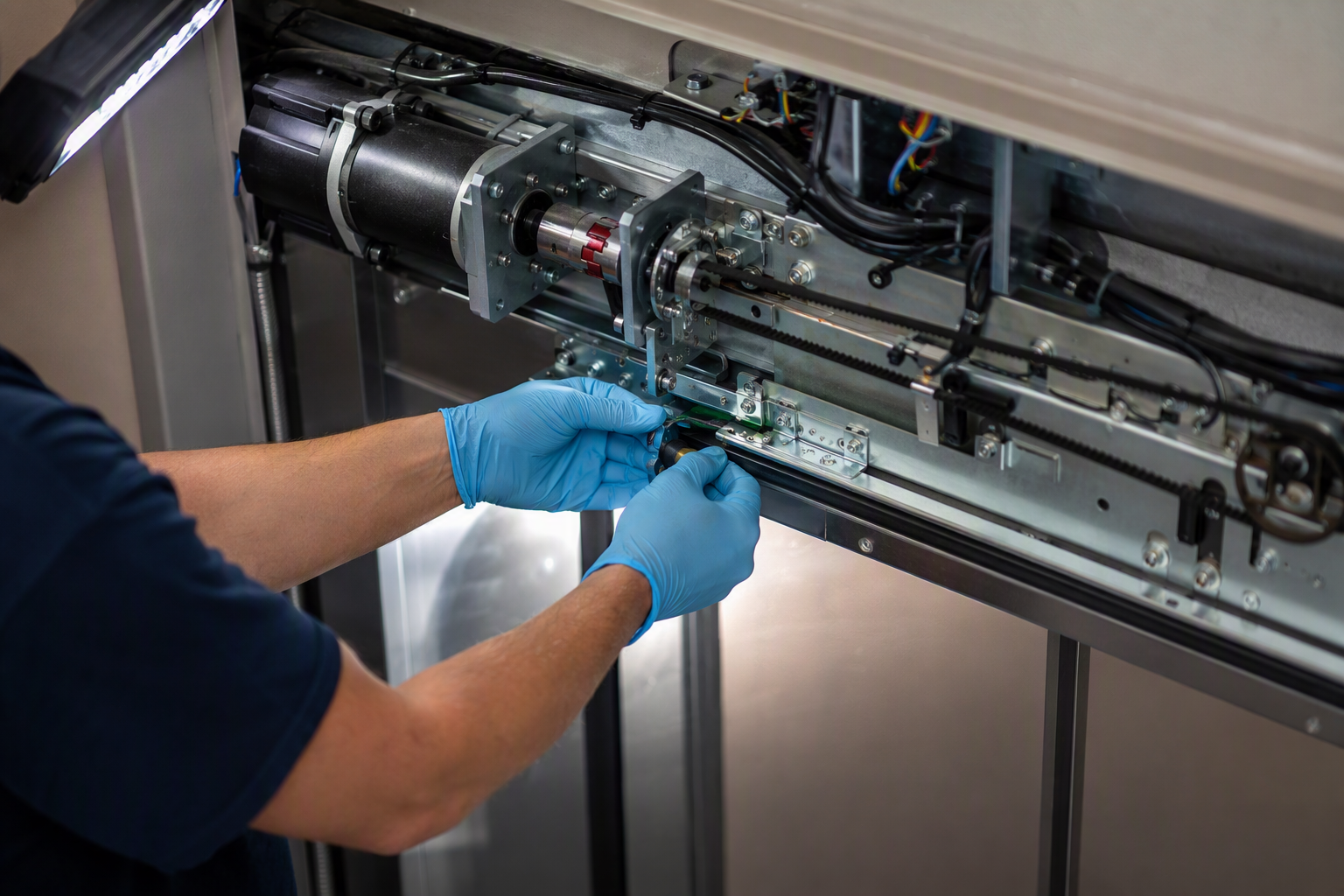
Not every elevator feature matters equally in a clinical setting. Healthcare administrators should prioritize the following when evaluating elevator systems and service vendors:
- Firefighters’ Emergency Operation (FEO): Required under ASME A17.1, this feature enables fire service personnel to commandeer elevator operation during emergencies. Functional, tested FEO is a non-negotiable compliance item in any occupied healthcare building.
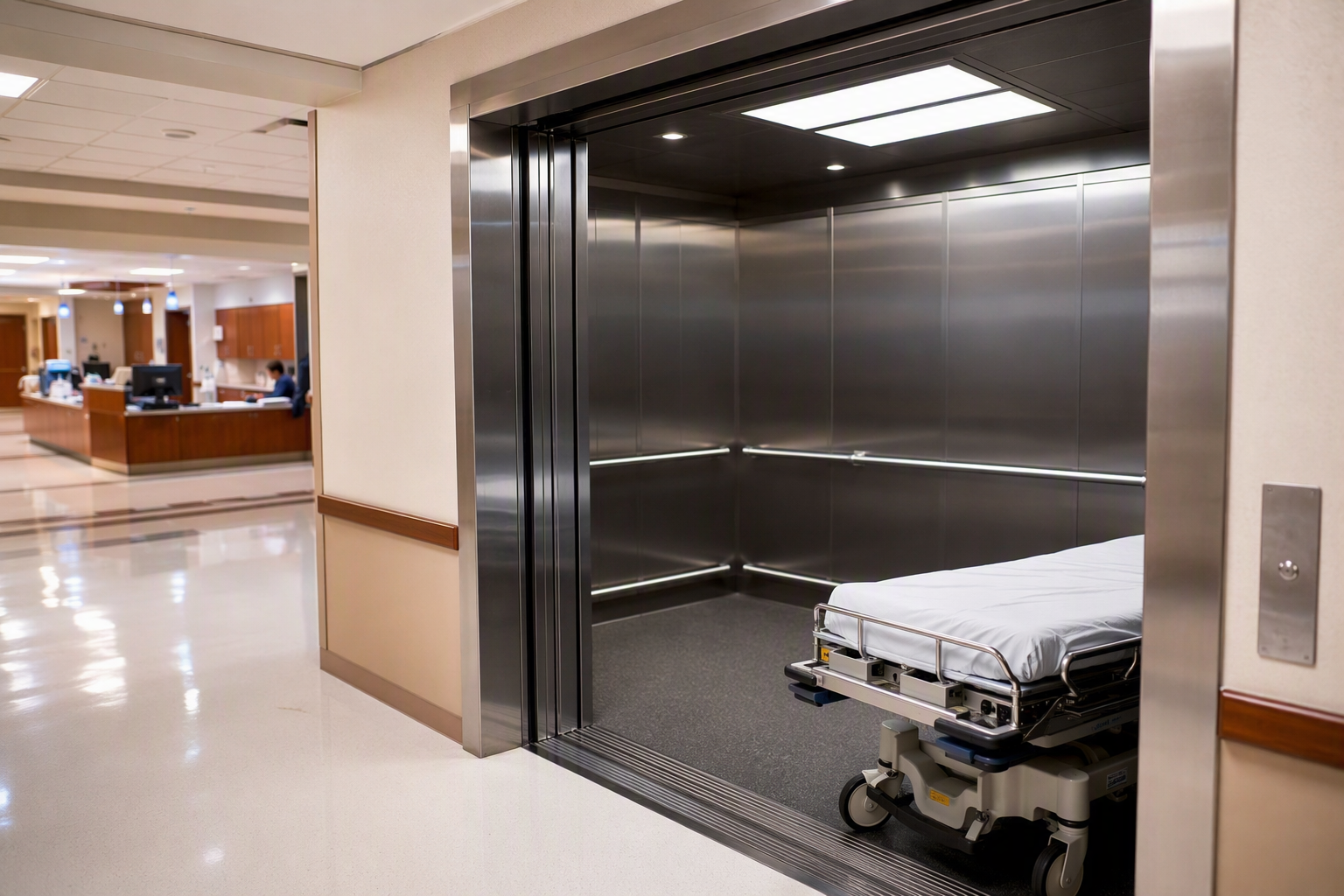
- Hospital-duty cab specifications: Clinical environments require larger cab dimensions to accommodate gurneys, stretchers, and medical equipment. Cab interiors should feature antimicrobial or easily sanitized wall finishes, recessed lighting, and handrails on multiple walls.
- Wide, slow-closing doors: Door timing and reopening sensitivity directly affect patient transport safety. Elevator service agreements should include regular calibration of door operators and safety edge sensors.
- Backup power compatibility: Florida hospitals operating under state and federal emergency management requirements typically maintain generator backup systems. Elevator service vendors should be familiar with how elevator controls interface with emergency power transfer systems.
- Remote monitoring capability: Modern elevator controllers can transmit real-time performance and fault data. This technology enables proactive service calls before a breakdown occurs — a meaningful advantage in a 24-hour clinical operation.
- ADA-compliant controls and communication: Tactile buttons, Braille markings, audible floor announcements, and two-way emergency communication systems meeting ADA standards are required and must be tested as part of regular maintenance.
Why Does Preventive Maintenance Matter More in Healthcare Settings?
Reactive maintenance — servicing an elevator only after it breaks down — is an unacceptable model for any healthcare facility. Clinical environments operate continuously, and unplanned elevator outages can disrupt patient transport, delay supply delivery, and place facilities in violation of life-safety codes during inspections.
A comprehensive preventive maintenance program, structured around the ASME A17.1 maintenance intervals and manufacturer recommendations, systematically addresses wear components before failure occurs. This includes lubrication of guide rails and sheaves, inspection and adjustment of brake assemblies, testing of safety circuits, and door system calibration. Healthcare administrators should request a written maintenance specification from any prospective vendor that maps tasks to ASME A17.1 requirements — not a generic checklist.
What Should Healthcare Administrators Look for in an Elevator Maintenance Contract?
Contract structure is one of the most consequential decisions a facilities director will make. Key elements to evaluate include:
- Scope of covered work: Full-maintenance contracts typically cover parts, labor, and callbacks. Partial agreements may exclude major components, creating unpredictable cost exposure.
- Inspection coordination: The vendor should manage scheduling and documentation for the annual or periodic inspections required by Florida DBPR, not leave that administrative burden to facility staff.
- Emergency callback provisions: Contracts should clearly define what constitutes an emergency callback and how the vendor responds to out-of-hours service requests — without vague language that leaves the facility unprotected.
- Modernization advisory services: A qualified vendor should be able to identify when aging equipment warrants modernization and provide documented recommendations — not simply defer the conversation.
- Recordkeeping and reporting: Hospitals and healthcare facilities are subject to inspection by The Joint Commission, the Agency for Health Care Administration (AHCA) in Florida, and other bodies. Service vendors should provide organized maintenance logs that are audit-ready at any time.
How Should a Healthcare Facility Evaluate Multiple Elevator Service Vendors?
Comparing vendors goes beyond price. Healthcare administrators should conduct a structured evaluation using the following steps:
- Verify active DBPR elevator contractor licensure for the company and confirm that field personnel hold current Florida elevator mechanic licenses.
- Request a copy of the vendor’s standard maintenance specification and compare it line-by-line against ASME A17.1 requirements.
- Ask for references from other Florida healthcare facilities — specifically hospitals, long-term care facilities, or medical office buildings — and follow up with those contacts directly.
- Confirm that the vendor carries adequate general liability and workers’ compensation insurance and can provide current certificates.
- Review the proposed contract for clarity on emergency callback procedures, parts coverage, and escalation paths when equipment issues are unresolved.
- Ask how the vendor handles elevator modernization recommendations and whether they are brand-agnostic or tied to specific equipment manufacturers.
- Confirm whether the vendor has experience interfacing with AHCA inspections and can provide organized service documentation on request.
What Emergency Response Capabilities Should a Vendor Provide?
Healthcare facilities cannot tolerate prolonged elevator outages, particularly on floors housing intensive care, surgical suites, or emergency services. When evaluating a service vendor’s emergency capabilities, administrators should look for documented after-hours callback procedures, a clear escalation protocol for entrapment situations, and confirmation that the vendor’s service coverage area includes Pompano Beach and surrounding Broward County communities without subcontracting to unknown third parties.
Axxiom Elevator Florida provides service throughout Florida, including Pompano Beach and the broader South Florida region, giving healthcare clients access to local field coverage without the uncertainty of out-of-area dispatching.
Does Elevator Modernization Ever Become a Compliance Requirement for Florida Hospitals?
Yes. Florida’s adoption of ASME A17.3 — the safety code for existing elevators — means that older equipment may be required to incorporate updated safety features when the Authority Having Jurisdiction (AHJ) identifies deficiencies during inspection or when significant alterations trigger code upgrade requirements. Healthcare administrators should not assume that an elevator passing its last annual inspection will remain indefinitely compliant as code editions are updated.
Modernization investments also address reliability concerns independent of compliance. Aging relay logic controls, worn hydraulic systems, and obsolete door operators are among the most common sources of chronic service disruption in older healthcare facilities. A qualified elevator service vendor will assess existing equipment condition and provide honest guidance on when maintenance costs and reliability risks make modernization the more cost-effective path.
Why Choose Axxiom Elevator Florida for Healthcare Facility Elevator Service in Pompano, FL?
Axxiom Elevator Florida is a certified elevator service company serving healthcare facilities, commercial buildings, and residential properties throughout Florida. Healthcare clients in Pompano Beach, Deerfield Beach, Fort Lauderdale, and surrounding Broward County communities rely on Axxiom for maintenance programs built around ASME A17.1 compliance, Florida DBPR regulatory coordination, and the kind of detailed service documentation that survives an AHCA audit.
Every maintenance agreement is structured around the specific equipment, occupancy type, and regulatory environment of the client facility — not a one-size-fits-all contract. For healthcare administrators who need a vendor that understands the difference between a commercial property and a clinical environment, that distinction matters.
Schedule a Free Consultation
Healthcare facility administrators in Pompano, FL and throughout Broward County are welcome to contact Axxiom Elevator Florida to discuss elevator maintenance programs, compliance requirements, or modernization assessments. There is no obligation, and the conversation begins with an honest evaluation of your current elevator situation.
Call Axxiom Elevator Florida today:
Serving Pompano Beach, Fort Lauderdale, Deerfield Beach, Boca Raton, and healthcare facilities throughout South Florida.
Need elevator service you can rely on? Axxiom Elevator Florida is ready to help.