Elevator Requirements and Accessibility Standards for Florida K-12 Schools and Universities
Florida educational institutions — from elementary schools to large public universities — operate under a layered compliance framework. Getting it right matters: non-compliance can trigger federal funding consequences, costly retrofits, and liability exposure. This guide breaks down every major requirement, compares compliance pathways, and explains how to keep your elevators inspection-ready in 2026 and beyond.
How Do ADA Requirements Apply to Elevator Accessibility in Florida Schools?
The Americans with Disabilities Act classifies public K-12 schools and most universities as public accommodations or public entities, requiring that programs, services, and facilities be accessible to individuals with disabilities. For elevators specifically, this means:
- New construction must include accessible vertical access between floors unless a specific statutory exemption applies (such as a building under three stories with no elevator requirement under Title III — an exemption that does not apply to educational facilities serving the public).
- Existing buildings undergoing alterations must make altered elements, including vertical circulation, accessible to the maximum extent feasible.
- Program accessibility is required even without full structural changes — meaning if an inaccessible building houses a program, the school must relocate the program or provide an accessible alternative.
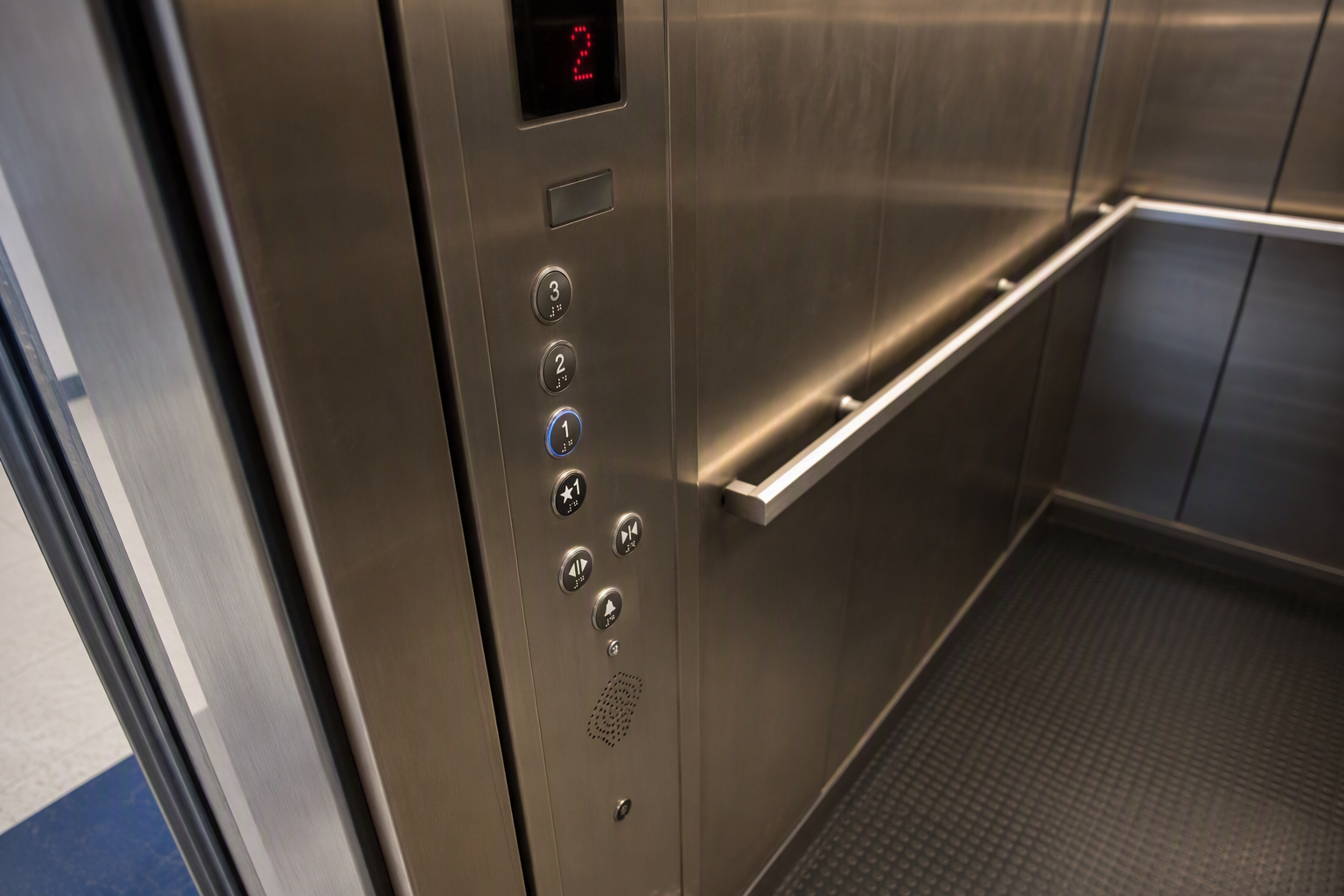
The ADA Standards for Accessible Design establish specific dimensional and operational requirements for elevator cab size, door width, call button height, floor indicators, audible signals, Braille signage, and emergency communication systems. Florida schools must meet these standards in any newly constructed or significantly renovated facility.
What Is the ASME A17.1 Code and Does It Apply to Florida Schools?
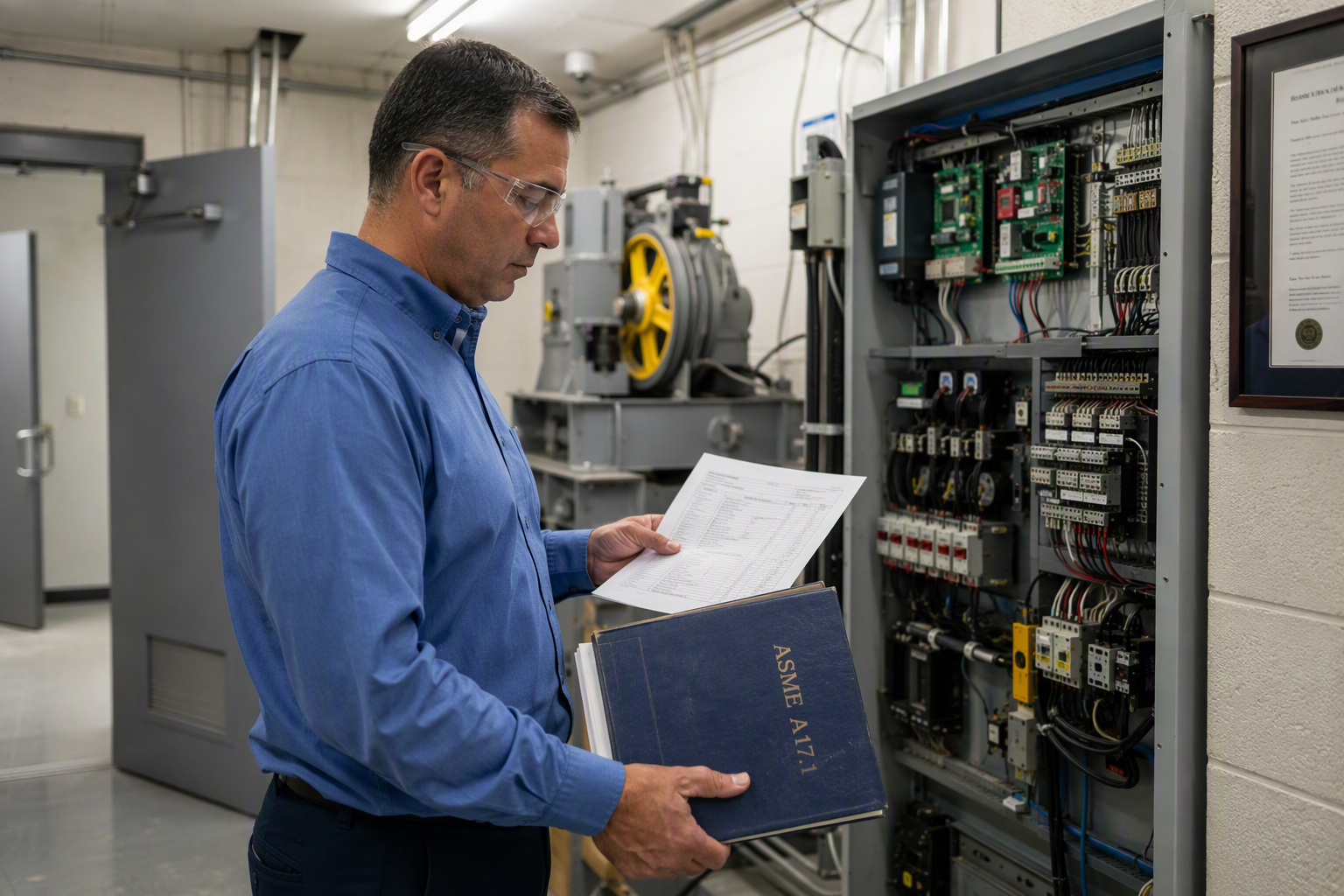
The ASME A17.1 Safety Code for Elevators and Escalators is the nationally recognized technical standard governing the design, construction, installation, operation, inspection, testing, and maintenance of elevators. Florida has adopted this code through state rulemaking, making ASME A17.1 the controlling technical standard for all elevator installations in the state — including those in public schools and universities.
For existing elevators in Florida educational facilities, the companion standard ASME A17.3 Safety Code for Existing Elevators and Escalators establishes the retroactive safety requirements that older equipment must meet over time. This is particularly relevant for older school buildings where elevator systems may predate modern code editions.
| Factor | ASME A17.1 (New Installations) | ASME A17.3 (Existing Elevators) |
|---|---|---|
| Applies To | New construction and major alterations | Elevators installed before current code adoption |
| Scope | Full design, installation, and safety requirements | Retroactive safety upgrades phased in over time |
| Enforcement | Plan review and installation inspection by AHJ | Periodic inspection and test cycles by AHJ |
| Common School Impact | New school buildings, additions, major renovations | Legacy elevators in older K-12 and university buildings |
| Modernization Trigger | Required upon substantial alteration | May be triggered by inspection findings or rule changes |
Who Enforces Elevator Compliance in Florida Educational Buildings?
Florida elevator compliance is enforced through a multi-agency structure:
- Florida Department of Business and Professional Regulation (DBPR) — Bureau of Elevator Safety: This state agency has jurisdiction over elevator installations, inspections, and licensing of elevator contractors and inspectors statewide, including in educational facilities.
- Local Authority Having Jurisdiction (AHJ): County and municipal building departments review plans, issue permits, and coordinate inspections — particularly for new school construction and renovation projects.
- U.S. Department of Justice / Office for Civil Rights: These federal agencies enforce ADA compliance for public schools, including elevator accessibility, and may investigate complaints filed by students, parents, or employees.
- U.S. Department of Education — Office for Civil Rights (OCR): OCR enforces Section 504 of the Rehabilitation Act, which independently requires accessible facilities in schools receiving federal funding.
What Are the Periodic Inspection and Testing Requirements for School Elevators in Florida?
Under Florida’s adoption of ASME A17.1 and A17.3, all elevators in service — including those in schools and universities — must undergo routine inspections and periodic tests conducted by a licensed elevator inspector. The Florida DBPR Bureau of Elevator Safety administers this program and requires that certificates of operation be current and posted in or near each elevator.
Key inspection points for school elevators typically include:
- Door operation, safety edges, and reopening devices
- Emergency lighting and communication systems (including two-way communication required by the ADA)
- Governor, safety, and buffer systems
- Leveling accuracy (critical for wheelchair users and individuals with mobility impairments)
- Cab interior condition, Braille signage, and button height compliance
- Machine room safety and ventilation
- Firefighters’ emergency operation (FEO) compliance
How Do Accessibility Requirements Differ Between K-12 Schools and Universities?
| Compliance Factor | K-12 Public Schools | Public Universities / Colleges | Private Universities |
|---|---|---|---|
| ADA Title | Title II (Public Entity) | Title II (Public Entity) | Title III (Public Accommodation) |
| Section 504 Applicability | Yes (federal funding recipient) | Yes (federal funding recipient) | Yes if federal funding received |
| New Construction Elevator Requirement | Required for multi-story accessible routes | Required for multi-story accessible routes | Required for multi-story accessible routes |
| Alteration Requirements | Path of travel must be made accessible | Path of travel must be made accessible | Path of travel must be made accessible |
| Program Accessibility Obligation | High — must relocate programs if building inaccessible | High — must provide accessible alternatives | Must ensure equivalent access |
| Enforcement Agency | DOJ, DOE Office for Civil Rights | DOJ, DOE Office for Civil Rights | DOJ |
| Florida DBPR Jurisdiction | Yes | Yes | Yes |
What Elevator Features Are Required for ADA Accessibility in Florida Schools?
The ADA Standards for Accessible Design specify detailed technical requirements for passenger elevators in public facilities including schools. Required features include:
| Feature | Requirement Summary | Why It Matters for Schools |
|---|---|---|
| Call Button Height | Centerline of buttons between 15 and 48 inches above floor | Ensures reach for wheelchair users, including students |
| Door Width | Minimum clear width for accessible entry | Accommodates wheelchairs, mobility devices, medical equipment |
| Two-Way Communication | Required in cab for emergency communication | Critical for students with hearing or speech impairments |
| Braille and Tactile Signage | Required on jambs and control panels | Supports students and staff with visual impairments |
| Floor Indicators | Visual and audible notification of floor level | Accessibility for blind, low-vision, and deaf users |
| Leveling Accuracy | Cab must level within tolerance at each landing | Prevents trip hazards for wheelchair users and ambulatory users |
| Door Reopening Device | Must reopen door if obstructed | Protects students using mobility aids, backpacks, or equipment |
| Emergency Lighting | Required in cab during power failure | Safety for all occupants, especially those unable to use stairs |
What Happens If a Florida School Elevator Fails an Inspection or Violates ADA Standards?
Non-compliance carries real consequences for Florida educational institutions:
- DBPR enforcement: The Florida Bureau of Elevator Safety has authority to order an elevator taken out of service immediately if a condition presents an imminent safety hazard. Operating an elevator without a valid certificate of operation is a violation of Florida law.
- ADA complaint and investigation: Any student, employee, or visitor can file a complaint with the U.S. Department of Justice or the Department of Education’s Office for Civil Rights. Substantiated complaints can result in corrective action plans, monitoring, and — in serious cases — loss of federal funding.
- Civil litigation: Schools and universities have faced ADA lawsuits over elevator inaccessibility. Courts can order injunctive relief (mandatory accessibility improvements) and award attorney’s fees.
- Reputational and accreditation risk: For universities, accessibility failures can attract scrutiny from accrediting bodies and affect enrollment.
What Is the Process for Bringing a School Elevator into Compliance in Florida?
- Conduct a current compliance assessment. Engage a licensed elevator contractor in Florida to evaluate the existing elevator against current ASME A17.1/A17.3 requirements and ADA Standards for Accessible Design. Document all deficiencies in writing.
- Prioritize life-safety and imminent hazard items. Any deficiency that could result in injury or that the DBPR inspector has flagged must be addressed before other improvements. These are non-negotiable and non-deferrable.
- Develop a modernization or repair scope of work. Based on assessment findings, determine whether targeted repairs, component upgrades, or full modernization is the appropriate path. Factors include the age of the equipment, availability of replacement parts, and the extent of required ADA upgrades.
- Obtain permits through the local AHJ. Any modernization or significant repair requires a permit. Submit plans to the local building department and the DBPR as required by Florida law.
- Complete the approved scope of work. All work must be performed by a licensed elevator contractor under the permit. Do not perform unpermitted elevator work — it is illegal and invalidates insurance coverage.
- Schedule final inspections. After work is complete, the AHJ and DBPR inspector must perform a final inspection and issue an updated certificate of operation before the elevator is returned to service.
- Establish an ongoing maintenance and inspection schedule. Compliance is not a one-time event. Florida law requires periodic inspections, and schools should have a preventive maintenance contract with a licensed elevator contractor to maintain continuous compliance.
- Document everything. Maintain records of all inspections, tests, maintenance activities, and certificates of operation. This documentation is essential in the event of a DBPR inquiry or ADA complaint investigation.
How Should Schools Compare Elevator Repair, Modernization, and Replacement Options?
| Factor | Targeted Repair | Partial Modernization | Full Modernization / Replacement |
|---|---|---|---|
| Best For | Isolated component failures; newer equipment | Equipment 15–25 years old with specific deficiencies | Equipment 25+ years old; major ADA gaps; frequent breakdowns |
| ADA Compliance Impact | May not resolve systemic accessibility deficiencies | Can address specific ADA components (controls, signals, cab) | Opportunity to achieve full current ADA compliance |
| ASME Code Compliance | Addresses specific cited deficiencies | Brings modernized systems to current code | Full compliance with current ASME A17.1 edition |
| Disruption to School | Low — shorter downtime | Moderate — phased outages possible | High — extended outage; accessibility plan required during work |
| Long-Term Reliability | Lower — underlying aging equipment remains | Moderate — improved but not fully renewed | High — new systems with manufacturer support and warranty |
| Parts Availability Risk | Higher for very old equipment | Reduced for modernized components | Eliminated for new equipment |
| Permit Required | Depends on scope | Yes | Yes |
Does OSHA Apply to Elevator Safety in Florida School Settings?
The Occupational Safety and Health Administration (OSHA) standards apply to the workers who install, maintain, and repair elevators — including elevator technicians working in Florida school buildings. School facility managers should ensure that any contractor performing elevator work complies with applicable OSHA regulations governing confined spaces, electrical safety, and fall protection. OSHA standards do not generally govern the use of elevators by school occupants; that falls under ADA and Florida building and elevator codes. However, school districts employing their own maintenance staff who work on elevator-related tasks must be aware of OSHA’s general industry standards.
What Should Florida Schools Look for When Selecting an Elevator Service Provider?
Choosing the right elevator contractor is as important as knowing the compliance requirements. Florida schools should verify that any elevator contractor holds a current license issued by the Florida DBPR, carries appropriate insurance, and has demonstrated experience with educational facility compliance requirements under both ASME standards and the ADA.
Key considerations when evaluating elevator service providers for Florida schools include:
- Current Florida elevator contractor license (verifiable through DBPR)
- Familiarity with DBPR inspection requirements and documentation standards
- Experience performing ADA accessibility assessments and recommending compliant upgrades
- Ability to handle permit applications with local AHJs and coordinate with DBPR inspectors
- Clear, written scope of work and transparent reporting — no vague service agreements
- Independent (non-proprietary) service capability, so the school is not locked into a single manufacturer’s pricing
Axxiom Elevator Florida is an independent, Florida-based certified elevator service company. As an independent provider, Axxiom Elevator Florida is not tied to any single elevator manufacturer, which means schools receive objective recommendations on whether repair, modernization, or replacement best serves their compliance needs and budget — without the upsell pressure common with proprietary service agreements. Axxiom Elevator Florida works with Florida K-12 schools and universities throughout the state to navigate DBPR requirements, ADA compliance assessments, and ASME code conformance.
Are There Specific Requirements for Emergency Evacuation Elevators in Florida Schools?
Florida building codes, aligned with national standards, address elevator use during fire emergencies. Elevators in schools are generally not intended for routine evacuation use during a fire — this is why fire service (firefighters’ emergency operation) features required under ASME A17.1 are so important. However, the accessibility imperative creates a tension: students and staff with disabilities who cannot use stairs need a means of vertical evacuation. Florida schools should:
- Ensure that areas of rescue assistance (areas of refuge) are provided and properly marked per applicable building code and ADA requirements
- Verify that firefighters’ emergency operation (FEO) is functional and tested as required
- Where applicable, consider occupant evacuation elevator (OEE) features now addressed in evolving editions of ASME A17.1 for high-rise applications
- Coordinate emergency evacuation plans with local fire authorities to address the needs of non-ambulatory students and staff
What Is the Timeline for Addressing an Elevator Compliance Finding in a Florida School?
Timelines depend on the severity of the deficiency and the scope of corrective work required:
| Deficiency Type | Typical Timeline Expectation | Notes |
|---|---|---|
| Imminent Safety Hazard (DBPR Order to Cease Operation) | Immediate — elevator out of service until corrected | School must provide accessible alternative immediately; no grace period |
| Inspection Deficiency Requiring Repair | Varies by DBPR order; prompt action expected | Document corrective action plan; engage licensed contractor immediately |
| ADA Complaint — Corrective Action Plan | Negotiated with DOJ/OCR; typically months to years depending on scope | Schools must demonstrate good-faith effort and measurable progress |
| Planned Modernization (Proactive) | Permitting: weeks to months; construction: weeks to months per unit | Plan during summer break to minimize impact on students |
| Parts Procurement for Older Equipment | Highly variable — legacy parts may have long lead times | Preventive maintenance reduces emergency procurement risk |
Summary: Key Takeaways for Florida School Elevator Compliance
- Florida K-12 schools and universities must comply with ADA accessibility requirements and ASME A17.1/A17.3 safety codes enforced by the Florida DBPR Bureau of Elevator Safety.
- Public schools are covered under ADA Title II; private universities under Title III — both require accessible vertical transportation in multi-story facilities.
- Inspections and certificates of operation are mandatory under Florida law; failure to maintain compliance can result in elevator shutdown, ADA complaints, and federal enforcement action.
- The compliance pathway — repair, modernization, or replacement — depends on the age and condition of the equipment, the nature of identified deficiencies, and the school’s long-term facility plans.
- Selecting a licensed, independent Florida elevator contractor protects schools from proprietary lock-in and ensures objective compliance guidance.
- Proactive maintenance and documentation are the most cost-effective long-term compliance strategies for any Florida educational institution.
Need elevator service you can rely on? Axxiom Elevator Florida is ready to help.