What Questions Should You Ask When Comparing Elevator Maintenance Contract Types: Full Service vs. Oil and Grease vs. Parts and Labor?

Choosing the wrong elevator maintenance contract is one of the most financially consequential decisions a Florida building owner or property manager can make. The difference between a full-service agreement and a basic oil-and-grease contract can mean the difference between a predictable maintenance budget and a surprise five-figure repair bill. This guide walks through the precise questions every building owner should ask — and explains why the answers matter for compliance, safety, and long-term equipment performance.
What Are the Three Main Elevator Maintenance Contract Types?
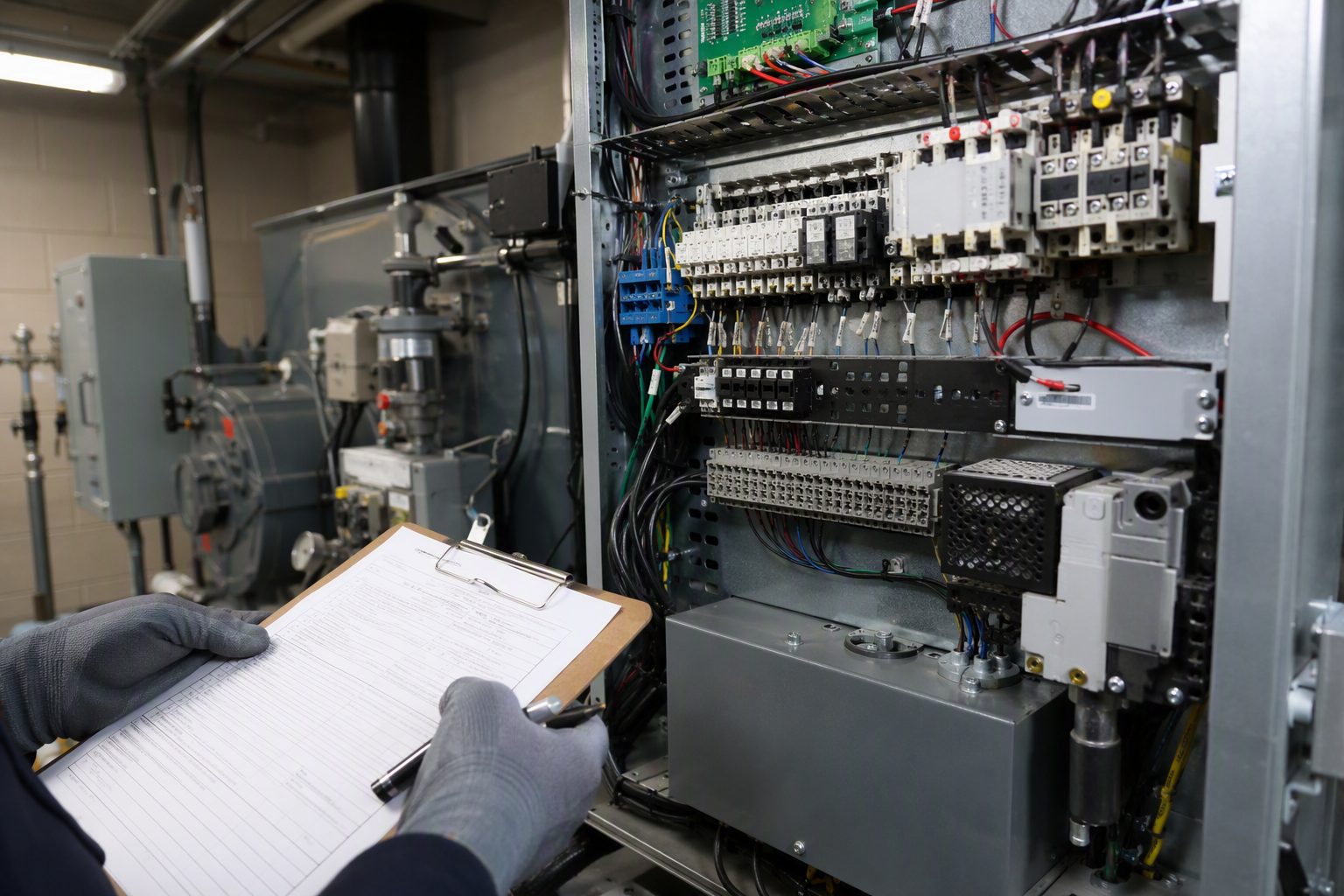
Understanding the structure of each contract type is the starting point for any meaningful comparison. The three primary maintenance contract formats in commercial and residential elevator service are:
- Full-Service (Comprehensive) Contracts: These cover all routine maintenance tasks, lubrication, adjustments, parts, and labor. Essentially, the maintenance provider assumes financial responsibility for keeping the unit running under normal wear and tear. Callbacks, inspections, and most repairs fall under a flat monthly or annual fee.
- Oil and Grease (Lubrication Only) Contracts: These are the most basic agreements available. The contractor performs routine lubrication, cleaning, and minor adjustments on a scheduled basis. Parts and labor for any repair are billed separately at the time of service. This type offers the lowest baseline cost but shifts all repair risk to the building owner.
- Parts and Labor Contracts: A middle-tier option, these contracts typically include routine maintenance visits and cover labor costs for repairs, but exclude the cost of replacement parts. Parts are billed at market or contract rates when needed. This option is common for moderately aged equipment where labor predictability is valued but the equipment profile does not justify the full-service premium.
None of these contract types is universally superior. The right choice depends on the specific elevator system, its age, the volume of use, and the building owner’s appetite for financial risk.
What Is Included — and What Is Explicitly Excluded — in Each Contract?
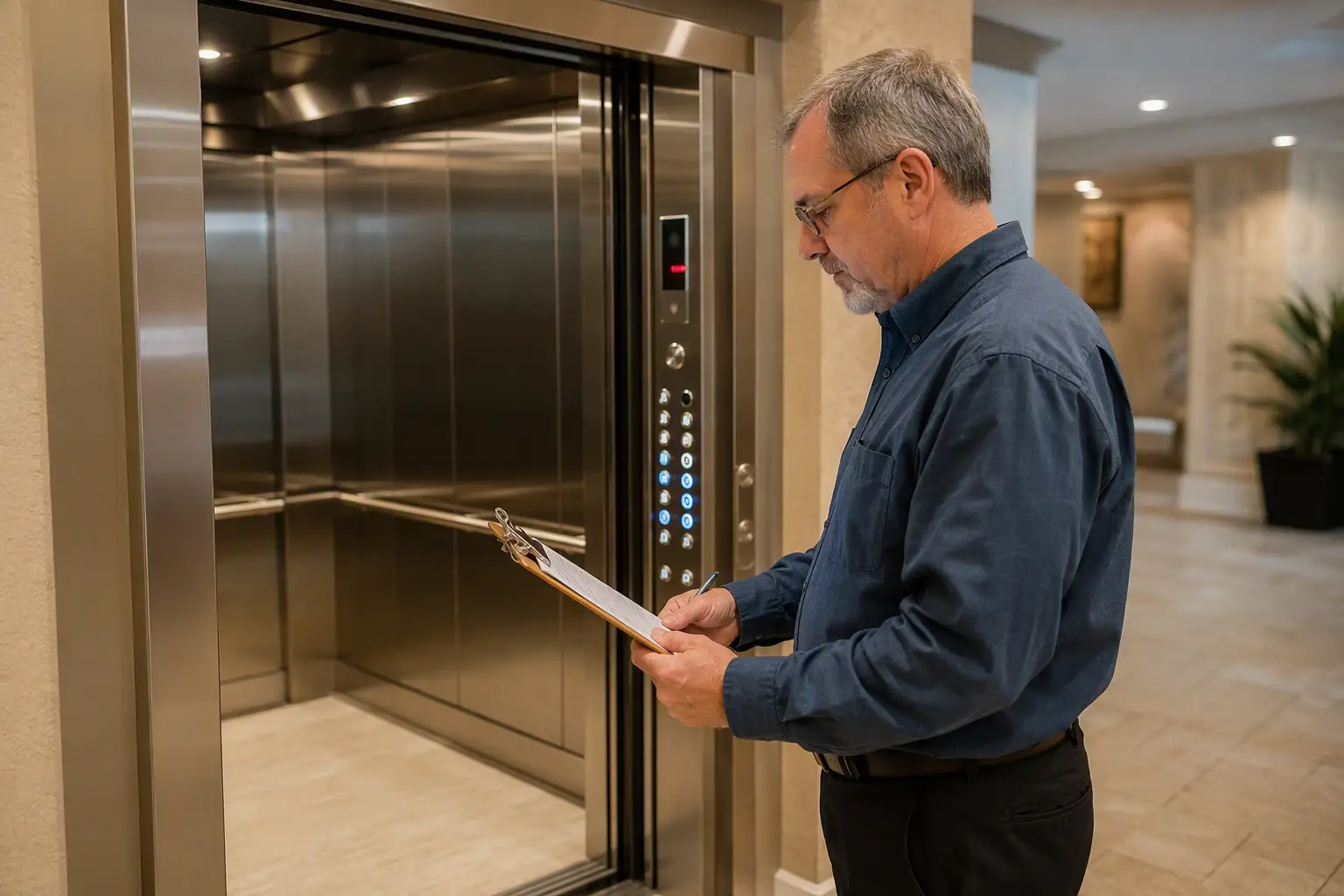
The single most important question to ask any elevator maintenance provider is: What does this contract explicitly exclude? Inclusion language is often broad; exclusion language is where financial exposure lives.
Key items to clarify in writing for each contract type include:
- Whether hydraulic fluid, oil, and lubricants are included or billed as materials
- Whether worn parts — such as door operators, rollers, buffers, or controller components — are covered under the agreement or require separate purchase orders
- Whether callback visits during business hours, after hours, weekends, and holidays are included or billed at premium rates
- Whether modernization components or proprietary parts from the original equipment manufacturer (OEM) are covered at all
- Whether vandalism damage, misuse, or Acts of God are explicitly excluded
- Whether annual inspection fees and witness fees for state or local authority-having-jurisdiction (AHJ) inspections are bundled or separate
Exclusion language in oil-and-grease contracts is often extensive. Building owners reviewing this contract type should request a written list of every repair category that falls outside the agreement before signing.
How Do Florida’s Code Requirements Affect Which Contract Type Is Sufficient?
Florida elevator equipment is subject to both state-level requirements under Chapter 399 of the Florida Statutes and the nationally adopted ASME A17.1 Safety Code for Elevators and Escalators, which Florida incorporates by reference. The 2026 code cycle continues to emphasize documented, routine maintenance as a non-negotiable obligation — not a recommendation.
Under ASME A17.1, owners are required to maintain elevators in a safe operating condition and ensure that all maintenance, repair, replacement, and testing are performed. The code does not specify which contract type must be used, but it does define what maintenance tasks must occur and at what frequency. This means that a low-tier oil-and-grease contract may technically leave the building owner legally responsible for repairs and code compliance items that the contractor is not obligated to perform under the agreement.
Building owners should ask: Does this contract ensure compliance with all applicable ASME A17.1 maintenance requirements, and if a code-required task arises that is not covered by this agreement, what is the billing mechanism?
Additionally, ADA compliance obligations apply to elevator accessibility features in covered facilities. Maintenance contracts should clarify whether adjustments, repairs, or replacements needed to maintain ADA-compliant door timing, leveling accuracy, and control reach ranges are included or excluded.
What Questions Should You Ask About Parts Coverage and Sourcing?
Parts coverage is the financial core of any elevator maintenance contract comparison. The following questions are essential:
- Are OEM parts required, or are equivalent aftermarket parts acceptable? Some contracts specify OEM-only parts, which can significantly increase costs but may be necessary for proprietary equipment with active manufacturer support.
- What is the markup on parts billed outside the contract? For oil-and-grease and parts-and-labor contracts, understanding the billing rate on parts purchased outside the agreement is critical to forecasting repair costs.
- Are major components — such as the machine, controller, or hydraulic pump — covered, or only minor wear items? Full-service contracts often exclude major component replacement even when marketed as “comprehensive.”
- What is the lead time for proprietary or obsolete parts? Older elevator systems may have components with extended lead times, and a contract that includes parts coverage but cannot source them quickly still results in extended downtime.
- Is there a parts warranty, and how long does it run?
What Response and Callback Terms Should You Require in Any Elevator Maintenance Contract?
Elevator entrapment and out-of-service events are not hypothetical risks — they are operational realities for any building with a vertical transportation system. Contract terms governing response to these events deserve explicit scrutiny.
Questions to ask every prospective maintenance provider:
- Is emergency callback service included in the monthly fee, or is it billed as a separate call?
- Are after-hours, weekend, and holiday callbacks included, or do premium rates apply?
- Is there a written service level commitment for callback response, and what happens contractually if it is not met?
- Who handles the callback — a local technician or a dispatched crew from another region?
- Does the agreement cover entrapment response separately from repair callbacks?
Under OSHA general duty requirements, building owners are responsible for maintaining safe workplaces, which includes elevator systems used by employees. Extended entrapment situations or repeated out-of-service periods without documented maintenance efforts can create regulatory exposure beyond the state elevator authority.
How Should You Evaluate Contract Length, Cancellation Terms, and Escalation Clauses?
Contract structure terms govern the long-term financial relationship between building owner and maintenance provider. These provisions warrant as much attention as the technical scope of work.
Critical contract structure questions include:
- What is the initial contract term? Multi-year agreements often offer lower monthly rates but reduce flexibility if service quality declines or the property is sold.
- What are the cancellation terms? Some contracts include notice periods of 90 to 180 days and substantial early termination penalties. These should be negotiated before signing, not after.
- Is there an annual price escalation clause? Many contracts include automatic price increases tied to labor indices or at the contractor’s discretion. Ask for the escalation cap and mechanism in writing.
- What happens to the contract upon property sale or transfer? Determine whether the agreement is assignable and whether the new owner is bound by its terms.
- Who owns the maintenance records? ASME A17.1 requires that maintenance records be kept and made available to the authority having jurisdiction. Confirm that records belong to the building, not the contractor, and that they are transferable at contract end.
What Questions Reveal the True Total Cost of Ownership for Each Contract Type?
The headline monthly fee of any elevator maintenance contract is rarely the total cost. A structured total-cost-of-ownership comparison requires asking:
- What is the all-in annual cost including estimated repair invoices for the contract type being considered, based on the equipment’s age and service history?
- How many callback visits per year are typically generated by this equipment type, and what would those cost outside a full-service agreement?
- What is the historical parts spend for this specific unit or unit type, and how does that compare to the full-service premium?
- Are inspection, testing, and witnessing costs included in the contract price?
- Is there a cap on annual parts or labor charges under a parts-and-labor contract, or is exposure unlimited?
For older equipment with unpredictable failure patterns, a full-service contract often provides stronger total-cost predictability despite its higher base rate. For newer equipment under manufacturer warranty or extended warranty programs, an oil-and-grease contract may be economically rational for a defined period.
How Does Equipment Age and Type Affect Which Contract Makes Sense?
Equipment characteristics are among the strongest determinants of contract type suitability. Questions to guide this analysis:
- What is the age of the equipment? Elevators past their typical major component lifecycle are statistically more likely to generate repair events — making full-service agreements more financially rational and parts-and-labor agreements more risky.
- Is the equipment hydraulic or traction? Hydraulic systems have different wear profiles and fluid management requirements compared to traction systems, and contracts should reflect the appropriate maintenance scope for the system type.
- Is the equipment proprietary? Some manufacturers use closed communication protocols and proprietary components that limit third-party maintenance. This affects both what a non-OEM contractor can service and what parts are available under a given contract.
- Has a modernization been completed recently? Recently modernized equipment with new components may carry a period of reduced mechanical risk, influencing the cost-benefit calculation for full-service versus alternatives.
What Documentation and Reporting Should Any Elevator Maintenance Contract Require?
Documentation requirements are frequently overlooked when comparing contract types. The following questions protect building owners from compliance gaps:
- Does the contract specify what maintenance records will be kept, in what format, and for how long?
- Will the contractor provide a written maintenance log after every visit, or only on request?
- Are deficiency reports — documenting items observed but not repaired — included in routine visit documentation?
- Does the contractor coordinate directly with the state elevator inspector, or does the building owner bear that responsibility?
- Is there a written protocol for notifying the building owner when a code violation or safety concern is identified during a maintenance visit?
Under ASME A17.1, maintenance records must be available to the authority having jurisdiction (AHJ). A contractor who does not provide written documentation of each visit creates compliance risk for the building owner — regardless of what contract type is in place.
How Do You Compare Vendor Qualifications When Evaluating Elevator Maintenance Contracts?
Not all elevator maintenance providers carry the same technical depth or local regulatory knowledge. When comparing vendors alongside contract types, ask:
- Is the company licensed as required under Florida Chapter 399 to perform elevator maintenance in this jurisdiction?
- Are the technicians performing the work qualified under the applicable state and local requirements?
- Does the company have documented experience with the specific equipment make and model installed in the building?
- What is the company’s protocol when a technician identifies a safety-critical deficiency mid-contract — particularly one that may require repair work outside the contract scope?
- Does the vendor carry appropriate liability and workers’ compensation insurance, and will they provide certificates of insurance?
What Industry Trends for 2025–2026 Are Influencing Elevator Maintenance Contract Decisions?
Several converging trends are reshaping how building owners approach elevator maintenance agreements entering 2026:
Remote monitoring and predictive maintenance integration: An increasing number of elevator maintenance providers are incorporating remote monitoring technology that allows real-time tracking of equipment performance indicators. Some full-service contracts now include monitoring provisions, which changes the value calculation compared to traditional time-and-materials arrangements. Building owners should ask whether remote monitoring is included, what data is collected, who owns it, and how it affects callback response.
Parts supply chain dynamics: Global manufacturing disruptions have affected elevator component availability for certain equipment categories, particularly older or discontinued systems. Parts-and-labor contracts in which the building owner bears parts cost exposure may carry greater financial risk in an environment where component lead times have lengthened and prices have increased. This trend reinforces the importance of asking about parts sourcing and lead time commitments in any contract negotiation.
Code update cycles: Florida continues to track and adopt updated editions of ASME A17.1 on a rolling basis. Maintenance contracts executed in 2025 and 2026 should explicitly address who bears responsibility for compliance with code changes that take effect during the contract term — particularly for inspection test requirements and documentation standards.
Modernization pressure on aging inventory: Florida’s commercial real estate and hospitality sectors include a significant volume of aging elevator equipment approaching or past major component lifecycle thresholds. As modernization becomes necessary, the contract type in place affects how deficiencies are identified, documented, and escalated to the point of capital planning.
How to Evaluate Elevator Maintenance Contract Proposals Step by Step
- Inventory your equipment. Before requesting proposals, compile the make, model, age, usage volume, and recent service history for every elevator unit in the building. This information determines which contract type is appropriate and prevents contractors from upselling based on incomplete information.
- Define your compliance baseline. Review the current applicable maintenance requirements under ASME A17.1 and Florida Chapter 399 to understand the non-negotiable maintenance tasks that must occur regardless of contract type.
- Request itemized proposals. Ask each vendor to provide a line-by-line proposal that lists included tasks, excluded items, callback terms, parts sourcing, documentation practices, and all fees — not just the monthly rate.
- Calculate total cost of ownership. For each contract type offered, model the total annual cost including the base contract fee plus estimated repair and parts invoices, callbacks, inspection fees, and any escalation provisions.
- Evaluate exclusion language. Have the exclusion section of each proposed contract reviewed carefully. Request that any ambiguous exclusion language be clarified in a written addendum before execution.
- Compare documentation and reporting commitments. Confirm that the contractor will provide written maintenance logs, deficiency notices, and inspection coordination — and that records belong to the building.
- Negotiate contract structure terms. Discuss cancellation provisions, price escalation caps, assignment rights, and record transfer before signing any multi-year agreement.
- Verify licensing and insurance. Confirm that the contractor holds all required Florida licenses and carries adequate liability and workers’ compensation coverage before execution.
Why Data-Driven Contract Evaluation Matters for Florida Building Owners?
Florida’s climate, building stock diversity, and regulatory environment create a maintenance landscape that differs from many other states. High humidity accelerates certain wear patterns in hydraulic and traction systems. The concentration of hospitality, healthcare, and multifamily residential properties creates usage intensity profiles that directly affect which maintenance contract type delivers appropriate coverage at an appropriate cost.
Axxiom Elevator Florida approaches maintenance contract evaluation with a systematic, data-informed framework — helping building owners in Florida understand the real scope of coverage, identify gaps between contract language and compliance obligations, and make decisions based on documented equipment condition rather than assumptions. Rather than offering a one-size-fits-all contract recommendation, the approach is to match the contract structure to the actual risk profile of the equipment and the building.
Key Questions Checklist: What to Ask Before Signing Any Elevator Maintenance Contract
- What specific tasks are included in each maintenance visit, and how frequently are visits scheduled?
- What is explicitly excluded, and how is excluded repair work billed?
- Are callbacks included, and do after-hours and holiday callbacks carry additional charges?
- Are parts covered, and if so, which categories of parts and at what threshold?
- Who is responsible for ensuring compliance with ASME A17.1 maintenance requirements during the contract term?
- Are annual inspection and witnessing fees included?
- What is the contract term, and what are the cancellation and early termination provisions?
- Is there an annual price escalation clause, and what is the cap?
- Who owns the maintenance records, and will they be provided in a transferable format at contract end?
- What happens to coverage and billing if a code change requires new maintenance tasks during the contract period?
- Does the contractor have documented experience with this specific equipment type and make?
- Are remote monitoring or predictive maintenance capabilities available, and how are they priced?
Get a Professional Elevator Contract Assessment for Your Florida Property
Choosing the right elevator maintenance contract type requires a detailed evaluation of your equipment, usage patterns, compliance obligations, and total cost of ownership. Axxiom Elevator Florida provides structured, data-driven assessments that help building owners compare full-service, oil-and-grease, and parts-and-labor agreements with clarity — before committing to a long-term agreement.
Contact Axxiom Elevator Florida for a free elevator assessment: