How Much Does It Cost to Maintain an Elevator in a Commercial Building in Florida Per Year?
Commercial elevator maintenance is one of the most consequential ongoing expenses a Florida building owner or property manager faces. Beyond the dollar figure, non-compliance with Florida’s elevator safety requirements can result in operating certificate suspension, liability exposure, and tenant disruption. This page breaks down every cost driver — from mandatory inspection fees to modernization triggers — so Florida building owners can budget with confidence.
What Are the Main Cost Components of Annual Elevator Maintenance in Florida?
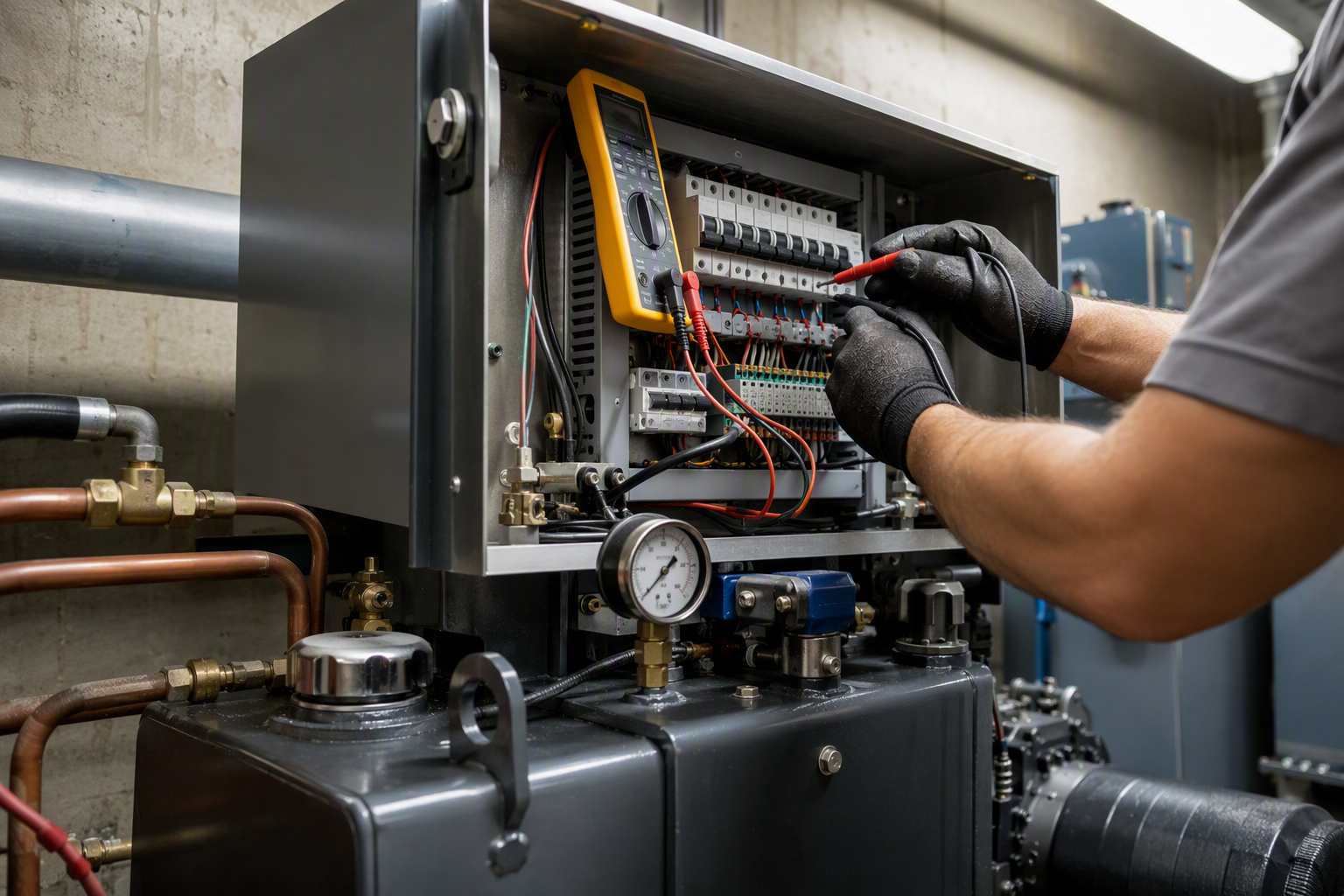
Annual elevator maintenance costs in a Florida commercial building are not a single line item. They are a layered set of expenses that include several distinct categories:
- Preventive maintenance contracts: Routine lubrication, adjustment, cleaning, and parts inspection performed on a scheduled basis — typically monthly or quarterly.
- Mandatory Florida safety inspections: Florida requires elevators to be inspected by a licensed elevator inspector. These inspections are a non-negotiable annual cost tied to the issuance of operating certificates under Florida’s elevator safety program.
- Repair and parts replacement: Wear items such as cables, sheaves, door operators, controllers, and safety devices must be replaced according to condition and code requirements.
- Emergency service calls: Unplanned breakdowns and passenger entrapments generate labor and parts costs outside of any maintenance contract.
- Code-compliance upgrades: Both ASME A17.1 Safety Code for Elevators and Escalators and ASME A17.3 Safety Code for Existing Elevators and Escalators impose retroactive requirements that can generate repair or modernization costs.
- ADA accessibility compliance: The Americans with Disabilities Act may require cab modifications, tactile controls, or audible signal upgrades.
- Modernization: Aging elevator systems eventually require full or partial modernization — a capital expense that is often triggered by Florida inspection findings or insurance requirements.
What Factors Drive Elevator Maintenance Costs Higher or Lower?

No two commercial elevators carry the same annual price tag. The following factors most significantly influence total annual spend:
- Elevator type: Hydraulic elevators, traction elevators (geared and gearless), and machine-room-less (MRL) systems each carry distinct maintenance profiles. Hydraulic systems, for example, require periodic fluid inspection and environmental compliance considerations that traction units do not.
- Age of the equipment: Older elevator systems require more frequent parts replacement and are more likely to trigger ASME A17.3 retroactive safety requirements during inspections.
- Number of stops and daily trips: High-traffic elevators in office towers, hospitals, or mixed-use developments wear faster than low-use elevators in small commercial properties.
- Building height: Mid-rise and high-rise buildings operate high-speed traction systems that carry more complex maintenance requirements than low-rise hydraulic installations.
- Contract scope: Full-coverage maintenance contracts that include parts and labor are priced higher than oil-and-grease (lubrication-only) contracts. The difference in upfront cost is often offset by reduced surprise repair expenses.
- Florida climate: Heat, humidity, and coastal salt air accelerate corrosion of pit components, cables, and electrical contacts — increasing both preventive maintenance frequency and repair frequency for Florida properties compared to drier climates.
- Vendor selection: National service providers, regional independents, and manufacturer-affiliated technicians are priced differently and offer varying contract terms.
What Does Florida Law Require for Elevator Inspections?
Florida’s elevator safety program is administered through the Florida Department of Business and Professional Regulation (DBPR). Florida law requires that conveyances — including commercial elevators — receive periodic inspections and hold a valid certificate of operation. Inspections must be performed by a licensed elevator inspector, and any deficiencies identified must be corrected within the timeframes specified by the inspector or the authority having jurisdiction (AHJ).
Failure to maintain a valid operating certificate can result in an elevator being taken out of service, which creates immediate business disruption and potential tenant or occupant liability. These compliance costs are therefore not discretionary — they are a fixed cost of operating a commercial elevator in Florida.
For federal code context, inspection intervals and testing requirements for safety devices are addressed under ASME A17.1 Safety Code for Elevators and Escalators, which Florida adopts as its technical reference standard.
What Does ASME A17.3 Mean for Florida Commercial Building Owners?
ASME A17.3 Safety Code for Existing Elevators and Escalators establishes retroactive safety requirements — meaning features required by this code must be added to existing elevators even if those elevators predate the requirement. In practical terms, this means a Florida commercial building owner may receive an inspection citation requiring upgrades to door reopening devices, emergency lighting, firefighters’ emergency operation, or other safety systems regardless of the elevator’s original installation date.
These retroactive upgrade costs are among the most unpredictable line items in a Florida elevator budget. A proactive relationship with a qualified elevator service provider helps building owners anticipate which A17.3 requirements their equipment has not yet met before an inspector surfaces the deficiency.
How Do ADA Requirements Affect Annual Elevator Costs?
The Americans with Disabilities Act establishes accessibility standards that apply to commercial facilities. For elevators, ADA requirements include standards related to cab dimensions, door timing, tactile and visual floor indicators, audible signals, and Braille/raised-character controls. When building alterations trigger ADA path-of-travel obligations, elevator accessibility upgrades may become a compliance-driven cost.
ADA compliance costs are not always annual, but they are a recurring consideration during modernizations, lease renewals that involve significant tenant improvement work, or after ADA complaints or accessibility audits.
What Is Typically Included in a Full-Coverage Maintenance Contract?
A full-coverage maintenance contract — sometimes called a comprehensive contract — generally includes scheduled preventive maintenance visits, labor for covered repairs, and the cost of replacement parts within defined exclusions. Coverage typically extends to:
- Motor, generator, and controller components
- Door operators, hangers, and sills
- Cables, sheaves, and buffers (traction systems)
- Hydraulic pump units and cylinders (hydraulic systems)
- Safety devices and governors
- Cab lighting and signals
What full-coverage contracts typically exclude: vandalism damage, cab interior cosmetic repairs, major modernization components, and deficiencies arising from the building owner’s failure to maintain the machine room environment (temperature, humidity, cleanliness).
Oil-and-grease contracts, by contrast, cover only the labor for scheduled lubrication and adjustment visits. All parts and repair labor are billed separately. These contracts appear less expensive upfront but can result in significantly higher total annual costs when equipment failures occur.
What Are the Cost Implications of Deferred Maintenance?
Deferred maintenance is one of the highest-cost decisions a commercial building owner can make with elevator systems. When routine maintenance is postponed or contracted at insufficient scope, the consequences compound:
- Minor wear items become major component failures, multiplying parts and labor costs.
- Inspection deficiency lists grow longer, creating multiple compliance deadlines simultaneously.
- Elevator downtime increases, triggering tenant complaints, lease disputes, and in multi-tenant commercial properties, potential rent abatement claims.
- Insurance carriers may cite deferred maintenance as grounds to deny claims arising from elevator-related incidents.
- OSHA requirements under OSHA general industry standards related to workplace safety and mechanical hazards may apply if employees are exposed to unsafe conditions from unmaintained equipment.
The industry consensus among elevator service professionals is that the annualized cost of proper preventive maintenance is substantially lower than the cost of reactive repair compounded by downtime losses.
How Does Elevator Age Affect Annual Maintenance Costs in Florida?
Elevator systems have functional service lives that vary by type and usage, but virtually all commercial elevators eventually reach a point where the annual cost of maintaining aging equipment — parts availability, frequency of failures, and accumulating code deficiencies — exceeds the annualized cost of modernization.
For Florida properties, this inflection point often occurs when:
- Proprietary controllers from discontinued manufacturers make replacement parts unavailable or extremely expensive.
- ASME A17.3 inspection deficiencies accumulate faster than they can be corrected on aging systems.
- Hydraulic elevator cylinders reach an age at which single-bottom cylinder replacement or liner installation becomes necessary to meet environmental and safety standards.
- Downtime frequency disrupts building operations to a degree that affects tenant retention or building occupancy rates.
Modernization planning — even when the project is years away — should be part of every Florida commercial building’s capital expenditure forecast.
What Should Florida Building Owners Look for When Comparing Elevator Maintenance Vendors?
Vendor selection is a significant determinant of both annual cost and compliance outcome. When evaluating elevator maintenance providers in Florida, building owners and property managers should assess:
- Florida licensure: Florida requires elevator contractors and mechanics to be licensed through the DBPR. Confirm that any vendor holds current, valid Florida licensure before signing a contract.
- Contract transparency: Understand exactly what is included, what is excluded, how callbacks are handled, and what constitutes a billable service call outside the contract.
- Parts sourcing: Vendors who stock commonly needed parts locally can resolve failures faster than those who must order from distant distribution centers — directly reducing downtime.
- Inspection coordination: A qualified vendor will prepare the elevator for Florida DBPR inspections, accompany the inspector, and manage the deficiency correction process on the building owner’s behalf.
- Code literacy: The vendor’s technical staff should be knowledgeable about both ASME A17.1 and ASME A17.3 as adopted in Florida, and should proactively advise on emerging compliance requirements.
- Contract term and cancellation provisions: Multi-year contracts should include fair termination provisions and should not contain provisions that make switching vendors prohibitively costly if service quality declines.
How Should a Florida Property Manager Budget for Elevator Maintenance Annually?
A sound elevator maintenance budget for a Florida commercial building accounts for both predictable and variable costs. The following step-by-step budgeting process is recommended:
- Inventory all conveyances: Document every elevator, escalator, and lift in the building — type, age, number of stops, and last modernization date.
- Obtain current maintenance contract cost: If a contract is in place, identify the annual contract value and what it covers. If no contract exists, obtain competitive bids.
- Account for Florida inspection fees: Include the cost of mandatory DBPR inspections and any fees associated with obtaining or renewing operating certificates.
- Review the last two years of repair invoices: Identify recurring repair categories and any outstanding deficiencies from prior inspections.
- Assess ASME A17.3 exposure: Work with a qualified elevator contractor to identify which ASME A17.3 retroactive requirements the equipment has not yet met and estimate the cost to address them.
- Build a contingency reserve: Even with a full-coverage contract, excluded items — vandalism, cab cosmetics, major modernization components — will generate out-of-pocket costs.
- Plan a five-year capital outlook: If the elevator is more than 20 years old, begin modeling the cost of modernization as a capital budget line item.
What Industry Trends Are Shaping Elevator Maintenance Costs in 2025 and 2026?
Several qualitative trends are influencing elevator maintenance costs for Florida commercial properties in the 2025–2026 period:
- Labor market pressures: Demand for licensed elevator mechanics continues to outpace supply in many Florida markets, influencing service pricing and response time dynamics across vendors.
- Parts supply chain dynamics: Global supply chain conditions continue to affect availability and pricing of elevator components, particularly for older systems dependent on legacy parts.
- Remote monitoring technology: Predictive maintenance platforms using IoT sensors and remote monitoring are becoming more accessible for commercial properties. These systems can reduce emergency call frequency by identifying developing failures before they result in downtime.
- Code edition updates: ASME periodically updates both A17.1 and A17.3. As Florida adopts updated editions, building owners should anticipate new compliance requirements emerging that affect both existing and newly installed equipment.
- Sustainability and energy efficiency: Demand for energy-efficient elevator systems — including regenerative drives and LED cab lighting — is growing in Florida’s commercial real estate sector, particularly in LEED-seeking properties.
- Insurance underwriting scrutiny: Commercial property insurers are increasingly reviewing elevator maintenance records during policy underwriting and renewal, creating a financial incentive beyond compliance to maintain documented preventive maintenance programs.
Does Building Type Affect Elevator Maintenance Cost in Florida?
Yes. The building’s use classification directly shapes maintenance cost in several ways:
- Office buildings: Typically moderate-use elevators with predictable traffic patterns; peak demand during morning and evening hours may accelerate door operator wear.
- Retail and mixed-use: Higher passenger volume and frequent heavy loads (shopping carts, delivery equipment) accelerate wear on cab interiors, door sills, and buffer systems.
- Healthcare facilities: Hospital and medical office elevators operate under intensive use and carry heavy equipment and beds; maintenance requirements and downtime consequences are both elevated.
- Hospitality: Hotels and resorts face 24-hour demand, making downtime particularly costly and maintenance scheduling more complex.
- Residential commercial (condominiums and apartments): Florida condominium associations are responsible for elevator maintenance under state condominium law; costs are a common subject of reserve study analysis and association budgeting.
- Industrial and warehouse: Freight elevators and material lifts face extreme load cycles and require maintenance protocols appropriate to their rated capacity and duty cycle.
What Role Does Axxiom Elevator Florida Play in Helping Commercial Buildings Manage Costs?
Axxiom Elevator Florida provides data-driven elevator maintenance and compliance services to commercial building owners and property managers throughout Florida. Rather than applying a one-size-fits-all approach, Axxiom Elevator Florida uses a systematic assessment process to evaluate each property’s equipment condition, compliance status, and maintenance history — giving building owners the information they need to make sound maintenance investment decisions.
By grounding recommendations in Florida code requirements, ASME standards, and a clear-eyed evaluation of equipment condition, Axxiom Elevator Florida helps clients avoid both the false economy of underservice and the unnecessary expense of premature modernization. The result is a maintenance program scaled to actual risk, not to a generic template.
Summary: Key Cost Drivers for Florida Commercial Elevator Maintenance
| Cost Category | Nature | Code / Regulatory Driver |
|---|---|---|
| Preventive Maintenance Contract | Recurring / Annual | Florida DBPR; ASME A17.1 |
| State Safety Inspections | Mandatory / Annual | Florida DBPR Elevator Safety Program |
| Retroactive Safety Upgrades | Variable / Compliance-Driven | ASME A17.3 |
| ADA Accessibility Modifications | Variable / Triggered by Alterations | Americans with Disabilities Act |
| Emergency / Unplanned Repairs | Variable | Equipment Age and Condition |
| Modernization (Capital) | Periodic / Long-Term Planning | ASME A17.1 / A17.3; Florida DBPR |
| Workplace Safety Compliance | Ongoing | OSHA General Industry Standards |
Note: This table organizes cost categories and their regulatory drivers. Dollar figures are not included because they vary materially by elevator type, age, building use, and contract scope. A qualified Florida elevator contractor can provide site-specific estimates.
Get a Clear Picture of Your Elevator Costs — Before Your Next Inspection
Florida commercial building owners and property managers who want to move from reactive spending to strategic maintenance planning should start with a professional elevator assessment. A qualified assessment surfaces compliance gaps, identifies deferred maintenance risk, and gives management the data needed to budget accurately for the year ahead.
Contact Axxiom Elevator Florida for a free elevator assessment:
Axxiom Elevator Florida — serving commercial properties across Florida with code-grounded elevator maintenance, inspection preparation, and modernization planning.