How Fast Can an Elevator Be Repaired? Complete FAQ Guide for Florida Building Owners
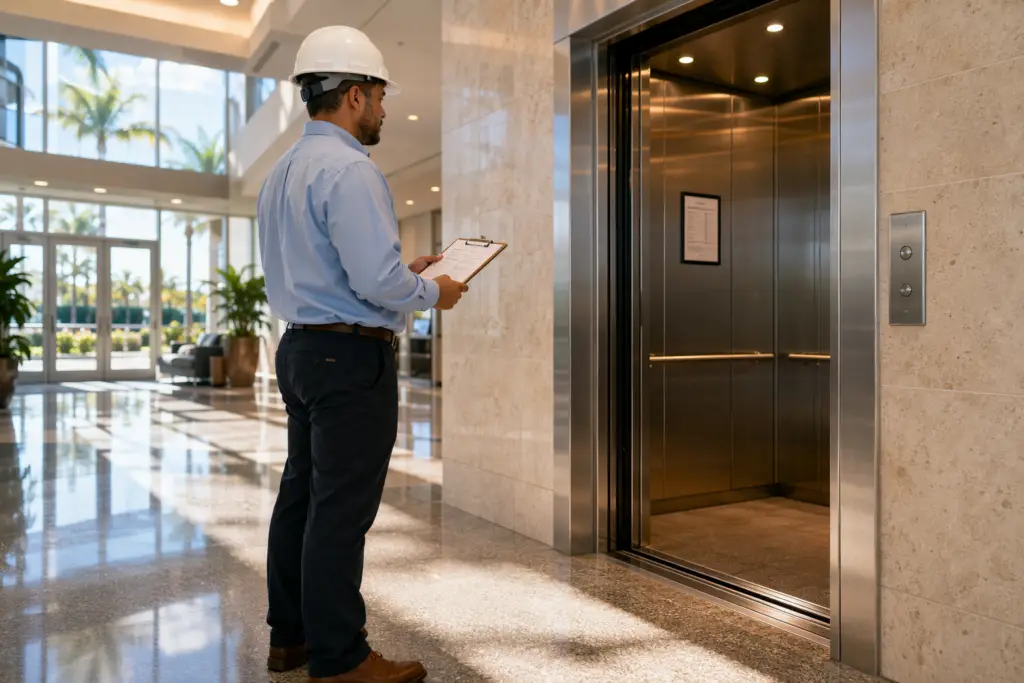
After 15 years in the field servicing elevators across South Florida and the Gulf Coast, I’ve been asked some version of this question hundreds of times: How fast can you fix it? The honest answer depends on what broke, how old the equipment is, and whether a licensed technician with the right parts is already on the way. This guide covers everything building owners, property managers, and facility directors in Pompano Beach and Sarasota need to know about elevator repair timelines, costs, compliance requirements, and what separates a fast, safe fix from a costly delay.
How Fast Can an Elevator Be Repaired?
Most elevator repairs take between 2 hours and 5 business days, depending entirely on the type of failure, parts availability, and technician response time.
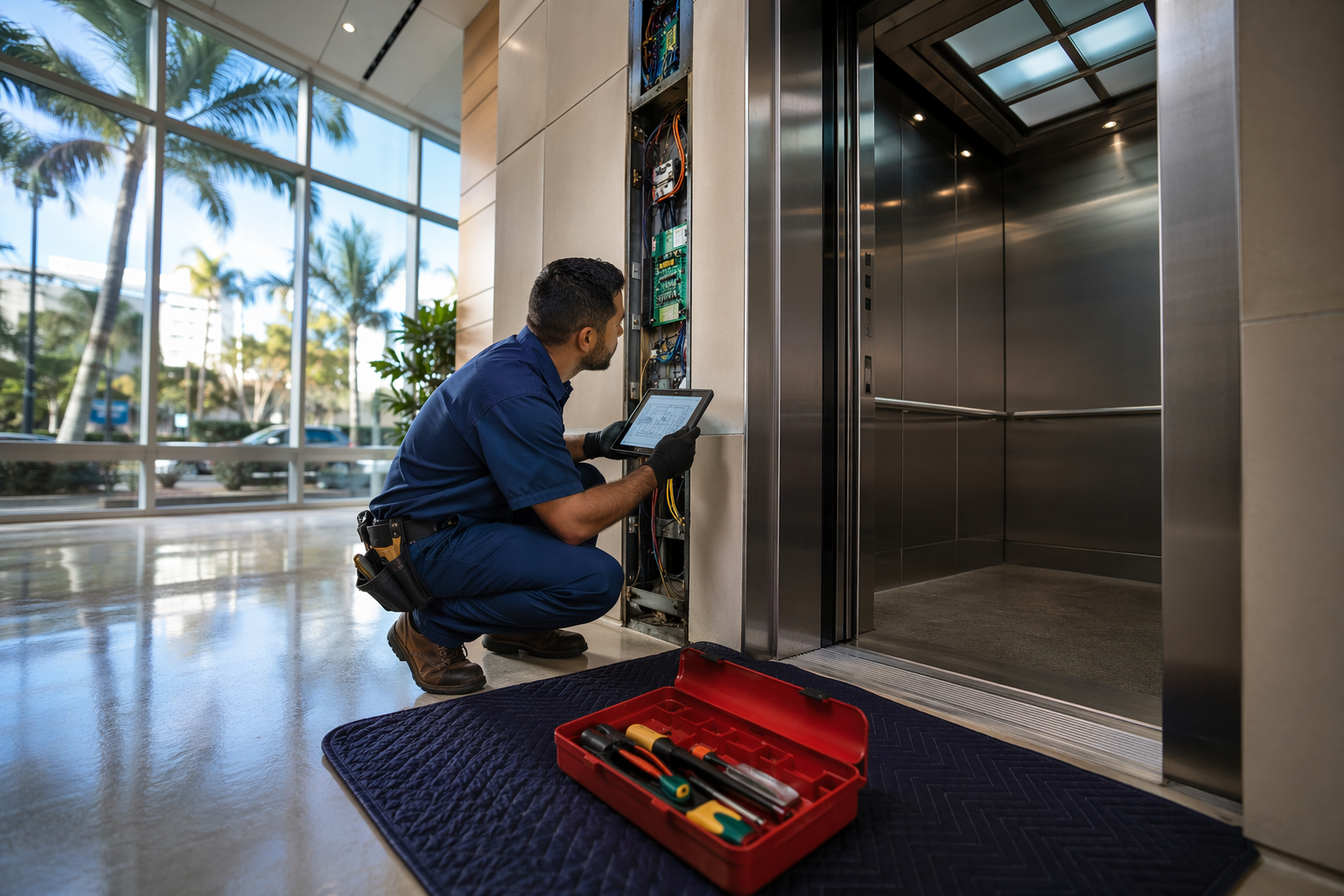
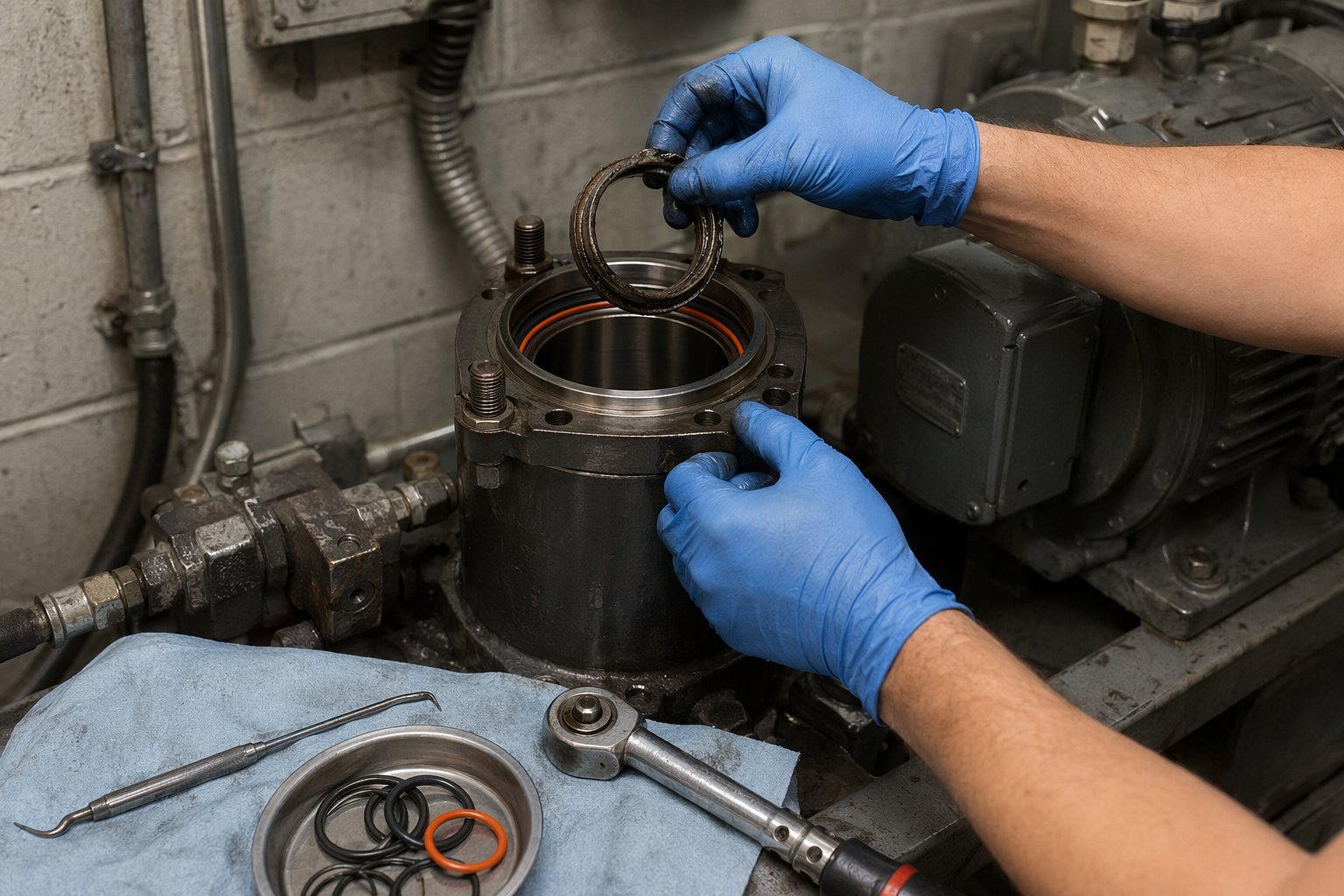
Minor repairs — door sensor replacements, pushbutton fixes, lighting issues, or resetting tripped breakers — can often be resolved in under two hours by a qualified technician. Intermediate repairs, such as replacing door operators, hydraulic seals, or motor control boards, typically require a full day to two days. Major overhauls involving traction motors, cab interiors, or complete controller replacements may extend to five business days or longer if specialty parts must be ordered. In Florida’s climate, hydraulic fluid degradation is a particularly common issue that can accelerate repair urgency, especially in Sarasota’s coastal humidity and Pompano Beach’s heat load.
What Are the Most Common Elevator Repairs and How Long Do They Take?
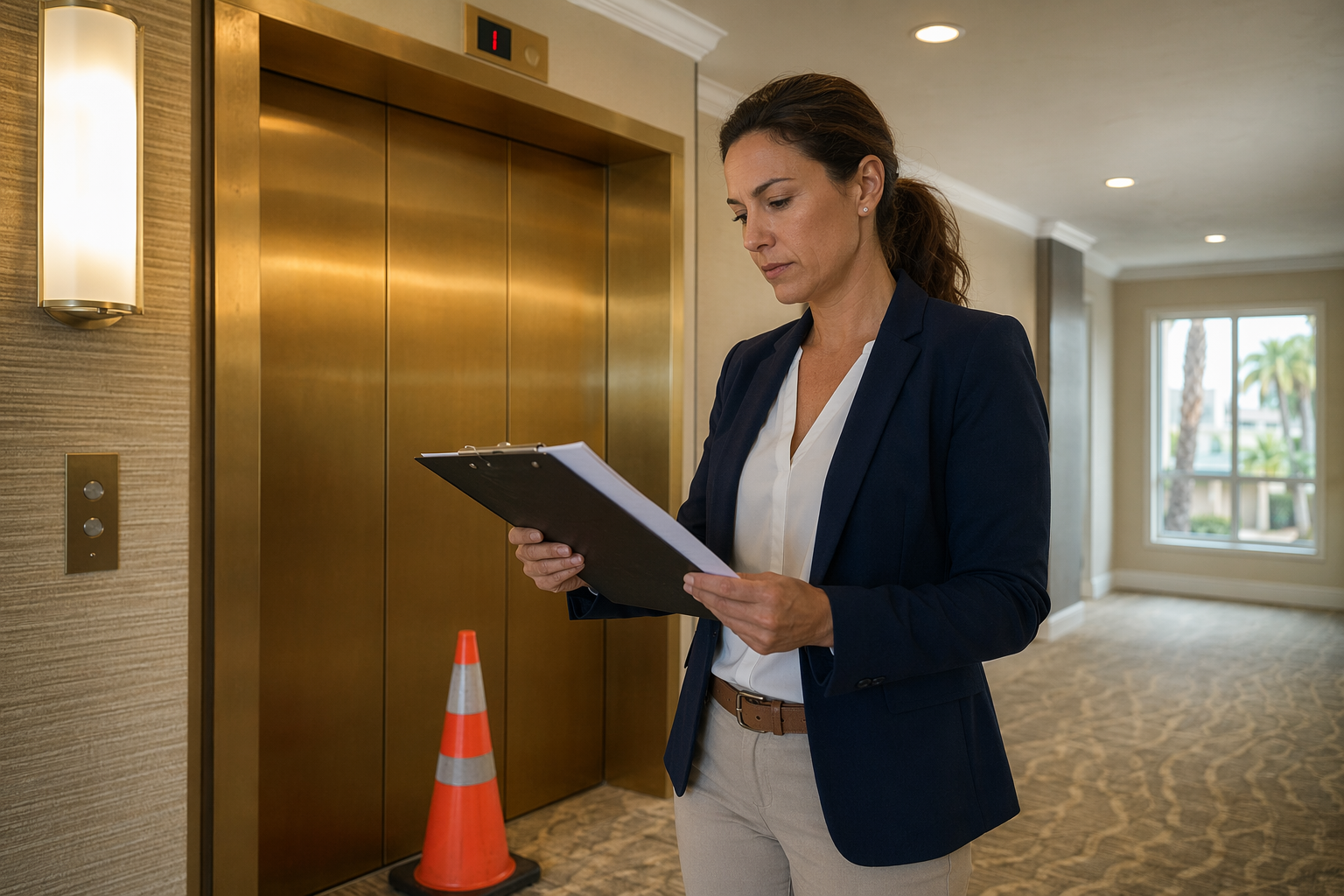
Door malfunctions are the single most frequent elevator repair, accounting for roughly 70% of all service calls, and are typically resolved within 2 to 4 hours.
Based on industry service data tracked through 2026, here is a realistic breakdown of the most common repair categories, average repair times, and rough cost benchmarks for Florida commercial properties:
| Repair Type | Average Repair Time | Estimated Cost (2026) | Common Cause |
|---|---|---|---|
| Door sensor / safety edge | 1–3 hours | $150–$450 | Wear, debris, misalignment |
| Door operator replacement | 4–8 hours | $800–$2,500 | Motor burnout, gear wear |
| Hydraulic fluid leak / seal | 3–6 hours | $500–$1,800 | Age, heat, pressure cycling |
| Motor control board (MRL) | 4–8 hours | $1,200–$4,000 | Power surges, humidity |
| Traction motor replacement | 2–4 days | $5,000–$15,000+ | End of service life |
| Controller modernization | 3–5 days | $12,000–$35,000 | Obsolete components |
| Hydraulic pump replacement | 1–2 days | $3,500–$8,000 | Cavitation, age |
| Emergency lighting / alarm | 1–2 hours | $100–$350 | Battery failure, code requirement |
| Cable / rope replacement | 1–3 days | $4,000–$10,000 | Wear beyond ASME limits |
| Buffer replacement | 4–8 hours | $600–$2,200 | Oil depletion, impact damage |
What Factors Determine How Quickly an Elevator Can Be Repaired?
The four primary variables that control repair speed are technician response time, parts availability, the age of the equipment, and local permit requirements.
Response time is perhaps the most controllable factor. A local service provider with a stocked parts van — like Axxiom Elevator Florida serving Pompano Beach and Sarasota — can dramatically outperform a national chain dispatching from a regional warehouse. Older elevators, particularly those built before 1990, often require obsolete components that must be sourced from specialty suppliers or fabricated, adding days to any repair timeline. Florida also requires that certain repairs trigger a state inspection before the elevator can be returned to service, which adds scheduling lag if not anticipated. Always ask your service vendor whether they maintain an active parts inventory locally.
Does Florida Have Specific Rules That Affect Elevator Repair Timelines?
Yes — Florida Statute Chapter 399 and the Florida Building Code require licensed contractors to perform all elevator repairs and mandate state inspections for major component replacements before the unit can be legally re-opened to the public.
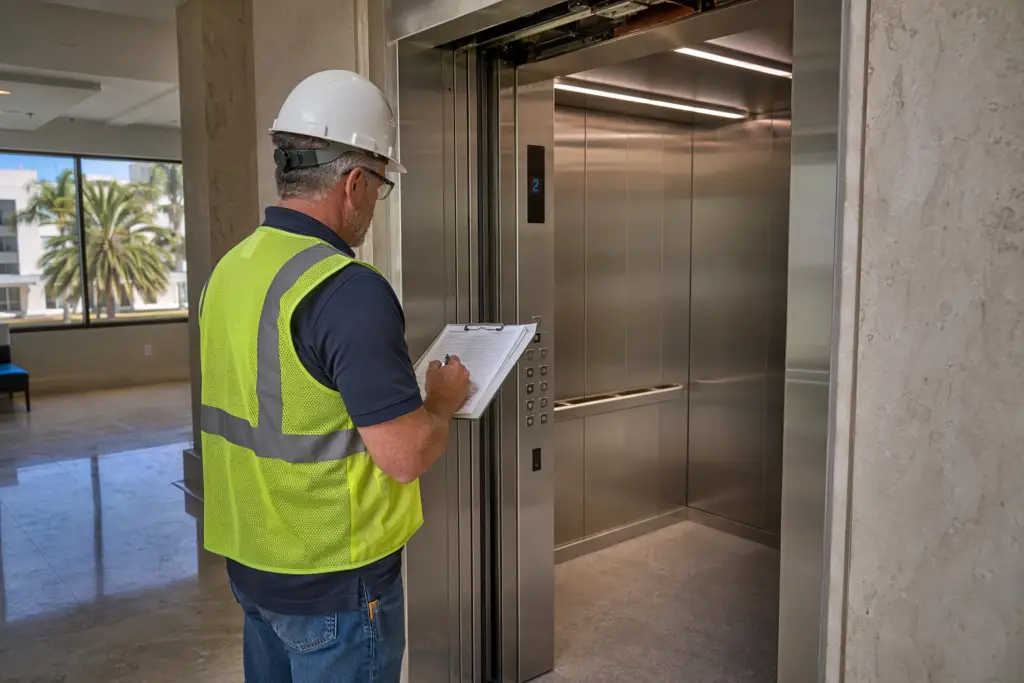
Under Florida’s elevator safety regulations, all elevator work must be performed by a licensed elevator contractor. For significant repairs — such as rope replacement, controller modernization, or hydraulic system overhauls — a permit must be pulled and a state-certified inspector must sign off before the elevator can return to service. This inspection requirement can add 1 to 5 business days depending on inspector availability in your county. In Broward County (Pompano Beach) and Sarasota County, inspection scheduling has become increasingly competitive in 2026 due to high construction volume, which underscores the importance of working with a contractor who has strong relationships with local inspection offices.
What Is the ASME A17.1 Safety Code and How Does It Impact Repair Speed?
The ASME A17.1 Safety Code for Elevators and Escalators sets the minimum safety standards for all repairs and can require specific testing protocols that must be completed before reopening, directly affecting how quickly a repaired elevator can go back into service.
ASME A17.1 (currently adopted in Florida in the 2019 edition as of 2026) dictates exactly how safety-critical components must be installed, tested, and documented. For example, after replacing hydraulic cylinder seals, a pressure test must be performed and results logged. After rope replacement on a traction elevator, a full load test is required. These aren’t optional steps — skipping them creates liability for the building owner and violates state law. A competent contractor factors testing time into their repair estimate. Shortcuts that save hours today can cost tens of thousands in liability tomorrow.
How Quickly Should a Stuck or Trapped Passenger Situation Be Resolved?
A passenger entrapment is a life-safety emergency that must be resolved within 1 hour of notification under best practice standards, and most jurisdictions — including Broward and Sarasota counties — require a technician response within 60 to 90 minutes for active entrapments.
The ASME A17.1 code requires that elevators be equipped with a two-way communication device that connects passengers to a monitoring center. When an entrapment is reported, your elevator service company should dispatch a licensed technician immediately. Building staff should never attempt to manually extract passengers from an elevator car — improper extraction is a leading cause of elevator-related injuries. Axxiom Elevator Florida maintains 24/7 emergency dispatch coverage across both its Pompano Beach and Sarasota service zones, ensuring that life-safety incidents receive priority response regardless of time of day.
How Does Preventive Maintenance Reduce Repair Time and Frequency?
Elevators on active preventive maintenance contracts experience 40–60% fewer emergency repair calls and significantly shorter repair durations because technicians already know the equipment’s condition history.
This is one of the most important points I make to every building owner I work with. A technician who has serviced your elevator every month for two years knows exactly where the wear points are, which components are approaching end-of-life, and what parts to have on the truck before they even arrive. Without maintenance records, a technician must diagnose from scratch, adding diagnostic time to every repair visit. Florida’s elevator code under Chapter 399 encourages — and in some occupancy types effectively mandates — periodic maintenance to sustain valid certificates of operation. Investing in a quarterly or monthly maintenance agreement is the single most effective strategy for reducing both repair frequency and repair duration.
What Is the Difference Between Emergency Repair and Routine Repair Response Times?
Emergency repairs for life-safety issues (entrapment, door won’t close, elevator won’t stop) should be responded to within 1–2 hours, while routine scheduled repairs can be booked within 1–3 business days.
Most elevator service companies tier their response commitments. Life-safety emergencies — an elevator stuck between floors with passengers, doors that won’t fully close creating a shear hazard, or a unit that overshoots the landing — demand immediate dispatch. Non-emergency nuisances, like a noisy cab ride, flickering lights, or sluggish door reopening, can safely be scheduled as a routine service visit. Understanding this distinction helps building managers set appropriate expectations with tenants and prioritize service calls correctly. Always ensure your service contract explicitly defines emergency response time commitments with enforceable guarantees.
How Long Does an Elevator Inspection Take and Is It Required After Every Repair?
A standard Florida elevator inspection typically takes 1 to 3 hours on-site, and while not every repair triggers a mandatory inspection, any alteration or major component replacement under Florida Statute 399 requires a new certificate of operation before the elevator reopens.
Florida distinguishes between “maintenance” (routine adjustment, lubrication, minor parts like buttons or sensors) and “alteration” (changes to core mechanical or electrical systems). Alterations require a permit, inspection, and updated certificate. Knowing this distinction matters when planning your budget and timeline. Minor repairs like replacing an intercom unit, adjusting door timing, or swapping a light fixture are maintenance items. Replacing a rope, modernizing a controller, or upgrading a hydraulic unit crosses into alteration territory. Your licensed contractor should advise you on this before starting work — not after the invoice arrives.
How Does Elevator Age Affect Repair Speed and Cost?
Elevators older than 20 years — a significant portion of Florida’s existing elevator inventory — face dramatically longer repair times due to discontinued parts, obsolete controllers, and the need for custom fabrication or sourcing from secondary markets.
Florida has a substantial stock of elevators installed in the 1980s and 1990s, particularly in the condominium and commercial high-rise buildings common along the Pompano Beach coastline and in Sarasota’s downtown corridor. For these units, finding a replacement controller board, relay, or door motor can take anywhere from a few days to several weeks if sourced internationally. This is why modernization planning becomes financially prudent for elevators over 20–25 years old. The repair-versus-replace calculation changes significantly once parts lead times start exceeding a week on a regular basis. A lifecycle assessment from a trusted contractor helps building owners make this call with real data rather than guesswork.
Can Parts Availability Delay an Elevator Repair Significantly?
Yes — specialty or discontinued parts can extend repair timelines from days to several weeks, which is why working with a service company that maintains a local parts inventory is critical for minimizing downtime.
In my 15 years in the field, parts availability is the number one cause of extended elevator outages — far more than the actual repair labor. Common consumables like door gibs, rollers, and oil are typically stocked locally. But control boards, proprietary software modules for modern machine-room-less (MRL) elevators, and legacy relay logic components may have lead times of 2 to 8 weeks when ordered new. The workaround options — refurbished components, third-party alternatives, or custom fabrication — each carry their own timelines and quality considerations. Axxiom Elevator Florida maintains strategic parts inventory across its Florida service locations specifically to reduce this gap for its contract customers.
What ADA Requirements Must Be Met During Elevator Repairs?
Under the Americans with Disabilities Act (ADA), elevators in public accommodations and commercial facilities must maintain full ADA accessibility compliance at all times, meaning repairs that affect button height, door timing, audible signals, or Braille signage must be corrected before reopening.
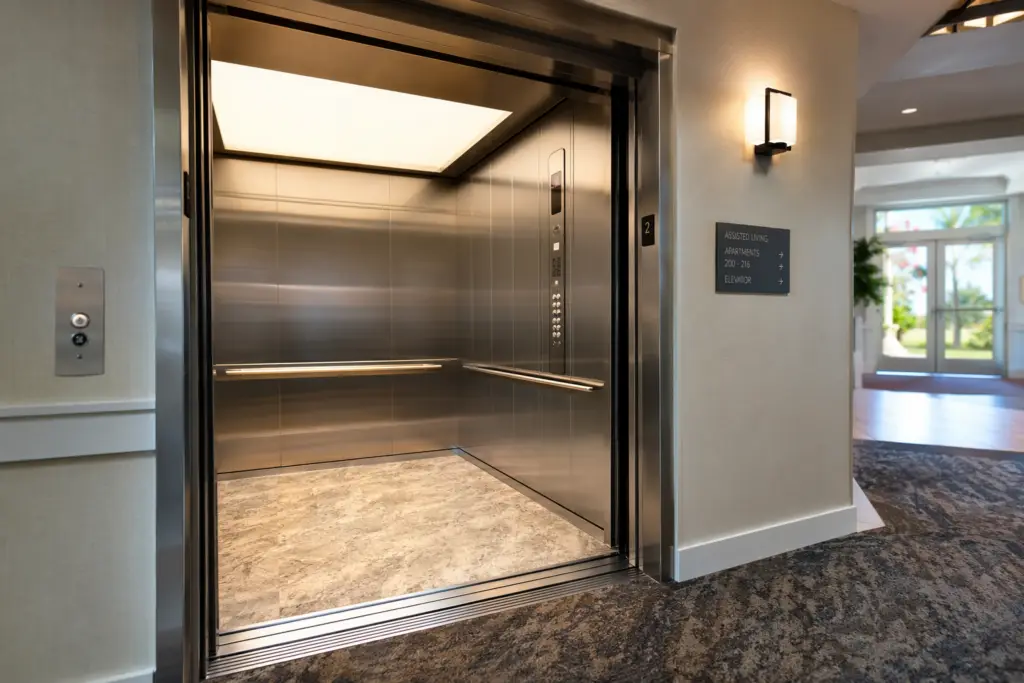
ADA Standards for Accessible Design (2010 Standards) specify precise requirements for elevator call buttons (minimum 3/4″ diameter), door reopening devices (must reopen in response to obstruction for at least 20 seconds), floor designation panels (Braille and raised characters), and audible/visual signals. When performing repairs, a licensed contractor is obligated to ensure these standards are maintained or improved — not compromised. For building owners with older elevators in Sarasota or Pompano Beach, a repair visit is often an opportunity to bring an elevator into better ADA compliance while the unit is already taken offline. Combining compliance upgrades with repairs minimizes total downtime.
How Does the Type of Elevator (Hydraulic vs. Traction) Affect Repair Time?
Hydraulic elevators and traction elevators have entirely different failure modes and component sets, making repair timelines vary significantly between the two types — hydraulic repairs are often faster for fluid and seal issues but slower when the cylinder itself requires work.
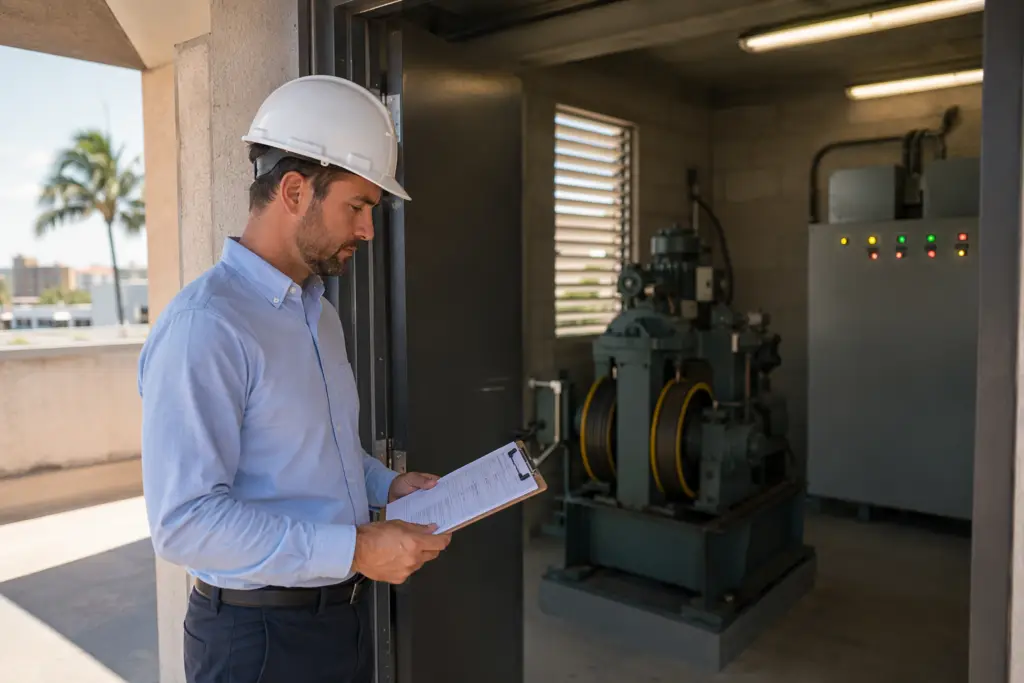
Hydraulic elevators (common in low-rise Florida buildings up to 6 stories) are susceptible to oil leaks, pump failure, and in-ground cylinder corrosion — a particular concern in Florida’s high water table environment. A simple seal replacement on a hydraulic unit can be done in a few hours. But replacing an in-ground cylinder — which may have corroded in Florida’s salt-laden soil — is an invasive multi-day project requiring excavation permits. Traction elevators (common in mid- and high-rise buildings) are more susceptible to rope wear, motor issues, and controller failures. MRL (machine-room-less) traction elevators introduce additional complexity because their compact drive systems can be harder to access for service. Knowing which system you have is step one in any realistic repair timeline conversation.
What Information Should I Have Ready When I Call for Emergency Elevator Repair?
Having your elevator’s unit number, certificate of operation number, the specific symptom, and whether passengers are trapped will allow a dispatcher to send the right technician with the right tools and parts, cutting response and repair time by up to 30%.
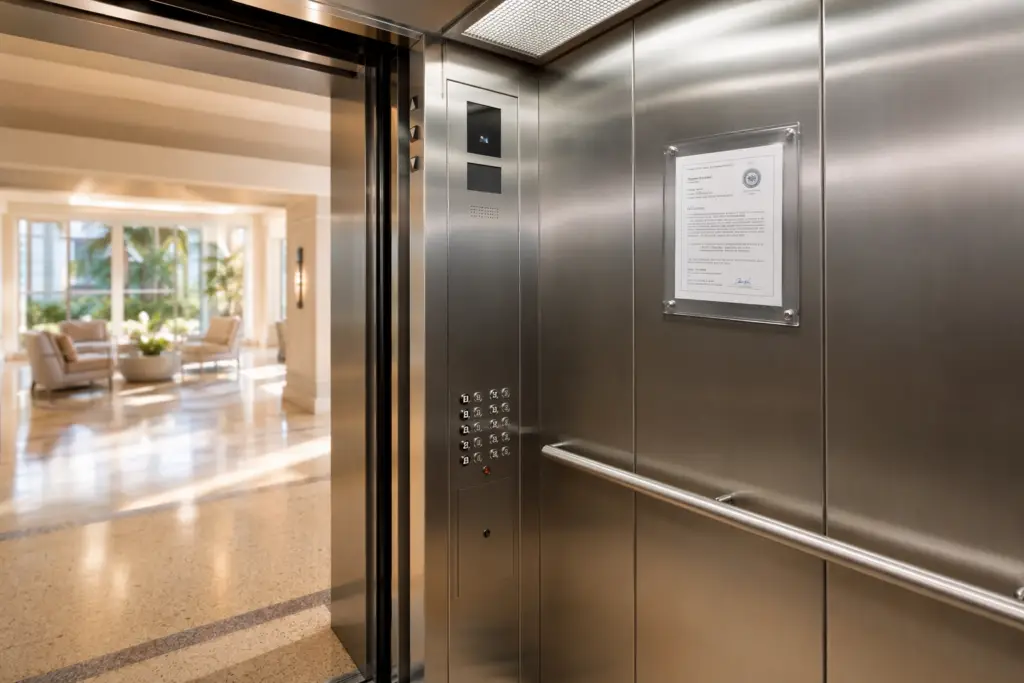
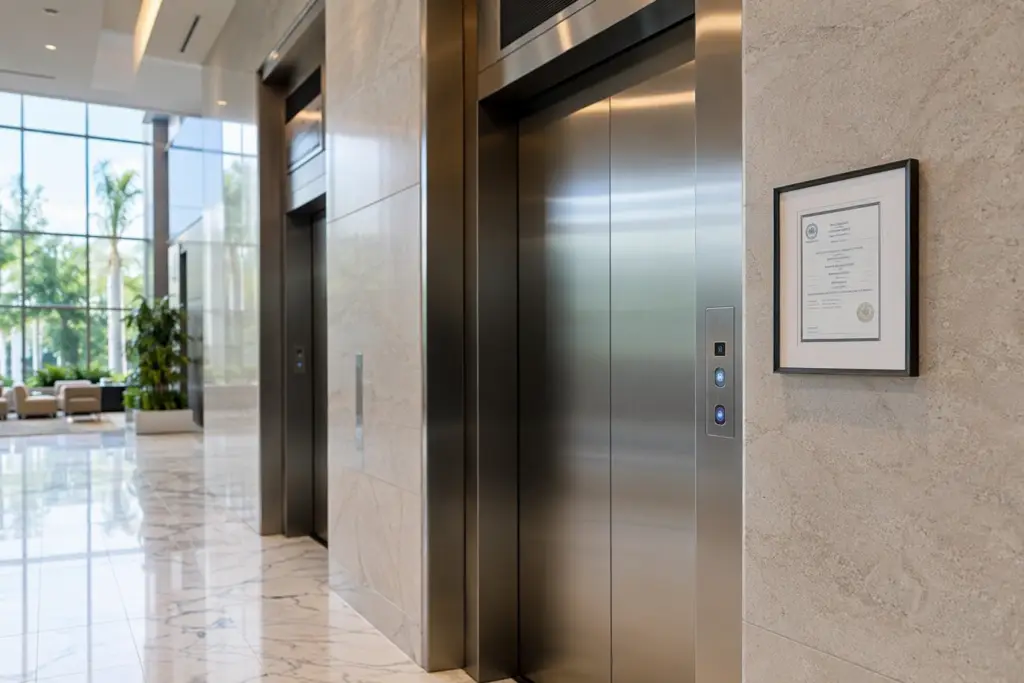
Here’s exactly what to have ready before you call: (1) Building address and floor the elevator serves; (2) Elevator unit ID number (found on the certificate of operation, typically posted inside the car or in the machine room); (3) Make and model of the elevator if known (Otis, Thyssenkrupp, Kone, Schindler, etc.); (4) Clear description of the symptom — is it stuck, making noise, not leveling, doors not closing?; (5) Whether any passengers are trapped; (6) When the last maintenance was performed. This information transforms a 20-minute diagnostic call into a direct dispatch with the right parts on the truck. Every minute saved in dispatch preparation translates directly into faster resolution time.
How Long Does Elevator Modernization Take Compared to Repair?
Full elevator modernization — replacing the controller, drive, and fixtures — typically takes 2 to 6 weeks depending on building type, while phased modernization can be staged to minimize continuous downtime to 3 to 5 business days per phase.
Modernization is the comprehensive upgrade of an elevator’s core systems, typically triggered when repair costs on aging equipment begin to approach or exceed 40% of replacement value annually. A full modernization on a typical Florida commercial elevator includes new controller, solid-state drive, new cab fixtures, updated ADA-compliant signage, and potentially new cab interior. The timeline is driven primarily by equipment lead times (controllers are often custom-built to order, with 4–8 week lead times in 2026) and inspection scheduling. Phased modernization — upgrading systems in stages while keeping the elevator partially operational — is a viable strategy for high-traffic buildings where prolonged outages are commercially unacceptable. Axxiom Elevator Florida offers phased modernization planning specifically designed to minimize tenant disruption in occupied commercial and residential buildings across its service markets.
How Do I Choose the Right Elevator Repair Company in Florida to Minimize Downtime?
Select a Florida-licensed elevator contractor with local technicians, a verifiable parts inventory, documented 24/7 emergency response, and a track record of ASME A17.1 and Florida Building Code compliance — not simply the lowest quoted hourly rate.
The lowest hourly rate is almost never the lowest total cost of ownership when it comes to elevator service. The real cost drivers are response time, first-visit fix rate, and parts availability. A company that charges 20% more per hour but shows up in 90 minutes instead of 4 hours and fixes the issue on the first visit is dramatically more cost-effective than a cheaper option that requires three visits and a two-week parts delay. Ask prospective vendors: What is your average first-visit resolution rate? Where is your nearest parts warehouse? Can I speak to three commercial references in my county? What is your Florida contractor license number? These questions separate professional operators from volume-driven service organizations. For building owners in Pompano Beach and Sarasota, Axxiom Elevator Florida offers locally based technicians, transparent response time guarantees, and dedicated account management for commercial and residential high-rise clients.
What Happens If an Elevator Is Left Out of Service for Too Long in Florida?
Under Florida law, a commercial elevator out of service beyond 30 days without active repair documentation on file with the state may trigger compliance violations, and buildings with ADA-required elevator access may face additional liability under federal accessibility law if no equivalent accessible route exists.
Extended outages carry multiple layers of risk for Florida building owners. From a state compliance perspective, your certificate of operation must remain valid — an elevator placed out of service must be properly locked out and tagged under Florida Chapter 399, with notification to the state elevator safety program. From an ADA perspective, if an elevator is the only accessible route to upper floors, its extended outage creates a potential ADA Title III violation under federal law, exposing commercial building owners to complaint filings and litigation. Document every step of your repair process, maintain communication with your state elevator inspector, and engage a licensed contractor quickly to establish a repair timeline on record.
How Much Does Emergency Elevator Repair Cost Compared to Scheduled Repair?
Emergency elevator repair typically costs 1.5 to 2.5 times more than the same repair performed during scheduled service hours, due to after-hours labor premiums, emergency parts sourcing costs, and priority dispatch fees.
In 2026, Florida elevator technician labor rates range from approximately $95 to $165 per hour during standard business hours. After-hours emergency rates commonly run $165 to $275 per hour, with minimum charges of 2 to 4 hours. Emergency parts sourcing — overnight freight, expedited fabrication — can add $200 to $800 or more to a parts cost that might be half that on a scheduled basis. This cost differential is precisely why a preventive maintenance agreement pays for itself rapidly. Buildings that invest $3,000 to $8,000 annually in a comprehensive maintenance contract routinely avoid $15,000 to $40,000 in emergency repair and accelerated component replacement costs over a 5-year horizon. The math is consistently compelling.
Are There Signs That My Elevator Needs Repair Before It Breaks Down Completely?
Yes — unusual noises, rough or jerky rides, inconsistent door operation, frequent nuisance trips, slow leveling, and vibration are all early warning signs that repair is needed and that ignoring them will result in a more expensive failure within weeks to months.
In my experience, building managers often tolerate “minor” symptoms for months before calling for service. Every one of those symptoms is a data point telling you something is wearing beyond acceptable tolerances. Rough rides indicate worn guide shoes or rail issues. Slow door operation suggests a door operator nearing failure. Frequent nuisance trips that reset on their own often mask intermittent safety circuit faults that will eventually become hard faults and strand passengers. The ASME A17.1 code requires that owners take elevators out of service when unsafe conditions are observed — tolerating known defects creates liability. Schedule a diagnostic inspection at the first sign of any symptom, and get a written report documenting findings and recommended action with timelines.
How Can I Minimize Elevator Downtime During Major Repairs or Modernization Projects?
Strategic scheduling — performing major repairs during low-traffic periods, pre-ordering parts before taking the elevator offline, and staging phased modernization to maintain partial service — can reduce tenant impact by 50% or more compared to unplanned outages.
The most effective downtime reduction strategy I recommend is what I call “plan before you take it down.” This means: work with your contractor to fully diagnose the repair scope before scheduling the outage; order all required parts and confirm delivery before pulling the elevator from service; schedule work during nights, weekends, or building low-traffic periods; communicate expected timelines to tenants in writing at least 48 hours in advance; and have a contingency plan in writing if the repair scope expands. For multi-elevator buildings in Sarasota high-rises or Pompano Beach condominiums, staggering repairs to always maintain at least one accessible elevator running is both a best practice and an ADA compliance strategy. Axxiom Elevator Florida’s project management process for major repairs includes pre-outage planning, parts procurement tracking, and tenant communication templates as standard components of every major repair engagement.
Ready to Get Your Elevator Running Faster?
Whether you’re managing a commercial building in Pompano Beach, a residential high-rise in Sarasota, or any property in between, the fastest path to a repaired elevator is a certified local technician who knows Florida code, carries the right parts, and shows up when they say they will.
Contact Axxiom Elevator Florida for a free elevator assessment. Our IUEC-certified technicians serve Pompano Beach, Sarasota, and surrounding Florida communities with 24/7 emergency dispatch, transparent pricing, and guaranteed response times backed by real service agreements.
Call us today:
Don’t wait for a complete breakdown — schedule your free elevator assessment now and get ahead of costly emergency repairs before they happen.