Who Should I Contact and How Often Should Elevators Be Inspected?
After 15+ years in the elevator industry — servicing residential lifts, commercial hydraulics, and high-rise traction systems across South and West Florida — the two questions I hear most from building owners and property managers are simple but critically important: Who do I call? and How often do I need to do this? This guide answers both in full, along with every related question a responsible building owner should understand before their next inspection date.
How Often Should Elevators Be Inspected According to Florida Law?
Florida law requires elevators to undergo a full safety inspection at least once every 12 months, with a separate periodic inspection cycle that may require more frequent checks depending on elevator type and installation year.
Under Florida Statute 399, all elevators, escalators, and related conveyances must be inspected annually by a licensed elevator inspector. The Florida Department of Business and Professional Regulation (DBPR) administers this requirement statewide, including in Pompano Beach and Sarasota. Failing to comply can result in operating permits being suspended and substantial fines.
Beyond annual statutory inspections, the ASME A17.1/CSA B44 Safety Code for Elevators and Escalators — the national standard adopted by most U.S. jurisdictions including Florida — categorizes inspections and tests into different cycles: Category 1 (annual), Category 3 (every 3 years for certain hydraulic tests), and Category 5 (every 5 years for full load safety tests). Your elevator type determines which categories apply.
Who Should I Contact to Schedule an Elevator Inspection?
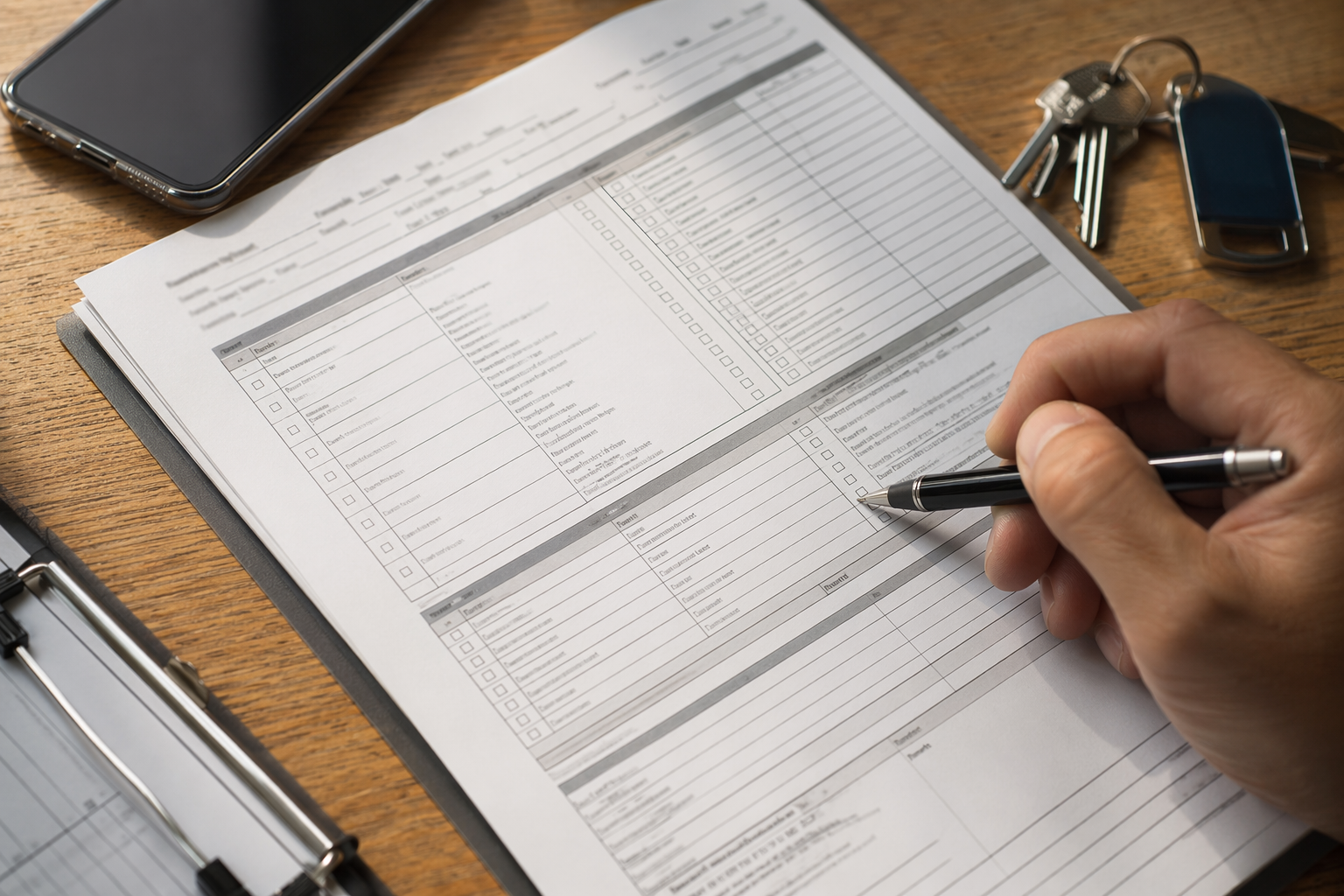
You should contact a Florida-licensed elevator inspection company or the DBPR’s Elevator Safety Program directly, though most building owners find it faster and more cost-effective to work through a certified elevator service contractor like Axxiom Elevator Florida who handles both maintenance and inspection coordination.
In Florida, elevator inspections must be performed by inspectors who hold a valid state license issued by the DBPR. You have two primary contact paths:
- Your elevator service contractor: Most certified elevator companies employ or partner with licensed inspectors and will coordinate inspection scheduling as part of a service agreement.
- The DBPR directly: You can request a state inspection through the DBPR Elevator Safety Program, though wait times for state inspectors can be significantly longer than using a private licensed inspector.
For building owners in Pompano Beach or Sarasota, the fastest path is working with a local certified contractor. Axxiom Elevator Florida manages inspection scheduling, maintains your compliance records, and coordinates directly with the DBPR on your behalf — eliminating the paperwork burden from property management teams.
What Is the DBPR Elevator Safety Program and Why Does It Matter?
The DBPR Elevator Safety Program is Florida’s governing body that licenses elevator contractors and inspectors, issues operating permits, and enforces compliance with state and federal elevator safety standards.
Every elevator operating legally in Florida must have a current operating permit issued by the DBPR. This permit is renewed annually following a successful inspection. If your elevator fails inspection or your permit lapses, the DBPR has authority to order the elevator taken out of service — an expensive disruption for any commercial or multifamily residential property.
As of 2026, Florida’s DBPR maintains a public database of elevator permits and inspection histories. Building owners and tenants can verify permit status online, which means your compliance record is publicly visible. This matters significantly for property valuations, insurance underwriting, and liability exposure.
What Types of Elevator Inspections Are Required Under ASME A17.1?
ASME A17.1 requires five inspection and test categories — labeled Category 1 through Category 5 — each with different frequency requirements, testing procedures, and documentation standards.
| Category | Test Type | Frequency | Applies To | Key Test Element |
|---|---|---|---|---|
| Category 1 | Annual No-Load Safety Test | Every 12 months | All elevators | Safety device function, car leveling, door operation |
| Category 3 | Hydraulic Oil Leakage / Pressure Test | Every 3 years | Hydraulic elevators | Underground cylinder integrity, pressure relief valve |
| Category 5 | Full Load Safety Test | Every 5 years | Traction elevators | Governor, safeties, buffers under rated load |
| Periodic | Routine Maintenance Inspection | Monthly to Quarterly | All conveyances | Lubrication, wear assessment, code compliance review |
| Acceptance | New Installation Inspection | Prior to first use | New installations | Full code compliance verification before certificate of occupancy |
How Often Should Elevator Maintenance Be Performed Between Inspections?
Elevators in high-traffic commercial buildings should receive professional maintenance every 4–6 weeks, while lower-use residential or light-commercial units typically require quarterly service visits to remain within ASME A17.1 maintenance guidelines.
Inspection and maintenance are not the same thing. An inspection verifies compliance at a point in time. Maintenance is the ongoing work — lubricating cables, adjusting door operators, testing emergency systems, checking hydraulic fluid levels — that keeps an elevator safe and compliant between inspection dates.
In my experience servicing elevators across Sarasota’s hospitality properties and Pompano Beach’s high-rise condominiums, buildings that skip routine maintenance almost always generate costly emergency call-outs and are far more likely to fail annual inspections. A full-service maintenance agreement with a certified contractor is almost always cheaper than reactive repair cycles.
What Happens If My Elevator Fails a State Inspection?
If your elevator fails a Florida DBPR inspection, the inspector will issue a written notice of violation, the elevator’s operating permit may be suspended, and the elevator must be taken out of service until all deficiencies are corrected and a re-inspection is passed.
Violations are categorized by severity. Minor items — worn hoist rope lubrication, outdated signage — may allow conditional continued operation with a corrective action deadline. Major violations — compromised safeties, malfunctioning door interlock systems, hydraulic leaks — result in immediate shutdown orders.
In 2026, Florida continues to enforce zero-tolerance standards for door interlock failures and governor/safety system defects. These are the two most common causes of elevator-related injuries nationally, according to the U.S. Bureau of Labor Statistics. Re-inspection fees and emergency repair costs make inspection failures significantly more expensive than proactive maintenance. Axxiom Elevator Florida offers pre-inspection compliance audits specifically designed to identify and resolve potential violations before your official inspection date.
Are There Different Inspection Requirements for Hydraulic vs. Traction Elevators?
Yes — hydraulic elevators require additional Category 3 underground cylinder pressure tests every 3 years that traction elevators do not, while traction elevators require more rigorous Category 5 full-load safety tests every 5 years that hydraulic systems are exempt from.
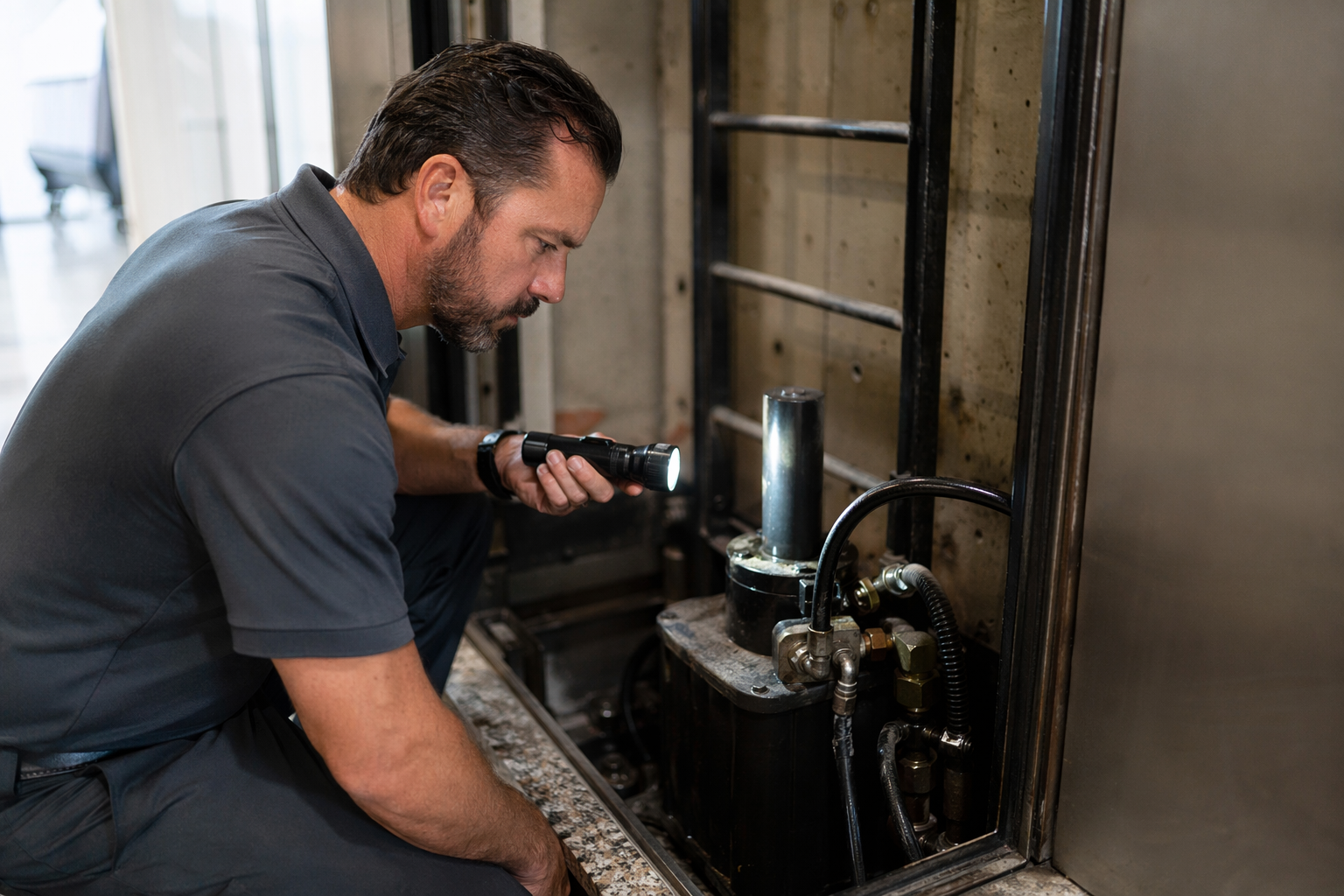
Hydraulic elevators — common in Florida’s 2–5 story commercial buildings and older residential complexes — have an underground cylinder that must be pressure-tested for leaks under ASME A17.1 Rule 8.6. Given Florida’s high water table and soil conditions, underground cylinder integrity is particularly critical in markets like Pompano Beach and Sarasota where corrosive soil conditions can accelerate cylinder degradation.
Traction elevators, standard in mid-rise and high-rise applications, require a complete Category 5 test every 5 years in which the elevator is loaded to 125% of rated capacity to verify governor, safeties, and buffer performance. This test must be witnesed by a licensed inspector and cannot be self-certified by the building owner.
What Does ADA Require Regarding Elevator Accessibility and Inspections?
The ADA Standards for Accessible Design require that elevators in public accommodations and commercial facilities meet specific dimensional, operational, and communication standards, and while ADA compliance is not part of the annual safety inspection, non-compliant elevators expose building owners to federal civil rights liability.
Key ADA elevator requirements in 2026 include:
- Minimum car dimensions: 80 inches deep × 68 inches wide for most configurations
- Door clear opening width: minimum 36 inches
- Hall call buttons: raised, centered at 42 inches above floor
- Braille and raised character floor designations on jamb panels
- Audible and visible signals at each landing
- Emergency two-way communication system
ADA compliance reviews should be part of any comprehensive elevator assessment. Many Florida buildings — particularly older properties in Sarasota’s downtown corridor and Pompano Beach’s beachfront commercial zones — have elevators that predate current ADA standards and have never been brought into compliance through modernization.
How Much Does an Elevator Inspection Cost in Florida?
Florida elevator inspection costs typically range from $150 to $600 per inspection depending on elevator type, test category, and whether you hire a private licensed inspector or use the DBPR’s state inspection service.
| Inspection Type | Estimated Cost Range (2026) | Who Performs It | Notes |
|---|---|---|---|
| Annual Category 1 (state) | $150–$300 | DBPR state inspector | Long scheduling delays possible |
| Annual Category 1 (private) | $200–$450 | Licensed private inspector | Faster scheduling, direct coordination |
| Category 3 (hydraulic pressure test) | $300–$600 | Certified elevator contractor + inspector | Required every 3 years |
| Category 5 (full load test) | $500–$1,200 | Certified elevator contractor + inspector | Required every 5 years |
| Pre-inspection compliance audit | $100–$300 | Elevator service contractor | Highly recommended before formal inspection |
| Re-inspection (after failed inspection) | $150–$400 | Inspector | Plus repair costs — prevention is cheaper |
These costs are separate from routine maintenance contract fees, which typically range from $1,800 to $6,000 per year per elevator depending on elevator type, age, and service frequency.
What Qualifications Should I Look for in an Elevator Inspector or Service Company?
In Florida, any elevator inspector performing official compliance inspections must hold a valid DBPR Elevator Inspector License, and the contracting company must hold a Florida Elevator Contractor License — verify both before hiring.
Beyond state licensing, look for the following credentials and indicators of quality:
- IUEC membership: Technicians trained through the International Union of Elevator Constructors follow the most rigorous technical standards in the industry
- NAEC certification: The National Association of Elevator Contractors certifies member companies on safety and quality standards
- Insurance and bonding: Minimum $1 million general liability; workers’ compensation coverage is mandatory in Florida
- Local market experience: Inspectors and technicians familiar with Florida’s climate conditions, soil types, and building stock will identify region-specific risks that out-of-state contractors miss
- Documented maintenance records: A qualified contractor maintains a detailed logbook for every elevator they service — required under ASME A17.1 Rule 8.6.4
What Is the Difference Between an Inspection and a Maintenance Contract?
An inspection is a formal compliance verification performed by a licensed inspector that results in a pass/fail determination and updated operating permit, while a maintenance contract is an ongoing service agreement with a certified elevator company that performs regular mechanical upkeep to keep the elevator safe and compliant between inspections.
Think of it this way: the inspection is like your car’s annual emissions test. Maintenance is like your regular oil changes, tire rotations, and brake inspections. You need both. One verifies compliance; the other ensures you reach compliance — and stay there.
A full-service maintenance agreement with Axxiom Elevator Florida covers scheduled maintenance visits, 24/7 emergency response, parts and labor for covered repairs, and inspection coordination — providing building owners in Pompano Beach and Sarasota with a single point of contact for complete elevator compliance management.
What Should I Expect During an Annual Elevator Inspection?
During an annual Category 1 inspection, a licensed inspector will test all safety devices, door operations, car leveling, emergency lighting, communication systems, and machine room conditions — the process typically takes 1–3 hours per elevator depending on type and complexity.
Here is a checklist of what inspectors evaluate during a standard annual inspection:
- Door interlocks and re-opening devices
- Car and counterweight safeties (engagement test)
- Governor rope and speed control system
- Buffer condition and clearances
- Machine room temperature, lighting, and fire protection
- Hoistway clearances and guarding
- Emergency lighting and battery backup systems
- Two-way communication (phone or intercom test)
- Car leveling accuracy (within ±½ inch per ASME A17.1)
- Capacity and load rating signage
- Certificate of inspection posting compliance
How Do I Know If My Elevator Is Overdue for Inspection?
The operating permit posted inside your elevator cab includes the expiration date — if that date has passed or the permit is missing, your elevator is overdue for inspection and potentially operating illegally in Florida.
Florida law requires the current operating permit to be posted in a visible location inside the elevator cab. If you manage a building and cannot locate this permit, contact the DBPR or a certified elevator contractor immediately. Operating an elevator without a current permit in Florida carries fines starting at $1,000 per day per unit.
You can also verify permit status through the DBPR’s online public records portal, which is searchable by building address. As of 2026, the DBPR has increased enforcement actions in Broward and Sarasota counties, making proactive compliance more important than ever for local property owners.
Do Residential Elevators Require the Same Inspections as Commercial Elevators?
Private residence elevators are generally exempt from Florida’s mandatory annual DBPR inspection requirement, but any elevator in a multifamily residential building with three or more units is classified as a commercial conveyance and subject to full inspection requirements.
Single-family residential elevators — increasingly common in South Florida’s luxury home market — fall under ASME A17.1 Part 5 (Private Residence Elevators) and are not regulated by Florida Statute 399. However, they must still meet the code under which they were installed, and most homeowners’ insurance policies require proof of periodic professional service.
Condominium buildings, apartment complexes, and assisted living facilities — regardless of the number of stories — are subject to the full commercial inspection regime. This is a common point of confusion for condo association boards and HOA property managers in Sarasota and Pompano Beach, where many small residential buildings assume they are exempt when they are not.
What Are the Most Common Elevator Code Violations Found During Inspections in Florida?
The five most common violations found during Florida elevator inspections in 2025–2026 are door interlock failures, expired or missing operating permits, inadequate machine room conditions, worn or improperly lubricated hoist ropes, and non-compliant emergency communication systems.
In my 15+ years of field experience, door interlock deficiencies account for more than 30% of all Florida inspection violations. This is the component that prevents elevator doors from opening between floors — a critical life-safety system. Florida’s humid coastal climate accelerates wear on door operator components, making regular maintenance and lubrication especially important in Pompano Beach and Sarasota’s salt-air environments.
Machine room violations — inadequate lighting below 19 foot-candles, improper storage of materials in machine rooms, missing fire extinguishers — are easy to prevent with routine facility management attention. They are also among the most embarrassing violations for professional property managers because they reflect basic housekeeping failures, not complex mechanical issues.
How Long Does It Take to Get an Elevator Inspected After Requesting Service?
Using a private licensed elevator inspection contractor, most Florida property owners can schedule an inspection within 5–15 business days; scheduling through the DBPR state inspection program directly can take 4–12 weeks due to inspector availability.
This scheduling gap is one of the most practical reasons to maintain a relationship with a certified elevator service company rather than relying solely on state inspectors. When your permit expires or you receive an inspection notice, having an established contractor relationship means you can schedule quickly and avoid the risk of operating with a lapsed permit.
Axxiom Elevator Florida maintains inspection scheduling priority for clients on maintenance agreements in both the Pompano Beach and Sarasota service areas, typically achieving inspection appointments within 7–10 business days for standard annual inspections.
What Documentation Should I Keep After an Elevator Inspection?
Florida law requires building owners to maintain all inspection reports, test certificates, and maintenance logs for a minimum of 5 years and to make them available to DBPR inspectors upon request.
Best practice documentation for Florida elevator compliance includes:
- Current operating permit (posted in cab, copy maintained by owner)
- Most recent inspection report with inspector’s license number
- Category 3 and Category 5 test certificates with technician certification
- Maintenance logbook (on-site, updated after every service visit)
- Repair work orders and parts replacement records
- Modernization permits if any upgrades have been performed
- Contractor’s insurance certificates and license copies
Digital recordkeeping is increasingly accepted by the DBPR and strongly recommended for multi-property portfolios. A good elevator service partner will provide digital copies of all inspection and service records after every visit.
What Is Elevator Modernization and When Does It Trigger a New Inspection?
Elevator modernization — replacing major components like the controller, motor, door operator, or cab interior — requires a permit from the DBPR and triggers a full acceptance inspection before the modernized elevator can return to service.
In Florida, any alteration to an elevator beyond routine maintenance must be permitted. Unpermitted modifications discovered during inspections are treated as major violations. Common modernizations that trigger new inspections include:
- Control system upgrades (especially microprocessor controller replacements)
- Door operator replacements
- Machine replacement or motor upgrades
- Car enclosure renovations that modify structural elements
- Safety system upgrades triggered by new code editions
Florida adopted the 2019 edition of ASME A17.1 as its reference standard, and buildings undergoing significant renovation work may trigger code compliance upgrades as a condition of modernization permits. An experienced contractor like Axxiom Elevator Florida will identify these triggers during project scoping to avoid costly surprises during the acceptance inspection process.
Can Elevator Inspections Be Combined With Other Building System Inspections?
No — Florida elevator inspections must be performed by a DBPR-licensed elevator inspector and cannot be conducted by a general building inspector, fire marshal, or other licensed professional unless that individual also holds a valid DBPR elevator inspector license.
This is a frequent misconception among property managers who are accustomed to combining fire suppression, HVAC, and electrical inspections into coordinated compliance review events. Elevators are a specialty regulated conveyance with dedicated licensing requirements. However, you can absolutely coordinate the scheduling of your elevator inspection alongside other building inspections — just ensure the elevator portion is handled by the appropriate licensed professional.
Some property management companies in Sarasota and Pompano Beach have found it efficient to align their elevator inspection cycle with their annual fire protection system inspection, creating a single-day compliance sweep that minimizes building access disruptions for tenants.
What Should I Do If a Tenant or Visitor Reports an Elevator Problem?
If a tenant or visitor reports an elevator malfunction, take the elevator out of service immediately, post an out-of-service notice, contact a licensed elevator service company for emergency assessment, and document the report and your response actions in writing.
Do not pressure your maintenance team to attempt elevator repairs without proper certification. Florida law restricts elevator repair work to licensed elevator contractors. Unauthorized repairs that result in injury create significant liability exposure for building owners and may invalidate your insurance coverage.
For building owners with an active service agreement, a single call to your elevator contractor — Axxiom Elevator Florida provides 24/7 emergency response throughout our Pompano Beach and Sarasota service areas — triggers an immediate dispatch response. Documenting your response time and actions protects you legally and demonstrates the duty of care required under Florida property law.
Ready to Get Your Elevator Inspected and Compliant?
Whether you manage a Pompano Beach high-rise, a Sarasota commercial property, or a multifamily residential building anywhere in between, elevator compliance is not something to put off. Lapsed permits, missed inspection cycles, and deferred maintenance create legal exposure, insurance risk, and — most importantly — danger for the people who use your building every day.
As a certified elevator technician with more than 15 years of experience serving Florida building owners, my advice is straightforward: establish a relationship with a qualified local elevator service provider before your next inspection deadline, not after.
Contact Axxiom Elevator Florida for a free elevator assessment. Our licensed technicians will evaluate your current compliance status, identify any outstanding inspection requirements under ASME A17.1 and Florida Statute 399, and provide a clear, no-obligation service proposal tailored to your property’s specific needs.
📞 Call us today:
Serving Pompano Beach, Sarasota, and surrounding South and West Florida communities. Licensed, insured, and IUEC-certified. Operating permit coordination, maintenance agreements, and emergency service available 24/7.