For hospital administrators, facilities directors, and compliance officers, elevator systems are not a background infrastructure concern — they are a patient safety and regulatory obligation. In 2026, healthcare facilities across Florida face heightened scrutiny from state inspectors, accreditation bodies, and federal accessibility regulators. Outdated elevator systems can trigger citations, delay The Joint Commission surveys, and expose facilities to liability. This guide breaks down every major upgrade category, compliance requirement, and decision factor healthcare facilities need to evaluate now.
Why Are Elevator Upgrades Especially Critical for Hospitals and Healthcare Facilities?
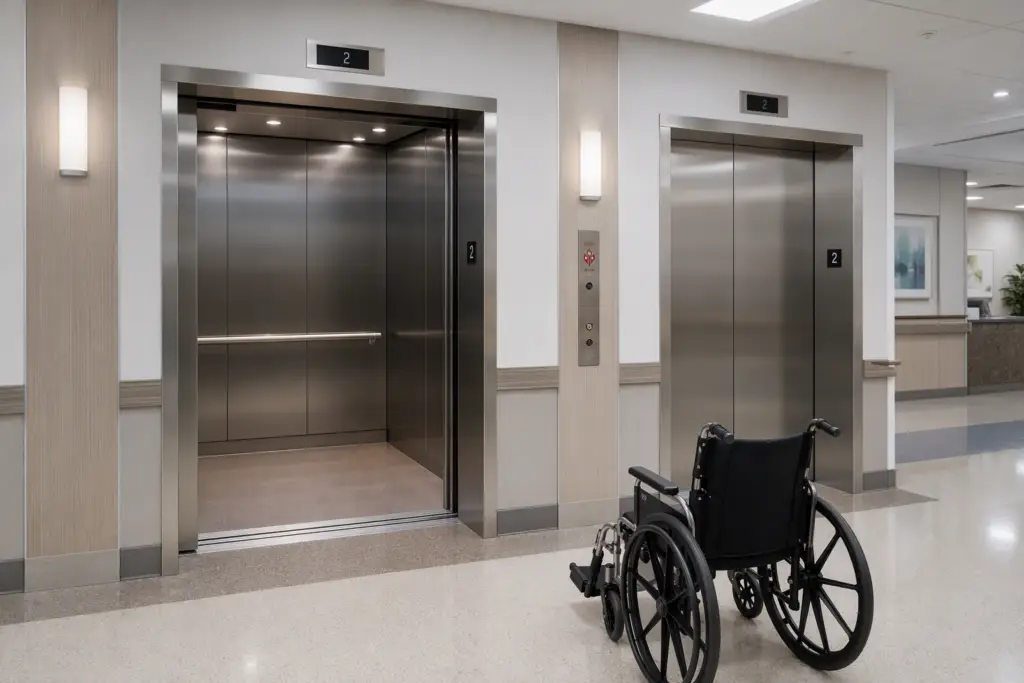
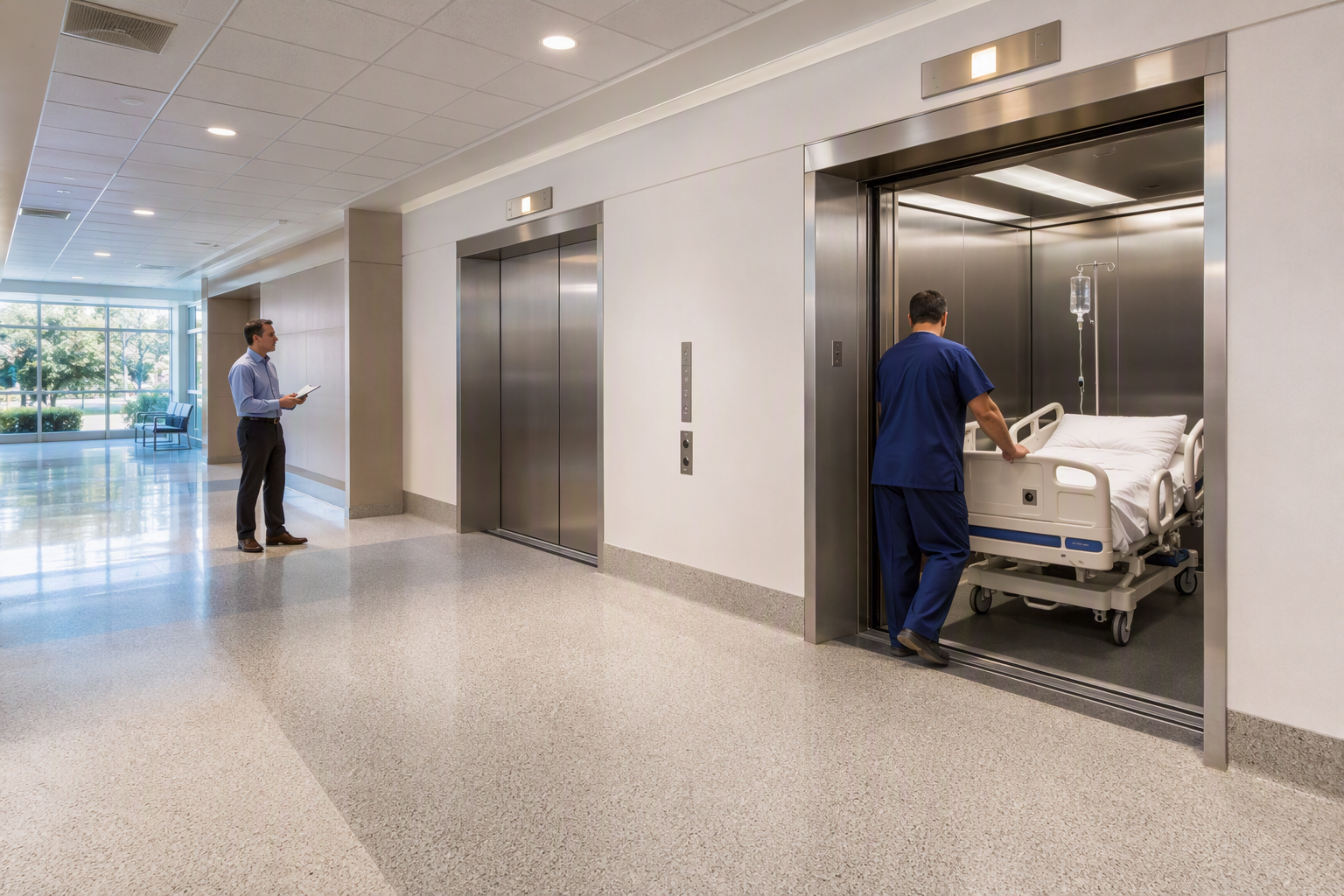
Hospitals operate elevators under conditions far more demanding than commercial office buildings. Elevators transport patients on gurneys and hospital beds, medical staff responding to emergencies, life-critical equipment, and visitors. A single elevator failure or non-compliant door operation in a hospital is not a convenience problem — it can directly affect patient outcomes.
Healthcare facilities are subject to overlapping regulatory frameworks: state elevator inspection codes (Florida adopts ASME A17.1 as its baseline standard), federal ADA accessibility requirements, OSHA workplace safety obligations for maintenance personnel, and standards enforced by accreditation bodies such as The Joint Commission and DNV Healthcare. Non-compliance with any one of these frameworks can jeopardize a hospital’s operating license, Medicare and Medicaid reimbursements, and accreditation status.
What Are the Core ASME A17.1 Requirements Affecting Hospitals in 2026?
The ASME A17.1 Safety Code for Elevators and Escalators is the foundational technical standard governing elevator design, installation, inspection, testing, and maintenance in most U.S. jurisdictions, including Florida. Key provisions with direct healthcare relevance include:
- Phase I and Phase II Firefighters’ Emergency Operation: All hospital elevators must have fully functional fire service recall and in-car operation modes. Systems that predate modern fire service requirements must be retrofitted.
- Door reopening devices: ASME A17.1 requires door protective devices capable of detecting obstructions without requiring contact. Outdated door edges that rely solely on mechanical contact are no longer compliant in many inspection cycles.
- Car leveling and releveling: Hospital elevators transporting beds and wheelchairs require precise leveling accuracy at landings to prevent tripping hazards and equipment tipping.
- Emergency lighting and communication: In-cab emergency lighting and a means of two-way communication are mandatory under ASME A17.1. Facilities must verify these systems are tested at required intervals.
- Periodic inspection and testing cycles: ASME A17.1 specifies defined intervals for routine inspections, Category 1 tests (annual), and Category 5 tests (five-year full load and safety tests). Florida state inspectors enforce these cycles.
What ADA Compliance Upgrades Do Hospitals Need for Elevators?
Under the Americans with Disabilities Act, elevators in multi-story healthcare facilities must meet specific accessibility requirements covering:
- Call button height and placement: Controls must be located within reach ranges defined in ADA Standards for Accessible Design.
- Cab dimensions: Minimum interior dimensions must accommodate wheelchairs and mobility devices. Many older hospital elevator cabs fall short when original equipment was installed before current ADA standards.
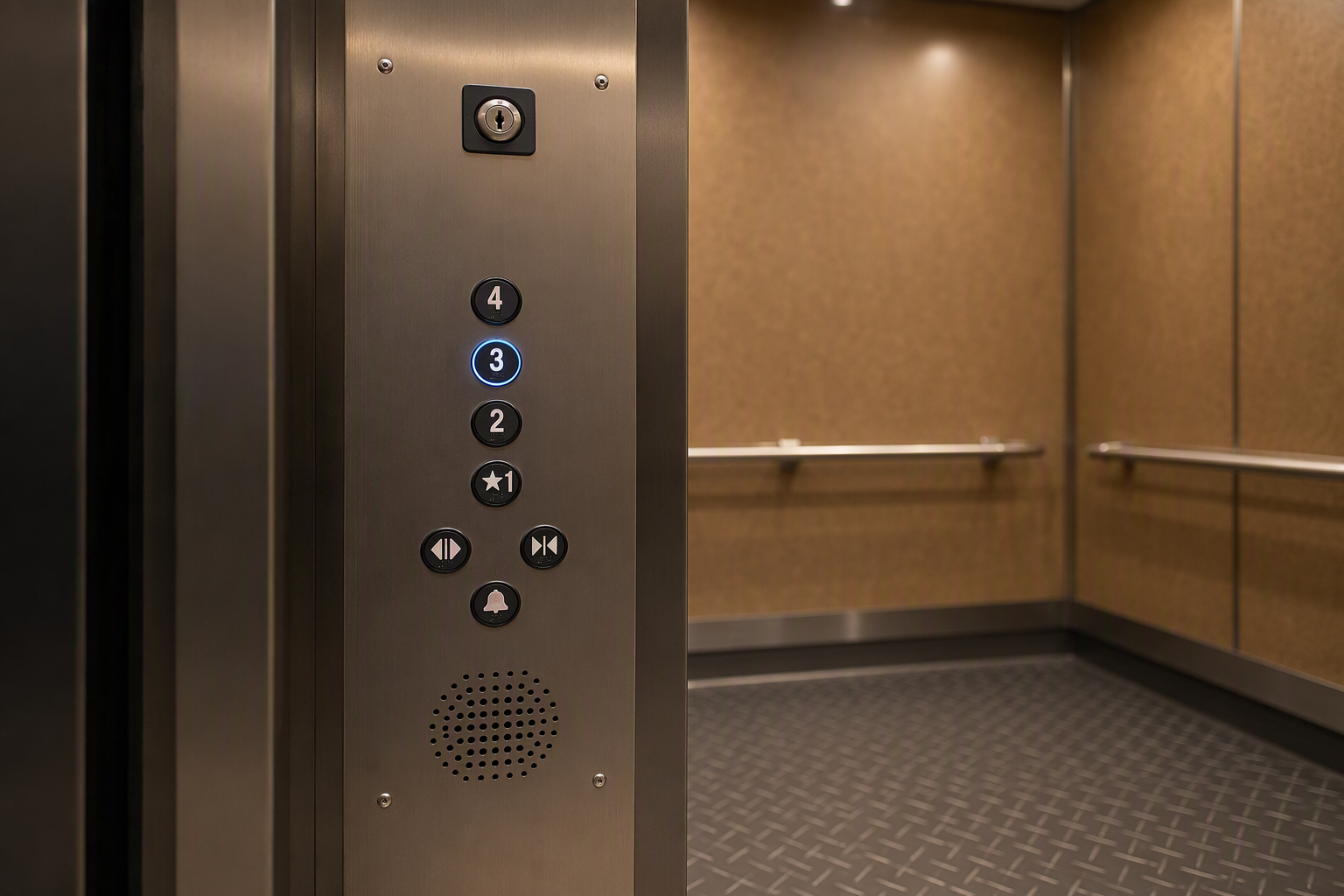
- Audible and visual signals: Hall lanterns, audible signals at floors, and illuminated floor indicators inside the cab are required for users with visual or auditory impairments.
- Braille and raised characters: All control panels must include Braille and raised character designations on buttons and floor indicators.
- Door timing: Doors must remain open long enough for individuals using mobility aids to enter and exit safely, with the option for extended door open times.
Hospitals that have not conducted a formal ADA elevator audit within recent years risk findings during facility surveys and potential complaints filed with the U.S. Department of Justice.
Which Elevator Upgrades Are Most Commonly Required in Hospital Settings?
Upgrade Comparison Table: Healthcare Elevator Modernization Options
| Upgrade Type | Compliance Driver | Typical Timeline | Key Pros | Key Cons | Priority Level |
|---|---|---|---|---|---|
| Fire Service Recall Modernization | ASME A17.1, State Fire Code | Days to weeks per unit | Mandatory compliance; life-safety critical; prevents inspection failures | Elevator downtime during retrofit; may require full controller replacement | Critical / Immediate |
| Door Safety Device Upgrade (Light Curtain / 3D Sensors) | ASME A17.1 | 1–3 days per unit | Eliminates door contact injuries; protects patients and equipment; low downtime | Ongoing maintenance requirement; sensor calibration needed | High |
| Emergency Communication System Upgrade | ASME A17.1, ADA | 1–2 days per unit | Code-compliant; improves patient and staff safety; often paired with monitoring | Requires reliable telecom infrastructure; potential ongoing monitoring fees | High |
| ADA Control Panel Modernization | ADA | 1–3 days per unit | Eliminates ADA exposure; improves accessibility for patients and visitors | May require full cab interior work if panels are not modular | High |
| Drive System Modernization (Hydraulic to MRL or Traction) | ASME A17.1, Environmental regulations | Weeks to months | Eliminates hydraulic fluid leak risk; energy efficiency gains; longer service life | Significant capital investment; extended downtime; structural assessment may be needed | Medium-High (for aging hydraulic systems) |
| Controller Replacement (Solid-State / Microprocessor) | ASME A17.1 | 1–2 weeks per unit | Enables modern safety features; improves reliability; parts availability for legacy systems often limited | High upfront cost; training required for maintenance staff | Medium-High |
| Cab Modernization (Interior, Lighting, Flooring) | ADA, Infection Control Standards | Days per unit | Supports infection control; ADA-compliant materials; improves patient experience | Primarily aesthetic/functional; does not address mechanical compliance alone | Medium |
| Seismic Safety Upgrades | Florida Building Code, ASME A17.1 | Variable by scope | Required in applicable zones; protects structural integrity during seismic events | Scope varies greatly by building age and elevator type | Jurisdiction-dependent |
What Is the Step-by-Step Process for Achieving Hospital Elevator Compliance?
Healthcare facilities should follow a structured compliance protocol to avoid missed deadlines, inspection failures, and disruption to clinical operations.
- Conduct a Full Elevator Inventory Audit: Document every elevator unit, its installation year, last major modernization, current controller type, drive system, and inspection history. Include freight and service elevators.
- Pull Current Inspection Records: Obtain the most recent state inspection reports for each unit. Identify any outstanding violations, conditional notices, or deferred items.
- Commission an Independent Elevator Assessment: Engage a certified, independent elevator service provider — not the OEM or the current maintenance contractor — to assess compliance gaps against current ASME A17.1 and ADA standards. Independence ensures an unbiased scope of work.
- Prioritize Upgrades by Risk and Regulatory Deadline: Life-safety deficiencies (fire service, door safety, emergency communications) take first priority. ADA and efficiency upgrades can be phased if budget requires.
- Develop a Phased Modernization Plan: Work with the service provider to schedule upgrades in a sequence that minimizes clinical disruption, particularly for surgical floors, ICUs, and emergency departments.
- Obtain Permits and Schedule Inspections: All significant elevator work in Florida requires permits and post-completion inspections by a state-licensed elevator inspector. Coordinate timelines accordingly.
- Update Maintenance Contracts: After modernization, ensure preventive maintenance agreements reflect updated equipment, inspection intervals per ASME A17.1, and any new testing requirements.
- Document Everything for Accreditation Surveys: Maintain organized records of all upgrades, permits, inspection certificates, and maintenance logs. The Joint Commission and other accreditors will request this documentation.
How Does Hospital Elevator Compliance Affect Joint Commission and DNV Accreditation?
Accreditation bodies evaluate hospital elevator systems as part of the Environment of Care (EC) standards. Inspectors look for evidence of preventive maintenance programs, documented inspection records, corrective action on deficiencies, and compliance with applicable life-safety codes. Elevator systems found to be out of compliance with fire service or emergency operation requirements can generate Requirement for Improvement (RFI) findings that must be resolved before accreditation is confirmed or renewed. Facilities with repeat elevator deficiencies face escalating scrutiny.
What OSHA Obligations Apply to Hospital Elevator Maintenance Workers?
Under OSHA regulations, employers — including hospitals and their contracted elevator service providers — must ensure that maintenance personnel working in elevator pits, on top of cars, and in machine rooms are protected from recognized hazards. Relevant OSHA standards governing lockout/tagout procedures, confined space entry protocols, and fall protection apply to elevator maintenance environments. Hospitals should verify that any contracted elevator service company maintains current OSHA compliance programs and provides documented safety training for technicians working on-site.
Independent vs. OEM Elevator Service: Which Is Better for Hospitals?
Service Provider Comparison Table
| Factor | OEM (Original Equipment Manufacturer) Service | Independent Certified Service Provider |
|---|---|---|
| Objectivity of Assessment | Potential conflict of interest toward proprietary parts and systems | Unbiased; recommends best-fit solution regardless of brand |
| Parts Sourcing | Proprietary parts; may be costly or discontinued for older units | Multi-brand parts sourcing; often more cost-effective for modernization |
| Contract Flexibility | Often long-term contracts with restrictive terms | More flexible contract structures; easier to benchmark against competitors |
| Code Compliance Expertise | Strong on their own equipment; variable on legacy and mixed fleets | Cross-brand compliance expertise; familiar with full Florida inspection landscape |
| Accreditation Documentation Support | Variable; may not align with hospital accreditation formats | Can tailor documentation to Joint Commission and DNV requirements |
| Local Florida Presence | Dependent on regional office coverage | Local teams with direct Florida inspection authority relationships |
Axxiom Elevator Florida is an independent, certified elevator service provider serving healthcare facilities throughout Florida. As an independent company, Axxiom Elevator Florida is not tied to a single manufacturer, allowing their team to assess each facility’s elevator fleet objectively and recommend upgrades that meet code requirements and the facility’s operational needs — rather than a manufacturer’s sales priorities.
What Are the Risks of Deferring Hospital Elevator Upgrades?
Facilities that delay required elevator upgrades face compounding risks across multiple domains:
- Regulatory penalties: Florida state elevator inspectors can issue out-of-service orders for units with uncorrected life-safety violations. An elevator placed out of service in a hospital creates immediate operational crisis.
- Accreditation jeopardy: Repeated or unresolved elevator deficiencies in EC surveys can delay or conditionally limit accreditation renewal.
- Patient and staff liability exposure: Door injuries, entrapments, and fall hazards at unlevel landings generate serious liability claims in healthcare settings, where duty-of-care standards are particularly high.
- Escalating modernization costs: Parts for legacy elevator systems become increasingly difficult to source and expensive as equipment ages. Early modernization typically costs less than emergency replacement after a failure.
- Reimbursement risk: CMS (Centers for Medicare and Medicaid Services) facility surveys that identify life-safety code deficiencies can trigger conditions that affect Medicare and Medicaid reimbursement status.
How Should Hospitals Budget for Elevator Compliance Upgrades?
Budget planning for elevator compliance should account for the scope of the existing fleet, the age and condition of each unit, and the specific deficiencies identified in a professional assessment. Hospitals should consider:
- Segmenting the elevator fleet by risk priority (life-safety first, accessibility second, efficiency third) to align capital spending with compliance urgency.
- Exploring financing or lease structures for major modernization projects that reduce upfront capital requirements.
- Building elevator compliance into multi-year facility capital plans rather than treating upgrades as one-time reactive expenses.
- Factoring in the cost of downtime — clinical operations, patient routing, and staff productivity — as a real cost of unplanned failures versus planned modernization windows.
- Requesting itemized, written proposals from independent service providers so that individual upgrade components can be phased if full scope cannot be funded in a single fiscal year.
What Documentation Should Florida Hospitals Maintain for Elevator Compliance?
Florida elevator regulations, enforced under the Florida Department of Business and Professional Regulation (DBPR), require that facilities maintain current certificates of operation for each elevator unit, visible in or adjacent to the cab. Beyond the certificate, hospitals subject to accreditation should maintain:
- Complete inspection and test records for all Category 1 and Category 5 tests per ASME A17.1
- Corrective maintenance records for all repairs and parts replacements
- Preventive maintenance logs including dates, technician records, and tasks performed
- Permit documentation for all modernization and alteration work
- ADA compliance assessment records if accessibility modifications have been made
- Emergency communication system test logs
- Fire service operation test records
Are There Specific Requirements for Bariatric or Oversized Hospital Elevators?
Many modern hospitals operate dedicated bariatric elevators or extra-capacity units to accommodate patients and equipment that exceed standard cab dimensions and weight ratings. These units carry all the same compliance obligations as standard hospital elevators under ASME A17.1 and ADA standards, with additional engineering considerations around load capacity ratings, structural support, and door width. If a facility has modified an existing elevator for bariatric use without proper engineering review and permitting, that modification may itself constitute a code violation that must be corrected.
How Can Hospitals Minimize Clinical Disruption During Elevator Modernization?
Planned modernization, while disruptive in the short term, is far less disruptive than emergency repairs or an unplanned out-of-service order. Facilities and their service providers can minimize clinical impact by:
- Scheduling major modernization work during low-census periods or overnight shifts when clinically feasible.
- Developing patient and equipment routing plans in advance for the duration of any elevator shutdown.
- Coordinating with nursing, transport, and facilities teams so that critical clinical workflows — surgical, ICU, emergency transport — are protected first.
- Phasing multi-unit modernization so that at least one compliant elevator remains in service on each critical bank at all times.
- Communicating timelines and contingency plans clearly to department managers, patients, and visitors.
Why Choose Axxiom Elevator Florida for Hospital Elevator Compliance?
Axxiom Elevator Florida is a certified, independent elevator service company serving healthcare and commercial facilities throughout Florida. As an independent provider, Axxiom Elevator Florida offers unbiased compliance assessments, multi-brand modernization capabilities, and documentation support designed for the specific demands of hospital accreditation and Florida state inspection requirements. Healthcare facilities benefit from working with an independent company that can service mixed elevator fleets, source parts across manufacturers, and develop compliance plans tailored to each facility’s patient care priorities — without the conflicts of interest inherent in OEM service arrangements.
Is Your Hospital’s Elevator System Ready for 2026 Compliance?
Don’t wait for an inspection failure, accreditation finding, or equipment breakdown to discover compliance gaps. Axxiom Elevator Florida provides comprehensive, independent elevator assessments for healthcare facilities across Florida — identifying every deficiency, prioritizing upgrades by risk, and developing a phased compliance plan that protects patients, staff, and your facility’s regulatory standing.
Contact Axxiom Elevator Florida for a free elevator assessment:
Need elevator service you can rely on? Axxiom Elevator Florida is ready to help.