Florida schools and universities must meet a specific set of elevator maintenance, inspection, and safety standards to remain legally operational and protect students, faculty, staff, and visitors. This guide breaks down every requirement, compares compliance approaches, and answers the most common questions educational facility managers ask.
—
What Are the Core Elevator Compliance Requirements for Florida Educational Facilities?
Florida regulates elevators under Chapter 399, Florida Statutes, with oversight from the Florida Department of Business and Professional Regulation (DBPR) — Division of Hotels and Restaurants, Elevator Safety Section. All elevators in public and private educational facilities — from K-12 schools to large university campuses — fall under this regulatory framework.
The key pillars of compliance are:
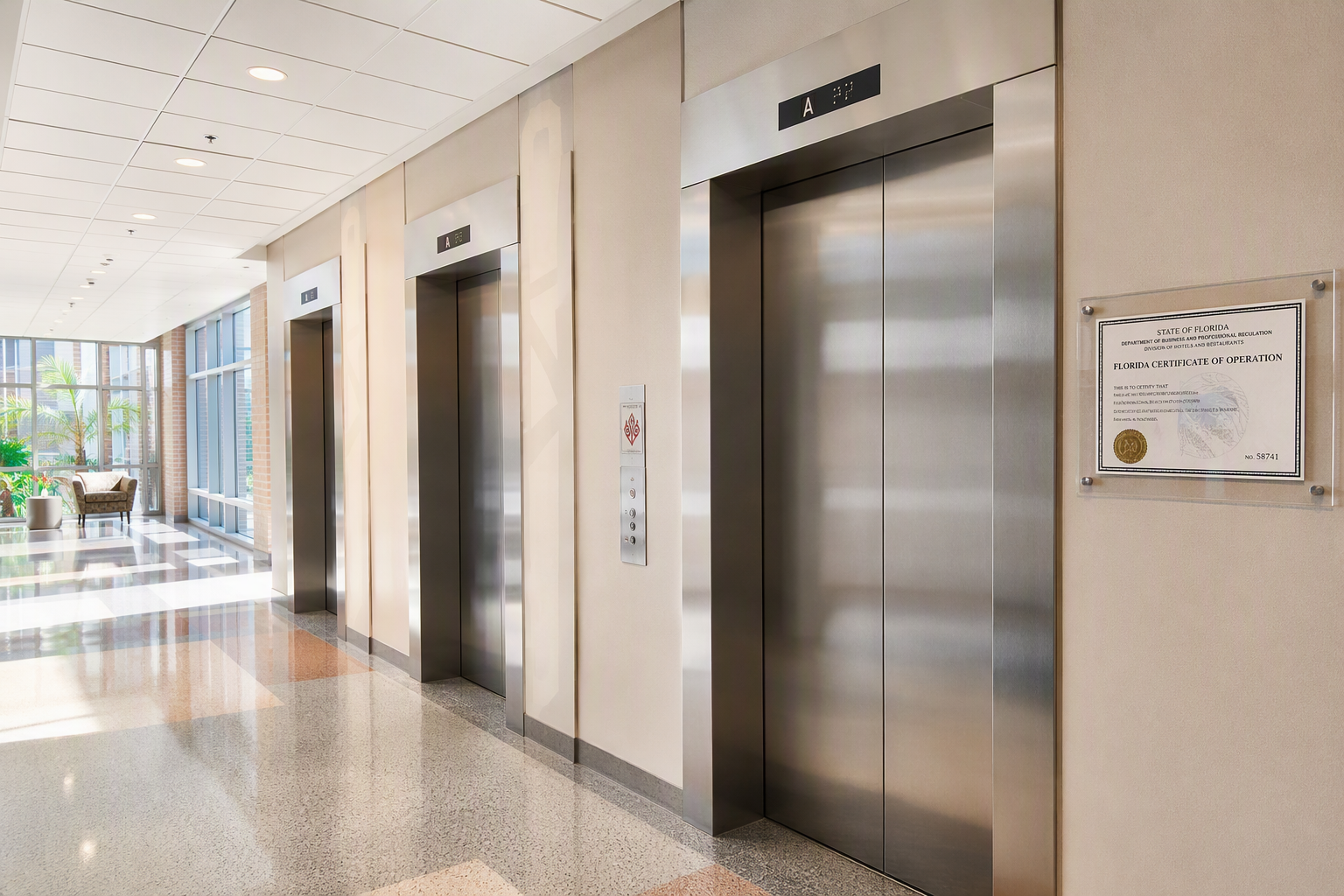
- Current Certificate of Operation: Every elevator must have a valid certificate of operation issued after a satisfactory periodic inspection. Operating an elevator without a current certificate is a violation of state law.
- Periodic Safety Inspections: Inspections must be performed by a licensed elevator inspector on a schedule defined by state rule and aligned with the ASME A17.1 Safety Code for Elevators and Escalators.
- Periodic Tests: In addition to routine inspections, full load tests and safety device tests are required at defined intervals per ASME A17.1.
- Documented Preventive Maintenance: Elevators must be maintained under contract with a licensed elevator contractor. Maintenance logs must be kept on-site and available for inspection.
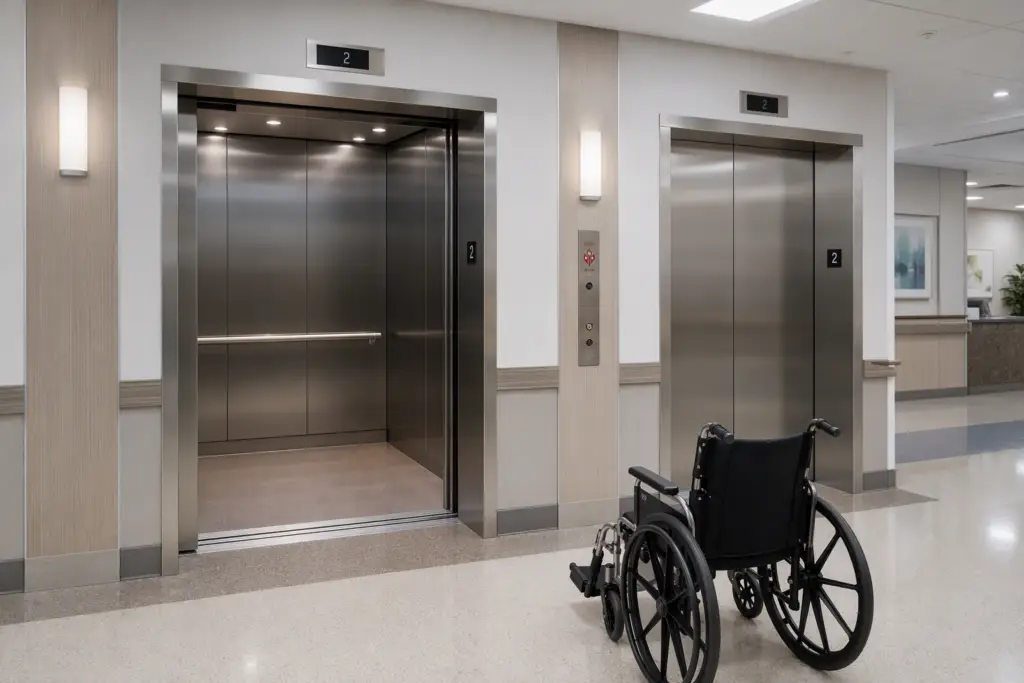
- ADA Accessibility Standards: School elevators serving the public must meet the requirements of the Americans with Disabilities Act (ADA), including cab dimensions, door timing, and accessible controls.
- Workplace Safety: Elevator machine rooms and maintenance activities must comply with applicable OSHA standards for worker safety.
—
What Is the Difference Between an Elevator Inspection and Elevator Maintenance?
These two requirements serve distinct purposes and are performed by different parties:
| Factor | Elevator Inspection | Elevator Maintenance |
|---|---|---|
| Purpose | Verify code compliance and issue/renew certificate of operation | Keep elevator in safe, reliable operating condition between inspections |
| Who Performs It | Licensed elevator inspector (state-certified or DBPR-approved third party) | Licensed elevator contractor / certified elevator mechanic |
| Frequency | Periodic per ASME A17.1 requirements and Florida rule | Ongoing — typically monthly visits under a service contract |
| Documentation Required | Inspection report filed with DBPR; certificate posted in cab | Maintenance log kept on-site; available to inspector on request |
| What Happens If Overdue | Certificate expires; elevator must be taken out of service | Accelerated wear, potential safety violations, higher repair costs |
| Regulatory Basis | Chapter 399, Florida Statutes; Florida Admin. Code Rule 61C-5 | ASME A17.1 Safety Code; maintenance contract requirements under Florida law |
—
What ASME Code Edition Applies to Florida School Elevators in 2026?
Florida adopts the ASME A17.1 Safety Code for Elevators and Escalators as its governing technical standard. The Florida DBPR references the adopted edition in its administrative rules, and facilities managers should confirm with DBPR which edition is currently in force for new installations versus existing equipment.
For existing elevators in schools, the relevant question is always: does the equipment meet the code edition under which it was installed, and are any mandatory upgrades or retrofits now required under newer editions? Older elevators in aging school buildings may require modernization to bring safety systems into alignment with current ASME A17.1 requirements — particularly for door safety devices, emergency lighting, and communication systems.
—
How Often Must School Elevators Be Inspected in Florida?
Florida’s inspection intervals are set by state administrative rule in alignment with ASME A17.1 requirements. The type of inspection determines the interval:
- Periodic Inspections: Required at defined intervals for all operating elevators. The frequency can vary by elevator type (traction, hydraulic, limited-use/limited-application).
- Category 1 Tests: Performed annually — include a no-load safety test and inspection of all safety devices.
- Category 5 Tests: Full-load, full-speed safety tests required at a longer interval (typically every five years per ASME A17.1) — these are the most comprehensive tests and must be witnessed by a licensed inspector.
Educational facilities with high-traffic elevators — such as university residence halls, academic buildings, or athletic facilities — should build inspection and test due dates into their facilities calendar well in advance to avoid lapses in certification.
—
What Are the ADA Requirements Schools Must Meet for Elevator Accessibility?
Under the Americans with Disabilities Act, schools that are places of public accommodation or receive federal funding must ensure their elevators provide accessible service. Key ADA requirements include:
| ADA Requirement | Applies To | Common Compliance Gap in Schools |
|---|---|---|
| Minimum cab dimensions | All new and altered elevators | Older school elevators may be undersized |
| Accessible control panel height and Braille markings | All elevators | Outdated panels lacking raised characters or Braille |
| Door reopening devices (sensing edge or light curtain) | All elevators | Worn or failed door edge sensors |
| Audible and visual floor indicators | All elevators | Non-functioning position indicators |
| Emergency two-way communication | All elevators | Phone systems not connected or not tested |
| Level landing and leveling accuracy | All elevators | Hydraulic elevators drifting out of level over time |
ADA violations in school elevators can trigger complaints to the U.S. Department of Justice and, for federally funded institutions, Section 504 / Section 508 enforcement. A comprehensive maintenance program addresses most ADA compliance gaps proactively.
—
What Should Schools Do If an Elevator Fails Inspection or Goes Out of Service?
- Post out-of-service notice immediately: Place a clear notice on all elevator entrances advising that the unit is not in service. Never allow occupants to use an elevator that has failed inspection or been condemned.
- Notify your licensed elevator contractor: Contact your maintenance provider to diagnose the deficiency. Obtain a written description of the required corrective work.
- Document the deficiency and repair plan: Keep records of the inspection report, the identified violations, and the contractor’s proposed timeline and scope of repair.
- Complete all required repairs: All deficiencies cited in the inspection report must be corrected before reinspection. Partial repairs that do not address all violations will result in another failed inspection.
- Schedule a reinspection: Contact the DBPR or your authorized inspector to schedule a follow-up inspection after repairs are complete.
- Provide ADA-equivalent access during the outage: If the elevator outage affects accessible routes required under the ADA, implement temporary accommodations such as staff assistance protocols or schedule changes while repairs are in progress.
- Obtain a new certificate of operation: Once the reinspection is passed, ensure the updated certificate is posted in the elevator cab as required by Florida law.
- Review your maintenance contract: If the failure was due to a maintenance gap, review your service agreement to prevent recurrence.
—
How Do Preventive Maintenance Contracts Compare for School Elevator Fleets?
Florida schools and universities typically choose between three maintenance contract structures:
| Contract Type | What’s Included | Best For | Key Risk |
|---|---|---|---|
| Full Maintenance (Comprehensive) | All labor, parts, callbacks, and adjustments — typically excludes vandalism and modernization | Large campuses with aging elevator fleets | Higher contract cost; vet what exclusions apply |
| Oil and Grease (Basic Lubrication) | Routine lubrication and adjustment only; parts and callbacks billed separately | Newer equipment still under manufacturer warranty | Unpredictable repair costs; may defer necessary work |
| Preventive Maintenance with Callbacks | Scheduled PM visits plus labor for callbacks; parts billed at cost or capped rate | Mid-age equipment on moderate budgets | Parts cost exposure; requires clear contract language on what is “included” |
| Independent vs. OEM Contractor | Independent contractors can typically service all major brands; OEM contractors may limit to their own equipment | Multi-vendor campuses benefit from independent provider | OEM lock-in can limit competitive pricing at renewal |
For multi-building school campuses with elevators of varying age and brand, an independent licensed elevator service provider — such as Axxiom Elevator Florida — offers the flexibility to service all makes and models under a single contract, simplifying compliance documentation and vendor management.
—
What Are the Pros and Cons of Independent vs. OEM Elevator Service for Schools?
| Factor | Independent Provider (e.g., Axxiom Elevator Florida) | OEM / Manufacturer Service |
|---|---|---|
| Equipment Flexibility | Can service all major brands on campus | Typically limited to own brand; may subcontract others |
| Code Compliance Capability | Florida-licensed; performs all required inspections and tests | Florida-licensed; may be strong on newer proprietary systems |
| Contract Pricing | Generally more competitive; no brand premium | Can be higher; OEM leverage at renewal |
| Parts Availability | Uses OEM-equivalent or genuine parts; broad supply chain | Direct access to proprietary parts |
| Modernization Expertise | Experienced with multi-brand retrofits and upgrades | Strong on own platform; may push full replacement over repair |
| Compliance Documentation | Unified reporting across all campus elevators | Separate reporting per brand if campus is mixed |
| Accountability | Local Florida-based service accountability | Regional or national structure; local accountability varies |
—
What OSHA Requirements Apply to Elevator Maintenance in Florida Schools?
While OSHA does not directly regulate elevator passenger safety (which falls under state jurisdiction), OSHA standards govern the safety of workers who maintain and repair elevators. Relevant OSHA requirements for school facilities include:
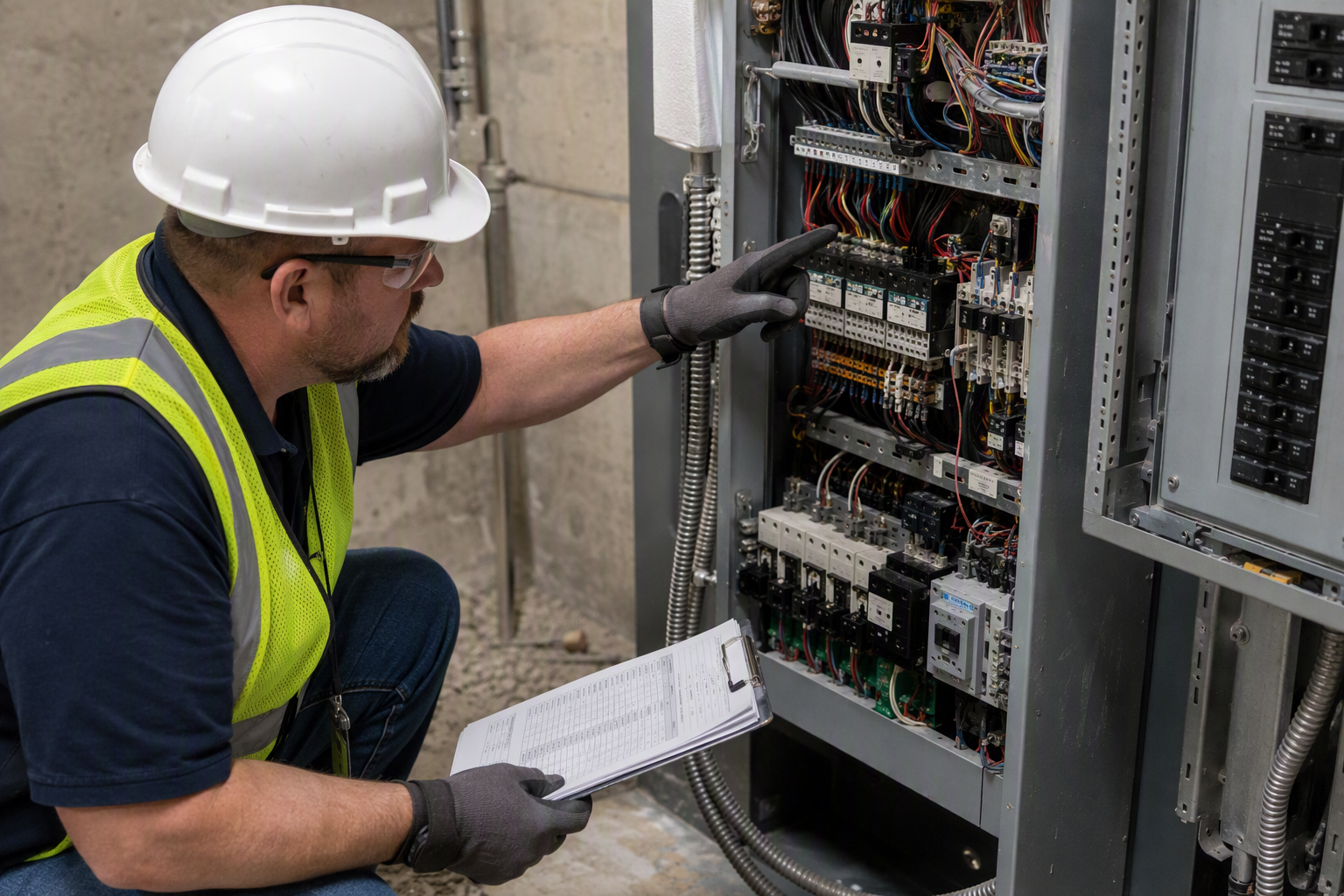
- Lockout/Tagout (LOTO) — 29 CFR 1910.147: Elevator machine rooms must have proper energy isolation procedures for maintenance work.
- Machine Room Safety: Access to elevator machine rooms must be restricted to authorized personnel. Machine rooms must be clean, properly lit, and free of stored materials.
- Fall Protection: Work in elevator pits or on top of cars requires compliance with applicable fall protection standards.
- Electrical Safety: All electrical work in machine rooms must meet OSHA electrical standards and the National Electrical Code.
Schools that employ in-house maintenance staff who perform any elevator-adjacent work — such as accessing machine rooms for lighting repairs — must ensure those employees are trained per OSHA requirements and do not perform work reserved for licensed elevator mechanics.
—
What Is the Timeline for Getting a School Elevator Back Into Compliance?
The timeline from identifying a compliance gap to receiving a renewed certificate of operation depends on the nature of the deficiency:
| Compliance Scenario | Typical Timeline | Key Variables |
|---|---|---|
| Minor adjustment or calibration deficiency | Days to one week | Contractor availability; inspector scheduling |
| Safety device replacement (door sensor, governor, buffer) | One to three weeks | Parts lead time; scope of work |
| Controller or drive system failure | Two to eight weeks | Parts availability; whether modernization is required |
| Full modernization (cab, controller, door operator) | Four to twelve weeks | Permitting, engineering review, parts procurement |
| ADA accessibility upgrades only | One to four weeks | Scope of work; cab modification requirements |
Schools should plan for these timelines when scheduling major maintenance periods — summer breaks and school holidays are ideal windows for repairs requiring elevator downtime.
—
What Questions Should Schools Ask When Evaluating Elevator Service Providers?
Before signing a maintenance contract, facility managers at Florida educational institutions should ask prospective service providers:
- Are you licensed as an elevator contractor by the Florida DBPR?
- Do your technicians hold current elevator mechanic certifications recognized in Florida?
- Can you service all elevator brands currently installed on our campus?
- What does your maintenance contract include — and specifically exclude — with respect to parts and callbacks?
- How do you document maintenance visits, and how is that documentation made available to us for regulatory inspections?
- Can you assist with scheduling and coordinating periodic inspections and Category 5 tests?
- What is your process when an elevator fails inspection?
- Do you have experience working with K-12 districts or university facilities departments in Florida?
—
Why Do Schools and Universities Choose Axxiom Elevator Florida?
Axxiom Elevator Florida is an independent, Florida-certified elevator service company serving educational institutions across the state. As an independent provider, Axxiom Elevator Florida is not tied to any single elevator manufacturer — meaning the company can service all major brands across a mixed campus fleet under a single maintenance agreement.
For Florida schools and universities, this matters because:
- Campus elevator fleets commonly include equipment from multiple manufacturers installed over different decades.
- Compliance documentation — maintenance logs, inspection records, test reports — is consolidated and organized for DBPR review.
- Independent contractors have no incentive to recommend unnecessary replacements over cost-effective repairs.
- Axxiom Elevator Florida operates within the Florida regulatory framework, including Chapter 399 requirements and ASME A17.1 standards.
Facility directors managing compliance timelines, budget cycles, and the demands of continuous school operation need a service partner who understands the unique pressures of the educational environment — from managing downtime around academic calendars to addressing ADA complaints promptly.
—
Summary: Elevator Compliance Checklist for Florida Schools and Universities
| Requirement | Regulatory Basis | Action Required |
|---|---|---|
| Valid Certificate of Operation posted in cab | Chapter 399, Florida Statutes | Track expiration; schedule reinspection before lapse |
| Periodic inspection by licensed inspector | Florida Admin. Code Rule 61C-5 | Maintain inspector relationship; keep inspection history on file |
| Category 1 annual safety test | ASME A17.1 | Coordinate with licensed contractor annually |
| Category 5 full-load test (five-year interval) | ASME A17.1 | Schedule well in advance; requires licensed inspector witness |
| Documented preventive maintenance program | Chapter 399, Florida Statutes; ASME A17.1 | Active contract with licensed elevator contractor; logs on-site |
| ADA accessibility compliance | ADA | Audit controls, door timing, leveling, and communications |
| Machine room OSHA compliance | OSHA | Restrict access; maintain LOTO procedures; keep room clear |
| Emergency communication system functional | ASME A17.1; ADA | Test two-way phone/intercom at each maintenance visit |
—
Get Expert Elevator Compliance Support for Your School or University
Florida educational facilities face real consequences for elevator compliance gaps — from operating violations and failed inspections to ADA complaints and safety incidents. Staying ahead of inspection schedules, maintenance requirements, and code updates requires a knowledgeable, licensed service partner.
Contact Axxiom Elevator Florida for a free elevator assessment. An independent compliance review of your campus elevator fleet can identify expiring certificates, deferred maintenance, and ADA gaps before they become violations.
Call today: