Elevator Downtime, Liability & Tenant Retention in Multitenant Office Buildings: A Healthcare Industry Guide
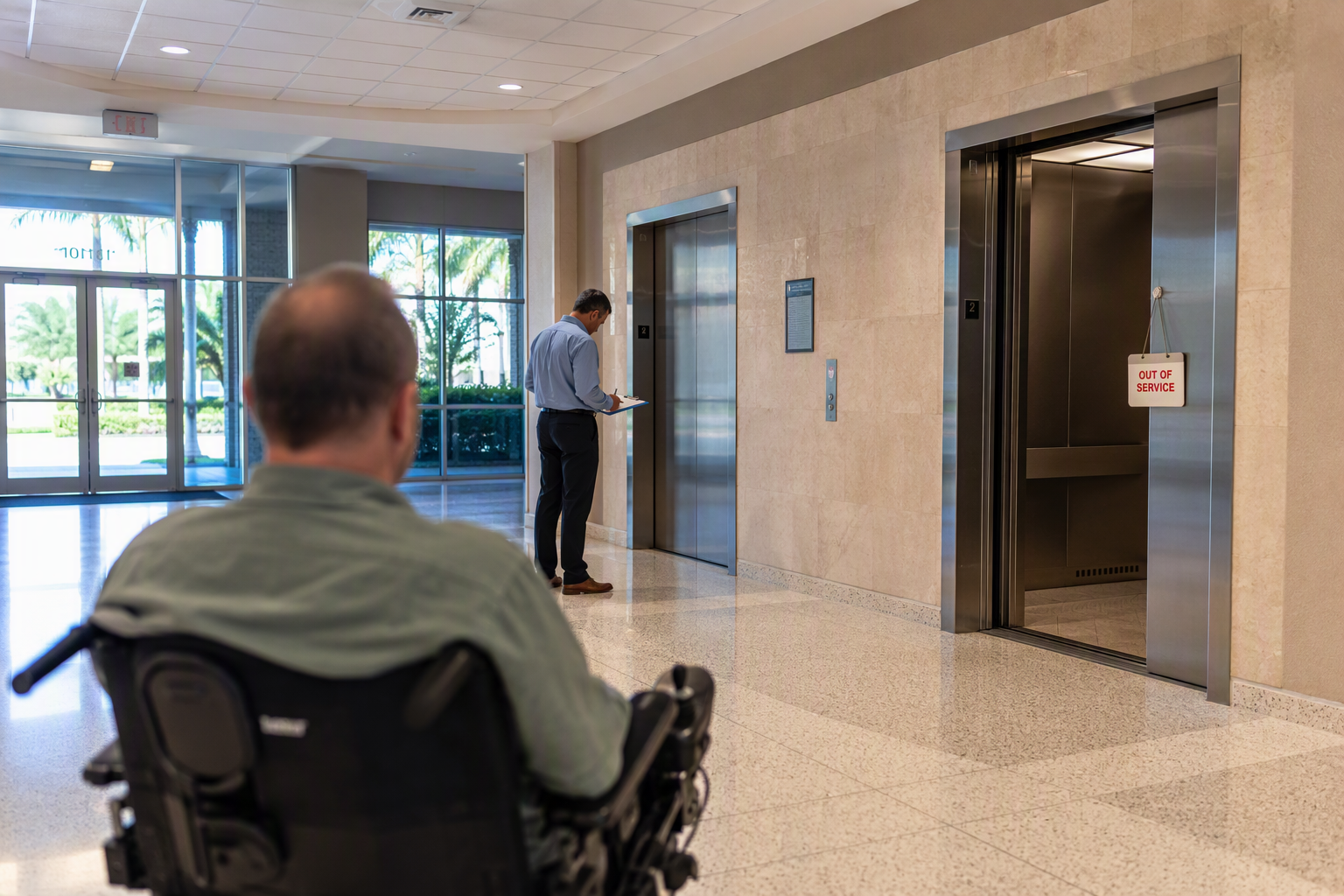
For multitenant office buildings in Pompano Beach, Sarasota, and across Florida that house healthcare providers — medical groups, therapy clinics, imaging centers, or specialty practices — a single elevator outage is rarely a minor inconvenience. It is a liability event. Healthcare tenants operate under patient safety and accessibility obligations that do not pause for mechanical failure. Building owners and property managers who underestimate the downstream consequences of recurring elevator downtime often find themselves facing lease disputes, regulatory scrutiny, and a shrinking pool of willing healthcare tenants.
This guide breaks down every dimension of elevator downtime risk in the healthcare vertical: legal exposure, compliance requirements, tenant relations, and what proactive maintenance actually looks like in Florida’s regulated environment.
How Does Elevator Downtime Create Legal Liability for Building Owners?
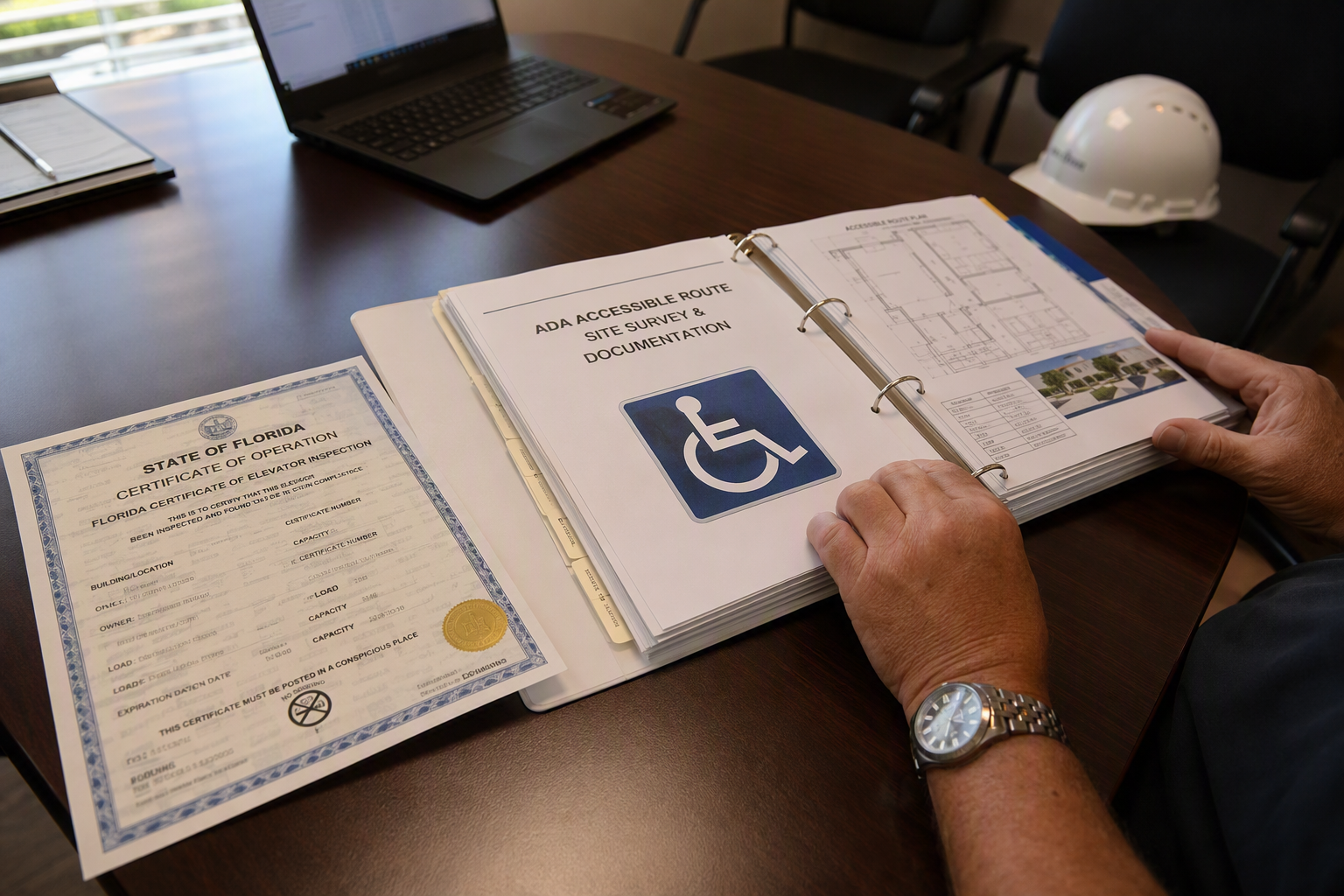
When an elevator goes out of service in a building that houses healthcare tenants, the building owner inherits a web of potential liability. The most immediate exposure comes from Americans with Disabilities Act (ADA) obligations. Title III of the ADA requires that places of public accommodation — including medical office buildings — maintain accessible routes. If a building’s only accessible vertical route is an elevator, its failure is not simply an inconvenience; it may constitute a failure to provide equal access to individuals with mobility impairments.
Beyond federal ADA obligations, Florida building codes enforce accessibility standards that align with and often reinforce ADA requirements. A prolonged outage without a documented remediation plan can expose building owners to complaints filed with the U.S. Department of Justice or private litigation by patients who were denied access to their medical appointments.
Premises liability is the second major vector. Florida law places a duty of care on property owners to maintain safe conditions. An elevator with a known mechanical defect — documented in inspection reports but left unrepaired — is exactly the kind of condition that plaintiffs’ attorneys look for when establishing negligence.
Which Elevator Safety Codes Apply to Healthcare-Occupied Buildings in Florida?
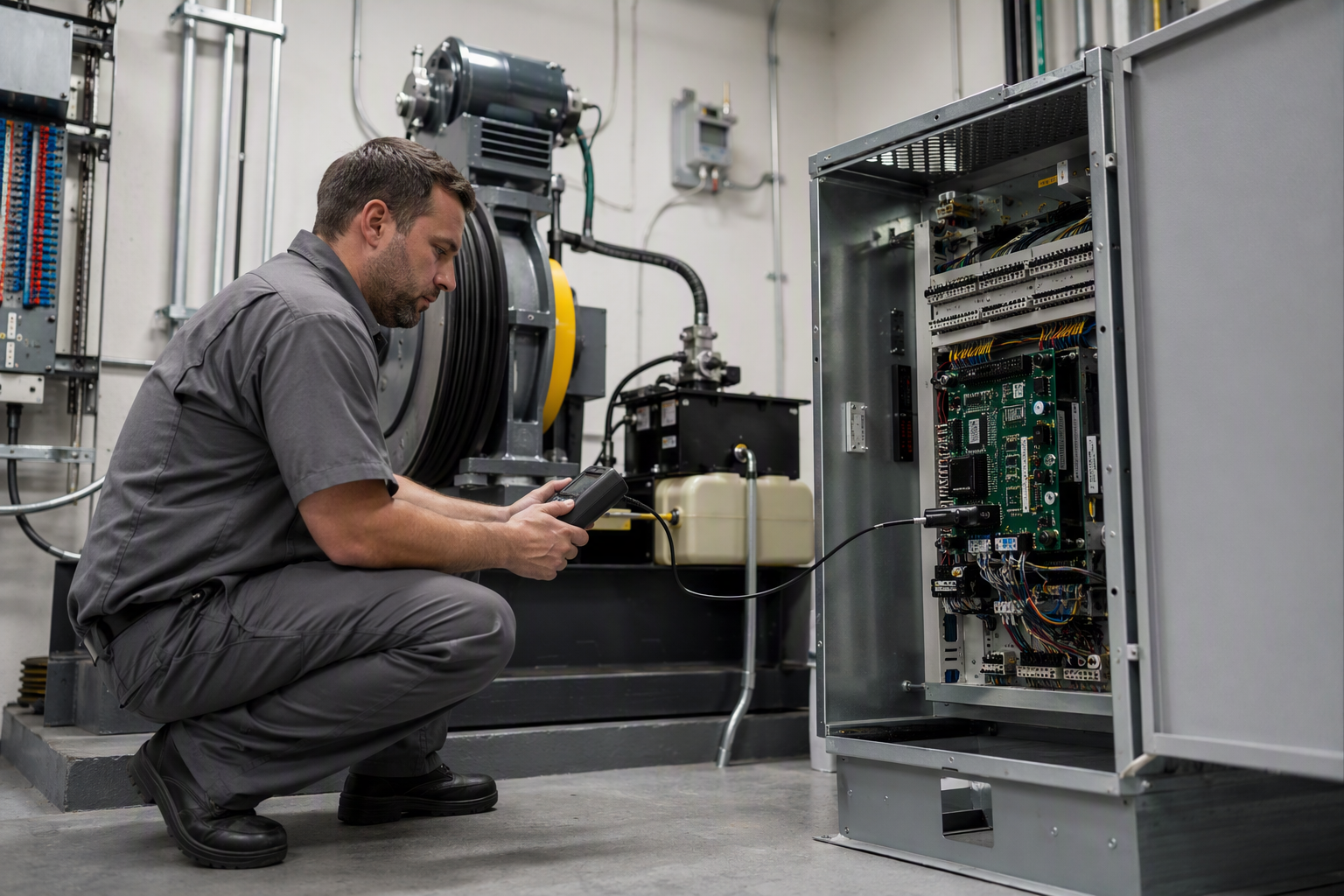
Florida elevator regulation is administered through the Florida Department of Business and Professional Regulation (DBPR), and the governing technical standard is the ASME A17.1 Safety Code for Elevators and Escalators. For existing installations, the companion document ASME A17.3 Safety Code for Existing Elevators and Escalators establishes the retroactive safety requirements that apply when equipment has not been replaced.
Key compliance touchpoints for Florida buildings include:
- Periodic inspections: Florida requires annual inspections of elevators by a licensed elevator inspector. Certificates of operation must be current and posted in the elevator cab.
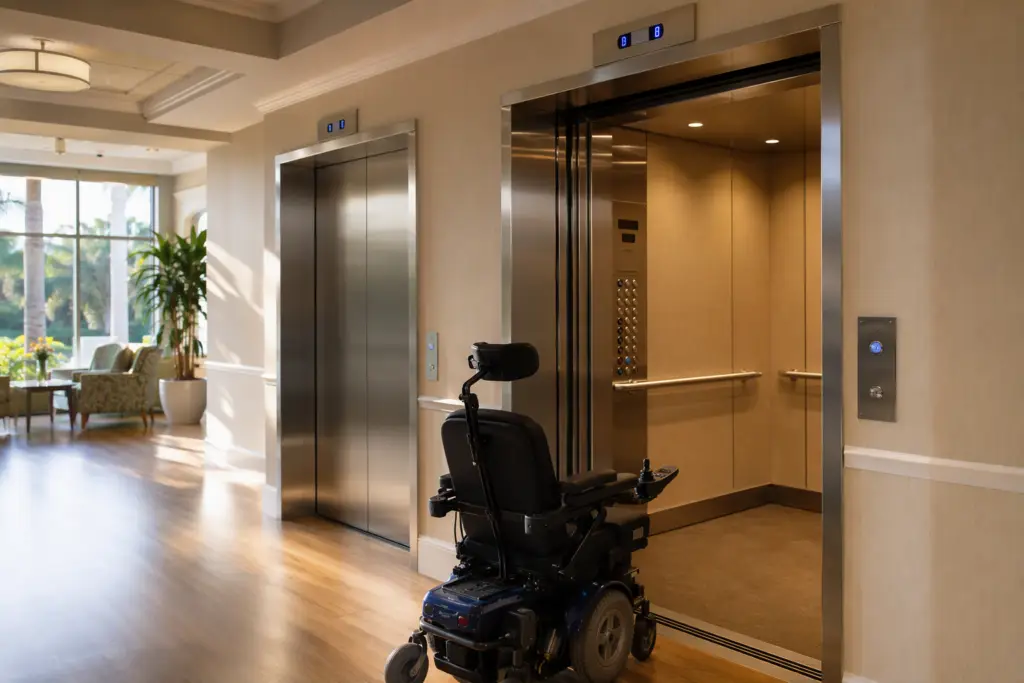
- ADA vertical accessibility: Under ADA Standards for Accessible Design, elevator cab dimensions, door timing, floor leveling tolerances, and controls must meet specific requirements — all of which can degrade over time without proper maintenance.
- Emergency communication: ASME A17.1 mandates a two-way communication system within every elevator cab, a requirement with heightened significance when medical emergencies may occur during transport.
- Door reopening devices: Automatic door reversal systems must function correctly — a critical safety feature in facilities where patients may move slowly or use mobility aids.
Axxiom Elevator Florida performs inspections and maintenance that specifically address these compliance checkpoints for medical office and healthcare-occupied buildings throughout Pompano Beach, Sarasota, and the surrounding Florida markets.
How Does Elevator Downtime Affect Healthcare Tenant Lease Renewals?
Healthcare tenants evaluate lease renewals differently than general office tenants. Patient volume, regulatory compliance, and operational continuity are not abstract concerns — they are tied directly to clinical viability. A medical practice that has experienced repeated elevator outages must weigh whether the building can reliably support its patient population, particularly patients with mobility limitations.
Common lease provisions that become points of contention after elevator failures include:
- Quiet enjoyment clauses: Healthcare tenants may argue that persistent elevator downtime constitutes a breach of their right to peacefully use and enjoy their leased space for the stated purpose.
- Force majeure and repair timelines: Leases that lack clear language on repair obligations and acceptable response timelines leave building owners exposed when mechanical failures extend beyond what tenants consider reasonable.
- Rent abatement triggers: Some commercial leases include provisions that allow rent reduction when essential building services — including elevator service — are unavailable for defined periods.
The reputational cost is equally significant. In competitive Florida healthcare markets like Sarasota, a medical office building with a history of elevator problems will struggle to attract or retain specialist groups, therapy providers, and diagnostic centers that have alternatives.
What Are the ADA Requirements for Elevator Accessibility in Medical Office Buildings?
Under ADA Title III, medical office buildings open to the public must provide accessible vertical transportation in all buildings with more than one story, subject to narrow exceptions that generally do not apply to professional healthcare facilities. The standards address:
- Minimum cab dimensions to accommodate wheelchairs and mobility aids
- Door dwell time sufficient for patients who move slowly
- Floor leveling accuracy so that wheelchair users can exit without navigating a gap or lip
- Control button height and Braille signage requirements
- Audible and visual floor indicators for patients with sensory impairments
Maintenance failures can cause ADA-compliant equipment to fall out of compliance over time. Worn door operators, drifting leveling mechanisms, and damaged interior controls are common culprits. Regular maintenance by a qualified provider like Axxiom Elevator Florida helps ensure that equipment installed to ADA specifications continues to meet those standards operationally, not just on paper.
What Immediate Steps Should a Building Manager Take When an Elevator Goes Down?
- Notify tenants immediately. Contact all healthcare tenants by phone or email so they can begin patient communication and schedule adjustments without delay.
- Post clear signage. Place notices at all elevator landings and building entrances identifying the outage and directing patients to any available alternative access.
- Assess ADA impact. Determine whether any accessible route to any healthcare tenant is now unavailable. If so, treat the situation as an urgent compliance matter, not a routine repair.
- Contact your elevator service provider. Report the failure and obtain a documented service call record including the reported fault, the technician’s findings, and the expected restoration timeline.
- Document everything. Keep a written log of the outage time, notifications sent, service calls placed, and any communications with tenants. This record is essential if a liability claim or lease dispute arises.
- Notify your property insurer. Depending on your policy, a prolonged outage affecting a medical tenant may be a reportable event.
- Confirm restoration before reopening. Do not return an elevator to service following a significant mechanical failure without a technician’s written confirmation that the unit is safe and compliant.
How Often Should Elevators in Florida Medical Office Buildings Be Inspected?
Florida law requires a licensed inspection on an annual basis, with the certificate of operation displayed inside the cab. However, compliance inspections and preventive maintenance inspections serve different purposes. A state inspection confirms that the equipment meets minimum safety standards at a point in time. Preventive maintenance — performed on a scheduled basis throughout the year — is what prevents the failures that cause downtime between inspections.
For buildings with healthcare tenants, the stakes of an unplanned outage are high enough that a reactive maintenance posture is a financial and legal risk. Axxiom Elevator Florida provides preventive maintenance programs designed for the demands of occupied commercial and medical office buildings in Florida markets, including Pompano Beach and Sarasota.
Can a Healthcare Tenant Break Their Lease Over Repeated Elevator Outages?
The answer depends on lease language, the severity and frequency of outages, and whether the building owner can demonstrate a good-faith effort to remediate the problem. In Florida, a constructive eviction argument — where a tenant claims that the building owner’s failure to maintain essential services made the space unfit for its intended use — is a recognized legal theory. A medical practice whose patients cannot reach its office, or whose staff cannot transport medical equipment between floors, has a stronger-than-average case for arguing that the space has become unfit.
Courts and arbitrators will examine the paper trail: Were outages reported? Was service called promptly? Were tenants notified? Was a maintenance contract in place? Building owners with documented, proactive maintenance programs are in a meaningfully stronger legal position than those who can only produce after-the-fact repair invoices.
What Is the Difference Between Modernization and Routine Maintenance for Aging Elevators?
Routine maintenance addresses wear, lubrication, adjustment, and replacement of consumable parts to keep an existing system operating within its design specifications. Modernization — sometimes called a retrofit or upgrade — replaces major components or control systems, typically to extend the useful life of the unit, improve reliability, or bring older equipment into alignment with current ASME A17.3 requirements for existing elevators.
For healthcare-occupied buildings where an older elevator is generating repeated service calls, modernization often makes economic and legal sense. A modernized elevator with updated controls and a documented maintenance history is far easier to defend in a liability context than a legacy unit with a long repair log. Axxiom Elevator Florida can assess whether an elevator’s failure pattern points toward a maintenance gap or a modernization need.
What Are the OSHA Obligations for Elevator Safety in Commercial Buildings?
While OSHA regulations primarily govern worker safety rather than public access, they are directly relevant to building maintenance staff, elevator technicians performing service, and healthcare workers who use elevators as part of their daily work environment. OSHA’s General Duty Clause requires employers to provide a workplace free from recognized hazards. A building where a known elevator defect has not been corrected could expose both the building owner and the healthcare tenant-employer to OSHA scrutiny if a worker is injured.
Questions Your Inspector Will Ask
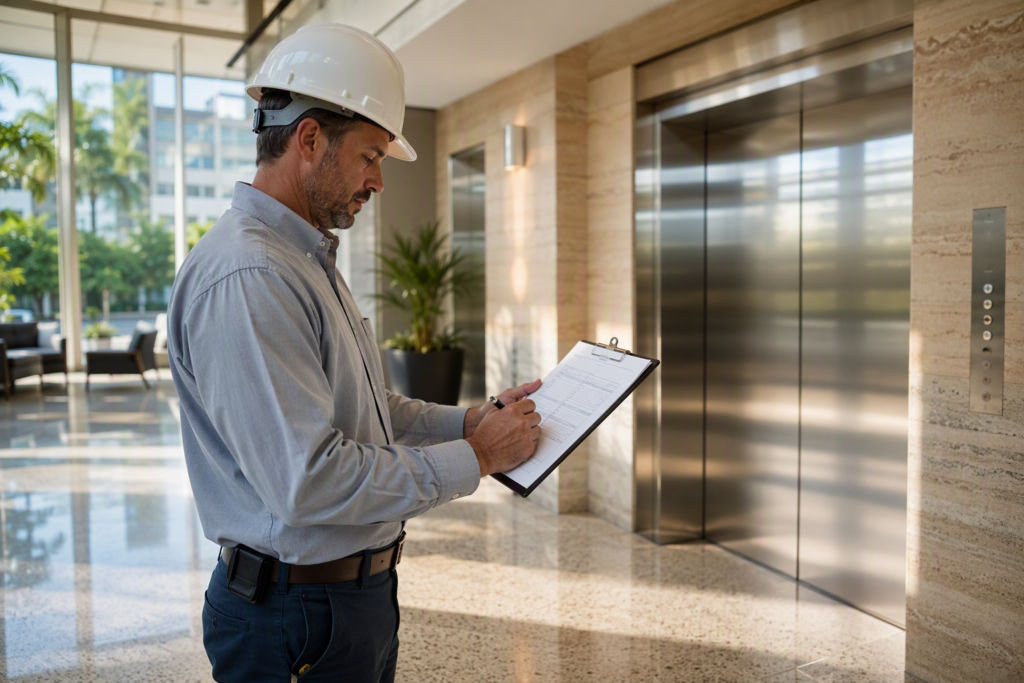
When a Florida DBPR-licensed elevator inspector arrives at a multitenant medical office building, the questions and checklist items are consistent. Building managers and property owners benefit from knowing what to expect:
- Is the current certificate of operation posted inside the cab and within its validity period?
- Are maintenance logs available showing the date, scope, and technician of record for each service visit?
- Is the two-way emergency communication system functional?
- Do door safety edges and reopening devices respond correctly?
- Is the elevator leveling within acceptable tolerance at each floor?
- Are machine room access, lighting, and fire suppression systems compliant?
- Have any out-of-service periods been documented, and were they reported to the AHJ (Authority Having Jurisdiction) as required?
- Are cab interior controls, Braille labels, and floor indicators in good condition and meeting current ADA standards?
- Has any work been performed on the elevator since the last inspection, and was a permit pulled for that work?
Axxiom Elevator Florida prepares building owners and property managers for annual inspections by conducting pre-inspection reviews that identify and correct deficiencies before the official inspection occurs.
How Does a Preventive Maintenance Contract Reduce Liability Exposure?
A formal preventive maintenance agreement creates a documented record that the building owner exercised reasonable care in maintaining vertical transportation equipment. That paper trail matters in three specific scenarios: a tenant dispute, a personal injury claim, or a regulatory enforcement action. Courts and regulators look for evidence of systematic, scheduled care — not just emergency repair calls placed after a failure has already occurred.
For healthcare-occupied buildings in Pompano Beach and Sarasota, where patient accessibility is a daily operational requirement, the maintenance contract is both an operational tool and a risk management document. Axxiom Elevator Florida provides maintenance agreements tailored to the compliance requirements of Florida’s healthcare real estate environment.
What Should Building Owners Look for When Selecting an Elevator Service Provider for a Medical Office Building?
- Florida licensing: Confirm that the company and its technicians hold current Florida elevator contractor licenses issued through DBPR.
- Healthcare building familiarity: Providers experienced with medical office environments understand the patient access implications of downtime and communicate accordingly.
- Documentation practices: The provider should supply written service records for every visit, in a format that supports both lease compliance and liability defense.
- Modernization capability: A provider who can assess, plan, and execute modernization projects — not just routine maintenance — offers broader long-term value.
- Code knowledge: Providers should demonstrate current knowledge of ASME A17.1, ASME A17.3, and Florida-specific DBPR requirements as they apply in 2026.
Protect Your Tenants, Your Leases, and Your Liability Position
Elevator downtime in a healthcare-occupied building is a compliance event, a lease risk, and a patient safety issue — all at once. Proactive maintenance, documented inspection readiness, and a qualified service partner are the building owner’s primary tools for managing that risk in Florida’s regulated environment.
Contact Axxiom Elevator Florida for a free elevator assessment. Serving Pompano Beach, Sarasota, and medical office buildings throughout Florida. Call to schedule your assessment today.
Need elevator service you can rely on? Axxiom Elevator Florida is ready to help.